
Microsoft’s Xbox Series X is reportedly losing about $150 per unit even as its 1TB model rises to $799.99 in the U.S. on August 1. The figure, reported by Windows Central and highlighted by GameLuster and Push Square, is not a Microsoft-confirmed margin disclosure, but it underscores how sharply component costs have changed the economics of dedicated gaming hardware.
Microsoft announced the latest Xbox price changes in June, citing storage and memory costs that it said had increased by more than 2.5 times. The 1TB models are receiving a $150 increase, while 512GB models rise by $100. In practical terms, a six-year-old Series X will now cost more than its original 2020 launch price, rather than following the traditional late-cycle path toward lower prices.
Console makers have long sold hardware at slim margins or a loss, expecting software, subscriptions, accessories, and platform fees to make up the difference. But the reported $150 loss after the August increase suggests Microsoft is facing something more severe than the normal launch-period subsidy.
Windows Central attributes the pressure to the ongoing memory and storage shortage, with AI infrastructure competing for parts and manufacturing capacity needed across PCs, phones, handhelds, and consoles. Microsoft’s own Xbox business is therefore in the unusual position of raising prices substantially while still reportedly absorbing hardware losses.
That matters beyond Xbox hardware sales. A $799.99 Series X is harder to position as the accessible on-ramp to Game Pass, cloud saves, Xbox Play Anywhere titles, and the wider Microsoft gaming ecosystem. It also narrows the value gap between a console and a Windows gaming PC, especially for buyers who already own a capable desktop or handheld.
Still, the underlying cost environment is real. Reuters reported in May that Sony had secured memory volumes needed for 2026, offering some near-term insulation for PlayStation 5 production. That is not the same as protection for a new console that may require a more advanced chip, faster memory, expanded storage, and a launch inventory measured in millions of units.
Nintendo’s planned Switch 2 increase adds another data point: Nintendo says its U.S. price will rise from $449.99 to $499.99 on September 1. When the industry’s three major console platforms are all dealing with higher component costs, Sony’s purchasing leverage may soften the blow, but it cannot make memory pricing irrelevant.
For Microsoft, the August 1 price rise tests whether the Xbox ecosystem can retain its appeal when its flagship console is priced like a high-end PC component purchase. For Sony, it is a preview of the decision waiting behind PS6 development: how much performance can a next-generation console deliver before the traditional console price ceiling stops making sense?
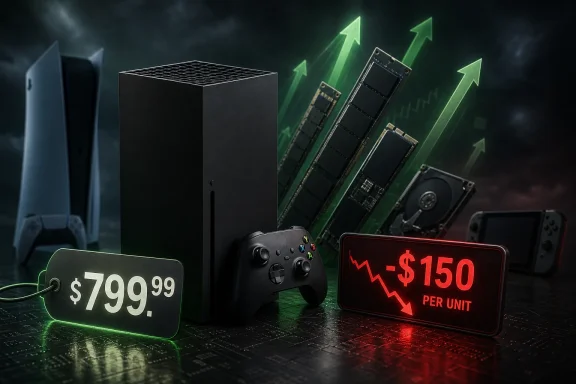 A higher MSRP does not restore the console subsidy
Console makers have long sold hardware at slim margins or a loss, expecting software, subscriptions, accessories, and platform fees to make up the difference. But the reported $150 loss after the August increase suggests Microsoft is facing something more severe than the normal launch-period subsidy.Windows Central attributes the pressure to the ongoing memory and storage shortage, with AI infrastructure competing for parts and manufacturing capacity needed across PCs, phones, handhelds, and consoles. Microsoft’s own Xbox business is therefore in the unusual position of raising prices substantially while still reportedly absorbing hardware losses.
That matters beyond Xbox hardware sales. A $799.99 Series X is harder to position as the accessible on-ramp to Game Pass, cloud saves, Xbox Play Anywhere titles, and the wider Microsoft gaming ecosystem. It also narrows the value gap between a console and a Windows gaming PC, especially for buyers who already own a capable desktop or handheld.
PS6 pricing is no longer a distant problem
The immediate story is Xbox, but the broader warning is for Sony’s next PlayStation. Sony has not announced the PlayStation 6, its specifications, release date, or price. Reports and leaks about a PS6 family that could include a home console and native handheld remain unverified, and no credible public evidence establishes a final design.Still, the underlying cost environment is real. Reuters reported in May that Sony had secured memory volumes needed for 2026, offering some near-term insulation for PlayStation 5 production. That is not the same as protection for a new console that may require a more advanced chip, faster memory, expanded storage, and a launch inventory measured in millions of units.
Nintendo’s planned Switch 2 increase adds another data point: Nintendo says its U.S. price will rise from $449.99 to $499.99 on September 1. When the industry’s three major console platforms are all dealing with higher component costs, Sony’s purchasing leverage may soften the blow, but it cannot make memory pricing irrelevant.
The old generational bargain is at risk
A PS6 priced at $1,000 or more remains speculation, not a forecast. But Xbox’s reported per-unit losses show why such a number is no longer easy to dismiss as clickbait. Sony would face a difficult choice: subsidize premium hardware more aggressively, reduce specifications, launch fewer configurations, or ask consumers to absorb a much higher upfront cost.For Microsoft, the August 1 price rise tests whether the Xbox ecosystem can retain its appeal when its flagship console is priced like a high-end PC component purchase. For Sony, it is a preview of the decision waiting behind PS6 development: how much performance can a next-generation console deliver before the traditional console price ceiling stops making sense?
References
- Primary source: GameLuster
Published: 2026-07-30T11:20:00+00:00
Loading…
gameluster.com - Related coverage: windowscentral.com
Xbox Price Tracker: Here are the best places to find in-stock Xbox consoles before prices go up in 13 days | Windows Central
A live tracker for every Xbox Series X|S deal before prices rise sharply on August 1 — and potentially again in 2027 as hardware costs continue climbing.www.windowscentral.com - Related coverage: xboxachievements.com
Loading…
www.xboxachievements.com - Related coverage: play3.de
Loading…
www.play3.de - Related coverage: as.com
Loading…
as.com