

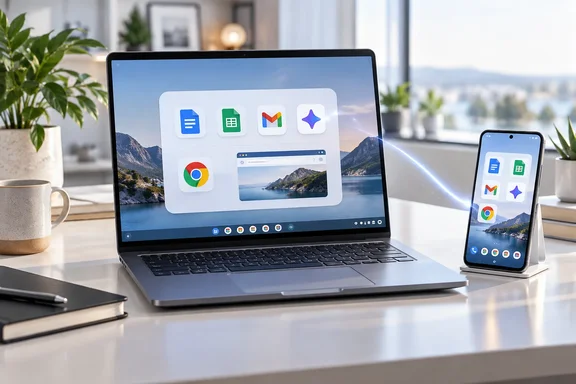
Googlebook Opens Pre-Orders as a Direct Rival to Windows Laptops
Google first announced Googlebook on May 12, 2026, as a new category of laptops, separate from the Chromebook line. Google's framing is that it is combining Android, with its Google Play apps and an operating system "designed for Intelligence", with ChromeOS and its browser. The first hardware partners named in May were Acer, ASUS, Dell, HP and Lenovo, the same companies that sell most mainstream Windows laptops.
Pre-orders opened on September 21. Google describes the platform as built on the Android technology stack, with desktop foundations taken from ChromeOS. Devices start at $899. Windows Latest reports that the range tops out at $1,299, a figure Google's announcement does not give. Pre-orders are available through the Google Store, Best Buy and other retailers. Units reach shelves on October 4 in the U.S. and October 5 in Canada, the U.K., Ireland, France, Germany and Australia.
Google says the hardware uses Intel and Qualcomm processors with NPUs rated at over 45 TOPS, up to 14 hours of battery life, touchscreens up to 2.8K OLED, and chassis made of aluminum, magnesium alloy and carbon fiber. These are Google's own claims. No independent battery or performance testing has been published yet. Every purchase includes 12 months of Google AI Pro with 5TB of cloud storage, three months of YouTube Premium, Adobe Photoshop, a year of GeForce NOW, and a promise of feature drops and updates for up to 10 years.
The main selling point is how the laptop works with an Android phone. During setup, Googlebook transfers the phone's settings, saved passwords, Wi-Fi networks and messages, and Google says that transfer is end-to-end encrypted. After setup, three named features tie the two devices together. Continue On resumes a phone task from the laptop taskbar, the Files app browses and opens phone files and photos, and Cast My Apps streams a phone app into a desktop window. The Gemini features are Magic Pointer, which gives contextual suggestions at the cursor, Rambler, which turns dictation into formatted notes, and Create My Widget, which builds desktop widgets from a plain-language prompt. Google says Magic Pointer acts only when asked and can be turned off.
Microsoft Copilot Lands in Google's Productivity Shortlist
According to Windows Latest, the main web page for Googlebook features both Microsoft Copilot and Microsoft 365. The page has an Apps & Games section split into four curated groups: Best of Google, Creativity, Streaming and Productivity. Windows Latest says Copilot appears in the Productivity group next to Notion, Notability, Adobe Acrobat, Dropbox and Fantastical, and that it uses Microsoft's newly announced Copilot logo.
The Microsoft 365 logo appears separately, in the section inviting visitors to "Get access to millions of your favourite apps and tools through the Google Play Store." Windows Latest also reports that Google's Googlebook FAQ says users can "open, edit, download, and save Microsoft Word, Excel, Outlook, and PowerPoint files on your Googlebook using the Microsoft 365 app". Google's official blog posts about Googlebook do not mention either the Copilot placement or that FAQ wording. Those details come from Windows Latest's reading of the live pages.
The shortlist is small, and that is why it is interesting. Google's pre-order announcement names only a few third-party apps: Adobe Photoshop, Adobe Lightroom and CapCut for creative work, Netflix and HBO Max for streaming, and BandLab as the Continue On example. On the page where it picks the apps that represent the whole platform, Google's productivity picks include a Microsoft AI assistant, even though it has Gemini built into the pointer, the widgets and the dictation tool.
Treat this placement as what it is. A spot in a curated app row is not an endorsement, a partnership or a verdict that Copilot beats Gemini, and neither company has announced any deal. It does show that Google expects Googlebook's target buyers to ask whether Microsoft's apps run on it, and wants the answer on the landing page.
The Microsoft 365 App Rename Explains the Logo Confusion
Windows Latest joked that Google may have been confused about which logo to use, since in its view the Microsoft 365 Android app no longer exists and users now need separate apps such as Word and Excel. Microsoft's documentation explains what actually happened. The app was renamed, not removed. Microsoft's support site says the Microsoft 365 (Office) app is now called the Microsoft Copilot app across web, mobile (iOS, Android), and Windows. The Google Play listing that used to carry the Microsoft 365 name is now titled "Microsoft Copilot". Windows Latest noted the same thing, saying the Play Store's Microsoft 365 entry now shows only the Copilot app.
That makes the Googlebook page harder to read. A Microsoft 365 logo on Google's page and a Copilot entry in the productivity row could point to the same Play listing or to two different Microsoft apps. Microsoft now says it offers Copilot for work in one app, and support pages direct Android users to install the Copilot app from the Google Play Store. From outside Google, you cannot tell which listing each logo links to. What is clear is that an FAQ promising Word, Excel, Outlook and PowerPoint file handling "using the Microsoft 365 app" names an app whose Play listing is now called something else.
The rename also changes what buyers get depending on their account. Microsoft says Copilot Chat is available to users with a Microsoft 365 license at no additional cost and users with a Microsoft Copilot license. For consumers, it is available for Microsoft 365 Personal, Family, Premium, and Pro subscribers (primary account holders only). For regions without Copilot availability, the Microsoft Copilot app will remove the Copilot tab from the Home screen. So the Copilot a Googlebook owner sees depends on their Microsoft account type, their subscription and their country, not on the laptop.
Microsoft 365 Copilot Numbers Give Google a Reason to Care
Windows enthusiasts mock Copilot. Windows Latest notes that Microsoft spent much of 2026 removing Copilot branding from Notepad, Snipping Tool and other parts of Windows 11 after user backlash. The enterprise numbers look different. On its July 29, 2026 earnings call, Microsoft said it had more than 30 million paid Microsoft 365 Copilot seats, with net seat additions more than doubling quarter over quarter. Satya Nadella also said average weekly engagement was on par with Outlook and Teams. On the April 29 call, Microsoft had reported more than 20 million paid seats.
Those figures are for Microsoft 365 Copilot, the paid business add-on. They do not measure the consumer Copilot app, and they are Microsoft's own numbers, not audited usage data. They still explain the placement. A laptop sold as "built for how people actually work and create", Google's own phrase, has to deal with the fact that many working people spend their day in Word, Excel, Outlook, Teams and, increasingly, Copilot.
Google Blocked Windows Phone's YouTube App Before Showcasing Microsoft Apps
The Windows Phone history shows how much has changed. In May 2013, Google sent Microsoft a cease-and-desist letter over Microsoft's own YouTube app for Windows Phone 8. According to Wired's reporting at the time, Google objected that the app allowed video downloads, blocked ads and played videos that were restricted on some platforms, and it demanded that the app be removed. Microsoft pulled the app, and the two companies said they would work on a compliant version. When Microsoft released a rebuilt app in August 2013, Google blocked its access again. TechCrunch reported that the dispute involved Microsoft's use of native code rather than the HTML5 approach Google wanted, along with advertising and API issues.
That fight was about one app and one set of terms-of-service claims. Google never banned Windows Phone outright, and the YouTube dispute alone did not kill the platform. It did show the rule that governed mobile platforms then: a platform without the big-name apps struggled to sell, and the companies that owned those apps could use that leverage.
Microsoft went the other way on Android. Under Nadella's "mobile-first, cloud-first" strategy, Word, Excel and PowerPoint became generally available on Android in 2015, and Microsoft has kept a large Android presence ever since. Googlebook runs Android apps, so it inherits all of that work. Google did not have to negotiate anything for Microsoft's apps to appear on its laptop. It only had to put them on the page.
Microsoft is not the only company whose apps rivals now advertise. Windows Latest points to Apple promoting Microsoft Office on its MacBook Neo page earlier this year and to Google releasing a Gemini desktop app for Windows. For buyers, the big productivity apps now follow them from one platform to another, and each platform's marketing says so.
What This Means for You
The decision is whether an Android version of Microsoft's apps, plus Office in the Chrome browser, is enough for the work you do. Google's pitch lists the desktop Chrome browser with extensions, millions of Android apps (many optimized for large screens, mouse and keyboard), and an isolated Linux environment for developer tools. Running Windows desktop applications is not part of that list. For Microsoft's apps, you get the Play Store versions and the web versions. Microsoft notes that with a Microsoft account, you can use Word, Excel, and PowerPoint in your browser for free, and that desktop apps and premium features require a Microsoft 365 plan.
If your work depends on Excel macros, Outlook add-ins or line-of-business Windows software, you can wait until reviewers and early buyers report how Microsoft's Android and web apps actually perform on Googlebook hardware. If you already live in Google Workspace and web apps and carry an Android phone, the phone integration is the more important feature, and Microsoft app support is a useful bonus.
IT administrators should note what is missing. Google's pre-order announcement is aimed at consumers and does not describe how Googlebooks will be managed in an enterprise. That gap matters more than any logo when deciding whether these devices can sit alongside Intune-managed Windows fleets.
- Googlebook pre-orders opened September 21, 2026, starting at $899, with shelf availability from October 4 in the U.S. and October 5 in Canada, the U.K., Ireland, France, Germany and Australia.
- Windows Latest reports that Google's Googlebook page lists Microsoft Copilot in its curated Productivity row and shows the Microsoft 365 logo beside its Google Play pitch.
- Microsoft has renamed the Microsoft 365 (Office) app to Microsoft Copilot on Android, so search the Play Store for the new name if the Microsoft 365 app seems to be missing.
- Copilot Chat access in that app depends on your Microsoft 365 license or consumer subscription tier and on whether Copilot is available in your region, not on the Googlebook itself.
- Microsoft apps on Googlebook are the Android and web versions, so check any workflow that depends on Windows-only Office features before you pre-order.
- Google's battery, NPU and security claims are unverified until independent reviews arrive after the October ship dates.
In 2013, Google's leverage over Microsoft was the YouTube app it could withhold from Windows Phone. In 2026, Google's case against Windows laptops includes Microsoft's own productivity apps, reached through Google Play. That tells you the Googlebook competes on Gemini, phone integration and price, not on locking out Microsoft. The October 4 retail launch will show whether Microsoft's Android apps hold up on a laptop screen as well as Google's marketing suggests.