

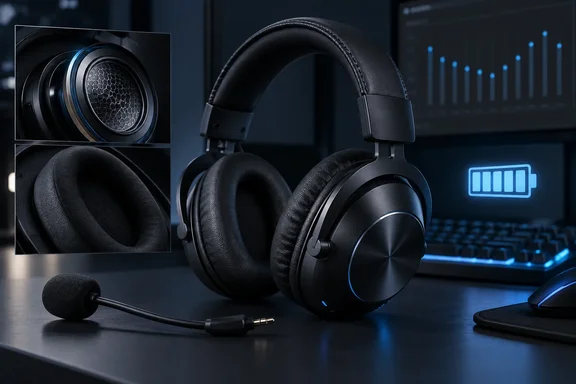
Logitech PRO X3 LIGHTSPEED Puts the Microphone First
Logitech is selling the PRO X3 on voice quality more than on sound. The company's product page promises "studio-quality comms & audio" and describes the boom as a "studio quality" mic offering a full frequency range (48kHz/16-bit) to ensure high-quality voice reproduction, according to Aroged's launch coverage. Logitech's own copy says the omnidirectional mic "captures the fullness of your voice." It also points owners to the BLUE VO!CE processing settings in G HUB for further tuning.
Notebookcheck, which first reported the launch, frames the change as a response to a known complaint. Some PRO X 2 users said their recorded voices didn't sound natural, and Notebookcheck gives the new mic a frequency response of 75 Hz to 20 kHz. That wider range, it argues, should reduce how much users lean on voice filters. Logitech's product page stresses the 48 kHz/16-bit capture spec and doesn't list the 75 Hz–20 kHz figure, so treat that number as Notebookcheck's until Logitech publishes a full spec sheet.
Logitech's gaming headsets have been judged harshly on the mic for years. When TechRadar reviewed the original PRO X Wireless LIGHTSPEED, it praised the headset but warned that the high price and weak microphone may convince some to stay away. The same line has followed the family ever since, which explains why Logitech leads the PRO X3 pitch with the boom rather than the drivers.
As general background, "full bandwidth" in voice chat means the microphone captures the whole range of the human voice. Many headset mics and chat codecs cut off the high frequencies, which is what makes voices sound boxy. A 48 kHz sample rate can in principle record the full audible range. What listeners actually hear depends on the capsule, the processing, and how Discord or an in-game chat compresses the signal. A better spec sheet is a promise to check, not a guarantee.
The Graphene Drivers and 10-Band EQ Carry Over
On playback, the PRO X3 builds on the PRO X 2 rather than replacing its hardware. Logitech kept the 50 mm PRO-G GRAPHENE drivers and says they deliver "breakthrough spatial sound and timing accuracy while reducing audio distortion." Aroged reports that the drivers use graphene and the headset supports a frequency range of 20 Hz – 20 kHz.
The software side has improved. Logitech lists a 10-band parametric EQ in G HUB with bass, midrange and treble controls, plus a library of "pro profiles" that players can browse and apply. Notebookcheck says the extra bands allow finer customization, useful for players who shape the sound to bring out footsteps or cut harsh highs.
The competitive claims come with a caveat. Logitech's copy and Notebookcheck both suggest the low-distortion drivers make audio cues like approaching footsteps easier to pick out. That's a plausible reading of the design, but nobody has shown it with testing on this model. PRO X 2 owners will already know the basic character of the sound, since the driver hardware hasn't changed.
Battery Life Rises From 50 to 70 Hours
The battery upgrade is the best-documented change. Logitech rates the PRO X3 at up to 70 hours on wireless and describes it as "40% more battery life than the previous generation." The numbers add up: Logitech's PRO X 2 page lists up to 50 hours, and 20 extra hours is exactly 40% more. Engadget, in separate launch coverage, reports that the headset includes a "studio-grade 48kHz microphone" and a battery that lasts 70 hours per charge, a 40 percent increase over the previous iteration.
These are manufacturer ratings. The product material doesn't say under what conditions the 70 hours was measured, such as volume level, connection type, or whether the mic was active. Real-world battery life for voice-heavy sessions will probably come in lower. Even so, the gap between the two models on Logitech's own figures should roughly hold.
In practice, 70 rated hours means charging far less often than with the original PRO X Wireless. That model was sold with 20+ hours of battery life and up to 15 m range using a robust 2.4 GHz connection, so the PRO X line has more than tripled its rated battery life in three generations.
Connectivity Stays Familiar: LIGHTSPEED, Bluetooth and Open Questions
Logitech's store lists the PRO X3 as a "LIGHTSPEED Wireless 7.1 Gaming Headset with Bluetooth." That means Logitech's low-latency 2.4 GHz USB receiver for PCs, plus Bluetooth for phones and other devices. Notebookcheck says the headset also keeps an analog wired input.
The biggest open question for multi-device users is source mixing. That would mean hearing a game over LIGHTSPEED and a phone call or Discord on a second device over Bluetooth at the same time. Notebookcheck says there is no indication the PRO X3 can mix wireless sources. Logitech's product copy doesn't mention it either way. If you need simultaneous audio from two devices, don't assume it's supported until Logitech's full specifications or hands-on reviews confirm it.
On the PC side, the headset will almost certainly be set up through G HUB, where Logitech puts the EQ, pro profiles, and BLUE VO!CE settings. G HUB is therefore required to get the most from the new mic and EQ. Most of what makes the PRO X3 different from the PRO X 2 lives in software, so users who skip the utility will get less out of the upgrade.
Comfort Gains a Few Grams
Logitech describes a perforated leatherette headband and rotating memory-foam ear cups, with leatherette or velour pads. The detachable boom is fully articulated, so it can be positioned freely. Notebookcheck says the design prioritizes breathability for long esports sessions.
The PRO X3 has put on weight. Notebookcheck puts it at 356 grams and says it's slightly heavier than the PRO X 2, but Logitech's product page doesn't list a weight. Comfort was rarely a complaint about the PRO X 2, so a few extra grams won't bother most people. It is worth checking if you're sensitive to clamping force or headband pressure.
Aroged reports that the headset will be available in black, white, and purple. Notebookcheck calls the third color magenta, and both are describing the same pink-purple option in Logitech's press images.
Pricing and Availability Vary by Region
Pricing depends on where you shop. Notebookcheck reports $249.99 in the US and €279.99 in Europe. Logitech's Canadian store lists CA$349.99 and its UK store lists £229.99. These are separate regional prices, not currency conversions. Logitech's own store pages don't confirm the US and euro figures. If $249.99 is right, the US price matches the PRO X 2, which SoundGuys noted at $249.99, the headset is more expensive than some of its closest competitors.
Aroged reports that the headset will start retailing on October 8th, but will be available for purchase through the company's official website starting September 23rd. That fits Notebookcheck's pre-order-now, ship-by-October-8 timeline. Storefront status differs by region: when checked, Logitech's Canadian page showed the headset as in stock and ready to ship, while other regional pages treated it as a pre-order.
The headset is part of a larger PRO-series refresh. Engadget reports that Logitech introduced several new gaming accessories in its Pro line, including a mouse, keyboard, mousepad and headset. The PRO X3 is the audio piece of that lineup.
What this means for you
Whether to buy comes down to the microphone and the battery. The driver hardware is unchanged, so PRO X 2 owners are really paying for a better mic, 20 more rated hours, and a finer EQ. That's worth it if teammates or stream viewers have complained about your voice, or if you're tired of charging. If you're happy with how your PRO X 2 sounds and comms have never been a problem, you can wait for independent mic tests.
Buyers coming from older or cheaper headsets should see a bigger jump. They should still wait for voice recordings before paying a premium for the "studio-quality" claim.
- The PRO X3 LIGHTSPEED keeps the PRO X 2's 50 mm graphene drivers, so its sound signature should be familiar to current owners.
- Logitech rates battery life at up to 70 hours versus 50 on the PRO X 2, but it hasn't published the test conditions behind that figure.
- The new 48 kHz/16-bit omnidirectional mic is the main upgrade, and no independent audio samples or measurements have been published yet.
- The 10-band parametric EQ, pro profiles, and BLUE VO!CE processing all require Logitech's G HUB software on your PC.
- Simultaneous LIGHTSPEED-plus-Bluetooth audio mixing is unconfirmed, so multi-device users should hold off until it's documented.
- Prices vary by region (reported $249.99/€279.99, and CA$349.99 and £229.99 on Logitech's stores), with retail availability from October 8.
The PRO X3 LIGHTSPEED is a targeted refresh. Logitech kept the drivers that made the PRO X 2 popular and spent the upgrade on battery life and on the part of the headset reviewers have criticized for three generations. The battery numbers hold up on Logitech's own figures. The microphone claim will be tested once review units arrive around the October 8 retail date, and those recordings should decide whether PRO X 2 owners upgrade.
References
- Logitech G Pro X 3 Lightspeed gaming headset debuts with a revamped microphone Notebookcheck · 2026-09-23T16:01:00+00:00