

That concern deserves attention. But hardware value, developer health and the arrival of genuinely new games are separate questions. Steam Frame can improve how people access VR without automatically solving what they will want to play next.
A premium price, with a limited initial purchase process
Road to VR’s September 14 reporting lists the Steam Frame’s 256GB model at $1,059 in the United States and £889 in the United Kingdom, with the 1TB configuration at $1,299 and £1,089. Those figures support IGN Africa’s central affordability complaint: this is a substantial purchase, not a casual experiment with a new gaming format.
The initial ordering process also needs precision. Road to VR describes a randomized reservation program, with registration closing September 17 and the first purchase emails expected September 18. That is different from unrestricted retail availability; an announced price and a reservation opportunity do not mean every interested customer can immediately obtain a headset.
Whether that price is excessive remains a judgment. Someone replacing a satisfactory wireless headset has a different calculation from someone entering PC VR for the first time. IGN Africa’s writer approaches Frame as a happy existing headset owner who wants new experiences—not merely another way to play familiar ones.
That distinction matters. An upgrade can be technically impressive and still answer a question its prospective buyer was not asking.
For PC users, streaming and standalone are different promises
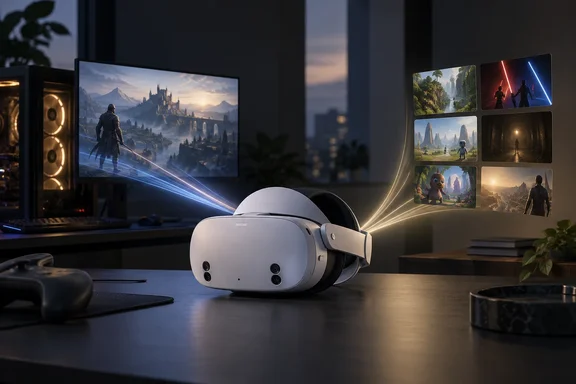
Valve’s Steamworks documentation describes Steam Frame as a standalone headset designed primarily for low-latency streaming from a PC. It runs SteamOS and supports both VR and non-VR experiences, with execution models covering Windows and Linux PC titles, native ARM64 applications and Android APKs.
For Windows gamers, the important distinction is where the game runs:
- PC streaming: The PC runs the game, while the headset receives the streamed experience.
- Standalone operation: The headset runs the software using its own hardware.
Valve documents both approaches, but their coexistence should not be interpreted as a guarantee that every demanding PC game performs equally well locally.
The practical buying question is therefore not simply “Does it support Steam?” It is “How will it run the particular games I want?”
That is independent reader value missing from a price-only comparison. A purchaser primarily interested in streaming an existing Windows gaming library should evaluate that experience separately from the standalone catalog. A buyer hoping to leave the PC behind needs evidence about on-device compatibility and performance, rather than assuming the Steam name settles both.
Half-Life: Alyx is old—but its technical role is new
IGN Africa’s strongest software criticism is that an established game cannot supply the excitement of a new flagship release. Valve’s Steam listing dates Half-Life: Alyx to March 23, 2020, making the six-year-old characterization accurate. The listing also confirms Workshop support and included level-authoring tools. Those features establish support for community content, although they do not measure how active the mod scene remains.
However, Valve’s September 15 interview with AUTOMATON adds an important explanation for revisiting Alyx. The development team said its standalone work produced graphics-driver improvements, Vulkan features and depth-reprojection options that could benefit other VR content. Valve also said the game’s assets remained unchanged, preserving compatibility with Workshop content.
That creates two valid readings:
- For players seeking novelty, another version of Alyx is not a new adventure.
- For the platform, adapting Alyx can exercise technology useful beyond that one game.
The second point does not cancel the first. Better infrastructure can help developers, but infrastructure is not a release calendar. Valve’s engineering explanation makes the decision more understandable; it does not oblige existing Alyx players to become excited about buying it another home.
Polyarc’s closure is a warning, not a market verdict
The shutdown of Moss developer Polyarc gives the discussion a concrete human and business consequence. Gematsu reports that the studio announced it was winding down active development after nearly 12 years. Its latest release was the non-VR Moss: The Forgotten Relic, combining the stories of the earlier VR games.
But Polyarc’s published farewell does not establish that disappointing VR sales, failed fundraising or the commercial performance of that non-VR release caused the closure. Those explanations should not be presented as settled findings on the strength of the announcement alone.
The defensible conclusion is narrower: a recognized VR developer has stopped active development. That is troubling for anyone hoping to see experienced teams continue producing ambitious VR projects. It is not, by itself, proof that the whole medium is collapsing.
Likewise, IGN Africa’s criticism of Meta’s showcase and its broader assessment of dwindling major-studio involvement remain the writer’s judgments, not a comprehensive accounting of forthcoming releases.
The real test is sustained usefulness
Steam Frame’s future should not be judged entirely by whether it arrives beside a spectacular new exclusive. Valve’s documented proposition includes PC streaming, standalone applications and non-VR gaming—not just one showcase title.
Yet the software concern remains legitimate. Hardware can reduce friction; it cannot manufacture anticipation.
For prospective buyers, the sensible test is concrete: identify the games you want, distinguish streaming from standalone requirements, and decide whether the resulting experience improves enough on your current setup to justify the price. Do not purchase a hoped-for renaissance.
Steam Frame need not be VR’s savior or its curtain call. It can be a useful premium PC-gaming device while leaving the larger challenge unresolved: giving players—and the developers who serve them—compelling reasons to keep returning.
References
- The Steam Frame: VR’s Future or the Beginning of the End? - IGN Africa IGN Africa · 2026-09-29T17:30:00+00:00
- Moss series developer Polyarc shuts down - Gematsu gematsu.com
- Valve Officially Announces Steam Frame, A "Streaming-First" Standalone VR Headset uploadvr.com