

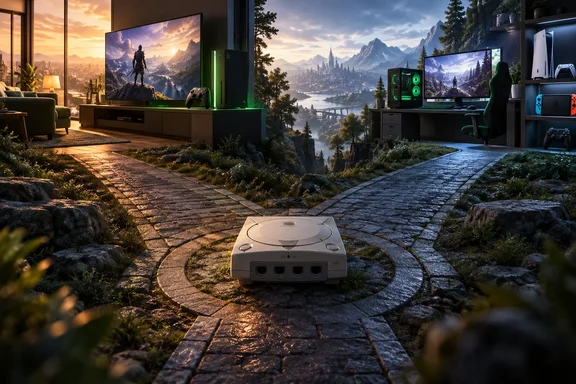
It's a sharp line, and Layden has used it before. This is still one well-connected outsider's opinion, though. It is not a Microsoft decision, and Microsoft's own public statements point to a more complicated position than the two options he laid out.
What Layden actually said
GameSpot also covered the interview, and it quotes Layden framing the choice this way: "Either you're going to be a platform competitive with PlayStation–which Xbox has not been competitive with PlayStation for years–but that's not out of the window. You can still make another run at it." He said a platform push would force hard calls: "We talked about exclusivity. We talked about how do you incentivize third parties to support your platform in a meaningful way."
The other path, as IGN quotes it, is for Microsoft to accept that it is the biggest game publisher in the Western world, with Activision, Blizzard and Bethesda under one roof, and to "be that." He compared this to Sega deciding to publish on PS2 and "get out of the hardware business," adding that "it can be done."
GameSpot notes that Layden opened by saying he had given the same "pick a lane" advice in another interview a couple of months ago. He has been making this comparison for a while:
- August 2025: In an interview with GamesIndustry.biz, PlayStation Universe quoted him as saying, "Watching what Xbox has been doing recently, I do get Dreamcast flashbacks. I think Sega realised they just were better off being a software house. I think Microsoft is in that same sort of fork in the road. And I don't think their hardware offering is persuasive enough to make up the ground they've lost."
- February 2025: VGChartz reported that, while discussing Xbox's multiplatform releases, he remembered that "I was in the business when Sega brought their Dreamcast titles to PS2, in time then Sega became a software-only company, and have had a great transformation in that sense".
What's new this time is the audience. Layden is now talking directly to Sharma, and he has moved from saying Xbox looks like Sega to saying Xbox must choose.
Section summary: Layden, a longtime Sony executive, says Xbox should either commit fully to competing as a platform or become a pure publisher. He has been making the Sega comparison since at least early 2025.
A short history of the Dreamcast exit
For readers who missed the turn of the millennium, here is what happened. Sega's official Japanese hardware history says the company announced on January 31, 2001, that it would narrow its home-console business to content. It also said it would stop making the Dreamcast in March 2001, after cutting the price twice. The Dreamcast was Sega's last home console, closing a line of hardware that started in 1983.
The Los Angeles Times reported on the day of the announcement that Sega had sold a little more than 6 million Dreamcasts worldwide and held about 15% of the U.S. console market. It also reported deals to make games for Sony's PlayStation 2 and Nintendo's Game Boy Advance, plus talks with Microsoft about games for the then-unreleased original Xbox. So Microsoft was one of the platforms Sega moved to. Twenty-five years later, a former Sony executive is telling Microsoft to consider the same move. Somewhere, a VMU is beeping sadly.
The comparison has limits. Sega had been losing money on hardware, and its whole company was smaller than a single Microsoft division. Critics made this point after Layden's 2025 remarks too. One commenter on VGChartz argued that the financial situation of MS (today) is totally different from Sega's in 2002 especially after the Dreamcast (and the Saturn). That is a forum comment, not analysis, but the point holds. Sega left hardware because it had to. Microsoft has a choice, even if some of the options are painful.
Section summary: The Dreamcast analogy captures one real path, from hardware maker to multiplatform publisher. Microsoft's size and finances in 2026 are very different from Sega's in 2001.
What Microsoft has actually said about hardware
This is the key point for anyone treating Layden's advice as a prediction: Microsoft has publicly committed to building another console.
- Project Helix, March 11, 2026. In an Xbox Wire summary of his GDC keynote, Jason Ronald, Xbox's vice president of next generation, said Microsoft is deep in development on Project Helix. He described it as a first-party next-generation console designed to play Xbox console and PC games, built on a custom AMD system-on-chip. He said Microsoft plans to start shipping alpha hardware to developers in 2027 and wants to keep games from four Xbox generations playable. That 2027 date is for developer kits, not a retail launch. Microsoft has not announced a consumer release date, a price or full specifications.
- "Next 100 Days: Xbox Reset," June 10, 2026. In a memo published on Xbox Wire, Sharma described a "hardware component crisis." She said console storage components cost more than twice as much when she became CEO as they had the previous fall, and that the price had doubled again since. For the 2027 holiday season she expects storage costs to exceed five times what Xbox paid two years earlier, with memory costs following a similar path. She wrote that Xbox cannot currently build as many consoles as players want to buy. She also said it needs "a new business model and partnerships for hardware as we remain committed to Helix."
- Fortune Brainstorm Tech, June 9, 2026. Fortune reported that Sharma is working on more flexible consumer plans, looking at distribution partnerships and exploring different business models. It said she believes exclusive services and content are key to the business staying healthy.
The same memo put numbers on the strain. Sharma said Xbox would end the fiscal year at about a 3% accountability margin. She also said that, excluding Activision Blizzard King, Xbox had spent more than $20 billion over five years on content, platform and hardware subsidies while annual revenue fell by nearly half a billion dollars, and she wrote that "this cannot continue."
The distinction matters. Microsoft is publicly committed to building hardware, but it has openly questioned the business model around that hardware. A company can keep designing a console while changing how that console is financed, subsidized, distributed or bundled. Layden's framing treats "platform" and "publisher" as a clean either/or. Microsoft is trying to do both, and the costs of doing both are exactly what the reset memo is about.
Section summary: Xbox says Helix is in development and that it remains committed to it. Its CEO has also said current hardware economics can't continue and that new models and partners are needed.
The market backdrop
GameSpot's coverage gives some useful context. It notes that Microsoft rarely discloses Xbox hardware sales, which are widely believed to trail Sony's PlayStation 5 (95.3 million units sold as of June 2026). It also reports that analysts predict that only 2.5 million Xbox Series X|S units will be sold in 2026, as Microsoft prepares for a "rapid wind-down toward zero" ahead of its next-gen console launch. That is an analyst forecast, not a Microsoft figure.
IGN places Layden's comments within a broader restructuring. It reports that nearly 2,000 staff have lost their jobs, that several studios have left Xbox or face closure, and that Xbox is concentrating on fewer, bigger franchises such as The Elder Scrolls, Fallout and Minecraft. IGN also notes that, in the same week, another former PlayStation executive, Shuhei Yoshida, said Sony and Nintendo should keep their current consoles going as long as possible, since rising costs have already pushed up PS5 and Switch 2 prices. Rising component costs are hitting the whole console market, not just Xbox.
What it means for Windows gamers
For WindowsForum readers, the PC is the part of this story that gets the least attention. Microsoft is not only choosing between console and publisher. It is also building a third option on Windows:
- Xbox Wire said in March that Xbox mode would start rolling out to Windows 11 in select markets from April. It is a full-screen, controller-friendly Xbox interface that first appeared on the ROG Xbox Ally handhelds.
- Microsoft says the Xbox Play Anywhere catalog now includes more than 1,500 games, so one purchase carries across console and PC.
- Helix itself is described as playing both Xbox console games and PC games.
Seen this way, "platform" and "publisher" are not the only choices. Windows is arguably Microsoft's biggest gaming platform already, and Sharma's own memo describes Windows as one of the largest gaming platforms in the world. A company that owns the PC operating system, a large game catalog and a console line is not in Sega's 2001 position.
Layden's central point still stands: hedging costs money. Supporting exclusives, bringing in third-party publishers, subsidizing hardware and shipping everywhere all compete for the same budget, and the June memo shows how little room that budget has.
The bottom line
Layden's "Dreamcast moment" is a sharp line from someone who knows how the console business works from the inside. He has been saying something similar since early 2025, so it's more a recurring view than a sudden revelation. Nothing Microsoft has said publicly suggests it plans to leave hardware. Its official position is continued work on Helix, alongside a frank admission that hardware now needs new business models and partners.
So which lane will Xbox pick? Right now it is trying to stay in several at once, and it has the scale and the Windows ecosystem to try. Whether that is a sound strategy or just a slower route to the choice Layden describes depends on things Microsoft hasn't announced yet: Helix's price, how exclusives will work, and what "new business model" means in practice.
Update: Layden questions whether Xbox can combine hardware and publishing (October 5, 2026)
In an October 5 report, VGChartz, citing PureXbox, says Layden also argued that Xbox cannot succeed as both a platform holder and a publisher. A platform needs exclusives to give players a reason to choose it, he reportedly said, while a publisher with Activision, Blizzard and Bethesda has a business incentive to release games across platforms.
Layden also raised a separate question about subscriptions: if Xbox offers games through a subscription service, he asked, how can it also expect customers to buy those games outright? He questioned how Microsoft could make that financial model work.
Those comments add a challenge beyond choosing between console hardware and multiplatform publishing: Xbox must also decide how subscriptions fit alongside game sales. Layden’s remarks are his assessment, not a change to Microsoft’s stated plans for its next-generation hardware or services.
References
- Former PS Boss Shawn Layden Says Xbox Needs to 'Pick a Lane' to Either Be a Top-Tier Platform or Publisher - VGChartz VGChartz · 2026-10-05T00:00:00+00:00
- 'This Is Your Dreamcast Moment' — Former PlayStation Boss Offers New Xbox CEO Some Words of Advice - ign.com ign.com · 2026-09-30T15:18:33.460000+00:00
- Former PlayStation Boss Shawn Layden Discusses Xbox Multiplatform Strategy vgchartz.com