
CISA describes an SBOM as an ingredients list for software: a machine-usable record of the components and supply-chain relationships behind an application or product. The new guidance incorporates feedback from a 2025 public-comment process while retaining the core idea that an SBOM must provide usable, baseline transparency rather than a static compliance artifact.
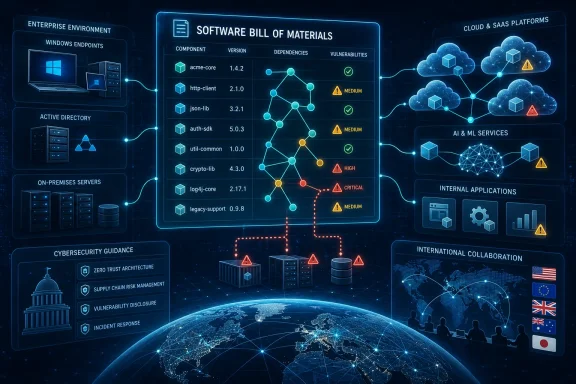 The baseline now needs to support modern software estates
The 2021 NTIA document organized SBOM minimum elements around data fields, automation support, and operational practices. Those principles still matter, but the 2026 guidance arrives after SBOMs became more common in procurement, vulnerability management, and secure-development programs.
That changes the practical test for IT teams. An SBOM is useful only if it can be connected to a real asset, a specific software release, and a repeatable process for checking newly disclosed vulnerabilities. A spreadsheet of third-party packages delivered once at purchase time is unlikely to help when a critical dependency issue emerges months later.
CISA says the new minimum elements apply broadly to all software. It also explicitly flags artificial intelligence systems and cloud-hosted software-as-a-service offerings as areas that may require additional information beyond the baseline.
SaaS and AI are not reasons to skip transparency
For enterprise buyers, SaaS has often complicated SBOM requests because the customer does not receive or operate the underlying application binaries. The joint guidance’s position is important: software transparency should begin with the minimum elements even when the delivery model creates additional questions.
That does not mean every cloud provider can disclose every operational detail. It does mean procurement and security teams should define what component and dependency information they need, how often it must be refreshed, and how vendors will communicate material changes affecting a service.
AI systems present a similar challenge. Traditional package inventories may not fully describe model artifacts, training-related dependencies, hosted inference services, or the infrastructure used to deliver an AI feature. The new baseline is a starting point, not a claim that one generic SBOM answers every AI supply-chain question.
What Windows and enterprise teams should do now
Organizations do not need to wait for a procurement cycle to make the guidance useful. Security and platform teams should compare their existing SBOM requirements with the new document, particularly for internally developed software and strategically important vendors.
- Verify that each software release or update can be matched to a current component inventory.
- Make SBOM ingestion part of vulnerability-management workflows rather than filing the documents in a contract repository.
- Identify software categories where ordinary component data is insufficient, including SaaS platforms, AI-enabled products, firmware, and managed services.
- Require a process for corrected or updated SBOM data when a vendor discovers an omission or changes a dependency.
The immediate consequence is not a new vulnerability or a Windows patch requirement. It is a more current federal baseline for asking a crucial question during the next supply-chain incident: where, exactly, is the affected component running?
