

In 2026, programming and developer-focused certifications remain powerful accelerants for landing higher-paying roles across cloud computing, AI/ML, backend and full‑stack engineering, and cybersecurity — but the market has matured: employers now expect demonstrable projects, cloud skills tied to production workflows, and careful vetting of credential availability before you invest time and money. Analytics Insight’s “Top 10” roundup is a useful map of the opportunities, and this feature expands and verifies that map with practical, role‑aligned guidance, up‑to‑date status checks, salary context, and a realistic game plan for converting a certificate into a job offer.
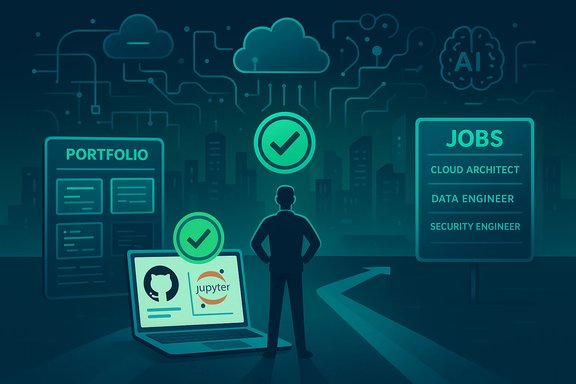
Certifications no longer function as standalone proof of mastery. In hiring practice they act as concise signals — shorthand that tells a recruiter which tools and platforms you can start using on Day One. That signal is highest when a certification maps directly to a hiring manager’s stack and is backed by portfolio evidence (GitHub repos, notebooks, demo videos). Community analysis and employer postings in late 2025 and early 2026 emphasize this point: certifications matter most when paired with reproducible work and a clear demonstration of impact.
Vendor programs have evolved quickly. Major providers (AWS, Microsoft, Google Cloud) have added AI and MLOps material to developer and specialist tracks, while several legacy exams have been paused or redesigned; learners must verify exam availability and renewal rules on vendor pages before paying fees.
Certifications in 2026 remain a high‑ROI path into cloud, AI, and high‑paying developer roles — provided they’re chosen strategically, verified for availability, and bolstered with demonstrable work. The difference between a badge that opens doors and one that collects dust on a resume is simple: alignment to the job you want, hands‑on projects you can explain, and up‑to‑date verification that the vendor still offers the exam you intend to take. Start by mapping certification targets to three real job listings, and build the portfolio artifacts that hiring managers actually check first.
Conclusion: certifications are most powerful when used as part of a disciplined job‑market strategy — pick the credential that matches the employer stack, verify its current status, do the labs, build the projects, and then negotiate from a position of demonstrable impact.
Source: Analytics Insight Most In-Demand Programming Certifications 2026: Top 10 for High-Paying Jobs
 Background
Certifications no longer function as standalone proof of mastery. In hiring practice they act as concise signals — shorthand that tells a recruiter which tools and platforms you can start using on Day One. That signal is highest when a certification maps directly to a hiring manager’s stack and is backed by portfolio evidence (GitHub repos, notebooks, demo videos). Community analysis and employer postings in late 2025 and early 2026 emphasize this point: certifications matter most when paired with reproducible work and a clear demonstration of impact.Vendor programs have evolved quickly. Major providers (AWS, Microsoft, Google Cloud) have added AI and MLOps material to developer and specialist tracks, while several legacy exams have been paused or redesigned; learners must verify exam availability and renewal rules on vendor pages before paying fees.
The 2026 Reality: Why Certifications Still Work — and When They Don’t
- Certifications are strong hiring signals for early‑career candidates and career changers, helping bypass initial ATS and recruiter filters when they match job descriptions.
- For mid‑career and senior hires, vendor‑neutral credentials (methodology, leadership) and demonstrable project impact often outweigh a long list of vendor badges.
- The highest‑paying certifications in 2025–2026 cluster around cloud architecture, cloud security, AI/ML productionization, and specialized data engineering — a trend confirmed by multiple salary and industry reports.
Top 10 Programming & Developer Certifications for 2026 (practical, role-aligned ranking)
Below are the certifications that consistently appear on hiring radar screens for high‑paying developer and engineering roles in 2026. Each entry describes who it’s for, why it pays, and the practical caveats.1. AWS Certified Solutions Architect – Professional
- Best for: Senior cloud architects, platform engineers, lead backend engineers.
- Why it pays: AWS remains the largest cloud provider by market share; the Solutions Architect track proves you can design scalable, secure distributed systems. Salary premiums for advanced AWS certs remain large.
- Caveat: Experience with IaC (Terraform/CloudFormation), cost optimization, and real production migrations amplify the value.
2. Google Professional Cloud Developer / Professional Cloud Architect
- Best for: Cloud-native developers and platform engineers who target GCP shops or data/ML platforms.
- Why it pays: GCP certificates command high salaries for roles that blend platform engineering and ML pipeline work; Google’s cloud tracks emphasize Vertex AI, GKE, and production data design.
- Practical tip: Pair with a deployed microservice on GKE or a Vertex AI pipeline to show production readiness.
3. Microsoft Certified: Azure Developer Associate (AZ‑204) / Azure Solutions Architect Expert
- Best for: Enterprise backend and cloud developers, Azure‑centric product teams.
- Why it pays: Enterprises with Microsoft stacks prize Azure role credentials; Microsoft’s exams now include MLOps and generative AI integration where relevant.
- Caveat: Vendor lock‑in risk — learn core patterns (CI/CD, monitoring, security) so you can migrate knowledge across clouds.
4. AWS Certified DevOps Engineer – Professional / DevOps-Adjacent Developer Tracks
- Best for: Senior DevOps engineers, SREs, platform engineers.
- Why it pays: Demonstrates ability to automate, secure, and operate production systems at scale; employers pay up for candidates who reduce downtime and deployment friction.
5. Google Professional Data Engineer / AWS/GCP ML Engineer certifications
- Best for: Data engineers and ML engineers who productionize models.
- Why it pays: These certs validate data pipeline, feature engineering, and production model skills — precisely the capabilities that drive AI product impact. Combine them with MLOps projects to be competitive.
6. Certified Information Systems Security Professional (CISSP) / Cloud Security Specialties
- Best for: Security engineers, cloud security leads.
- Why it pays: Security credentials remain premium because risk management, compliance, and secure architectures directly protect company revenue and reputation. Cloud‑specific security certs (AWS Security Specialty, GCP Cloud Security) further increase value.
7. Certified Kubernetes Application Developer (CKAD) / CKA
- Best for: Backend and DevOps engineers working with containerized production systems.
- Why it pays: Kubernetes expertise is nontrivial and in short supply; certified developers show they can design and troubleshoot containerized apps in production.
8. Platform & Tool Specialties: Databricks, Power BI, Terraform, Databases
- Best for: Role‑specific hires — BI engineers (Power BI), data platform engineers (Databricks), infra engineers (Terraform).
- Why it pays: Employers list exact tools; certifications proving mastery of those tools shorten onboarding and materially lower project risk.
9. IBM Data Science Professional Certificate / Google Data Analytics Professional Certificate
- Best for: Entry‑level data roles and career changers.
- Why it pays: These multi‑course, capstone‑driven programs provide resume‑ready projects and are often the most efficient route into analyst roles. They are not substitutes for production ML or cloud engineering skills but are great for first roles.
10. Vendor‑Neutral & Leadership: Certified Analytics Professional (CAP), PMP (for PM-adjacent roles)
- Best for: Analytics leaders, product and project managers who need vendor‑neutral process credibility.
- Why it pays: Senior roles require evidence of method and impact; CAP signals cross‑industry analytics leadership and PMP signals serious program management ability.
Status Watch: Pause, Phaseouts, and Redesigns (what to check now)
- TensorFlow Developer Certificate: The official TensorFlow certification program was paused for registration while the provider reevaluated the exam format; independent reporting and community checks show registrations were closed in 2024 and new candidates cannot reliably sign up. If you see TensorFlow listed as active, verify directly on TensorFlow’s certification page before spending time or money.
- Cloudera and some legacy Hadoop/Spark exams: Cloudera has been redesigning its certification portfolio, phasing out legacy CCP exams in favor of role‑based or CDP‑focused tracks. Always confirm current exam status on vendor portals.
- Renewal & exam format changes: Major vendors moved several role‑based certs to free online renewal assessments or added frequent updates to include generative AI and MLOps topics. Check exam renewal windows and whether an emitted badge includes an expiry.
Salary Context & ROI — What the Data Shows
Multiple industry salary analyses and reporting from 2024–2025 consistently show the largest salary uplifts for certs tied to cloud architecture, cloud security, and data/ML production roles. For example, lists compiled from industry salary reports place advanced cloud and Google Cloud security/architecture certifications among the top paying credentials. Forbes' report on certifications with the biggest salary boosts highlights AWS, cloud security, and ML‑related specialties among the most financially rewarding. Practical ROI guidance:- Factor in local salary ranges (U.S., Europe, Asia differ widely).
- For early‑career candidates, expect the quickest ROI from certificates that include capstone projects you can show in interviews.
- For senior roles, vendor‑neutral leadership credentials plus demonstrable impact (cost savings, reliability, revenue uplift) yield more negotiation leverage than multiple entry‑level badges.
How to Choose the Right Certification — A Tactical Framework
- Map to target jobs: pick three job ads you would realistically apply to and list the exact skills/tools they require. If a certification appears in those JDs, it’s high priority.
- Choose one role and two certs: a primary cert for tooling (cloud/data/AI) and a secondary credential for methodology or security.
- Build two portfolio projects aligned to the exam objectives: these are the deliverables recruiters ask to see first.
- Confirm availability, format, and renewal rules on the vendor’s official site before paying. Note pauses or redesigns (e.g., TensorFlow).
- Budget for cloud costs and hands‑on labs — free sandboxes exist but many practical labs incur charges; plan accordingly.
Study Plan: An 8–12 Week Roadmap to Certification + Portfolio
- Week 1–2: Role audit and materials — pick the certification, gather official exam guide, and collect three job postings for alignment.
- Week 3–6: Core learning and labs — follow official vendor training (Microsoft Learn, AWS Skill Builder, Google Cloud Skills Boost) and complete at least one hands‑on lab per exam objective.
- Week 7–9: Capstone project — build one end‑to‑end project that mirrors a real job task; prepare a README, evaluation metrics, and a 3‑minute demo video.
- Week 10–12: Practice exams and readiness — simulate proctored conditions, review weak spots, finalize registration. Check exam availability again before booking.
Risks, Trade‑Offs, and How to Mitigate Them
- Vendor lock‑in: heavy training on one cloud reduces cross‑cloud mobility. Mitigation: learn underlying patterns (CI/CD, observability, security fundamentals) and build one project on a second cloud later.
- Obsolescence & paused exams: some vendor programs are paused for redesign (TensorFlow example). Mitigation: build transferable skills (Keras or PyTorch projects) and treat paused badges as future opportunities rather than guarantees.
- False signaling: multiple low‑effort badges without portfolio work are weak signals. Mitigation: focus time on fewer, role‑aligned certs and two demonstrable projects.
- Exam scams & third‑party brokers: when an exam is paused, third‑party sellers may falsely claim access. Mitigation: only register through official vendor portals and confirm current exam status directly.
Quick Role‑Based Recommendations (Actionable)
- Aspiring Cloud Developer / Backend Engineer: AWS Developer Associate or Azure Developer (AZ‑204), plus a deployed microservice and IaC sample.
- Data Engineer / ML Engineer: Google Professional Data Engineer or AWS ML/MLops tracks; pair with a streaming pipeline or Vertex AI/SageMaker project.
- Security Engineer: CISSP for leadership; AWS/GCP security specialties for cloud roles.
- Entry‑Level Analyst: Google Data Analytics or IBM Data Science Professional Certificate — prioritize the capstone for interviews.
Final Recommendations — A Practical Checklist Before You Enroll
- Confirm that the certification is currently offered and check the vendor’s renewal policy.
- Ensure the cert matches the stack in actual job ads you want to apply to.
- Build two reproducible projects aligned with the exam objectives and add them to your resume and portfolio.
- Allocate time for labs and cloud bills; use official sandboxes where possible.
- Treat the certification as an amplifier of your portfolio — not a replacement for demonstrable outcomes.
Certifications in 2026 remain a high‑ROI path into cloud, AI, and high‑paying developer roles — provided they’re chosen strategically, verified for availability, and bolstered with demonstrable work. The difference between a badge that opens doors and one that collects dust on a resume is simple: alignment to the job you want, hands‑on projects you can explain, and up‑to‑date verification that the vendor still offers the exam you intend to take. Start by mapping certification targets to three real job listings, and build the portfolio artifacts that hiring managers actually check first.
Conclusion: certifications are most powerful when used as part of a disciplined job‑market strategy — pick the credential that matches the employer stack, verify its current status, do the labs, build the projects, and then negotiate from a position of demonstrable impact.
Source: Analytics Insight Most In-Demand Programming Certifications 2026: Top 10 for High-Paying Jobs
