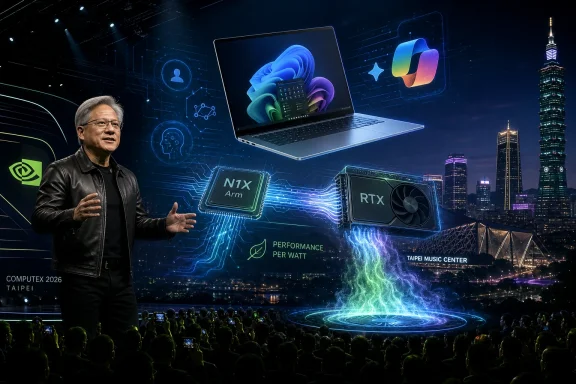
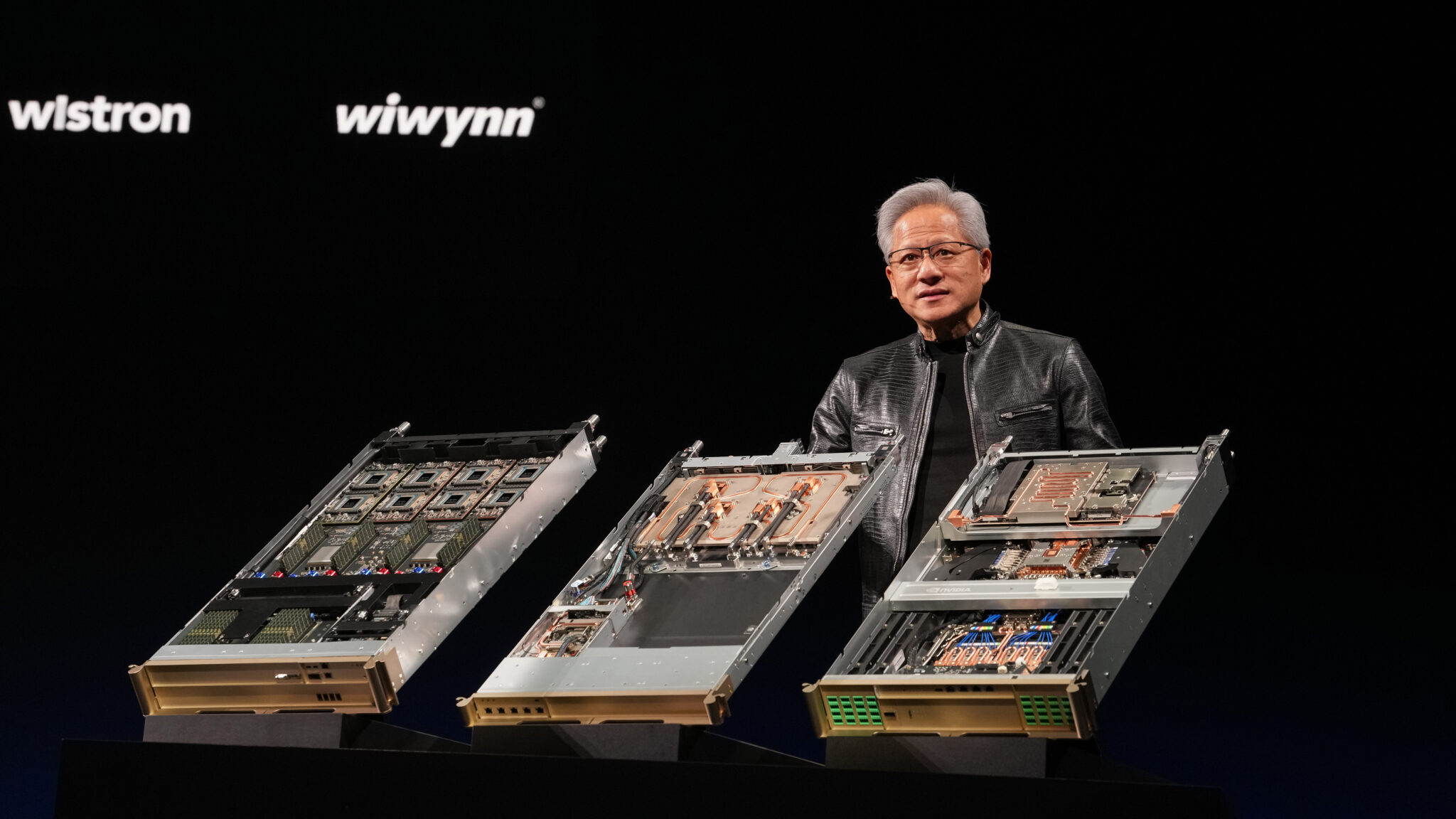
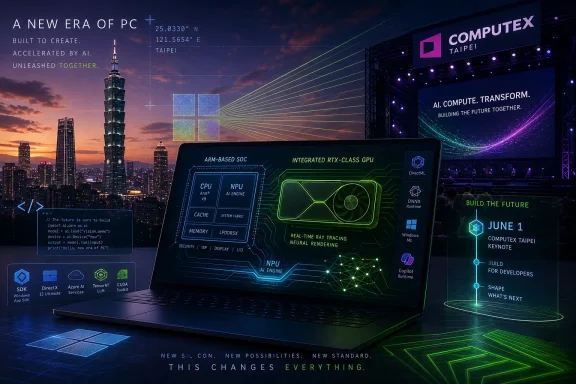
Microsoft and NVIDIA jointly teased “a new era of PC” on May 29, 2026, using matching social posts that point toward Computex in Taipei and have intensified speculation that NVIDIA’s long-rumored Arm-based N1X PC chip may finally be unveiled next week. The companies have not confirmed the product, and Microsoft’s Windows and Surface chief has already said the tease is not about a new Windows version. But the choreography matters: when the Windows platform owner and the dominant GPU vendor use the same phrase, the same coordinates, and the same week on the calendar, they are not merely hinting at another laptop refresh. They are testing whether the PC market is ready to imagine NVIDIA as something more than the graphics card inside the machine.
The public evidence is deliberately thin, which is exactly how these pre-show campaigns are designed to work. Microsoft and NVIDIA posted the same “new era of PC” phrasing alongside the numbers “25.0528” and “121.5990,” which line up with the latitude and longitude of Taipei Music Center, a key Computex venue. NVIDIA CEO Jensen Huang is scheduled to keynote at Computex on June 1, while Microsoft Build is unfolding in the same news cycle.
That overlap is the entire point. Computex is where silicon vendors speak to hardware makers; Build is where Microsoft speaks to developers. A normal laptop announcement can live at Computex alone. A new Windows-on-Arm developer push, a new class of AI PC, or a new NVIDIA-led PC platform needs both audiences.
Pavan Davuluri, Microsoft’s head of Windows and Surface, added fuel by teasing that “something new is coming for developers” while explicitly saying it is not a new OS version. That matters because it narrows the field. If this is not Windows 12, and if it is being teased by both Microsoft and NVIDIA, the story is likely not the shell, Start menu, or branding of Windows. It is the hardware substrate Windows is expected to run on.
The industry has been here before, of course. Windows on Arm has had several “this time it’s different” moments, from Qualcomm’s early Snapdragon PCs to the more credible Copilot+ PC wave. What makes the current rumor more consequential is NVIDIA’s role. Qualcomm brought battery life and mobile DNA to Windows laptops; NVIDIA would bring the PC gaming, workstation, CUDA, and AI developer ecosystem that already defines a large part of high-performance computing.
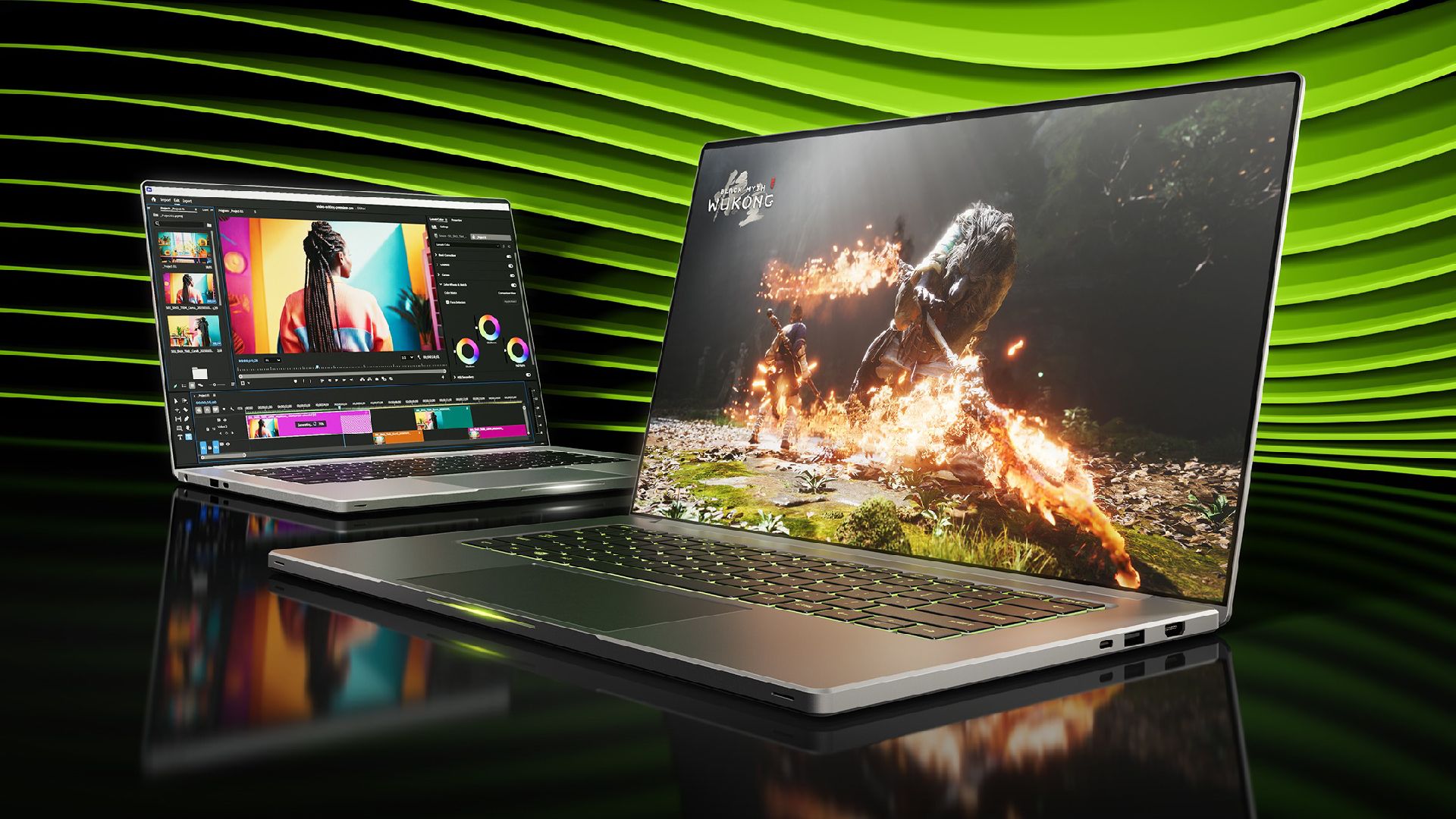
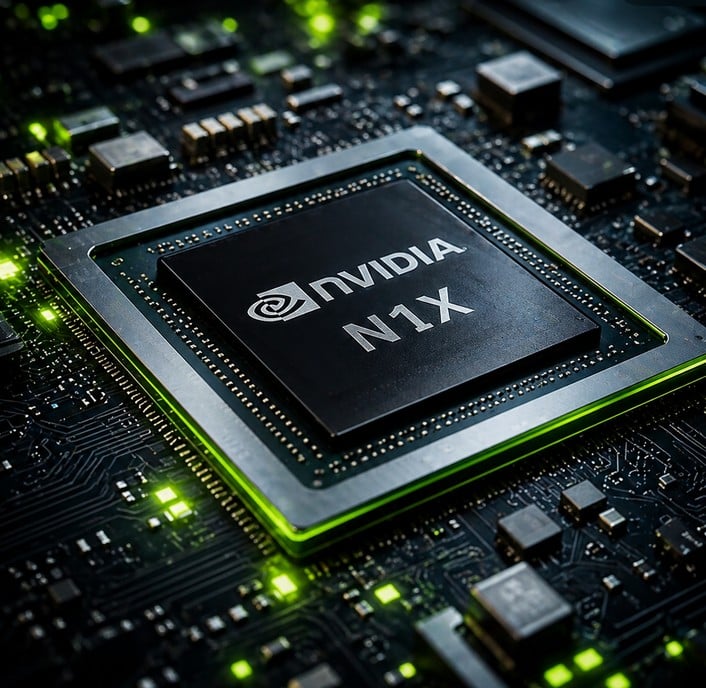
That is why the alleged N1 and N1X chips are so interesting. Reports have described them as Arm-based SoCs developed with MediaTek, with the high-end N1X rumored to pair a 20-core Arm CPU with a large Blackwell-class integrated GPU. Some leaks have suggested graphics resources in the neighborhood of a desktop RTX 5070-class part, though that remains unconfirmed and should be treated as pre-launch speculation rather than fact.
Even if the final product lands below the most aggressive rumors, the direction is clear. NVIDIA is not likely to enter the Windows laptop market with a modest office notebook chip. It would want a part that reframes what integrated graphics can mean, especially for AI workloads, creator apps, gaming laptops, and portable developer machines.
That is the difference between an Arm PC and an NVIDIA Arm PC. Qualcomm’s pitch has centered on efficiency, battery life, and NPU performance. NVIDIA’s natural pitch is local AI, graphics performance, creator acceleration, and a software stack developers already know. If Microsoft is standing next to that pitch, it suggests Windows may be ready to treat that class of machine as a first-class development target.
That is why Davuluri’s “developers” language matters. A new PC chip is only as disruptive as the software that runs well on it. Windows on Arm has improved dramatically, but it still carries baggage: emulation performance, driver availability, anti-cheat support, VPN clients, plug-ins, enterprise agents, and obscure line-of-business apps all decide whether a promising laptop becomes a real fleet candidate.
Microsoft knows this. The first Copilot+ PCs proved that Windows on Arm could feel modern and competitive in mainstream productivity tasks, but they also exposed the limits of branding a platform around AI features before the software ecosystem fully catches up. Recall, the flagship Copilot+ feature, stumbled into privacy controversy and delay. The NPU requirement became clearer than the user benefit.
An NVIDIA-backed Arm PC could shift the conversation from “can Windows on Arm be acceptable?” to “can Windows on Arm become the best place for certain workloads?” That is a much more powerful argument, but it depends on developers seeing enough market gravity to recompile, optimize, test, and support their apps.
Apple broke from that model with Apple Silicon, and the Windows world has been trying to answer ever since. Microsoft’s first attempts at Windows on Arm were underpowered and overpromised. Qualcomm’s Snapdragon X Elite generation gave the effort credibility, but it still did not deliver the one thing Apple Silicon did: a vertically convincing sense that hardware, OS, drivers, developer tools, and application priorities were moving together.
A Microsoft-NVIDIA announcement would not instantly solve that. Windows is not macOS, and Microsoft cannot simply drag the whole software ecosystem through a single architectural transition. But it would signal that the old Wintel center of gravity is no longer the only serious axis in the PC market.
That has consequences for Intel and AMD even before a single N1X laptop ships. Intel is fighting to restore confidence in its process roadmap and defend the laptop market against both AMD and Arm. AMD has strong x86 laptop parts and increasingly capable integrated graphics, but NVIDIA entering the SoC market would pressure AMD in one of its most important differentiation zones. Qualcomm, meanwhile, would no longer be the only major Arm supplier trying to make Windows laptops happen.
The result is not simply “more competition.” It is a re-sorting of what a PC platform means. CPUs, GPUs, NPUs, memory architecture, AI frameworks, graphics drivers, and developer tooling are becoming one argument instead of several separate spec-sheet lines.
The rumored N1X pitch would be different because it would not begin with austerity. A 20-core Arm CPU paired with substantial RTX-class graphics would position Arm not as the low-power alternative to x86, but as a high-performance architecture that can compete in premium PCs. That is a philosophical shift.
The hard part is that performance on paper does not automatically translate into performance in Windows. Games need drivers, anti-cheat compatibility, shader compilation behavior, and predictable frame pacing. Creator apps need plug-in support and stable acceleration paths. Enterprise software needs device management and endpoint security support. Developers need toolchains that do not make Arm feel like a second shift after x86.
NVIDIA has strengths here that Qualcomm does not. Its driver organization, developer relations, CUDA ecosystem, gaming partnerships, and AI software stack are formidable. But NVIDIA also has a history of steering ecosystems toward NVIDIA-first solutions, and the Windows PC market has usually thrived when no single vendor could fully dictate the shape of the platform.
That tension will define the next stage if N1X is real. Microsoft wants more powerful Arm PCs because they make Windows look modern against Apple and create a cleaner story for local AI. NVIDIA wants a bigger slice of the PC and AI client markets. Users want machines that run their software without fine print. Those incentives overlap, but they are not identical.
But Surface is also where Microsoft’s hardware ambitions meet uncomfortable market reality. The line has produced influential designs, but it has not always translated those designs into mass-market momentum. Surface RT became a warning label for Windows on Arm’s early failures. Later Surface Pro X machines were elegant but constrained by app compatibility and performance tradeoffs. Even good Surface hardware can become a showcase for a platform that is not yet ready.
That history makes any N1X Surface speculation both exciting and dangerous. A Surface device could give developers a clear target and signal that Microsoft is deeply invested. It could also concentrate all the platform’s rough edges into one very visible product.
There is another possibility: Microsoft may not announce Surface hardware at all. The tease could instead involve developer kits, OEM partnerships, an NVIDIA Windows platform initiative, or a Build-focused software layer for AI and graphics development. In some ways, that would be more prudent. Before Microsoft asks consumers or enterprises to buy into another Windows-on-Arm wave, it needs to make sure developers have the tools and reasons to support it.
If the announcement is only a teaser for future hardware, the market may grumble. But for a platform transition, boring groundwork is often more important than a dramatic device reveal.
The average Windows user does not buy a laptop because a spec sheet says the NPU clears a threshold. They buy it because battery life improves, fan noise drops, video calls look better, search becomes more useful, games run faster, creative tools save time, or the machine stays responsive under load. The AI PC label has often struggled because the hardware story arrived before enough everyday software benefits did.
NVIDIA could give that category a sharper edge. The company already owns much of the language around AI acceleration, from data centers to local developer workstations. Its GPUs are familiar to gamers and creators. Its software stack gives developers a practical reason to care about local compute beyond a marketing badge.
That does not mean the NPU disappears. Microsoft’s Copilot+ requirements and on-device AI ambitions still make dedicated AI silicon important. But the N1X rumor points to a more blended model: CPU, GPU, and NPU working together in a system where local AI is not a separate novelty feature but part of the machine’s overall performance identity.
For Windows, that is the more credible AI PC future. The platform does not need another sticker. It needs hardware that lets developers ship features users can feel.
Those questions are not glamorous, but they decide whether “new era” becomes “pilot program.” Large organizations have long memories of platform transitions that looked exciting in demos and painful in procurement. Windows on Arm has improved, yet many IT departments still treat it as an exception path unless there is a compelling reason to do otherwise.
NVIDIA’s presence may help with some of that skepticism. The company is trusted in workstation, AI, and graphics-heavy professional environments. If the first systems target developers, creators, engineers, and AI practitioners, enterprise buyers may evaluate them as specialized high-performance endpoints rather than general office laptops.
But specialization cuts both ways. A fleet manager can justify a few powerful Arm-NVIDIA laptops for AI developers or media teams. Standardizing an entire organization on them is a different matter. Microsoft will need to show that Windows on this platform is not just impressive, but administratively normal.
The best-case scenario for IT is not that N1X replaces x86 overnight. It is that Windows gains a credible third lane: x86 for broad compatibility, Qualcomm-class Arm for efficiency-first productivity machines, and NVIDIA-class Arm for local AI and graphics-heavy mobile workstations. That would be a more complex PC market, but also a more interesting one.
But gaming is also where Windows on Arm can get punished most visibly. It is not enough for a few showcase titles to run well. The PC gaming ecosystem is sprawling, old, weird, and full of middleware, launchers, mods, overlays, anti-cheat systems, and driver expectations. A machine that benchmarks beautifully but fails a popular competitive game will be judged harshly.
NVIDIA has more leverage here than any other potential Arm PC entrant. Game developers already optimize for its GPUs. Its driver releases are part of the rhythm of PC gaming. DLSS, Reflex, RTX features, and the GeForce brand give it tools to shape perception even before raw compatibility is perfect.
Still, Arm adds a second axis of uncertainty. If games run through emulation, CPU overhead matters. If anti-cheat systems block Arm environments, user frustration spikes. If native Arm builds are rare, the platform depends on translation layers and vendor-specific workarounds. Microsoft and NVIDIA can reduce those frictions, but they cannot wish them away.
That is why the first gaming claims, if they come, should be read carefully. A good demo proves potential. A broad compatibility list proves strategy. A year of driver updates proves commitment.
Microsoft has learned this lesson the hard way. The Windows ecosystem is too broad to command by decree. Apple could force a transition because it controls the hardware lineup, the OS, the app distribution culture, and the user expectation that old things eventually break. Microsoft’s ecosystem is more democratic and more stubborn. It needs incentives.
NVIDIA can provide some of those incentives. AI developers already care about NVIDIA acceleration. Creative software vendors already optimize around NVIDIA GPUs. Game studios already ship against NVIDIA driver realities. If a new Arm PC platform gives those developers access to powerful local AI and graphics hardware in a portable Windows machine, native support becomes more than a courtesy.
The key will be whether Microsoft and NVIDIA make the developer path feel obvious. Tooling, SDKs, drivers, documentation, emulation behavior, profiling tools, and store policies all matter. If developers are asked to solve too many platform-specific problems themselves, they will wait for market share. If market share waits for developers, the cycle stalls.
That is why Build is as important as Computex. A chip launch can create excitement, but a developer program creates software gravity.
Intel, in particular, has every incentive to make the next few Windows laptop generations more competitive. It is defending not just unit share but platform identity. AMD, meanwhile, has built a strong position with efficient Ryzen mobile chips and increasingly capable Radeon integrated graphics. Neither company is waiting for NVIDIA to define the next PC era uncontested.
The more realistic outcome is a period of architectural pluralism. Premium Windows laptops may split into several camps: x86 machines optimized for compatibility and mature performance, Qualcomm Arm machines optimized for battery life and mobility, and NVIDIA Arm machines optimized for AI, graphics, and developer workloads. That fragmentation could be good for innovation and annoying for support.
For users, the danger is confusion. “Windows laptop” used to imply a fairly predictable compatibility baseline. In a more heterogeneous era, buyers will need to understand not just memory and storage, but architecture, native app support, AI acceleration paths, and graphics driver maturity. Microsoft’s job will be to make that complexity disappear as much as possible.
If it cannot, the market may punish the experiment. PC buyers are willing to embrace new categories when the benefits are obvious. They are less forgiving when the tradeoffs are discovered after purchase.
But the gap between announcement and reality is where PC platforms often lose their magic. Availability may be limited. Launch devices may be expensive. Performance may depend heavily on native software. Battery life may vary under GPU-heavy workloads. Enterprise compatibility may lag. Gaming support may be impressive in some places and messy in others.
None of that would make the effort a failure. It would make it a platform launch. The first Apple Silicon Macs were not judged only by what shipped on day one; they were judged by the clarity of the transition and the speed with which the ecosystem followed. Microsoft and NVIDIA will not have the same control Apple had, so they will need even more clarity about who the first machines are for.
That first audience is likely not everyone. It may be developers building AI apps, creators who need NVIDIA acceleration, gamers willing to live near the edge, and OEMs looking for a premium differentiator. The broader Windows market will watch from a distance until the software story feels boringly reliable.
That is the paradox of a “new era” PC. It succeeds when it stops feeling like a new era and starts feeling like a normal choice.
The most concrete takeaways are narrower, and more useful, than the slogan:
 The Tease Is Small, but the Implication Is Not
The public evidence is deliberately thin, which is exactly how these pre-show campaigns are designed to work. Microsoft and NVIDIA posted the same “new era of PC” phrasing alongside the numbers “25.0528” and “121.5990,” which line up with the latitude and longitude of Taipei Music Center, a key Computex venue. NVIDIA CEO Jensen Huang is scheduled to keynote at Computex on June 1, while Microsoft Build is unfolding in the same news cycle.That overlap is the entire point. Computex is where silicon vendors speak to hardware makers; Build is where Microsoft speaks to developers. A normal laptop announcement can live at Computex alone. A new Windows-on-Arm developer push, a new class of AI PC, or a new NVIDIA-led PC platform needs both audiences.
Pavan Davuluri, Microsoft’s head of Windows and Surface, added fuel by teasing that “something new is coming for developers” while explicitly saying it is not a new OS version. That matters because it narrows the field. If this is not Windows 12, and if it is being teased by both Microsoft and NVIDIA, the story is likely not the shell, Start menu, or branding of Windows. It is the hardware substrate Windows is expected to run on.
The industry has been here before, of course. Windows on Arm has had several “this time it’s different” moments, from Qualcomm’s early Snapdragon PCs to the more credible Copilot+ PC wave. What makes the current rumor more consequential is NVIDIA’s role. Qualcomm brought battery life and mobile DNA to Windows laptops; NVIDIA would bring the PC gaming, workstation, CUDA, and AI developer ecosystem that already defines a large part of high-performance computing.
NVIDIA Wants the CPU Without Surrendering the GPU
The N1X rumor has been circulating for years because it solves an obvious strategic problem for NVIDIA. The company dominates discrete GPUs, AI accelerators, and developer mindshare, but most PCs still begin with a CPU platform controlled by Intel, AMD, or Qualcomm. If NVIDIA wants a larger share of the PC value chain, it eventually needs to own more of the system-on-chip, not just the graphics block.That is why the alleged N1 and N1X chips are so interesting. Reports have described them as Arm-based SoCs developed with MediaTek, with the high-end N1X rumored to pair a 20-core Arm CPU with a large Blackwell-class integrated GPU. Some leaks have suggested graphics resources in the neighborhood of a desktop RTX 5070-class part, though that remains unconfirmed and should be treated as pre-launch speculation rather than fact.
Even if the final product lands below the most aggressive rumors, the direction is clear. NVIDIA is not likely to enter the Windows laptop market with a modest office notebook chip. It would want a part that reframes what integrated graphics can mean, especially for AI workloads, creator apps, gaming laptops, and portable developer machines.
That is the difference between an Arm PC and an NVIDIA Arm PC. Qualcomm’s pitch has centered on efficiency, battery life, and NPU performance. NVIDIA’s natural pitch is local AI, graphics performance, creator acceleration, and a software stack developers already know. If Microsoft is standing next to that pitch, it suggests Windows may be ready to treat that class of machine as a first-class development target.
The Coordinates Point to Computex, but the Audience Is Build
The Taipei coordinates are not subtle. Computex is the natural stage for NVIDIA to make a silicon announcement, especially with Jensen Huang headlining the event. But Microsoft’s involvement changes the audience from OEM buyers and hardware journalists to developers, IT administrators, and Windows software vendors.That is why Davuluri’s “developers” language matters. A new PC chip is only as disruptive as the software that runs well on it. Windows on Arm has improved dramatically, but it still carries baggage: emulation performance, driver availability, anti-cheat support, VPN clients, plug-ins, enterprise agents, and obscure line-of-business apps all decide whether a promising laptop becomes a real fleet candidate.
Microsoft knows this. The first Copilot+ PCs proved that Windows on Arm could feel modern and competitive in mainstream productivity tasks, but they also exposed the limits of branding a platform around AI features before the software ecosystem fully catches up. Recall, the flagship Copilot+ feature, stumbled into privacy controversy and delay. The NPU requirement became clearer than the user benefit.
An NVIDIA-backed Arm PC could shift the conversation from “can Windows on Arm be acceptable?” to “can Windows on Arm become the best place for certain workloads?” That is a much more powerful argument, but it depends on developers seeing enough market gravity to recompile, optimize, test, and support their apps.
The PC’s Old Alliances Are Starting to Crack
For decades, the Windows PC market was built around a familiar alignment: Microsoft supplied the OS, Intel and later AMD supplied the CPU, and NVIDIA often supplied the graphics option for machines that needed more horsepower. That architecture was modular, competitive, and messy, but it made the PC ecosystem flexible enough to survive multiple computing eras.Apple broke from that model with Apple Silicon, and the Windows world has been trying to answer ever since. Microsoft’s first attempts at Windows on Arm were underpowered and overpromised. Qualcomm’s Snapdragon X Elite generation gave the effort credibility, but it still did not deliver the one thing Apple Silicon did: a vertically convincing sense that hardware, OS, drivers, developer tools, and application priorities were moving together.
A Microsoft-NVIDIA announcement would not instantly solve that. Windows is not macOS, and Microsoft cannot simply drag the whole software ecosystem through a single architectural transition. But it would signal that the old Wintel center of gravity is no longer the only serious axis in the PC market.
That has consequences for Intel and AMD even before a single N1X laptop ships. Intel is fighting to restore confidence in its process roadmap and defend the laptop market against both AMD and Arm. AMD has strong x86 laptop parts and increasingly capable integrated graphics, but NVIDIA entering the SoC market would pressure AMD in one of its most important differentiation zones. Qualcomm, meanwhile, would no longer be the only major Arm supplier trying to make Windows laptops happen.
The result is not simply “more competition.” It is a re-sorting of what a PC platform means. CPUs, GPUs, NPUs, memory architecture, AI frameworks, graphics drivers, and developer tooling are becoming one argument instead of several separate spec-sheet lines.
Arm Is No Longer Just the Battery-Life Bet
Windows on Arm used to be sold as a compromise: accept some app uncertainty in exchange for thin hardware, instant wake, and battery life. That was not enough to move the mainstream market, especially when x86 laptops became more efficient and users found that “most apps work” was not the same as “my apps work.”The rumored N1X pitch would be different because it would not begin with austerity. A 20-core Arm CPU paired with substantial RTX-class graphics would position Arm not as the low-power alternative to x86, but as a high-performance architecture that can compete in premium PCs. That is a philosophical shift.
The hard part is that performance on paper does not automatically translate into performance in Windows. Games need drivers, anti-cheat compatibility, shader compilation behavior, and predictable frame pacing. Creator apps need plug-in support and stable acceleration paths. Enterprise software needs device management and endpoint security support. Developers need toolchains that do not make Arm feel like a second shift after x86.
NVIDIA has strengths here that Qualcomm does not. Its driver organization, developer relations, CUDA ecosystem, gaming partnerships, and AI software stack are formidable. But NVIDIA also has a history of steering ecosystems toward NVIDIA-first solutions, and the Windows PC market has usually thrived when no single vendor could fully dictate the shape of the platform.
That tension will define the next stage if N1X is real. Microsoft wants more powerful Arm PCs because they make Windows look modern against Apple and create a cleaner story for local AI. NVIDIA wants a bigger slice of the PC and AI client markets. Users want machines that run their software without fine print. Those incentives overlap, but they are not identical.
Surface Is the Perfect Rumor Magnet, and the Riskiest One
The presence of Microsoft’s Surface and Windows chief naturally invites speculation about new Surface hardware. Surface has often served as Microsoft’s reference implementation for where it wants the PC ecosystem to go. If Microsoft wanted to bless a new Arm-plus-NVIDIA class of Windows device, a Surface reveal would be the cleanest symbolic move.But Surface is also where Microsoft’s hardware ambitions meet uncomfortable market reality. The line has produced influential designs, but it has not always translated those designs into mass-market momentum. Surface RT became a warning label for Windows on Arm’s early failures. Later Surface Pro X machines were elegant but constrained by app compatibility and performance tradeoffs. Even good Surface hardware can become a showcase for a platform that is not yet ready.
That history makes any N1X Surface speculation both exciting and dangerous. A Surface device could give developers a clear target and signal that Microsoft is deeply invested. It could also concentrate all the platform’s rough edges into one very visible product.
There is another possibility: Microsoft may not announce Surface hardware at all. The tease could instead involve developer kits, OEM partnerships, an NVIDIA Windows platform initiative, or a Build-focused software layer for AI and graphics development. In some ways, that would be more prudent. Before Microsoft asks consumers or enterprises to buy into another Windows-on-Arm wave, it needs to make sure developers have the tools and reasons to support it.
If the announcement is only a teaser for future hardware, the market may grumble. But for a platform transition, boring groundwork is often more important than a dramatic device reveal.
The AI PC Needed a Better Story Than TOPS
The current AI PC branding has a measurement problem. Vendors have spent the last two years talking about TOPS, NPUs, and local inference as if buyers were waiting to compare neural processing units the way they once compared clock speeds. Most were not.The average Windows user does not buy a laptop because a spec sheet says the NPU clears a threshold. They buy it because battery life improves, fan noise drops, video calls look better, search becomes more useful, games run faster, creative tools save time, or the machine stays responsive under load. The AI PC label has often struggled because the hardware story arrived before enough everyday software benefits did.
NVIDIA could give that category a sharper edge. The company already owns much of the language around AI acceleration, from data centers to local developer workstations. Its GPUs are familiar to gamers and creators. Its software stack gives developers a practical reason to care about local compute beyond a marketing badge.
That does not mean the NPU disappears. Microsoft’s Copilot+ requirements and on-device AI ambitions still make dedicated AI silicon important. But the N1X rumor points to a more blended model: CPU, GPU, and NPU working together in a system where local AI is not a separate novelty feature but part of the machine’s overall performance identity.
For Windows, that is the more credible AI PC future. The platform does not need another sticker. It needs hardware that lets developers ship features users can feel.
Enterprise IT Will Ask the Questions the Launch Event Avoids
Consumer tech coverage will focus on whether N1X laptops can game, edit video, and embarrass x86 chips in benchmarks. Enterprise IT will focus on everything else. Can these machines be imaged, secured, managed, repaired, and supported at scale? Do endpoint agents run natively? Are drivers stable? Do VPNs work? Can help desks troubleshoot them without creating a separate knowledge base for every hardware quirk?Those questions are not glamorous, but they decide whether “new era” becomes “pilot program.” Large organizations have long memories of platform transitions that looked exciting in demos and painful in procurement. Windows on Arm has improved, yet many IT departments still treat it as an exception path unless there is a compelling reason to do otherwise.
NVIDIA’s presence may help with some of that skepticism. The company is trusted in workstation, AI, and graphics-heavy professional environments. If the first systems target developers, creators, engineers, and AI practitioners, enterprise buyers may evaluate them as specialized high-performance endpoints rather than general office laptops.
But specialization cuts both ways. A fleet manager can justify a few powerful Arm-NVIDIA laptops for AI developers or media teams. Standardizing an entire organization on them is a different matter. Microsoft will need to show that Windows on this platform is not just impressive, but administratively normal.
The best-case scenario for IT is not that N1X replaces x86 overnight. It is that Windows gains a credible third lane: x86 for broad compatibility, Qualcomm-class Arm for efficiency-first productivity machines, and NVIDIA-class Arm for local AI and graphics-heavy mobile workstations. That would be a more complex PC market, but also a more interesting one.
Gaming Is the Prize and the Trap
If N1X includes substantial RTX-class graphics, gaming will dominate the public imagination. That is understandable. A Windows laptop with Arm efficiency and serious NVIDIA integrated graphics would sound like the machine PC gamers have been promised in various forms for years: thin, quiet, powerful, and less dependent on a hot discrete GPU.But gaming is also where Windows on Arm can get punished most visibly. It is not enough for a few showcase titles to run well. The PC gaming ecosystem is sprawling, old, weird, and full of middleware, launchers, mods, overlays, anti-cheat systems, and driver expectations. A machine that benchmarks beautifully but fails a popular competitive game will be judged harshly.
NVIDIA has more leverage here than any other potential Arm PC entrant. Game developers already optimize for its GPUs. Its driver releases are part of the rhythm of PC gaming. DLSS, Reflex, RTX features, and the GeForce brand give it tools to shape perception even before raw compatibility is perfect.
Still, Arm adds a second axis of uncertainty. If games run through emulation, CPU overhead matters. If anti-cheat systems block Arm environments, user frustration spikes. If native Arm builds are rare, the platform depends on translation layers and vendor-specific workarounds. Microsoft and NVIDIA can reduce those frictions, but they cannot wish them away.
That is why the first gaming claims, if they come, should be read carefully. A good demo proves potential. A broad compatibility list proves strategy. A year of driver updates proves commitment.
Developers Are the Real Launch Customers
The phrase “something new is coming for developers” may be the most revealing line in the entire tease. Developers are not just another audience for this announcement; they are the gatekeepers. If Windows developers do not treat Arm as a serious target, users will keep encountering the platform as a caveat.Microsoft has learned this lesson the hard way. The Windows ecosystem is too broad to command by decree. Apple could force a transition because it controls the hardware lineup, the OS, the app distribution culture, and the user expectation that old things eventually break. Microsoft’s ecosystem is more democratic and more stubborn. It needs incentives.
NVIDIA can provide some of those incentives. AI developers already care about NVIDIA acceleration. Creative software vendors already optimize around NVIDIA GPUs. Game studios already ship against NVIDIA driver realities. If a new Arm PC platform gives those developers access to powerful local AI and graphics hardware in a portable Windows machine, native support becomes more than a courtesy.
The key will be whether Microsoft and NVIDIA make the developer path feel obvious. Tooling, SDKs, drivers, documentation, emulation behavior, profiling tools, and store policies all matter. If developers are asked to solve too many platform-specific problems themselves, they will wait for market share. If market share waits for developers, the cycle stalls.
That is why Build is as important as Computex. A chip launch can create excitement, but a developer program creates software gravity.
Intel and AMD Are Not Standing Still
It would be a mistake to frame a possible N1X announcement as the end of x86. Intel and AMD remain deeply entrenched, and both have credible roadmaps for laptop CPUs, integrated graphics, NPUs, and power efficiency. The Windows software universe still defaults to x86 in countless ways that matter.Intel, in particular, has every incentive to make the next few Windows laptop generations more competitive. It is defending not just unit share but platform identity. AMD, meanwhile, has built a strong position with efficient Ryzen mobile chips and increasingly capable Radeon integrated graphics. Neither company is waiting for NVIDIA to define the next PC era uncontested.
The more realistic outcome is a period of architectural pluralism. Premium Windows laptops may split into several camps: x86 machines optimized for compatibility and mature performance, Qualcomm Arm machines optimized for battery life and mobility, and NVIDIA Arm machines optimized for AI, graphics, and developer workloads. That fragmentation could be good for innovation and annoying for support.
For users, the danger is confusion. “Windows laptop” used to imply a fairly predictable compatibility baseline. In a more heterogeneous era, buyers will need to understand not just memory and storage, but architecture, native app support, AI acceleration paths, and graphics driver maturity. Microsoft’s job will be to make that complexity disappear as much as possible.
If it cannot, the market may punish the experiment. PC buyers are willing to embrace new categories when the benefits are obvious. They are less forgiving when the tradeoffs are discovered after purchase.
The “New Era” Claim Has to Survive the Fine Print
The phrase “new era of PC” is grandiose, but it is not automatically empty. A credible NVIDIA Arm SoC for Windows would be one of the most consequential changes to the PC market in years. It would challenge assumptions about who supplies the heart of a Windows laptop and what integrated graphics can be expected to do.But the gap between announcement and reality is where PC platforms often lose their magic. Availability may be limited. Launch devices may be expensive. Performance may depend heavily on native software. Battery life may vary under GPU-heavy workloads. Enterprise compatibility may lag. Gaming support may be impressive in some places and messy in others.
None of that would make the effort a failure. It would make it a platform launch. The first Apple Silicon Macs were not judged only by what shipped on day one; they were judged by the clarity of the transition and the speed with which the ecosystem followed. Microsoft and NVIDIA will not have the same control Apple had, so they will need even more clarity about who the first machines are for.
That first audience is likely not everyone. It may be developers building AI apps, creators who need NVIDIA acceleration, gamers willing to live near the edge, and OEMs looking for a premium differentiator. The broader Windows market will watch from a distance until the software story feels boringly reliable.
That is the paradox of a “new era” PC. It succeeds when it stops feeling like a new era and starts feeling like a normal choice.
The Concrete Stakes Behind the Taipei Breadcrumbs
For all the rumor-driven noise, the shape of the next week is fairly clear. Microsoft and NVIDIA have coordinated a tease, the coordinates point toward Computex, and the language points away from a conventional Windows release. The interesting question is not whether the announcement will be flashy, but whether it will give the Windows ecosystem a believable new hardware lane.The most concrete takeaways are narrower, and more useful, than the slogan:
- Microsoft and NVIDIA have not confirmed N1X, so any chip specifications remain leaks and reports until the companies announce them.
- The shared “new era of PC” language and Taipei coordinates strongly suggest a Computex-linked reveal rather than a routine Surface update.
- Microsoft’s statement that the news is not a new OS version makes a Windows 12 announcement unlikely in this context.
- If N1X is real, its significance is not merely Arm compatibility, but NVIDIA bringing RTX-class graphics and AI developer gravity into a Windows SoC.
- The biggest barriers will be software support, driver maturity, game compatibility, enterprise manageability, and actual device availability.
- The most plausible near-term market is premium developer, creator, AI, and gaming hardware rather than immediate replacement of mainstream x86 fleets.
References
- Primary source: Windows Central
Published: Fri, 29 May 2026 18:02:37 GMT
Microsoft and NVIDIA tease "new era of computing"
Microsoft and NVIDIA posted matching “new era of PC” teasers with coordinates for Computex, igniting predictions that the long‑rumored N1X chip is finally about to surface. www.windowscentral.com
- Related coverage: pcgamer.com
Nvidia's N1X laptop chip has cropped up on a Lenovo login page, adding fuel to the speculative fire
A portent of things soon to come?www.pcgamer.com
- Related coverage: tomsguide.com
Computex 2026 preview: Intel Arc G3 handhelds and cheap laptops to fight MacBook Neo confirmed, and I'm hoping for Nvidia N1X | Tom's Guide
Computex 2026 is almost here, and Tom's Guide will be in Taipei for the event! Here's what to expect, from Nvidia N1X, to the big Windows fightback against MacBook Neo.www.tomsguide.com - Related coverage: frandroid.com

Lenovo a laissé fuiter par mégarde la puce ARM que Nvidia n'a toujours pas annoncée
Lenovo a oublié de bien verrouiller un portail interne, et tout le monde y a vu deux entrées pointant vers une puce N1X que Nvidia n'a toujours pas annoncé www.frandroid.com
- Related coverage: techspot.com
Nvidia's long-rumored N1X Arm chip pairs a 20-core CPU with RTX graphics | TechSpot
Nvidia appears ready to make its long-anticipated move into consumer Arm PCs after years of speculation and sporadic leaks. A report from DigiTimes Taiwan indicates that the...www.techspot.com - Related coverage: notebookcheck.org
La filtración del Nvidia N1X apunta a una disponibilidad limitada para 2026
La Ley de Moore ha muerto ha revelado que Nvidia planea mostrar su CPU N1X para portátiles en Computex este año. Sin embargo, es posible que haya que esperar un tiempo antes de poder comprar un portátil alimentado por el chip. www.notebookcheck.org
- Related coverage: hardwareluxx.de

NVIDIA N1X: Lenovo-Hinweis deutet auf neuen ARM-Laptop zur Computex hin - Hardwareluxx
Auf einer Lenovo-ADFS-Seite sind Hinweise auf NVIDIAs bislang nicht offiziell vorgestellten N1X aufgetaucht. www.hardwareluxx.de
- Related coverage: igorslab.de
NVIDIA N1X zur Computex im Gespräch: Leak deutet auf Demo 2026, aber späteren Marktstart hin|igor´sLAB
NVIDIA und MediaTek, das klingt im Notebook-Markt immer noch ein wenig nach einer dieser Kombinationen, bei denen man erst einmal schaut, ob wirklich ein… www.igorslab.de
- Related coverage: notebookcheck.net
Nvidia N1X leak points to limited 2026 availability
Moore’s Law is Dead has revealed Nvidia plans to show off its N1X laptop CPU at Computex this year. However, one might have to wait a while before they can buy a laptop powered by the chip. www.notebookcheck.net
- Related coverage: profesionalreview.com
NVIDIA apunta al mercado portátil con los chips N1 y N1X: ya sabemos cuando presentaría sus CPU ARM
Un nuevo reporte apunta a que NVIDIA presentará sus CPU ARM durante la Computex 2026, que se celebrará este mes de junio en Taipei. Las CPU ARM de NVIDIA www.profesionalreview.com
- Related coverage: dataconomy.com

Nvidia to unveil Arm laptop chips at Computex 2026
Nvidia plans to unveil its Arm-based N1 and N1X system-on-chips for laptops at Computex in June 2026, marking its entry dataconomy.com
- Related coverage: xalabuda.com
NVIDIA N1X могут показать на Computex 2026, но ноутбуки выйдут позже - Xalabuda
NVIDIA N1X могут показать на Computex 2026, но первые ARM-ноутбуки ожидаются только к концу 2026 года или в начале 2027-го. xalabuda.com
- Related coverage: tweaktown.com

NVIDIA's new N1X chip rumors: expect a Computex 2026 release, Alienware gaming laptop first
NVIDIA's new N1X and N1 processors rumored for mid-2026 launch, with Alienware aiming for Q1 2026 launch of new 16-inch N1X-powered gaming laptop. www.tweaktown.com
- Official source: microsoft.com