

Jabil Inc. is pitching its Eco-Friendly Packaging Solutions in 2026 as a behind-the-scenes manufacturing service for global brands that want to replace single-use plastic packaging with molded fiber, paper-based, reusable, or recyclable formats across high-volume consumer, healthcare, and retail supply chains. That makes the story less about a branded product than about a quiet industrial pivot: the box is becoming part of the product strategy. As reported by ad hoc news and supported by Jabil’s own sustainability materials, the company is trying to turn packaging from an afterthought into a compliance, logistics, and customer-retention business. For WindowsForum readers, the useful lens is familiar: this is supply-chain engineering disguised as environmental virtue.
The most interesting thing about Jabil’s sustainable packaging push is that the end user is not supposed to notice Jabil at all. Consumers may notice the rougher feel of a molded fiber tray, the lack of a glossy plastic clamshell, or a mailer that collapses into the recycling bin without guilt. But the company’s name is mostly invisible, buried several layers beneath the brand that actually appears on the box.
That invisibility is the point. Jabil is not trying to become the Apple, Dell, or Logitech of packaging. It is trying to become the company those brands call when their environmental commitments collide with drop-test requirements, pallet geometry, retailer scorecards, and the brutal economics of shipping millions of identical objects.
Jabil’s public packaging materials describe a business built around sustainable design, material sourcing, recyclability assessment, and high-volume manufacturing. Its sustainable packaging page highlights fiber-based formats and hybrid paper technologies, including Ecologic packaging, which Jabil says can use up to 70 percent less plastic than comparable formats of the same size.
That claim matters because packaging sustainability often dies in the gap between marketing and mechanics. A molded tray that looks green but fails in transit is not a sustainability win; it is a returns problem with a nicer texture. Jabil’s bet is that brands will pay for a partner that can make lower-plastic packaging behave like industrial packaging rather than like a craft-store compromise.
That is why this is more strategically interesting than a generic molded-fiber announcement. A packaging converter can sell trays. A paper mill can sell board. Jabil can sell a combined program: product design awareness, packaging design, testing, sourcing, production, and logistics optimization under one umbrella.
For a consumer electronics brand, that can matter enormously. Packaging decisions affect unboxing, warehouse density, freight cost, damage rates, retailer acceptance, and customer perception. The tray inside a headphone box is not just a tray; it is a structural component in a global logistics system.
Jabil’s packaging unit describes capabilities across rigid plastic, fiber-based packaging, paper formats, tooling, prototyping, and manufacturing. The sustainable version of that offering is not simply “plastic bad, paper good.” It is a more complicated engineering pitch: use less plastic where possible, separate materials where needed, and make the package easier to recycle or reuse at end of life.
That nuance is important because sustainability in packaging is full of trade-offs. Paper can be heavier. Fiber can need coatings. Hybrid formats can confuse recycling streams if designed poorly. Jabil’s value proposition is that brands do not want to solve those trade-offs alone, especially when every packaging decision is replicated across millions of units.
That is where the story becomes less sentimental. The world does not need more packaging that merely looks recyclable. It needs packaging that can survive conveyor belts, delivery vans, humid warehouses, automated fulfillment centers, and impatient consumers with box cutters.
Jabil’s own writing on paper packaging design emphasizes the complexity of moving from plastic to paper-based structures. The company has pointed to molded fiber and hybrid paper-plastic designs as ways to balance sustainability cues with performance requirements. In plain English, the tray has to look green without behaving like wet cardboard.
There is also a sound-and-touch element that brands care about more than they admit. Plastic packaging crackles, snaps, and telegraphs cheapness when overused. Molded fiber has a muted, matte quality that can make a box feel calmer and more deliberate. That tactile shift is now part of the premium design language for electronics and accessories.
But this is not only about vibes. A lighter, tighter, better-fitted package can reduce shipping volume, improve pallet efficiency, and lower the amount of air transported through the supply chain. For high-volume brands, a few millimeters shaved from a carton can become real money.
Large retailers have spent years pushing vendors toward packaging that is easier to ship, display, recycle, and handle. E-commerce has sharpened that demand because shipping inefficiency is no longer hidden behind store shelves. Every padded mailer, plastic insert, and half-empty carton is now part of the cost structure.
This is where Jabil’s offering becomes a business-to-business infrastructure play. The company can help a brand design packaging that satisfies the marketing team’s unboxing ambitions while also passing the retailer’s operational demands. The result is not glamorous, but it is sticky.
Once a brand integrates packaging into manufacturing and logistics, switching suppliers becomes harder. Tooling, materials, testing, printing, regulatory documentation, and warehouse workflows all become part of the package. That complexity can create recurring revenue that is less visible than a device launch but potentially more durable.
For investors tracking Jabil’s shares under the ticker JBL, that is the appeal. Sustainable packaging is unlikely to appear as a clean, standalone story in the way a new product line might. It is embedded revenue, attached to customer relationships that already depend on manufacturing execution.
That matters for global brands because California is too large to treat as an edge case. A packaging decision made for the U.S. market must increasingly account for state-level rules, retailer requirements, and European expectations at the same time. The simplest package is no longer necessarily the cheapest package once compliance costs enter the model.
Jabil positions sustainable packaging as a way for customers to anticipate those pressures rather than react to them. That is a stronger pitch than generic environmental branding. Compliance budgets are harder to cut than marketing experiments.
Europe has been further along this road for years, and U.S. states are now adding their own rules. The result is a fragmented compliance map that makes packaging design more complicated for any brand selling nationally or globally. A supplier that understands both materials and regulation becomes more valuable in that environment.
Still, regulation does not magically make every fiber package a good idea. Poorly designed alternatives can shift burdens rather than reduce them. A heavier paper package with coatings that complicate recycling may look better on a shelf while performing worse in practice. The serious work is in the bill of materials, the recycling pathway, and the logistics math.
Jabil’s sustainability overview says its goals are tied to those of its customers, many of which are major global brands. The company’s fiscal 2025 sustainability materials highlight reductions in greenhouse-gas emissions compared with a fiscal 2019 baseline and site-level landfill diversion metrics. Those numbers are corporate-wide, not a packaging-segment scorecard, but they frame how Jabil wants customers and investors to read the business.
That framing is important. Jabil is not presenting sustainable packaging as a boutique green product. It is presenting it as part of a broader manufacturing capability: helping customers make, package, ship, and report products in ways that fit modern sustainability expectations.
There is a risk here for investors. ESG-adjacent business lines can be overhyped, especially when companies do not break out revenue in a way that lets outsiders separate narrative from profit. Jabil’s Eco-Friendly Packaging Solutions should not be treated as a magic growth engine simply because molded fiber photographs well.
But neither should they be dismissed as corporate window dressing. Packaging is a real cost center, a real compliance exposure, and a real customer-experience layer. If Jabil can make itself useful across all three, it has something more valuable than a slogan.
That makes the opportunity less legible but potentially more resilient. A brand that redesigns packaging around a supplier’s materials, tooling, and logistics model is not likely to switch casually. Packaging may be low drama, but it can become high-friction infrastructure.
Analysts often look for this kind of stickiness in contract manufacturing. The more deeply a supplier is integrated into design and production decisions, the more difficult it becomes for a customer to move elsewhere. Packaging adds another layer to that integration.
The margin profile is harder to judge from the outside. Sustainable materials can involve higher upfront design and tooling costs, and price competitiveness depends on scale, sourcing, and performance requirements. But once a package is validated and deployed across a product lifecycle, the work can become repeatable.
That repeatability is why Jabil’s packaging story belongs in the same conversation as its broader diversification. The company is not merely chasing greener boxes. It is trying to attach itself to customer decisions that recur every time a product is launched, refreshed, shipped, or redesigned for a new market.
Sustainable packaging fits neatly into that hidden stack. A laptop sleeve, router tray, webcam insert, keyboard carton, or accessories mailer can all become part of a brand’s sustainability claim. The consumer sees the finished box. The supplier sees tolerances, drop heights, moisture exposure, fiber selection, ink systems, and pallet loading.
This matters because electronics packaging is unusually demanding. Devices are fragile, often high value, and increasingly shipped directly to homes. At the same time, customers have grown less tolerant of excessive plastic. The industry wants packaging that feels premium, protects the product, and photographs well when opened on camera.
That is exactly the kind of problem a company like Jabil wants to own. It sits at the intersection of manufacturing and brand experience. If it can solve packaging during product development rather than after the product is finished, it can influence decisions earlier and capture more value.
There is also a support angle. Damaged products create returns, replacements, customer-service contacts, and reputational drag. A cheaper package that raises failure rates is not cheap. A better-designed fiber package that protects as well as plastic while improving recyclability can justify itself beyond the sustainability line item.
That is why Jabil’s emphasis on design and assessment is more important than the word “eco-friendly.” The market is full of packaging that sounds sustainable until someone asks where it actually goes after use. A tray that is technically recyclable but contaminated, coated, or glued into a mixed-material structure may not deliver the promised benefit.
Jabil’s public materials discuss recyclability, material separation, and end-of-life outcomes. Those are the right issues to emphasize. The challenge is that end-of-life performance depends not only on design but also on local recycling infrastructure, consumer behavior, and municipal sorting systems.
For U.S. consumers, the experience remains uneven. One city accepts a paper-based mailer; another rejects it because of coating, adhesive, or contamination. A molded fiber tray may feel recyclable, but the answer can still depend on local rules.
That ambiguity is not a reason to stop improving packaging. It is a reason to be more precise. The future of sustainable packaging will belong to companies that can document what their materials are, how they perform, and where they can realistically be recovered.
That boredom is an advantage. Many sustainability promises fail because they depend on consumers doing the right thing after purchase or brands paying more indefinitely for symbolic improvements. Jabil’s model is more pragmatic: redesign the package inside the manufacturing system so the better option becomes the default option.
If that works, the environmental benefit does not depend on a consumer choosing a green SKU. It happens upstream, at the level of product launch planning and procurement. The consumer simply opens a box with less plastic in it.
That is also why the company’s role can be easy to underestimate. Suppliers that operate behind the label rarely get public credit for environmental improvements. But if they influence materials at scale, their impact can be larger than that of many louder consumer-facing campaigns.
The same logic applies to enterprise IT procurement. Buyers increasingly ask suppliers for emissions data, recycled content, packaging reductions, and compliance documentation. The boring supplier that can produce the paperwork and the product may win where the flashier supplier stumbles.
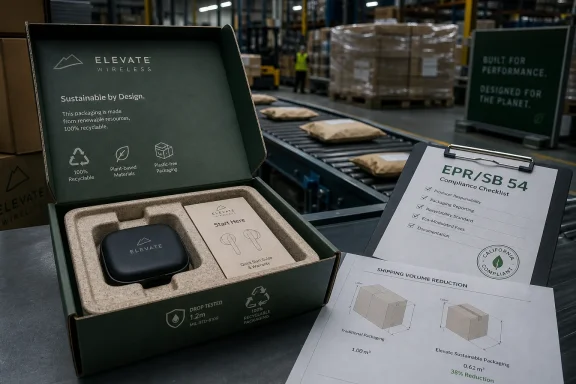 Jabil Is Selling the Absence of Plastic
The most interesting thing about Jabil’s sustainable packaging push is that the end user is not supposed to notice Jabil at all. Consumers may notice the rougher feel of a molded fiber tray, the lack of a glossy plastic clamshell, or a mailer that collapses into the recycling bin without guilt. But the company’s name is mostly invisible, buried several layers beneath the brand that actually appears on the box.That invisibility is the point. Jabil is not trying to become the Apple, Dell, or Logitech of packaging. It is trying to become the company those brands call when their environmental commitments collide with drop-test requirements, pallet geometry, retailer scorecards, and the brutal economics of shipping millions of identical objects.
Jabil’s public packaging materials describe a business built around sustainable design, material sourcing, recyclability assessment, and high-volume manufacturing. Its sustainable packaging page highlights fiber-based formats and hybrid paper technologies, including Ecologic packaging, which Jabil says can use up to 70 percent less plastic than comparable formats of the same size.
That claim matters because packaging sustainability often dies in the gap between marketing and mechanics. A molded tray that looks green but fails in transit is not a sustainability win; it is a returns problem with a nicer texture. Jabil’s bet is that brands will pay for a partner that can make lower-plastic packaging behave like industrial packaging rather than like a craft-store compromise.
The Contract Manufacturer Has Found a New Place to Embed Itself
Jabil’s core identity has long been contract manufacturing: design, engineering, production, supply-chain orchestration, and the kind of industrial execution consumers rarely see but depend on constantly. Packaging extends that logic. If a company already helps build the device, accessory, medical product, or retail item, it is well positioned to design the thing that protects it.That is why this is more strategically interesting than a generic molded-fiber announcement. A packaging converter can sell trays. A paper mill can sell board. Jabil can sell a combined program: product design awareness, packaging design, testing, sourcing, production, and logistics optimization under one umbrella.
For a consumer electronics brand, that can matter enormously. Packaging decisions affect unboxing, warehouse density, freight cost, damage rates, retailer acceptance, and customer perception. The tray inside a headphone box is not just a tray; it is a structural component in a global logistics system.
Jabil’s packaging unit describes capabilities across rigid plastic, fiber-based packaging, paper formats, tooling, prototyping, and manufacturing. The sustainable version of that offering is not simply “plastic bad, paper good.” It is a more complicated engineering pitch: use less plastic where possible, separate materials where needed, and make the package easier to recycle or reuse at end of life.
That nuance is important because sustainability in packaging is full of trade-offs. Paper can be heavier. Fiber can need coatings. Hybrid formats can confuse recycling streams if designed poorly. Jabil’s value proposition is that brands do not want to solve those trade-offs alone, especially when every packaging decision is replicated across millions of units.
The Molded Fiber Tray Is a Small Object With a Large Supply-Chain Shadow
The molded fiber tray has become the visual shorthand for the post-plastic unboxing era. It feels familiar because everyone knows egg cartons and drink carriers. But the industrial version is more demanding: it must hold tolerances, resist compression, absorb shocks, stack cleanly, and look acceptable inside a premium product box.That is where the story becomes less sentimental. The world does not need more packaging that merely looks recyclable. It needs packaging that can survive conveyor belts, delivery vans, humid warehouses, automated fulfillment centers, and impatient consumers with box cutters.
Jabil’s own writing on paper packaging design emphasizes the complexity of moving from plastic to paper-based structures. The company has pointed to molded fiber and hybrid paper-plastic designs as ways to balance sustainability cues with performance requirements. In plain English, the tray has to look green without behaving like wet cardboard.
There is also a sound-and-touch element that brands care about more than they admit. Plastic packaging crackles, snaps, and telegraphs cheapness when overused. Molded fiber has a muted, matte quality that can make a box feel calmer and more deliberate. That tactile shift is now part of the premium design language for electronics and accessories.
But this is not only about vibes. A lighter, tighter, better-fitted package can reduce shipping volume, improve pallet efficiency, and lower the amount of air transported through the supply chain. For high-volume brands, a few millimeters shaved from a carton can become real money.
Retailers Have Turned Packaging Into a Vendor Discipline
The pressure on brands is not coming only from consumers who prefer paper to plastic. It is coming from retailers, e-commerce platforms, and regulators that increasingly treat packaging as a measurable part of doing business. If a product arrives in an oversized box full of mixed materials, the brand may be creating costs for everyone downstream.Large retailers have spent years pushing vendors toward packaging that is easier to ship, display, recycle, and handle. E-commerce has sharpened that demand because shipping inefficiency is no longer hidden behind store shelves. Every padded mailer, plastic insert, and half-empty carton is now part of the cost structure.
This is where Jabil’s offering becomes a business-to-business infrastructure play. The company can help a brand design packaging that satisfies the marketing team’s unboxing ambitions while also passing the retailer’s operational demands. The result is not glamorous, but it is sticky.
Once a brand integrates packaging into manufacturing and logistics, switching suppliers becomes harder. Tooling, materials, testing, printing, regulatory documentation, and warehouse workflows all become part of the package. That complexity can create recurring revenue that is less visible than a device launch but potentially more durable.
For investors tracking Jabil’s shares under the ticker JBL, that is the appeal. Sustainable packaging is unlikely to appear as a clean, standalone story in the way a new product line might. It is embedded revenue, attached to customer relationships that already depend on manufacturing execution.
Regulation Is Making the Box a Compliance Problem
The regulatory backdrop is moving in Jabil’s favor, even if the details remain messy. Extended producer responsibility, or EPR, shifts more responsibility for packaging waste back toward the companies that put packaged products into the market. California’s SB 54 is the most prominent U.S. example, and CalRecycle describes it as a statewide program covering packaging and single-use plastic food-service ware.That matters for global brands because California is too large to treat as an edge case. A packaging decision made for the U.S. market must increasingly account for state-level rules, retailer requirements, and European expectations at the same time. The simplest package is no longer necessarily the cheapest package once compliance costs enter the model.
Jabil positions sustainable packaging as a way for customers to anticipate those pressures rather than react to them. That is a stronger pitch than generic environmental branding. Compliance budgets are harder to cut than marketing experiments.
Europe has been further along this road for years, and U.S. states are now adding their own rules. The result is a fragmented compliance map that makes packaging design more complicated for any brand selling nationally or globally. A supplier that understands both materials and regulation becomes more valuable in that environment.
Still, regulation does not magically make every fiber package a good idea. Poorly designed alternatives can shift burdens rather than reduce them. A heavier paper package with coatings that complicate recycling may look better on a shelf while performing worse in practice. The serious work is in the bill of materials, the recycling pathway, and the logistics math.
ESG Spending Is Becoming Less Optional and More Operational
The useful thing about Jabil’s sustainable packaging business is that it shows how environmental, social, and governance spending is changing. The first wave of ESG in corporate communications often sounded like a branding exercise. The second wave is more operational: fewer emissions, less waste, better materials, cleaner reporting, and measurable compliance.Jabil’s sustainability overview says its goals are tied to those of its customers, many of which are major global brands. The company’s fiscal 2025 sustainability materials highlight reductions in greenhouse-gas emissions compared with a fiscal 2019 baseline and site-level landfill diversion metrics. Those numbers are corporate-wide, not a packaging-segment scorecard, but they frame how Jabil wants customers and investors to read the business.
That framing is important. Jabil is not presenting sustainable packaging as a boutique green product. It is presenting it as part of a broader manufacturing capability: helping customers make, package, ship, and report products in ways that fit modern sustainability expectations.
There is a risk here for investors. ESG-adjacent business lines can be overhyped, especially when companies do not break out revenue in a way that lets outsiders separate narrative from profit. Jabil’s Eco-Friendly Packaging Solutions should not be treated as a magic growth engine simply because molded fiber photographs well.
But neither should they be dismissed as corporate window dressing. Packaging is a real cost center, a real compliance exposure, and a real customer-experience layer. If Jabil can make itself useful across all three, it has something more valuable than a slogan.
The Investor Story Is Quiet Because the Revenue Is Embedded
For retail investors, the hardest part of evaluating Jabil’s packaging push is that it does not behave like a consumer product launch. There is no MSRP, no shelf date, no flagship device, and no unit sales chart. Pricing is negotiated through contract programs, and revenue is folded into broader manufacturing relationships.That makes the opportunity less legible but potentially more resilient. A brand that redesigns packaging around a supplier’s materials, tooling, and logistics model is not likely to switch casually. Packaging may be low drama, but it can become high-friction infrastructure.
Analysts often look for this kind of stickiness in contract manufacturing. The more deeply a supplier is integrated into design and production decisions, the more difficult it becomes for a customer to move elsewhere. Packaging adds another layer to that integration.
The margin profile is harder to judge from the outside. Sustainable materials can involve higher upfront design and tooling costs, and price competitiveness depends on scale, sourcing, and performance requirements. But once a package is validated and deployed across a product lifecycle, the work can become repeatable.
That repeatability is why Jabil’s packaging story belongs in the same conversation as its broader diversification. The company is not merely chasing greener boxes. It is trying to attach itself to customer decisions that recur every time a product is launched, refreshed, shipped, or redesigned for a new market.
The Consumer Electronics Angle Is Bigger Than the Logo on the Box
WindowsForum readers know this pattern from the PC and device world. The most important suppliers are often invisible. The label on the machine tells only part of the story; the real industrial system includes contract manufacturers, component vendors, logistics providers, firmware partners, and packaging specialists.Sustainable packaging fits neatly into that hidden stack. A laptop sleeve, router tray, webcam insert, keyboard carton, or accessories mailer can all become part of a brand’s sustainability claim. The consumer sees the finished box. The supplier sees tolerances, drop heights, moisture exposure, fiber selection, ink systems, and pallet loading.
This matters because electronics packaging is unusually demanding. Devices are fragile, often high value, and increasingly shipped directly to homes. At the same time, customers have grown less tolerant of excessive plastic. The industry wants packaging that feels premium, protects the product, and photographs well when opened on camera.
That is exactly the kind of problem a company like Jabil wants to own. It sits at the intersection of manufacturing and brand experience. If it can solve packaging during product development rather than after the product is finished, it can influence decisions earlier and capture more value.
There is also a support angle. Damaged products create returns, replacements, customer-service contacts, and reputational drag. A cheaper package that raises failure rates is not cheap. A better-designed fiber package that protects as well as plastic while improving recyclability can justify itself beyond the sustainability line item.
The Greenest Package Is Still the One That Does Not Create a New Problem
The packaging industry has a long history of solving one environmental problem by creating another. Plastic reduced weight and breakage in many contexts. Paper improves recyclability cues but can require more material or coatings. Compostable formats can fail if the local waste system cannot process them.That is why Jabil’s emphasis on design and assessment is more important than the word “eco-friendly.” The market is full of packaging that sounds sustainable until someone asks where it actually goes after use. A tray that is technically recyclable but contaminated, coated, or glued into a mixed-material structure may not deliver the promised benefit.
Jabil’s public materials discuss recyclability, material separation, and end-of-life outcomes. Those are the right issues to emphasize. The challenge is that end-of-life performance depends not only on design but also on local recycling infrastructure, consumer behavior, and municipal sorting systems.
For U.S. consumers, the experience remains uneven. One city accepts a paper-based mailer; another rejects it because of coating, adhesive, or contamination. A molded fiber tray may feel recyclable, but the answer can still depend on local rules.
That ambiguity is not a reason to stop improving packaging. It is a reason to be more precise. The future of sustainable packaging will belong to companies that can document what their materials are, how they perform, and where they can realistically be recovered.
Jabil’s Strongest Argument Is Industrial Boredom
The most convincing part of Jabil’s pitch is that it is not especially glamorous. Molded fiber trays, paper mailers, packaging assessments, tooling, and material sourcing are not the stuff of keynote demos. They are operational disciplines.That boredom is an advantage. Many sustainability promises fail because they depend on consumers doing the right thing after purchase or brands paying more indefinitely for symbolic improvements. Jabil’s model is more pragmatic: redesign the package inside the manufacturing system so the better option becomes the default option.
If that works, the environmental benefit does not depend on a consumer choosing a green SKU. It happens upstream, at the level of product launch planning and procurement. The consumer simply opens a box with less plastic in it.
That is also why the company’s role can be easy to underestimate. Suppliers that operate behind the label rarely get public credit for environmental improvements. But if they influence materials at scale, their impact can be larger than that of many louder consumer-facing campaigns.
The same logic applies to enterprise IT procurement. Buyers increasingly ask suppliers for emissions data, recycled content, packaging reductions, and compliance documentation. The boring supplier that can produce the paperwork and the product may win where the flashier supplier stumbles.
The Quiet Plastic Cutters Deserve a Harder Look
Jabil’s Eco-Friendly Packaging Solutions should be read less as a feel-good packaging story and more as a sign of where manufacturing value is migrating. The package is becoming a regulatory object, a logistics object, a brand object, and an investor-relations object at the same time.- Jabil’s sustainable packaging business is aimed at brand and retail customers, not consumers buying a Jabil-labeled product off a shelf.
- The company’s public materials emphasize molded fiber, paper-based formats, hybrid paper technologies, recyclability assessment, and material sourcing as part of a broader packaging service.
- California’s SB 54 and similar EPR policies are turning packaging waste into a producer responsibility issue rather than a purely municipal waste problem.
- The investment case is indirect because Jabil does not break out Eco-Friendly Packaging Solutions as a standalone consumer product line with public unit pricing.
- The strongest business argument is customer stickiness, since packaging design becomes intertwined with product development, tooling, logistics, and retailer requirements.
- The environmental argument depends on execution, because fiber and paper alternatives must still survive shipping, reduce waste in practice, and fit real recycling systems.
References
- Primary source: AD HOC NEWS
Published: 2026-07-06T04:20:30.782865
Loading…
www.ad-hoc-news.de - Related coverage: calrecycle.ca.gov
Loading…
calrecycle.ca.gov - Related coverage: jabil.com
Loading…
www.jabil.com - Related coverage: brightest.io
Loading…
www.brightest.io - Related coverage: staging.jabil.com
Loading…
staging.jabil.com - Related coverage: rila.org
Loading…
www.rila.org
