

Typhoon Bavi prompted a wind warning of up to 60 metres per second, warnings for flooding, landslides, and storm surge, and the suspension of flights and ferries around Ishigaki and Miyakojima. Those combined hazards threatened to isolate communities across the Sakishima island chain even before any physical damage could be assessed. The supplied record does not confirm that a sustained wind of 216 km/h was measured at a specific location. It establishes the 60 m/s warning and the resulting 216 km/h headline, but it does not define that value as a sustained wind, a gust, a local forecast, or an observed measurement.
That limitation does not make the warning insignificant. It means the number must be reported with its original context intact. For residents and businesses on remote islands, the more consequential issue was the convergence of dangerous weather, coastal hazards, and suspended transport.
The 216 km/h figure is the direct conversion of 60 metres per second into kilometres per hour:
60 m/s × 3.6 = 216 km/h
That arithmetic is straightforward. The meaning of the underlying figure is not.
The supplied facts establish that a warning referred to winds of up to 60 m/s. They do not establish whether this was a maximum-gust warning, a sustained-wind value, a forecast for a particular locality, a figure describing the cyclone more broadly, or a measurement observed by an instrument at a named site.
Those categories are not interchangeable. A sustained-wind estimate describes wind averaged over a defined interval. A gust describes a shorter peak. A forecast value describes expected conditions, while an observation records conditions detected at a particular place and time. A cyclone-wide figure may also differ from the wind experienced in a specific community.
The defensible conclusion is therefore narrow: 216 km/h accurately converts the supplied 60 m/s warning into another unit, but the record does not confirm a sustained 216 km/h wind measurement on Ishigaki or Miyakojima.
This clarification is enough. There is no need either to dismiss the figure or to attach a more precise label than the available information supports. The warning represented a serious threat, but responsible reporting should not transform an incompletely defined warning value into a verified local observation.
That overlap matters in the Sakishima Islands because airports and harbours are essential links rather than optional conveniences. They support passenger travel, medical access, tourism, deliveries, maintenance operations, and the movement of specialist personnel and replacement equipment.
A community does not have to record the highest warned wind value to face dangerous conditions. Strong winds can make travel and outdoor work unsafe, while flooding can block roads and storm surge can threaten low-lying coastal areas. Landslide warnings can restrict movement near slopes even after conditions begin to improve.
For island communities, these hazards reinforce one another. A blocked route is more consequential when ferries are suspended. A communications or power problem is more difficult to address when specialist staff cannot fly in. A business that has cloud backups may still be unable to operate if employees, devices, connectivity, and recovery credentials are not locally available.
The practical story is therefore one of constrained access. Bavi did not have to produce the same conditions everywhere to create a region-wide operational problem. Once flights and ferries were suspended, each island had to rely more heavily on the people, supplies, equipment, and information already in place.
The suspensions should nevertheless be understood as part of the safety response. Air and maritime services can be halted before the most severe local conditions arrive because operators must consider the full period during which passengers, crews, aircraft, vessels, and terminal staff would be exposed.
A transport suspension can also begin a longer period of isolation than the weather headline suggests. Restarting service is not automatic when the immediate warning changes. Operators may need to assess local conditions, confirm that personnel can report for duty, reposition aircraft or vessels, and verify that terminals and access routes are usable.
The precise restart process will differ among operators. The supplied facts do not establish which inspections or operational mechanisms were required in Bavi’s case, so they should not be presented as documented events. The general continuity implication, however, is clear: residents and organizations cannot assume that passenger travel, deliveries, or technical support will resume immediately after the most dangerous conditions move away.
For travelers, a suspension may affect more than one scheduled departure. An outbound service can depend on an inbound aircraft or vessel, an available crew, and functioning connections elsewhere in the regional network. A disruption centered on one island can therefore propagate through later services without indicating that every location is experiencing identical weather.
For local organizations, the first confirmed transport suspension is an actionable threshold. It signals that replacement hardware, outside contractors, relief staff, and physical records may no longer be obtainable on short notice. Continuity procedures should already be active by that point, rather than waiting for a power or communications failure.
Flooding can interrupt short but essential road connections between homes, workplaces, medical facilities, shelters, airports, harbours, and utility sites. Even a limited closure can become operationally important where alternative routes are few.
Landslide warnings create a separate access problem. Slopes may remain hazardous after the strongest winds have moved away, so improving weather does not necessarily make every road or property safe to inspect. Residents and staff should continue following local restrictions rather than treating calmer conditions as an automatic all-clear.
Storm surge affects coastal areas by elevating water levels and increasing the reach of coastal inundation. Its local consequences vary with shoreline conditions and timing, which is why a general storm report cannot establish the exact outcome in every harbour, neighbourhood, or waterfront facility.
These distinctions matter for recovery. A building may appear intact while its access road remains closed. A network room may retain power while the staff responsible for it cannot travel safely. A coastal business may be unable to inspect equipment even if inland conditions have improved.
The supplied record supports the existence of the warnings, not a detailed account of where flooding, slope failure, or surge damage occurred. Any damage assessment should therefore remain separate from the warning record unless confirmed information becomes available.
It also does not establish a complete chronology. Exact future-facing dates should not be added without reliable source material that documents when each warning, suspension, impact, and service restoration occurred. A false timeline can be more misleading than no timeline because it gives uncertain information the appearance of a verified sequence.
The same restraint applies to damage and casualty reporting. The absence of a confirmed total in the supplied material does not prove that damage was minor, but neither does it support speculation about widespread destruction. Early information can establish risk and disruption while leaving the final outcome unresolved.
The island context makes dependencies more visible. A business may maintain off-site or cloud backups yet still be unable to restore operations if no authorized administrator can reach the site. A cloud-managed Windows environment may remain technically available while local users lose internet access, power, working devices, or multifactor authentication.
These are preparedness considerations, not claims about specific failures during Bavi. The supplied facts do not document server outages, authentication problems, equipment damage, or business data loss on Ishigaki or Miyakojima.
They do establish the condition that can expose such weaknesses: transport was suspended while multiple weather hazards threatened the islands. Once access is restricted, a continuity plan must work with local personnel and locally available resources.
Once the trigger is reached:
Both administrators should be able to:
The threshold should be decided before conditions deteriorate. During an emergency, staff should execute an approved sequence rather than debate how much battery time or heat exposure is acceptable.
Before isolation:
Document:
Employees still need functioning devices, power, connectivity, credentials, and a safe place to work. Administrators still need access to management systems. A hotel, clinic, retailer, logistics operator, or local government office may also require printers, scanners, payment terminals, phones, door-access systems, or locally connected equipment.
This is why continuity planning should begin with essential outcomes rather than a list of servers. An organization should identify the minimum functions it must maintain during isolation, the people authorized to run them, and the information required to operate manually if digital services are unavailable.
For example, a company may decide that full application access can wait, but employee safety contacts, guest or customer records, medication information, supplier contacts, and emergency payment procedures must remain available. That decision determines which data should be exported, which devices need battery support, and which staff members require offline access.
The plan should also separate emergency availability from normal security exceptions. A crisis does not justify uncontrolled password sharing or undocumented administrator access. Emergency accounts, offline codes, and local copies should have named custodians, access rules, and post-event review requirements.
If only one employee can access the identity platform, decrypt a backup, contact the internet provider, or restart the network, the organization has not created redundancy. It has moved the entire recovery process into one human dependency.
Two-administrator coverage should include more than credentials. Both people need enough procedural knowledge to identify critical systems, understand dependencies, and know when not to restart equipment. They should also understand who has authority to close the site, approve emergency spending, communicate with customers, and request external assistance.
Where staffing is limited, an organization can arrange documented support with a trusted provider. But an off-island provider may also be constrained when transport and local communications are interrupted. The local plan must define which actions can be completed remotely and which require someone physically present.
Regular testing is essential. A recovery code that has expired, a password stored in an inaccessible cloud vault, or a backup administrator who has never logged in can create false confidence. Test the process under controlled conditions before an emergency exposes it.
It also should not be treated as proof that the event was minor. Warnings and transport suspensions can be verified before a complete assessment of community impact becomes available. Conversely, a high warning value does not prove that every location experienced catastrophic damage.
Coverage should distinguish among three stages:
Maintaining those boundaries makes the report more accurate without understating the danger.
That combination turns preparedness into a deadline. Once transport stops and local movement becomes unsafe, organizations must rely on the personnel, equipment, power, connectivity, credentials, and documentation already available.
For residents, the same principle applies to medication, communications, charging, water, essential supplies, and safe shelter. For travelers, disruption can begin before the most serious local conditions and continue after warnings change. For businesses, transport suspension can cut off staff and replacement equipment before any electrical or network outage occurs.
For media consumers, the key clarification is simple: the 216 km/h headline reflects the conversion of a 60 m/s warning, but the supplied record does not define that figure well enough to present it as a measured sustained wind at a named location.
That limitation does not make the warning insignificant. It means the number must be reported with its original context intact. For residents and businesses on remote islands, the more consequential issue was the convergence of dangerous weather, coastal hazards, and suspended transport.
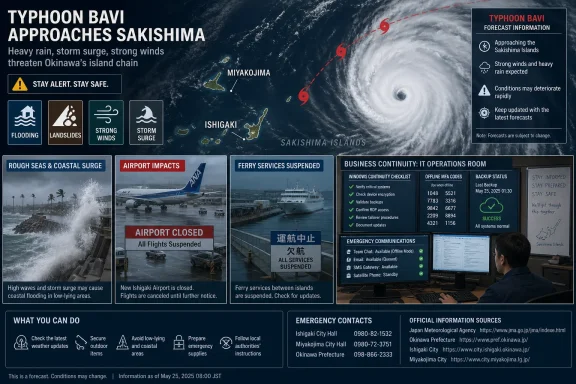 The 216 km/h Headline Needs a Unit Check
The 216 km/h figure is the direct conversion of 60 metres per second into kilometres per hour:60 m/s × 3.6 = 216 km/h
That arithmetic is straightforward. The meaning of the underlying figure is not.
The supplied facts establish that a warning referred to winds of up to 60 m/s. They do not establish whether this was a maximum-gust warning, a sustained-wind value, a forecast for a particular locality, a figure describing the cyclone more broadly, or a measurement observed by an instrument at a named site.
Those categories are not interchangeable. A sustained-wind estimate describes wind averaged over a defined interval. A gust describes a shorter peak. A forecast value describes expected conditions, while an observation records conditions detected at a particular place and time. A cyclone-wide figure may also differ from the wind experienced in a specific community.
The defensible conclusion is therefore narrow: 216 km/h accurately converts the supplied 60 m/s warning into another unit, but the record does not confirm a sustained 216 km/h wind measurement on Ishigaki or Miyakojima.
This clarification is enough. There is no need either to dismiss the figure or to attach a more precise label than the available information supports. The warning represented a serious threat, but responsible reporting should not transform an incompletely defined warning value into a verified local observation.
Bavi’s Passage Put the Islands at Risk
The immediate concern around Ishigaki and Miyakojima was not one wind number in isolation. It was the overlap of strong-wind risk, flooding, landslides, storm surge, and interruptions to both air and maritime transport.That overlap matters in the Sakishima Islands because airports and harbours are essential links rather than optional conveniences. They support passenger travel, medical access, tourism, deliveries, maintenance operations, and the movement of specialist personnel and replacement equipment.
| Location | Verified exposure | Transport effect | Warned hazards |
|---|---|---|---|
| Ishigaki | Affected during Bavi’s passage through the island region | Flights and ferry services suspended | Strong winds, flooding, landslides, storm surge |
| Miyakojima | Affected as Bavi moved through the surrounding island area | Flights and ferry services suspended around affected routes | Strong winds, flooding, landslides, storm surge |
| Wider island network | Risk of reduced access when air and sea links stopped | Passenger and supply movement interrupted | Compounding weather, coastal, and access risks |
For island communities, these hazards reinforce one another. A blocked route is more consequential when ferries are suspended. A communications or power problem is more difficult to address when specialist staff cannot fly in. A business that has cloud backups may still be unable to operate if employees, devices, connectivity, and recovery credentials are not locally available.
The practical story is therefore one of constrained access. Bavi did not have to produce the same conditions everywhere to create a region-wide operational problem. Once flights and ferries were suspended, each island had to rely more heavily on the people, supplies, equipment, and information already in place.
Transport Shutdown Was Part of the Safety Response
Flights and ferries were suspended around Ishigaki and Miyakojima as Bavi affected the region. The supplied record supports that transport disruption, but it does not provide a verified total number of cancellations or enough detail to describe the operating decisions of individual airlines, airports, ferry companies, or harbours.The suspensions should nevertheless be understood as part of the safety response. Air and maritime services can be halted before the most severe local conditions arrive because operators must consider the full period during which passengers, crews, aircraft, vessels, and terminal staff would be exposed.
A transport suspension can also begin a longer period of isolation than the weather headline suggests. Restarting service is not automatic when the immediate warning changes. Operators may need to assess local conditions, confirm that personnel can report for duty, reposition aircraft or vessels, and verify that terminals and access routes are usable.
The precise restart process will differ among operators. The supplied facts do not establish which inspections or operational mechanisms were required in Bavi’s case, so they should not be presented as documented events. The general continuity implication, however, is clear: residents and organizations cannot assume that passenger travel, deliveries, or technical support will resume immediately after the most dangerous conditions move away.
For travelers, a suspension may affect more than one scheduled departure. An outbound service can depend on an inbound aircraft or vessel, an available crew, and functioning connections elsewhere in the regional network. A disruption centered on one island can therefore propagate through later services without indicating that every location is experiencing identical weather.
For local organizations, the first confirmed transport suspension is an actionable threshold. It signals that replacement hardware, outside contractors, relief staff, and physical records may no longer be obtainable on short notice. Continuity procedures should already be active by that point, rather than waiting for a power or communications failure.
Flooding, Landslides, and Storm Surge Were Separate Threats
Warnings for flooding, landslides, and storm surge accompanied the wind threat. Each hazard can affect a different part of an island and can continue on a different timetable.Flooding can interrupt short but essential road connections between homes, workplaces, medical facilities, shelters, airports, harbours, and utility sites. Even a limited closure can become operationally important where alternative routes are few.
Landslide warnings create a separate access problem. Slopes may remain hazardous after the strongest winds have moved away, so improving weather does not necessarily make every road or property safe to inspect. Residents and staff should continue following local restrictions rather than treating calmer conditions as an automatic all-clear.
Storm surge affects coastal areas by elevating water levels and increasing the reach of coastal inundation. Its local consequences vary with shoreline conditions and timing, which is why a general storm report cannot establish the exact outcome in every harbour, neighbourhood, or waterfront facility.
These distinctions matter for recovery. A building may appear intact while its access road remains closed. A network room may retain power while the staff responsible for it cannot travel safely. A coastal business may be unable to inspect equipment even if inland conditions have improved.
The supplied record supports the existence of the warnings, not a detailed account of where flooding, slope failure, or surge damage occurred. Any damage assessment should therefore remain separate from the warning record unless confirmed information becomes available.
What the Available Reporting Establishes
The available material establishes a concise set of facts:- Bavi affected Ishigaki and the surrounding Sakishima island region.
- A wind warning referred to values of up to 60 m/s.
- The 216 km/h headline corresponds mathematically to 60 m/s.
- The record does not identify 216 km/h as a verified sustained-wind measurement at a specific location.
- Authorities warned about flooding, landslides, and storm surge.
- Flights and ferries around Ishigaki and Miyakojima were suspended.
It also does not establish a complete chronology. Exact future-facing dates should not be added without reliable source material that documents when each warning, suspension, impact, and service restoration occurred. A false timeline can be more misleading than no timeline because it gives uncertain information the appearance of a verified sequence.
The same restraint applies to damage and casualty reporting. The absence of a confirmed total in the supplied material does not prove that damage was minor, but neither does it support speculation about widespread destruction. Early information can establish risk and disruption while leaving the final outcome unresolved.
Why the Transport Trigger Matters to Windows Environments
A typhoon affecting remote islands may appear separate from routine Windows administration, but the continuity problems are familiar: identity access, power management, backups, networking, physical security, staffing, and recovery sequencing.The island context makes dependencies more visible. A business may maintain off-site or cloud backups yet still be unable to restore operations if no authorized administrator can reach the site. A cloud-managed Windows environment may remain technically available while local users lose internet access, power, working devices, or multifactor authentication.
These are preparedness considerations, not claims about specific failures during Bavi. The supplied facts do not document server outages, authentication problems, equipment damage, or business data loss on Ishigaki or Miyakojima.
They do establish the condition that can expose such weaknesses: transport was suspended while multiple weather hazards threatened the islands. Once access is restricted, a continuity plan must work with local personnel and locally available resources.
Continuity Checklist for Island Businesses and IT Teams
The following checklist turns transport suspension into a concrete operational trigger rather than waiting for an outage to force improvised decisions.1. Name the owners before the warning escalates
Assign an accountable owner and backup owner for each critical function:- Incident coordination
- Employee safety and communications
- Windows and identity administration
- Network and internet services
- Backup verification and restoration
- Facilities, power, and water inspection
- Vendor and customer communications
- Finance, payments, and essential records
2. Set a pre-transport-shutdown trigger
Define a trigger that activates continuity measures before flights and ferries are expected to stop. The trigger might be an official warning, a transport operator’s suspension announcement, or a management deadline set a fixed number of hours before anticipated isolation.Once the trigger is reached:
- Freeze nonessential infrastructure changes.
- Confirm the most recent successful backup for every critical service.
- Download essential contact and recovery information for offline use.
- Move portable equipment and recovery media to safer locations.
- Confirm which employees will remain available locally.
- Complete any task that requires outside staff, travel, or physical delivery.
- Notify customers and suppliers about likely service limitations.
3. Verify offline MFA recovery
Test whether authorized administrators can recover access without relying on one phone, one mobile carrier, or one employee.- Generate and verify offline multifactor authentication recovery codes.
- Store them in a controlled, documented location.
- Keep an additional protected copy at a separate safe site.
- Confirm that recovery codes correspond to current accounts.
- Verify emergency-access accounts according to the organization’s security policy.
- Record who may use those accounts and how their use will be reviewed.
- Do not assume an authenticator application will remain usable if a phone is lost, damaged, discharged, or disconnected.
4. Assign two system administrators
Ensure that at least two authorized people can perform essential recovery tasks independently.Both administrators should be able to:
- Access critical Windows and cloud administration portals
- Restore key data and configuration backups
- manage identity and authentication problems
- Shut down and restart designated systems
- Access network, firewall, and remote-management consoles
- Contact internet, power, hosting, and application vendors
- Find current diagrams, inventories, and recovery procedures
5. Set a controlled-shutdown threshold
Document the conditions that require an orderly shutdown of on-premises equipment. Possible thresholds include:- Backup power falling below a defined remaining-runtime level
- Loss of cooling beyond a defined temperature or duration
- Water entering or approaching the equipment area
- Unstable electrical service
- Loss of safe staff access to the site
- A facilities order to evacuate or isolate the building
- Loss of network service when continued operation would provide no useful function
The threshold should be decided before conditions deteriorate. During an emergency, staff should execute an approved sequence rather than debate how much battery time or heat exposure is acceptable.
6. Confirm backups and local restoration information
A successful backup notification is not the same as a recoverable service.Before isolation:
- Confirm that scheduled jobs completed.
- Review failures and incomplete backup sets.
- Verify that restore credentials are available.
- Keep a current inventory of protected systems.
- Export essential configuration information.
- Ensure recovery instructions can be read without internet access.
- Identify the minimum data required to resume essential operations.
- Test a representative restore whenever time and safety permit.
7. Prepare for degraded connectivity
Identify what the organization can and cannot do if its primary internet connection fails.Document:
- Secondary internet options
- Mobile-network dependencies
- Systems that require continuous cloud access
- Locally cached information available to staff
- Manual procedures for essential transactions
- The priority order for restoring connected services
- Bandwidth restrictions if only a limited backup connection remains
8. Protect equipment and recovery materials
Before staff travel becomes unsafe:- Move laptops and removable media away from exposed windows and flood-prone areas.
- Raise equipment stored on low shelves or floors.
- Protect paper recovery records from water.
- Photograph rack layouts and cable connections if this would assist restoration.
- Label shutdown controls and critical circuits clearly.
- Confirm that spare batteries, chargers, and flashlights are accessible.
- Restrict last-minute equipment relocation to trained staff.
9. Document the post-storm power and water inspection sequence
Do not restart systems simply because utility power appears to have returned. Use a defined inspection order:- Confirm that authorities and facilities personnel consider site access safe.
- Inspect the route to the equipment room for standing water, structural damage, and exposed electrical hazards.
- Check ceilings, walls, floors, windows, conduits, and cable penetrations for water entry.
- Inspect power strips, uninterruptible power supplies, outlets, distribution equipment, and visible cabling.
- Confirm that cooling and ventilation can operate.
- Verify that electrical service is stable and that facilities personnel have approved energizing equipment.
- Start core power and environmental monitoring first.
- Start network and security infrastructure in the documented order.
- Start storage and servers only after their dependencies are available.
- Check logs, disk health, backup status, authentication, and connectivity before releasing services to users.
- Record every exception, failure, and temporary workaround.
- Schedule follow-up inspections for delayed moisture, corrosion, battery, and cooling problems.
Data Redundancy Is Not the Same as Operational Resilience
Cloud services can reduce dependence on one physical server, but they do not remove every local dependency.Employees still need functioning devices, power, connectivity, credentials, and a safe place to work. Administrators still need access to management systems. A hotel, clinic, retailer, logistics operator, or local government office may also require printers, scanners, payment terminals, phones, door-access systems, or locally connected equipment.
This is why continuity planning should begin with essential outcomes rather than a list of servers. An organization should identify the minimum functions it must maintain during isolation, the people authorized to run them, and the information required to operate manually if digital services are unavailable.
For example, a company may decide that full application access can wait, but employee safety contacts, guest or customer records, medication information, supplier contacts, and emergency payment procedures must remain available. That decision determines which data should be exported, which devices need battery support, and which staff members require offline access.
The plan should also separate emergency availability from normal security exceptions. A crisis does not justify uncontrolled password sharing or undocumented administrator access. Emergency accounts, offline codes, and local copies should have named custodians, access rules, and post-event review requirements.
Avoid Single Points of Administrative Failure
The most preventable continuity weakness is dependence on one person.If only one employee can access the identity platform, decrypt a backup, contact the internet provider, or restart the network, the organization has not created redundancy. It has moved the entire recovery process into one human dependency.
Two-administrator coverage should include more than credentials. Both people need enough procedural knowledge to identify critical systems, understand dependencies, and know when not to restart equipment. They should also understand who has authority to close the site, approve emergency spending, communicate with customers, and request external assistance.
Where staffing is limited, an organization can arrange documented support with a trusted provider. But an off-island provider may also be constrained when transport and local communications are interrupted. The local plan must define which actions can be completed remotely and which require someone physically present.
Regular testing is essential. A recovery code that has expired, a password stored in an inaccessible cloud vault, or a backup administrator who has never logged in can create false confidence. Test the process under controlled conditions before an emergency exposes it.
The Absence of a Damage Total Does Not Settle the Outcome
The supplied record does not provide a confirmed casualty count, property-loss estimate, outage total, or complete infrastructure assessment. That absence should not be filled with invented numbers or unsupported descriptions.It also should not be treated as proof that the event was minor. Warnings and transport suspensions can be verified before a complete assessment of community impact becomes available. Conversely, a high warning value does not prove that every location experienced catastrophic damage.
Coverage should distinguish among three stages:
- Forecast and warning: what authorities said could occur.
- Operational response: what services were suspended or what protective measures were taken.
- Verified impact: what was measured, damaged, interrupted, or lost.
Maintaining those boundaries makes the report more accurate without understating the danger.
The Central Risk Was Isolation, Not One Wind Number
Bavi’s importance for Ishigaki and Miyakojima lies in the convergence of weather hazards and restricted access. Strong winds threatened safe movement, flooding could interrupt roads, landslide warnings affected slope areas, storm surge threatened coastal zones, and suspended flights and ferries reduced external connections.That combination turns preparedness into a deadline. Once transport stops and local movement becomes unsafe, organizations must rely on the personnel, equipment, power, connectivity, credentials, and documentation already available.
For residents, the same principle applies to medication, communications, charging, water, essential supplies, and safe shelter. For travelers, disruption can begin before the most serious local conditions and continue after warnings change. For businesses, transport suspension can cut off staff and replacement equipment before any electrical or network outage occurs.
For media consumers, the key clarification is simple: the 216 km/h headline reflects the conversion of a 60 m/s warning, but the supplied record does not define that figure well enough to present it as a measured sustained wind at a named location.
What Ishigaki’s Bavi Experience Makes Clear
The supported conclusions are more useful than an exaggerated or overly precise storm narrative:- Bavi prompted a wind warning of up to 60 m/s.
- That value converts mathematically to 216 km/h.
- The supplied record does not confirm a sustained 216 km/h measurement at a specific location.
- Warnings covered flooding, landslides, and storm surge.
- Flights and ferries around Ishigaki and Miyakojima were suspended.
- Transport suspension increased the islands’ risk of operational isolation.
- Businesses and IT teams should activate continuity measures before access is cut off.
- Recovery plans need named owners, two capable administrators, offline MFA recovery, controlled-shutdown thresholds, and a documented power-and-water inspection sequence.
References
- Primary source: Hindustan Times
Published: 2026-07-11T03:10:12.197232
Loading…
www.hindustantimes.com - Related coverage: data.jma.go.jp
Loading…
www.data.jma.go.jp - Related coverage: typhooncommittee.org
Loading…
www.typhooncommittee.org - Related coverage: japantimes.co.jp
Loading…
www.japantimes.co.jp - Related coverage: scmp.com
Loading…
www.scmp.com - Related coverage: city.ishigaki.okinawa.jp
Loading…
www.city.ishigaki.okinawa.jp