

Windows users and enterprise IT teams are confronting a stubborn reality: a large portion of the global PC installed base is not moving to Windows 11 — even as Microsoft phases out free support for Windows 10 and vendors pitch fresh hardware, AI PCs, and Copilot-enabled experiences.
Dell’s executive briefing during its Q3 earnings call injected new urgency into the upgrade debate. COO Jeff Clarke told investors that roughly 500 million PCs that are capable of running Windows 11 have not been upgraded, and another ~500 million machines are too old to run it at all. That framing — half a billion “upgrade-ready but unupdated” devices plus half a billion unsupported ones — was presented as a major addressable market for refreshed PCs and the AI-PC wave. At the same time Microsoft executives have leaned into scale metrics for Windows 11: at Ignite and related announcements Microsoft said Windows 11 is approaching the “nearly a billion” device mark — language that has been widely repeated but that leaves room for interpretation about what “rely on” or “nearly a billion” precisely means. Multiple outlets reported Microsoft using that phrasing during its Windows 40th / Ignite coverage. The backdrop to both sets of remarks is the official end of mainstream, free support for Windows 10, which concluded on October 14, 2025. Microsoft offered transitional programs such as Extended Security Updates (ESU) and migration tools, but the formal end-of-support milestone forces a calendar on IT managers who must choose between upgrading hardware, purchasing ESUs, or moving devices into other support models.
Microsoft’s “nearly a billion” claim about Windows 11 scale underscores platform momentum, but the phrasing leaves analytical work to others: whether that equals monthly active devices, licensed devices, or some blended metric should be clarified by the vendor for exact comparisons. Until Microsoft publishes a specific, audited device metric, caution is warranted when reconciling company-level scale claims with OEM and market-level upgrade observations. For the PC ecosystem, this is the moment of practical reckoning: security timelines, hardware compatibility rules, enterprise economics, and the marketing push for on-device AI all converge. OEMs like Dell are betting on services, trade-ins, and AI-driven product differentiation to nudge the market — but the upgrade wave will play out on enterprise procurement calendars, repair and sustainability policies, and whether on-device AI delivers obvious, trackable value that justifies device refreshes.
Source: The Verge Around 500 million PCs are holding off upgrading to Windows 11, says Dell
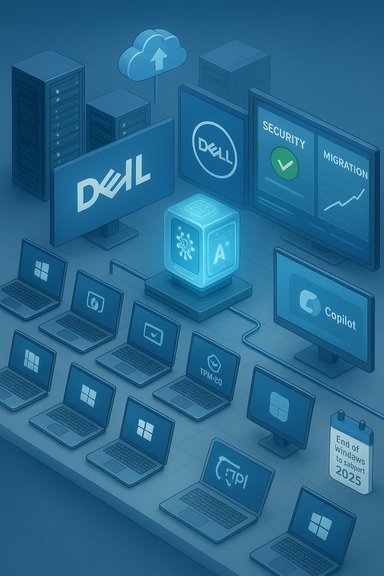 Background: the numbers that shifted the conversation
Dell’s executive briefing during its Q3 earnings call injected new urgency into the upgrade debate. COO Jeff Clarke told investors that roughly 500 million PCs that are capable of running Windows 11 have not been upgraded, and another ~500 million machines are too old to run it at all. That framing — half a billion “upgrade-ready but unupdated” devices plus half a billion unsupported ones — was presented as a major addressable market for refreshed PCs and the AI-PC wave. At the same time Microsoft executives have leaned into scale metrics for Windows 11: at Ignite and related announcements Microsoft said Windows 11 is approaching the “nearly a billion” device mark — language that has been widely repeated but that leaves room for interpretation about what “rely on” or “nearly a billion” precisely means. Multiple outlets reported Microsoft using that phrasing during its Windows 40th / Ignite coverage. The backdrop to both sets of remarks is the official end of mainstream, free support for Windows 10, which concluded on October 14, 2025. Microsoft offered transitional programs such as Extended Security Updates (ESU) and migration tools, but the formal end-of-support milestone forces a calendar on IT managers who must choose between upgrading hardware, purchasing ESUs, or moving devices into other support models. Overview: what Dell actually said — and what it implies
The headline claim: 500 million “holding off,” 500 million “can’t”
Dell’s numeric framing came during a forward-looking investor call. Clarke’s point was operational and strategic: the PC installed base is large, and a sizable slice is either (a) eligible for a Windows 11 upgrade but hasn’t moved, or (b) aged past the Windows 11 hardware gate. Dell used those figures to justify pursuing upgrades, Copilot-enabled device bundles, and the new category of “AI PCs” that integrate NPUs and on-device inference capabilities. Two immediate implications:- The PC refresh market opportunity remains significant in absolute terms, even if unit growth is muted.
- The Windows 11 adoption story is not simply technical — it’s economic, organizational, and behavioral. Enterprises and consumers weigh migration costs, compatibility, and perceived benefit before pushing upgrades.
Why Dell’s framing matters to the PC market
Dell presented the numbers as opportunity: replace the machines that can’t run Windows 11, and convince the “can run but didn’t” cohort to modernize. That’s a realistic go-to-market posture for OEMs that sell hardware, lifecycle services, and enterprise bundles. It also explains why Dell is balancing two stories at once: record AI server orders and continuing investments in PC go-to-market. The hardware side finances the software push, and vice versa.Why so many PCs didn’t move: the hardware gate and the upgrade calculus
Windows 11 hardware requirements changed the economics
Windows 11’s system checks — including TPM 2.0, UEFI Secure Boot, and a modern generation of supported CPUs — established a higher baseline than Windows 10. Those requirements forced compatibility decisions up front and, in many cases, created hard cutoffs for older machines. While some users and IT teams used unofficial workarounds, Microsoft’s supported path required validated hardware and firmware. That barrier explains a large part of Dell’s “500 million that can’t run Windows 11” figure.- TPM 2.0 and Secure Boot are the most talked-about gating items; many systems sold earlier in the last decade lack either chip-level TPM 2.0 or the UEFI firmware configuration required.
- Processor support lists further limited eligibility; Microsoft’s supported CPU lists (and later patches that enforced checks) meant mid-generation laptops were left behind.
- Enterprise constraints — validated drivers, vendor imaging, group policy compatibility — add time and cost when planning any large-scale OS migration.
The behavioral and business calculus
Even where hardware is compatible, organizations hesitate to upgrade for multiple reasons:- Application compatibility and vendor testing windows.
- Service desk and training investments when user workflows change.
- Margin and capital-planning priorities; if a device “still works,” many businesses defer refreshes until end-of-life or a performance failure.
- Perceived benefit: Windows 11 innovations (visual updates, Copilot integration, security architecture) must outweigh the disruption and costs.
Microsoft’s counterpoint: scale, reach, and messaging
“Nearly a billion” — scale without precision
Microsoft’s messaging that “nearly a billion people rely on Windows 11” (or equivalent phrasing) is powerful marketing shorthand. It communicates scale and platform reach, and it signals to OEMs and ISVs that Windows 11 has achieved commercial gravity. Multiple outlets reported Microsoft using that phrasing during Ignite and anniversary messaging. However, the phrase is ambiguous: it does not define whether “rely” equals monthly active devices, licensed devices, unique users, or some other metric. That ambiguity matters to analysts and customers who want to reconcile Microsoft’s claims with OEM observations about the installed base.The product push: Copilot, AI PCs, and Windows 11 as the platform
Microsoft has used Windows 11 as the vehicle for its Copilot integration and for a push toward Copilot+ PCs (AI PCs). The marketing narrative — and many OEM strategies — center on packaging on-device AI (NPUs), Microsoft Copilot features, and secure hardware as reasons to upgrade. This creates a clear incentive alignment between Microsoft and major OEMs like Dell: modern hardware plus Windows 11 unlocks new value propositions. That said, success depends on convincing end users and IT buyers that those features deliver meaningful productivity gains or security benefits.The security and compliance consequences of lingering on Windows 10
Windows 10’s end of support reshaped the risk calculus. After October 14, 2025 Microsoft stopped mainstream security updates for most Windows 10 SKUs, which introduces a growing security liability for organizations that continue to operate unsupported endpoints.- ESU and migration windows are available but have cost and operational overhead.
- Regulatory and compliance risk grows as security patches cease; many regulated industries require supported OS versions to meet controls.
- Attack surface consequences: unpatched systems become easier targets for exploit kits and targeted attacks.
Dell’s strategic play: product, services, and the AI infusion
From client refresh to AI infrastructure: balancing short-term flatness with long-term growth
Dell’s earnings call highlighted a dual business model: rapidly growing AI infrastructure orders (multi-billion-dollar bookings) alongside a PC business that is more muted and, by Dell’s guidance, “roughly flat” into the next year. Clarke used the Windows 11 upgrade gap as both an opportunity to sell PCs and as a justification for services and lifecycle deals that wrap hardware with migration assistance. Key execution levers for Dell:- Bundle modern Windows 11-compatible devices with migration services and device-management offerings.
- Market Copilot+ or NPU-enabled AI PCs to knowledge workers with demonstrable productivity scenarios.
- Leverage enterprise relationships to convert device fleets over multiyear refresh cycles, avoiding the expectation of a single “big bang” migration.
Numbers from the call that matter
Dell reported record AI server bookings in the quarter and a large backlog, figures it used to underscore how AI infrastructure is offsetting slower PC momentum. Those infrastructure numbers were emphasized in the same discussion where the Windows 11 upgrade opportunity was outlined. The combination of AI server demand and PC refresh potential shapes Dell’s near-term priorities.Risks, friction points, and second-order effects
1) Environmental and lifecycle risks
A sudden push to replace hundreds of millions of PCs would create a substantial environmental footprint if not handled with repair, reuse, and recycling programs. For OEMs and corporate buyers, this will intensify scrutiny from ESG teams and sustainability-minded stakeholders.2) Fragmentation and unsupported upgrades
Some users will apply unsupported registry workarounds or install Windows 11 on unsupported hardware to stay on modern features while avoiding hardware spend. These tactics create an unsupported diversity of endpoints that complicate patching, telemetry, and support for ISVs and IT operations. Microsoft’s official stance discourages such approaches and can limit feature updates or support attention for non-compliant installs.3) Vendor lock-in and migration costs
Enterprises face hidden costs: application certification, endpoint management retooling, and retraining. Those costs slow migration velocity and create opportunities for competitive platforms and cloud-hosted desktop alternatives to capture share from a direct hardware refresh.4) Messaging and measurement mismatch
The marketing narrative — Microsoft’s “nearly a billion” and Dell’s “500 million holdouts” — can coexist if careful definitions are applied, but public confusion risks misaligned expectations among investors, customers, and partners. The lack of a single, universally understood metric for “Windows 11 devices” means stakeholders should request clarity on “active devices,” “monthly active users,” and “licensed devices” before drawing definitive conclusions.Practical guidance for CIOs and IT decision-makers (actionable steps)
- Inventory and classification
- Run a hardware compatibility assessment across the fleet (PC Health Check, vendor tools). Classify machines into: upgrade-ready, upgradeable with firmware updates, and replacement-required.
- Prioritize by risk and impact
- Replace devices used for regulated workloads, remote access, or that hold sensitive data first. Defer low-risk endpoints where budget constraints exist.
- Use migration windows wisely
- Leverage Extended Security Updates (ESU) strategically only when necessary; plan a multi-quarter migration that aligns refreshes with budgeting cycles.
- Evaluate AI-PC use cases before wholesale purchases
- Pilot Copilot+ hardware in roles where AI on-device demonstrably saves time or increases quality. Avoid blanket deployments without measurable KPIs.
- Consolidate vendor assistance
- Use OEM migration services to reduce helpdesk churn. Consider a blended strategy of OS upgrade for some devices and Windows 365/cloud PC for specialized workloads.
What this means for consumers and enthusiasts
- Consumers with compatible hardware should weigh the security benefits and new Windows 11 features against the pain of reconfiguring apps and drivers.
- Budget-conscious shoppers can delay purchases if hardware is still serviceable, but should be aware of increasing security and compatibility risks after Windows 10’s support sunset.
- Enthusiasts who want Windows 11 features but lack supported hardware face trade-offs: unofficial hacks are available but come with support and update risks.
Final analysis: market reality versus marketing narratives
Dell’s 500M/500M framing is valuable as a heuristic: it highlights a large, fragmented installed base where hardware policy decisions matter. The numbers should be read as directional — pointing to a wide gulf between potential upgrade candidates and actual migration progress — rather than as a precise census.Microsoft’s “nearly a billion” claim about Windows 11 scale underscores platform momentum, but the phrasing leaves analytical work to others: whether that equals monthly active devices, licensed devices, or some blended metric should be clarified by the vendor for exact comparisons. Until Microsoft publishes a specific, audited device metric, caution is warranted when reconciling company-level scale claims with OEM and market-level upgrade observations. For the PC ecosystem, this is the moment of practical reckoning: security timelines, hardware compatibility rules, enterprise economics, and the marketing push for on-device AI all converge. OEMs like Dell are betting on services, trade-ins, and AI-driven product differentiation to nudge the market — but the upgrade wave will play out on enterprise procurement calendars, repair and sustainability policies, and whether on-device AI delivers obvious, trackable value that justifies device refreshes.
Takeaway: upgrade strategy in one paragraph
Organizations and consumers should treat the Windows 11 transition as a multi-year program, not a single event: catalog devices, prioritize by risk, pilot AI-PC investments where ROI is measurable, and use ESU and cloud-hosted desktops as targeted stopgaps rather than permanent workarounds. Vendors will push refresh narratives, but the migration will succeed only when technical readiness aligns with clear business value and sensible lifecycle planning. Conclusion: the next 18–36 months will determine whether the “500 million” upgrade-ready devices become a sustained refresh wave — or whether migration will remain slow, incremental, and priced by targeted replacements and managed services.Source: The Verge Around 500 million PCs are holding off upgrading to Windows 11, says Dell
