

More Americans are now using AI in the same ordinary places they use everything else: on their phones, inside dedicated apps, and as part of recurring routines rather than one-off experiments. PYMNTS Intelligence’s latest consumer data suggests the shift from curiosity to habit is already underway, with 54% of U.S. consumers reporting AI use for personal tasks in January 2026, up five points from December 2025. That is not just wider adoption; it is a sign that consumer AI has crossed into mainstream behavior, and that the winners in this phase will be the platforms that feel like daily utilities rather than occasional novelties. nsumer AI story has changed quickly, and the latest PYMNTS numbers capture that transition with unusual clarity. In the March 2026 edition of the Agentic AI Report, the research group found that AI use for personal tasks reached 54% of U.S. consumers in January, while one-third of consumers now qualify as mainstream users. That means adoption is no longer just expanding at the edges; it is becoming more deeply embedded across everyday routines.
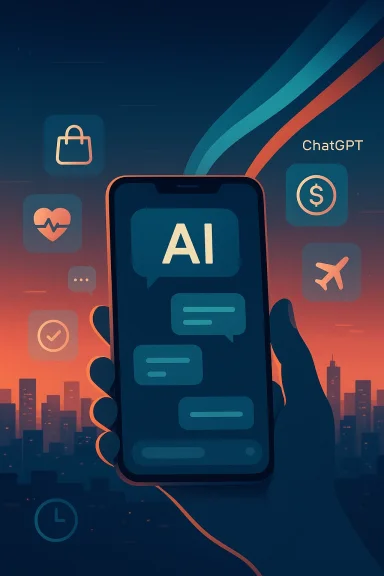
The more interestinjust who is using AI, but how they are using it. PYMNTS says consumers are increasingly accessing AI through apps rather than websites, and that pattern becomes stronger as engagement rises. ChatGPT users are most likely to use a smartphone or tablet app, and Gemini also shows a notably app-led pattern, reinforcing the idea that AI is evolving into an always-available companion rather than a browser tab people visit occasionally.
That shift matters because consumer behavior is often a proxy for product maturity. When users install an app, open it repeatedly, and rely on it for routine tasks, they are signaling trust, convenience, and a willingness to reorganize habits around the tool. In other words, app-centric AI use is not just a distribution metric; it is evidence of a deeper behavioral handoff.
It also suggests that the competitive field is still fluid. ChatGPT remay point, but Claude’s consumer base grew 22% month over month in January, and Gemini rose 8%. Those gains point to a market where the first mover still has a lead, yet alternatives are steadily carving out space through product differentiation, platform integration, and user preference for specific workflows.
The data arrives at an important moment for the broader AI market. OpenAI has already reported enormous scale across its products, while Google and Microsoft continue to integrate AI deeper into their ecosystems. The PYMNTS findings help explain why those companies are pushing so hard: consumer use is no longer a sandbox. It is becoming a durable layer of everyday digital life.
Consumer AI adoption did not begin with agentic ambition. It started with simple prompts, novelty use cases, and the basic thrill of asking a machine to write, summarize, or explain something in plain English. Early usage was often sporadic and exploratory, with consumers trying AI tools out of curiosity before returning to search, notes apps, or voice assistants for most of their daily tasks.
What has changed in 2025 and early 2026 is the nature of the use case. PYMNTS’ framework now covers 54 activities across nine activity groups, including shopping, finances, health, education, and travel. That breadth matters because it shows AI is no longer being judged only as a chatbot. It is being evaluated as a practical layer for planning, deciding, and acting in ordinary consumer life.
There is also a stronger link between AI use and replacement behavior. Consumers who say AI mostly replaces older methods are more likely to use the ChatGPT app than those who say it merely complements pricrucial distinction: complementary tools tend to sit at the edge of behavior, while replacement tools begin to reshape the center of it.
The broader ecosystem has evolved to support that transition. Mobile operating systems increasingly surface AI natively, major platforms are refining app experiences, and users are being encouraged to keep AI close at hand. Thwhere distribution is increasingly less about persuading people to try AI and more about ensuring that AI appears in the place they already spend time.
A second shift is happening in parallel: consumers are getting comfortable using AI for more personal and higher-friction tasks. Once an AI platform helps with travel planning, budgeting, or shopping discovery, the relationship becomes more durable. Trust builds through repetition, and repetition pushes usage from novelty toward habit.
That is why the app shift deserves more attention than it might first receive. Apps create habits through notifications, one-tap access, saved context, and persistent identity. Once AI becomes app-centric, it starts to look less like a service and more like infrastructure.
That matters because consumer AI is not a one-winner market in the traditional sense. People often use multiple tools for different reasons: one platform for general-purpose tasks, another for ecosystem integration, and another for specialized search or reasoning. The average user’s portfolio-like behavior makes this a contest about workflow fit as much as raw model quality.
The market leader still benefits from inertia. ChatGPT is the default mental model for many consumers when they think of AI assistance, and that kind of brand shorthand is hard to dislodge. But as alternative platforms improve and consumers become more fluent, switching friction drops.
This is more than a design preference. Mobile access changes usage frequency, context, and expectation. A browser session is often deliberate; an app session is more spontaneous. That alone can increase the number of AI touchpoints throughout a day.
It also means AI is moving closer to the moment of need. People do not always plan to ask an AI a question. They often need help while shopping, commuting, organizing a day, or comparing options. Mobile interfaces are better positioned for those moments than desktop workflows.
The logic is straightforward. The more often a person uses AI, the more likely they are to value convenience, continuity, and immediacy. Those are exactly the qualities mobile apps provide. In that sense, app usage is both a cause and effect of deeper AI adoption.
Light users, by contrast, may be testing the waters or using AI sporadically for low-stakes tasks. For them, browser access may be enthe tool becomes more useful, more personal, or more repetitive, the app tends to win.
This is where the market transitions from convenience to substitution. Consumers do not replace habits lightly. They do it when the new method is faster, better, or more reliable enough to justify the change. That implies consumer AI is gaining enough utility to become a default path for some tasks.
The report’s language suggests that once AI starts replacing old habits, app use rises alongside it. That makes sense. A tool people depend on every day needs to be fast, portable, and easy to reopen. The app is the natural home for thip.
We can already see the shape of that market in adjacent developments. OpenAI has emphasized the scale of ChatGPT usage, Google is folding personal intelligence into its consumer surfaces, and Microsoft is reorganizing Copilot to compete more effectively across consumer and enterprise experiences. These moves all point in the same direction: AI must now prove itself in day-to-day workflows, not just demo rooms.
That is where the market becomes more strategic. Once AI can influence shopping, travel, finance, or service selection, it starts to sit at the front door of commerce. That changes the economics of discovery and creates new power centers around platforms, merchants, and payment rails.
That helps explain why vendors are fighting so hard over default placement and ecosystem integration. Tnot be the tool with the most impressive benchmark. It may be the one that shows up at the right moment, with the right context, in the right interface.
It also means the market is maturing in a more normal way than early hype suggested. Consumers are not endlessly chasing shiny new tools. They are narrowing to a manageable set of assistants and using those assistants more repeatedly. That is how a real software category forms.
The biggest signal to watch is whether usage keeps shifting from complement to replacement. If more consumers begin to say AI mostly replaces old habits, the market will move from productivity enhancement into behavioral substitution. That is when pricing power, retention, and cross-platform competition will become even more intense.
Source: PYMNTS.com The Data Behind AI’s Shift to Everyday Consumer Use
The more interestinjust who is using AI, but how they are using it. PYMNTS says consumers are increasingly accessing AI through apps rather than websites, and that pattern becomes stronger as engagement rises. ChatGPT users are most likely to use a smartphone or tablet app, and Gemini also shows a notably app-led pattern, reinforcing the idea that AI is evolving into an always-available companion rather than a browser tab people visit occasionally.
That shift matters because consumer behavior is often a proxy for product maturity. When users install an app, open it repeatedly, and rely on it for routine tasks, they are signaling trust, convenience, and a willingness to reorganize habits around the tool. In other words, app-centric AI use is not just a distribution metric; it is evidence of a deeper behavioral handoff.
It also suggests that the competitive field is still fluid. ChatGPT remay point, but Claude’s consumer base grew 22% month over month in January, and Gemini rose 8%. Those gains point to a market where the first mover still has a lead, yet alternatives are steadily carving out space through product differentiation, platform integration, and user preference for specific workflows.
The data arrives at an important moment for the broader AI market. OpenAI has already reported enormous scale across its products, while Google and Microsoft continue to integrate AI deeper into their ecosystems. The PYMNTS findings help explain why those companies are pushing so hard: consumer use is no longer a sandbox. It is becoming a durable layer of everyday digital life.
 Background
Consumer AI adoption did not begin with agentic ambition. It started with simple prompts, novelty use cases, and the basic thrill of asking a machine to write, summarize, or explain something in plain English. Early usage was often sporadic and exploratory, with consumers trying AI tools out of curiosity before returning to search, notes apps, or voice assistants for most of their daily tasks.What has changed in 2025 and early 2026 is the nature of the use case. PYMNTS’ framework now covers 54 activities across nine activity groups, including shopping, finances, health, education, and travel. That breadth matters because it shows AI is no longer being judged only as a chatbot. It is being evaluated as a practical layer for planning, deciding, and acting in ordinary consumer life.
There is also a stronger link between AI use and replacement behavior. Consumers who say AI mostly replaces older methods are more likely to use the ChatGPT app than those who say it merely complements pricrucial distinction: complementary tools tend to sit at the edge of behavior, while replacement tools begin to reshape the center of it.
The broader ecosystem has evolved to support that transition. Mobile operating systems increasingly surface AI natively, major platforms are refining app experiences, and users are being encouraged to keep AI close at hand. Thwhere distribution is increasingly less about persuading people to try AI and more about ensuring that AI appears in the place they already spend time.
A second shift is happening in parallel: consumers are getting comfortable using AI for more personal and higher-friction tasks. Once an AI platform helps with travel planning, budgeting, or shopping discovery, the relationship becomes more durable. Trust builds through repetition, and repetition pushes usage from novelty toward habit.
Why this moment is different
The current wave is different because it is not anchored to a single viral prompt or a single feature launch. It is being driven by routine utility, which is a much stronger adoption engine. Users return to tools that save time, reduce friction, or improve outcomes, especially when those tools are accessible in a mobile app they already carry everywhere.That is why the app shift deserves more attention than it might first receive. Apps create habits through notifications, one-tap access, saved context, and persistent identity. Once AI becomes app-centric, it starts to look less like a service and more like infrastructure.
The Adoption Curve Has Moved Beyond Experimportant headline in the PYMNTS data is the 54% usage rate. At this point, AI is not an emerging curiosity; it is a mainstream consumer product with genuine category depth. The 5-point increase from December to January suggests momentum, but just as important is the fact that the market has passed the early “try it once” phase and entered a stage of recurring use.
That shift matters because consumer technology markets tend to have a sharp dividing line between awareness and habit. Plenty of tools are known, but only a subset become part of the routine. AI now appears to be crossing that line, and the implication is that future growth will depend less on awareness campaigns and more on retention, differentiation, and usefulness.Fronce a consumer has used AI for planning, shopping, or organizing, the barrier to repeat use falls. The platform remembers prior interaction patterns, the interface becomes familiar, and the user starts to see AI as a shortcut rather than an experiment. That is the essence of habit formation, and it is exactly what the PYMNTS research is capturing.
The rise of mainstream users is especially telling. These users are not power users pushing the model to its edges, but neither are they casual dabblers. They occupy the middle ground where AI becomes part of the weekly or daily workflow. That middle tier is where consumer tech often becomes durable.- AI is now used for a broad range of personal tasks.
- The market is shifting from curiosity to routine.
- Mainstream users ng segment.
- Habit formation is more important than raw trial volume.
- The next growth phase is likely to come from deeper engagement, not just new sign-ups.
ChatGPT Still Leads, but the Platform Race Is Far from Settled
ChatGPT remains the dominant consumer AI platform in the PYMNTS data, and that aligns with broader market perception. Yet the same research also shows meaningful movement among alternatives, particularly Claude and Gemini. Claude’s user base rose 22% month over month in January, while Gemini grew 8%, suggesting that market share in consumer AI is still very much in flux.That matters because consumer AI is not a one-winner market in the traditional sense. People often use multiple tools for different reasons: one platform for general-purpose tasks, another for ecosystem integration, and another for specialized search or reasoning. The average user’s portfolio-like behavior makes this a contest about workflow fit as much as raw model quality.
Why alternatives are gaining
Claude’s momentum likely reflects a combination of product positioning, brand trust, and cons Gemini’s gains are easier to understand through distribution: when AI is embedded into an existing ecosystem, adoption can ride on top of familiar habits. In both cases, the lesson is the same: platform context matters almost as much as model capability.The market leader still benefits from inertia. ChatGPT is the default mental model for many consumers when they think of AI assistance, and that kind of brand shorthand is hard to dislodge. But as alternative platforms improve and consumers become more fluent, switching friction drops.
- ChatGPT remains the most recognized consumer AI platform.
- Claude is posting rapid month-over-month gains.
- Gemini is benefiting from ecosystem alignment.
- Users increasingly evaluate AI tools by task fit, not just fame.
- The market is fragmenting into use-case and.
Mobile Apps Are Becoming the New Default Interface
One of the clearest signals in the data is that AI is migrating toward the smartphone. ChatGPT users are most likely to access the platform through a mobile app, and Gemini shows similar app-led behavior. That suggests the AI experience is becoming something people carry with them, not merely something they visit from a desktop browser.This is more than a design preference. Mobile access changes usage frequency, context, and expectation. A browser session is often deliberate; an app session is more spontaneous. That alone can increase the number of AI touchpoints throughout a day.
What app-led usage really means
App-led usage usually implies stronger retention, greater convenience, and more persistent identity. When a consumer opens an app instead of typing a URL, they are usually signaling that the service has earned a permanent place on the device. That is a strong marker of product-market fit.It also means AI is moving closer to the moment of need. People do not always plan to ask an AI a question. They often need help while shopping, commuting, organizing a day, or comparing options. Mobile interfaces are better positioned for those moments than desktop workflows.
- Mobile creates higher-frequency usage.
- Apps reduce friction versAI becomes available in more spontaneous moments.
- Persistent app presence supports habit formation.
- The smartphone is turning into the default AI delivery point.
Power Users Are Driving the Deepest App Engagement
PYMNTS’ split between power users, mainstream users, and light users reveals an important pattern: the heaviest AI users are also the most mobile. Among ChatGPT power users, 48.2% use the smartphone app, compared with 37.1% of light users. That gap suggests app usage and advanced engagement reinforce each other.The logic is straightforward. The more often a person uses AI, the more likely they are to value convenience, continuity, and immediacy. Those are exactly the qualities mobile apps provide. In that sense, app usage is both a cause and effect of deeper AI adoption.
Why heavy users behave differently
Power users are likely to use AI across more contexts and for more sophisticated tasks. That naturally rewards the app experience, where saved chats, push access, and quick prompts are easier to manage than in a browser. It also creates a stronger emotional bond with the product, because the service is no longer occasional—it is embedded.Light users, by contrast, may be testing the waters or using AI sporadically for low-stakes tasks. For them, browser access may be enthe tool becomes more useful, more personal, or more repetitive, the app tends to win.
- Power users are disproportionately mobile.
- More usage leads to more app dependency.
- The app is becoming a loyalty mechanism.
- Browser access looks increasingly transitional.
- Deep engagement and app use appear to be mutually reinforcing.
Habits, Not Just Supporting Them
One of the most revealing data points in the PYMNTS report is the relationship between AI and habit replacement. Consumers who say a platform mostly replaced older methods are more likely to use the ChatGPT a it merely complements older habits. That is a strong indicator that AI is becoming an alternative to older workflows, not just an accessory to them.This is where the market transitions from convenience to substitution. Consumers do not replace habits lightly. They do it when the new method is faster, better, or more reliable enough to justify the change. That implies consumer AI is gaining enough utility to become a default path for some tasks.
Complement versus replacement
Complementary tools sit beside existing habits. Replacement tools displace them. That difference is crucial for understanding the next phase of AI adoption, because replacement behavior typically leads to much stronger retention and much higher willingness to pay. It also means the product becomes more central to a user’s daily life.The report’s language suggests that once AI starts replacing old habits, app use rises alongside it. That makes sense. A tool people depend on every day needs to be fast, portable, and easy to reopen. The app is the natural home for thip.
- Replacement behavior is a stronger signal than trial.
- App use rises as AI becomes more habitual.
- Consumers are using AI to displace older search and task methods.
- Habit replacement is a marker of product indispensability.
- The more AI substitutes for old habits, the more valuable the platform becomes.
The Broader Market Is Shifting Toward Agentic Utility
Although the PYMNTS report centers on consumer usage, it sits inside a wider markete becoming more agentic, more embedded, and more tied to outcome-based tasks. Across the industry, companies are racing to turn AI from a question-answering layer into a decision and action layer. That broader shift helps explain why consumer usage is becoming more practical and more routine.We can already see the shape of that market in adjacent developments. OpenAI has emphasized the scale of ChatGPT usage, Google is folding personal intelligence into its consumer surfaces, and Microsoft is reorganizing Copilot to compete more effectively across consumer and enterprise experiences. These moves all point in the same direction: AI must now prove itself in day-to-day workflows, not just demo rooms.
Consumer AI and the payments layer
The consumer AI shift also intersects with commerce. PYMNTS has repeatedly reported on the rise of AI-assisted shopping and agentic commerce, where AI platforms help users discover, compare, and eventually purchase products. If consumers are already using AI apps daily, then the next logical step is to let those apps participate in transactions.That is where the market becomes more strategic. Once AI can influence shopping, travel, finance, or service selection, it starts to sit at the front door of commerce. That changes the economics of discovery and creates new power centers around platforms, merchants, and payment rails.
- AI becomes a habit.
- The habit moves to mobile.
- Mobile AI influences decisions.
- Decision influence turns into transaction power.
- Transaction power reshapes platform economics.
Consumer Behavior Is Creating a New Competitive Moat
The biggest strategic implication of the PYMNTS data is that habit itself is becoming a moat. Once users settle into a platform for personal tasks, that platform gains a recurring place in the consumer’s routine. And once routine use is mobile, contextual, and app-based, the switching costs become psychological as much as technical.That helps explain why vendors are fighting so hard over default placement and ecosystem integration. Tnot be the tool with the most impressive benchmark. It may be the one that shows up at the right moment, with the right context, in the right interface.
Why retention now matters more than novelty
At the beginning of a product cycle, novelty drives attention. Later, retention drives value. Consumer AI is clearly moving into the second phase, where companies must solve for memory, continuity, and trust if they want to keep users coming back. That is a harder but much more valuable problem.It also means the market is maturing in a more normal way than early hype suggested. Consumers are not endlessly chasing shiny new tools. They are narrowing to a manageable set of assistants and using those assistants more repeatedly. That is how a real software category forms.
- Habit is becoming a competitive advantage.
- Context and continuity matter more than raw novelty.
- App placement influences retention.
- Ecosystem integration can reinforce switching costs.
- Mature categories reward usefulness over hype.
Strengths and Opportunities
The PYMNTS data points to a market with real upside, not just hype. The strongest opportunity is the combination of broad adoption and deeper engagement: more than half of consumers now use AI for personal tasks, and a meaningful share are moving into habitual, app-based use. That creates room for monetization, retention, and cross-sell if the platforms can keep delivering value.- Mainstream adoption is now large enough to support durable prodpp-centric usage** creates stronger retention than browser-only behavior.
- Power users provide a proving ground for advanced features.
- Platform diversification gives smaller players room to differentiate.
- Replacement behavior suggests AI can displace older workflows.
- Commerce integration could make AI a meaningful shopping layer.
- Mobile distribution opens the door to more frequent, contextual interactions.
Risks and Concerns
The same trends that make consumer AI powerful also make it potentially fragile. The more users depend on AI for everyday tasks, the more damaging errors, hallucinations, privacy concerns, or platform outages become. Habit creates value, but it also creates exposure.- Privacy risk grows as AI becomes more personal and more embedded in daily routines.
- Overdependence can make errors more consequential.
- Platform concentration may leave consumers with fewer meaningful alternatives.
- Habitual use could outpace users’ understanding of model limitations.
- Mobile app dominance raises stakes for permissions and data handling.
- Replacement behavior may cause users to trust AI too quickly.
- Monetization pressure could push vendors toward aggressive upselling or data capture.
Looking Ahead
The next stage of consumer AI will likely be defined by two forces at once: deeper habit formation and stronger ecosystem integration. Consumers are already showing a preference for app-based, mobile-first access, and that pattern should intensify as platforms compete to become the default helper for everyday tasks. The question is no longer whether AI will become more common. It is which companies can make it feel indispensable without becoming invasive.The biggest signal to watch is whether usage keeps shifting from complement to replacement. If more consumers begin to say AI mostly replaces old habits, the market will move from productivity enhancement into behavioral substitution. That is when pricing power, retention, and cross-platform competition will become even more intense.
What to watch next
- Further growth in mainstream and power user segments.
- More evidence that mobile apps are replacing browser access.
- Continued month-over-month gains for Claude and Gemini.
- New commerce and payments features tied to AI assistants.
- Greater competition around memory, personalization, and context.
- Product moves from OpenAI, Google, and Microsoft aimed at locking in daily use.
Source: PYMNTS.com The Data Behind AI’s Shift to Everyday Consumer Use
