

Artificial intelligence is not just another productivity tool — early research suggests it may be reshaping how we think, learn, and even speak, with consequences that range from practical classroom challenges to deeper cognitive shifts in memory, attention, and problem solving. New empirical work and a growing body of cognitive-science literature point to a complex picture: AI can be a powerful amplifier of human capability, but habitual reliance on generative systems appears to encourage cognitive offloading, reduce neural engagement on certain tasks, and accelerate changes in everyday language. The result is a set of trade-offs that educators, technologists, and Windows users need to understand before embracing AI as an unquestioned shortcut.
Scientists studying human–AI interaction have approached the question from multiple angles: behavioral experiments, neurophysiological measures, corpus linguistics, and large-scale surveys. Across those methods, two recurring themes emerge. First, tools that make information or reasoning easily accessible tend to change what people store in internal memory versus what they rely on external systems to remember. Second, repeated outsourcing of mental effort — whether to search engines, smartphones, or large language models (LLMs) like ChatGPT — can produce measurable differences in task engagement, recall, and the shape of produced language.
The phenomenon of cognitive offloading — using external aids to reduce internal cognitive load — is not new, and it has long been recognized as both adaptive and double-edged. Classic experiments going back more than a decade showed that people who expect to have future access to information are less likely to encode it deeply, instead remembering where to find it. Modern AI raises the stakes: unlike a simple address book or a search engine, LLMs can generate answers, rewrite text, and perform complex multi-step reasoning that once required sustained human mental work. The question for researchers is whether repeated delegation to an AI assistant reduces the brain’s engagement, and whether that reduced engagement meaningfully impairs later independent performance. Evidence to date suggests the answer is nuanced but increasingly concerning in some use cases.
Key points from the empirical reviews:
Important caveat: linguistic change is complex and multifactorial. Media exposure, professional norms, and cultural trends also influence word choice, so establishing strict causality is difficult. Nonetheless, the rapidity and directionality of these lexical shifts are unusual enough to warrant attention and further replication across independent datasets.
The responsible course for users, educators, and IT professionals is pragmatic stewardship: use AI to expand capacity, but design workflows, curricula, and organizational policies that preserve practice, build AI literacy, and monitor outcomes. Doing so will allow the Windows community and broader society to harvest AI’s productivity gains without surrendering the independent thinking and creativity that define human advantage.
Source: bgr.com Is ChatGPT Changing How Your Brain Works? - BGR
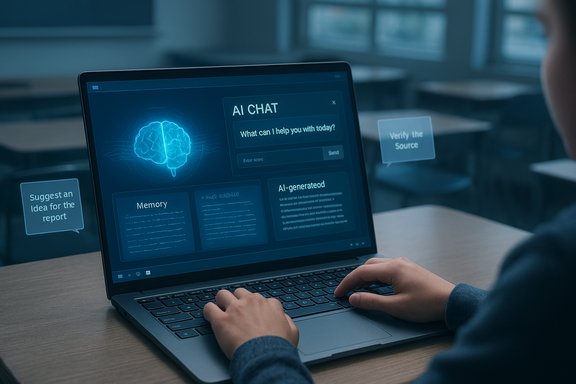 Background: what researchers are measuring — and why it matters
Scientists studying human–AI interaction have approached the question from multiple angles: behavioral experiments, neurophysiological measures, corpus linguistics, and large-scale surveys. Across those methods, two recurring themes emerge. First, tools that make information or reasoning easily accessible tend to change what people store in internal memory versus what they rely on external systems to remember. Second, repeated outsourcing of mental effort — whether to search engines, smartphones, or large language models (LLMs) like ChatGPT — can produce measurable differences in task engagement, recall, and the shape of produced language.The phenomenon of cognitive offloading — using external aids to reduce internal cognitive load — is not new, and it has long been recognized as both adaptive and double-edged. Classic experiments going back more than a decade showed that people who expect to have future access to information are less likely to encode it deeply, instead remembering where to find it. Modern AI raises the stakes: unlike a simple address book or a search engine, LLMs can generate answers, rewrite text, and perform complex multi-step reasoning that once required sustained human mental work. The question for researchers is whether repeated delegation to an AI assistant reduces the brain’s engagement, and whether that reduced engagement meaningfully impairs later independent performance. Evidence to date suggests the answer is nuanced but increasingly concerning in some use cases.
The headline study: “Your Brain on ChatGPT” and the cognitive-debt hypothesis
In mid-2025 a multidisciplinary team released a provocative paper — later circulated widely in press coverage — that directly addressed whether using a chat-based LLM for writing tasks changes neural and behavioral outcomes. In a controlled experiment, participants were assigned to one of three conditions for repeated essay-writing tasks: relying on an LLM (ChatGPT-style assistance), using a conventional search engine, or writing unaided (brain-only). The researchers recorded electroencephalography (EEG) during tasks and analyzed essays for linguistic features, originality, and recall. The central claim: extended LLM use corresponded with lower neural engagement during tasks, more formulaic outputs, reduced ability to recall content later, and a form of accumulated “cognitive debt” when users later tried to perform without the assistant. Why this study struck a chord is twofold. First, it used neural measures (EEG) in addition to behavioral metrics, offering physiological evidence that engagement differs when people rely on LLMs versus their unaided cognition. Second, the authors reported that the group repeatedly using an LLM performed worse when later asked to rely on their own mental resources — consistent with the hypothesis that outsourcing repetitive cognitive work can erode the underlying skill or readiness to perform it. Reporters and commentators framed the result starkly: prolonged LLM use “reduces brain activity” and may “erode critical thinking.” Critics quickly pointed out methodological limits — small sample sizes, short time frames, and the difficulty of disentangling practice and familiarity effects — but the paper nonetheless crystallized a plausible risk profile that demands follow-up. Caveat: the study is early-stage and not a definitive verdict. Its sample sizes were modest, and the tasks focused on a particular kind of essay-writing exercise rather than the full range of cognitive work people do with AI. Nevertheless, it is among the first to pair brain signals with behavioral outcomes in an extended LLM-usage protocol, making it highly influential in the debate.Cognitive offloading: benefits, trade-offs, and evidence
Cognitive offloading — choosing to store or process information externally to reduce internal memory demands — has a long and well-documented literature. Researchers observe three practical features:- Offloading improves immediate task performance and reduces error rates when external aids are available.
- Offloading shifts what people remember: location and retrieval cues typically survive better than content itself.
- Habitual offloading can produce weaker internal traces of information, especially for relational and item-specific details that require active encoding.
Key points from the empirical reviews:
- Offloading can be beneficial when used strategically (reminders, scaffolding, partial offloading), improving task accuracy.
- Persistent reliance on external stores, without deliberate internal practice, tends to reduce internal memory for both item-level facts and the relationships between them — meaning deeper conceptual understanding can weaken over time.
- The net effect depends on context: for professionals who must synthesize vast content quickly, offloading may boost productivity without harming core expertise; for learners building foundational skills, over-reliance risks hollowing out those skills.
Students, learning, and the classroom: real-world consequences
Educators have been among the first to feel the practical tension. Large-scale surveys and systematic reviews of generative-AI use in higher education reveal a mixed landscape. Students overwhelmingly report that tools like ChatGPT help with brainstorming, drafting, and clarifying concepts; teachers report reduced time on routine grading and increased ability to create customized materials. At the same time, multiple studies document risks: diminished engagement with reading and writing processes, ethical concerns about outsourcing assignments, and declines in outcomes when AI is used as an easy substitute for learning rather than as a scaffolded aid. A few empirical patterns stand out:- Many students use LLMs for formative tasks (summaries, paraphrasing, and drafting), which often improves short-term efficiency.
- Heavy, unstructured use of LLMs for summative work (final essays, problem sets) correlates with reduced mastery on higher-order assessments in several contexts.
- When AI is integrated with explicit pedagogical design — with prompts that scaffold thinking, requirements for reflection, and instructor oversight — it can support learning rather than replace it.
Language change: is AI teaching us to speak differently?
Generative models do more than answer questions — they have lexical preferences and stylistic fingerprints. Recent corpus-linguistics research comparing pre- and post-ChatGPT language data suggests certain words and phrasings disproportionately common in LLM outputs have increased in human speech and writing. Studies analyzing millions of words from conversational podcasts and scientific-text corpora report a measurable uptick in so-called “AI-associated” words such as delve, underscore, and strategically, especially in domains with high AI exposure. This pattern suggests not merely copying but a broader "seep-in" effect where model-generated style influences human lexical choice. Why this matters: language shapes thought. If AI nudges people toward a narrower set of phrasing and argument structures, it can homogenize public discourse, normalize certain rhetorical frames, and reduce stylistic diversity. For communities and brands that prize distinct voice — including content creators and technical writers on Windows platforms — awareness and active style governance become essential.Important caveat: linguistic change is complex and multifactorial. Media exposure, professional norms, and cultural trends also influence word choice, so establishing strict causality is difficult. Nonetheless, the rapidity and directionality of these lexical shifts are unusual enough to warrant attention and further replication across independent datasets.
What's happening in the brain — and how confident can we be?
Neurophysiological evidence is growing but still preliminary. EEG and fMRI studies comparing AI-assisted and unaided tasks consistently find differences in engagement-related signals, particularly in regions associated with attention, working memory, and executive control. Those neural markers correlate with behavioral measures of recall and originality in some experiments, lending plausibility to the idea that outsourcing can lower activation in networks that normally support sustained problem solving. Yet important methodological caveats apply:- Small samples and limited task diversity make generalization risky. One intensive lab study cannot prove long-term, population-level changes.
- Neural engagement measures are context-sensitive; lower activation can signal efficiency rather than impairment in some learning contexts.
- Effects reported over weeks or months in experimental settings may not map linearly onto years of habitual AI use in real life.
Balancing productivity and cognitive resilience: practical recommendations
For individual users, IT teams, and educators, the issue becomes one of designing interaction patterns that capture AI’s benefits while protecting the mental skills that matter. The following practical rules synthesize research findings into actionable steps:- Use AI for scaffolding, not wholesale replacement. Treat LLM outputs as drafts or problem-solving hints that must be interrogated and revised.
- Preserve deliberate practice for core skills. If writing, set aside AI-free sessions where users brainstorm, outline, and draft unaided.
- Teach prompt literacy and verification habits: encourage users to ask for sources, cross-check facts, and test AI answers rather than accepting them at face value.
- Build assignments and workflows with two-stage designs: an initial unaided attempt, followed by an AI-assisted revision phase. This preserves engagement while leveraging AI's editing benefits.
- Track language drift in organizational writing: maintain style guides and run periodic audits for “AI-speak” to preserve brand or intellectual voice.
Risks beyond cognition: ethics, misinformation, and fairness
Cognitive change is only one axis of risk. Generative AIs introduce and amplify problems that affect trust and decision-making:- Misinformation and overconfidence: LLMs can hallucinate facts or oversimplify complex findings. Systems trained to be persuasive may produce confident-but-wrong assertions that degrade users’ ability to judge reliability. Recent evaluations show models sometimes gloss over crucial caveats in scientific material.
- Skill erosion and inequality: Not every learner or worker has equal access to guided, pedagogically sound AI practices. Unequal access to AI literacy training could widen existing education and labor-market gaps.
- Monoculture of expression: Language homogenization risks flattening rhetorical diversity and creative expression — a subtle cultural effect with downstream implications for persuasion, branding, and innovation.
What remains uncertain — and where research should go next
The research frontier is active and several questions need rigorous answers:- Long-term trajectories: do repeated LLM-assisted behaviors produce durable cognitive change over years, or are effects reversible when practice resumes?
- Mechanisms of change: is performance decline due to memory decay, strategy shift, or loss of metacognitive skills (confidence, monitoring, error detection)?
- Population differences: how do age, baseline skill level, and discipline moderate risks and benefits?
- Language dynamics: to what degree do model biases and training corpora drive the observed lexical shifts, versus social contagion from AI-using communities?
For Windows users: practical steps and integration advice
Users and administrators in Windows environments can adopt simple practices that make AI a help rather than a crutch:- Enable staged workflows in productivity apps: encourage a “draft-first” approach where Office users create a raw draft before invoking AI rewriting tools.
- Configure Copilot and other assistive features with conservatism: limit automatic completions for assessment-grade tasks and require confirmation steps for model-suggested content.
- Provide internal training modules: short micro-lessons on prompt design, fact checking, and when not to use AI help sustain organizational competence.
- Preserve offline practice: set aside “AI-free hours” for creative or high-cognition tasks where independent thinking and memory consolidation are priorities.
Conclusion: AI is changing behavior — but not irreversibly or uniformly
Artificial intelligence — and ChatGPT in particular — is already changing the cognitive landscape. The evidence shows consistent, replicable phenomena: cognitive offloading reduces some internal memory traces; LLM-assisted workflows show lower task-related neural engagement in certain experiments; and AI-preferred phrasing is beginning to appear in human speech. Yet the story is nuanced. Offloading can be beneficial when used strategically; lower neural activation is not always synonymous with harm; and language change can reflect multiple social forces.The responsible course for users, educators, and IT professionals is pragmatic stewardship: use AI to expand capacity, but design workflows, curricula, and organizational policies that preserve practice, build AI literacy, and monitor outcomes. Doing so will allow the Windows community and broader society to harvest AI’s productivity gains without surrendering the independent thinking and creativity that define human advantage.
Source: bgr.com Is ChatGPT Changing How Your Brain Works? - BGR
