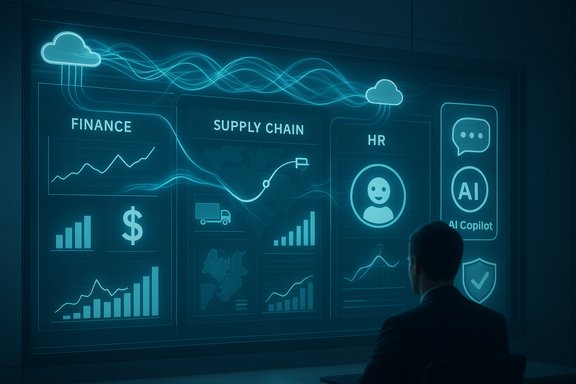
AI is no longer an optional layer on top of enterprise systems — it is actively remaking the architecture, behavior, and business case for modern ERP, turning what used to be a passive transaction ledger into a continuous, predictive decision engine that can automate work, reduce cost, and change how decisions are made across finance, supply chain, HR, and sales.
Enterprise Resource Planning (ERP) software has historically been a consolidated system of record: ledgers, inventory, orders, payroll and related master data kept in one place so different teams could stop duplicating work. Over the past three years, however, vendors and integrators have layered advanced machine learning (ML), natural language processing (NLP), and generative AI into that stack — creating what the industry now calls AI-driven ERP or AI-powered ERP systems. That evolution shifts ERP from a reporting and transaction engine to an active decision partner that recommends actions, automates workflows, and in some scenarios can initiate transactions with human supervision.
Market research firms broadly agree the ERP market is expanding alongside this AI wave. Independent analyst estimates place the global ERP market in the mid-to-high $60 billion range in 2024 and forecast growth into the low $70 billions for 2025 — numbers that align with vendor messaging that AI integration is a primary growth driver. For example, Mordor Intelligence estimated the ERP market at roughly USD 64.6 billion for 2024 with a projection to about USD 71.6 billion in 2025, while Straits Research placed 2024 at USD 67.1 billion and 2025 at USD 72.6 billion. These independent figures confirm the scale and momentum of the market the review you provided describes.
Enterprises that pair pragmatic pilots with investments in master data, retrieval layers, and governance will capture the earliest and safest wins. Those that treat AI as a magic button, skipping the data and governance work, risk unreliable outputs, cost overruns, and regulatory exposure. The companies that win will be those that modernize ERP not only technologically, but organizationally — aligning IT, data science and business leaders around measurable, risk‑adjusted outcomes while using vendor acceleration programs, copilots and agent stores as tools rather than shortcuts.
(Notes: the user-supplied review provided the framing for this analysis; vendor product claims, market numbers and feature descriptions referenced here were validated against public vendor documentation and independent analyst reports including Microsoft documentation on Copilot, SAP product materials on Joule, and market research estimates from Mordor Intelligence and Straits Research. Where vendor claims are marketing-forward or lack independently published performance data, they have been presented with caution.
Source: vocal.media AI-Driven ERP Systems
 Background / Overview
Enterprise Resource Planning (ERP) software has historically been a consolidated system of record: ledgers, inventory, orders, payroll and related master data kept in one place so different teams could stop duplicating work. Over the past three years, however, vendors and integrators have layered advanced machine learning (ML), natural language processing (NLP), and generative AI into that stack — creating what the industry now calls AI-driven ERP or AI-powered ERP systems. That evolution shifts ERP from a reporting and transaction engine to an active decision partner that recommends actions, automates workflows, and in some scenarios can initiate transactions with human supervision.Market research firms broadly agree the ERP market is expanding alongside this AI wave. Independent analyst estimates place the global ERP market in the mid-to-high $60 billion range in 2024 and forecast growth into the low $70 billions for 2025 — numbers that align with vendor messaging that AI integration is a primary growth driver. For example, Mordor Intelligence estimated the ERP market at roughly USD 64.6 billion for 2024 with a projection to about USD 71.6 billion in 2025, while Straits Research placed 2024 at USD 67.1 billion and 2025 at USD 72.6 billion. These independent figures confirm the scale and momentum of the market the review you provided describes.
Why AI Changes the ERP Equation
From passive records to proactive agents
Traditional ERP excels at durable functions: storing transactions, enforcing master data, and executing defined business logic. The limitation has been reactivity — humans interpret reports and act. AI flips that model: ML models spot patterns across large historical and real-time datasets, NLP enables conversational queries and context-aware summarization, and generative models produce narrative reports, emails, or even code. Put together, these capabilities make ERP systems proactive: surfacing forecasts, calling out risks (cash, inventory, suppliers), and recommending or executing fixes within governed boundaries. Microsoft, SAP, Oracle and others now frame copilots and assistants as the new interface to ERP, turning queries into actions while respecting role‑based access and audit trails.The practical lift: measurable, not merely theoretical
AI in ERP is not just marketing jargon. The technology creates measurable operational value in four main areas:- Automation of repetitive work (invoice capture, three‑way matching, reconciliations).
- Predictive analytics (demand forecasting, cash‑flow projection, supplier risk alerts).
- Process optimization (route planning, production scheduling, inventory rebalancing).
- Improved user experience (natural‑language queries, conversational copilots, auto‑generated narratives).
Key Benefits, with Concrete Examples
Operational efficiency and automation
AI removes or reduces manual touchpoints across transactional flows. Typical examples:- Automated invoice ingestion and vendor matching using OCR + ML reduces AP cycle times and exception rates.
- Intelligent bank reconciliation and variance analysis accelerate month‑end close.
- Predictive maintenance schedules derived from sensor feeds cut unplanned downtime in manufacturing.
Enhanced decision‑making and predictive analytics
AI shifts ERP from backward-looking reports to forward-looking forecasts.- Demand forecasting: ML models that ingest historical sales, promotions, seasonality and external signals (weather, macro indicators) yield tighter inventory targets and fewer stockouts.
- Cash‑flow management: Probabilistic forecasting tools model receivables, payment behavior and collections impact so finance teams can plan borrowing or investment more accurately.
- Risk management: Anomaly detection flagging unusual vendor spend or suspicious financial entries enables early corrective action.
Process optimization and cost reduction
Because ML models can analyze multi-dimensional telemetry at scale, AI finds inefficiencies human teams miss:- Optimized shipping and multi‑stop routing using real‑time traffic and weather can reduce transportation spend.
- Dynamic production scheduling that accounts for capacity constraints, lead times and late orders can lower work‑in‑process and shorten cycle times.
- Smart sourcing recommendations reduce procurement costs by balancing price, lead‑time reliability and supplier risk.
Improved user experience with conversational AI
Natural language interfaces and generative AI make ERP accessible beyond the expert user community. Instead of navigating menus, business users type or speak requests like “show this quarter’s cash‑flow variance and top 10 drivers” and receive a structured answer, charts and suggested actions. This reduces training friction and speeds adoption — a critical factor in realizing value from any ERP modernization project.Application Areas by Department: What Works Today
Finance & Accounting
AI automates compliance workflows, speeds reconciliations, and helps detect fraud. Examples include automated invoice capture to ledger, anomaly detection for suspicious journal entries, and ML‑assisted account matching to speed month‑end close. Oracle and SAP have explicit modules and partner solutions that deploy these patterns in the field.Supply Chain Management (SCM)
SCM benefits most visibly: demand forecasting reduces inventory holding, disruption alerts allow pre‑emptive sourcing, and route optimization cuts transport spend. Real‑time telemetry and external feeds make these forecasts much more accurate than simple historical averages. Many deployments now combine ERP data with logistics telematics, weather feeds, and external supplier scores to create a near‑real‑time planning loop.Human Resources (HR)
AI assists resume screening, candidate matching, attrition prediction and personalized learning recommendations. Enterprise HR modules incorporate NLP to surface candidate insights and generative AI to craft job descriptions or auto‑draft communications. These features accelerate talent workflows while requiring careful governance to avoid bias amplification.Sales & Customer Service
AI prioritizes leads, suggests cross‑sell opportunities, and helps service agents resolve tickets faster via suggested responses and knowledge retrieval. Microsoft and other vendors embed these capabilities directly into CRM/ERP modules so sales and service can act without context switching.The Vendor Landscape: Who’s Delivering What
- Microsoft (Dynamics 365 + Copilot + Azure): Microsoft embeds Copilot across Dynamics 365 modules and provides Copilot Studio for building custom agents. Copilot is positioned as a role‑based assistant (Sales, Finance, Supply Chain) with grounding in tenant data and governance controls. Microsoft’s documentation describes how Copilot grounds responses on data the user can access, and how Copilot Studio enables low‑code agent assembly.
- SAP (S/4HANA + Joule): SAP’s Joule is the company’s generative assistant across SuccessFactors, Ariba, S/4HANA and other suites. SAP has prioritized role‑aware Joule assistants and integrated Joule into the SAP Business Technology Platform and the SAP Business Data Cloud, with extensibility via low‑code tools (SAP Build). SAP’s product announcements describe both analytical and transactional Joule skills.
- Oracle (Fusion Cloud + Adaptive Intelligent Apps): Oracle offers Adaptive Intelligent Apps that apply ML to ERP processes like procurement, forecasting and financial management. Oracle’s product pages and regional communications describe automated invoice processing and ML-driven procurement decision aids.
- Others (Infor, Zoho, NetSuite, Workday, specialized vendors): Mid‑market and vertical players are shipping agentic features or their own copilots (e.g., Zoho’s Zia agents). These vendors often compete on vertical depth, pricing and integration with existing SMB stacks.
Implementation Challenges and Real Risks
AI-enabled ERP projects often promise big returns, but the path to production is nontrivial. The primary risks and practical considerations are:1) Data quality and integration (the foundational dependency)
AI models follow garbage in, garbage out. Fragmented master data, inconsistent SKUs, or stale supplier records will degrade prediction accuracy and automation safety. Enterprises must invest in canonical data models, master‑data management (MDM), and an enterprise search/retrieval fabric before expecting reliable agent behavior. Several analyst reports emphasize that retrieval and data hygiene are the single largest shift required to make assistants trustworthy.2) Security, privacy and compliance
ERP systems hold PII, payroll, contract and pricing data. Agent interactions and model calls create new telemetry that must be logged, access‑controlled and auditable. Vendor platforms (Microsoft, SAP, Oracle) provide enterprise‑grade controls and guidance, but customers are ultimately responsible for gatekeeping data, defining what data agents may access, and retaining human‑in‑the‑loop (HITL) controls for regulated decisions. The RISE with SAP on Azure program, for example, includes guidance on security and AI readiness for SAP migrations to Azure.3) Model transparency, bias and governance
Generative outputs can “hallucinate” or reflect biases present in training data. Finance or HR decisions driven by opaque ML models can create legal and reputational risk. A robust governance program with versioned models, confidence scores, provenance metadata and mandatory human approval for high‑impact actions is essential. Analysts recommend logging the evidence used by agents and surfacing provenance for every recommendation.4) Cost and vendor lock‑in
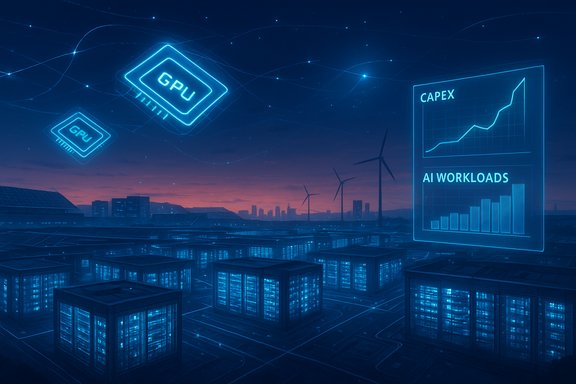
AI workloads add GPU/compute costs, increased data egress, and new licensing/consumption fees (Copilot Credits, agent metering). Some vendors separate declarative agents from metered, custom agents — creating a mixed cost model that requires careful budget planning and pilot cost-tracking. Enterprises must evaluate long‑term cost trajectories and design portability or hybrid architectures to avoid lock‑in.5) Talent gap and change management
AI‑first ERP adoption needs data engineers, ML engineers, and product owners who can translate domain problems into reliable agent behaviors. Equally important is people change: reskilling finance, supply chain and HR teams to trust and verify AI outputs, and rethinking operating models to use freed capacity for higher‑value work.A Practical Roadmap for Adoption (what works in the field)
Enterprises that succeed typically follow a staged approach that balances value capture with risk control:- Identify high‑value, low‑risk pilots. Start with tasks that have clear ROI and limited regulatory exposure (e.g., invoice OCR and matching, meeting summarization).
- Fix data hygiene. Establish canonical master data, fix SKU mismatches and build a governed retrieval index before training models or deploying agents.
- Implement human‑in‑the‑loop guardrails. For every automation, define approval thresholds and exception flows.
- Track KPIs and costs. Measure time saved, error reduction, and token/compute spend; include risk‑adjusted ROI in the business case.
- Scale via modular agents and governance. Use low‑code agent builders (Copilot Studio, SAP Build) and an agent catalog so IT and business teams can publish governed agents.
- Build a long‑term “AI factory.” Invest in repeatable pipelines for model lifecycle, observability, and cost controls as you move from pilots to enterprise scale.
Vendor Strategies and Cooperative Ecosystems
Large ERP vendors are not only embedding AI; they’re reworking the ecosystem that sits around ERP:- Co‑engineering and cloud acceleration programs. The Microsoft–SAP Global Acceleration program for RISE with SAP on Azure is a concrete example: it packages migration guidance, security, and AI‑readiness to help customers move SAP workloads to Azure with prescriptive best practices. Those joint programs accelerate modernization projects that later host AI workloads.
- Agent marketplaces and metered consumption. Microsoft’s Agent Store and SAP’s Joule ecosystem illustrate how vendors plan to distribute prebuilt agents and monetize heavier agent usage while offering declarative agents for on‑ramp adoption. Governance and admin controls are central to these marketplaces.
- Vertical specialization. Several vendors (Zoho, Infor, specialized integrators) focus on industry‑specific agents where domain knowledge is critical (packaging, healthcare, retail). These vertical plays reduce customization time and accelerate value capture.
Future Vision: Autonomous, Personalized, Generative ERP
Industry roadmaps and vendor announcements converge on three near‑term trends:- Autonomous ERP agents: Systems that can act on bounded decisions (e.g., place an order with an approved alternate supplier when a disruption is predicted) with pre‑approved rules and audit trails. Expect careful rollout with many HITL gates initially.
- Hyper‑personalized interfaces: Copilots and assistants that adapt dashboards, alerts and recommended actions to a user’s role, KPIs and working style — reducing noise and increasing signal. SAP and Microsoft are already promoting role‑aware assistants.
- Generative AI for scenario simulation and workflow composition: Generative models will enable finance and operations teams to simulate “what‑if” scenarios in natural language, generate complex reports, and even synthesize new workflows from top‑level prompts. Vendors are building studio tools for composing agents and simulations.
Critical Analysis — Strengths and Real Limitations
Notable strengths
- Scale of impact: AI reduces repetitive work across high‑volume transactional areas (AP, reconciliations, order capture) — yielding quick wins.
- Better decision velocity: Predictive analytics and real‑time alerts materially improve responsiveness to supply chain shocks and cash risks.
- User adoption lift: Conversational interfaces lower the barrier for business users to interact with ERP data.
- Ecosystem momentum: Large vendors and cloud partners are investing heavily in packaged programs and marketplaces, easing the path to production for customers that follow recommended patterns.
Potential pitfalls and blind spots
- Data and retrieval fragility: Many agent failures stem from poor retrieval or stale datasets, not model quality. Without a governed search fabric and canonical master data, agents will give inconsistent answers.
- Governance and model drift: As models and data change, outputs can silently degrade. Enterprises need model versioning, accuracy KPIs, and audit trails — areas where mature practices are still evolving.
- Hidden costs: Tokenized agent consumption, GPU inference, and integration can create budget surprises if pilots are not cost‑monitored. Capacity planning for AI workloads is a new competency for ERP teams.
- Ethical and legal risk: HR and finance automations that influence hiring or compliance demand rigorous bias testing and legal review. Deploying models into decision paths without clear accountability is hazardous.
- Vendor dependency: Heavy reliance on proprietary agent marketplaces or vendor‑hosted models increases lock‑in risk. A strategy for portability and hybrid hosting is prudent for large enterprises.
What Enterprises Should Do Today (a checklist)
- Clean and canonicalize master data before launching AI pilots.
- Run tightly scoped pilots with measurable KPIs and cost tracking.
- Require provenance and confidence metadata for every AI recommendation.
- Implement HITL gates for high‑risk decisions and maintain human audit trails.
- Use vendor acceleration programs and partner networks for migration and hardened blueprints.
- Invest in cross‑functional governance (legal, security, finance, business owners) early.
Conclusion
AI‑driven ERP systems are not a marketing fad — they are a structural evolution that shifts ERP from a passive record keeper to an intelligent, proactive business partner. The upside is compelling: automation, faster decisions, optimized costs, and more accessible interfaces. The caveat is equally real: success depends on disciplined data foundations, robust governance, cost controls, and change management.Enterprises that pair pragmatic pilots with investments in master data, retrieval layers, and governance will capture the earliest and safest wins. Those that treat AI as a magic button, skipping the data and governance work, risk unreliable outputs, cost overruns, and regulatory exposure. The companies that win will be those that modernize ERP not only technologically, but organizationally — aligning IT, data science and business leaders around measurable, risk‑adjusted outcomes while using vendor acceleration programs, copilots and agent stores as tools rather than shortcuts.
(Notes: the user-supplied review provided the framing for this analysis; vendor product claims, market numbers and feature descriptions referenced here were validated against public vendor documentation and independent analyst reports including Microsoft documentation on Copilot, SAP product materials on Joule, and market research estimates from Mordor Intelligence and Straits Research. Where vendor claims are marketing-forward or lack independently published performance data, they have been presented with caution.
Source: vocal.media AI-Driven ERP Systems