

Satya Nadella’s brief Davos intervention did more than reframe a familiar debate — it refracted the old question of where data lives into a sharper argument about who owns what inside AI models, and why that ownership will define corporate sovereignty in the AI era. At the World Economic Forum’s 2026 meeting Nadella told Larry Fink that “if you are not able to embed the tacit knowledge of the firm in a set of weights in a model that you control, by definition you have no sovereignty,” and added that the data center’s physical location is “the least important thing.” Those comments crystallise a growing consensus in enterprise technology: sovereignty is less a geography problem and more a question of model control, intellectual property, and governance.
The last decade’s debates around data sovereignty focused on where personal and corporate data are stored and which legal regime governs access. European customers demanded data residency and transparency, and hyperscalers responded with region-locked offerings such as Microsoft’s EU Data Boundary — a multi‑phase program designed to store and process customer data within EU/EFTA regions. Microsoft presents the boundary as enhanced residency plus contractual and process controls intended to protect customer data. But legal scholars, privacy experts, and national regulators have repeatedly warned that simply moving data to an EU data center does not eliminate the reach of extraterritorial law. US statutes and surveillance frameworks such as the CLOUD Act and FISA 702 give US authorities legal pathways to compel US-based providers, creating a legal tension that residency alone cannot resolve. That technical/legal reality is why some policymakers and analysts now talk about AI sovereignty — the ability of states and firms to shape, deploy, and govern AI ecosystems consistent with their values, operational control, and resilience. The World Economic Forum’s recent paper reframes this as a strategic mix of localized investment and trusted international collaboration.
But the reframing is not a magic bullet. Technical limits (encryption performance), legal realities (extraterritorial access laws), and commercial constraints (cost and talent) mean that sovereignty will be accomplished as a layered programme of technical, contractual, and policy measures — not by a single architectural decision. Firms that recognise sovereignty as a composite capability — one that blends control of models, resilient hosting, strong cryptography, auditable governance, and legal defensibility — will be best positioned to preserve enterprise value as AI reshapes the competitive landscape.
Source: theregister.com Nadella talks AI sovereignty at the World Economic Forum
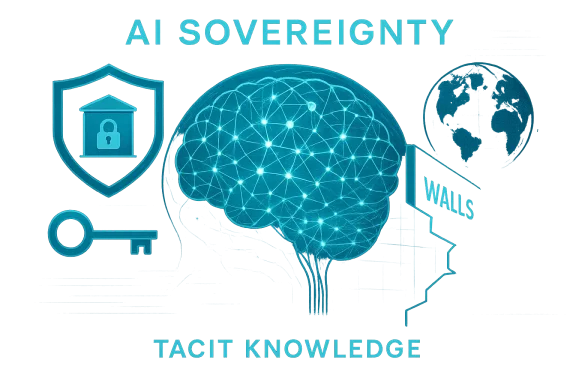 Background: from data sovereignty to AI sovereignty
The last decade’s debates around data sovereignty focused on where personal and corporate data are stored and which legal regime governs access. European customers demanded data residency and transparency, and hyperscalers responded with region-locked offerings such as Microsoft’s EU Data Boundary — a multi‑phase program designed to store and process customer data within EU/EFTA regions. Microsoft presents the boundary as enhanced residency plus contractual and process controls intended to protect customer data. But legal scholars, privacy experts, and national regulators have repeatedly warned that simply moving data to an EU data center does not eliminate the reach of extraterritorial law. US statutes and surveillance frameworks such as the CLOUD Act and FISA 702 give US authorities legal pathways to compel US-based providers, creating a legal tension that residency alone cannot resolve. That technical/legal reality is why some policymakers and analysts now talk about AI sovereignty — the ability of states and firms to shape, deploy, and govern AI ecosystems consistent with their values, operational control, and resilience. The World Economic Forum’s recent paper reframes this as a strategic mix of localized investment and trusted international collaboration. What Nadella said — and why it matters
The core claim: weights, not walls
Nadella’s central argument is succinct: the economic value an enterprise derives from AI comes from embedding its tacit and proprietary knowledge into model weights that the firm controls. If that embedding happens inside someone else’s model — an externally hosted, third‑party foundational model — then the firm risks leaking enterprise value to that model owner. In his words, without control over the model and its weights you “have no sovereignty.” There are three dimensions to parse here:- Intellectual property and competitive advantage. Models that internalise a firm’s procedures, tradecraft, and specialised data can become proprietary assets. If those assets are held or monetised by another organisation, competitive value can slip away.
- Operational control. Controlling weights means the firm determines versioning, updates, audits, and the guardrails that protect high‑value processes.
- Regulatory and legal control. Where models are hosted and who can access logs or model internals matters to compliance, but Nadella’s point is that technical control over the model itself is the more critical lever.
The punchline: data center location is secondary
Nadella called data center geography “the least important thing,” arguing that encryption and advanced networking already allow models and tokens to be delivered globally, and that latency — while relevant — is a practical engineering constraint rather than a strategic determinant of sovereignty. This flips the conventional sovereignty narrative: if firms can control model weights and protect those weights cryptographically, then the physical site of compute becomes a logistical choice rather than a sovereignty safeguard.How persuasive is the reframing? Strengths of the argument
1) It captures the real economic vector: model‑embedded knowledge
Nadella’s emphasis on weights tracks how enterprises actually capture AI-driven value. Companies using retrieval‑augmented generation (RAG) or fine‑tuning to inject proprietary knowledge into models find that model‑internalised representations accelerate workflows and automate decisions in ways that external API calls often cannot match. When domain knowledge, unique taxonomies, and business rules live inside a model the result is tighter integration and often measurable productivity gains. Multiple industry studies and engineering papers show RAG and fine‑tuning are practical, complementary strategies for knowledge injection — and that each carries distinct tradeoffs.2) It reframes governance around control, not location
By shifting the conversation toward control of models and weights, Nadella forces enterprises and regulators to think about who can change a model, inspect its training data, or access its logs — not just where disks are located. That reframing makes governance tools — model access controls, provenance, audit logs, explainability, and technical measures such as confidential computing — central to sovereignty strategies. It also aligns with the WEF’s call for mechanisms that combine local investment with trusted international collaboration.3) It is technically grounded (mostly)
Many organisations are already pursuing the strategy Nadella describes: building private models, licensing open weights, or using on‑prem / customer‑managed deployments of LLMs to keep control over training data and inference. For regulated industries — finance, defence, healthcare — keeping models under direct control is a clear risk mitigation strategy, and leading cloud providers now offer tools to host, encrypt, and run models with customer‑managed keys.The tradeoffs and risks Nadella downplays
Nadella’s reframing is powerful, but it glosses over important technical, economic, and legal tradeoffs. A sober assessment must weigh three categories of risk.1) Cost and capability: creating sovereign models is expensive
Training and operating models that match the capabilities of leading foundation models requires massive compute, specialised hardware (GPUs/accelerators), energy, and talent. Microsoft has indeed committed tens of billions in data center capex and dedicated AI facilities — and the hyperscalers collectively are pouring large sums into infrastructure — but for most enterprises building and maintaining proprietary, high‑performance models is economically prohibitive. Many firms will therefore continue to rely on third‑party models via APIs or cloud partnerships, trading sovereignty for affordability and speed to market. Claims that firms can simply “own their weights” understate the capital and skills required.2) Technical limits on “perfect” sovereignty: encryption, latency, and practical privacy
Nadella asserts that encryption and other technical protections reduce the role of physical data center placement — but the reality is nuanced. Homomorphic encryption and similar privacy‑preserving techniques can allow computation on encrypted data, but they remain orders of magnitude slower than plaintext inference and are currently practical only for narrow workloads or with significant optimisation. Confidential computing (trusted execution environments) offers a middle path — protecting data in use — but it does not magically erase compliance concerns or jurisdictional reach. In short, cryptography helps but does not instantly deliver frictionless, low‑latency, fully sovereign model operation at enterprise scale.3) Legal exposure: model control may not insulate you from third‑party legal orders
Even if a firm controls its weights and model code, legal exposure remains complex. Courts and regulators can subpoena logs, model provenance, or data used in training. If a model is built on infrastructure or services owned by providers under another jurisdiction, legal mechanisms may still enable access. Moreover, regulators in different jurisdictions are increasingly focused on model behaviour, safety testing, and auditability. Sovereignty, then, is not only about ownership of weights; it is about legal defensibility, auditable governance, and documented stewardship of model pipelines.Practical architectures: how firms can aim for “model sovereignty”
For IT decision makers who accept Nadella’s premise, several practical approaches emerge. These are not exclusive; many organisations will combine them.- Private fine‑tuning and closed weights: Build a model (or fine‑tune an open‑weights model) inside a customer‑controlled environment so the enterprise owns the resulting weights.
- RAG + on‑prem retrieval: Keep the knowledge base in company control, use RAG to avoid embedding all facts in weights, and host the retriever/inference inside a controlled environment.
- Confidential computing and customer‑managed keys: Use TEEs and customer‑held key management to minimize provider access to plaintext.
- Hybrid hosting and federation: Split workloads so training happens in a trusted facility while inference-serving is distributed for latency reasons — with cryptographic protections and strict access controls.
- Contractual and legal controls: Combine technical controls with clear contract language, transparency mechanisms, and legal assurance about access and auditability.
The regulatory and geopolitical dimension
Why the EU Data Boundary didn’t end the debate
Microsoft’s EU Data Boundary delivers stronger residency guarantees and contractual commitments, but experts warn that residency is not a panacea. The CLOUD Act and similar extraterritorial access regimes mean that the nationality of the provider and the legal seat of control matter in practice. European regulators and security agencies have repeatedly highlighted that legal frameworks — not just physical fences — determine the risk profile of cross‑border data flows. That is why many governments are building sovereign‑cloud programs or incentivising non‑US cloud alternatives, and why the WEF proposes pathway models combining local investment with trusted international collaboration.Sovereignty as a layered concept
The modern definition of AI sovereignty — used by policymakers — is deliberately multi‑layered: it includes values alignment, strategic and operational control, flexibility, resilience, and local investments. In other words, sovereignty is political, economic, and technical at once. For companies, then, “sovereignty” will likely mean a combination of: local hosting where necessary, model control for strategic applications, contractual protections, and participation in trusted supply chains. No single technical measure will satisfy every regulator or board.Business implications: strategy, procurement, and vendor risk
Vendor lock‑in vs. lock‑out
There’s a delicate balance between relying on leading foundation‑model providers (speed, capability, cost efficiency) and the strategic need to retain control. Locking into an API‑only model creates predictable vendor dependence; building a private model creates capital intensity and the risk of being out‑paced by innovation. Firms must ask:- Which use cases are strategic enough to justify proprietary model investment?
- Where is RAG sufficient to deliver required outcomes and compliance?
- What contractual and technical assurances are necessary to satisfy auditors and regulators?
Governance and auditing become product features
Enterprises must treat model governance as a first‑class product requirement: reproducible training pipelines, versioned datasets, immutable provenance records, red‑team testing, and audit trails. Suppliers who embed governance, explainability, and legal‑forensic features into their offerings will have a competitive advantage with risk‑sensitive customers. Microsoft and others are already emphasising such tooling alongside their cloud capex narrative.Areas where Nadella’s claim needs cautionary flags
- Claims that data center location is “the least important thing” should be read as strategic emphasis, not absolute truth. For many regulated workloads the location and legal ownership of the infrastructure remain essential compliance controls, and in some jurisdictions they are table stakes for public procurement. Nadella’s perspective is valid for many commercial scenarios but not universally.
- Technical guarantees from encryption and confidential computing are improving but not yet ubiquitous. Homomorphic encryption and FHE are promising for private inference, but practical performance and cost constraints remain a material barrier for real‑time, large‑scale applications. Confidential computing provides stronger near‑term protections but requires careful threat modelling. Organisations should avoid over‑reliance on a single cryptographic silver bullet.
- Statements that hyperscalers have “spent hundreds of billions” on datacentres are headline‑friendly but can conflate cumulative multi‑company market forecasts with a single company’s disclosed capex. Microsoft has guided and reported very large capex figures in recent years (tens of billions per fiscal year) and has launched major AI data center projects, but corporate spending claims should be rooted in earnings guidance and filings rather than rhetoric. Readers should treat aggregated industry spending projections with care.
Practical checklist for enterprise IT leaders (a working playbook)
- Map your crown‑jewel workflows: identify which processes require true model sovereignty (IP, regulatory sensitivity, national security).
- Start with RAG for low‑latency, regularly updated knowledge and reserve fine‑tuning for irreversible IP you must own.
- Insist on provable governance: pipeline reproducibility, versioned datasets, model cards, and immutable audit trails.
- Negotiate contractual protections for audit access, data‑use restrictions, and breach notification with any third‑party model provider.
- Evaluate confidential computing and customer‑managed keys for high‑value or regulated inference workloads.
- Run a legal stress‑test: simulate lawful access requests across jurisdictions with counsel to identify risk exposure.
- Budget realistically for talent, capex, and energy costs if pursuing private model ownership; expect multi‑year timeframes to reach parity with the largest foundation models.
Conclusion: sovereignty is plural, not single‑axis
Satya Nadella’s Davos shorthand — weights over walls — is a useful provocation. It redirects corporate and policy thinking from the static question of where to a dynamic question of who controls what, when, and how. That shift should prod boards, CISOs, and policymakers to prioritise model governance, provenance, and operational control as the core elements of sovereignty in the AI era.But the reframing is not a magic bullet. Technical limits (encryption performance), legal realities (extraterritorial access laws), and commercial constraints (cost and talent) mean that sovereignty will be accomplished as a layered programme of technical, contractual, and policy measures — not by a single architectural decision. Firms that recognise sovereignty as a composite capability — one that blends control of models, resilient hosting, strong cryptography, auditable governance, and legal defensibility — will be best positioned to preserve enterprise value as AI reshapes the competitive landscape.
Source: theregister.com Nadella talks AI sovereignty at the World Economic Forum
