
Michael Parekh’s latest RTZ dispatch, “AI: Weekly Summary. RTZ #1018,” lands as a compact but trenchant briefing for anyone who needs a practical read on where generative AI, platform risk, and the hardware market are converging this week. (michaelparekh.substack.com)
Michael Parekh’s RTZ series has for years served as a weekly signal‑filter for executives and technologists tracking tactical shifts in AI productization, security, and market dynamics. The #1018 edition continues that pattern: short, focused observations that connect headlines — from chip supply and cloud economics to emergent attack classes against AI assistants — into operational takeaways for IT teams and decision makers. That history of RTZ coverage has been reflected in community conversations and past threads on Windows‑focused forums, where RTZ ecited as quick primers for engineers and administrators.
In this piece I summarize the key points presented in RTZ #1018, verify the technical claims that matter to Windows administrators and enterprise IT teams, and then offer deeper analysis and practical guidance. I draw on Parekh’s dispatch as the narrative spine, and cross‑check major assertions against independent security advisories, market analyses, and vendor advisories so readers can act with confidence.
At the same time, geopolitical and export controls have carved out notable regional exceptions to that dominance: public comments from Nvidia’s CEO and multiple outlets document a sharp reduction of the company’s foothold in China following export restrictions — a structural risk that affects global supply and pricing. (tomshardware.com)
Microsoft, Aim Labs, and the market researchers cited in this piece provide the factual scaffolding for this analysis, and the operational recommendations above follow directly from those documented findings and the practical signal Parekh provides in RTZ #1018. For Windows administrators and IT leaders, the message is straightforward: the era of assistants as benign UX features is over — treat them like privileged services, instrument them like users, and protect them like critical infrastructure. (michaelparekh.substack.com)
Conclusion: RTZ #1018 is a high‑value signal. Convert it into policy, controls, and testing cycles now — because the convergence of concentrated hardware markets, agentic automation, and novel AI attack vectors is already changing how enterprise security and operations must work.
Source: AI: Reset to Zero AI: Weekly Summary. RTZ #1018
 Background / Overview
Michael Parekh’s RTZ series has for years served as a weekly signal‑filter for executives and technologists tracking tactical shifts in AI productization, security, and market dynamics. The #1018 edition continues that pattern: short, focused observations that connect headlines — from chip supply and cloud economics to emergent attack classes against AI assistants — into operational takeaways for IT teams and decision makers. That history of RTZ coverage has been reflected in community conversations and past threads on Windows‑focused forums, where RTZ ecited as quick primers for engineers and administrators.In this piece I summarize the key points presented in RTZ #1018, verify the technical claims that matter to Windows administrators and enterprise IT teams, and then offer deeper analysis and practical guidance. I draw on Parekh’s dispatch as the narrative spine, and cross‑check major assertions against independent security advisories, market analyses, and vendor advisories so readers can act with confidence.
What RTZ #1018 says, in brief
- The newsletter highlights a continuing consolidation at the top of the AI hardware market — a reality that is reshaping cloud negotiating leverage and procurement risk for enterprises.
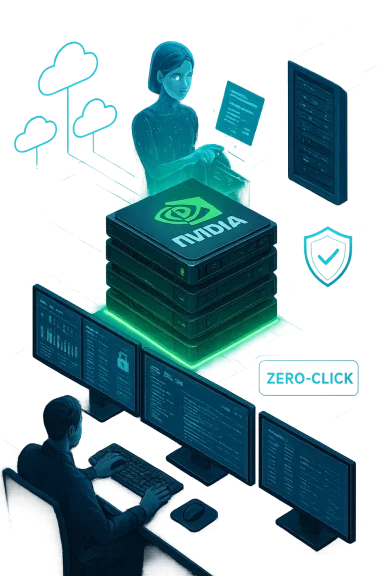
- It flags a class of security incidents tied to AI assistants and Retrieval‑Augmented Generation (RAG) systems, underscoring a new pattern of zero‑interaction attacks (what some researchers have begun to call “zero‑click” AI exfiltration).
- The writeup also notes product‑level moves among major platform vendors to push agentic automation and deeper assistant integrations into workflows — a development that promises productivity gains, and simultaneously widens the enterprise attack surface.
Nvidia, the market, and why hardware concentration matters
What Parekh notes
RTZ #1018 points to Nvidia’s outsized influence on the economics and cadence of current AI deployments: demand for high‑end GPUs is driving everything from public cloud pricing to vendor M&A and inventory backlogs.Independent verification
Multiple market analysts and industry coverage corroborate the scale of Nvidia’s dominance. Recent market research estimates Nvidia’s share of the GPU‑for‑AI market at well above 80–90% by revenue in the 2024–2026 window, with data center GPU revenues ballooning alongside Blackwell family product cycles. Independent commentators have also described a very tight supply picture and large order backlogs for leading Nvidia accelerators. (siliconanalysts.com)At the same time, geopolitical and export controls have carved out notable regional exceptions to that dominance: public comments from Nvidia’s CEO and multiple outlets document a sharp reduction of the company’s foothold in China following export restrictions — a structural risk that affects global supply and pricing. (tomshardware.com)
Why this matters for IT and procurement
High concentration of AI compute in a single vendor creates three concrete risks IT leaders must manage:- Procurement fragility: sudden spikes in demand or export‑driven market gaps can delay projects, inflate cloud costs, or force single‑vendor procurement—each of which undermines project timetables.
- Price leverage: cloud providers and large hyperscalers can pass higher GPU costs through to customers; businesses that assumed steady pricing for inference and training workloads can see margins compress.
- Vendor lock and compatibility: heavy investment in a single accelerator ecosystem creates migration pain if alternate architectures (ARM‑based inference chips, custom accelerators) become necessary.
EchoLeak and the arrival of zero‑click AI attacks
What RTZ #1018 flagged
Parekh calls attention to the broader security lesson exposed by recent disclosures: AI assistants that draw on external documents and enterprise data (RAG copilots, for example) create an expanded surface for automated exfiltration and command injection. RTZ signals that this class of attacks requires rethinking traditional email‑oriented defenses. (michaelparekh.substack.com)The technical reality — what researchers found
In early 2025, researchers from Aim Labs disclosed a vulnerability chain they labeled “EchoLeak” (CVE‑2025‑32711). The attacks demonstrated a zero‑click path by which specially crafted external artifacts (for example, maliciously formed emails or web content) could influence an AI assistant’s context and cause disclosure of sensitive information without the user opening a message. The vulnerability was tracked publicly, and vendors pushed server‑side mitigations. Multiple technical writeups, security advisories, and CVE/NVD entries document the discovery and remediation. (aim.security)Why EchoLeak is different from classic exploits
EchoLeak and its ilk are not the traditional phishing or code‑execution vulnerabilities IT teams are used to. Key differentiators:- No user interaction required. The exploit leverages the assistant’s automatic ingestion of contextual data rather than tricking a user into clicking a malicious link.
- Logic/semantic manipulation rather than memory corruption. Attackers manipulate model prompts, traversal logic, or document parsing to cause the assistant to reveal or redirect data outputs.
- Wide blast radius. Because many organizations grant assistants broad document access, a successful exploit can reach across mailboxes, shared drives, and central indexes.
Productization of agentic features: promise and peril
Parekh’s observation
RTZ #1018 emphasizes that major vendors are shifting from chat‑first assistants to agentic workflows — assistants that take automated actions across applications and systems. This is the transition from “answer” to “act.” (michaelparekh.substack.com)Why agentic assistants escalate governance needs
Agentic features multiply operational concerns:- They expand the attack surface: making changes, clicking through UIs, or invoking APIs on behalf of users means any compromise becomes action‑capable.
- They complicate audit and attribution: when an assistant acts autonomously, logging and policy enforcement must evolve to capture intent and decision traces.
- They blur role boundaries: assistants may need permissions traditionally reserved for humans (calendar access, file writes, ticket creation), which requires new least‑privilege models.
What RTZ #1018 does well — strengths
- Timely focus on attack surface expansion. Parekh’s emphasis on AI assistants as an emergent risk is both timely and actionable; it reframes assistant features as security controls rather than merely UX improvements. (michaelparekh.substack.com)
- Concise synthesis. The newsletter distills multiple threads into operational takeaways that are useful to IT leaders who must triage priorities quickly.
- Practical orientation. RTZ’s tone encourages remediation and governance rather than fear, pointing readers toward defensive posture adjustments.
Where RTZ #1018 could go deeper — gaps and caveats
- Quantitative procurement guidance is thin. The note on hardware concentration is correct, but RTZ doesn’t provide procurement playbooks (e.g., spot instance tiering, contractual GPU guarantees, or hybrid inference strategies) that enterprises can deploy immediately. Market data from independent analysts shows the urgency; organizations need concrete procurement alternatives. (siliconanalysts.com)
- Operationalizing AI governance requires more detail. Pointing to the problem is valuable, but rolling out policy — e.g., how to instrument RAG systems for data provenance or how to enforce in‑flight policy checks — needs step‑by‑step guidance that most IT teams lack.
- Risk of overgeneralization. The category “AI assistant risk” bundles many different architectures. Not every assistant is vulnerable in the same way; the real differentiators are data access level, RAG design, and connector privileges. Readers should treat the risk as conditional, not universal.
Concrete recommendations for Windows admins and enterprise IT
Below are prioritized, practical steps every team should consider immediately. They map directly to the risk vectors highlighted in RTZ #1018 and corroborated by independent security research.1. Treat assistants as privileged resources
- Apply least‑privilege to Copilot/assistant accounts and connectors.
- Enforce conditional access policies and session limits for assistant service principals.
- Limit sensitive connectors (HR, payroll, legal repositories) from being accessible to any assistant without a formal review.
2. Require RAG and agent actions to pass policy gates
- Implement automated policy checks on RAG retrievals: tag sensitive documents and enforce redaction or blocking before they enter a model context.
- For agentic workflows, require an approval step for actions that change state (email sends, ticket creation, admin tasks).
3. Harden email and content ingestion pipelines
- Apply content‑type sanitization and canonicalization before documents are fed into assistants.
- Inspect and quarantine inbound content with AI‑aware scanning rules that look for prompt injection patterns and suspicious structure.
4. Monitor and log assistant behavior like a user
- Stream assistant actions into SIEM with identity, intent, and retrieval traces.
- Build dashboards that track high‑risk patterns: mass document retrievals, repeated access to sensitive datasets, rapid agent‑initiated changes.
5. Update procurement and architecture plans
- Add GPU risk clauses into cloud contracts (priority access windows, price‑cap protections).
- Design model serving to be portable across accelerator types when feasible (avoid early hard dependencies on single‑vendor stack).
- Maintain a tiered strategy: on‑prem inference for highly sensitive workloads and cloud for elastic, lower‑sensitivity workloads.
6. Engage legal, compliance, and incident response
- Update incident playbooks to include AI‑specific channels: compromised agent, model misuse, and emergent data exfiltration.
- Coordinate with legal to define notification thresholds for model‑related data exposure.
Strategic and longer‑term considerations
Rethink identity for agents
Identity and entitlement models designed for humans do not map neatly to autonomous agents. Enterprises should explore agent identity frameworks that allow for short‑lived credentials, attestation, and more restrictive scopes.Invest in model provenance and explainability
Where regulatory, legal, or safety requirements exist, teams should require models and retrieval systems to produce provenance trails — which documents were used to answer a query, with cryptographic hashes where appropriate.Advocate for vendor accountability and safer defaults
Vendors will continue to ship agentic features rapidly. IT leaders should demand:- Default‑off, least‑privilege assistant configurations.
- Server‑side mitigations for known AI attack classes.
- Transparent changelogs showing how data is accessed and used.
Risks to watch over the next 12–24 months
- Supply disruptions and pricing shocks. Continued demand concentration could make high‑end GPUs a persistent bottleneck for projects needing quick scale, forcing reprioritization of AI initiatives. (siliconanalysts.com)
- New classes of AI command injections. Researchers will continue to discover creative chains where external content or connectors steer model behavior; defenders must treat this as an ongoing threat class. (aim.security)
- Regulatory pressure on assistant defaults and data use. Expect regulators to scrutinize how assistants access and reuse personal and corporate data; this will impact product roadmaps and enterprise adoption speed. (lemonde.fr)
- Erosion of auditability in agentic workflows. As workflows become more autonomous, the ability to reconstruct causal chains after an incident will be tested — enterprises should build for forensic readiness now.
Final assessment: what to do with RTZ #1018’s signals
Michael Parekh’s RTZ #1018 does exactly what the format should: it raises timely red flags, condenses market signals, and nudges readers toward operational responses. The key step for IT leaders is to convert those signals into programmatic controls:- Audit current assistant privileges and connectors this week.
- Add AI‑specific scenarios to threat modeling and tabletop exercises within 30–60 days.
- Update procurement and cloud negotiation playbooks to account for accelerator risk and pricing volatility.
- Instrument detection and logging for model access and agent actions as part of the normal SIEM ingestion pipeline.
Short checklist for immediate action
- Inventory assistants and RAG connectors (days).
- Apply least‑privilege to assistant and agent accounts (days).
- Enable DLP and retrieval redaction for sensitive document classes (weeks).
- Add AI agent scenarios to incident response playbooks (weeks).
- Negotiate cloud GPU commitments and alternative execution plans (months).
Microsoft, Aim Labs, and the market researchers cited in this piece provide the factual scaffolding for this analysis, and the operational recommendations above follow directly from those documented findings and the practical signal Parekh provides in RTZ #1018. For Windows administrators and IT leaders, the message is straightforward: the era of assistants as benign UX features is over — treat them like privileged services, instrument them like users, and protect them like critical infrastructure. (michaelparekh.substack.com)
Conclusion: RTZ #1018 is a high‑value signal. Convert it into policy, controls, and testing cycles now — because the convergence of concentrated hardware markets, agentic automation, and novel AI attack vectors is already changing how enterprise security and operations must work.
Source: AI: Reset to Zero AI: Weekly Summary. RTZ #1018
