

Alibaba Cloud’s pivot toward an AI‑first platform feels less like a copy of Amazon Web Services and more like a deliberate alignment with Google Cloud’s developer‑ and data‑centric playbook, and that distinction matters for customers, partners, and investors alike. Momentum Works’ recent analysis argues that Alibaba is learning from Google Cloud’s strengths — high‑quality ML tooling, open models, and tight data‑to‑model integrations — rather than AWS’s infrastructure‑first, breadth‑over‑depth strategy. That thesis is visible across Alibaba’s product moves (the Qwen3 model family, open‑weight releases), commercial signals (a headline RMB 380 billion investment program), and go‑to‑market choices that prioritize model adoption and developer experience over raw IaaS parity.
Alibaba’s Cloud Intelligence Group has shifted from a low‑profile infrastructure arm into the company’s principal growth engine, powered by generative AI demand and a deliberately open model strategy. In recent quarters the unit reported accelerated cloud revenue growth — RMB 33.4 billion in the June quarter, up 26% year‑over‑year — and the company has announced a three‑year plan to invest roughly RMB 380 billion (~US$52–53 billion) in AI and cloud infrastructure. Those are not PR soundbites; they are explicit strategic choices to build both compute capacity and the software stack that runs on it. At the same time Alibaba has published and open‑released the Qwen3 family — a multi‑size, mixture‑of‑experts (MoE) and dense model lineup that emphasizes hybrid reasoning, long contexts, and developer configurability. Qwen3’s technical claims (36 trillion training tokens, multiple sizes including a 235B MoE variant with 22B active parameters, wide language coverage) underline a product‑led approach intended to seed ecosystems and lock developers into Alibaba’s tooling and cloud hosting options. These product and investment signals together explain why many analysts and regional strategists see Alibaba following a Google‑like path: prioritize ML tooling, make models available and interoperable, and build a developer funnel that converts to cloud demand.
For enterprises and investors, the right posture is pragmatic optimism: acknowledge Alibaba’s strengths (open models, vertical data advantages, capital) while demanding measurable proof — utilization curves, published benchmarks, and signed enterprise commitments — before presuming the company has closed the gap with global hyperscalers.
Key recent verifications summarized in brief:
Source: The Low Down - Momentum Works https://thelowdown.momentum.asia/why-alibaba-cloud-is-learning-from-google-cloud-not-aws/
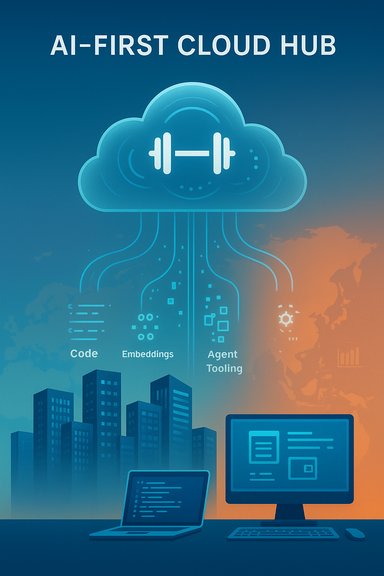 Background / Overview
Alibaba’s Cloud Intelligence Group has shifted from a low‑profile infrastructure arm into the company’s principal growth engine, powered by generative AI demand and a deliberately open model strategy. In recent quarters the unit reported accelerated cloud revenue growth — RMB 33.4 billion in the June quarter, up 26% year‑over‑year — and the company has announced a three‑year plan to invest roughly RMB 380 billion (~US$52–53 billion) in AI and cloud infrastructure. Those are not PR soundbites; they are explicit strategic choices to build both compute capacity and the software stack that runs on it. At the same time Alibaba has published and open‑released the Qwen3 family — a multi‑size, mixture‑of‑experts (MoE) and dense model lineup that emphasizes hybrid reasoning, long contexts, and developer configurability. Qwen3’s technical claims (36 trillion training tokens, multiple sizes including a 235B MoE variant with 22B active parameters, wide language coverage) underline a product‑led approach intended to seed ecosystems and lock developers into Alibaba’s tooling and cloud hosting options. These product and investment signals together explain why many analysts and regional strategists see Alibaba following a Google‑like path: prioritize ML tooling, make models available and interoperable, and build a developer funnel that converts to cloud demand. Why “Learning from Google Cloud” is a Useful Frame
1. Developer and data tooling over IaaS breadth
Google Cloud’s reputation since the Vertex AI and BigQuery era has been one of data and ML first — the company appeals strongly to data engineers, MLOps teams, and research organizations by offering integrated tooling for model training, evaluation, and deployment. Alibaba’s product moves mirror that orientation: open model releases, a focus on long‑context models and agent capabilities, and explicit developer controls for “thinking” budgets and inference trade‑offs. Those are developer‑facing bets more akin to Google’s approach than AWS’s historical emphasis on catalog breadth and infrastructure primitives.2. Open models as a distribution channel
Making high‑quality models open‑weight — as Alibaba did with Qwen3 — is a distribution play that creates developer mindshare, plugin ecosystems, and low‑friction integration paths that can later be monetized via managed hosting, enterprise SLAs, and verticalized applications. Google has long leaned into managed ML offerings and open research to build adoption; Alibaba appears to be replicating that playbook (open models + cloud managed hosting) to grow AI workloads that stick to its infrastructure. This is a markedly different route than AWS’s more conservative, proprietary model ecosystem approach.3. Productized model features (agent tooling, long context, hybrid reasoning)
Google Cloud’s investments in agent frameworks, embeddings, and data‑centric ML tooling make it attractive to teams building complex workflows. Alibaba’s Qwen3 and complementary platform capabilities emphasize agentic coding, multimodality, and configurable reasoning budgets — features that directly address the same engineering pain points. The implication: Alibaba is optimizing for the same class of workloads that make enterprises choose Google Cloud for advanced ML projects.The Evidence: Products, Metrics, and Capital
Qwen3: technical posture and product intent
- Qwen3 is a multi‑model family with dense models from 0.6B to 32B and MoE variants (notably a 235B model with 22B parameters active), trained on an enormous corpus and advertised to support long contexts and hybrid reasoning modes. Alibaba offers direct developer controls to tune the model’s “thinking” duration and therefore performances vs. cost trade‑offs — a very developer‑centric capability.
- Independent reporting (CNBC, TechCrunch, other outlets) places Qwen3 as competitive versus leading models on benchmarks for coding and reasoning tasks, while also noting that direct head‑to‑head superiority claims are best evaluated via independent benchmarks. That caveat matters: open release increases credibility, but independent third‑party metrics remain critical to confirm production parity.
Capital and capacity: the RMB 380 billion investment
Alibaba’s commitment to ~RMB 380 billion over three years signals a heavy, infrastructure‑backed bet to host the very workloads it is trying to attract. Reuters and multiple financial outlets report the same headline investment figure and tie it to new data‑centers and AI infrastructure expansion, including regional pushes like new Gulf and Southeast Asia capacity. That combination of capital and product openness is a classic “build the stack to own the value” move.Monetization signals
Short‑term revenue acceleration in Cloud Intelligence (RMB 33.4 billion in the June quarter, +26% YoY) demonstrates that the strategy is generating demand. Alibaba’s public filings and earnings commentary emphasize that AI‑related product revenue is growing at triple‑digit rates and is an increasing share of external cloud revenue. That’s consistent with a Google‑style product funnel: developer adoption → managed services → enterprise contracts.Critical Analysis: Strengths, Trade‑offs, and Risks
Strengths — why the Google model makes sense for Alibaba
- Developer mindshare and stickiness. Open models plus accessible tooling reduce friction for startups and internal teams to build atop Qwen3. Over time, well‑integrated tooling and vertical apps can translate developer usage into recurring cloud revenue.
- Vertical advantage via data and commerce. Alibaba controls massive real‑world datasets (e‑commerce, logistics, payments). These data assets enable high‑value, verticalized models and applications that are hard for generic cloud providers to replicate without the same platform customers. That use‑case specificity is a natural complement to a Google‑style ML+data orientation.
- Local market moats and compliance alignment. For many APAC customers, data‑residency, regulatory alignment, and strong local partnerships reduce barriers to adoption — and Alibaba can convert local market leadership into regional expansion. That’s a powerful near‑term advantage versus global incumbents.
Trade‑offs and concrete risks
- Capital intensity and unit economics. Building data centers and buying accelerators at scale is front‑loaded capex. If utilization lags or ASPs (average selling prices) compress because of price competition, the capex could depress margins for many quarters. Alibaba must convert usage into higher‑margin managed services quickly to justify the spending.
- Benchmarking and credibility gap. Open model releases invite benchmarking scrutiny. Until independent third‑party tests verify latency, cost‑per‑token, and reasoning performance across standard workloads, enterprise buyers will remain cautious about replacing incumbent vendor stacks. Public claims should be treated cautiously until corroborated.
- Geopolitics and supply chain friction. Export controls on advanced accelerators and geopolitical tensions complicate procurement. Alibaba’s push into domestic inference silicon is logical but technically risky — chip design, manufacturing, and validation at data‑center scale are nontrivial and slow. A failed or delayed chip program could raise costs and delay planned unit‑economics improvements.
- Competitive dynamics: AWS’s scale and Microsoft’s enterprise motion. While Alibaba is focusing on ML tooling, AWS can still compete on price, breadth, and global scale; Microsoft can bundle AI into productivity suites that sell into enterprise workflows. Winning globally will require Alibaba to turn developer adoption into enterprise commitments that include long‑dated contracts and reserved capacity.
What Alibaba Is Doing Differently Than AWS (and Why That Matters)
- Developer‑first openness versus AWS’s more conservative model hosting.
- Alibaba’s open‑weight Qwen3 releases and developer controls trade short‑term licensing income for faster ecosystem adoption and a wider developer funnel — a play that more closely resembles Google’s open‑research lineage than AWS’s historically closed model approach.
- Productized model features prioritized over raw catalog breadth.
- Rather than trying to match AWS across hundreds of service categories immediately, Alibaba is concentrating on a narrower value chain (models, embeddings, agent frameworks, vertical apps) where it can leverage its commerce and logistics data to deliver unique value. That narrow focus can be a more pragmatic route to profitable differentiation.
- Aggressive regional expansion paired with localized compliance.
- Alibaba’s new regions and data centers are explicitly positioned to capture regional AI opportunities, particularly where local compliance and proximity matter — a vector where AWS’s global footprint is necessary but not sufficient to win specific verticals.
How Enterprises and IT Leaders Should Read This Shift
- Treat Alibaba as a serious alternative for AI‑native workloads in APAC and for vertical solutions that exploit Alibaba’s commerce data. For multinational or regulated workloads, assess regional compliance implications carefully.
- Design for portability where lock‑in risk exists. If migrating to a Qwen3‑powered stack, ensure data formats, vector stores, and model artifacts remain transportable. The new reality is that model tooling sits between the app and the cloud, so portability of embeddings, metadata, and pipelines matters more than ever.
- Demand independent benchmarks and commercial terms tied to performance SLAs. Enterprises should insist on measurable latency, cost per token, and throughput guarantees before committing significant reserved capacity. Alibaba’s openness lowers the friction for benchmarking, but buyers should verify results.
Where the Thesis Could Be Overstated — and What to Watch
- If Alibaba cannot materially improve inference cost per call via silicon or operational efficiency, the open‑model funnel will produce developer adoption without proportional enterprise revenue. Tracking utilization rates, cloud gross margins, and booked enterprise contracts will be the fastest way to test execution.
- Watch for price competition in APIs and per‑call billing that compresses ASPs. China’s cloud market has demonstrated aggressive price deflation in the past; if that dynamic reappears, high GPU consumption from AI workloads might not translate into improved profitability.
- Independent benchmarking is not just a nicety — it’s a gating factor. Claims about Qwen3’s superiority or cost profile should be validated by neutral parties running standardized workloads and publishing latency, throughput, and energy metrics. Until then, treat comparative performance claims with caution.
Recommendations: Tactical Moves Alibaba Should Make Next
- Publish independent, reproducible benchmarks (open datasets, standardized evaluation scripts) to reduce skepticism and accelerate enterprise adoption.
- Convert developer engagement into predictable enterprise revenue via tiered pricing, reserved capacity, and vertical managed services — not by relying solely on pay‑as‑you‑go credits.
- De‑risk silicon strategy with pragmatic multi‑vendor support during validation phases and publish energy‑per‑token comparisons when available. Public, transparent validation will materially reduce buyer uncertainty.
- Strengthen SLA, auditability, and governance tooling for regulated customers; enterprise buyers will pay for provable compliance, lineage, and data‑governance features. This is an area Google Cloud has productized well and Alibaba should emulate.
Conclusion
Alibaba Cloud’s strategic trajectory reads like a conscious effort to learn from Google Cloud’s playbook rather than to mirror AWS. That means building a developer‑first, data‑and‑model oriented stack; opening flagship models to seed ecosystems; and investing heavily in capacity to host the workloads the models generate. It’s a high‑risk, high‑potential path: if Alibaba can translate Qwen3’s developer traction into committed enterprise consumption and improve inference unit economics through silicon and operational gains, the company can convert its regional dominance into a meaningful global contender for AI workloads. But the window for success is narrow — the investment is enormous, competitors are aggressive, and independent benchmarking plus disciplined monetization will be the twin arbiters of whether this strategy becomes a durable win or an expensive experiment.For enterprises and investors, the right posture is pragmatic optimism: acknowledge Alibaba’s strengths (open models, vertical data advantages, capital) while demanding measurable proof — utilization curves, published benchmarks, and signed enterprise commitments — before presuming the company has closed the gap with global hyperscalers.
Key recent verifications summarized in brief:
- Alibaba publicly announced the Qwen3 family with dense and MoE models and hybrid reasoning capabilities.
- Alibaba reported Cloud Intelligence revenue of RMB 33.4 billion (+26% YoY) for the June quarter.
- The company announced a three‑year investment plan of roughly RMB 380 billion for AI and cloud infrastructure.
- Independent press and analyst coverage corroborates the market context: Google Cloud’s developer/data strengths, AWS’s scale advantage, and the broad market share dynamics among hyperscalers.
Source: The Low Down - Momentum Works https://thelowdown.momentum.asia/why-alibaba-cloud-is-learning-from-google-cloud-not-aws/
