

Anthropic is reportedly in talks with Microsoft in May 2026 to run some Claude inference workloads on Microsoft’s custom AI accelerators, a potential extension of the companies’ broader Azure partnership and Anthropic’s existing $30 billion commitment to buy Microsoft cloud capacity. That is the plain version of a deal that sounds narrow but cuts to the center of the AI business model. The next phase of the generative AI race is not only about who has the smartest model; it is about who can serve that model cheaply, reliably, and at planetary scale. For Microsoft, Anthropic, NVIDIA, and the broader Windows ecosystem, inference silicon is becoming the new control plane.
The popular imagination still treats AI infrastructure as a training story: gigantic clusters, months-long runs, and frontier models being forged in data centers that look more like power plants than computer rooms. That story is not wrong, but it is incomplete. Once a model is trained, the meter keeps running every time a user asks it to write code, summarize a contract, search a knowledge base, or plan a spreadsheet.
That recurring cost is inference. It is the portion of AI that enterprise buyers actually experience as latency, availability, and price. It is also where cloud providers can either print margin or watch margin evaporate under the weight of expensive accelerator fleets.
Anthropic’s reported interest in Microsoft’s custom chips therefore should not be read as a repudiation of NVIDIA. It is better understood as an attempt to build a more flexible cost stack. Claude can remain a premium model while Anthropic quietly tries to make each answer cheaper to produce.
That distinction matters because the AI market is leaving its first theatrical phase. The era of demo magic gave way to the era of enterprise contracts, and enterprise contracts come with procurement departments, usage caps, compliance requirements, and quarterly cost reviews. In that world, tokens per dollar matters as much as benchmark rank.
Microsoft’s broader arrangement with Anthropic and NVIDIA positioned Claude as a model family that Azure customers could reach more directly through Microsoft’s enterprise AI channels. Microsoft also committed capital to Anthropic, while NVIDIA committed even more, turning what might once have been a supplier relationship into a triangular alliance of capital, cloud, and silicon.
The reported custom-chip talks fit that pattern. Microsoft wants Azure to be more than a reseller of other companies’ accelerators. Anthropic wants capacity that is not entirely constrained by the availability and pricing of NVIDIA’s top-end GPUs. NVIDIA, meanwhile, remains central because its systems are still the industry’s default answer for frontier AI training and high-performance inference.
The interesting part is not that these interests conflict. It is that they coexist. The modern AI stack is becoming too large for a single-vendor story, even when that vendor is NVIDIA.
The first generation, Maia 100, was Microsoft’s statement that it intended to participate in the silicon layer rather than rent all of it from the outside. The later Maia 200 generation sharpened that message around inference, where the economics are repetitive enough and the workloads predictable enough for custom silicon to matter.
That is the crucial difference between general-purpose GPU dominance and hyperscaler inference chips. GPUs are astonishingly flexible, and that flexibility is part of NVIDIA’s moat. But flexibility is expensive. If a provider can identify high-volume workloads and tune silicon, networking, memory, compilers, and model-serving software around them, the resulting system can be cheaper to operate even if it is less universal.
Microsoft has a special reason to care. It is trying to make AI feel native across Windows, Microsoft 365, GitHub, Azure, Dynamics, security products, and developer tooling. The company cannot afford for every Copilot prompt, agent invocation, and enterprise search request to ride on scarce premium hardware forever.
A model that becomes embedded in Microsoft 365 is not a chatbot sitting behind a website. It is a service invoked inside Word, Excel, Teams, Outlook, SharePoint, Visual Studio Code, GitHub, Defender, and countless line-of-business workflows. If agentic AI becomes normal in the enterprise, each user action could trigger multiple model calls behind the scenes.
That is why inference silicon is strategically different from training silicon. Training is about building capability. Inference is about monetizing it. A company can survive an expensive training run if the resulting model generates enough revenue; it cannot survive a product whose unit economics worsen as usage grows.
This is where Anthropic’s position becomes fascinating. Claude is widely viewed as one of the leading enterprise AI systems, especially for coding, writing, analysis, and safety-sensitive deployments. But the better Claude becomes, the more customers will use it, and the more inference cost becomes a board-level issue rather than an engineering footnote.
Anthropic’s existing partnership with NVIDIA still matters because frontier AI labs want the best available hardware for the hardest workloads. Grace Blackwell and future Vera Rubin systems are not interchangeable with a first-party inference accelerator designed mainly to reduce serving costs. Different workloads reward different architectures.
But the hedging is real. Microsoft has Maia. Google has TPUs. Amazon has Trainium and Inferentia. Startups are pitching specialized inference chips. AI labs are learning that dependence on one hardware supplier is a strategic vulnerability, even when that supplier is technologically excellent.
That does not mean NVIDIA loses. It means the market is growing large enough that customers will segment their compute. Premium GPUs will remain critical for training, experimentation, and high-performance workloads, while custom accelerators compete for predictable inference at scale.
This matters for administrators because AI features are no longer isolated consumer toys. They are being woven into identity, security, productivity, compliance, and developer workflows. If Microsoft can lower its inference costs, it gains more room to bundle AI into existing subscriptions, expand usage limits, and push Copilot deeper into enterprise defaults.
It also matters for developers. Azure AI Foundry, GitHub Copilot, Windows development workflows, and enterprise application stacks increasingly depend on model choice and model routing. A customer may not know or care whether a request ran on NVIDIA GPUs or Microsoft Maia accelerators, but they will care about latency, availability zones, data residency, and invoice shock.
For Windows users, the front end may look like a button in the taskbar or a sidebar in Office. For Microsoft, the backend is a capital-intensive race to make that button economically sustainable.
Custom AI chips accelerate that trend. A workload tuned for one provider’s silicon may not move cleanly to another. The more optimization happens across the whole stack, the more customers gain performance inside a cloud and lose portability outside it.
Microsoft understands this. So do Google and Amazon. A custom accelerator is not just a cheaper chip; it is a reason for customers to stay. Once a model-serving pipeline is tuned for Azure’s hardware, networking, telemetry, and deployment tools, migrating it becomes a strategic project rather than a procurement exercise.
That is the quiet lock-in behind the efficiency story. Cloud providers will present custom silicon as customer choice, and in one sense it is. But every highly optimized path also becomes a path of least resistance back into the same walled garden.
But it is not decentralization. Anthropic is spreading its bets across hyperscalers and chip suppliers, not escaping the gravitational field of the largest technology companies. The frontier AI business is increasingly a game played by companies that can secure enormous amounts of power, land, capital, accelerators, and cloud access.
That reality complicates the public narrative around open competition in AI. Model providers may compete fiercely at the application layer, but the infrastructure layer is consolidating around a small number of firms with the balance sheets to build or reserve gigawatt-scale compute.
Anthropic may be making a rational move by testing Microsoft silicon. It may get better pricing, better availability, and leverage against future supply constraints. But the overall shape of the market still points toward deeper dependence on hyperscale platforms.
Projects such as decentralized GPU marketplaces are not necessarily doomed by hyperscaler custom silicon. Their best arguments were never purely about raw price. They can still compete on permissionless access, geographic distribution, censorship resistance, or serving customers that centralized clouds may ignore.
But the middle of the market is getting squeezed. If an enterprise wants compliant, scalable, supported inference for a leading model, Azure with custom silicon is a formidable answer. If a developer wants bargain GPU cycles for experiments, decentralized networks may still have a role. The challenge is that hyperscalers are moving downward on cost while maintaining advantages in reliability, procurement, and integration.
That leaves decentralized compute networks with a sharper strategic question. They must identify workloads where openness and distribution matter more than the convenience of a bundled cloud contract. Otherwise, they risk becoming a speculative wrapper around commodity capacity in a market where the largest buyers are designing the commodity out of existence.
If Claude becomes more deeply available through Azure, Microsoft can package it in ways that feel familiar to enterprise buyers. It can tie model access to identity, logging, governance, data boundaries, and procurement channels that already exist. That is a major advantage over standalone AI services trying to enter large organizations one department at a time.
The custom silicon layer could make that packaging more aggressive. Lower serving costs might allow Microsoft to offer more generous usage allowances, specialized inference SKUs, or model-routing options that trade cost against latency. It could also allow Microsoft to reserve premium NVIDIA capacity for workloads that truly need it while shifting predictable inference to Maia.
The trade-off is opacity. Customers may get better economics but less visibility into how requests are routed. In regulated industries, that will raise uncomfortable but necessary questions about where workloads run, which accelerators process them, and how performance claims are validated.
That creates tension. Safety narratives are about restraint, evaluation, and governance. Infrastructure races are about speed, capacity, and preferential access. Anthropic has to do both at once.
The reported Microsoft chip talks are a symptom of that pressure. If Claude’s enterprise demand keeps growing, Anthropic cannot simply rely on premium GPU capacity and hope pricing remains tolerable. It needs a serving strategy that matches its product ambitions.
This is where the company’s identity may evolve. Anthropic can still be the safety-minded AI lab, but it is also becoming a sophisticated buyer and shaper of global compute infrastructure. That is not a betrayal of its mission; it is the cost of pursuing that mission in a market where model quality and infrastructure scale are inseparable.
The logic is obvious. Enterprise customers do not want a religious war over models. They want the right model for the right workload, with governance and billing that do not create new operational headaches. Microsoft wants Azure to be the place where that choice happens.
Custom silicon strengthens that ambition. If Microsoft can offer a menu of models running across a menu of optimized hardware, it becomes not just a cloud provider but an AI exchange. Customers bring data and workflows; Microsoft supplies models, chips, orchestration, compliance, and billing.
That is a more durable position than betting everything on one model partner. It also gives Microsoft leverage. The more model providers depend on Azure distribution and capacity, the more Microsoft can shape the economics of the AI layer above Windows and Microsoft 365.
This is why the reported Anthropic-Microsoft talks should be viewed as part of a longer industrial story. AI companies are no longer merely software companies. They are indirectly competing for electricity, land, transformers, fiber routes, water, and manufacturing capacity.
Inference may be cheaper per operation than training, but it happens constantly. If AI agents become embedded in daily enterprise work, aggregate inference demand could become enormous. The economics of serving models will therefore depend not only on chip efficiency but on whether cloud providers can deploy those chips where customers need them.
Microsoft’s advantage is that it already operates at hyperscale. Its challenge is that every other hyperscaler is chasing the same resources. Custom silicon helps only if the surrounding industrial machine can keep up.
Some requests may run on NVIDIA systems because they need maximum throughput or because the software stack is mature. Some may run on Microsoft Maia if they are predictable inference workloads inside Azure. Others may run on Google TPUs, Amazon Trainium or Inferentia, AMD accelerators, or specialized startup chips if the economics make sense.
That routing layer will become strategically important. It will decide where prompts go, how models are quantized, which workloads get premium capacity, and how cloud providers price the experience. Over time, the user may never know that a single AI service is actually a broker across several kinds of silicon.
For IT leaders, that means AI architecture will need the same discipline already applied to cloud architecture. Cost observability, vendor risk, workload placement, and exit planning will matter. The model is the visible product, but the hardware routing policy may determine whether the product is sustainable.
For Azure customers, this may eventually show up as more model choice, more predictable capacity, and more pricing options. It may also make Microsoft’s AI ecosystem harder to leave, because the best economics could be tied to workloads optimized for Azure’s own silicon and services.
For Windows developers and administrators, the near-term effect is indirect but important. Copilot-era features will increasingly depend on backend cost curves. If Microsoft lowers inference costs, it can push AI more deeply into Windows, Microsoft 365, GitHub, Defender, and Azure management tools without making every feature feel like a premium add-on.
For competitors, the message is sharper. If you do not own a cloud, a chip roadmap, or privileged access to both, you need a very clear reason to exist in the enterprise AI stack.
The practical takeaways are less about one negotiation and more about the direction of the market:
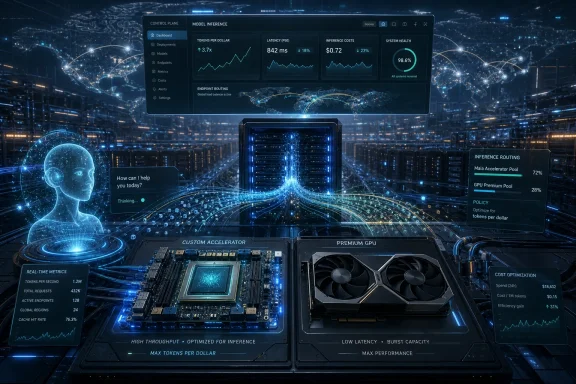 Anthropic’s Microsoft Chip Talks Are About Margins, Not Mystique
The popular imagination still treats AI infrastructure as a training story: gigantic clusters, months-long runs, and frontier models being forged in data centers that look more like power plants than computer rooms. That story is not wrong, but it is incomplete. Once a model is trained, the meter keeps running every time a user asks it to write code, summarize a contract, search a knowledge base, or plan a spreadsheet.That recurring cost is inference. It is the portion of AI that enterprise buyers actually experience as latency, availability, and price. It is also where cloud providers can either print margin or watch margin evaporate under the weight of expensive accelerator fleets.
Anthropic’s reported interest in Microsoft’s custom chips therefore should not be read as a repudiation of NVIDIA. It is better understood as an attempt to build a more flexible cost stack. Claude can remain a premium model while Anthropic quietly tries to make each answer cheaper to produce.
That distinction matters because the AI market is leaving its first theatrical phase. The era of demo magic gave way to the era of enterprise contracts, and enterprise contracts come with procurement departments, usage caps, compliance requirements, and quarterly cost reviews. In that world, tokens per dollar matters as much as benchmark rank.
The $30 Billion Azure Commitment Changes the Negotiating Table
Anthropic’s Azure commitment is not a normal cloud migration. A company does not agree to buy tens of billions of dollars in compute capacity and then behave like an ordinary customer selecting virtual machines from a pricing page. At that scale, the customer becomes part of the infrastructure roadmap.Microsoft’s broader arrangement with Anthropic and NVIDIA positioned Claude as a model family that Azure customers could reach more directly through Microsoft’s enterprise AI channels. Microsoft also committed capital to Anthropic, while NVIDIA committed even more, turning what might once have been a supplier relationship into a triangular alliance of capital, cloud, and silicon.
The reported custom-chip talks fit that pattern. Microsoft wants Azure to be more than a reseller of other companies’ accelerators. Anthropic wants capacity that is not entirely constrained by the availability and pricing of NVIDIA’s top-end GPUs. NVIDIA, meanwhile, remains central because its systems are still the industry’s default answer for frontier AI training and high-performance inference.
The interesting part is not that these interests conflict. It is that they coexist. The modern AI stack is becoming too large for a single-vendor story, even when that vendor is NVIDIA.
Microsoft Wants Maia to Be More Than an Internal Science Project
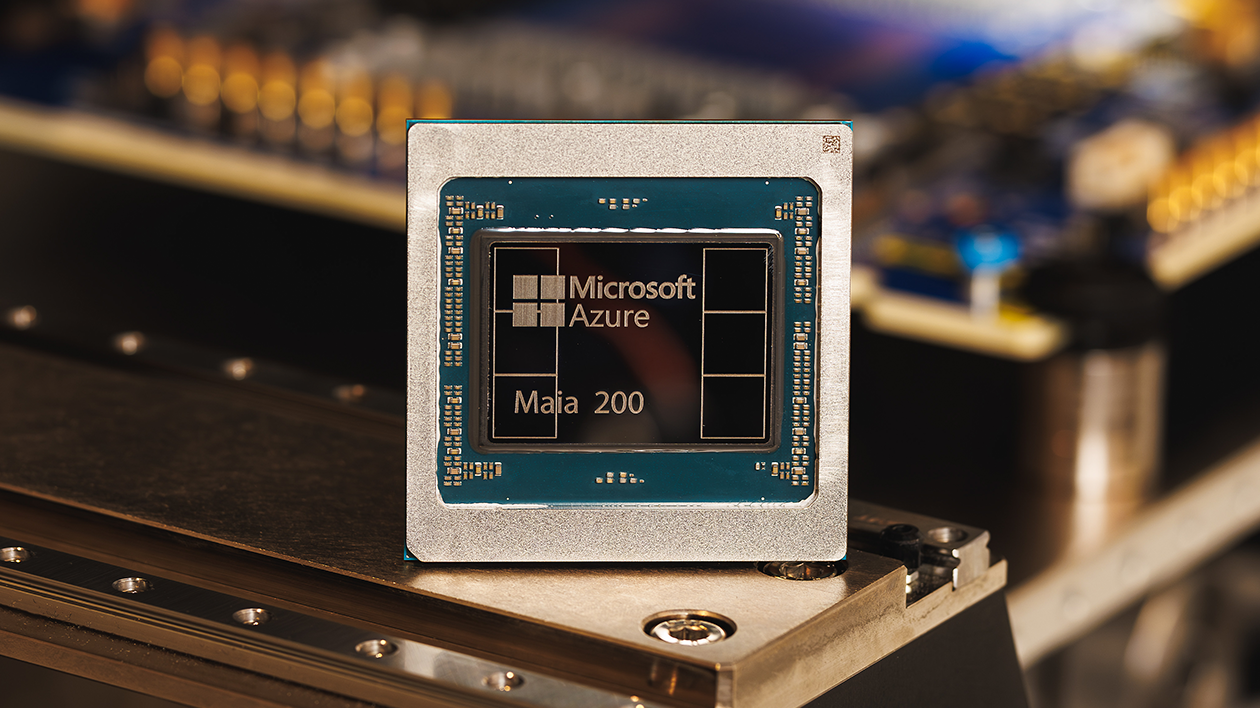
Microsoft’s custom AI accelerator program, branded Maia, has always had two audiences. The first is internal: Microsoft’s own Copilot services, Azure OpenAI workloads, and model-serving infrastructure. The second is external: customers who need lower-cost AI capacity but do not necessarily care whose logo is on the package if the model runs well.The first generation, Maia 100, was Microsoft’s statement that it intended to participate in the silicon layer rather than rent all of it from the outside. The later Maia 200 generation sharpened that message around inference, where the economics are repetitive enough and the workloads predictable enough for custom silicon to matter.
That is the crucial difference between general-purpose GPU dominance and hyperscaler inference chips. GPUs are astonishingly flexible, and that flexibility is part of NVIDIA’s moat. But flexibility is expensive. If a provider can identify high-volume workloads and tune silicon, networking, memory, compilers, and model-serving software around them, the resulting system can be cheaper to operate even if it is less universal.
Microsoft has a special reason to care. It is trying to make AI feel native across Windows, Microsoft 365, GitHub, Azure, Dynamics, security products, and developer tooling. The company cannot afford for every Copilot prompt, agent invocation, and enterprise search request to ride on scarce premium hardware forever.
Inference Is Where AI Becomes a Utility Bill
Training costs are dramatic because they arrive in large, newsworthy chunks. Inference costs are more dangerous because they never stop. They scale with adoption, and adoption is the entire business plan.A model that becomes embedded in Microsoft 365 is not a chatbot sitting behind a website. It is a service invoked inside Word, Excel, Teams, Outlook, SharePoint, Visual Studio Code, GitHub, Defender, and countless line-of-business workflows. If agentic AI becomes normal in the enterprise, each user action could trigger multiple model calls behind the scenes.
That is why inference silicon is strategically different from training silicon. Training is about building capability. Inference is about monetizing it. A company can survive an expensive training run if the resulting model generates enough revenue; it cannot survive a product whose unit economics worsen as usage grows.
This is where Anthropic’s position becomes fascinating. Claude is widely viewed as one of the leading enterprise AI systems, especially for coding, writing, analysis, and safety-sensitive deployments. But the better Claude becomes, the more customers will use it, and the more inference cost becomes a board-level issue rather than an engineering footnote.
NVIDIA Remains the Center of Gravity, Even as Everyone Hedges
The temptation is to frame every custom chip story as an anti-NVIDIA story. That is too simple. NVIDIA remains the dominant supplier because it sells not just chips but a complete computing platform: GPUs, networking, libraries, compilers, systems, and a developer ecosystem that has been hardened over many years.Anthropic’s existing partnership with NVIDIA still matters because frontier AI labs want the best available hardware for the hardest workloads. Grace Blackwell and future Vera Rubin systems are not interchangeable with a first-party inference accelerator designed mainly to reduce serving costs. Different workloads reward different architectures.
But the hedging is real. Microsoft has Maia. Google has TPUs. Amazon has Trainium and Inferentia. Startups are pitching specialized inference chips. AI labs are learning that dependence on one hardware supplier is a strategic vulnerability, even when that supplier is technologically excellent.
That does not mean NVIDIA loses. It means the market is growing large enough that customers will segment their compute. Premium GPUs will remain critical for training, experimentation, and high-performance workloads, while custom accelerators compete for predictable inference at scale.
The Windows Angle Is Bigger Than Claude in a Browser
For WindowsForum readers, the story is not merely that Anthropic may run some Claude requests on Microsoft chips. The practical issue is that Microsoft’s AI ambitions increasingly depend on infrastructure decisions users never see. When Copilot responds faster, costs less to bundle, or becomes more available in regulated enterprise environments, some of that improvement will trace back to the hardware beneath Azure.This matters for administrators because AI features are no longer isolated consumer toys. They are being woven into identity, security, productivity, compliance, and developer workflows. If Microsoft can lower its inference costs, it gains more room to bundle AI into existing subscriptions, expand usage limits, and push Copilot deeper into enterprise defaults.
It also matters for developers. Azure AI Foundry, GitHub Copilot, Windows development workflows, and enterprise application stacks increasingly depend on model choice and model routing. A customer may not know or care whether a request ran on NVIDIA GPUs or Microsoft Maia accelerators, but they will care about latency, availability zones, data residency, and invoice shock.
For Windows users, the front end may look like a button in the taskbar or a sidebar in Office. For Microsoft, the backend is a capital-intensive race to make that button economically sustainable.
Custom Silicon Turns Cloud Platforms Into AI Fiefdoms
The cloud used to abstract hardware away. That abstraction is weakening. AI workloads are forcing customers to care about the physical substrate again: GPU type, accelerator availability, interconnect bandwidth, memory capacity, region, cooling, and power.Custom AI chips accelerate that trend. A workload tuned for one provider’s silicon may not move cleanly to another. The more optimization happens across the whole stack, the more customers gain performance inside a cloud and lose portability outside it.
Microsoft understands this. So do Google and Amazon. A custom accelerator is not just a cheaper chip; it is a reason for customers to stay. Once a model-serving pipeline is tuned for Azure’s hardware, networking, telemetry, and deployment tools, migrating it becomes a strategic project rather than a procurement exercise.
That is the quiet lock-in behind the efficiency story. Cloud providers will present custom silicon as customer choice, and in one sense it is. But every highly optimized path also becomes a path of least resistance back into the same walled garden.
Anthropic Is Diversifying Inside the Walls of Big Tech
Anthropic’s reported discussions with Microsoft should be understood alongside its broader compute strategy. The company has relationships across the major infrastructure players, including Amazon and Google, while also working with NVIDIA and exploring alternative silicon. That looks like diversification, and it is.But it is not decentralization. Anthropic is spreading its bets across hyperscalers and chip suppliers, not escaping the gravitational field of the largest technology companies. The frontier AI business is increasingly a game played by companies that can secure enormous amounts of power, land, capital, accelerators, and cloud access.
That reality complicates the public narrative around open competition in AI. Model providers may compete fiercely at the application layer, but the infrastructure layer is consolidating around a small number of firms with the balance sheets to build or reserve gigawatt-scale compute.
Anthropic may be making a rational move by testing Microsoft silicon. It may get better pricing, better availability, and leverage against future supply constraints. But the overall shape of the market still points toward deeper dependence on hyperscale platforms.
The Crypto Compute Pitch Runs Into Purpose-Built Inference
Crypto Briefing’s angle is worth taking seriously, even for readers who do not follow token markets. Decentralized compute networks have often pitched themselves as cheaper, more open alternatives to centralized GPU clouds. That pitch becomes harder if Microsoft, Google, Amazon, and others can offer purpose-built inference at lower cost and with enterprise-grade support.Projects such as decentralized GPU marketplaces are not necessarily doomed by hyperscaler custom silicon. Their best arguments were never purely about raw price. They can still compete on permissionless access, geographic distribution, censorship resistance, or serving customers that centralized clouds may ignore.
But the middle of the market is getting squeezed. If an enterprise wants compliant, scalable, supported inference for a leading model, Azure with custom silicon is a formidable answer. If a developer wants bargain GPU cycles for experiments, decentralized networks may still have a role. The challenge is that hyperscalers are moving downward on cost while maintaining advantages in reliability, procurement, and integration.
That leaves decentralized compute networks with a sharper strategic question. They must identify workloads where openness and distribution matter more than the convenience of a bundled cloud contract. Otherwise, they risk becoming a speculative wrapper around commodity capacity in a market where the largest buyers are designing the commodity out of existence.
Enterprise IT Will Care Less About the Chip Than the Contract
Administrators rarely get rewarded for choosing elegant infrastructure. They get rewarded for systems that work, pass audits, stay within budget, and do not wake people at 3 a.m. That is why the Anthropic-Microsoft chip story will land in the enterprise through service-level agreements, region availability, pricing tiers, and compliance language rather than semiconductor diagrams.If Claude becomes more deeply available through Azure, Microsoft can package it in ways that feel familiar to enterprise buyers. It can tie model access to identity, logging, governance, data boundaries, and procurement channels that already exist. That is a major advantage over standalone AI services trying to enter large organizations one department at a time.
The custom silicon layer could make that packaging more aggressive. Lower serving costs might allow Microsoft to offer more generous usage allowances, specialized inference SKUs, or model-routing options that trade cost against latency. It could also allow Microsoft to reserve premium NVIDIA capacity for workloads that truly need it while shifting predictable inference to Maia.
The trade-off is opacity. Customers may get better economics but less visibility into how requests are routed. In regulated industries, that will raise uncomfortable but necessary questions about where workloads run, which accelerators process them, and how performance claims are validated.
The Safety Company Is Becoming an Infrastructure Company by Necessity
Anthropic built its brand around AI safety, constitutional training methods, and a more cautious posture than some rivals. Yet the company’s strategic reality now looks increasingly infrastructural. To compete at the frontier, it must secure enough compute to train, serve, evaluate, and iterate models at massive scale.That creates tension. Safety narratives are about restraint, evaluation, and governance. Infrastructure races are about speed, capacity, and preferential access. Anthropic has to do both at once.
The reported Microsoft chip talks are a symptom of that pressure. If Claude’s enterprise demand keeps growing, Anthropic cannot simply rely on premium GPU capacity and hope pricing remains tolerable. It needs a serving strategy that matches its product ambitions.
This is where the company’s identity may evolve. Anthropic can still be the safety-minded AI lab, but it is also becoming a sophisticated buyer and shaper of global compute infrastructure. That is not a betrayal of its mission; it is the cost of pursuing that mission in a market where model quality and infrastructure scale are inseparable.
Microsoft’s OpenAI Relationship No Longer Defines Its AI Future
For years, Microsoft’s AI story was almost synonymous with OpenAI. That relationship remains enormously important, but Microsoft has been steadily making its model portfolio less dependent on any single partner. Bringing Claude into Azure and Microsoft’s broader ecosystem is part of that shift.The logic is obvious. Enterprise customers do not want a religious war over models. They want the right model for the right workload, with governance and billing that do not create new operational headaches. Microsoft wants Azure to be the place where that choice happens.
Custom silicon strengthens that ambition. If Microsoft can offer a menu of models running across a menu of optimized hardware, it becomes not just a cloud provider but an AI exchange. Customers bring data and workflows; Microsoft supplies models, chips, orchestration, compliance, and billing.
That is a more durable position than betting everything on one model partner. It also gives Microsoft leverage. The more model providers depend on Azure distribution and capacity, the more Microsoft can shape the economics of the AI layer above Windows and Microsoft 365.
The Real Bottleneck Is Power, Not Press Releases
Chip deals are easy to announce compared with the physical reality of building AI infrastructure. Accelerators need data centers, power contracts, cooling systems, networking gear, supply chains, and skilled operators. A custom chip does not solve the grid.This is why the reported Anthropic-Microsoft talks should be viewed as part of a longer industrial story. AI companies are no longer merely software companies. They are indirectly competing for electricity, land, transformers, fiber routes, water, and manufacturing capacity.
Inference may be cheaper per operation than training, but it happens constantly. If AI agents become embedded in daily enterprise work, aggregate inference demand could become enormous. The economics of serving models will therefore depend not only on chip efficiency but on whether cloud providers can deploy those chips where customers need them.
Microsoft’s advantage is that it already operates at hyperscale. Its challenge is that every other hyperscaler is chasing the same resources. Custom silicon helps only if the surrounding industrial machine can keep up.
The Claude-on-Maia Idea Points to a Multi-Chip Future
The cleanest prediction from this story is not that Microsoft’s chips will replace NVIDIA’s GPUs. They will not, at least not broadly. The better prediction is that frontier AI providers will increasingly route workloads across multiple chip types based on cost, latency, availability, and model characteristics.Some requests may run on NVIDIA systems because they need maximum throughput or because the software stack is mature. Some may run on Microsoft Maia if they are predictable inference workloads inside Azure. Others may run on Google TPUs, Amazon Trainium or Inferentia, AMD accelerators, or specialized startup chips if the economics make sense.
That routing layer will become strategically important. It will decide where prompts go, how models are quantized, which workloads get premium capacity, and how cloud providers price the experience. Over time, the user may never know that a single AI service is actually a broker across several kinds of silicon.
For IT leaders, that means AI architecture will need the same discipline already applied to cloud architecture. Cost observability, vendor risk, workload placement, and exit planning will matter. The model is the visible product, but the hardware routing policy may determine whether the product is sustainable.
The Practical Reading for Windows and Azure Shops
The most concrete lesson is that Microsoft is turning AI infrastructure into a first-class competitive weapon. If Anthropic ends up using Microsoft’s custom inference chips, it will validate Azure’s silicon strategy and give Microsoft another way to differentiate its AI platform from clouds that rely more heavily on merchant GPUs.For Azure customers, this may eventually show up as more model choice, more predictable capacity, and more pricing options. It may also make Microsoft’s AI ecosystem harder to leave, because the best economics could be tied to workloads optimized for Azure’s own silicon and services.
For Windows developers and administrators, the near-term effect is indirect but important. Copilot-era features will increasingly depend on backend cost curves. If Microsoft lowers inference costs, it can push AI more deeply into Windows, Microsoft 365, GitHub, Defender, and Azure management tools without making every feature feel like a premium add-on.
For competitors, the message is sharper. If you do not own a cloud, a chip roadmap, or privileged access to both, you need a very clear reason to exist in the enterprise AI stack.
The Chip Story Behind Claude Is the Cost Story Behind Copilot
The industry will keep talking about model intelligence because it is easy to demonstrate and easy to rank. But the business war is moving toward the less glamorous question of who can deliver that intelligence most efficiently. Anthropic’s reported talks with Microsoft sit squarely in that shift.The practical takeaways are less about one negotiation and more about the direction of the market:
- Anthropic is reportedly exploring Microsoft’s custom AI chips for inference, not walking away from NVIDIA’s high-end systems.
- Microsoft’s $30 billion Azure relationship with Anthropic gives both companies a strong reason to optimize Claude for Microsoft’s infrastructure.
- Inference cost is becoming one of the most important constraints on how widely AI can be embedded in enterprise software.
- Custom silicon gives hyperscalers a way to reduce dependence on NVIDIA while also increasing customer lock-in.
- Decentralized compute networks will need to compete on more than cheap GPU access as hyperscalers build purpose-built inference capacity.
- Windows and Azure customers should expect AI features to be shaped increasingly by backend economics they rarely see directly.
References
- Primary source: Crypto Briefing
Published: Thu, 21 May 2026 16:17:03 GMT
Loading…
cryptobriefing.com - Official source: blogs.microsoft.com
Microsoft, NVIDIA and Anthropic announce strategic partnerships - The Official Microsoft Blog
Anthropic to scale Claude on Azure Anthropic to adopt NVIDIA architecture NVIDIA and Microsoft to invest in Anthropic Today Microsoft, NVIDIA and Anthropic announced new strategic partnerships. Anthropic is scaling its rapidly-growing Claude AI model on Microsoft Azure, powered by NVIDIA, which... blogs.microsoft.com
- Related coverage: techradar.com
Microsoft and Nvidia funnel billions into Anthropic as Claude scales
Microsoft and Nvidia funnel billions into Anthropic as Claude scaleswww.techradar.com
- Related coverage: tomshardware.com
Loading…
www.tomshardware.com - Official source: news.microsoft.com
- Related coverage: techspot.com
Loading…
www.techspot.com

- Official source: azure.microsoft.com
Loading…
azure.microsoft.com - Related coverage: geekwire.com
Loading…
www.geekwire.com - Related coverage: finance.yahoo.com
Loading…
finance.yahoo.com - Related coverage: windowscentral.com
Loading…
www.windowscentral.com - Related coverage: itpro.com
Loading…
www.itpro.com - Related coverage: livescience.com
Loading…
www.livescience.com - Official source: cdn-dynmedia-1.microsoft.com
Loading…
cdn-dynmedia-1.microsoft.com - Related coverage: signal65.com
Loading…
signal65.com - Related coverage: hc2024.hotchips.org
Loading…
hc2024.hotchips.org