

Claude maker Anthropic is deepening its infrastructure bench with a high-profile hire from Microsoft, bringing in former Azure AI platform president Eric Boyd as it races to support surging enterprise demand and a rapidly expanding partner ecosystem. The move is more than a talent grab: it signals that compute, reliability, and platform scale are now central battlegrounds in the competition among frontier AI companies. For Anthropic, the hire arrives at a moment when Claude’s commercial momentum, channel ambitions, and infrastructure footprint are all expanding at once.
Anthropic’s decision to appoint a former Microsoft Azure AI leader to an infrastructure role fits the shape of the company’s current phase. The startup is no longer just a research brand with a respected safety message; it is becoming a high-growth enterprise platform with serious operational demands. That transition changes what leadership must optimize for, from model quality alone to uptime, throughput, deployment efficiency, and partner readiness.
Eric Boyd’s background makes him a particularly telling choice. At Microsoft, he helped lead the Azure AI team and worked on products and services that supported large-scale model adoption, including Azure OpenAI Service, Microsoft Foundry, and other enterprise-facing AI infrastructure. In other words, he arrives with exactly the kind of experience needed when a company’s product curve begins to run into the limits of its platform curve.
The timing matters as much as the résumé. Anthropic has been pushing harder into the channel, investing in partner enablement, and signaling that Claude is increasingly positioned as a business system, not merely a chatbot. At the same time, the company’s public statements about revenue growth and customer expansion suggest an organization under heavy demand pressure.
This is also happening in a wider market where the most important AI stories are no longer only about model benchmarks. They are about cloud capacity, distribution alliances, vertical integration, and enterprise trust. Anthropic’s hire shows that the company understands this shift and is acting accordingly.
Anthropic is confronting that reality from both sides. On one hand, demand for Claude appears to be accelerating among businesses. On the other hand, every new customer, every new agentic workflow, and every new coding product increases pressure on the underlying platform. That makes infrastructure leadership a business-critical function rather than a back-office role.
Boyd’s experience with large-scale cloud systems suggests Anthropic is looking for someone who can manage not just capacity, but efficiency under pressure. That matters because the next stage of competition is likely to reward companies that can keep service quality high while expanding usage volume.
Key infrastructure priorities likely include:
At Microsoft, he worked through the era in which large language models moved from experimental to mainstream. That included platform work tied to model hosting, developer tooling, and enterprise integration. Those are the kinds of problems that become more difficult, not less, when usage explodes.
By the time he was leading Azure AI, the emphasis had shifted to broader enterprise enablement. That meant helping businesses adopt AI through managed services, model access, retrieval tooling, and operational guardrails. In practical terms, that is the difference between demonstrating a model and operating a platform.
What stands out about his background:
Anthropic’s own public comments suggest that the company sees infrastructure as a direct enabler of research and product development. That framing matters. It implies that platform work is not a support function; it is a prerequisite for shipping frontier capabilities. If the company wants Claude to remain competitive, it must ensure its stack can absorb both current load and future workload patterns.
This is especially true for Claude Code, which Anthropic has highlighted as a strong driver of recent momentum. Coding products can generate very bursty usage and often push systems into edge cases quickly. That makes them an excellent test of whether infrastructure is ready for prime time.
Anthropic likely needs to optimize for:
Partner networks are often underestimated in AI, because the narrative tends to focus on models, not distribution. But for enterprise software, partners do the hard work of implementation, customization, governance, and change management. If Anthropic wants Claude to become embedded in real organizations, it needs an army of trusted integrators and advisors.
Boyd’s cloud background could help Anthropic make that connection more operational. He understands how platform choices affect downstream adoption, and he knows that partner success often depends on invisible backend decisions. This is one of the more important strategic reasons the hire stands out.
Potential partner-network benefits:
Revenue of that scale changes investor expectations, employee pressure, and cloud economics. It also raises questions about whether the company’s infrastructure architecture can stay ahead of demand without eroding margins. Rapid revenue growth is flattering, but it can conceal very real strain underneath.
A senior infrastructure executive with cloud platform experience can influence several business levers at once. These include customer satisfaction, enterprise retention, gross margin trajectory, and launch velocity. That is why hires like Boyd matter far beyond their org chart placement.
Important implications of the revenue surge:
The broader market is tightening around a few core questions: who can deliver the best models, who can distribute them most effectively, and who can operate them at scale? Anthropic, OpenAI, Microsoft, Google, and others are all trying to answer those questions in different ways. Hiring Boyd signals that Anthropic wants to compete on the operational front, not just the model front.
At the same time, the move may sharpen the contrast between Anthropic and its peers. OpenAI has been associated with consumer reach and product velocity, Microsoft with enterprise distribution and cloud integration, and Google with massive infrastructure and silicon depth. Anthropic is increasingly trying to build a differentiated position that combines safety, enterprise trust, and high-performance models.
What this means competitively:
Enterprise AI buyers tend to look for vendors that can survive their own success. A flashy launch is useful, but a stable platform is what drives renewals. If Anthropic can pair strong models with mature infrastructure leadership, it becomes a more credible alternative in regulated and mission-critical environments.
The enterprise opportunity is not just about selling seats or API access. It is about becoming embedded in workflows that are hard to rip out. That means the company must deliver performance and governance at the same time, which is exactly where infrastructure leadership matters most.
Enterprise advantages Anthropic may be pursuing:
The opportunity is to turn technical scale into commercial trust. That would make Claude harder to displace in enterprise accounts and easier for partners to recommend. It also gives Anthropic a better shot at converting current momentum into a sustainable platform business.
There is also the risk that a senior leader from a large incumbent cloud organization may need time to adapt to a faster, more fluid startup environment. Anthropic may value that discipline, but it must also avoid importing bureaucracy. The company needs agility as much as it needs operational rigor.
The company’s broader direction will likely depend on three things: how quickly it can expand capacity, how well it can support partners, and how effectively it can maintain product quality as usage grows. Those are difficult problems, but they are exactly the kind that separate the long-term winners from the momentary standouts.
Watch for these developments:
Source: crn.com Anthropic Taps Microsoft Azure AI Veteran For Infrastructure Role
 Overview
Anthropic’s decision to appoint a former Microsoft Azure AI leader to an infrastructure role fits the shape of the company’s current phase. The startup is no longer just a research brand with a respected safety message; it is becoming a high-growth enterprise platform with serious operational demands. That transition changes what leadership must optimize for, from model quality alone to uptime, throughput, deployment efficiency, and partner readiness.Eric Boyd’s background makes him a particularly telling choice. At Microsoft, he helped lead the Azure AI team and worked on products and services that supported large-scale model adoption, including Azure OpenAI Service, Microsoft Foundry, and other enterprise-facing AI infrastructure. In other words, he arrives with exactly the kind of experience needed when a company’s product curve begins to run into the limits of its platform curve.
The timing matters as much as the résumé. Anthropic has been pushing harder into the channel, investing in partner enablement, and signaling that Claude is increasingly positioned as a business system, not merely a chatbot. At the same time, the company’s public statements about revenue growth and customer expansion suggest an organization under heavy demand pressure.
This is also happening in a wider market where the most important AI stories are no longer only about model benchmarks. They are about cloud capacity, distribution alliances, vertical integration, and enterprise trust. Anthropic’s hire shows that the company understands this shift and is acting accordingly.
Why Infrastructure Is Now the Story
The infrastructure layer has become a strategic moat in frontier AI. Training large models is expensive, but serving them at scale, with predictable latency and stable economics, is often harder. Companies that can’t efficiently translate research progress into dependable production systems eventually hit a wall.Anthropic is confronting that reality from both sides. On one hand, demand for Claude appears to be accelerating among businesses. On the other hand, every new customer, every new agentic workflow, and every new coding product increases pressure on the underlying platform. That makes infrastructure leadership a business-critical function rather than a back-office role.
The hidden load behind AI growth
AI companies often talk about model releases, but the real complexity lives below the surface. Each increase in usage can amplify costs tied to inference, orchestration, security, observability, storage, and data movement. Those burdens grow especially fast when customers use the product for code generation, enterprise search, or workflow automation.Boyd’s experience with large-scale cloud systems suggests Anthropic is looking for someone who can manage not just capacity, but efficiency under pressure. That matters because the next stage of competition is likely to reward companies that can keep service quality high while expanding usage volume.
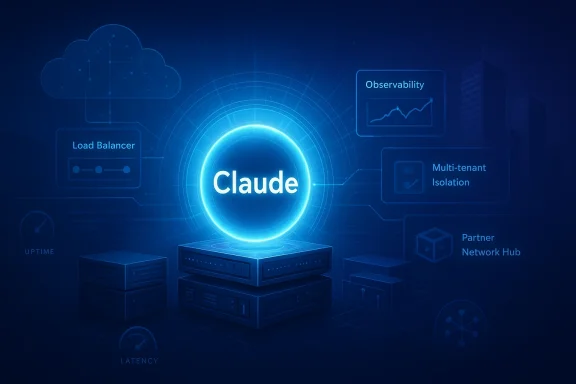
Key infrastructure priorities likely include:
- Inference capacity planning
- Workload isolation and reliability
- Enterprise-grade observability
- Partner deployment consistency
- Cost control across high-usage products
- Security and compliance at scale
Eric Boyd’s Microsoft Background
Boyd spent roughly 17 years at Microsoft, according to his LinkedIn profile and related reporting, and his career arc maps neatly onto the rise of cloud AI. He started in search and ad-tech scale systems before moving into the Azure AI organization, where the challenge shifted from serving queries to enabling enterprise adoption of foundation models. That evolution makes him unusually relevant to Anthropic’s present needs.At Microsoft, he worked through the era in which large language models moved from experimental to mainstream. That included platform work tied to model hosting, developer tooling, and enterprise integration. Those are the kinds of problems that become more difficult, not less, when usage explodes.
From Bing systems to Azure AI
Boyd’s early experience in Bing advertising and large-scale serving systems is not just a resume footnote. Search and ad infrastructure are brutal disciplines, because they combine high traffic, strict latency constraints, and continuously changing demand patterns. Those same engineering instincts translate well to AI platforms, where response-time expectations and workload spikes can be unforgiving.By the time he was leading Azure AI, the emphasis had shifted to broader enterprise enablement. That meant helping businesses adopt AI through managed services, model access, retrieval tooling, and operational guardrails. In practical terms, that is the difference between demonstrating a model and operating a platform.
What stands out about his background:
- He has worked on large-scale serving systems
- He has managed enterprise AI adoption
- He has experience with cloud platform economics
- He has seen the evolution from search-era infrastructure to foundation-model infrastructure
- He understands the operational reality of mainstream enterprise software
What Anthropic Needs From Infrastructure Now
The company’s infrastructure challenge is not simply to “grow bigger.” It is to grow in a way that preserves performance, safety, and trust. That means balancing aggressive customer acquisition with disciplined systems design. In the AI sector, those goals are often in tension.Anthropic’s own public comments suggest that the company sees infrastructure as a direct enabler of research and product development. That framing matters. It implies that platform work is not a support function; it is a prerequisite for shipping frontier capabilities. If the company wants Claude to remain competitive, it must ensure its stack can absorb both current load and future workload patterns.
Scaling for enterprise demand
Enterprise AI buyers are often less tolerant of instability than consumers. They want predictable response times, clear service levels, and integration pathways that don’t force them to redesign workflows every quarter. As Claude is used more deeply in coding, knowledge work, and agentic systems, those expectations become even more important.This is especially true for Claude Code, which Anthropic has highlighted as a strong driver of recent momentum. Coding products can generate very bursty usage and often push systems into edge cases quickly. That makes them an excellent test of whether infrastructure is ready for prime time.
Anthropic likely needs to optimize for:
- Better throughput per dollar
- Lower latency variance
- Stronger multi-tenant isolation
- More robust partner deployment tooling
- Faster incident response and remediation
The Partner Network Is Becoming a Distribution Engine
Anthropic’s channel strategy is one of the most important clues to why this hire matters now. In March, the company announced a $100 million investment in the Claude Partner Network and began building out certification and enablement programs. That is a classic sign that the company wants to expand through ecosystem leverage rather than direct sales alone.Partner networks are often underestimated in AI, because the narrative tends to focus on models, not distribution. But for enterprise software, partners do the hard work of implementation, customization, governance, and change management. If Anthropic wants Claude to become embedded in real organizations, it needs an army of trusted integrators and advisors.
Why channel readiness depends on infrastructure
A partner network only works if the platform is stable, documented, and scalable. Partners do not want to build practices around tools that change too quickly or fail too often. That means the infrastructure team and the partner team are more connected than they might first appear.Boyd’s cloud background could help Anthropic make that connection more operational. He understands how platform choices affect downstream adoption, and he knows that partner success often depends on invisible backend decisions. This is one of the more important strategic reasons the hire stands out.
Potential partner-network benefits:
- Faster enterprise deployment through certified integrators
- More repeatable implementation patterns
- Better governance and support for regulated industries
- Stronger feedback loops from customer deployments
- Greater credibility with procurement teams
Revenue Growth Raises the Stakes
Anthropic’s reported revenue trajectory has become one of the most closely watched numbers in the AI market. The company disclosed that its run-rate revenue has surpassed $30 billion, up from about $9 billion at the end of 2025, according to recent reporting and company statements. If accurate, that is an extraordinary acceleration, and it creates a different class of operational risk.Revenue of that scale changes investor expectations, employee pressure, and cloud economics. It also raises questions about whether the company’s infrastructure architecture can stay ahead of demand without eroding margins. Rapid revenue growth is flattering, but it can conceal very real strain underneath.
Capacity is a financial issue, not just a technical one
For AI companies, compute is both the engine and the bill. As usage rises, so do the costs of serving it, particularly when customers engage in long-context workflows, code generation, or multi-step agentic tasks. That means infrastructure efficiency directly affects business quality.A senior infrastructure executive with cloud platform experience can influence several business levers at once. These include customer satisfaction, enterprise retention, gross margin trajectory, and launch velocity. That is why hires like Boyd matter far beyond their org chart placement.
Important implications of the revenue surge:
- Greater urgency to optimize inference economics
- More pressure to avoid service outages
- Higher expectations from enterprise buyers
- Increased scrutiny from investors and competitors
- Stronger need for regional and global scale
Competitive Pressure From Microsoft, OpenAI, and Google
Boyd’s move is also symbolically rich because it comes from Microsoft, one of Anthropic’s most important strategic peers and, in some contexts, a collaborator. The AI ecosystem is full of overlapping alliances, but talent movement still reveals where the competition is most intense. When senior platform leaders move between major AI players, it usually reflects a race for infrastructure advantage.The broader market is tightening around a few core questions: who can deliver the best models, who can distribute them most effectively, and who can operate them at scale? Anthropic, OpenAI, Microsoft, Google, and others are all trying to answer those questions in different ways. Hiring Boyd signals that Anthropic wants to compete on the operational front, not just the model front.
Cloud strategy and platform differentiation
Microsoft has deep experience in AI platform commercialization, and Boyd helped build pieces of that machine. Anthropic may benefit from importing that institutional knowledge, especially as it expands beyond pure research audiences. This is a classic case of a company borrowing operating wisdom from a larger rival.At the same time, the move may sharpen the contrast between Anthropic and its peers. OpenAI has been associated with consumer reach and product velocity, Microsoft with enterprise distribution and cloud integration, and Google with massive infrastructure and silicon depth. Anthropic is increasingly trying to build a differentiated position that combines safety, enterprise trust, and high-performance models.
What this means competitively:
- Microsoft loses a veteran AI platform leader
- Anthropic gains enterprise-scale infrastructure expertise
- OpenAI faces another competitor investing in commercial execution
- Google remains a key compute benchmark and strategic cloud partner
- The market may further reward companies with distribution plus platform control
Why This Matters for the Enterprise Market
For enterprise customers, the appointment may read as a vote of confidence. When a company like Anthropic hires a seasoned infrastructure leader from Microsoft, it suggests the vendor is serious about the requirements that matter most to large organizations: reliability, scale, support, and integration discipline. Those are the features procurement teams care about, even if they are not as visible as model demos.Enterprise AI buyers tend to look for vendors that can survive their own success. A flashy launch is useful, but a stable platform is what drives renewals. If Anthropic can pair strong models with mature infrastructure leadership, it becomes a more credible alternative in regulated and mission-critical environments.
Consumer visibility versus enterprise stickiness
Consumer products create buzz, but enterprise products create long-lived revenue. That distinction is becoming more important as Claude spreads into coding, security, analytics, and workflow automation. Boyd’s arrival suggests Anthropic is optimizing for the latter.The enterprise opportunity is not just about selling seats or API access. It is about becoming embedded in workflows that are hard to rip out. That means the company must deliver performance and governance at the same time, which is exactly where infrastructure leadership matters most.
Enterprise advantages Anthropic may be pursuing:
- Stronger compliance posture
- Better customer-specific reliability
- More predictable API behavior
- Expanded support for partner implementations
- Improved regional deployment options
Strengths and Opportunities
Boyd’s appointment gives Anthropic a chance to pair frontier-model ambition with operational maturity, and that combination could prove decisive. The company is in the rare position of having both strong market demand and a rapidly developing channel motion. If it executes well, the infrastructure function can become a multiplier rather than a constraint.The opportunity is to turn technical scale into commercial trust. That would make Claude harder to displace in enterprise accounts and easier for partners to recommend. It also gives Anthropic a better shot at converting current momentum into a sustainable platform business.
- Deep cloud-scale experience from Microsoft
- Better alignment between infrastructure and partner strategy
- Potential improvements in reliability and performance
- Stronger enterprise credibility
- A more mature approach to scaling usage demand
- Better odds of sustaining growth without service degradation
- More room to optimize compute economics
Risks and Concerns
Even a strong hire cannot solve the structural risks facing Anthropic. The company is scaling in a brutally competitive market, and its infrastructure needs are rising at the same time its product ambitions are expanding. That creates a delicate balancing act between speed, safety, and economics.There is also the risk that a senior leader from a large incumbent cloud organization may need time to adapt to a faster, more fluid startup environment. Anthropic may value that discipline, but it must also avoid importing bureaucracy. The company needs agility as much as it needs operational rigor.
- Compute costs may rise faster than efficiency gains
- Partner growth could outpace support capacity
- Infrastructure complexity may slow product iteration
- Enterprise promises could exceed platform maturity
- Talent overlap with larger cloud rivals may intensify competition
- Safety, compliance, and scaling goals may collide
- Rapid revenue growth may mask underlying fragility
Looking Ahead
The most important question is whether Anthropic can transform hiring momentum into institutional capability. One infrastructure executive does not solve the company’s strategic challenge, but it can materially improve how Anthropic responds to scale, demand, and enterprise expectations. The next phase will reveal whether this is the beginning of a sturdier operating model or simply another impressive headline.The company’s broader direction will likely depend on three things: how quickly it can expand capacity, how well it can support partners, and how effectively it can maintain product quality as usage grows. Those are difficult problems, but they are exactly the kind that separate the long-term winners from the momentary standouts.
Watch for these developments:
- Further infrastructure hires with cloud-scale backgrounds
- Deeper integration between partner programs and platform tooling
- More detail on how Anthropic manages compute capacity
- Continued expansion of enterprise customer counts
- New signals about Claude Code adoption and usage intensity
Source: crn.com Anthropic Taps Microsoft Azure AI Veteran For Infrastructure Role
