• Thread Author
The industry just reached a new inflection point: Anthropic, Microsoft, and NVIDIA unveiled a tightly coordinated set of partnerships that stitch model development, chip co‑engineering, and hyperscale cloud capacity into a single commercial fabric — Anthropic has committed to purchase roughly $30 billion of Azure compute capacity while NVIDIA and Microsoft announced investments of up to $10 billion and $5 billion, respectively. These moves expand Claude’s footprint inside Microsoft’s Copilot family, tie Anthropic more closely to Azure and NVIDIA hardware roadmaps, and mark a decisive shift in how frontier AI models will be funded, hosted, and delivered to enterprise customers.

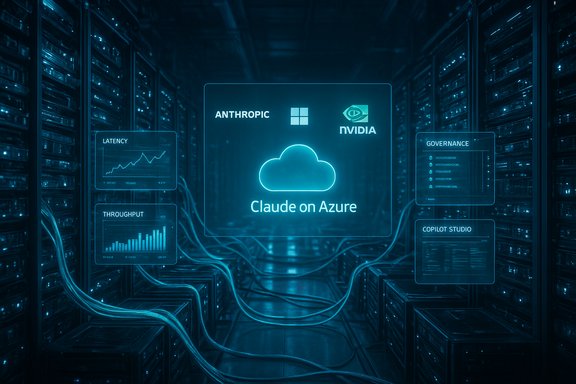
Futuristic data center with neon blue display reading 'Claude on Azure' between server racks.Background​

The modern generative-AI stack is no longer only about algorithms and datasets — it’s about raw compute, the interconnects that bind racks of accelerators together, and the commercial arrangements that guarantee capacity months or years ahead of need. Anthropic’s Claude family of models has been growing in capability and enterprise adoption, and the newly disclosed agreements anchor Claude more firmly into Azure while also deepening hardware collaboration with NVIDIA. The three-way pact should be read as both commercial and operational: long‑term cloud capacity commitments, strategic minority investments, and closer co‑engineering between model developers and chip architects.

Why the timing matters​

Hyperscalers and AI labs are racing to secure predictable access to accelerators and to lock down distribution channels for inference at scale. Securing computing capacity and preferential hardware access reduces the risk of throttled model development, long procurement lead times for next‑generation GPUs, and the volumetric exposure that comes with unexpected customer demand. Microsoft’s move also signals a widening of the company’s multi‑model strategy inside Copilot and Azure — a practical pivot from single-supplier reliance toward a federated model marketplace.

The deals, in plain numbers​

  • Anthropic’s compute commitment: ~$30 billion of Azure compute capacity, with initial references to phasing toward gigawatt‑scale deployments for Claude serving and training workloads. This is a multi‑year procurement commitment, not a one‑day invoice, and will be fulfilled across Azure regions and offerings.
  • NVIDIA investment: up to $10 billion in Anthropic, tied to a deeper co‑engineering agreement to optimize Claude for NVIDIA’s current and next‑generation platforms (Grace/Blackwell and new systems referenced in partner messaging). This frames NVIDIA as a strategic compute partner for Anthropic’s inference and training path.
  • Microsoft investment: up to $5 billion in Anthropic; Microsoft will also incorporate Claude models into Azure AI Foundry and the Copilot ecosystem, expanding enterprise access to Anthropic’s model family across GitHub Copilot, Microsoft 365 Copilot, and other Copilot-branded surfaces.
These headline numbers have been widely reported by major outlets and repeated in vendor statements; independent coverage corroborates the three principal facts (the $30B Azure commitment, $10B NVIDIA, $5B Microsoft), but readers should treat certain ancillary numerical claims (e.g., precise GW ceilings or exact GPU counts) as company‑reported estimates until detailed contractual schedules or regulatory filings provide line‑item confirmation.

Technical and product implications​

What this means for Claude’s footprint​

Anthropic’s Claude models — including recent variants referenced in announcements (Sonnet, Opus, Haiku families) — will become first‑class citizens on Azure’s platform and will be selectable inside Microsoft’s Copilot orchestration layer. For enterprise users, that means choosing Claude as an inference engine for Copilot Studio agents, Researcher workflows, and GitHub Copilot scenarios depending on task fit and governance policies. The practical result is greater model choice inside Microsoft productivity stacks.

Co‑engineering with NVIDIA​

NVIDIA’s stated $10B commitment is not simply financial; it is paired with promises of hardware and architecture alignment. The agreement is framed as a pathway to optimize Claude for NVIDIA’s Blackwell‑era chips and anticipated successors, improving throughput, latency, and TCO for Anthropic’s workloads. That deep collaboration can translate into tighter software/hardware stack optimizations — for example, model sharding patterns that exploit NVLink/NVSwitch, memory pooling strategies, or kernel-level tuning that reduces inference costs.

Azure AI Foundry and Copilot integration​

Microsoft will expose Claude models through Azure AI Foundry and its Copilot ecosystem, enabling:
  • model selection in Copilot Studio and Researcher
  • BYOM (Bring Your Own Model) routing and agent orchestration across mixed provider endpoints
  • enterprise-grade controls for tenant admin enablement and model provenance tracking
This makes Copilot a true orchestration layer where model choice becomes an admin‑level configuration, but it also raises immediate governance questions because requests to Anthropic-hosted endpoints may be processed outside Microsoft‑managed infrastructure depending on routing choices.

Commercial and competitive impact​

A new axis of competition with OpenAI​

Microsoft’s long and complex relationship with OpenAI remains important, but the Anthropic tie-up signals Microsoft’s intent to diversify its frontier model sources. Anthropic’s platform availability on all three major cloud providers now (AWS, Google Cloud, and increasingly Azure) reduces its vendor lock‑in and positions Claude as a multi‑cloud frontier model. For Microsoft, having Claude integrated into Copilot is both a product and a competitive hedge.

Market concentration and supplier entanglement​

These deals concentrate enormous computational demand around a handful of hyperscalers and a leading chipmaker. That concentration has benefits (economies of scale, unified product experiences) but also systemic downsides: single points of failure, bargaining power imbalances, and potential regulatory scrutiny where financial and operational ties between cloud providers, chip vendors, and AI labs create complex interdependencies. Several industry observers have already highlighted antitrust and market-power risks as compute and distribution consolidate.

Enterprise governance, contracts, and data flows​

Data residency and contractual coverage​

A central operational reality to guard against: when a Microsoft Copilot session is routed to Anthropic models, requests may be processed on Anthropic‑hosted endpoints and on third‑party clouds. Microsoft’s standard customer agreements and DPAs may not extend to those external processing events unless explicitly included in contractual addenda. Enterprises with strict residency, audit, or regulatory needs must map traffic paths and negotiate express contractual guarantees.

Observability and audit trails​

Enterprises will need to enforce and ingest per‑request telemetry that records:
  • which model handled the request (provider and model id),
  • what tenant content was included,
  • latency, cost, and policy flags,
  • long‑term retention and auditability metadata.
Without rigorous telemetry, multi‑model deployments risk audit blind spots that complicate compliance and incident response. Microsoft has signaled admin controls and enablement toggles, but operationalizing a multi‑model governance posture is still a heavy lift for IT teams.

Regulatory, antitrust, and national‑security angles​

The scale and interlocking nature of these commitments make regulatory review plausible in multiple jurisdictions. Antitrust authorities are increasingly sensitive to vertical and horizontal consolidation in digital infrastructure markets, and governments may also view gigawatt‑scale compute clusters as strategic national assets. The European Digital Markets Act and similar frameworks worldwide could raise fresh questions about preferential coupling between cloud, chip, and model vendors. These political and legal risks are not hypothetical; they are part of the backdrop that informed public commentary around similar hyperscaler deals earlier in the year.

Environmental and infrastructure considerations​

Operating at gigawatt scale has material environmental and local infrastructure implications. High-density GPU campuses consume large amounts of electricity and require advanced cooling (often liquid cooling) and significant land, fiber, and substation access. The announcements explicitly tie to multi‑year buildouts and long procurement cycles; community impacts (local grid strain, water use for cooling, and the need for renewable PPAs) should be part of public planning and environmental reviews as facilities are sited and permitted. Vendor press materials and industry reporting highlight these operational choices, but granular grid‑level details remain company‑reported and should be scrutinized as projects progress.

Implications for Windows users, developers, and IT teams​

For developers​

  • Expect broader access to Claude variants inside development tools such as GitHub Copilot and Visual Studio model pickers; Sonnet and Opus families are being positioned for different workload profiles (throughput vs. reasoning). This means more options for code generation, refactoring, and testing workflows without running large models locally.
  • Performance and cost optimizations will favor cloud‑native architectures that exploit GPU locality and rack‑scale memory. Developers should design for modular sharding and test across providers to avoid unexpected behavior when switching model backends.

For IT and security teams​

  • Treat model selection as an enterprise procurement decision: which provider/model is allowed for which data class, and under what contractual protections.
  • Insist on observability that includes model provenance in logs and audit trails, and ensure Copilot admin gating is exercised for production tenants.

For end users and productivity scenarios​

  • Microsoft 365 Copilot and GitHub Copilot users will likely see faster, more capable responses for multi‑document synthesis and developer tasks as Claude variants become available inside these surfaces. However, the default routing and tenant settings will determine where data is processed and under which contractual protections.

Notable strengths and potential risks — critical analysis​

Strengths​

  • Scale for enterprise-grade AI: A $30B compute commitment and direct hardware co‑engineering reduce uncertainty about capacity and enable more predictable SLAs for customers who require large-scale inference.
  • Model diversity inside products: Making Claude available inside Copilot and Azure AI Foundry gives customers choice — the ability to pick models tuned to specific tasks or regulatory needs can improve outcomes and resilience.
  • Optimized cost and performance: Direct collaboration between model labs and chip vendors can yield real TCO benefits through software/hardware co‑design, tighter kernels, and validated reference stacks.

Risks​

  • Concentration and vendor entanglement: Large, cross‑owned stakes and long‑term capacity reservations risk creating a small set of de facto gatekeepers for frontier compute and distribution — a systemic risk for competition and innovation.
  • Contractual and compliance blind spots: Routing Copilot requests to external model endpoints complicates the DPA and residency picture; enterprises must proactively negotiate protections and test routing behavior.
  • Operational and environmental externalities: Gigawatt‑scale compute needs translate into real-world constraints — grid stability, cooling resources, and supply‑chain pressure — that require long lead times and robust public engagement.
  • Public‑interest and regulatory attention: The combination of investments and compute commitments invites scrutiny by competition and national‑security authorities, potentially slowing rollout or forcing contractual changes in different markets.
Where public claims or detailed numeric projections exceed what has been independently documented, such assertions should be treated as vendor‑provided targets rather than established facts; read vendor head‑line numbers as directional until contractual schedules, filings, or independent audits appear.

Practical next steps for enterprises planning to adopt Claude on Azure​

  • Update procurement RFPs to include explicit routing and residency requirements for multi‑model Copilot scenarios.
  • Require per‑request provenance in logs and incorporate model provider IDs into long‑term audit trails.
  • Pilot mixed‑model agent workflows in non‑sensitive environments to benchmark latency, cost, and fidelity across model vendors.
  • Negotiate contractual amendments that specify DPA applicability, SLAs for external provider processing, and audit rights for third‑party model endpoints.
  • Coordinate with sustainability and facilities teams to understand regional compute growth plans and potential impacts on data gravity, connectivity, and energy procurement.

Conclusion​

The NVIDIA–Microsoft–Anthropic alignment is more than a headline financing event; it operationalizes a future where model creators, chip vendors, and cloud platforms are tightly coupled through long‑term capacity commitments and co‑engineering arrangements. For enterprises and developers, the immediate benefits are clearer access to Anthropic’s Claude models inside Azure and Microsoft Copilot, and the promise of optimized, high‑performance deployments. For regulators, competitors, and local stakeholders, the implications are broader: concentrated compute raises competition, governance, and environmental questions that will shape procurement, policy, and product development for years.
Enterprises should treat the announcements as a signal to accelerate governance work: map data flows for model routing, insist on auditability, and validate model behavior in controlled pilots. Vendors and policymakers must balance the performance and scale benefits against systemic risks that accompany compute concentration. The practical reality is simple: the winner in generative AI will be the firm that can combine model quality with reliable, cost‑effective, and governable compute — and these deals markedly re‑sketch the map of who controls those levers.
Source: Devdiscourse NVIDIA, Microsoft, and Anthropic Forge Massive AI Alliances
 

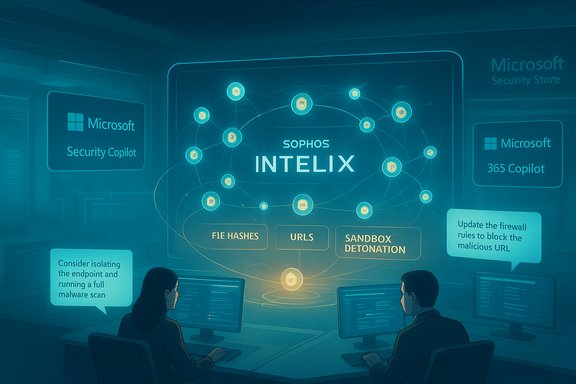
Sophos’ announcement that Sophos Intelix now plugs directly into Microsoft Security Copilot and Microsoft 365 Copilot marks a practical turning point: threat intelligence that once lived behind analyst consoles is being surfaced inside Microsoft’s generative-AI assistants and agent framework, promising faster triage and broader access to contextual security decisions across SOC workflows and everyday productivity apps.

Security analysts monitor a Sophos Intelix dashboard in a Microsoft security operations setup.Background​

Sophos has expanded the reach of its threat‑intelligence platform, Sophos Intelix, by making it available inside Microsoft’s Copilot ecosystem — specifically Microsoft Security Copilot and Microsoft 365 Copilot. The company publicly positioned the integrations as generally available following demonstrations and partner activity around Microsoft Ignite, and Sophos frames the move as democratizing high‑fidelity intelligence for both security teams and general Microsoft 365 users. This is an example of two concurrent trends colliding: (1) vendors exposing telemetry and forensic services via APIs and agent endpoints, and (2) platform owners — Microsoft in this case — embedding third‑party services into an agentic Copilot model that treats AI assistants as first‑class, identity‑aware actors under enterprise governance. The Microsoft agent model and Security Store provide the distribution and control plane that make these integrations operational for tenants.

What Sophos Is Delivering (Overview)​

At a high level, Sophos Intelix inside Copilot brings these core capabilities into Microsoft’s assistant surfaces:
  • Reputation lookups (file hash, URL, IP, domain) returned inline inside Copilot conversations and Security Copilot investigations.
  • Sandbox and dynamic analysis results (detonation summaries) that surface behavioral context about suspicious binaries.
  • Prevalence and attribution metrics from Sophos X‑Ops — how widely an IOC has been seen, and links to campaigns or threat actors where available.
  • Natural‑language enrichment so analysts and knowledge workers can ask Copilot for human‑readable explanations and remediation guidance that incorporate Sophos findings.
Sophos promotes these features as available both to security teams using Security Copilot and to broader Microsoft 365 users (IT admins, risk managers, frontline staff) inside Teams and Microsoft 365 Copilot chat. The vendor says these capabilities are accessible at no cost to Copilot users via the Microsoft Security Store and Copilot agent model.

Why This Matters: Practical Benefits​

For SOCs and Incident Responders​

  • Faster triage: Analysts can replace manual lookups across multiple systems with a single Copilot query that returns Sophos’ sandbox verdicts, reputation scores, and prevalence statistics — reducing context switching.
  • Richer context: Combining Microsoft telemetry (Defender, Sentinel) with Intelix enrichment helps produce more actionable incident summaries and reduces time‑to‑containment.
  • Integrated playbooks: The enriched answers can be used directly to drive or recommend playbook steps (isolate host, revoke credentials, block domain), shortening the investigation-to-response loop.

For IT Admins, Risk Teams, and Knowledge Workers​

  • Democratized intelligence: Non‑SOC staff gain the ability to check links, domains, and suspicious files from inside Teams or Copilot chat, improving day‑to‑day decision making without needing analyst intervention.
  • Operational economics: Organizations that already pay for Microsoft security and Copilot capabilities may reduce manual enrichment time and avoid escalation costs by surfacing authoritative Intelix data inside native workflows.

For Managed Service Providers (MSPs) and Small Businesses​

  • Access to enterprise-grade telemetry: Sophos emphasizes that Intelix is backed by Sophos X‑Ops telemetry across hundreds of thousands of businesses; making that intelligence available in Copilot can level the playing field for SMBs with limited security staff. Sophos cites daily telemetry and detection figures as the data backbone for Intelix — company‑reported numbers that should be treated as vendor metrics.

How the Integration Works (Technical Mechanics)​

Model Context Protocol (MCP) and the Copilot Agent Model​

Sophos exposes Intelix through the emerging Model Context Protocol (MCP) and agent plugins so Copilot agents can call Intelix services securely. MCP is an interoperability mechanism designed to let generative AI systems request context and services from external providers in a standardized way; Anthropic and other vendors have been active in MCP development and adoption. In Microsoft’s agent architecture, third‑party agents are published in the Security Store, discovered by tenant admins, and registered as agent identities under Agent 365 for governance. The practical flow looks like this:
  • Tenant admin registers/installs the Sophos Intelix agent from the Microsoft Security Store or Copilot Studio.
  • Copilot or Security Copilot calls the Intelix agent via MCP when a user asks for enrichment or when an automated agent triggers a lookup.
  • Intelix returns structured context (reputation, sandbox summary, prevalence) that Copilot incorporates into conversational outputs or investigation artifacts.
  • All agent actions are tracked and audited via Agent 365 and Entra identity controls.
This design aims to reduce credential exposure while enabling Copilot to present vendor intelligence in tenant‑scoped, auditable ways.

Data Inputs and Intelix Capabilities​

Sophos says Intelix supports:
  • Cloud lookups for static reputation.
  • Static analysis for file and web artifacts.
  • Dynamic analysis (sandbox detonation) with behavioral summaries.
  • Prevalence metadata drawn from the Sophos X‑Ops telemetry fabric.
These capabilities are surfaced as discrete API responses suitable for short contextual queries inside Copilot chat and Security Copilot investigation flows. Sophos has documented an early access pattern, and announced general availability to Microsoft Copilot channels in November 2025.

Verification and Key Claims​

  • Sophos’ press materials state that its telemetry pipeline processes more than 223 terabytes of telemetry daily, produces 34+ million detections, and automatically blocks 11+ million threats per day; those figures appear consistently in Sophos communications and partner press coverage but are company‑reported metrics and should be treated as vendor claims rather than independently audited facts.
  • Microsoft’s agent framework, Security Store, and Agent 365 control plane — the distribution and governance mechanisms Sophos leverages — are described in Microsoft’s Security blog and independent reporting on Microsoft Ignite; these platform elements are corroborated by Microsoft documentation and third‑party coverage. That independent confirmation is important because it establishes the runtime and governance mechanics that make the Sophos integration operational inside tenant environments.
Where numbers or performance arguments are central to procurement decisions (for example, telemetry scale or detection counts), organizations should insist on written SLAs, representative trial results, and technical validation in their own environment. Vendor telemetry figures are useful context but not a substitute for tenant testing.

Security, Privacy, and Governance Considerations​

The attraction of integrated threat intelligence brings with it several governance and risk tradeoffs that IT and security leaders must manage carefully.

Data Handling and Privacy Boundaries​

  • Sophos states the integration follows its Copilot privacy principles and that data entered through Microsoft 365 remains protected under Sophos’ policies; however, the precise retention, logging, and telemetry-sharing behaviors depend on agent configuration, tenant policies, and contractual terms. Review both Microsoft’s agent data‑flow documentation and Sophos’ privacy statements before enabling broad access.
  • Tenant scope vs. cloud lookups: Some lookups require sending file hashes, URLs, or file artifacts to Sophos for analysis. Tenant admins must decide what kinds of content are allowed to be sent to external services and configure DLP/protection policies accordingly. Microsoft Purview and Copilot DLP controls can help reduce oversharing, but they are not a replacement for policy design.

Agent Identity and Auditability​

  • Agent 365 gives agents Entra‑based identities, enabling tenants to audit agent actions and revoke agent access; administrators should use agent lifecycle controls, RBAC, and logging to ensure that agent actions are visible and traceable in incident forensics. Treat agents like service accounts with strict least privilege.

New Attack Surface and Prompt Injection​

  • Any time external intelligence is called into an LLM-driven flow, teams should consider prompt‑injection and manipulation risks where an agent’s output might be used to drive automation or remediation. Implement safety gates: require human authorization for high‑impact actions, validate actions against telemetry sources, and instrument playbooks to prevent automated destructive changes without supervisor approval.

Compliance and Regulated Workloads​

  • Regulated data (healthcare, finance, government) may require careful review of cross‑border data transfer, processing, and vendor certifications. Microsoft offers gov‑cloud and tenant controls; Sophos provides contractual statements, but compliance owners must validate the entire data chain. Flag any use of Copilot for regulated data until legal and compliance sign‑off is complete.

Deployment, Licensing, and Operational Economics​

  • Sophos states the Intelix integrations will be available through the Microsoft Security Store and Copilot agent storefronts; availability may depend on tenant region, EULA terms, and Microsoft’s store policies. The partner announcement frames the agent as available at no additional charge to Security Copilot users, but organizations must validate licensing at the tenant level and confirm any compute‑based metering (Security Compute Units or SCUs) that Microsoft uses for agent workloads. Confirm pricing and entitlements with both vendors.
  • Operational cost considerations include:
  • Metered Copilot/SCU consumption for heavy agent use or large‑scale sandbox detonation.
  • Data egress and storage when files are sent to external analysis.
  • Analyst time saved versus new platform management overhead for agent registration, auditing, and policy controls.

Practical Guidance: A Short Playbook for Windows-Centric IT Teams​

  • Inventory: Identify which tenant teams will need Sophos Intelix lookups (SOC, IT Helpdesk, Incident Response).
  • Pilot: Run a short pilot that:
  • Limits agent scope to a small investigation workspace.
  • Logs all Intelix calls and sandbox submissions.
  • Measures response time, false positive/false negative shifts, and analyst productivity gains.
  • Governance: Register the agent in Agent 365 and assign a minimal Entra Agent identity with scoped permissions. Enable audit logs and alerting on agent‑initiated changes.
  • Data Controls: Create DLP/label rules for Copilot and Teams to block or flag any accidental sharing of regulated data to the agent.
  • Playbooks: Update incident response playbooks to include Intelix‑enriched steps and require human authorization for containment actions suggested by Copilot.
  • Procurement: Validate any SCU or meter pricing scenarios with Microsoft and Sophos — include usage caps or alerts to avoid surprise bills.
  • Training: Train analysts on how to interpret sandbox summaries and prevalence metrics — treat Intelix as a high‑quality enrichment source, not an infallible oracle.

Strengths and Strategic Upside​

  • Speed and context: Enriching Copilot with Intelix reduces manual lookups and shortens investigation cycles for both SOC analysts and non‑security staff.
  • Democratization of intelligence: Making enterprise‑grade telemetry available inside everyday productivity tools improves baseline security awareness across the organization.
  • Platform governance: The Microsoft agent model provides a mature control plane (Agent 365, Entra identity, Security Store) intended to mitigate the governance risks that come with agentic automation. Independent reporting confirms Microsoft’s investment in agent governance and a Security Store model.

Risks and Limitations​

  • Vendor‑reported telemetry claims: Sophos’ telemetry numbers support their marketing case, but those are vendor metrics — procurement teams should require validation and realistic pilot tests.
  • New attack surface: Introducing agents and shared intelligence raises the bar for governance; misconfigured agents or over‑permissive connectors can create avenues for data leakage or malicious automation.
  • Operational complexity: The productivity gains may be offset initially by the effort required to register, audit, and monitor agents at scale — a legitimate concern for smaller teams without a mature identity and logging posture.
  • Prompt and model risks: Any LLM‑mediated workflow introduces model uncertainty; outputs should be corroborated against raw telemetry where critical remediation decisions are being made.

Independent Cross‑Checks and Reporting​

The headline integration and most operational claims are corroborated by multiple sources: Sophos’ own press release and product news, APN News and other wire services that repeated the announcement, and independent coverage about Microsoft’s Security Store and agent model that provides the runtime context for these agents. Microsoft’s Security blog and third‑party reporting around Ignite describe Agent 365 and the Security Store as the platform mechanisms enabling third‑party agents — a necessary piece of the integration puzzle. Cross‑referencing these independent sources confirms both the existence of the Sophos Intelix agent and the Microsoft platform features that enable it.

How to Evaluate Sophos Intelix for Your Organization​

  • Define success metrics up front: mean time to triage, analyst time saved, and false positive reduction.
  • Run a representative proof‑of‑value in a controlled tenant with production telemetry samples.
  • Monitor agent call volumes and sandbox submission costs during the trial to model expected monthly SCU and compute usage.
  • Verify contractual protections for regulated workloads and audit access to ensure data residency and retention obligations are met.

Conclusion​

The Sophos Intelix integrations into Microsoft Security Copilot and Microsoft 365 Copilot are a practical, measurable extension of two converging trends: vendors exposing authoritative telemetry as services, and platform owners embedding third‑party intelligence into agentic Copilot workflows under identity and governance controls. For Windows‑centric IT and security teams, the promise is clear: faster investigations, smarter playbooks, and more informed decisions surfaced directly inside the tools people already use. At the same time, this utility brings immediate operational responsibilities: governance, data‑handling policies, audit trails, and a disciplined pilot approach are essential to capturing the upside while containing the risks. Organizations should validate vendor claims through tenant‑grounded pilots, insist on clear contractual and compliance terms, and treat agents with the same lifecycle rigor they apply to service accounts and automation tooling.
The integration is a meaningful step toward making advanced threat intelligence ubiquitous, but its success in any given organization will depend on disciplined deployment, real‑world validation, and continuous governance.

Source: varindia.com Sophos announces new integrations into Microsoft
Source: APN News Sophos Integrates Advanced Cyber Intelligence into Microsoft Security Copilot and Microsoft 365 Copilot
 

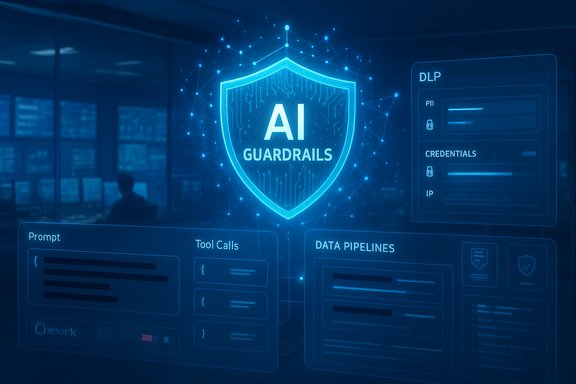
Check Point and Microsoft have announced a collaboration that embeds Check Point’s AI Guardrails, Data Loss Prevention (DLP), and Threat Prevention into Microsoft Copilot Studio to provide continuous, runtime security and compliance controls for enterprises deploying generative AI agents.

AI Guardrails shield glows over a futuristic blue security dashboard.Background​

Microsoft Copilot Studio is the company’s platform for building, orchestrating, and deploying generative-AI agents — an environment where organizations connect LLMs, enterprise data sources, and third‑party services to automate workflows and augment worker productivity. As Copilot Studio adoption accelerates, the attack surface expands: agents routinely access sensitive files, connect to SaaS systems, and execute automated actions that previously required human operators.
Check Point, a long‑standing player in enterprise security, positions this integration as runtime protection that sits alongside Copilot Studio’s native controls. The combined solution is intended to give security teams visibility and enforcement across the full agent lifecycle — from development and testing to live execution — with a prevention‑first approach that focuses on stopping risky behaviors before they result in data loss, misuse, or compliance violations.

What the integration delivers​

Core capabilities at a glance​

  • Runtime AI Guardrails: Continuous inspection of agent prompts, responses, and tool invocations to detect and block prompt injection, malicious prompts, or automated actions that contravene policy.
  • Data Loss Prevention (DLP): Content inspection and contextual policies to prevent exfiltration of sensitive fields, credentials, PII, IP, or regulatory data from agent outputs or connector calls.
  • Threat Prevention: Runtime threat detection for malicious or anomalous behavior across agent workflows, including attempts to subvert logic, escalate privileges, or interact with risky endpoints.
  • Enterprise-scale deployment: Designed for large deployments with claims of low latency and consistent enforcement that won’t materially degrade agent responsiveness.

How it plugs into Copilot Studio​

  • The integration is implemented at runtime: Check Point’s enforcement engines observe each agent interaction and decision point, applying policy decisions to tool calls, outputs, and external integrations.
  • The approach mirrors the webhook-based runtime threat detection and enforcement model supported by Copilot Studio: external security services can be called during agent execution to evaluate and approve—or block—actions in near real time.
  • Authentication and trust appear to follow the platform’s identity model, relying on identity and access control mechanisms to authorize enforcement services and protect the enforcement channel.

Why this matters: risk vectors Copilot Studio creates — and what runtime enforcement can stop​

Generative AI agents change how data flows through an enterprise. They increase scale, speed, and autonomy, which is a productivity leap — but also magnifies traditional risks and creates new ones:
  • Prompt injection and prompt manipulation: Agents may be tricked into leaking data or executing unsafe commands if adversarial inputs are introduced.
  • Data exfiltration through connectors: Agents that call external tools or third‑party services can unintentionally send sensitive enterprise data off‑premises.
  • Model misuse and drift: Agents configured with broad permissions or poorly constrained toolchains can perform unauthorized actions or gradually deviate from compliance guardrails.
  • Supply‑chain and connector compromise: Even legitimate connectors or external services can be abused to collect sensitive outputs.
  • Operational mistakes at scale: Automated actions (bulk deletes, data modifications) executed at machine speed can create large‑scale outages or compliance violations before humans can react.
Runtime enforcement directly addresses many of these by inserting policy checks into the agent’s execution path. This reduces the window between an agent decision and enforcement, stops many classes of prompt injection, and can redact, block, or convert risky outputs before they leave the enforcement perimeter.

Technical reality check: capabilities and limits​

Strengths​

  • Real‑time policy control: Having a runtime enforcement plane lets security teams apply context aware rules (who, what, where, and why) against each interaction, not just at build time.
  • Unified prevention posture: Integrating DLP and threat prevention into the same enforcement fabric simplifies policy management and reduces gaps between detection and remediation.
  • Operational continuity: When tuned correctly, runtime guards allow enterprises to retain agent productivity while providing a safety net for high‑risk operations.

Practical constraints and residual risks​

  • Latency and timeouts: Copilot Studio’s runtime threat detection mechanism expects sub‑second responses for external checks to avoid agents defaulting to “allow.” Any enforcement service must meet strict latency SLAs or risk degraded behavior or fallback policies that permit actions. Enterprises should validate performance under real loads to ensure policy enforcement does not trigger agent failures or silent falls back to less restrictive behaviors.
  • False positives and workflow friction: Aggressive policies may block legitimate agent activity, causing productivity loss. Fine‑tuning rules and establishing exception workflows are essential to avoid operational bottlenecks.
  • Scope of enforcement: Runtime inspection protects data flows that traverse the enforcement channel. It cannot retroactively control third‑party services that already received data, and it cannot fully contain compromised external endpoints that legitimately accept data.
  • Covert exfiltration techniques: Advanced exfiltration (steganography, covert timing channels, or low‑and‑slow leaks) can evade standard DLP; defending against these requires adaptive detection and continual model updates.
  • Human and supply‑chain weakness: Runtime security does not eliminate risk from attacker‑controlled human accounts, insider threats, or poisoned model components sourced from untrusted suppliers.
These constraints mean runtime enforcement is a major improvement — but not a silver bullet. Security teams must combine it with secure development practices, strict access controls, connector allow‑listing, and continuous monitoring.

Enterprise adoption guidance — a practical checklist​

For security leaders evaluating or piloting the Check Point + Copilot Studio integration, practical preparation and measurable validation are critical. Below is an actionable checklist to guide pilots and rollouts.
  • Prepare a data classification mapping:
  • Identify high‑value data that must never leave the tenant or be exposed to external connectors.
  • Tag datasets and APIs that require special handling.
  • Define policy taxonomy and risk tolerance:
  • Establish clear guardrails for what agents can do by role and by environment (dev/test/prod).
  • Set default least‑privilege actions and require explicit approvals for elevated actions.
  • Validate integration plumbing and identity:
  • Confirm authentication, scopes, and allowed app registrations.
  • Implement strict allow‑lists for enforcement endpoints and ensure Entra ID or equivalent identity bindings are enforced.
  • Performance and latency testing:
  • Run synthetic and real‑workload tests to measure enforcement latency under peak loads.
  • Verify the agent’s behavior when the enforcement engine is unavailable (fail‑closed vs fail‑open).
  • Tune DLP and detection models:
  • Start with conservative policies in test environments and iterate on false positives.
  • Include business owners in policy validation to avoid unintended workflow breaks.
  • Logging, audit trails, and retention:
  • Ensure comprehensive telemetry is available for each agent decision and tool invocation.
  • Retain logs sufficiently long for investigations and regulatory needs.
  • Incident playbooks and runbooks:
  • Establish rapid response procedures for agent compromise, connector compromise, or large‑scale data exposure.
  • Include human verification steps for high‑impact actions.
  • Legal and contractual protections:
  • Ensure SLAs for detection efficacy, latency, and availability are contractually guaranteed.
  • Clarify vendor responsibilities for protecting regulatory data and incident notification timelines.
  • Continuous red‑teaming:
  • Simulate prompt injection, connector misuse, and covert exfiltration scenarios to validate runtime defenses.
  • Incorporate lessons into periodic policy updates.
  • Training and governance:
  • Train developers, agent authors, and approvers on secure agent design patterns and common pitfalls.
  • Institute a governance board to sign off on agent templates and high‑risk capabilities.

Integration risks enterprises must explicitly manage​

  • Overreliance on vendor marketing: Vendor announcements often present idealized performance metrics. Insist on proof‑of‑concept results and measurable KPIs before broad deployment.
  • Gaps between enforcement and connectors: If an agent calls a third‑party tool that stores or reuses input, runtime redaction may not fully prevent downstream retention. Map end‑to‑end data flows and add contractual controls with vendors.
  • Latency-induced fallback behavior: If enforcement endpoints do not respond within the expected window, agents might default to permissive behavior. Ensure fail‑safe modes are tuned to deny or quarantine actions rather than allow.
  • Policy sprawl and complexity: As organizations deploy many agents, rule complexity grows. Plan for policy governance and tooling to prevent conflicting rules and to keep incident response efficient.
  • False assurances around ‘prevention’: Runtime DLP and guardrails can prevent many misuse scenarios, but they cannot replace robust identity, access management, or secure software supply‑chain practices.

Market context and what competitors are doing​

The collaboration is part of a broader industry trend where security vendors embed runtime enforcement and DLP into agent and Copilot ecosystems. Several vendors are offering complementary or competing capabilities ranging from threat intelligence integrations for Copilot to agent governance platforms that enforce policies across builders and runtimes.
Key movements to note:
  • Security vendors are rapidly developing connectors and runtime webhook integrations with Copilot and similar agent platforms to provide real‑time controls.
  • Some vendors emphasize pre‑deployment posture assessments (static analysis of agent specs and policy testing), while others — including this collaboration — highlight runtime enforcement as the critical control point.
  • Large security players are also pursuing FedRAMP and government authorizations to win public sector customers who require high‑assurance compliance.
These market dynamics mean enterprises will likely rely on a mix of build‑time checks, runtime enforcement, and external governance tooling when scaling agent deployments.

A deeper technical look: what to validate in a pilot​

When running a pilot, technical teams should validate the following specifics:
  • Response time under load: Confirm enforcement calls consistently return within the platform’s timeout threshold to avoid undesired agent behavior.
  • Redaction fidelity: Test DLP redaction across data types (structured data, free text, attachments) and ensure redaction does not break downstream processes that require partial content.
  • Policy expressiveness: Verify the policy language supports contextual rules (e.g., allow summaries but block full exports, permit action in sandbox but require approval in production).
  • Observability and forensics: Confirm logs include raw inputs and the enforcement decisions made (and the reason codes) while respecting privacy and retention policies.
  • Connector protection: Check how the enforcement layer interacts with third‑party connectors — whether it proxies requests, sanitizes payloads, or issues policy‑driven truncations.
  • Failover behavior: Simulate enforcement service outages and confirm whether the system fails closed (deny), fails open (allow), or follows a queued review process.

Business impact: operational and compliance benefits​

  • Reduced exposure window: Continuous runtime checks reduce the time between an agent decision and enforcement, limiting potential data leakage events.
  • Stronger auditability: Centralized enforcement and logging simplify compliance reporting and forensic investigations when incidents occur.
  • Faster safe adoption: Organizations can roll out agent use cases more rapidly by enforcing policies in production rather than blocking innovation at the design phase.
  • Policy consistency: A unified enforcement plane helps maintain consistent rules across multiple agent deployments, reducing configuration drift.

Vendor claims to treat cautiously​

Vendors may use strong performance and efficacy claims in press materials. Treat the following areas with scrutiny and require independent validation:
  • Quantified detection rates or near‑zero false positives: These numbers may reflect ideal test environments, not real enterprise scale or adversary creativity.
  • “No perceptible latency” promises: Perceptual latency varies by use case and user expectations; validate under your actual workloads.
  • Complete protection against exfiltration: Runtime controls significantly lower risk, but sophisticated exfiltration techniques and supply‑chain compromises still present residual threats.
Flag any such claims and obtain contractual KPIs, third‑party test results, or pilot metrics before relying on them for wide rollout decisions.

Recommendations for security leaders​

  • Treat runtime enforcement as a critical control but not the only control. Combine it with secure development practices, least privilege, connector governance, and continuous monitoring.
  • Run focused pilots that reflect production data volumes and workflows to measure latency, false positives, and enforcement coverage.
  • Engage business stakeholders early when tuning DLP and guardrails to avoid blocking legitimate workflows.
  • Demand transparency: require vendors to disclose how enforcement works, what data is logged, how detections are generated, and how updates to detection models are managed.
  • Insist on contractual SLAs, incident notification timelines, and options for on‑prem or private deployments where regulatory requirements demand it.

Final assessment​

The Check Point and Microsoft collaboration represents an important evolution in securing generative AI agents. By bringing runtime AI Guardrails, DLP, and Threat Prevention into Copilot Studio, enterprises gain a pragmatic control point to reduce many high‑risk scenarios inherent to autonomous agents. The real benefit will come to organizations that treat this as one element of a layered security strategy: runtime enforcement for immediate protection; governance for policy consistency; identity and access controls for proper permissions; and supply‑chain diligence for model and connector hygiene.
However, buyers must exercise discipline: validate latency and failure modes, tune DLP to minimize business disruption, and require measurable outcomes before large‑scale deployment. Runtime enforcement closes many gaps, but it doesn’t eliminate systemic risks created by third‑party services, human abuse, or sophisticated exfiltration techniques. Organizations that pair this integration with strong governance, continuous testing, and operational readiness will realize the productivity upside of Copilot Studio while keeping the enterprise safer and more compliant.

Source: SecurityBrief Asia Check Point & Microsoft boost Copilot Studio AI security tools
 

Back
Top