

Knox Systems’ new collaboration with Microsoft aims to shorten one of the most stubborn paths in federal IT: turning commercially proven software into a secure, deployable service that U.S. government agencies can actually buy and operate. By pairing Knox’s pre-authorized managed cloud model with Microsoft Azure Government, the companies are positioning the partnership as a faster route for AI, cybersecurity, data, and enterprise software vendors that need to meet demanding federal security and compliance expectations.
The significance is not simply that another cloud partnership has been announced. Federal agencies increasingly want access to the same modern software platforms reshaping commercial operations, but the authorization process can turn a technically ready product into a multi-year compliance project. Knox and Microsoft are betting that a combination of inherited security controls, managed operations, and Azure Government’s existing compliance posture can reduce that friction without weakening the safeguards required for sensitive public-sector workloads.
For Windows and Microsoft cloud professionals, the announcement reinforces a broader trend: Azure Government is becoming a more important landing zone for independent software vendors serving federal civilian and defense customers. The opportunity is substantial, but success will depend on how carefully vendors distinguish between faster deployment, inherited controls, and the separate authorization decisions that still govern whether a particular agency can use a service.
Government modernization often faces a difficult contradiction. Agencies are expected to adopt AI, advanced cyber defenses, analytics platforms, and data tools quickly, yet they must do so inside a procurement and security system designed to protect high-value systems and sensitive information.
That tension has historically created a costly gap between the commercial and federal markets. A software provider may have a mature product, established enterprise customers, and a compelling government use case, but still lack the authorization artifacts, operational processes, technical controls, and agency relationships necessary to deploy in a federal environment.
The Knox Systems and Microsoft collaboration addresses that gap through a managed federal cloud approach. Instead of requiring every software company to independently construct every element of a compliant cloud operating environment, Knox provides a managed boundary in which customers can inherit a significant share of infrastructure and operational controls.
Microsoft Azure Government supplies the underlying cloud platform, with security and compliance capabilities intended for U.S. public-sector workloads. Azure Government maintains a FedRAMP High provisional authorization and supports Department of Defense authorization levels that matter to defense-adjacent organizations, including DoD Impact Level 4 and Impact Level 5 environments.
Together, the companies are presenting a practical proposition: commercial vendors should be able to focus more of their engineering effort on the application, data protection model, and mission requirements of their product, while relying on an established operating environment for shared infrastructure responsibilities.
A startup with a sophisticated AI platform may have excellent model governance and strong commercial security practices, for example, yet lack the staff and processes required to operate a standalone federal compliance program. A cybersecurity vendor may be able to detect threats in real time, but still need a separate operational foundation for the environment in which its service runs.
The central value proposition of the Knox-Microsoft relationship is therefore time-to-mission, not merely hosting. The partners are attempting to make the route from commercial deployment to government-ready deployment more repeatable.
For organizations deploying into Azure Government, the platform offers a familiar Azure-oriented development and operations model while adapting the service environment to public-sector requirements. That matters for software vendors that already build around Microsoft technologies, Azure-native services, DevOps practices, identity platforms, data services, and enterprise integration patterns.
However, familiarity should not be confused with simple portability. Not every commercial Azure service is necessarily available in Azure Government at the same time, in the same configuration, or under the same compliance scope. Software vendors must validate service availability, regional capabilities, API compatibility, and the authorization status of every service they intend to use.
That requirement is particularly important for applications that depend on:
Yet it is equally important to understand the boundary of that benefit. Azure Government’s authorization does not automatically authorize a customer application. A cloud service provider’s compliance package covers the platform and services within scope; the software vendor remains accountable for how its own application is designed, configured, secured, monitored, and operated.
This is where Knox enters the picture. Its managed environment is intended to bridge the gap between the cloud provider’s platform-level compliance and the application provider’s service-level obligations.
The company says it supports more than 70 software companies and holds 16 federal civilian and defense authorizations to operate. It also states that customers can achieve a production-ready federal cloud environment in as little as 90 days by inheriting a substantial portion of controls already implemented within the Knox environment.
Those claims are meaningful, but they should be interpreted with appropriate care. A 90-day path is not the same as a universal 90-day guarantee, and the time needed for a specific vendor will still depend on application maturity, technical findings, agency requirements, scope changes, and the quality of the vendor’s operational evidence.
Under a shared-responsibility cloud model, not every security control must be built independently by every organization. A vendor using an authorized platform may inherit safeguards associated with facilities, physical security, infrastructure, network operations, logging foundations, access management processes, vulnerability management, incident-response procedures, and other shared components.
In practical terms, the approach can allow a software provider to concentrate on controls that are specific to its application, such as:
A vendor cannot simply deploy into a managed boundary and assume compliance is complete. Inherited controls reduce duplicated work; they do not eliminate application ownership.
This is where a managed cloud partner can become more valuable than a compliance consulting engagement. A consultant can help prepare documentation and guide a readiness effort, but a managed platform provider may operate the recurring infrastructure and processes that turn the authorization into an ongoing service.
Knox positions its platform around that longer-term responsibility. Its model includes managed monitoring and remediation capabilities, with the goal of reducing the administrative and operational load on customer engineering teams.
For software providers, this can translate into a more predictable compliance operating model. Instead of building an internal team to own every aspect of the federal environment, the vendor can allocate responsibility across its own application team, Knox’s managed service layer, and Microsoft’s cloud platform.
It is also a claim that deserves careful interpretation.
Several factors can still extend the timeline:
AI platforms, for instance, must address much more than model performance. Government deployments can involve data classification, retention rules, model provenance, prompt and response logging, access control, data leakage prevention, service availability, and potentially the handling of controlled unclassified information.
Cybersecurity vendors face a similar challenge. They may need access to sensitive telemetry, endpoint data, logs, identity information, network metadata, and incident evidence. A federal environment must therefore be designed to protect not only the vendor’s service, but also the government data flowing through it.
Security tools frequently require elevated permissions, broad data visibility, integration with identity systems, and access to high-value operational records. That makes least-privilege design, segregation of duties, strong logging, and carefully scoped integrations essential.
The Knox-Microsoft model could reduce the deployment burden for these vendors, but it will not eliminate the need for agencies to conduct a thorough risk assessment. In fact, the more powerful the tool, the more rigorous that assessment should be.
That can be valuable for companies working with:
A commercial product that integrates easily with Azure may still need substantial changes before it can run inside an Azure Government authorization boundary. The partnership’s value lies in providing a framework and operational path for that work, rather than making the work disappear.
A growing group of specialized firms now operates between those layers. These companies provide compliance automation, managed authorization boundaries, secure application platforms, continuous monitoring services, and federal-market acceleration.
Knox occupies that intermediary position. Microsoft provides the cloud infrastructure and government platform capabilities; Knox offers a managed environment intended to help commercial vendors navigate authorization and ongoing operations; the software vendor supplies the application; and the agency ultimately determines whether the resulting service meets its mission and risk requirements.
This model has several potential benefits:
For that reason, customers should evaluate the provider’s technical architecture, incident-response track record, tenant-isolation model, subcontractor practices, availability design, and exit strategy. Faster access to government markets should not create a new form of vendor dependency without clear governance.
The key question is not whether a vendor is hosted on Azure Government or within a managed Knox boundary. The key question is whether the complete service—including the application, operations, integrations, data handling, and support model—fits the agency’s risk posture and mission requirements.
Its strongest promise is not that compliance becomes easy. Rather, it is that the work can become more structured, reusable, and operationally sustainable. Vendors can potentially inherit infrastructure controls, work within an established managed environment, and focus their effort on securing the parts of the service only they can own.
The 90-day message will attract understandable attention, especially from companies stalled by the cost and complexity of federal authorization. But the real measure of success will be whether the partnership delivers rapid deployments without turning security into a checkbox exercise.
For government agencies, the upside is access to more modern commercial technology at a pace better aligned with mission needs. For vendors, the opportunity is a clearer Azure Government path into a difficult market. For both, the responsibility remains the same: build services that are not only fast to deploy, but genuinely secure, resilient, auditable, and ready to operate over the long term.
The significance is not simply that another cloud partnership has been announced. Federal agencies increasingly want access to the same modern software platforms reshaping commercial operations, but the authorization process can turn a technically ready product into a multi-year compliance project. Knox and Microsoft are betting that a combination of inherited security controls, managed operations, and Azure Government’s existing compliance posture can reduce that friction without weakening the safeguards required for sensitive public-sector workloads.
For Windows and Microsoft cloud professionals, the announcement reinforces a broader trend: Azure Government is becoming a more important landing zone for independent software vendors serving federal civilian and defense customers. The opportunity is substantial, but success will depend on how carefully vendors distinguish between faster deployment, inherited controls, and the separate authorization decisions that still govern whether a particular agency can use a service.
 Why This Partnership Matters for Government Cloud Adoption
Government modernization often faces a difficult contradiction. Agencies are expected to adopt AI, advanced cyber defenses, analytics platforms, and data tools quickly, yet they must do so inside a procurement and security system designed to protect high-value systems and sensitive information.That tension has historically created a costly gap between the commercial and federal markets. A software provider may have a mature product, established enterprise customers, and a compelling government use case, but still lack the authorization artifacts, operational processes, technical controls, and agency relationships necessary to deploy in a federal environment.
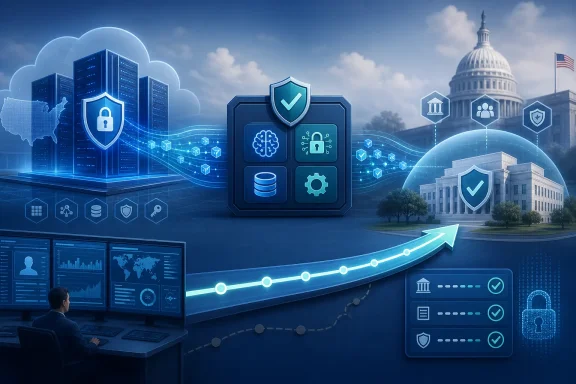
The Knox Systems and Microsoft collaboration addresses that gap through a managed federal cloud approach. Instead of requiring every software company to independently construct every element of a compliant cloud operating environment, Knox provides a managed boundary in which customers can inherit a significant share of infrastructure and operational controls.
Microsoft Azure Government supplies the underlying cloud platform, with security and compliance capabilities intended for U.S. public-sector workloads. Azure Government maintains a FedRAMP High provisional authorization and supports Department of Defense authorization levels that matter to defense-adjacent organizations, including DoD Impact Level 4 and Impact Level 5 environments.
Together, the companies are presenting a practical proposition: commercial vendors should be able to focus more of their engineering effort on the application, data protection model, and mission requirements of their product, while relying on an established operating environment for shared infrastructure responsibilities.
The Commercial Software Problem in Federal Procurement
For an independent software vendor, entering the federal market frequently means confronting several challenges simultaneously:- Establishing a compliant architecture and authorization boundary
- Mapping technical and operational safeguards to federal control requirements
- Building and maintaining a comprehensive System Security Plan
- Producing evidence for security assessments
- Managing vulnerability remediation, incident response, logging, and continuous monitoring
- Obtaining an agency sponsorship path or another valid route to authorization
- Supporting ongoing compliance after the initial approval rather than treating it as a one-time milestone
A startup with a sophisticated AI platform may have excellent model governance and strong commercial security practices, for example, yet lack the staff and processes required to operate a standalone federal compliance program. A cybersecurity vendor may be able to detect threats in real time, but still need a separate operational foundation for the environment in which its service runs.
The central value proposition of the Knox-Microsoft relationship is therefore time-to-mission, not merely hosting. The partners are attempting to make the route from commercial deployment to government-ready deployment more repeatable.
What Azure Government Brings to the Collaboration
Microsoft Azure Government is distinct from Azure’s commercial cloud environment. It is designed for U.S. government agencies and eligible organizations that require additional assurances around personnel screening, data handling, access, and compliance.For organizations deploying into Azure Government, the platform offers a familiar Azure-oriented development and operations model while adapting the service environment to public-sector requirements. That matters for software vendors that already build around Microsoft technologies, Azure-native services, DevOps practices, identity platforms, data services, and enterprise integration patterns.
A Familiar Platform With a Separate Government Posture
One of Azure Government’s advantages is that it enables vendors to retain much of the cloud development knowledge they have already built in Azure. Teams familiar with virtual networking, managed identities, Azure Policy, Azure Monitor, Key Vault, Kubernetes, infrastructure as code, and Microsoft security tooling do not have to learn an entirely unrelated cloud model.However, familiarity should not be confused with simple portability. Not every commercial Azure service is necessarily available in Azure Government at the same time, in the same configuration, or under the same compliance scope. Software vendors must validate service availability, regional capabilities, API compatibility, and the authorization status of every service they intend to use.
That requirement is particularly important for applications that depend on:
- AI and machine learning services
- Managed Kubernetes clusters
- Advanced identity integrations
- Data lake, analytics, and business intelligence services
- Event-driven architectures
- Third-party software-as-a-service integrations
- DevOps pipelines and source-code hosting platforms
- Security information and event management tools
FedRAMP High and Defense-Relevant Capabilities
Microsoft’s government cloud platform has an established compliance position that includes FedRAMP High authorization and Department of Defense provisional authorizations for relevant Azure Government services. This foundational posture is important because it reduces the number of underlying cloud-provider controls that a software vendor must independently demonstrate.Yet it is equally important to understand the boundary of that benefit. Azure Government’s authorization does not automatically authorize a customer application. A cloud service provider’s compliance package covers the platform and services within scope; the software vendor remains accountable for how its own application is designed, configured, secured, monitored, and operated.
This is where Knox enters the picture. Its managed environment is intended to bridge the gap between the cloud provider’s platform-level compliance and the application provider’s service-level obligations.
Knox’s Managed Federal Cloud Model
Knox Systems describes itself as a federal managed cloud provider with a pre-authorized environment spanning multiple cloud platforms, including Azure. Its operating model is built around enabling customer software to deploy inside an established authorization boundary rather than requiring each customer to build a wholly separate boundary from scratch.The company says it supports more than 70 software companies and holds 16 federal civilian and defense authorizations to operate. It also states that customers can achieve a production-ready federal cloud environment in as little as 90 days by inheriting a substantial portion of controls already implemented within the Knox environment.
Those claims are meaningful, but they should be interpreted with appropriate care. A 90-day path is not the same as a universal 90-day guarantee, and the time needed for a specific vendor will still depend on application maturity, technical findings, agency requirements, scope changes, and the quality of the vendor’s operational evidence.
Security Control Inheritance Explained
Control inheritance is one of the most important concepts in this announcement.Under a shared-responsibility cloud model, not every security control must be built independently by every organization. A vendor using an authorized platform may inherit safeguards associated with facilities, physical security, infrastructure, network operations, logging foundations, access management processes, vulnerability management, incident-response procedures, and other shared components.
In practical terms, the approach can allow a software provider to concentrate on controls that are specific to its application, such as:
- Application-level authentication and authorization
- Secure software development lifecycle practices
- Encryption configuration and key-management decisions
- Data classification and retention policies
- API security
- Tenant isolation
- Application audit logging
- Secure configuration of workloads and services
- Third-party integration risk
- Vulnerability remediation inside the application stack
- Customer-facing incident communication procedures
A vendor cannot simply deploy into a managed boundary and assume compliance is complete. Inherited controls reduce duplicated work; they do not eliminate application ownership.
The Operational Value of a Managed Boundary
The operational burden after authorization is often underestimated. Federal cloud services must maintain a continuing security posture through monitoring, patching, incident management, evidence collection, vulnerability tracking, and periodic assessment activity.This is where a managed cloud partner can become more valuable than a compliance consulting engagement. A consultant can help prepare documentation and guide a readiness effort, but a managed platform provider may operate the recurring infrastructure and processes that turn the authorization into an ongoing service.
Knox positions its platform around that longer-term responsibility. Its model includes managed monitoring and remediation capabilities, with the goal of reducing the administrative and operational load on customer engineering teams.
For software providers, this can translate into a more predictable compliance operating model. Instead of building an internal team to own every aspect of the federal environment, the vendor can allocate responsibility across its own application team, Knox’s managed service layer, and Microsoft’s cloud platform.
The 90-Day Claim: Ambitious, Useful, and Worth Scrutiny
The most attention-grabbing element of the announcement is the claim that vendors can reach production-ready federal cloud environments in as little as 90 days. In a market where conventional federal authorization paths can often take far longer, that message will resonate strongly with SaaS providers trying to convert government interest into actual deployments.It is also a claim that deserves careful interpretation.
What Can Make a Faster Path Plausible
A compressed timeline becomes more realistic when a vendor begins with several advantages:- A mature commercial application with a documented architecture and established operational practices.
- A compatible cloud design that can deploy without a major refactor.
- An existing authorized boundary that supplies infrastructure and operational control inheritance.
- Clear evidence of secure engineering practices, vulnerability management, access control, and incident response.
- A defined scope that avoids late additions of unapproved services or complex third-party dependencies.
- A ready customer or sponsor path that aligns the authorization approach with a real government use case.
Why Fast Does Not Mean Automatic
The risks emerge when buyers interpret speed claims as a shortcut around government security obligations. No credible federal cloud strategy should be based on the expectation that compliance can be purchased as a simple feature.Several factors can still extend the timeline:
- The application depends on services that are not approved or available in the target environment.
- Security assessments identify design flaws or serious vulnerabilities.
- The vendor lacks sufficient documentation for its development, support, and incident-response processes.
- Critical application components run outside the intended authorization boundary.
- The product requires sensitive data handling patterns that demand additional safeguards.
- Agency-specific mission needs create requirements beyond the baseline environment.
- Subcontractors, external APIs, or SaaS dependencies introduce additional supply-chain review.
A Stronger Route for AI and Cybersecurity Vendors
The partnership is especially timely for organizations building AI-native software, cybersecurity platforms, data-management tools, and critical infrastructure technologies. These are categories where federal demand is rising, but where the security stakes are unusually high.AI platforms, for instance, must address much more than model performance. Government deployments can involve data classification, retention rules, model provenance, prompt and response logging, access control, data leakage prevention, service availability, and potentially the handling of controlled unclassified information.
Cybersecurity vendors face a similar challenge. They may need access to sensitive telemetry, endpoint data, logs, identity information, network metadata, and incident evidence. A federal environment must therefore be designed to protect not only the vendor’s service, but also the government data flowing through it.
AI Workloads Require More Than Compliant Infrastructure
Azure Government and a managed Knox boundary can establish an important compliance foundation, but AI vendors must still make deliberate product-level decisions. These include:- Whether customer data is used for model training or tuning
- How prompts, responses, embeddings, and vector data are stored
- How sensitive information is redacted or minimized
- How model access is restricted and audited
- Whether data crosses into external services
- How administrators are separated from operational data
- How model outputs are monitored for safety, bias, and reliability
- How customers retain control over data lifecycle decisions
Cybersecurity Platforms Need Deep Integration Discipline
For cybersecurity vendors, rapid government deployment can be compelling because agencies often need faster access to advanced detection, response, identity, and asset-management capabilities. However, the implementation must be tightly controlled.Security tools frequently require elevated permissions, broad data visibility, integration with identity systems, and access to high-value operational records. That makes least-privilege design, segregation of duties, strong logging, and carefully scoped integrations essential.
The Knox-Microsoft model could reduce the deployment burden for these vendors, but it will not eliminate the need for agencies to conduct a thorough risk assessment. In fact, the more powerful the tool, the more rigorous that assessment should be.
Implications for Microsoft-Centric Software Vendors
The collaboration is particularly relevant to vendors whose products already rely on Microsoft’s cloud and enterprise ecosystem. A software company with Azure-native architecture may have a clearer route into Azure Government than one that must redesign an application around an unfamiliar operating model.That can be valuable for companies working with:
- Microsoft Entra ID and identity-centric architectures
- .NET, Windows-based workloads, and Microsoft developer tooling
- Azure Kubernetes Service and containerized applications
- Azure-native monitoring and security services
- Azure data and analytics products
- Microsoft 365 and Dynamics ecosystem integrations
- Hybrid infrastructure that connects government cloud resources with controlled on-premises systems
A commercial product that integrates easily with Azure may still need substantial changes before it can run inside an Azure Government authorization boundary. The partnership’s value lies in providing a framework and operational path for that work, rather than making the work disappear.
Competitive Significance in the Federal Cloud Market
The announcement also illustrates how the government cloud market is evolving. The competitive landscape is no longer defined solely by hyperscale cloud providers, systems integrators, and traditional government contractors.A growing group of specialized firms now operates between those layers. These companies provide compliance automation, managed authorization boundaries, secure application platforms, continuous monitoring services, and federal-market acceleration.
Knox occupies that intermediary position. Microsoft provides the cloud infrastructure and government platform capabilities; Knox offers a managed environment intended to help commercial vendors navigate authorization and ongoing operations; the software vendor supplies the application; and the agency ultimately determines whether the resulting service meets its mission and risk requirements.
This model has several potential benefits:
- It can make federal opportunities more accessible to innovative software vendors.
- It may reduce duplicated infrastructure and compliance effort.
- It could help agencies evaluate modern tools sooner.
- It creates a more standardized pathway for repeatable deployments.
- It can shift security investment toward operational maturity rather than documentation alone.
For that reason, customers should evaluate the provider’s technical architecture, incident-response track record, tenant-isolation model, subcontractor practices, availability design, and exit strategy. Faster access to government markets should not create a new form of vendor dependency without clear governance.
What Government Buyers Should Watch
Federal buyers evaluating solutions delivered through this model should welcome the prospect of faster access to commercial innovation, but they should maintain a disciplined review process.The key question is not whether a vendor is hosted on Azure Government or within a managed Knox boundary. The key question is whether the complete service—including the application, operations, integrations, data handling, and support model—fits the agency’s risk posture and mission requirements.
A Practical Evaluation Checklist
Agencies and integrators should examine:- The exact authorization status and scope of the proposed service
- Which controls are inherited and which remain the application vendor’s responsibility
- The data types the service will process, store, or transmit
- Whether all required Azure services are authorized and in scope
- The location and access model for operational support personnel
- Third-party dependencies, APIs, and supply-chain exposure
- Logging, monitoring, incident notification, and remediation commitments
- Data retention, deletion, backup, and disaster-recovery processes
- Identity integration and least-privilege administration controls
- The process for onboarding, offboarding, and transitioning away from the service if needed
The Bottom Line
The Knox Systems and Microsoft collaboration is a notable development for the federal cloud ecosystem because it targets a genuine and persistent bottleneck: the slow conversion of commercial software into government-ready services. Combining a managed authorization boundary with Microsoft Azure Government could give qualified AI, cybersecurity, data, and enterprise software vendors a materially faster route to federal deployment.Its strongest promise is not that compliance becomes easy. Rather, it is that the work can become more structured, reusable, and operationally sustainable. Vendors can potentially inherit infrastructure controls, work within an established managed environment, and focus their effort on securing the parts of the service only they can own.
The 90-day message will attract understandable attention, especially from companies stalled by the cost and complexity of federal authorization. But the real measure of success will be whether the partnership delivers rapid deployments without turning security into a checkbox exercise.
For government agencies, the upside is access to more modern commercial technology at a pace better aligned with mission needs. For vendors, the opportunity is a clearer Azure Government path into a difficult market. For both, the responsibility remains the same: build services that are not only fast to deploy, but genuinely secure, resilient, auditable, and ready to operate over the long term.
References
- Primary source: Morningstar
Published: 2026-07-23T17:01:00+00:00
- Official source: learn.microsoft.com
Azure Government Security - Azure Government | Microsoft Learn
Guidance and best practices for securing Azure Government workloads, including encryption, isolation, monitoring, and access controls.learn.microsoft.com - Official source: download.microsoft.com
Microsoft Word - Microsoft Azure Government Datasheet 09232016 FINALv3
PDF documentdownload.microsoft.com
- Official source: info.microsoft.com