

Microsoft’s brief, product‑scoped advisory — that “Azure Linux includes this open‑source library and is therefore potentially affected” by CVE‑2024‑46754 — is correct as an attestation for Azure Linux, but it is not a technical guarantee that no other Microsoft product ships the same vulnerable kernel code; operators should treat Azure Linux as a confirmed starting point and immediately perform artifact‑level verification across other Microsoft‑distributed kernels and images.
CVE‑2024‑46754 is a Linux kernel fix described upstream as “bpf: Remove tst_run from lwt_seg6local_prog_ops.” The vulnerability stems from a test/dump path for the seg6local BPF program type that allowed certain BPF operations (invoked via bpf_test_run to be called without the surrounding seg6local runtime context being initialized, which in turn could cause incorrect behavior or kernel instability. The issue and its upstream fix are recorded in the kernel stable tree and in vendor advisories. Microsoft’s Security Response Center (MSRC) entry for this CVE includes a product attestation that Azure Linux (Microsoft’s Linux distribution lineage used for Azure images and some internal artifacts) “includes the open‑source library and is therefore potentially affected,” and the company has committed to publish machine‑readable CSAF/VEX attestations and to update CVE mappings if additional Microsoft products are found to ship the same component. That attestation is intentionally product‑scoped and procedural rather than an engineering statement about every Microsoft SKU.
This article examines what that phrasing means in practice, why it matters operationally, and — most importantly — what system owners should do right now to assess and remediate exposure across Microsoft‑supplied artifacts.
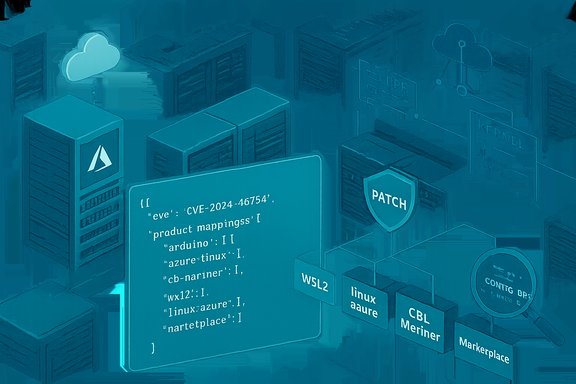
However, a product‑level attestation is a snapshot of what Microsoft has validated at the time it published the advisory. It is not an engineering claim that every other Microsoft artifact (WSL kernels, linux‑azure builds used for some VM SKUs, CBL‑Mariner‑derived images, Marketplace appliances, or statically compiled binaries in images) has been scanned and declared unaffected. Put simply:
This assessment is grounded in the upstream kernel commits and independent vendor advisories that document CVE‑2024‑46754 and its patches, and it reflects Microsoft’s public attestation practice as published in its Security Update Guide and CSAF/VEX outputs. The operational guidance above is designed to be reproducible, verifiable, and immediately actionable for administrators responsible for Azure Linux, WSL2, and other Microsoft‑distributed Linux artifacts.
Source: MSRC Security Update Guide - Microsoft Security Response Center
 Background / Overview
CVE‑2024‑46754 is a Linux kernel fix described upstream as “bpf: Remove tst_run from lwt_seg6local_prog_ops.” The vulnerability stems from a test/dump path for the seg6local BPF program type that allowed certain BPF operations (invoked via bpf_test_run to be called without the surrounding seg6local runtime context being initialized, which in turn could cause incorrect behavior or kernel instability. The issue and its upstream fix are recorded in the kernel stable tree and in vendor advisories. Microsoft’s Security Response Center (MSRC) entry for this CVE includes a product attestation that Azure Linux (Microsoft’s Linux distribution lineage used for Azure images and some internal artifacts) “includes the open‑source library and is therefore potentially affected,” and the company has committed to publish machine‑readable CSAF/VEX attestations and to update CVE mappings if additional Microsoft products are found to ship the same component. That attestation is intentionally product‑scoped and procedural rather than an engineering statement about every Microsoft SKU.This article examines what that phrasing means in practice, why it matters operationally, and — most importantly — what system owners should do right now to assess and remediate exposure across Microsoft‑supplied artifacts.
What Microsoft’s phrasing actually means
Product‑scoped attestation, not universal exclusion
When MSRC says a product “includes the open‑source library and is therefore potentially affected,” it is communicating the result of an inventory exercise for that product family — in this case, Azure Linux. That is an authoritative, machine‑readable signal customers can automate against: if you run Azure Linux images, treat them as in‑scope and remediate per Microsoft’s guidance.However, a product‑level attestation is a snapshot of what Microsoft has validated at the time it published the advisory. It is not an engineering claim that every other Microsoft artifact (WSL kernels, linux‑azure builds used for some VM SKUs, CBL‑Mariner‑derived images, Marketplace appliances, or statically compiled binaries in images) has been scanned and declared unaffected. Put simply:
- Yes — Azure Linux is the only Microsoft product Microsoft has publicly attested as including the implicated component for this CVE at the time of the advisory.
- No — that assertion does not prove other Microsoft products do not contain the same upstream code. Artifact‑level verification is required.
Why the distinction matters technically
Whether a vulnerable upstream file or kernel subsystem ends up in a given Microsoft product depends on at least three artifact‑level properties:- Kernel version / branch — upstream fixes are merged into kernel trees and then flow into distribution kernel packages. Different artifacts can carry different kernel revisions.
- Kernel configuration — CONFIG_* build flags determine whether a subsystem is built into the kernel, compiled as a module, or excluded. Two kernels with the same version might differ by config.
- Packaging / build pipeline — Microsoft ships multiple Linux‑related artifacts produced by distinct pipelines (Azure images, linux‑azure kernels, WSL2 kernels, CBL‑Mariner artifacts, Marketplace appliances). Each pipeline can pick different kernel sources and configs.
Independent verification of the technical facts
Two independent technical sources confirm the nature of CVE‑2024‑46754 and the presence of fixes in the upstream kernel:- The NVD entry for CVE‑2024‑46754 documents the bug summary and lists the fix text matching the upstream change to remove the problematic testrun invocation.
- Distribution trackers (Debian/Ubuntu and other vendor advisories) map the CVE into kernel package timelines and record which kernel package revisions are vulnerable or fixed. Debian’s and Ubuntu’s advisories mirror the upstream description.
Practical risk model: which Microsoft artifacts can be affected
Any Microsoft offering that ships a Linux kernel binary built from an upstream tree containing the vulnerable commit — and that enables the relevant BPF/seg6local functionality — can be affected. Examples of Microsoft artifacts you must treat as potentially in scope until verified:- Azure Linux images (CBL‑Mariner lineage / Azure-distributed distro) — explicitly attested by Microsoft and therefore the highest‑confidence “yes” for triage and patching.
- linux‑azure kernel packages used in certain Azure VM SKUs — separate kernel builds that should be checked independently.
- WSL2 kernel images — Microsoft maintains and publishes the WSL2 kernel source and build artifacts; if the WSL2 kernel build includes the implicated code and predates the fix, WSL2 hosts could be affected.
- CBL‑Mariner derived artifacts and container host images — Microsoft’s internal distro lineage is used for container hosts and appliance base images and can share upstream backports.
- Azure Marketplace / third‑party appliance images — these may ship older or different kernels; each image is a separate artifact that requires verification.
- Statically linked or embedded binaries — not typical for kernel bugs, but similar attestation gaps apply to userland components: a static binary built with a vulnerable version of a library remains vulnerable even if the system package is updated. The principle of artifact‑level verification applies universally.
Immediate actions: prioritized checklist (for operators and security teams)
- Patch Azure Linux images first (highest priority).
- Azure Linux is explicitly attested and should be treated as in‑scope; follow Microsoft’s published kernel and image updates and reboot machines after applying kernel updates.
- Inventory all Microsoft artifacts in your estate (WSL, linux‑azure, CBL‑Mariner images, Marketplace appliances, AKS node images). Use SBOM/SCA scans, image unpacking and direct inspection. Treat each artifact independently.
- Verify kernels and configs on live instances using these commands:
- uname -r
- zgrep CONFIG_BPF /proc/config.gz || grep -w CONFIG_BPF /boot/config-$(uname -r)
- lsmod | grep bpf || modinfo bpf
- rpm -q --changelog kernel | grep -i 46754 (or apt changelog equivalent)
These checks will show the running kernel version, whether BPF support was compiled in, and whether vendor changelogs reference the fix. - Inspect WSL2 kernels (on Windows hosts): check the WSL kernel version and compare against upstream fixes, or verify the WSL kernel config in Microsoft’s WSL repo when necessary. If you run a custom WSL kernel, re‑build with a fixed kernel source.
- For Marketplace and third‑party images: boot a test instance, inspect /boot and /proc/config.gz, and check kernel package changelogs or vendor advisories. Vendor‑provided appliances may require escalation to the publisher for clarity and patched images.
- Apply compensating controls while patching: restrict untrusted BPF loading, tighten capabilities (remove CAP_BPF from untrusted contexts), and isolate multi‑tenant workloads where possible. These mitigations reduce risk until kernels are patched.
- Automate ingestion of Microsoft’s CSAF/VEX attestations into your vulnerability management pipeline so product‑level mappings are consumed automatically as Microsoft expands coverage beyond Azure Linux. Microsoft committed to publishing those attestations beginning in October 2025; subscribe to the feed and watch for updates.
Technical verification recipes (step‑by‑step)
For each running Linux host or offline image you manage, run the following reproducible checks:- Confirm running kernel version
- Command: uname -r
- Purpose: Map running kernel to vendor advisory or upstream stable commits.
- Check kernel configuration for BPF/seg6local support
- Command: zgrep -E "CONFIG_BPF|CONFIG_BPF_SYSCALL|CONFIG_BPF_JIT|CONFIG_IPV6_SEG6" /proc/config.gz || grep -E "CONFIG_BPF|CONFIG_BPF_SYSCALL" /boot/config-$(uname -r)
- Purpose: If BPF or the seg6 subsystem is not compiled in, the kernel is unlikely to exhibit the exact vulnerable behavior. However, module presence or alternative build paths can change exposure.
- Inspect package changelogs for the fix reference or CVE number
- Debian/Ubuntu: apt changelog linux-image-$(uname -r) | grep -i 46754
- RHEL/CentOS/Oracle: rpm -q --changelog kernel | grep -i 46754
- Purpose: Vendor changelogs often list the upstream commit or CVE mapping used to mark a package as fixed.
- For offline VM images or Marketplace appliances
- Mount the image, extract /boot and the kernel config file, and run the same checks as above. If no config is present, attempt to match the kernel version string to upstream stable trees.
- WSL2 specific check (on the Windows host)
- Inspect the WSL kernel version: wsl --status or check the running WSL distro for uname -r. Compare to Microsoft’s WSL kernel tags and config in the WSL GitHub repo if necessary. If the WSL kernel predates the fix and includes seg6/BPF support, patch or replace the WSL kernel.
Strengths and limitations of Microsoft’s approach
Strengths
- Authoritative attestation where completed: Microsoft’s VEX/CSAF attestations provide machine‑readable, product‑level mappings that are ideal for automation and immediate triage for the attested product (Azure Linux). That reduces ambiguity for customers who run those images.
- Procedural commitment to expand: Microsoft has pledged to update CVE mappings and VEX attestations as additional internal inventories identify other product carriers. That promises improved coverage over time.
Limitations / Risks
- Phased rollout leaves short‑term coverage gaps: Starting with Azure Linux is pragmatic, but it leaves other Microsoft artifacts “unattested” until inventory completes. Absence of an attestation is not proof of absence. This is the core operational risk that causes confusion.
- Many independent artifacts to check: Microsoft ships linux‑related artifacts from multiple pipelines (WSL, linux‑azure, Marketplace, container base images) — each requires separate verification. Large customers or service teams can face substantial inventory work.
- Static or embedded components are hard to detect: For userland issues, static binaries or vendor‑embedded artefacts may continue to carry vulnerable code even after system packages are updated. The same artifact‑level problem applies if Microsoft or partners embed kernels or modules in appliances.
How to interpret Microsoft’s future updates and what to expect
Microsoft’s public commitment to expand VEX/CSAF attestations means the list of Microsoft products mapped to a CVE will likely grow as internal inventories complete. Customers should therefore:- Treat the Azure Linux attestation as an authoritative yes for that product and act on it immediately.
- Treat the absence of other Microsoft products from the attestation as unknown, not safe. Continue artifact‑level verification until either (a) Microsoft publishes an attestation for that product or (b) you confirm the artifact is not carrying the vulnerable code via the technical checks described above.
Sample remediation plan for a mixed estate (Azure VMs, on‑prem, Windows clients)
- Immediate (0–24 hours)
- Apply Microsoft’s published updates to all Azure Linux images (redeploy patched images if necessary) and reboot nodes.
- Subscribe to Microsoft’s CSAF/VEX feeds and begin ingesting attestation messages.
- Short term (24–72 hours)
- Inventory Microsoft artifacts (WSL hosts, linux‑azure VMs, Marketplace images, CBL‑Mariner hosts). Use SBOMs, image scanning (Trivy/Grype), and direct kernel inspection commands.
- For WSL systems owned by enterprise endpoints, identify which Windows clients have WSL2 enabled and what kernel they run; patch or replace WSL kernels if necessary.
- Medium term (3–14 days)
- Patch or rebuild any other Microsoft artifacts identified as carrying the vulnerable kernel or BPF subsystem. Coordinate with Marketplace publishers where third‑party images are in use.
- Implement capability and privilege hardening to limit BPF loading in multi‑tenant environments.
- Validation and monitoring (ongoing)
- Monitor kernel logs (dmesg, syslogs) for OOPS/WARN traces that the upstream fix intended to prevent. Validate fixes in a staging ring where you can reproduce relevant BPF selftests if you have the test harness available.
What remains unverifiable and where to be cautious
- Any specific claim that “no other Microsoft product includes the library” is unverifiable until Microsoft expands its attestation list or individual artifacts are inspected. The attestation for Azure Linux does not prove universal absence elsewhere. Treat such claims with caution.
- Microsoft’s own update‑guide page is rendered dynamically and its CSAF/VEX artifacts are machine‑readable JSON; for the most reliable indication of product mappings, consume Microsoft’s VEX/CSAF JSON files programmatically (they are the canonical inventory outputs). If you cannot find a VEX entry for a particular Microsoft product, that product is simply not yet attested — it is not confirmed safe.
Final assessment and bottom line
- Microsoft’s statement that Azure Linux includes the open‑source library and is therefore potentially affected is accurate and operationally useful: it gives Azure Linux customers a deterministic, machine‑readable signal to prioritize patching.
- However, Azure Linux is not necessarily the only Microsoft product that could include the vulnerable code; it is simply the only product Microsoft has publicly attested so far. Other Microsoft‑distributed kernels and images (WSL2, linux‑azure, CBL‑Mariner lineage images, Marketplace appliances) remain unverified until Microsoft publishes attestations for them or you perform artifact‑level checks.
- For security teams: act on the Azure Linux attestation now, inventory and verify every Microsoft artifact you run, apply kernel updates or rebuild images with patched kernels, and tighten BPF-related privileges until remediation is complete. Automate ingestion of Microsoft’s CSAF/VEX attestations so you are notified as Microsoft updates the product mappings.
This assessment is grounded in the upstream kernel commits and independent vendor advisories that document CVE‑2024‑46754 and its patches, and it reflects Microsoft’s public attestation practice as published in its Security Update Guide and CSAF/VEX outputs. The operational guidance above is designed to be reproducible, verifiable, and immediately actionable for administrators responsible for Azure Linux, WSL2, and other Microsoft‑distributed Linux artifacts.
Source: MSRC Security Update Guide - Microsoft Security Response Center
