

Microsoft’s brief MSRC note that “Azure Linux includes this open‑source library and is therefore potentially affected” is accurate — but it is a product‑scoped attestation, not a categorical statement that no other Microsoft product can contain the same vulnerable code. Azure Linux is the only Microsoft product Microsoft has publicly attested (so far) to include the implicated open‑source component for CVE‑2025‑38071, and Microsoft has committed to update the CVE/VEX mapping when additional Microsoft products are found to ship the same upstream code.
The vulnerability assigned CVE‑2025‑38071 concerns a kernel allocation path where code calling memblock_phys_alloc_range did not check the routine’s return value, creating a reliability and potential denial‑of‑service vector in affected kernels. The upstream patch adds explicit checks, safer allocation flags, and clamping logic to prevent integer overflows and uncontrolled allocations that could otherwise trigger WARN_ON_ONCE or allocation failures. Multiple distribution and vulnerability trackers recorded the issue and published remediation guidance.
Microsoft’s Security Response Center (MSRC) published an advisory that maps the upstream component to Microsoft’s Azure Linux product family and states that Azure Linux “includes this open‑source library and is therefore potentially affected.” MSRC also announced a phased rollout of machine‑readable CSAF/VEX attestations beginning in October 2025 and pledged to update attestations and CVE records if additional Microsoft products are identified as carriers of the vulnerable component.
The attestation does not assert, and MSRC does not claim, that other Microsoft products have been exhaustively scanned and proved free of the component. Microsoft explicitly said it will update CVE and VEX entries if further products are found to include the same code, which is precisely what you would expect from a phased, per‑artifact inventory model. Absence of a VEX entry for another Microsoft SKU therefore means “not yet attested,” not “not affected.”
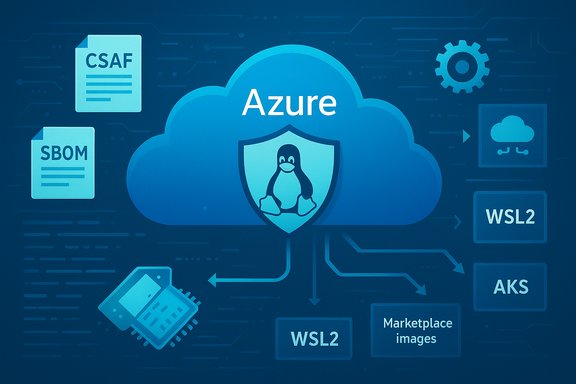
Long answer: Azure Linux is the only Microsoft product Microsoft has publicly attested (to date) as containing the implicated open‑source code for CVE‑2025‑38071. Because Microsoft’s VEX/CSAF program is being rolled out product‑by‑product, other Microsoft artifacts that ship Linux kernels or include the same library may also contain the vulnerable code depending on their kernel version and build configuration. Examples of such artifacts include the WSL2 kernel builds, linux‑azure variants, Azure Marketplace VM images, AKS node images, and curated vendor appliances. Each of these artifacts requires its own inventory check until Microsoft issues a VEX attestation for it or the owner verifies the artifact directly.
This distinction — attested versus exclusive — is operationally important. Treat MSRC’s Azure Linux attestation as an authoritative “yes” for Azure Linux, and treat any other Microsoft kernel‑shipping artifact as unverified until a VEX attestation or SBOM confirms its status.
However, reliance solely on vendor attestation as a substitute for local artifact inventory is a strategic mistake. A mature vulnerability management program must combine three capabilities:
Note: these commands are provided as a starting point; your environment, distribution tooling, and image formats may require adjustments.
Microsoft’s public attestation that Azure Linux includes the implicated open‑source library is an important, actionable signal that reduces uncertainty for cloud customers. It is not, however, a guarantee of exclusivity. The most effective defense is a blended approach that uses vendor attestations, artifact inspection, SBOMs, and rapid patching to close gaps across the full estate.
Source: MSRC Security Update Guide - Microsoft Security Response Center
 Background
The vulnerability assigned CVE‑2025‑38071 concerns a kernel allocation path where code calling memblock_phys_alloc_range did not check the routine’s return value, creating a reliability and potential denial‑of‑service vector in affected kernels. The upstream patch adds explicit checks, safer allocation flags, and clamping logic to prevent integer overflows and uncontrolled allocations that could otherwise trigger WARN_ON_ONCE or allocation failures. Multiple distribution and vulnerability trackers recorded the issue and published remediation guidance.Microsoft’s Security Response Center (MSRC) published an advisory that maps the upstream component to Microsoft’s Azure Linux product family and states that Azure Linux “includes this open‑source library and is therefore potentially affected.” MSRC also announced a phased rollout of machine‑readable CSAF/VEX attestations beginning in October 2025 and pledged to update attestations and CVE records if additional Microsoft products are identified as carriers of the vulnerable component.
What Microsoft’s Attestation Actually Means
Product‑scoped inventory, not exclusivity
Microsoft’s phrasing is deliberate: a VEX/CSAF attestation is an authoritative machine‑readable mapping between an upstream CVE and the specific Microsoft product artifacts the vendor has inspected. When MSRC states that Azure Linux includes the open‑source library and is therefore potentially affected, it is declaring the result of an inventory for that product family — nothing more. The attestation confirms the presence of the upstream code in Azure Linux builds and signals that Azure Linux customers should prioritize remediation.The attestation does not assert, and MSRC does not claim, that other Microsoft products have been exhaustively scanned and proved free of the component. Microsoft explicitly said it will update CVE and VEX entries if further products are found to include the same code, which is precisely what you would expect from a phased, per‑artifact inventory model. Absence of a VEX entry for another Microsoft SKU therefore means “not yet attested,” not “not affected.”
Why per‑product attestations are necessary
Large vendors ship hundreds or thousands of distinct artifacts — kernels, distribution images, Marketplace appliances, container base images, and bespoke binaries — each built with different config flags and sometimes different upstream versions. For kernel code in particular, whether a vulnerability appears in an artifact is a build‑time property driven by:- The upstream kernel commit and applied backports
- Kernel CONFIG_* options (what drivers/subsystems are included)
- Whether code is built in or compiled as a module
- Any vendor‑specific backports or patches applied during packaging
Is Azure Linux the Only Microsoft Product That Could Be Affected?
Short answer: No — not necessarily.Long answer: Azure Linux is the only Microsoft product Microsoft has publicly attested (to date) as containing the implicated open‑source code for CVE‑2025‑38071. Because Microsoft’s VEX/CSAF program is being rolled out product‑by‑product, other Microsoft artifacts that ship Linux kernels or include the same library may also contain the vulnerable code depending on their kernel version and build configuration. Examples of such artifacts include the WSL2 kernel builds, linux‑azure variants, Azure Marketplace VM images, AKS node images, and curated vendor appliances. Each of these artifacts requires its own inventory check until Microsoft issues a VEX attestation for it or the owner verifies the artifact directly.
This distinction — attested versus exclusive — is operationally important. Treat MSRC’s Azure Linux attestation as an authoritative “yes” for Azure Linux, and treat any other Microsoft kernel‑shipping artifact as unverified until a VEX attestation or SBOM confirms its status.
Technical Reasons Other Microsoft Products Could Be Carriers
- Kernel configuration variance: Some Microsoft kernels (for example the WSL2 kernel compared with Azure Linux kernels) are built with different CONFIG_* options. A subsystem present in Azure Linux may be omitted in another Microsoft kernel build, or it may be compiled as a module rather than built‑in, changing exposure.
- Different upstream baselines/backports: Windows Subsystem for Linux (WSL), linux‑azure, and other images may track different upstream kernel branches or include different backports. An artifact that predates the upstream fix or lacks the backport becomes a carrier.
- Static or embedded components: Some products embed userland libraries or statically link components. A vulnerability in an open‑source library can therefore propagate into unexpected artifacts if not tracked with SBOMs and inventory tooling.
- Marketplace and partner images: Third‑party Marketplace appliances or vendor images distributed via Azure Marketplace may use Microsoft tooling or base images in their build pipelines; those images could include the vulnerable code depending on how they are produced.
Operational Guidance: What Organizations Should Do Now
For organizations running Microsoft products or Azure services, the following practical checklist provides a defensible response strategy.1. Prioritize Azure Linux patching immediately
- Treat MSRC’s attestation for Azure Linux as authoritative and action it within your patching windows.
- Apply vendor kernel updates or kernel package upgrades published for Azure Linux and follow Microsoft’s recommended reboot cadence where required.
2. Inventory other Microsoft artifacts in your estate
- Identify every place you run Microsoft‑published Linux artifacts: WSL2 instances, Azure VM images, AKS nodes, Marketplace appliances, linux‑azure kernels, and any custom images derived from Microsoft base images.
- For each artifact, perform an artifact inspection or query its SBOM if available. If you cannot inspect a specific image, open a support case with Microsoft and request a product‑level VEX/CSAF attestation for that SKU.
3. Use deterministic checks to detect presence of the vulnerable code
- For running hosts: check kernel version and compile options. Search for the presence of the implicated file or symbol in your kernel build (for example, examine /boot/config-$(uname -r) for CONFIG_* flags and inspect kernel modules).
- For images: mount the image and inspect kernel packages and initramfs contents, or rebuild SBOMs using tools like syft/grype to locate the vulnerable component.
- For WSL: verify the WSL2 kernel version shipped with your Windows build or any custom kernel you deploy and ensure it contains the upstream fix or backport.
4. Automate VEX/CSAF consumption and re‑scan when vendor attestations change
- If you consume Microsoft’s VEX/CSAF feed in your vulnerability pipeline, ensure automation re-runs inventory and mapping when MSRC updates files. VEX statuses can change (Known Affected → Fixed, or new products can move from Not Attested → Known Affected).
5. If you can’t patch immediately, apply compensating controls
- Restrict kernel‑level attack surface where possible: limit which tenants or workloads can exercise the vulnerable subsystem, restrict access to affected kernel interfaces, and add monitoring to detect WARN_ON_ONCE or oops traces in dmesg.
- For multi‑tenant hosts, consider migration or workload evacuation from at‑risk hosts until remediation is applied.
How to Verify Whether a Specific Microsoft Artifact Is Affected
Below are concrete, ranked steps you can run to establish artifact impact.- Query Microsoft’s VEX/CSAF feed for the CVE and product SKU you care about. If the product appears there, the VEX entry is authoritative for that SKU.
- For VMs or images you control, inspect kernel packages and kernel config:
- Check uname -r and distribution kernel package versions.
- Inspect /boot/config-$(uname -r) for relevant CONFIG_* flags.
- Search module lists (lsmod) and the kernel image for the implicated symbol or source file.
- For WSL2:
- Check the WSL kernel version shipped with your Windows build or any custom kernel you installed.
- Compare the kernel commit/version against upstream commit(s) that fixed memblock_phys_alloc_range return‑value checks.
- If you cannot inspect the artifact, request a VEX/CSAF attestation or SBOM from Microsoft for that specific SKU. Microsoft has committed to expanding attestations as their inventory completes.
Strengths and Risks of Microsoft’s CSAF/VEX Approach
Strengths (notable positives)
- Actionable, machine‑readable data: VEX/CSAF provides deterministic answers per product artifact that automation pipelines can consume and act upon, reducing guesswork.
- Transparency commitment: Microsoft’s public promise to publish attestations and update them when additional products are found to be carriers improves traceability and accountability.
- Pragmatic rollout: Starting with Azure Linux focuses scarce engineering resources where they can deliver the most immediate value to cloud customers.
Risks and limitations (what to watch for)
- False sense of exclusivity: Non‑security specialists may misread “Azure Linux includes…” to mean “only Azure Linux includes…” — a mistaken inference that can leave other artifacts unverified and unpatched.
- Per‑artifact variance: Kernel vulnerabilities are highly dependent on build options and backports; a product attestation for one artifact does not logically cover other artifacts or SKUs.
- Attestation lag: The VEX/CSAF inventory process is phased; until Microsoft finishes inventories across its entire footprint there will be windows of uncertainty for customers that must be closed by artifact inspection or vendor requests.
Critical Analysis: What This Means for Enterprise Risk Management
Microsoft’s move to publish CSAF/VEX attestations is an unequivocally positive step for enterprise defenders: it enables automated triage and reduces noisy vendor advisories that historically forced broad, manual artifact scans. For Azure Linux operators, the attestation gives a concrete action signal to patch and validate.However, reliance solely on vendor attestation as a substitute for local artifact inventory is a strategic mistake. A mature vulnerability management program must combine three capabilities:
- Vendor attestation consumption (VEX/CSAF)
- Fleet artifact inventory and SBOM validation
- Fast, efficient rollout of mitigations and kernel updates
Practical Example: Quick Detection Commands
The steps below are illustrative and widely usable for Linux images and VMs. They are formatted as deterministic checks — run them on a host or image you control.- Check kernel version and package:
- uname -a
- dpkg -l | grep linux-image
- rpm -qa | grep kernel
- Inspect kernel config for suspicious options:
- zcat /proc/config.gz | grep -E 'CONFIG_MEMBLOCK|CONFIGHIGHMEM|CONFIGNFTABLES'
- grep -i memblock /proc/kallsyms
- Search for signs of the bug in logs:
- dmesg | grep -i WARN_ON
- journalctl -k | grep -i oops
Note: these commands are provided as a starting point; your environment, distribution tooling, and image formats may require adjustments.
Unverifiable or Time‑sensitive Claims — Cautionary Notes
- Any statement that other Microsoft products are affected beyond the Azure Linux attestation requires corroboration from additional MSRC VEX entries, SBOM disclosures, or an explicit inventory update from Microsoft. Microsoft has committed to updating CVE records if additional products are discovered, but until that happens, assertions about other SKUs are speculative and must be validated. Treat claims about other Microsoft products cautiously until vendor attestations or SBOMs confirm them.
- The exact list of kernel commit IDs that fix CVE‑2025‑38071 and the set of kernel builds Microsoft marked as “Known Affected” or “Fixed” appear in vendor advisories and stable tree commits; to map a given image to a fix deterministically, compare image kernel versions and build metadata to those commits or backport indicators.
Final Recommendations (executive summary)
- Act now on MSRC’s Azure Linux attestation: apply the kernel updates Microsoft published for Azure Linux and validate reboots and functionality.
- Treat MSRC’s VEX/CSAF output as one authoritative input in your pipeline, but do not assume it covers all Microsoft SKUs. Where critical assets run other Microsoft artifacts, perform artifact inspections or obtain a VEX/SBOM attestation for those specific SKUs.
- Automate ingestion of vendor VEX/CSAF feeds and re‑scan artifacts whenever vendor attestations change.
- Maintain a short‑term compensating control posture for unpatched or unverified artifacts: reduce access to affected subsystems, monitor kernel logs for oops/WARN traces, and accelerate patch testing where possible.
Microsoft’s public attestation that Azure Linux includes the implicated open‑source library is an important, actionable signal that reduces uncertainty for cloud customers. It is not, however, a guarantee of exclusivity. The most effective defense is a blended approach that uses vendor attestations, artifact inspection, SBOMs, and rapid patching to close gaps across the full estate.
Source: MSRC Security Update Guide - Microsoft Security Response Center
