

Microsoft’s brief advisory that “Azure Linux includes this open‑source library and is therefore potentially affected” is accurate — but it is a product‑scope attestation, not a categorical statement that no other Microsoft product could include the same vulnerable component.
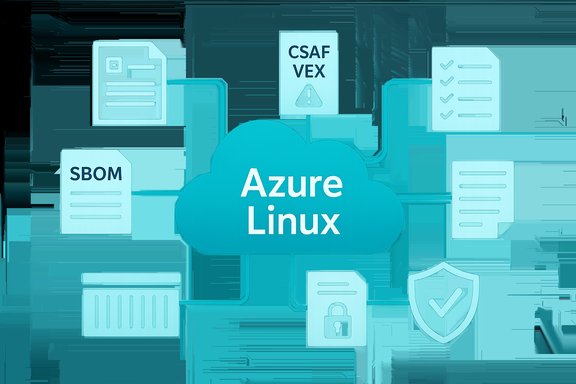
Microsoft recently began publishing machine‑readable CSAF/VEX attestations for its product families, starting with the Azure Linux distribution. That transparency program means Microsoft will explicitly list which Microsoft product images and builds have been inventory‑checked and are known affected, not affected, under investigation, or fixed for a given CVE. The wording you quoted from MSRC — that Azure Linux “includes this open‑source library and is therefore potentially affected” — reflects the outcome of that inventory process for Azure Linux, not a universal exclusion for other Microsoft SKUs.
This operational model is important to understand because it changes how customers should interpret vendor advisories: a published VEX/CSAF entry is an authoritative, machine‑readable confirmation for the named product(s). It is not proof that other products do not carry the vulnerable component; it is simply evidence that Microsoft has completed the mapping work for Azure Linux and published the result. Microsoft has also said it will update CVE/VEX records if additional Microsoft products are identified that include the same open‑source library.
Cautionary note: any definitive statement that other specific Microsoft products are or are not affected requires either (a) a Microsoft VEX/CSAF attestation that names those products, or (b) direct artifact inspection by you (or your vendor). Until one of those is available, assume uncertainty and verify.
Source: MSRC Security Update Guide - Microsoft Security Response Center
 Background
Microsoft recently began publishing machine‑readable CSAF/VEX attestations for its product families, starting with the Azure Linux distribution. That transparency program means Microsoft will explicitly list which Microsoft product images and builds have been inventory‑checked and are known affected, not affected, under investigation, or fixed for a given CVE. The wording you quoted from MSRC — that Azure Linux “includes this open‑source library and is therefore potentially affected” — reflects the outcome of that inventory process for Azure Linux, not a universal exclusion for other Microsoft SKUs.This operational model is important to understand because it changes how customers should interpret vendor advisories: a published VEX/CSAF entry is an authoritative, machine‑readable confirmation for the named product(s). It is not proof that other products do not carry the vulnerable component; it is simply evidence that Microsoft has completed the mapping work for Azure Linux and published the result. Microsoft has also said it will update CVE/VEX records if additional Microsoft products are identified that include the same open‑source library.
What the MSRC text actually says — a concise summary
- Microsoft explicitly states Azure Linux is known to include the affected open‑source library and therefore is potentially affected by the CVE in question.
- Microsoft also says it began publishing CSAF/VEX attestations in October 2025 and will update the CVE record if additional internal products are discovered to ship the component.
- The phrasing used by Microsoft is procedural and scoped to the inventory work completed so far; it intentionally avoids asserting that other Microsoft products cannot be affected.
Short answer to the user’s question
No — Azure Linux is not necessarily the only Microsoft product that includes the vulnerable open‑source library. It is the only Microsoft product Microsoft has publicly attested to include the component so far, but absence of attestation is not proof of absence. Any Microsoft image, container, or binary that embeds or ships the same library (including statically‑linked or vendor‑built artifacts) could be a carrier until an inventory check proves otherwise. Treat the Azure Linux VEX/CSAF attestation as a definitive signal for Azure Linux only.Technical context: why Microsoft’s wording matters
What an attestation represents
A VEX/CSAF attestation is a machine‑readable mapping between a CVE and the specific product artifacts that a vendor has inventory‑checked. When Microsoft says a product “includes” a library and is “potentially affected,” that is the vendor declaring: “We inspected this product’s build and found the component; treat it as in‑scope unless we later mark it fixed.” This is a positive step for engineers who need deterministic inputs for automated triage and remediation.What an attestation does not represent
- It does not mean Microsoft checked every internal product or image across the company.
- It does not guarantee that custom images, third‑party Marketplace appliances, or static binaries embedded in other Microsoft artifacts are free of the component.
- It does not replace host‑level verification, artifact inspection, or SBOM‑driven checks.
Why Azure Linux was the first to be attested
Microsoft began its CSAF/VEX rollout with Azure Linux (CBL‑Mariner lineage) as a practical and logical starting point for several reasons:- Azure Linux is a single, distributable product family that Microsoft builds, publishes, and controls end‑to‑end — making it easier to generate authoritative SBOMs and build provenance.
- The Azure Linux attestation program provides immediate value to cloud customers who consume Microsoft‑published images at scale, reducing noisy triage for a large, well‑defined population.
- Microsoft committed to iteratively expand attestations to other product families over time; the initial focus on Azure Linux reflects a phased inventory approach rather than a final statement of coverage.
Practical implications for enterprises and operators
Immediate operational truth
- If you run Azure Linux images, treat Microsoft’s attestation as the authoritative statement that the product includes the vulnerable component and is potentially affected. Prioritize patching and follow Microsoft’s remediation guidance for that product.
For other Microsoft products and images
- Do not assume they are safe simply because Microsoft has not yet published a VEX attestation for them. Absence of an attestation should be treated as “not yet validated,” not “not affected.”
Specific artifact classes that commonly hide vulnerable components
- Statically linked binaries and single‑file distributables that bundle third‑party libraries.
- Container images (including Marketplace and partner images) that are based on older base layers or vendor artifacts.
- Appliance‑style installers and firmware images that include open‑source stacks.
- Build pipelines that embed older runtimes (Go toolchains, Python wheels, Node modules, etc. into release artifacts.
Recommended verification and remediation checklist
Below is an operational playbook tailored for WindowsForum readers and enterprise defenders facing a vendor attestation like Microsoft’s.1. Treat the attestation as a high‑priority triage signal
- If you operate Azure Linux images, follow Microsoft’s remediation guidance first. An explicit vendor attestation reduces uncertainty and should be prioritized.
2. Inventory and locate the library across your estate
- Use SBOMs where available (CycloneDX, SPDX) to search for the component name and version across images and packages.
- For containers: inspect image layers, package manifests, and recreate images in a scanning environment to enumerate bundled libraries.
- For binaries: search for version strings, build metadata, or use runtime introspection (where possible) to detect embedded libraries.
- For Windows‑hosted artifacts: search build artifacts, CI manifests, and packaged artifacts for third‑party components.
3. Check static linking and bundled artifacts
- A patched system package does not fix a statically‑linked binary. If you find vendor binaries that statically include the open‑source component, rebuild or replace those binaries with patched versions or obtain vendor‑released updates.
4. Scan containers and images in registry
- Prioritize scanned images that are outwardly exposed (internet‑facing services, multi‑tenant hosts, CI runners). If Marketplace images are used, treat them as separate inventory items and contact the image publisher for attestation or updates.
5. Apply compensating controls while you patch
- Rate limit parsing endpoints, introduce stricter input validation, and isolate parsing services into ephemeral containers with resource limits. These measures reduce blast radius if the CVE is a parsing/performance or DoS class.
6. Rebuild and redeploy where necessary
- Where the vulnerable component is embedded in built artifacts, the only true remediation is replacing the artifact with a build that uses a patched dependency or an updated toolchain. Do not rely on OS/package updates alone when dealing with bundled code.
7. Monitor vendor VEX/CSAF updates
- Microsoft has committed to updating the CVE record if additional internal products are discovered to ship the component; subscribe to MSRC CVE pages and machine‑readable VEX/CSAF outputs so updates can trigger automated re‑inventory.
Detection and hunting recommendations
- Look for process crashes, OOMs, or repeated restarts in services that parse external blobs (certificates, keys, archives, image uploads). These are classic signals when CVEs are parsing‑ or memory‑safety‑related.
- Capture and analyze SBOMs and build logs to quickly correlate component versions to known vulnerable ranges.
- For performance‑oriented CVEs (algorithmic complexity, quadratic parse), monitor CPU spikes and unusually long end‑to‑end latencies on parsing endpoints.
Critical analysis of Microsoft’s VEX/CSAF approach
Notable strengths
- Machine‑readability: VEX/CSAF provides deterministic automation inputs for vulnerability management systems, dramatically speeding triage for the named product family.
- Transparency commitment: Microsoft’s public pledge to update attestations when additional products are identified reduces ambiguity compared with older vendor advisories that left customers guessing.
- Practical prioritization: Publishing attestations for Azure Linux first helps customers who run those images take immediate action without exhaustive manual triage.
Residual risks and limitations
- Phased coverage creates blind spots. Until Microsoft completes inventory across all product families, many Microsoft‑published artifacts (Marketplace images, partner images, legacy installers) may remain un‑attested and therefore uncertain. Treat these as requiring independent verification.
- Static linking and bundled artifacts undermine OS‑level fixes. Many applications and appliances embed third‑party libraries. Patching the system package is insufficient when the vulnerable code is bundled inside an application binary.
- Operational assumptions can be dangerous. Some operations teams interpret “only Azure Linux” to mean “only Azure Linux customers must act.” That is incorrect and risky; inventory must drive decisions, not a vendor’s initial attestation scope.
When vendor wording is ambiguous — how to ask better questions
When contacting Microsoft or other vendors about CVE exposure, demand the following:- A VEX/CSAF attestation or SBOM that explicitly lists product artifacts and component versions.
- Confirmation about static/bundled binaries: whether product SKUs ship any statically‑linked or embedded artifacts that include the vulnerable library.
- The exact upstream commit or patched package version that fixes the component so you can map it to your artifacts.
Example scenarios where “Azure Linux only” would be misleading
- A Microsoft‑published container image in the Azure Marketplace may be built on an older base layer that includes the vulnerable library even if the vendor’s named product (Azure Linux base images) is already patched. Marketplace images are distinct inventory items and must be checked separately.
- A custom internal tool built by a Microsoft team (or partner) that embeds a specific Go toolchain version may still carry the vulnerable encoding/pem code even if Azure Linux images have been remediated. This is especially true for statically compiled, long‑lived binaries.
Conclusion — definitive operational verdict
Microsoft’s advisory for CVE‑related attestations correctly and usefully states that Azure Linux includes the affected open‑source library and is therefore potentially affected. That attestation is authoritative for Azure Linux and should be acted upon immediately by anyone running those images. However, Azure Linux is not necessarily the only Microsoft product that could include the vulnerable library — it is merely the only Microsoft product Microsoft has publicly attested at this stage. Absence of attestation is not proof of absence. Operators must perform artifact‑level verification (SBOMs, image scans, binary inspections), prioritize remediation for Microsoft‑attested products, and apply the inventory and rebuild guidance above wherever statically linked or bundled components are found.Quick checklist (action you can take right now)
- If you run Azure Linux: follow Microsoft’s remediation steps immediately and subscribe to VEX/CSAF updates.
- For all Microsoft images and binaries in your estate: run SBOM or SCA scans for the component name and version; inspect container layers and binaries for bundled copies.
- Identify static/shared libraries embedded in release artifacts and plan rebuilds where necessary.
- Apply compensating controls (rate limits, input validation, isolation) to parsing endpoints while you complete remediation.
Cautionary note: any definitive statement that other specific Microsoft products are or are not affected requires either (a) a Microsoft VEX/CSAF attestation that names those products, or (b) direct artifact inspection by you (or your vendor). Until one of those is available, assume uncertainty and verify.
Source: MSRC Security Update Guide - Microsoft Security Response Center
