

Azure Mattress’ recent press release and syndicated reviews frame the brand’s rise in Singapore as a case study in how trust, transparency and consistent product performance translate into repeat buyers and word-of-mouth growth.
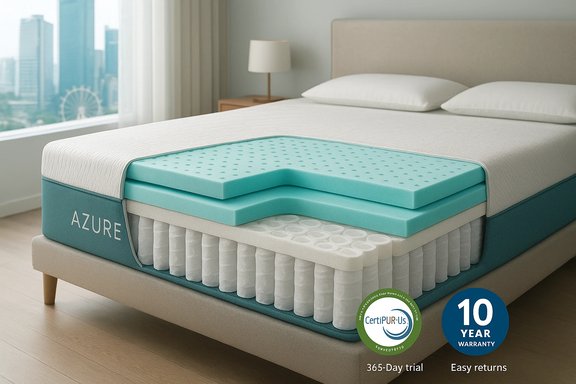
Azure Mattress launched as a direct-to-consumer mattress brand focused on hot, humid markets in Southeast Asia and positions its products as hybrid, cooling mattresses with latex and pocket-spring support. The company’s site highlights a multi-layer hybrid construction, cooling fabrics and gel foams, CertiPUR‑US certification, and a 10‑year warranty—messages repeated across product pages and FAQs. The narrative picked up steam through a cluster of syndicated press pieces and blog posts emphasising three themes: climate‑aware cooling design, straightforward product pages that explain materials, and a customer-first returns/warranty posture. These claims were amplified in a press release syndication that explicitly links those factors to rising brand loyalty.
Source: openPR.com Azure Mattress Review Shows How Trust Drives Brand Loyalty
 Background / Overview
Azure Mattress launched as a direct-to-consumer mattress brand focused on hot, humid markets in Southeast Asia and positions its products as hybrid, cooling mattresses with latex and pocket-spring support. The company’s site highlights a multi-layer hybrid construction, cooling fabrics and gel foams, CertiPUR‑US certification, and a 10‑year warranty—messages repeated across product pages and FAQs. The narrative picked up steam through a cluster of syndicated press pieces and blog posts emphasising three themes: climate‑aware cooling design, straightforward product pages that explain materials, and a customer-first returns/warranty posture. These claims were amplified in a press release syndication that explicitly links those factors to rising brand loyalty. What the press messaging actually says
- Azure’s PR frames trust-building as a product of transparent product descriptions, consistent performance, and clear policies (trial, returns, warranty). The release explicitly points to the brand’s website, social channels and other syndicated reviews as supporting evidence.
- The brand emphasizes cooling features—open‑cell latex, cooling gel foam and breathable covers—and claims those choices make its mattresses better suited to tropical climates. Product pages and marketing copy repeatedly stress “Ultra Cool Sleep” and “CloudCool” layers.
- Azure’s customer-facing policies listed on-site include a 10‑year limited warranty, free delivery and returns language, and published FAQs that reference a 365‑day trial/return period in some sections. These are cornerstone trust signals on the site.
Verifying the technical claims: what’s supported and what needs scrutiny
Materials, certifications and construction
- Azure’s product pages list measurable components—natural latex layers, cooling gel memory foam, Tencel or Ice Silk covers, and pocketed micro‑springs. Those specific elements are plausible and commonly used in hybrid mattresses to combine airflow, contouring and zoned support. The site lists CertiPUR‑US / Oeko‑Tex style markers as certifications for foams and textiles.
- Independent verification: CertiPUR‑US and Oeko‑Tex are recognised third‑party standards for foam emissions and textiles respectively. Azure’s claim that its foams meet CertiPUR‑US criteria is consistent with how many mattress companies advertise safety testing, but the presence of a badge on a site is not the same as an independent lab report. Consumers should request the specific CertiPUR‑US certification number or a downloadable certificate when third‑party proof is important to them. This is a routine due‑diligence step when certification is a selling point.
Cooling performance
- The brand’s cooling argument is both technical (open‑cell latex + gel foam) and experiential (customer testimonials saying they sleep cooler). Open‑cell latex and phase‑change / gel‑infused foams can reduce retained heat relative to dense memory foam, and pocket springs enable airflow compared with solid foam cores. Those are credible mechanisms.
- What’s missing in the public materials is standardized, third‑party testing data—objective measures such as thermal conductivity, microclimate temperature reduction over time, or measured sleep‑stage improvements. The brand provides product architecture but not the lab data that would quantify how many degrees cooler a sleeper might expect. Until such testing or independent lab results are published, cooling claims should be treated as plausible but not precisely quantified.
Warranty and trial terms
- Azure advertises a 10‑year limited warranty; the site contains a warranty page that outlines coverage and exclusions (e.g., normal wear, misuse) and describes a registration process for warranty activation. The warranty language and exclusions align with standard DTC mattress warranties.
- On trial periods and returns, the company’s FAQ mentions a 365‑day trial period in at least one entry—this is an unusually long window compared to many mattress DTC players (most offer 90–120 nights). However, the press coverage and some third‑party writeups are inconsistent about whether a formal 365‑day, fully risk‑free trial (with free pickup and full refund) is universally applied or only available under certain conditions. The site’s return policy language should be read carefully (registration, inspection, hygiene exclusions and pickup fees appear in some places). Where policy language is inconsistent across pages, ask customer service for the exact trial return process before purchase.
Customer feedback, social proof and review sourcing
Azure’s marketing leans heavily on customer testimonials and on-site review widgets. The brand’s pages display many positive quotes—several 5‑star blurbs and repeated claims of improved back pain and cooling comfort. Syndicated press (IssueWire, openPR and smaller blogs) re‑publish the same themes, which helps awareness but can also create an echo chamber when coverage is primarily PR-driven rather than investigative. Third‑party independent reviews (blogs, YouTube testers, mattress comparison sites) are present but less numerous and vary in depth. Some independent posts test cooling by experience rather than by instrumentation; others highlight value and price point. Key caution for readers: promotional coverage and company-hosted testimonials are a useful signal of satisfaction, but they should be balanced with:- longer‑term owner reviews (6–12+ months),
- reviews from independent mattress reviewers who publish methodology,
- any available returns and warranty claim statistics if the vendor will share them.
Marketing and PR — why the message matters (and how to read it)
Azure’s PR states plainly that transparency is the differentiator: clear product descriptions, visible policy coverage, and active response to customer feedback. Those are the exact behaviors that reduce the risk of buyer remorse in online mattress purchases. The company’s communications are consistent—product pages, FAQs and the press release all repeat the same claims. However, syndicated press releases and paid distribution networks can amplify a message without independent validation. Several of the articles cited by the openPR release appear to be republished PR or brand narrative pieces rather than independent investigations. This pattern is common in consumer goods launches: brands use PR networks to reach discovery channels, then rely on user reviews and retail conversions to supply independent corroboration later. That process works—provided the company actually delivers on those claims over time.Strengths worth calling out
- Clear product architecture. Azure lists specific layers (latex, gel memory foam, pocket springs, cooling covers). That level of specificity reduces ambiguity for buyers and makes it easier to compare against competitors.
- Trust signals in policy. A published 10‑year warranty and explicit returns language are powerful trust builders when they are simple to understand and consistently applied. Azure publishes these policies prominently.
- Local market fit. The brand repeatedly frames its design for tropical climates and markets its cooling features accordingly—this message resonates where overheating is a primary complaint. Early consumer quotes and local press highlight this fit.
- Price/value positioning. Azure’s direct sales model and frequent promotions (site lists aggressive discounts) make premium constructions more accessible on price—an effective strategy when the product meets expectation.
Risks, gaps and potential red flags
- Certification proof vs badge display. The site displays CertiPUR‑US or similar badges. That is a strong signal, but shoppers who need guaranteed lab evidence should request certificate numbers or lab reports rather than relying on a site badge alone. Ask for certificates or vendor‑provided lab test PDFs for full assurance.
- Trial and returns clarity. The FAQ mentions both a 365‑day trial and separate returns language; when multiple pages provide different phrasing, buyers should clarify the exact return mechanics (pick‑up, hygiene exclusions, restocking fees) before purchase. Policy inconsistency is a common source of consumer disputes.
- Syndicated PR vs independent journalism. The openPR press release and IssueWire piece are largely promotional and draw from the same company-provided material. While not disqualifying, that reduces the amount of genuinely independent verification available in public coverage. Seek out independent long‑term reviews or third‑party testers for a stronger evidence base.
- Longevity and sagging claims need time. Durability claims are credible given higher‑density foams and pocket springs, but real proof of longevity requires multi‑year owner feedback or independent accelerated aging tests. Some third‑party writeups discuss durability positively, but robust conclusions require longer horizons.
How to evaluate Azure (practical checklist for buyers)
- Review the exact warranty text and ask for examples of what qualifies as a valid sag/indentation claim. Confirm the registration timeline and what proof of purchase is required.
- Confirm the trial/return process: ask whether free pickup is included, whether returns within 30/90/365 days are unconditional, and what hygiene conditions (mattress covers, stains) might void a return.
- Request evidence of third‑party certifications (CertiPUR‑US ID, Oeko‑Tex certificate) if chemical emissions and material provenance matter to you.
- Read a mix of reviews: on‑site testimonials, independent blog tests that describe methodology, and long‑term owner posts (6–12 months). Watch for consistent patterns (cooling, sagging, edge support).
- Compare value vs. alternatives: evaluate competitor pages and aggregate review counts—high rating from a handful of reviews is less robust than many reviews with consistent scoring.
Industry perspective: why trust matters in DTC mattresses
Direct‑to‑consumer mattress brands live and die by two levers: product design and post‑sale experience. A well‑engineered mattress will only produce repeat buyers if returns, warranty and customer service are smooth. Azure’s PR and site messaging are tuned to this dynamic: the company foregrounds transparent materials, cooling engineering and long warranties because those are the signals that lower the purchase friction for online buyers. When a brand communicates clearly and then honours its policies, trust compounds into referrals and higher lifetime value. However, the reverse is true as well: inconsistency between marketing and operation—confusing trial rules, inflexible warranty handling, or opacity around certification—erodes trust faster than marketing can build it. That’s why independent verification (lab reports, documented warranty resolutions, third‑party long‑term reviews) matters more than PR volume.Final assessment
Azure Mattress has assembled the right building blocks for fast DTC growth in Singapore: a locally relevant product claim (cooling), clear warranty and return messaging, and an accessible price point. Those elements, when executed well, are proven drivers of brand loyalty in the mattress category. The company’s public materials and syndicated PR correctly emphasise transparency, quality and service as the pathways to trust. That said, the most important, load‑bearing claims still need more independent backing to graduate from promising to proven:- third‑party certification documents for materials and emissions,
- instrumented cooling tests or comparative thermal data,
- a clear, consistently phrased trial and return policy that is reproducibly applied in customer cases,
- and multi‑year owner data or accelerated testing that substantiates longevity and sag resistance. Until those elements are either published or available on request, the brand’s ascent is best read as early but credible—worthy of interest and trial, but best approached with the normal consumer due diligence for an expensive, long‑life purchase.
Recommendation for readers
- If you value cooling and hybrid support and the advertised warranty/trial meets your threshold, Azure is a reasonable option to test—especially at its price points. Confirm trial/return specifics in writing before checkout.
- If you need absolute assurance on chemical testing or cooling performance, request the specific certification numbers and any lab reports from the vendor; insist on documented proof rather than badge images.
- For independent validation, supplement Azure’s marketing with long‑term owner reviews and third‑party tester reports before making a final decision. Look for repeated, convergent experiences across several months of ownership.
Source: openPR.com Azure Mattress Review Shows How Trust Drives Brand Loyalty
