

Microsoft used Build 2026 in San Francisco on Tuesday to pitch Windows, Surface, Copilot, and its own AI models as pieces of a single agent-driven computing stack spanning cloud services, local PCs, developer hardware, and experimental devices. The headline is not one gadget or one chatbot upgrade. It is Microsoft’s attempt to make the AI PC less of a marketing sticker and more of an operating model. If the company succeeds, Windows becomes the place where agents are built, governed, deployed, and trusted; if it fails, Build 2026 will look like another ambitious platform reset that arrived before customers were ready.
The most important word in Microsoft’s Build pitch was not “Copilot.” It was “stack.” The company is trying to bind together silicon, operating-system controls, developer tools, cloud orchestration, and foundation models into something enterprises can buy without stitching together half a dozen vendors.
That is a familiar Microsoft move. Windows won the PC era not merely because it was an operating system, but because it became the default substrate for developers, IT departments, hardware makers, and business software vendors. Azure grew by convincing enterprises that Microsoft could make cloud adoption feel adjacent to their existing identity, security, and productivity investments. Now Microsoft is trying to do the same thing for agents.
The company’s argument is simple enough: AI agents will not remain confined to a browser tab or chatbot pane. They will read files, summarize meetings, operate apps, schedule work, move data, and eventually take actions across systems that today require a human sitting in front of a desktop. That creates a giant business opportunity, but also a giant governance problem.
For Windows users and administrators, the promise is seductive and unsettling in equal measure. A useful agent needs context and permission. A dangerous agent has too much of both. Build 2026 was Microsoft’s attempt to say that the same company that gave IT admins Group Policy, Intune, Defender, Entra ID, BitLocker, and Windows security baselines can also make agentic computing safe enough for corporate laptops.
That matters because the economics of AI development are starting to look less like traditional software engineering and more like a cloud-metering exercise. Every experiment can carry a cost. Every test loop can depend on latency, quota, model availability, and data-movement rules. A powerful local machine does not eliminate the cloud, but it gives developers a place to prototype, fine-tune, test agents, and handle sensitive workloads without sending every iteration to a hosted service.
Microsoft’s Surface line has played this role before. Surface devices are rarely just devices; they are reference designs for what Microsoft wants the Windows ecosystem to become. The original Surface pushed OEMs toward premium touch hardware. Surface Pro helped normalize the detachable Windows tablet. Copilot+ PCs pushed neural processors into the Windows mainstream. The Surface RTX Spark Dev Box now signals that Microsoft wants a new class of Windows machine for agent developers, not merely productivity workers.
The risk is that developer boxes can become symbols rather than markets. Microsoft’s previous Arm developer hardware has not always aged gracefully, and Windows on Arm still carries years of compatibility skepticism. The Dev Box therefore has to prove not just that it can load large models, but that developers can actually use it as a dependable part of their daily workflow.
That is a much stronger story than the first wave of AI PCs offered. A local agent that can reason over files, interact with apps, and run smaller or specialized models on-device gives the PC a purpose in the AI era beyond being a thin client for cloud chatbots. It also gives Microsoft a reason to defend Windows as a runtime, not just as a shell around web apps.
The Surface Laptop Ultra, announced around the same Nvidia push, extends that idea into premium mobile hardware. Microsoft and Nvidia are positioning RTX Spark systems as high-end Windows machines built for a future in which local AI workloads are routine. That places them against Apple’s premium laptops, but the comparison is not merely about battery life, display quality, or industrial design. It is about whether Windows can become the better workstation for developers and businesses building agentic systems.
The catch is price and timing. Premium AI hardware tends to arrive before the software that justifies it for mainstream buyers. Enterprises may pilot these machines for AI teams, data scientists, developers, and regulated workflows, but broad deployment will require a clearer return on investment than “the future of computing.” IT departments are conservative for good reasons: they have procurement cycles, support costs, security reviews, and fleets of perfectly usable PCs.
That is a subtle but important shift. Smartphones trained users to think of computing as a grid of apps. Smart speakers trained users to think of ambient computing as voice commands, timers, music, and brittle integrations. Microsoft is sketching something different: small, purpose-built devices that invoke agents connected to cloud systems, enterprise data, and specific workflows.
The medical-visit example is instructive. A badge or desk device that helps document a nurse’s interaction with a patient is not trying to replace a laptop. It is trying to sit inside a workflow where opening a laptop or tapping through a phone interface is friction. This is where agent devices may first become useful: not as general-purpose consumer gadgets, but as narrow enterprise endpoints with clear jobs.
That also explains why Microsoft is talking to developers and enterprises rather than trying to sell Solara as the next must-have household object. The last decade is littered with failed ambient computing hardware because the use cases were too vague. “Talk to a device and it does things” is not a product. “Capture this clinical interaction, summarize it, apply policy, and route it into an approved system” is at least a plausible workflow.
This is also where Microsoft has a structural advantage. Google has Gmail, Workspace, Android, and search. OpenAI has mindshare and model momentum. Anthropic has a strong enterprise trust narrative. But Microsoft has Outlook, Teams, SharePoint, OneDrive, Office documents, Windows endpoints, GitHub, Azure, and enterprise identity. Scout does not need to be a genius if it has privileged access to the right work graph and can act within policies admins already understand.
The danger is that agents in productivity suites can become notification machines wearing AI clothing. If Scout merely repackages email triage, users will ignore it like every other “focused inbox” feature that promised calm and delivered another pane. To matter, it has to reduce cognitive load without creating a new supervisory job. An agent that constantly asks permission is annoying; an agent that acts without legible boundaries is dangerous.
That is why Microsoft’s governance story matters as much as its model story. Enterprises will not deploy autonomous assistants broadly unless they can audit what happened, constrain what tools were available, and prevent agents from turning an innocent instruction into a compliance incident. Microsoft’s Build demos around preventing destructive actions, such as mass deletion of desktop files, are theatrical, but the underlying issue is real.
That framing is revealing. Microsoft knows that the agent ecosystem will not be fully owned by Microsoft. Developers will use open-source frameworks, fast-moving community projects, and third-party models. Some of those tools will be powerful, chaotic, and culturally far from the compliance-heavy world of enterprise IT. If Windows cannot host them safely, developers may go elsewhere.
This is where Microsoft’s platform instincts are strongest. Rather than pretending every agent will be a Copilot-branded feature, the company is trying to provide controls around agents generally. If Windows can become the place where agents get permissions, run in constrained environments, call tools through auditable interfaces, and respect corporate policy, Microsoft can win even when the agent itself comes from outside Redmond.
That is the same trick Windows pulled with Win32 software decades ago, albeit in a much messier security environment. The difference is that agentic software is less predictable than traditional applications. A spreadsheet macro does what it was written to do, even when that is malicious. An agent interprets goals, calls tools, chains steps, and may behave differently depending on context. The operating system now has to govern not just code, but intent.
That does not mean the Microsoft-OpenAI relationship is suddenly irrelevant. The partnership has reshaped both companies and remains central to Microsoft’s AI story. But Microsoft is too large, too vertically ambitious, and too exposed to enterprise expectations to rely on one outside lab for its entire model roadmap. Customers buying into Microsoft’s AI stack want continuity, pricing predictability, data assurances, and product integration. Those are harder to guarantee if the most important layer is controlled elsewhere.
The reported benchmark comparison between MAI-Thinking-1 and Anthropic’s Claude Opus line should be treated carefully. Vendor benchmarks are marketing until independent users can test the models across real workloads. Still, the direction is unmistakable: Microsoft wants to compete at the model layer, not merely rent intelligence and wrap it in Office.
The Mayo Clinic partnership adds another dimension. Healthcare is one of the few domains where “agent as teammate” is both obviously useful and obviously risky. Faster diagnosis, better documentation, and clinical decision support are appealing goals, but they sit inside liability, privacy, bias, and workflow realities that punish naive automation. Microsoft’s healthcare push suggests it wants its reasoning models to be judged not only by coding demos and benchmark charts, but by high-stakes institutional use cases.
Microsoft has credible pieces of that story. Windows secured-core PCs, BitLocker, Defender, Entra ID, Intune, audit logs, endpoint management, and Azure policy controls are already familiar to IT departments. If agent controls can be integrated into those systems rather than bolted on as a new admin universe, Microsoft has a real advantage.
But trust is not inherited automatically. The company has spent the Windows 11 era reminding users that platform control can feel like coercion when poorly handled. Copilot branding has been everywhere, sometimes ahead of clear user value. Recall, Microsoft’s earlier attempt to create a searchable timeline of PC activity, triggered a privacy backlash before being reworked with stronger security and opt-in controls. The lesson is obvious: when AI features touch personal or corporate context, implementation details become the product.
Enterprise buyers will ask hard questions. Can local agents be disabled cleanly? Can admins define exactly which data sources an agent can inspect? Can actions be approved, simulated, or rolled back? Can third-party agents run without becoming a shadow IT nightmare? Can Microsoft explain the boundary between local inference, cloud inference, telemetry, and model improvement in language that survives legal review?
That is a practical shift. Not every task needs a frontier model. Speech recognition, document classification, semantic search across local files, code assistance, image manipulation, lightweight planning, and specialized agents can often run locally or in hybrid form. Keeping some of that work on-device reduces round trips and can make AI feel less like a remote service and more like part of the machine.
It also gives customers leverage. If every AI action requires a cloud call, vendors control the meter. If some workloads can run locally on hardware the customer owns, procurement becomes more flexible. Developers can test without burning tokens. Regulated businesses can keep more data inside controlled environments. Users can get faster responses for routine tasks.
The hard part is deciding what belongs where. Microsoft will be tempted to present hybrid AI as seamless, but administrators will need clarity. A feature that appears local but silently escalates to the cloud under certain conditions is a governance problem. A local model that is too weak to be useful is a novelty. The winning implementation will be boringly explicit: this ran here, this data stayed there, this policy applied, this action was logged.
That is why the Dev Box matters even if it sells in modest numbers. It gives Microsoft a physical artifact around which to organize an ecosystem. It tells developers that local model development on Windows is supposed to be first-class. It tells hardware partners where the company wants premium PCs to go. It tells IT departments that Microsoft sees agent development as something that should happen within managed Windows environments, not only on cloud notebooks or developer Macs.
There is a defensive angle too. Apple has benefited from a developer culture that values quiet, efficient, high-memory laptops capable of local AI experimentation. Linux remains the default for much AI infrastructure work. If Windows is seen as a second-class AI development environment, Microsoft risks losing influence even while Azure remains strong. RTX Spark and Surface Dev Box are attempts to keep the developer workstation inside the Windows orbit.
The challenge is that developers are allergic to platform speeches that are not backed by tooling. They will care less about keynote language than driver stability, memory bandwidth, container support, WSL behavior, Python and CUDA compatibility, model runtime performance, package management, and whether common open-source agent frameworks work without yak shaving. Microsoft does not need developers to applaud the strategy. It needs them to stop reaching for another machine.
That does not mean consumers are irrelevant. Microsoft’s long-term ambition is clearly to make the PC feel less like a passive tool and more like a participant. The company wants users to ask for outcomes, not open apps. It wants Windows to understand context, bridge tasks, and surface decisions. In theory, that is a major improvement over today’s fragmented desktop experience.
In practice, consumers will judge AI PCs by mundane standards. Does the battery last? Does the fan spin? Does the device cost too much? Does the assistant save time, or does it interrupt? Can the user tell when private data is being inspected? Can features be turned off? Does Windows become calmer, or does it become an operating system full of animated suggestions?
The first AI PC wave suffered from an imbalance between branding and usefulness. Microsoft cannot afford a second wave that feels the same. The RTX Spark generation may solve the hardware side for premium users, but the software side must demonstrate everyday competence. The agent era will not arrive because a keynote says “ubiquitous.” It will arrive when users stop noticing that the computer did five small chores correctly.
That may sound ominous, but it is also what enterprises are asking for. The open internet version of AI agents is thrilling and reckless. Businesses do not want autonomous systems wandering through HR files, source repositories, patient records, and financial workbooks without guardrails. Microsoft is betting that the agent era will reward the company that can make autonomy administrable.
The tension is that too much control can choke the ecosystem Microsoft wants to cultivate. Developers want flexibility. Open-source projects move quickly. Hardware partners want differentiation. Users want agency over their own machines. Regulators want accountability. Microsoft has to make Windows safe for agents without making it hostile to experimentation.
That balance will define the next phase of Windows. The operating system can no longer be merely a launcher, a file manager, and a compatibility layer. If Microsoft is right, Windows becomes a policy engine for intelligent action. That is a far more ambitious role, and a far more politically sensitive one.
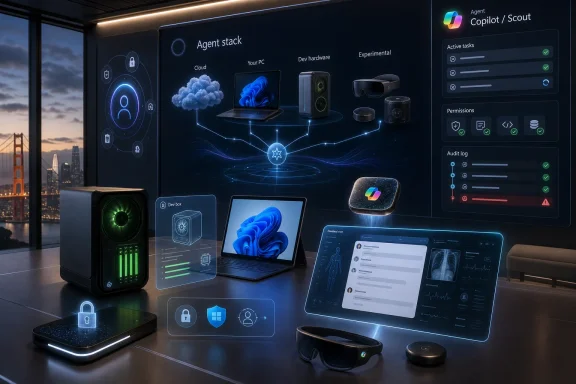 Microsoft Wants the Agent Era to Belong to Windows, Not Just the Cloud
The most important word in Microsoft’s Build pitch was not “Copilot.” It was “stack.” The company is trying to bind together silicon, operating-system controls, developer tools, cloud orchestration, and foundation models into something enterprises can buy without stitching together half a dozen vendors.That is a familiar Microsoft move. Windows won the PC era not merely because it was an operating system, but because it became the default substrate for developers, IT departments, hardware makers, and business software vendors. Azure grew by convincing enterprises that Microsoft could make cloud adoption feel adjacent to their existing identity, security, and productivity investments. Now Microsoft is trying to do the same thing for agents.
The company’s argument is simple enough: AI agents will not remain confined to a browser tab or chatbot pane. They will read files, summarize meetings, operate apps, schedule work, move data, and eventually take actions across systems that today require a human sitting in front of a desktop. That creates a giant business opportunity, but also a giant governance problem.
For Windows users and administrators, the promise is seductive and unsettling in equal measure. A useful agent needs context and permission. A dangerous agent has too much of both. Build 2026 was Microsoft’s attempt to say that the same company that gave IT admins Group Policy, Intune, Defender, Entra ID, BitLocker, and Windows security baselines can also make agentic computing safe enough for corporate laptops.
The Surface RTX Spark Dev Box Is a Developer Machine With Platform Ambitions
The Surface RTX Spark Dev Box is the most concrete expression of Microsoft’s local-AI pitch. It is a compact developer PC powered by Nvidia’s RTX Spark silicon, with Microsoft saying it is designed for local-first AI development, sustained workloads, and models that would overwhelm ordinary PCs. The company’s own Build messaging describes 1 petaflop of AI compute and 128GB of unified memory, enough to run models up to 120 billion parameters locally.That matters because the economics of AI development are starting to look less like traditional software engineering and more like a cloud-metering exercise. Every experiment can carry a cost. Every test loop can depend on latency, quota, model availability, and data-movement rules. A powerful local machine does not eliminate the cloud, but it gives developers a place to prototype, fine-tune, test agents, and handle sensitive workloads without sending every iteration to a hosted service.
Microsoft’s Surface line has played this role before. Surface devices are rarely just devices; they are reference designs for what Microsoft wants the Windows ecosystem to become. The original Surface pushed OEMs toward premium touch hardware. Surface Pro helped normalize the detachable Windows tablet. Copilot+ PCs pushed neural processors into the Windows mainstream. The Surface RTX Spark Dev Box now signals that Microsoft wants a new class of Windows machine for agent developers, not merely productivity workers.
The risk is that developer boxes can become symbols rather than markets. Microsoft’s previous Arm developer hardware has not always aged gracefully, and Windows on Arm still carries years of compatibility skepticism. The Dev Box therefore has to prove not just that it can load large models, but that developers can actually use it as a dependable part of their daily workflow.
Nvidia Gives Microsoft the AI PC Story It Could Not Tell Alone
Microsoft’s partnership with Nvidia is doing strategic work here. The PC industry spent the last two years trying to explain why a neural processing unit should matter to consumers. The answer often sounded vague: better camera effects, local transcription, background blur, offline image tools, and the promise of future software that might care. Nvidia’s RTX Spark pitch is more direct: agents need serious local compute, and Windows needs hardware that can run those agents with less dependence on remote inference.That is a much stronger story than the first wave of AI PCs offered. A local agent that can reason over files, interact with apps, and run smaller or specialized models on-device gives the PC a purpose in the AI era beyond being a thin client for cloud chatbots. It also gives Microsoft a reason to defend Windows as a runtime, not just as a shell around web apps.
The Surface Laptop Ultra, announced around the same Nvidia push, extends that idea into premium mobile hardware. Microsoft and Nvidia are positioning RTX Spark systems as high-end Windows machines built for a future in which local AI workloads are routine. That places them against Apple’s premium laptops, but the comparison is not merely about battery life, display quality, or industrial design. It is about whether Windows can become the better workstation for developers and businesses building agentic systems.
The catch is price and timing. Premium AI hardware tends to arrive before the software that justifies it for mainstream buyers. Enterprises may pilot these machines for AI teams, data scientists, developers, and regulated workflows, but broad deployment will require a clearer return on investment than “the future of computing.” IT departments are conservative for good reasons: they have procurement cycles, support costs, security reviews, and fleets of perfectly usable PCs.
Project Solara Shows Microsoft Looking Beyond the PC Without Abandoning It
Project Solara is the stranger, and perhaps more revealing, part of Microsoft’s Build story. According to the Build demonstrations and syndicated reporting, Solara is a family of prototype devices ranging from smart-speaker-sized hardware to badge-like devices, using chips from Qualcomm and MediaTek. They have screens and microphones, but Microsoft is not presenting them as traditional app platforms. They are agent hosts.That is a subtle but important shift. Smartphones trained users to think of computing as a grid of apps. Smart speakers trained users to think of ambient computing as voice commands, timers, music, and brittle integrations. Microsoft is sketching something different: small, purpose-built devices that invoke agents connected to cloud systems, enterprise data, and specific workflows.
The medical-visit example is instructive. A badge or desk device that helps document a nurse’s interaction with a patient is not trying to replace a laptop. It is trying to sit inside a workflow where opening a laptop or tapping through a phone interface is friction. This is where agent devices may first become useful: not as general-purpose consumer gadgets, but as narrow enterprise endpoints with clear jobs.
That also explains why Microsoft is talking to developers and enterprises rather than trying to sell Solara as the next must-have household object. The last decade is littered with failed ambient computing hardware because the use cases were too vague. “Talk to a device and it does things” is not a product. “Capture this clinical interaction, summarize it, apply policy, and route it into an approved system” is at least a plausible workflow.
Scout Is Copilot Learning to Wait for the Human Bottleneck
The new Scout agent inside Copilot is Microsoft’s attempt to move from answering prompts to managing work. The reported examples are mundane in the best possible way: gathering emails or messages that require user decisions, surfacing pending items, and helping a person move through blocked tasks. That is where office automation becomes genuinely useful, because much of knowledge work is not writing a paragraph from scratch. It is finding the five things that need judgment before the day collapses into meetings.This is also where Microsoft has a structural advantage. Google has Gmail, Workspace, Android, and search. OpenAI has mindshare and model momentum. Anthropic has a strong enterprise trust narrative. But Microsoft has Outlook, Teams, SharePoint, OneDrive, Office documents, Windows endpoints, GitHub, Azure, and enterprise identity. Scout does not need to be a genius if it has privileged access to the right work graph and can act within policies admins already understand.
The danger is that agents in productivity suites can become notification machines wearing AI clothing. If Scout merely repackages email triage, users will ignore it like every other “focused inbox” feature that promised calm and delivered another pane. To matter, it has to reduce cognitive load without creating a new supervisory job. An agent that constantly asks permission is annoying; an agent that acts without legible boundaries is dangerous.
That is why Microsoft’s governance story matters as much as its model story. Enterprises will not deploy autonomous assistants broadly unless they can audit what happened, constrain what tools were available, and prevent agents from turning an innocent instruction into a compliance incident. Microsoft’s Build demos around preventing destructive actions, such as mass deletion of desktop files, are theatrical, but the underlying issue is real.
OpenClaw Is a Warning Shot From the Open-Agent World
One of the more interesting details in the Build coverage is Microsoft’s attention to OpenClaw, described as open-source software capable of directing groups of AI agents to carry out everyday tasks. Microsoft’s pitch is not simply that Windows will run it. The pitch is that Windows can make it safe enough for business environments.That framing is revealing. Microsoft knows that the agent ecosystem will not be fully owned by Microsoft. Developers will use open-source frameworks, fast-moving community projects, and third-party models. Some of those tools will be powerful, chaotic, and culturally far from the compliance-heavy world of enterprise IT. If Windows cannot host them safely, developers may go elsewhere.
This is where Microsoft’s platform instincts are strongest. Rather than pretending every agent will be a Copilot-branded feature, the company is trying to provide controls around agents generally. If Windows can become the place where agents get permissions, run in constrained environments, call tools through auditable interfaces, and respect corporate policy, Microsoft can win even when the agent itself comes from outside Redmond.
That is the same trick Windows pulled with Win32 software decades ago, albeit in a much messier security environment. The difference is that agentic software is less predictable than traditional applications. A spreadsheet macro does what it was written to do, even when that is malicious. An agent interprets goals, calls tools, chains steps, and may behave differently depending on context. The operating system now has to govern not just code, but intent.
Microsoft’s In-House Models Are a Hedge Against Its Own OpenAI Dependence
Build 2026 also showed Microsoft continuing to build model capacity under its own name. Microsoft AI’s release of MAI-Thinking-1, its first reasoning model, alongside other in-house models, is not a minor branding exercise. It is part of a broader effort to ensure Microsoft is not permanently dependent on OpenAI for frontier AI capability.That does not mean the Microsoft-OpenAI relationship is suddenly irrelevant. The partnership has reshaped both companies and remains central to Microsoft’s AI story. But Microsoft is too large, too vertically ambitious, and too exposed to enterprise expectations to rely on one outside lab for its entire model roadmap. Customers buying into Microsoft’s AI stack want continuity, pricing predictability, data assurances, and product integration. Those are harder to guarantee if the most important layer is controlled elsewhere.
The reported benchmark comparison between MAI-Thinking-1 and Anthropic’s Claude Opus line should be treated carefully. Vendor benchmarks are marketing until independent users can test the models across real workloads. Still, the direction is unmistakable: Microsoft wants to compete at the model layer, not merely rent intelligence and wrap it in Office.
The Mayo Clinic partnership adds another dimension. Healthcare is one of the few domains where “agent as teammate” is both obviously useful and obviously risky. Faster diagnosis, better documentation, and clinical decision support are appealing goals, but they sit inside liability, privacy, bias, and workflow realities that punish naive automation. Microsoft’s healthcare push suggests it wants its reasoning models to be judged not only by coding demos and benchmark charts, but by high-stakes institutional use cases.
The Enterprise Pitch Is Trust, but the Enterprise Problem Is Proof
Microsoft’s Build message leans heavily on trust. That is sensible because enterprise AI buyers are increasingly less impressed by demos and more concerned with deployment risk. They want to know where data goes, which model handled it, how outputs are logged, who approved tool access, what happens offline, and whether a regulator or plaintiff’s attorney can reconstruct the chain of events.Microsoft has credible pieces of that story. Windows secured-core PCs, BitLocker, Defender, Entra ID, Intune, audit logs, endpoint management, and Azure policy controls are already familiar to IT departments. If agent controls can be integrated into those systems rather than bolted on as a new admin universe, Microsoft has a real advantage.
But trust is not inherited automatically. The company has spent the Windows 11 era reminding users that platform control can feel like coercion when poorly handled. Copilot branding has been everywhere, sometimes ahead of clear user value. Recall, Microsoft’s earlier attempt to create a searchable timeline of PC activity, triggered a privacy backlash before being reworked with stronger security and opt-in controls. The lesson is obvious: when AI features touch personal or corporate context, implementation details become the product.
Enterprise buyers will ask hard questions. Can local agents be disabled cleanly? Can admins define exactly which data sources an agent can inspect? Can actions be approved, simulated, or rolled back? Can third-party agents run without becoming a shadow IT nightmare? Can Microsoft explain the boundary between local inference, cloud inference, telemetry, and model improvement in language that survives legal review?
Local AI Is Not a Rejection of the Cloud; It Is a Bargaining Chip
It would be a mistake to read Microsoft’s local-AI hardware push as a retreat from Azure. The cloud remains where the largest models, training workloads, orchestration systems, and enterprise AI services will live. What is changing is the division of labor. Microsoft is positioning the PC as the edge of the AI stack, where privacy, latency, cost, and user context make local execution valuable.That is a practical shift. Not every task needs a frontier model. Speech recognition, document classification, semantic search across local files, code assistance, image manipulation, lightweight planning, and specialized agents can often run locally or in hybrid form. Keeping some of that work on-device reduces round trips and can make AI feel less like a remote service and more like part of the machine.
It also gives customers leverage. If every AI action requires a cloud call, vendors control the meter. If some workloads can run locally on hardware the customer owns, procurement becomes more flexible. Developers can test without burning tokens. Regulated businesses can keep more data inside controlled environments. Users can get faster responses for routine tasks.
The hard part is deciding what belongs where. Microsoft will be tempted to present hybrid AI as seamless, but administrators will need clarity. A feature that appears local but silently escalates to the cloud under certain conditions is a governance problem. A local model that is too weak to be useful is a novelty. The winning implementation will be boringly explicit: this ran here, this data stayed there, this policy applied, this action was logged.
Developers Are the Real Audience for the Hardware Theater
Build is a developer conference, and that matters. The Surface RTX Spark Dev Box, Project Solara prototypes, OpenClaw support, Windows AI APIs, and Copilot agent tooling are not primarily aimed at consumers browsing Best Buy shelves. They are aimed at the people Microsoft needs to convince before the agent era becomes real: developers building the workflows, extensions, integrations, and line-of-business tools that make AI useful inside organizations.That is why the Dev Box matters even if it sells in modest numbers. It gives Microsoft a physical artifact around which to organize an ecosystem. It tells developers that local model development on Windows is supposed to be first-class. It tells hardware partners where the company wants premium PCs to go. It tells IT departments that Microsoft sees agent development as something that should happen within managed Windows environments, not only on cloud notebooks or developer Macs.
There is a defensive angle too. Apple has benefited from a developer culture that values quiet, efficient, high-memory laptops capable of local AI experimentation. Linux remains the default for much AI infrastructure work. If Windows is seen as a second-class AI development environment, Microsoft risks losing influence even while Azure remains strong. RTX Spark and Surface Dev Box are attempts to keep the developer workstation inside the Windows orbit.
The challenge is that developers are allergic to platform speeches that are not backed by tooling. They will care less about keynote language than driver stability, memory bandwidth, container support, WSL behavior, Python and CUDA compatibility, model runtime performance, package management, and whether common open-source agent frameworks work without yak shaving. Microsoft does not need developers to applaud the strategy. It needs them to stop reaching for another machine.
The Consumer Story Is Still Unfinished
For ordinary Windows users, Build 2026 may feel both futuristic and remote. A badge-like Solara device documenting medical visits is not tomorrow’s home PC. A 128GB unified-memory AI dev box is not a family laptop. Scout may become useful inside Microsoft 365, but the broader consumer value proposition remains fuzzy.That does not mean consumers are irrelevant. Microsoft’s long-term ambition is clearly to make the PC feel less like a passive tool and more like a participant. The company wants users to ask for outcomes, not open apps. It wants Windows to understand context, bridge tasks, and surface decisions. In theory, that is a major improvement over today’s fragmented desktop experience.
In practice, consumers will judge AI PCs by mundane standards. Does the battery last? Does the fan spin? Does the device cost too much? Does the assistant save time, or does it interrupt? Can the user tell when private data is being inspected? Can features be turned off? Does Windows become calmer, or does it become an operating system full of animated suggestions?
The first AI PC wave suffered from an imbalance between branding and usefulness. Microsoft cannot afford a second wave that feels the same. The RTX Spark generation may solve the hardware side for premium users, but the software side must demonstrate everyday competence. The agent era will not arrive because a keynote says “ubiquitous.” It will arrive when users stop noticing that the computer did five small chores correctly.
The Real Build 2026 Message Is Control
The connective tissue across Microsoft’s announcements is control. Control over the hardware reference design. Control over the operating-system security model. Control over developer tooling. Control over enterprise policy. Control over cloud orchestration. Control, increasingly, over Microsoft’s own models.That may sound ominous, but it is also what enterprises are asking for. The open internet version of AI agents is thrilling and reckless. Businesses do not want autonomous systems wandering through HR files, source repositories, patient records, and financial workbooks without guardrails. Microsoft is betting that the agent era will reward the company that can make autonomy administrable.
The tension is that too much control can choke the ecosystem Microsoft wants to cultivate. Developers want flexibility. Open-source projects move quickly. Hardware partners want differentiation. Users want agency over their own machines. Regulators want accountability. Microsoft has to make Windows safe for agents without making it hostile to experimentation.
That balance will define the next phase of Windows. The operating system can no longer be merely a launcher, a file manager, and a compatibility layer. If Microsoft is right, Windows becomes a policy engine for intelligent action. That is a far more ambitious role, and a far more politically sensitive one.
The Build 2026 Bet Comes Down to Five Concrete Tests
The announcements are broad, but the success criteria are not mysterious. Microsoft’s AI hardware and agent strategy will be judged by whether it turns into dependable workflows rather than keynote choreography.- The Surface RTX Spark Dev Box has to prove that local AI development on Windows is faster, cheaper, or safer than defaulting to cloud notebooks and Linux workstations.
- Project Solara has to find narrow enterprise workflows where agent-first devices are obviously better than phones, tablets, laptops, or smart speakers.
- Scout has to reduce real workplace friction without becoming another inbox, notification feed, or supervisory chore.
- Windows agent controls have to be legible enough for IT departments to trust third-party and open-source agents on managed devices.
- Microsoft’s in-house models have to earn credibility outside vendor benchmarks, especially in domains such as healthcare where mistakes have consequences.
- Hybrid AI has to be transparent about what runs locally, what runs in the cloud, what data moves, and which policies apply.
References
- Primary source: Devdiscourse
Published: 2026-06-02T22:04:32.897940
Loading…
www.devdiscourse.com - Independent coverage: forth.news
Published: Tue, 02 Jun 2026 18:58:19 GMT
Loading…
www.forth.news - Related coverage: axios.com

Microsoft debuts Nvidia-powered Microsoft Surface Ultra laptop
Microsoft is trying again to redefine the PC for the AI era.www.axios.com
- Related coverage: windowscentral.com
Loading…
www.windowscentral.com - Official source: microsoft.com
Loading…
www.microsoft.com - Related coverage: tomshardware.com

Microsoft debuts Surface RTX Spark Dev Box — Nvidia-powered mini-PC helps devs get ready for an agentic Windows
It will have Visual Studio Code and GitHub Copilot preinstalled.www.tomshardware.com
- Official source: blogs.windows.com
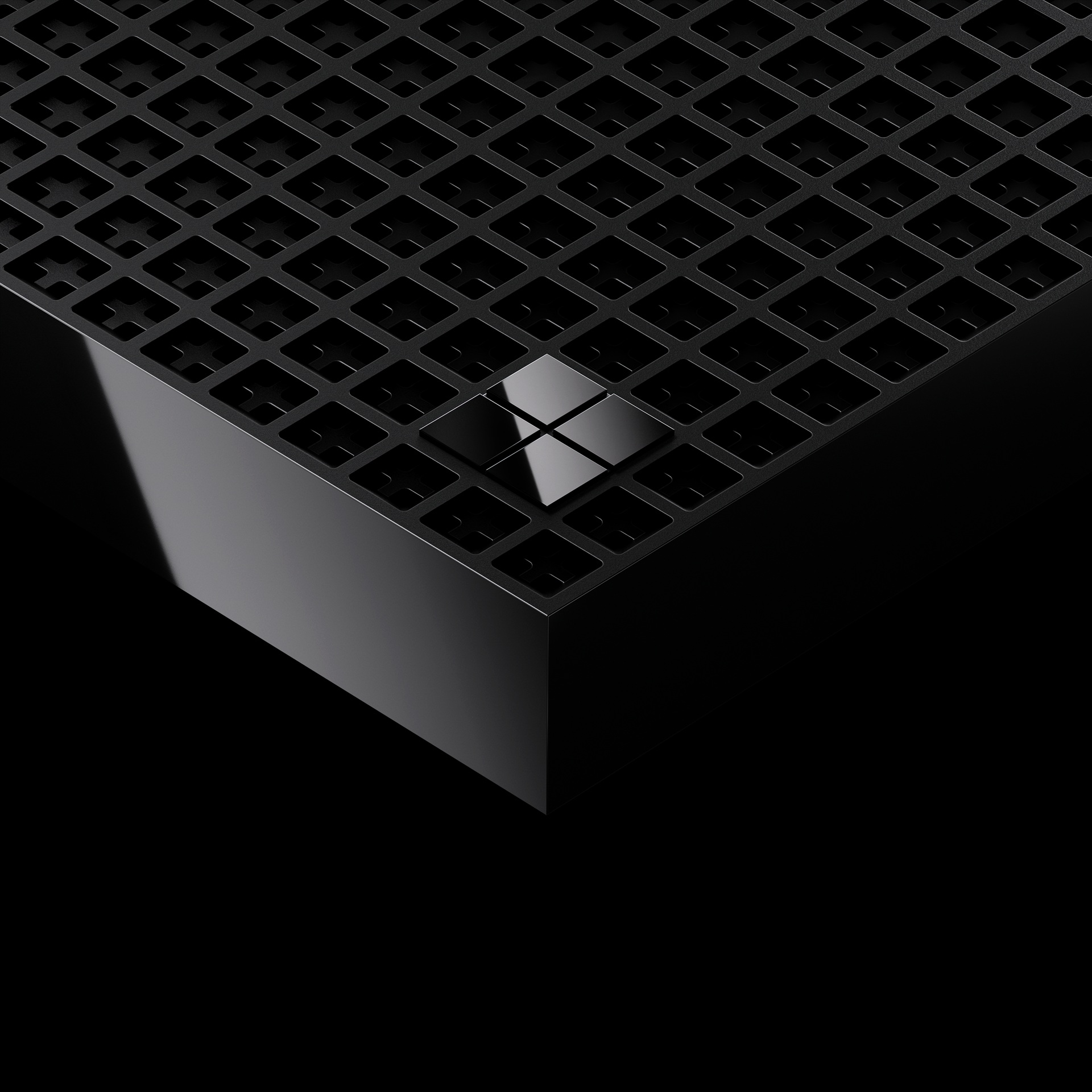
Building the next generation of devices for developers: Surface RTX Spark Dev Box
Software developers are some of the most ambitious makers we serve. They push devices harder, ask more of their tools and expect their environment to help define the pace of modern software creation. Development today means longer runnin blogs.windows.com
- Official source: news.microsoft.com

Microsoft Build Live
The home for real-time coverage of the news as it is announced from Microsoft Build, June 2-3, 2026. news.microsoft.com
- Related coverage: techcrunch.com

Microsoft launches Scout, an OpenClaw-inspired personal assistant | TechCrunch
Launched at Build, Microsoft Scout is a new AI assistant meant to bring the power and flexibility of OpenClaw into the Microsoft 365 system. techcrunch.com
- Related coverage: thewincentral.com
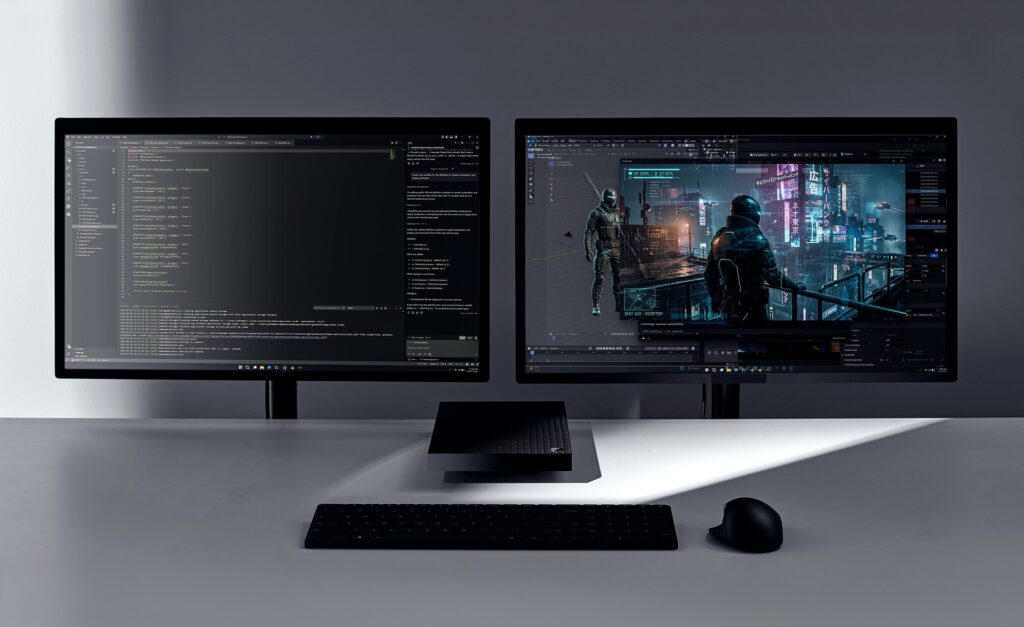
Microsoft Surface RTX Spark Dev Box Debuts at Build 2026 - WinCentral
Microsoft unveils the Surface RTX Spark Dev Box, a compact AI-powered developer PC built for local AI models, agents, and Windows development. - Read in Latest News on WinCentral thewincentral.com
- Related coverage: anatoliapulse.com

Microsoft Launches Surface RTX Spark Dev Box for Developers
Microsoft unveils Surface RTX Spark Dev Box, a compact developer PC powered by Nvidia's Arm-based RTX Spark chips for AI workloads.anatoliapulse.com
- Official source: blogs.microsoft.com

Microsoft Build 2026: Be yourself at work - The Official Microsoft Blog
Platforms shift when developers build. We explore, choose tools, dream, create. This platform shift comes with more information than ever, ready at your fingertips. This shift, it’s about building fast AND THEN: it’s about building, operating, optimizing and observing. Securing your... blogs.microsoft.com