

Mohamed bin Zayed University of Artificial Intelligence’s Incubation and Entrepreneurship Centre has launched Build It Demo Day, a new showcase in Abu Dhabi that prioritizes working AI products and prototypes over slide decks, and promises significant technology credits and industry exposure to early-stage builders.
Mohamed bin Zayed University of Artificial Intelligence (MBZUAI) operates an Incubation and Entrepreneurship Centre (IEC) designed to accelerate the transition from research and prototypes to investable AI businesses. The IEC opened programmes in 2023 and has since emphasized practical, product-focused support: entrepreneurship workshops, grant streams, mentor hours, and community-building activities. The new Build It Demo Day is positioned as a complementary, low-barrier platform where makers — university students, startup founders, and professionals — can demonstrate work-in-progress AI solutions in front of the UAE’s innovation ecosystem rather than present polished investor pitches.
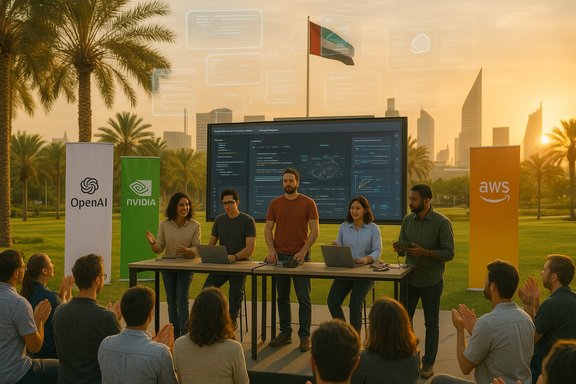
The inaugural Build It Demo Day is scheduled for 30 October 2025, 5–7 PM GST, at Masdar City Park in Abu Dhabi. Submissions are being accepted on a rolling basis; selected participants will gain exposure to industry partners and access to a package of technology credits intended to accelerate development milestones.
Likewise, quoted assertions about the exact cumulative dollar value contributed by partners (phrases such as “over $200,000”) are organisation-reported and useful for signalling scale, but they do not substitute for contractual detail. Any team budgeting on credits should secure documented allocations and timelines.
To translate a single demo into a sustainable company will require:
Build It Demo Day represents an incremental but important shift: a concrete stage where rough demos become conversations, and those conversations can become companies. The format is pragmatic, the resource package is substantial on paper, and the timing aligns with Abu Dhabi’s ambition to grow an applied AI economy. The crucial tests will come after the lights dim at Masdar City Park — in the follow-up support, the real-world pilots, and the long-term sustainability of each team that takes the stage.
Source: Big News Network.com https://www.bignewsnetwork.com/news...unches-demo-day-for-ai-builders-in-abu-dhabi/
 Background
Mohamed bin Zayed University of Artificial Intelligence (MBZUAI) operates an Incubation and Entrepreneurship Centre (IEC) designed to accelerate the transition from research and prototypes to investable AI businesses. The IEC opened programmes in 2023 and has since emphasized practical, product-focused support: entrepreneurship workshops, grant streams, mentor hours, and community-building activities. The new Build It Demo Day is positioned as a complementary, low-barrier platform where makers — university students, startup founders, and professionals — can demonstrate work-in-progress AI solutions in front of the UAE’s innovation ecosystem rather than present polished investor pitches.The inaugural Build It Demo Day is scheduled for 30 October 2025, 5–7 PM GST, at Masdar City Park in Abu Dhabi. Submissions are being accepted on a rolling basis; selected participants will gain exposure to industry partners and access to a package of technology credits intended to accelerate development milestones.
What Build It Demo Day is — and what it is not
A showcase for functioning prototypes, not polished slide decks
Build It is explicitly framed as a hands-on demo day. The event enforces three simple rules for participants:- Demo something the builder is genuinely proud of.
- Ensure AI is central — whether that means a model, an agent, or an AI-driven workflow.
- Show work-in-progress: an interactive mock-up, a prototype, or a short video demonstrating functionality.
A curated connection to industry and cloud/compute resources
Selected teams receive access to a structured set of technology credits from major providers. The headline package includes credits and offers reportedly contributed by partners such as OpenAI, NVIDIA, Amazon Web Services (AWS), Microsoft Azure, ElevenLabs, Hugging Face, PostHog, and HubSpot. The published credit list is substantial and tiered by partner.The sponsor and credit package — what it contains
The Build It initiative includes a multi-provider credit package intended to reduce the early-stage infrastructure burden for builders. The announced package includes:- OpenAI API credits (up to $2,000)
- NVIDIA credits (up to $120,000)
- AWS credits ($25,000)
- ElevenLabs credits ($50,000)
- Hugging Face credits (up to $2,000)
- PostHog credits (up to $50,000)
- Microsoft Azure credits ($5,000)
- HubSpot discount (reportedly up to a 90% discount on HubSpot plans)
Why the credit mix matters
- Compute and GPU access (NVIDIA): Substantial GPU credits address one of the most expensive parts of model development, particularly for teams experimenting with larger models or fine-tuning tasks.
- Cloud credits (AWS, Azure): These support infrastructure, deployment, storage, and security needs as prototypes evolve to production-ready services.
- API access (OpenAI, ElevenLabs, Hugging Face): API credits reduce the financial friction for integrating prebuilt generative models or building on top of open-weight model ecosystems.
- Observability and analytics (PostHog): Early user and product analytics are critical to iterate on UX and measure engagement.
- Sales and growth tools (HubSpot): Marketing and customer relationship management tools help teams transition from demo to go-to-market.
Why Build It Demo Day matters to Abu Dhabi’s AI ecosystem
Practical bridge between research and commercialization
MBZUAI sits at the intersection of high-quality AI research and a national strategy that prioritizes AI-driven economic transformation. Build It Demo Day lowers friction for researchers and engineers to convert prototypes into ventures, by:- Providing credibility and a visible stage for early demos.
- Offering resources that materially lower development costs.
- Creating a network effect: demos that attract industry attention can unlock pilots, contracts, and follow-on investment.
A signal of ecosystem maturity
The format — centering working demos — suggests a shift from ideation-heavy startup culture toward product and execution focus. This aligns with Abu Dhabi’s strategy to build an AI economy that includes not only research but also productization, data-driven services, and high-value job creation.Talent circulation and retention
With MBZUAI’s student base and an entrepreneurial community reported to exceed 2,000 members, Build It Demo Day can help retain talent locally by offering pathways to funding, industry partnership, and operational support without immediate relocation.Critical analysis — strengths, opportunities, and strategic value
Strengths
- Hands-on ethos: Prioritising demos over pitches fosters rapid learning, realistic validation, and technical feedback loops.
- High-value partner package: The breadth and scale of the listed credits are unusually generous for a single demo-event, and could materially propel a team’s next milestone.
- Institutional backing: The event leverages MBZUAI’s academic credibility and physical presence in Masdar City — a region positioned as a sustainability and innovation hub.
- Practical inclusion criteria: Open applications for students, founders, and professionals increase diversity of participation and reduce gatekeeping common to invitation-only demo events.
Opportunities
- Pipeline development: Build It can serve as a consistent funnel for the IEC’s incubation programming and grant initiatives, identifying ideas that merit deeper support.
- Corporate partnerships and pilots: Demos create low-friction discovery opportunities for corporations to find bespoke AI solutions for local needs (energy, healthcare, logistics).
- Cross-pollination with Masdar City and sovereign initiatives: Integrating demos with local infrastructure and pilot projects could accelerate real-world validation, especially for sustainability and smart-city applications.
Risks, limitations, and areas that require close attention
1. Overreliance on vendor credits
Vendor credits are a valuable bootstrap resource but are not a substitute for sustainable funding. Credits often come with usage constraints, expiry dates, or vendor-specific dependencies that can create:- Vendor lock-in risk if teams build on proprietary APIs without planned migration strategies.
- Operational cliff when credits expire and teams face sudden infrastructure bills.
- Misaligned incentives if credits steer technical architecture toward providers’ stacks rather than product-fit architecture.
2. Demo-day theatre versus durable outcomes
Demo days are excellent for attention and momentum; however, the correlation between dazzling demos and long-term startup success is weak without follow-through. Key failure modes include:- Unproven business models or market fit.
- Lack of governance around data privacy, consent, and regulatory compliance.
- Engineering debt accumulated during prototype rushes.
3. IP, data governance, and regulatory compliance
AI projects often require access to sensitive or proprietary data. A demo-focused culture must still be grounded in robust IP management and data governance practices:- Clear ownership agreements with universities, student teams, and advisors.
- Data handling procedures that meet UAE regulations and international best practices, especially for health, finance, and public sector pilots.
- Ethical guardrails to avoid downstream liabilities from biased models or unsafe deployments.
4. The hype cycle and expectation management
Public demos can create media buzz that raises expectations among investors and customers. Organisers need to manage signalling to avoid premature commercialization pressure, which can force teams into unsustainable product timelines.5. Accessibility and meaningful inclusion
A rolling application approach increases access, but the real measure of inclusion will be whether teams from underrepresented backgrounds — non-traditional founders, regional developers, and small teams without corporate sponsors — receive equitable selection and follow-up support.Practical guidance for builders — how to get the most from Build It Demo Day
- Prepare an honest demo narrative:
- Focus on the problem solved, the AI component, and one measurable outcome.
- Demonstrate a clear user flow; show failure modes gracefully and explain mitigation strategies.
- Plan a 6–12 month roadmap tied to credits:
- Map how each credit tranche will be used (training, inference, deployment, analytics).
- Identify migration strategies in case vendor services must be replaced or expanded.
- Protect core IP and data:
- Document data provenance and consent (if using third-party or user data).
- Use minimal data replication in public demos; prefer synthetic or anonymised datasets where possible.
- Prepare a follow-up ask:
- For each demo, articulate the immediate next milestone and the resources required (technical, commercial, or regulatory).
- Request specific pilot opportunities or introductions that would materially advance the milestone.
- Network intentionally:
- Use the two-hour event to schedule short, focused conversations with potential partners and sponsors.
- Capture contact details and follow up within 48–72 hours with a concise progress plan.
How organisers and sponsors can increase the event’s long-term impact
- Offer post-demo technical clinics: Short, expert-led sessions (cloud architecture, MLOps, data governance) can help teams convert demos into robust products.
- Create clear credit terms and migration guidance: Publish usage windows, technical support contacts, and best-practice patterns to reduce accidental lock-in.
- Track outcomes and report impact: Publish aggregated, anonymised follow-up metrics (pilot conversions, funding raised, startups formed) to measure the program’s effectiveness.
- Link demos to procurement pathways: Establish mechanisms for public and corporate procurement teams to pilot solutions discovered at Build It, converting demos into live tests.
- Prioritise equitable access: Reserve a portion of showcase slots and follow-on grants for underrepresented founders and teams outside major hubs.
The wider strategic picture — how Build It fits Abu Dhabi’s AI ambitions
Abu Dhabi and the UAE have articulated national strategies to scale AI adoption, talent, and research. Build It Demo Day aligns with these goals by:- Supporting talent retention and entrepreneurship at MBZUAI and across the region.
- Lowering friction for pilot projects that can integrate into government and private-sector digital transformation efforts.
- Demonstrating a practical route for research outputs to reach commercial application, thereby increasing the return on public investment in higher education and AI infrastructure.
Potential downstream effects to watch
- Increased formation of AI startups in Abu Dhabi: The IEC already reports support for 14 AI startups and hundreds of mentorship hours; Build It could accelerate that pipeline.
- Stronger public–private collaborations: Industry partners using demos as discovery mechanisms may increase procurement of local solutions.
- Ecosystem clustering in Masdar City: Concentrated activity, events, and internships could consolidate talent and supplier networks around MBZUAI’s campus.
- Regulatory scrutiny and standards momentum: As more demonstrations involve real data and live pilots, regulators will likely demand clearer compliance frameworks — an evolution that could be beneficial if coordinated.
Cautionary notes and unverifiable claims
Several claims accompanying the Build It announcement are presented as concrete figures — credit amounts and community metrics. These figures have been published in multiple outlets and in MBZUAI’s communications, but they should be regarded as programme announcements rather than audited commitments. Builders and partners should obtain written confirmation of credit terms, redemption windows, and usage constraints directly from the providers and MBZUAI before relying on them for operational planning.Likewise, quoted assertions about the exact cumulative dollar value contributed by partners (phrases such as “over $200,000”) are organisation-reported and useful for signalling scale, but they do not substitute for contractual detail. Any team budgeting on credits should secure documented allocations and timelines.
Final assessment — realistic expectations and next steps
Build It Demo Day is a purposeful, product-first intervention in an ecosystem that benefits from more pragmatic, demo-led discovery. Its strengths lie in the hands-on format, the high-profile partner list, and MBZUAI’s capacity to convene talent. For builders, the event presents a rare opportunity to showcase working systems and to access material technical support without immediate investor pressure.To translate a single demo into a sustainable company will require:
- Strategic use of credits with an eye to migration and unit economics.
- Clear IP and data governance from day one.
- Measured follow-up support that pairs market and technical mentorship with access to pilots and customers.
Build It Demo Day represents an incremental but important shift: a concrete stage where rough demos become conversations, and those conversations can become companies. The format is pragmatic, the resource package is substantial on paper, and the timing aligns with Abu Dhabi’s ambition to grow an applied AI economy. The crucial tests will come after the lights dim at Masdar City Park — in the follow-up support, the real-world pilots, and the long-term sustainability of each team that takes the stage.
Source: Big News Network.com https://www.bignewsnetwork.com/news...unches-demo-day-for-ai-builders-in-abu-dhabi/
