

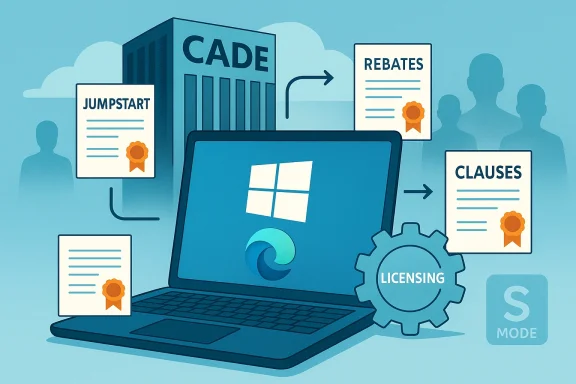
Brazil’s competition authority has opened a formal administrative inquiry into whether Microsoft leveraged commercial terms and device-configuration practices to steer PC makers into shipping Microsoft Edge as the dominant, out‑of‑the‑box browser on new Windows machines — a probe triggered by a complaint from Opera and now amplified by a wider coalition of rival browser vendors. (press.opera.com
Background
Why this probe landed in Brazil
Opera formally filed a complaint with Brazil’s Administrative Council for Economic Defense (CADE) accusing Microsoft of using its dominant position in Windows and related markets to disadvantage competing browsers — through a mix of preinstallation arrangements, so‑called dark patterns in Windows UX, and commercial incentives to OEMs. CADE accepted the complaint and has moved from a preliminary assessment to an administrative inquiry, asking major PC manufacturers for detailed sales, contract and device‑configuration data. (blogs.opera.comThe complaint does not come out of nowhere: browser competition has a long regulatory history, from the Internet Explorer era to more recent DMA-related disputes in Europe. Opera’s complaint positions Brazil as a potential test case for remedies aimed at restoring “effective” consumer choice around default browser settings and preinstallation practices. (press.opera.com
What prompted CADE to dig deeper
CADE’s General Superintendence found the Opera complaint sufficiently credible to justify a deeper look. The authority’s information requests — sent to a long list of OEMs — are unusually granular, reflecting concerns about whether Microsoft’s commercial arrangements and technical device defaults materially foreclose rival browsers from the preinstallation and first‑use channels on new PCs. (digitalpolicyalert.orgWhat regulators are asking OEMs — the core of the inquiry
The dataset CADE wants
According to the documents reported from the inquiry, regulators have asked OEMs for:- Yearly unit sales between 2020 and 2025, broken down by operating system and model.
- Counts of devices sold under Microsoft’s Jumpstart program versus devices outside that program.
- The number of devices shipped with Windows in S mode (a locked‑down Windows configuration that permits only Microsoft Store apps).
- Full copies of Jumpstart contracts and any related addenda, including clauses, penalties, rebates, and communications that document negotiation or take‑it‑or‑leave‑it terms.
- Evidence of restrictions or permissions on preinstalling third‑party software (including browsers) under Jumpstart terms.
- Estimates of the financial impact on OEMs if they were to withdraw from Jumpstart or change preinstallation behavior.
The OEMs in the crosshairs
CADE has reportedly sent requests to a broad set of PC makers, including global and regional brands: Dell, HP, Lenovo, Asus, Acer, Positivo, Samsung, Multilaser, Daten, and LG are among those named in the inquiry documents. The breadth of that list signals a regulator trying to map how widespread (and standardized) any Microsoft‑OEM arrangements were across different classes of devices and geographic markets. (tugatech.com.ptThe technical lever: Windows in S mode, defaults, and “first‑run” configuration
What is Windows in S mode and why it matters here
Windows in S mode restricts app installs to those distributed through the Microsoft Store. On devices shipped in that configuration, installing an alternative native browser may be difficult or impossible until the end user deliberately switches out of S mode. That limitation gives preinstalled software and defaults an outsized influence on the browser a user is likely to keep and use. Regulators have explicitly flagged S mode as a focal point in their requests.The combination of S mode, first‑run “out of box experience” (OOBE) wiring, and default associations can create a high‑friction environment for competing browsers: even if alternatives are technically available, the path for users to discover, install, and set a new default can be buried or discouraged by UX nudges that favor the incumbent product. Regulators call those patterns out when assessing whether competition is operating on the merits. (theverge.com
“First‑run” configuration and manufacturer firmware
Beyond S mode, the documents show interest in how OEMs configure devices at first boot. If OEM images, vendor utilities, or Jumpstart scripts set Edge as pinned on the taskbar, register it as the default browser for common link handlers, or otherwise make it the path of least resistance, regulators want to know whether those actions flowed from OEM choice or contractual or commercial pressure. The inquiry’s demand for negotiation logs, penalties and rebate terms is meant to connect technical settings to business incentives.Jumpstart, rebates and the economics of preinstallation
What Jumpstart reportedly is
The Jumpstart label in the regulatory files refers to a program under which OEMs receive specific licensing terms, rebates or commercial benefits in exchange for meeting Microsoft’s configuration or preinstallation requirements on qualifying devices. Opera’s complaint specifically alleges that such commercial terms were conditioned on shipping devices with Edge preinstalled or configured as the default, or on shipping devices in S mode to qualify for discounts. If true, that would convert product‑design differences into a financial lever discouraging OEMs from offering competing browsers by default. (press.opera.comWhy rebates and conditional licensing matter legally
Competition law frequently treats rebates and conditional licensing as suspect when they foreclose rivals from a key distribution channel — here, preinstallation and default status on new PCs. If Microsoft tied lower license costs to particular configurations, or threatened economic penalties for non‑compliance, a regulator could conclude the arrangement effectively tied the OS license to a preinstallation outcome that favored Microsoft’s browser. The granular contract evidence CADE now seeks is precisely what would prove (or disprove) that causal chain. (digitalpolicyalert.orgThe actors: Opera, the Browser Choice Alliance, OEMs, and Microsoft
Opera’s role and motives
Opera filed the complaint in July 2025, framing the action as part of a global campaign for browser choice. Opera’s public messaging argues that Microsoft’s interface nudges and OEM incentives make it difficult for rivals to compete, and asks regulators to consider remedies such as mandating unbiased browser‑choice screens, allowing OEMs to preload rival browsers, and banning manipulative UX patterns. Opera’s submission triggered CADE’s administrative inquiry. (press.opera.comThe Browser Choice Alliance and industry coordination
Opera has been joined rhetorically by a coalition of rival browser vendors and advocacy groups that argue the preinstallation channel is essential for competition. That alliance amplifies the complaint’s reach, turning what might have been a narrow technical dispute into a broader political and regulatory issue with cross‑jurisdictional resonance. CADE’s action now intersects with other regulatory efforts globally, notably in the EU, where Microsoft agreed to changes under DMA pressure — and where regulators have separately scrutinized default‑setting behavior. (blogs.opera.comOEMs’ likely posture
Device manufacturers often sit between platform vendors and end customers; their contract portfolios and margin structures differ widely. For OEMs, Jumpstart may have been an economically rational program — trading certain preinstallation or configuration concessions for license discounts and marketing support. CADE’s requests for “estimates of the financial impact” if OEMs withdrew indicate regulators want to quantify the commercial dependency that may have shaped OEM behavior. Those impact estimates will be central to assessing whether any foreclosure was de‑minimis or systemic.Microsoft: silence, modifications, and the European precedent
Microsoft has faced similar accusations before. In the EEA, Microsoft announced product and UX changes in mid‑2025 designed to reduce “nagging” around Edge and make it simpler to set alternate defaults — a direct response to DMA obligations and related regulatory pressure. Whether those changes are sufficient or were global is part of the dispute: Opera’s complaint alleges the problem persists in jurisdictions such as Brazil, and CADE’s inquiry will test whether Microsoft’s global commercial practice differs materially from its EU‑facing commitments. At the time of reporting, CADE has requested evidence from OEMs; public statements from Microsoft in Brazil have been limited or non‑conclusive in the public record we surveyed. (tech.yahoo.comLegal framing: tying, exclusion, and remedies
How competition law approaches this type of conduct
Antitrust authorities view tying and exclusion in light of foreclosure effects: did the conduct deprive competitors of a viable route to customers, and did it harm consumer welfare by raising prices, reducing innovation, or diminishing quality? In software markets, preinstallation and defaults are powerful distribution tools; remedying misuse of those channels has included structural and behavioral fixes in prior cases. CADE’s granular evidence requests map directly to the elements prosecutors and enforcers need to establish such a case: contractual terms, the magnitude of market share involved, and the commercial incentives faced by OEMs. (digitalpolicyalert.orgPotential remedies regulators might consider
If CADE finds anticompetitive tying or exclusionary conduct, remedies could range from narrow behavioral adjustments (requiring clearer browser‑choice prompts, forbidding certain contractual clauses, or banning S‑mode conditioning) to broader structural or conduct remedies (monetary fines, mandated changes in licensing terms, or obligations to allow rival preinstallation). The exact remedy would depend on the scope of any foreclosure CADE finds. Opera has publicly urged CADE to require an unbiased browser‑choice screen and to ban preinstallation restrictions that prevent OEMs from shipping competitive alternatives. (press.opera.comInternational context and precedent
How the EU’s DMA and Microsoft’s EEA changes matter
Microsoft’s June 2025 commitments in the European Economic Area (EEA) — including changes to how defaults are set and removing certain nags — show that platform obligations can be tailored regionally under regulatory pressure. Those EEA changes serve two roles: they demonstrate that Microsoft is capable of product and UX changes to accommodate competition concerns, and they provide a regulatory template that CADE could look to when considering remedies. At the same time, regional commitments don’t automatically translate into global behavior, which is precisely why CADE’s inquiry focuses on contractual evidence and OEM practices in Brazil. (tech.yahoo.comPast Microsoft antitrust history — a cautionary tale
Microsoft’s earlier antitrust entanglements over browser bundling (notably the Internet Explorer cases) helped shape the law on tying and platform leverage. That history matters politically and legally: regulators will be alert to patterns that resemble past exclusionary conduct even if the technical details differ. Opera’s complaint explicitly references both past and present tactics, framing its action as necessary to prevent platform incumbency from choking competition in adjacent markets. (press.opera.comPractical impact: what this means for users and OEMs
For end users
Most consumers will not feel the legal arguments directly, at least not immediately. However, the practical stakes are:- If CADE finds against Microsoft and imposes remedies, future Windows devices sold in Brazil could present clearer, unbiased browser choice screens and ship with fewer OEM restrictions on preinstalled browsers.
- If S mode or Jumpstart terms are restricted, alternative browsers may gain a stronger presence on new devices, improving discoverability for users who prefer different engines.
- Absent regulatory change, users in S mode or on heavily configured OEM images may continue to face friction when installing and setting non‑Edge browsers as default. (press.opera.com
For OEMs
OEMs will be asked to produce contract copies and quantify the revenue impact of any change to their Jumpstart relationships. That means manufacturers must carve out time and legal resources to cooperate with CADE — and potentially to revise commercial models if CADE imposes remedies. OEMs with large market footprints in Brazil will have particular exposure to any final remedy.Strengths and shortcomings of the case — a critical reading
Strengths of CADE’s approach
- Granularity of evidence sought: By demanding per‑model sales and contract terms, CADE frames the inquiry to be evidence‑driven rather than purely speculative. That sets up a fact‑finding mission that could yield clear causal links between rebates/terms and OEM configuration choices.
- Focus on distribution channels: Regulators rightly treat preinstallation and defaults as powerful gates to market access; examining S mode and Jumpstart directly targets the mechanisms at issue. (digitalpolicyalert.org
Weaknesses and risks in pursuing enforcement
- Proving intent vs. effect: It may be hard to show that OEM configurations resulted directly from coercive Microsoft terms rather than voluntary OEM decisions seeking narrow commercial advantage. OEM testimony and impact estimates will be contested and may be noisy.
- Remedial proportionality: Even if CADE finds problematic clauses, selecting remedies that restore competition without unduly disrupting OEM business models or consumer experiences will be complex. Overbroad remedies risk unintended consequences for device pricing or support. (tecmundo.com.br
Evidence and transparency concerns
Because the key evidence is largely contractual and commercial — often confidential — public debate will hinge on whether CADE’s investigators can obtain and, where appropriate, publish enough information to justify remedies without breaching legitimate business confidentiality. The balance between enforcement transparency and protection of trade secrets will be central to the case’s political reception.What to watch next — timeline and likely milestones
- OEM responses to CADE’s information requests (expected in the coming weeks/months). These will show how many devices were under Jumpstart and what contractual terms existed.
- CADE’s review and potential interviews or additional document subpoenas. Investigations often expand as new evidence surfaces. (digitalpolicyalert.org
- Any interim remedies or commitments offered by Microsoft to head off a full enforcement action; Microsoft has previously made regionally targeted changes under regulatory pressure. (tech.yahoo.com
- Final administrative determination by CADE, possible fines, and behavioral remedies — or a decision to close the inquiry if evidence is insufficient. (tecmundo.com.br
Final assessment: why this matters beyond Brazil
CADE’s inquiry is important for three overlapping reasons. First, it probes how platform owners monetize and manage default settings and preinstallation channels, a central battleground for software competition. Second, it tests whether commercial programs like Jumpstart can be used to achieve market outcomes that regulators will consider exclusionary. Third, the case could produce remedies or legal reasoning that other jurisdictions may borrow, particularly where regional rules (like the EU’s DMA) do not reach or where local market structures differ.For users, the ideal outcome is clearer choice, less UX manipulation, and a more level playing field for browsers that compete on functionality, privacy, and performance. For OEMs, the case could mean revisiting long‑standing commercial deals and potentially loosening the operational constraints that currently govern out‑of‑box configurations. For Microsoft, the inquiry is a reminder that product decisions that interact with commercial incentives will attract regulatory scrutiny — especially when they touch a mass consumer channel like the default browser on new PCs. (press.opera.com
This administrative inquiry will likely play out over months, and its impact could ripple beyond Brazil if CADE’s findings prompt parallel investigations or inspire policy responses aimed at safeguarding software choice on preinstalled devices.
Source: Windows Report https://windowsreport.com/microsoft-under-fire-as-brazil-investigates-edge-pressure-on-oems/
