

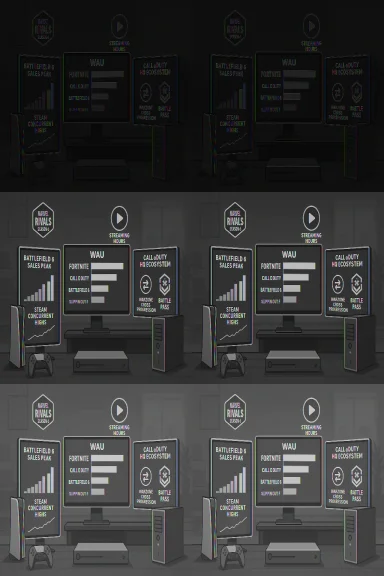
Call of Duty still sits comfortably near the top of the U.S. console play charts while Battlefield 6 — despite being the best-selling shooter of the year — has cooled on consoles and even slipped out of Circana’s recent top-ten weekly engagement snapshot. This divergence between sales and ongoing playtime is the story of the moment: blockbuster launch performance for EA’s Battlefield 6, persistent ecosystem-driven engagement for Activision’s Call of Duty, and an industry reminder that buying a game doesn’t guarantee sustained player attention.
Circana’s Player Engagement Tracker is built to estimate weekly active users on platform ecosystems (consoles and PC) and has become a go-to read for gauging where players actually spend their time — not just what they buy. That distinction is critical because publishers increasingly monetize games through live-service updates, seasonal content, and cross-title ecosystems. Analysts and outlets have been using Circana’s weekly snapshots to map how engagement shifts after launch windows and content drops.
Mat Piscatella — a senior industry analyst at Circana — regularly shares weekly engagement snapshots that show which titles attracted the most weekly active users (WAU) on PlayStation and Xbox in the U.S. Those posts are what most outlets are relaying when they report that Fortnite is still #1 and Call of Duty remains #2 on consoles for recent weeks. While the raw numbers behind Circana’s estimates are proprietary, the published top-10 lists are a helpful directional measure of platform traction.
Call of Duty’s advantage is structural. The franchise operates as an ecosystem (often referenced as Call of Duty HQ or the combined Black Ops + Warzone experience) that pulls players into a shared, cross-title live-service loop: frequent limited-time modes, cross-progression, seasonal Battle Passes, and a constant flow of events. Those design choices nudge players to return even when individual retail entries underperform. Multiple outlets argue that the HQ/economic model is keeping Call of Duty high in weekly console engagement.
By contrast, Battlefield 6’s model is more traditional at the base level — a premium launch followed by seasonal drops. Despite EA’s strong launch (notable Steam peaks and high first-week sales), the retention curve on consoles has shown a steeper drop in weekly active users when compared with Call of Duty’s more diversified engagement approach. This is especially visible when you compare console WAUs against PC/Steam concurrent numbers where Battlefield has often performed better.
Examples from reporting:
Caveat: streaming metrics lag and vary greatly by region and platform; a weekend streamer craze does not equate to sustainable weekly active users. Still, Twitch viewership and total hours watched remain important correlates for what’s trending and what can convert into additional active players.
Important note: online negativity can accelerate churn if combined with missing content promises or technical problems. Conversely, consistent content and transparent roadmaps can blunt backlash and rebuild momentum.
The risk: complacency. If live-service freshness fades or monetization choices alienate players, even the HQ ecosystem can lose momentum. The brand’s heavy reliance on events and cosmetics means players will punish repetitive or extractive monetization by voting with their time.
Publishers that translate early sales into continuous, high-quality live-service content will win the sustained engagement race. For players and platform holders, that means watching WAUs, season release calendars, and platform-specific discoverability just as closely as we watch unit sales. The coming months will show whether Battlefield can convert its commercial victory into a lasting console presence or whether Call of Duty’s ecosystem will continue to absorb player attention and dominate the weekly play charts.
Source: Windows Central Call of Duty remains #2 most played console game, Battlefield 6 drops away
 Background: what Circana’s tracker measures and why it matters
Circana’s Player Engagement Tracker is built to estimate weekly active users on platform ecosystems (consoles and PC) and has become a go-to read for gauging where players actually spend their time — not just what they buy. That distinction is critical because publishers increasingly monetize games through live-service updates, seasonal content, and cross-title ecosystems. Analysts and outlets have been using Circana’s weekly snapshots to map how engagement shifts after launch windows and content drops. Mat Piscatella — a senior industry analyst at Circana — regularly shares weekly engagement snapshots that show which titles attracted the most weekly active users (WAU) on PlayStation and Xbox in the U.S. Those posts are what most outlets are relaying when they report that Fortnite is still #1 and Call of Duty remains #2 on consoles for recent weeks. While the raw numbers behind Circana’s estimates are proprietary, the published top-10 lists are a helpful directional measure of platform traction.
The immediate headlines: Call of Duty #2, Battlefield 6 falling
- On consoles in the U.S., Fortnite retains the top spot by weekly active users, with the Call of Duty ecosystem in second place. Several outlets citing Circana’s tracker observed this pattern for the week ending Jan. 17, 2026.
- Battlefield 6 — while the commercial winner of the year in sales terms — has trended downward in weekly console engagement and, in some recent weekly snapshots, dropped out of the top 10 on PlayStation and Xbox. That decline stands in contrast to the game’s impressive launch and early Steam peaks.
- Niche and event-driven titles can spike: NetEase’s Marvel Rivals moved up the engagement charts after its Season 6 content drop on Jan. 16, 2026, demonstrating how targeted seasonal content still yields quick engagement bumps.
Sales vs. engagement: why Battlefield 6 can sell more but be played less
At launch, Battlefield 6 delivered massive sales and concurrent player peaks — figures EA prominently highlighted — and it ultimately placed as the best-selling U.S. title of 2025 in several trackers. Those are real commercial wins: big opening-week sells, media attention, and guaranteed revenue upfront. But conversion from buyers to long-term players depends on several factors beyond an initial polished experience.Call of Duty’s advantage is structural. The franchise operates as an ecosystem (often referenced as Call of Duty HQ or the combined Black Ops + Warzone experience) that pulls players into a shared, cross-title live-service loop: frequent limited-time modes, cross-progression, seasonal Battle Passes, and a constant flow of events. Those design choices nudge players to return even when individual retail entries underperform. Multiple outlets argue that the HQ/economic model is keeping Call of Duty high in weekly console engagement.
By contrast, Battlefield 6’s model is more traditional at the base level — a premium launch followed by seasonal drops. Despite EA’s strong launch (notable Steam peaks and high first-week sales), the retention curve on consoles has shown a steeper drop in weekly active users when compared with Call of Duty’s more diversified engagement approach. This is especially visible when you compare console WAUs against PC/Steam concurrent numbers where Battlefield has often performed better.
Platform split: Steam and PC paint a different picture
One of the clearest nuances in this story is a platform split: Battlefield 6 tends to look healthier on PC (Steam) metrics, where it recorded very high concurrent peaks and longer sessions early on. Steam’s audience, especially for big multiplayer shooters, often behaves differently than console populations. Meanwhile, Call of Duty’s peak strength appears to be on consoles where the franchise’s ecosystem, Warzone tie-ins, and Game Pass distribution matter more.Examples from reporting:
- Steam peaks and all-time concurrent highs for Battlefield were widely reported during launch windows and holiday discounts, which underscores strong PC demand.
- On console, however, weekly active user snapshots (Circana) show Fortnite and Call of Duty occupying the top positions consistently, while Battlefield’s placement has been more volatile week to week.
Why engagement matters more than ever for publishers
Growing active-user numbers and long-term retention fuel recurring revenue opportunities: Battle Pass purchases, microtransactions, cosmetics, and ancillary spend all depend on a critical mass of regular players. For publishers, sustained engagement translates to:- healthier ecosystem monetization,
- improved season-to-season retention, and
- stronger brand longevity beyond the initial sales spike.
Content cadence, technical polish, and community trust: the three retention levers
Successful live-service retention almost always hinges on three practical areas:- Frequent, meaningful content drops. Players return for new maps, modes, events, and compelling limited-time updates. Marvel Rivals demonstrated how a well-timed season launch can move the needle on weekly active users.
- Technical stability and polish. Early launch bugs or server issues create churn. Battlefield 6’s launch included occasional service problems reported in the wild; those early hiccups can compound if content cadence isn’t immediate.
- Ecosystem reach and distribution. Game Pass inclusion, cross-title integrations, and free-to-play hooks help maintain a steady active base. Black Ops 7’s presence on subscription services and the linkage between premium and free modes have been cited as retention advantages for Call of Duty.
Twitch and streaming: perception vs. participation
Public perception is often shaped by Twitch and streaming metrics. Several trackers and third-party reports indicate that Call of Duty tends to outperform Battlefield on streaming hours in certain windows, while Battlefield peaks on PC streaming around new content or PC-centric moments. Streaming is not a perfect proxy for engagement — but it does shape discoverability and the social narrative that drives free marketing. Stream Hatchet and other streaming analytics showed big spikes for multiple 2025 launches (including ARC Raiders and Fortnite crossover events), with Call of Duty maintaining a strong presence on console-focused stream hours.Caveat: streaming metrics lag and vary greatly by region and platform; a weekend streamer craze does not equate to sustainable weekly active users. Still, Twitch viewership and total hours watched remain important correlates for what’s trending and what can convert into additional active players.
Community sentiment and online discourse: does “hate” mean quitting?
The internet loves a narrative. Black Ops 7 faced vocal backlash on some social channels and review platforms, yet public sentiment on social media does not always translate into mass abandonment. Where sentiment does matter is when it affects trust in future content, monetization choices, or competitive balance. In Call of Duty’s case, despite vocal critics, the HQ ecosystem and ongoing events have kept enough players engaged for the title to hold strong on consoles. In Battlefield’s case, positive launch sentiment on PC didn’t fully translate into sustained console play.Important note: online negativity can accelerate churn if combined with missing content promises or technical problems. Conversely, consistent content and transparent roadmaps can blunt backlash and rebuild momentum.
What EA needs to do next: a practical playbook
If the goal for Battlefield 6 is to convert commercial launch success into durable engagement on consoles, the next season and content roadmap must do heavy lifting. Practical steps include:- Ship a robust Season roadmap with clear dates and meaningful content (maps, modes, weapons). Players value predictability and a reason to return.
- Prioritize cross-platform parity and ensure console-specific performance and matchmaking stability are solid.
- Lean into free-to-play hooks and cross-promotion to plug players into the ecosystem when they are not buying paid expansions.
- Give streamers and content creators targeted incentives and early access windows to maintain Twitch visibility.
- Increase transparency about fixes, nerfs, and balance changes — public trust speeds recovery from early issues.
What Activision is doing right (and risks it still faces)
Activision’s strength is in the integrated ecosystem: cross-mode incentives, multiple titles feeding one another, and effective use of limited-time modes and collaborations. That structure delivers better console retention even if individual retail entries do not match previous sales highs. Call of Duty also benefits from inclusion in subscription services in ways that turn purchase friction into access and immediate play.The risk: complacency. If live-service freshness fades or monetization choices alienate players, even the HQ ecosystem can lose momentum. The brand’s heavy reliance on events and cosmetics means players will punish repetitive or extractive monetization by voting with their time.
Broader implications for publishers, players, and the market
- For publishers: the data reinforces that a successful business now includes strong post-launch engagement plans, not just opening-week sales. Live operations teams are as important as launch marketing.
- For players: a game’s longevity may be more a function of live updates and community momentum than retail box sales. Players who value evolving content should gravitate toward titles with predictable seasonality and robust ecosystem play.
- For the market: the split between PC and console behavior underscores how platform strategies must be tailored. Steam peaks and retail wins do not imply console dominance, and vice versa.
Outlook: the next 90 days will tell the tale
The next wave of seasonal content across major shooters — from EA’s Battlefield roadmap to Activision’s seasonal drops and third-party titles’ in-season efforts — will determine whether the trends we’re seeing are temporary blips or structural shifts.- If Battlefield 6’s Season cadence accelerates and introduces compelling modes and map rotations, console WAUs can rebound quickly.
- If Activision keeps delivering short-term variety across Black Ops and Warzone without alienating players, Call of Duty’s console grip should hold.
- If a third competitor (new IPs or surprise hits like ARC Raiders or strong free-to-play launches) captures player attention, both incumbents could lose share fast.
Conclusion
The recent Circana snapshots — echoed by multiple outlets — paint a nuanced picture: Call of Duty remains a console behemoth in weekly active users thanks to its ecosystem; Battlefield 6 has won the sales war but faces the retention war on consoles; and seasonal drops (like Marvel Rivals’ Season 6) still move the needle when executed well. These dynamics are a reminder to industry observers: buying a game is only the first act. The sequel — keeping players coming back — is what decides long-term dominance.Publishers that translate early sales into continuous, high-quality live-service content will win the sustained engagement race. For players and platform holders, that means watching WAUs, season release calendars, and platform-specific discoverability just as closely as we watch unit sales. The coming months will show whether Battlefield can convert its commercial victory into a lasting console presence or whether Call of Duty’s ecosystem will continue to absorb player attention and dominate the weekly play charts.
Source: Windows Central Call of Duty remains #2 most played console game, Battlefield 6 drops away
