

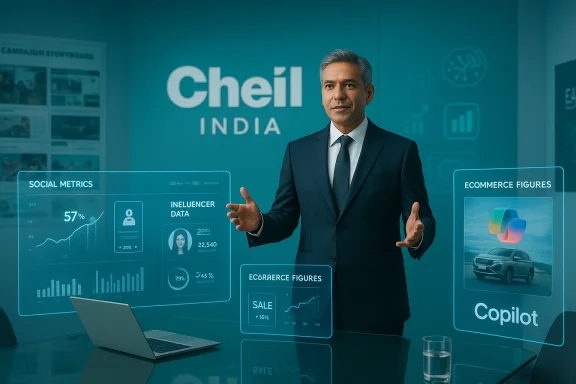
Cheil India’s elevation of Shrey Gandhi to deputy general manager and head of social media is more than a personnel update; it’s a deliberate signal about how agencies are reorganizing to make social channels central to creative, media and commerce work across broad brand portfolios.
Shrey Gandhi’s promotion was announced on March 2, 2026, when the industry trade press reported his move from client services director and head of social media to deputy general manager and head of social media at Cheil India. In his previous role at the agency he led integrated digital and social strategies across brands, overseeing campaign execution, influencer initiatives and digital rollouts. His portfolio includes work on MG Motor campaigns and influencer-led activations tied to Microsoft Copilot, among other assignments.
Before joining Cheil India, Gandhi led strategy and client services at Silver Stroke Communications and held brand and social roles at Alibaba Group (working on UC Browser and UC News in India) and MRM//McCann. His career brings together experience in digital revenue, brand marketing, and social strategy across media, technology and consumer categories — exactly the blend of skills agencies prize when social media becomes a strategic business unit rather than a tactical channel.
For Cheil, the appointment is both a statement of intent and a strategic bet: that social expertise, when elevated and resourced, can drive creative differentiation and measurable business results. For the industry, it’s a reminder that winning modern marketing briefs requires leaders who can translate platform fluency into commercial impact — and that social media is no longer an afterthought but a core engine of brand growth.
Source: afaqs! Cheil names Shrey Gandhi deputy GM & social media head
 Background / Overview
Shrey Gandhi’s promotion was announced on March 2, 2026, when the industry trade press reported his move from client services director and head of social media to deputy general manager and head of social media at Cheil India. In his previous role at the agency he led integrated digital and social strategies across brands, overseeing campaign execution, influencer initiatives and digital rollouts. His portfolio includes work on MG Motor campaigns and influencer-led activations tied to Microsoft Copilot, among other assignments.Before joining Cheil India, Gandhi led strategy and client services at Silver Stroke Communications and held brand and social roles at Alibaba Group (working on UC Browser and UC News in India) and MRM//McCann. His career brings together experience in digital revenue, brand marketing, and social strategy across media, technology and consumer categories — exactly the blend of skills agencies prize when social media becomes a strategic business unit rather than a tactical channel.
Why this promotion matters: a strategic read
Cheil’s decision to promote a social lead into a deputy general manager role reflects three parallel industry shifts:- Social as the spine of integrated campaigns. Social channels now anchor creative storytelling, performance media, influencer partnerships and commerce touchpoints. Elevating a social leader to senior management recognizes that social strategy influences top-line business outcomes.
- Client expectations for unified digital experiences. Brands expect consistent activation across owned, earned and paid channels. A social executive with client services experience is better positioned to translate social-first ideas into cross-channel execution.
- The commercialisation of social expertise. Agencies are consolidating revenue streams that used to live in separate silos — PR, digital, influencer, commerce and creative — under leaders who can align KPIs and monetize social capabilities.
Career arc and capabilities: what Gandhi brings to the role
From product marketing to agency client leadership
Gandhi’s background combines brand-side roles (notably at Alibaba Group working on UC Browser and UC News in India) with agency-side strategy and client services. That hybrid experience matters for three reasons:- It deepens understanding of product lifecycles and platform dynamics, useful when building platform-native campaigns.
- It provides fluency in cross-functional stakeholder management — an essential skill when social programs must plug into product launches, sales operations or CRM.
- It signals comfort with both demand-generation metrics and brand-building objectives.
Proven campaign experience
Two program types repeatedly referenced in his portfolio illustrate the scope of his experience:- Large automotive campaigns (MG Motor) that require multi-touch creative, media planning and dealer/retail integration.
- Influencer-led activations for Microsoft Copilot that suggest work at the intersection of platform launches, influencer ecosystems and emerging technology narratives (AI).
Team leadership and client services
Gandhi’s previous title combined client services leadership with social responsibilities. That dual responsibility equips him to:- Manage agency-client commercial relationships and billing expectations.
- Translate social insights into client briefs that secure budget across creative, media and activation.
- Build multi-disciplinary teams that balance craft, analytics and paid amplification.
What this promotion signals about Cheil India’s priorities
1) Social-first creative and measurement
By entrusting social leadership with expanded managerial authority, Cheil is indicating that social is not an execution lane but a strategic amplifier. Expect the agency to:- Push social-first creative brief structures where short-form, repurposable assets are planned from the outset.
- Emphasize measurement frameworks that link social engagement to business outcomes (lead generation, commerce conversion, dealer traffic).
2) Greater investment in influencer ecosystems
Gandhi’s experience with influencer-led Microsoft Copilot work points toward a continued focus on influencer marketing as a core capability. That entails:- Institutionalizing influencer discovery, contracting and verification processes.
- Building in-house tools or partnerships to track influencer ROI and fraud detection.
- Designing long-term creator partnerships that move beyond one-off promotions.
3) Integration with AI and platform partnerships
Working on Microsoft Copilot initiatives suggests familiarity with AI product narratives — an asset as agencies help brands position themselves in conversations about generative AI, productivity tools and platform features. Expect Cheil to position itself as an agency that can translate complex tech messaging into consumer-facing social content and scaled activation plans.The larger industry context: why agencies are elevating social leadership
Social moves from channel to ecosystem
Social platforms now function as content distribution engines, marketplaces, customer service channels and discovery layers. Agencies must therefore treat social as an ecosystem requiring dedicated strategy, governance and cross-functional coordination. Promoting social leaders into senior positions is an industry trend that recognizes this expanded remit.Convergence of creative, data and commerce
Clients increasingly want agencies to offer full-funnel solutions — from awareness and consideration through to conversion and retention. Social teams, if equipped with performance measurement and commerce tooling, can bridge creative storytelling and direct response outcomes.Talent and retention dynamics
Digital and social talent remain highly mobile. Elevating internal social leaders to senior roles is both a retention strategy and a message to clients: the agency has senior talent capable of stewarding major brand relationships.Deep dive: what Gandhi’s portfolio examples tell us about modern social programs
MG Motor: creative scale + dealer-level activation
Automotive campaigns that win attention on social require high production value and precise media amplification. A successful auto program typically combines:- Long-form hero films for brand storytelling.
- Short, platform-native edits for Reels/Shorts/Stories.
- Influencer-led road tests or local ownership stories for authenticity.
- Integration with dealer communications and test-drive funnels.
Microsoft Copilot influencer initiatives: tech storytelling for mainstream audiences
Communicating new AI features to consumers demands a different approach: translate technical claims into everyday benefits. Influencer-led programs for a product like Microsoft Copilot typically require:- Selection of creators who can credibly demo productivity gains in real-world scenarios.
- Compliance and messaging controls to avoid technical misrepresentations.
- Rapid creative iteration to respond to product updates or platform feedback.
Strengths visible in this appointment
- Cross-functional fluency. Gandhi’s mix of client services, strategy and social speaks to an ability to navigate creative, data and commercial pressures.
- Platform and product experience. Having worked on technology products and mainstream consumer campaigns positions him to bridge technical messaging and popular culture.
- Credibility with clients. Deputizing a social head to the deputy GM level signals to clients that social delivery will be supported at senior leadership — a commercial advantage when vying for integrated briefs.
Risks and open questions
No appointment is risk-free. The move raises several operational and strategic challenges Cheil will need to address.1) Scaling social without diluting craft
Social-first production models can encourage rapid asset churn. The risk: volume at the expense of craft. Cheil must ensure systems that protect creative quality while scaling output.2) Measurement and attribution complexities
Linking social activity to tangible business impact remains difficult, especially for upper-funnel brand work. Agencies frequently face disagreements with clients on attribution models, viewability, and cross-device measurement. Cheil will need to offer transparent, defensible measurement frameworks that reconcile short-term KPIs with long-term brand metrics.3) Influencer authenticity versus compliance
Influencer activations for enterprise products (like Copilot) must balance authenticity with legal and compliance constraints. Misrepresentation, overstatement of features, or poor disclosure can damage both brand and agency reputations. Tight processes for briefing, review and disclosure are essential.4) Platform dependency and algorithm risk
When a large portion of ROI depends on a handful of social platforms’ algorithms, agencies and clients become vulnerable to sudden reach changes or policy shifts. Cheil must diversify channel strategies and invest in owned audience development (email, CRM, first-party data).5) Talent churn and role clarity
As social takes on greater strategic importance, defining career pathways and clear role descriptions inside the agency will be key to retaining talent and scaling teams without bottlenecks.Practical recommendations for Cheil and client brands
- Build a unified social measurement framework that links creative KPIs to business outcomes. Include leading indicators (engagement, view-through rates) and lagging indicators (leads, conversions, dealer footfall).
- Formalize influencer governance: vetting, fraud detection, contract standards, disclosure checklists and creative approval gates.
- Invest in scalable creative production hubs that combine in-house capability with vetted external production partners to preserve craft while reducing turnaround times.
- Promote cross-training between performance media, creative, and social teams to break silos and improve campaign iteration velocity.
- Prioritize first-party data strategies that reduce reliance on platform targeting and protect against algorithmic shock.
What this means for clients and competitors
Clients of Cheil India should view the appointment as an opportunity to demand more integrated social-first solutions that tie creative to measurable outcomes. For competitors, the move signals a market where senior social leadership is increasingly expected to sit at the management table. Expect other network agencies to similarly elevate social leads or consolidate social, influencer and performance under fewer senior protagonists to present cohesive offers to clients.Broader implications for the advertising ecosystem
The promotion underlines a structural evolution in modern agencies: social platforms are not just channels but marketplaces and product ecosystems that shape culture and commerce. Agencies that succeed will be those that:- Treat social as a strategic business function with measurable ROI.
- Invest in compliance, creator management and creative excellence.
- Embrace technology partnerships (including AI tools) to drive scale and personalization without sacrificing brand integrity.
Caveats and verification note
The details of Shrey Gandhi’s promotion and the list of campaigns referenced in this article are drawn from industry reporting published on March 2, 2026, and from campaign credits and corporate bios that tie him to the MG Motor and Microsoft Copilot initiatives, as well as earlier roles at Silver Stroke Communications, Alibaba Group and MRM//McCann. Where campaign impact numbers, awards, or internal financial effects were not publicly reported, this article avoids making unverifiable claims and instead focuses on observable trends and operational implications.Looking ahead: three things to watch
- How Cheil structures reporting lines under Gandhi: will social be centralized across Cheil’s client roster or remain embedded in individual brand teams?
- Whether the agency introduces new social measurement products or partnerships that make ROI claims more defensible for clients.
- The degree to which Cheil formalizes influencer governance and first-party data strategies — critical signals that this promotion translates into sustainable commercial capability, not only symbolic seniority.
Conclusion
Shrey Gandhi’s promotion to deputy general manager and head of social media at Cheil India encapsulates a wider industry reality: social leadership is now a strategic function that must sit at the senior table. Gandhi’s blended background — agency client services, technology product marketing and social execution — aligns with the skill set agencies need as they pursue integrated creative, performance and commerce outcomes.For Cheil, the appointment is both a statement of intent and a strategic bet: that social expertise, when elevated and resourced, can drive creative differentiation and measurable business results. For the industry, it’s a reminder that winning modern marketing briefs requires leaders who can translate platform fluency into commercial impact — and that social media is no longer an afterthought but a core engine of brand growth.
Source: afaqs! Cheil names Shrey Gandhi deputy GM & social media head
