

Cloocus’s nomination as a finalist for the 2025 Microsoft Partner of the Year Award in the Gaming category marks a notable milestone for the Seoul‑based cloud specialist — and it spotlights a broader shift in how cloud, AI, and security services are being packaged for the demanding needs of modern game studios and live-service titles. Cloocus’s announcement highlights its Azure‑centric, AI‑driven managed services and lists marquee customers in Korea’s games sector; Microsoft’s Partner of the Year program and the winner’s circle demonstrate how hyperscalers and their partner ecosystems are defining the future of gaming infrastructure and operations.
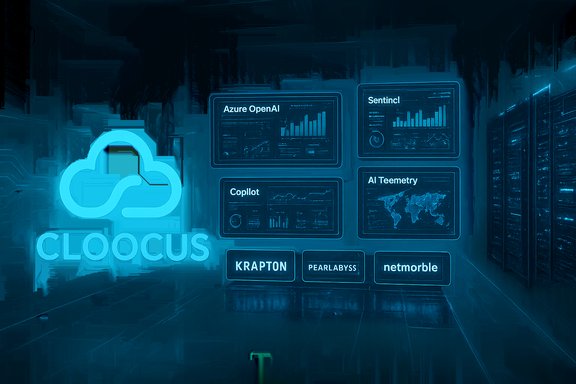
Cloocus rose quickly from a regional managed service provider to a recognized Microsoft partner, positioning itself as an AI and data‑first Azure Managed Service Provider (MSP) with a growing international footprint. The company emphasizes end‑to‑end cloud modernization, real‑time operations, and AI‑enabled managed services targeted at gaming customers that require global scale and low latency. Cloocus’s public materials and press releases list customers such as Krafton, Pearl Abyss, and Netmarble as references and describe expanding operations across Korea, Japan, Malaysia, and the United States. Microsoft’s annual Partner of the Year Awards recognize partners that deliver exceptional customer outcomes using Microsoft Cloud and AI. The 2025 program drew thousands of nominations from more than 100 countries and spans global and regional categories; winners and finalists are announced in the lead‑up to Microsoft Ignite. For the Gaming category, Microsoft recognized SOUTHWORKS as the winner, while Cloocus and other finalists were recognized for their innovation and customer success.
For partners, the path forward is clear: build repeatable, industry‑specific managed services and invest in co‑sell readiness and demonstrable customer outcomes. For studios, the marketplace is richer but more complex; they must balance innovation (AI‑enabled player experiences) against operational caution (safety, cost, latency).
Conclusion
Cloocus’s recognition as a 2025 Microsoft Partner of the Year finalist for Gaming validates the firm’s Azure‑first, AI‑enabled managed services strategy and positions it among an emerging class of partners blending cloud operations, security, and generative AI for demanding live‑service games. The nomination — alongside Microsoft’s formal winners list — offers studios and enterprise customers a practical indicator of partner capability while also reminding buyers to conduct disciplined due diligence around cost, safety, and operational readiness. The next phase for Cloocus will be converting this recognition into verifiable, global reference customers and robust, repeatable service offerings that balance innovation with the guardrails modern games require.
Source: Blockchain News Article Not Found
 Background
Cloocus rose quickly from a regional managed service provider to a recognized Microsoft partner, positioning itself as an AI and data‑first Azure Managed Service Provider (MSP) with a growing international footprint. The company emphasizes end‑to‑end cloud modernization, real‑time operations, and AI‑enabled managed services targeted at gaming customers that require global scale and low latency. Cloocus’s public materials and press releases list customers such as Krafton, Pearl Abyss, and Netmarble as references and describe expanding operations across Korea, Japan, Malaysia, and the United States. Microsoft’s annual Partner of the Year Awards recognize partners that deliver exceptional customer outcomes using Microsoft Cloud and AI. The 2025 program drew thousands of nominations from more than 100 countries and spans global and regional categories; winners and finalists are announced in the lead‑up to Microsoft Ignite. For the Gaming category, Microsoft recognized SOUTHWORKS as the winner, while Cloocus and other finalists were recognized for their innovation and customer success. What the nomination means for Cloocus and the industry
Cloocus’s finalist status is both a commercial credential and a business signal. For customers, being shortlisted by Microsoft typically indicates:- Proven technical alignment with Microsoft Azure and demonstration of Azure product integration at scale.
- Operational maturity — the ability to deliver live‑game operations, security, and global traffic handling.
- Strategic co‑sell and go‑to‑market potential with Microsoft, which can accelerate customer acquisition outside a home market.
- The gaming sector is moving beyond basic cloud hosting to AI‑enabled, secure, managed operations, where partners deliver not only infrastructure but also integrated AI toolchains and security telemetry.
- Hyperscalers are rewarding partners who build repeatable, referenceable solutions—especially when those solutions combine low‑latency multiplayer operations, real‑time analytics, and generative AI features. Microsoft’s Partner of the Year program is increasingly focused on AI and cross‑platform security as core differentiators.
Cloocus’s pitch: AI‑powered managed services for games
Cloocus’s public messaging frames its offering around three pillars: high‑performance cloud operations, AI and data services, and security — all built on Azure. The company emphasizes operational support for large‑scale global traffic, real‑time game operations, and differentiated player experiences enabled by generative and compositional AI. Cloocus explicitly lists use of Azure capabilities such as Azure OpenAI, Microsoft Sentinel, and Microsoft Copilot to deliver customer outcomes. Key elements Cloocus highlights include:- AI‑backed ops and observability for live game services (scaling, DDoS, latency management).
- Integration of Azure OpenAI for in‑game assistants, moderation pipelines, and content generation.
- Use of Microsoft Sentinel for centralized SIEM/XDR across multicloud and hybrid game backends.
- Leveraging Copilot and Copilot Studio for internal automation, ops playbooks, and developer productivity improvements.
Verifying the claims: what the public record shows
Cloocus’s finalist announcement was distributed through PR channels and replicated on multiple outlets; the same press cycle reflects Southworks’ win in the Gaming category. Independent verification is straightforward:- Cloocus’s finalist announcement and explicit product references (Azure OpenAI, Sentinel, Copilot) were published in its PR release and republished via PR Newswire and affiliated outlets.
- Microsoft’s Partner blog confirms the winners and finalists for the 2025 awards program and the scale of the nomination pool.
- Cloocus’s corporate site and press pages provide company history, client lists (including Krafton, Pearl Abyss, Netmarble), and strategic growth targets including IPO considerations and fiscal figures referenced in recent company statements. These on‑site materials are consistent with the claims made in the finalist filing.
Technical context: the Azure building blocks Cloocus cites
Understanding Cloocus’s value proposition requires a quick technical look at the Microsoft technologies it cites.Azure OpenAI: models, grounding, and enterprise controls
Azure OpenAI Service provides access to advanced language models (GPT families) with Azure’s enterprise governance, role‑based access, and regional deployment options. Microsoft positions Azure OpenAI for tasks such as content generation, semantic search, and in‑app assistants — capabilities that are attractive for in‑game chat moderation, NPC/dialog generation, and player support automation. Importantly, Azure OpenAI includes safety tooling and content‑filtering integration points that partners must adopt to meet production safety and compliance needs.Microsoft Sentinel: SIEM and agentic defense
Microsoft Sentinel is a cloud‑native SIEM and security platform built to unify telemetry across multi‑cloud and hybrid landscapes. Sentinel provides data connectors, analytics, automation playbooks, and increasingly AI‑driven detection and response capabilities — features critical for live game operations that must detect attacks, investigate incidents, and orchestrate automated mitigations around-the-clock. Sentinel’s scale and integration with Microsoft Security Copilot are emphasized by Microsoft as core advantages for enterprise defenders.Microsoft Copilot and Copilot Studio: productivity and operational assistants
Copilot for Microsoft 365 and Copilot Studio provide ways to embed generative assistants into business apps and operational workflows. In the context of game operations, copilots and custom assistants can automate playbook execution, synthesize postmortems, and accelerate developer productivity by converting natural language requests to code snippets or runbooks. Microsoft’s documentation shows how Copilot Studio integrates with Azure OpenAI and other Azure cognitive services, which aligns with Cloocus’s described implementation choices.Strengths: why Cloocus’s approach resonates with game studios
- Vertical focus and references. Cloocus points to multiple game studio clients and a track record in Korea’s competitive gaming market. That practical experience is a differentiator for studios evaluating partners who “get” game‑specific operational challenges (matchmaking, cheat detection, global traffic spikes).
- Azure specialization. Certification and proven integration with Azure services (including Azure OpenAI and Sentinel) lower the integration risk for customers that want enterprise‑grade controls and predictable SLAs. Microsoft’s partner recognition often reflects technical alignment that eases co‑sell and support paths.
- End‑to‑end managed services. Many studios prefer managed partners who can handle cloud ops, security, and AI feature rollout rather than piecing together multiple vendors. Cloocus’s packaged offering — from proof‑of‑concept through operations — is a strong match for this buyer preference.
- Regional expansion + partnerships. Cloocus’s moves into Malaysia, the U.S., and other APAC markets, combined with alliances (Databricks, Wiz, others), equip the company to deliver global footprints that matter for latency and compliance.
Risks and caveats: what buyers and observers should watch
While the finalist nod is meaningful, several risks and practical trade‑offs deserve attention.1. Vendor lock‑in and architectural dependency
Building high‑value game features on proprietary managed paths — especially when deeply tied to Azure OpenAI or Copilot integrations — can create switching costs. If a studio embeds Copilot‑driven workflows or proprietary orchestration into games, moving to another cloud or provider will require nontrivial rework. Organizations should evaluate portability and hybrid strategies up front.2. Cost of scale: compute, inference, and data egress
Generative AI, real‑time analytics, and global DDoS‑resilient architectures have non‑linear costs at scale. Per‑inference pricing for LLMs, data egress across regions, and long‑term telemetry retention in SIEMs can compound. Rigorous cost modeling and staged rollouts are essential. Microsoft documentation on Azure OpenAI and Sentinel stresses deployment planning, access controls, and cost‑management practices as part of project design.3. Safety, moderation, and legal exposure
In‑game generative features and chat systems increase exposure to harmful content, hallucinations, and moderation failures. Azure Content Safety and related tooling provide guardrails, but these are tooling layers — not legal absolutes. Partners and studios must adopt multi‑layered moderation, logging, and human review processes. Microsoft’s Content Safety guidance documents outline severity levels, API behaviors, and the fact that content classification is advisory; takedown decisions remain a customer responsibility.4. Operational complexity for live titles
Live games demand rapid incident response, deterministic latency, and predictable throughput under flash crowds. While Sentinel and Azure native services provide observability and automated response options, orchestration across CDN, regional game clusters, and third‑party anti‑cheat systems requires deep integration and rigorous runbook testing. Not all partners have equal strength in systems integration at that level; studio references and runbook audits are critical evaluation criteria.5. Geopolitics and data residency
Cloocus’s expansion into multiple countries brings up data residency, cross‑border transfer rules, and cloud region selection. For studios with European or APAC data residency requirements, partners must map Azure region capabilities, legal frameworks, and contractual clauses for data processing. This is not unique to Cloocus, but it’s a practical consideration for multinational deployments. Microsoft’s Azure platform provides regional services and compliance tooling, but the responsibility for configuration and contractual alignment rests with the customer and partner.Due diligence checklist for studios evaluating Cloocus or similar partners
When a studio is considering a partner claiming Azure + AI + security managed services for gaming, the following practical checklist helps validate the vendor’s readiness:- Evidence of live‑game references (names, engagement scope, measurable outcomes).
- Architecture walkthroughs showing:
- How Azure OpenAI is integrated (on‑prem vs. regional cloud, data flow, caching).
- How Microsoft Sentinel is used for telemetry ingestion and automated response.
- Copilot/Studio usage patterns for ops automation and safeguards.
- Cost model and capacity planning for peak events (stress tests and historical examples).
- Content safety strategy: Azure Content Safety integration, human‑in‑the‑loop moderation, and escalation paths.
- SLA and runbook review, including incident simulations and RTO/RPO targets.
- Data residency mapping and contractual protections (data processing addenda, breach notification obligations).
- Exit and portability plans — how to migrate off managed services if needed.
Business outlook: what the Partner of the Year recognition unlocks
Being a finalist in Microsoft’s Partner of the Year program is not just a trophy. It typically yields:- Greater visibility to Microsoft account teams, which can accelerate co‑sell and customer introductions.
- Credibility in global markets, especially where local enterprises prefer vetted partners with hyperscaler endorsements.
- Recruitment momentum and partner ecosystem opportunities (ISVs, security vendors, platform partners).
Strategic implications for Microsoft, partners, and studios
Microsoft’s awards — and the winners/finalists list — reveal the platform’s strategic direction: partners that succeed combine cloud ops, security, and AI into repeatable offerings that reduce time‑to‑value for customers. For Microsoft, recognizing partners across geographies helps shore up Azure adoption in verticals where scale and real‑time operations matter.For partners, the path forward is clear: build repeatable, industry‑specific managed services and invest in co‑sell readiness and demonstrable customer outcomes. For studios, the marketplace is richer but more complex; they must balance innovation (AI‑enabled player experiences) against operational caution (safety, cost, latency).
Final assessment
Cloocus’s finalist standing in the 2025 Microsoft Partner of the Year Awards (Gaming) is a credible signal of technical capability and market traction. The company’s public materials and PR filings align with Microsoft’s partner narratives: Azure‑native AI and security are now table stakes for managed gaming operations. Cloocus’s client references and regional expansion plans support the claim that it is positioned to take on global live‑service workloads. At the same time, several pragmatic caveats apply: reliance on specific Azure services introduces portability and cost considerations; generative AI features require robust safety guardrails and human oversight; and live‑game operational excellence still depends on rigorous runbook, testing, and incident response discipline — not just tool selection. Buyers evaluating Cloocus or similar partners should validate references, run controlled pilots, and insist on clear cost models and compliance posture before committing to mission‑critical production rollouts.What to watch next
- Microsoft Ignite (the awards ceremony period and partner sessions) will surface more details about winners, finalist case studies, and Microsoft’s immediate roadmap for Copilot, Azure OpenAI, and Sentinel integrations — an important moment for partners and customers to align on forward‑looking capabilities.
- Cloocus’s next public disclosures — including customer case studies, audited financials if they progress on IPO plans, and regional presence updates — will be key to assessing whether the company can convert finalist recognition into durable global market share.
- The evolution of Azure’s cost model and security tooling (especially in content safety and model guardrails) will directly affect how partners design in‑game AI features and moderation systems. Microsoft’s evolving documentation emphasizes responsible AI controls and operational governance; partners must operationalize these controls for production usage.
Conclusion
Cloocus’s recognition as a 2025 Microsoft Partner of the Year finalist for Gaming validates the firm’s Azure‑first, AI‑enabled managed services strategy and positions it among an emerging class of partners blending cloud operations, security, and generative AI for demanding live‑service games. The nomination — alongside Microsoft’s formal winners list — offers studios and enterprise customers a practical indicator of partner capability while also reminding buyers to conduct disciplined due diligence around cost, safety, and operational readiness. The next phase for Cloocus will be converting this recognition into verifiable, global reference customers and robust, repeatable service offerings that balance innovation with the guardrails modern games require.
Source: Blockchain News Article Not Found
