

CloudMoyo’s dual announcement — that it has earned the Microsoft Solutions Partner designation in Data & AI and launched a new Microsoft Cloud Solution Provider (CSP) program — marks a deliberate push to convert Microsoft platform credentials into direct commercial and delivery advantage for customers modernizing data estates and adopting generative AI at scale. The designation signals technical validation across Azure analytics and AI tooling, while the CSP launch lets CloudMoyo bundle licensing (Azure, Microsoft 365 and Copilot) with consulting, implementation and managed services to offer single‑partner procurement, consolidated billing, and tighter lifecycle support.
Microsoft’s reworked partner framework ties public partner badges to measurable activity across three pillars — Performance, Skilling, and Customer Success — and awards Solutions Partner designations when partner capability scores meet defined thresholds. The Data & AI designation in particular packages demonstrated delivery capability across Azure analytics and AI services, and it is the prerequisite for several workload specializations that require audited evidence and Azure consumption thresholds. Separately, Microsoft’s Cloud Solution Provider (CSP) program remains the primary channel for partners to resell cloud licenses (Azure, Microsoft 365 and other Microsoft cloud offers) directly to customers. CSP partners can provide value-added billing, managed services, private offers and operational support while retaining flexibility to integrate marketplace and ISV offerings into an end customer’s Azure tenancy. The CSP catalog and mechanics are documented and actively updated in Partner Center. CloudMoyo’s public statement frames the two moves as complementary: the Data & AI designation proves technical capability to Microsoft and to enterprise buyers, while CSP status allows CloudMoyo to transact and bundle Microsoft licensing with their accelerators and managed services (for example CloudMoyo Fabric Accelerator, IntelliDoc Analyze, and Migration Assistant), theoretically simplifying procurement and accelerating time‑to‑value for customers.
However, the partner ecosystem is crowded. Many firms now claim Solutions Partner badges as part of competitive positioning; the decisive differentiators are demonstrable references, published audit artifacts, and calibration of delivery capacity to project complexity. Buyers who treat badges as an opening signal and execute the verification steps above will convert marketing into measurable program outcomes.
What makes this announcement useful to buyers:
CloudMoyo’s move follows an industry‑wide pattern where partners convert Microsoft program credentials into differentiated, transactable offerings — a positive development for customers that want a single accountable supplier for Microsoft‑centric AI and data modernization. The badge and the CSP capability are meaningful signals; converting them into predictable production outcomes requires the verification steps and contractual hygiene described above.
Source: The AI Journal CloudMoyo Achieves Microsoft Solution Partner Designation in Data & AI and Launches New Microsoft CSP Program to Expand Customer Value | The AI Journal
 Background / Overview
Microsoft’s reworked partner framework ties public partner badges to measurable activity across three pillars — Performance, Skilling, and Customer Success — and awards Solutions Partner designations when partner capability scores meet defined thresholds. The Data & AI designation in particular packages demonstrated delivery capability across Azure analytics and AI services, and it is the prerequisite for several workload specializations that require audited evidence and Azure consumption thresholds. Separately, Microsoft’s Cloud Solution Provider (CSP) program remains the primary channel for partners to resell cloud licenses (Azure, Microsoft 365 and other Microsoft cloud offers) directly to customers. CSP partners can provide value-added billing, managed services, private offers and operational support while retaining flexibility to integrate marketplace and ISV offerings into an end customer’s Azure tenancy. The CSP catalog and mechanics are documented and actively updated in Partner Center. CloudMoyo’s public statement frames the two moves as complementary: the Data & AI designation proves technical capability to Microsoft and to enterprise buyers, while CSP status allows CloudMoyo to transact and bundle Microsoft licensing with their accelerators and managed services (for example CloudMoyo Fabric Accelerator, IntelliDoc Analyze, and Migration Assistant), theoretically simplifying procurement and accelerating time‑to‑value for customers.What the Microsoft Solutions Partner (Data & AI) designation actually certifies
The mechanics — what Microsoft measures
Microsoft computes a partner capability score from observable signals in Partner Center across:- Performance (net customer adds and usage growth, derived from Azure Consumed Revenue / ACR)
- Skilling (role-based certifications and certified headcount)
- Customer success (deployments and usage growth metrics)
Why Data & AI matters for enterprise buyers
The Data & AI badge signals the partner can:- Build or migrate a unified data estate on Azure (Microsoft Fabric, Synapse, Databricks),
- Deliver analytics modernization with governance (Power BI, semantic models, OneLake),
- Deploy production AI workloads using Azure OpenAI / Foundry and MLOps patterns.
What CloudMoyo’s CSP program launch enables — practical benefits and limits
Tangible benefits for customers
- Single partner billing and support: CloudMoyo can invoice Azure and Microsoft 365/Copilot seat licensing directly and combine that with professional services and managed services, simplifying vendor management.
- Bundled offers and promotions: CSPs can apply promotional pricing and orchestrate staged license rollouts for Copilot and Microsoft 365, which can translate to lower first‑year costs or curated rollouts for departmental pilots. Microsoft has explicitly expanded Copilot availability through CSP channels and run time‑limited CSP promotions to spur adoption.
- Operational integration: Licensing becomes part of the delivery contract — CloudMoyo can provision, optimize and manage tenants, apply governance controls, and roll Copilot, Fabric and Azure OpenAI into end‑to‑end solutions backed by their accelerators.
Realistic limits and caveats
- Commercial transparency: CSP pricing can be competitive, but customers must verify margins, billing cadence (monthly vs annual), and how charges—especially for consumption‑based Azure services—are reported on monthly invoices.
- Azure consumption models: Core ACR numbers that underpin Microsoft partner scoring also depend on how consumption is attributed (DPOR, PAL, CSP). Teams should validate how historic and projected Azure usage will be attributed when assessing partner capability.
- Licensing scope: While CSP partners can sell a broad catalog (including Azure reservations, software subscriptions and Microsoft 365 add‑ons), some offers or government/education SKUs have special procurement rules and may be restricted by region or segment. Partner Center remains the canonical source to confirm whether a given SKU is available via CSP in a specific market.
Technical implications: Microsoft Fabric, OneLake, Azure OpenAI and Copilot
Microsoft Fabric & OneLake — unified data plane
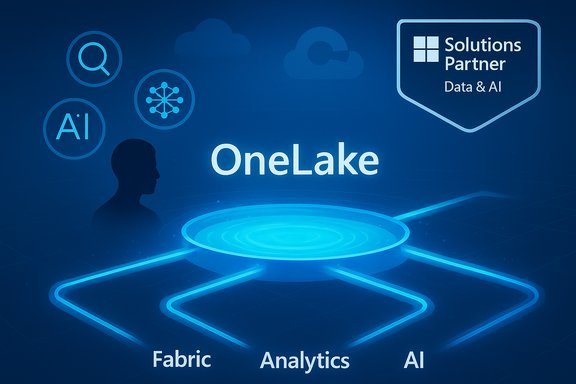
CloudMoyo’s Data & AI focus makes Microsoft Fabric and OneLake central to its stated approach: OneLake provides a tenant‑level, unified data lake and consistent security model across Fabric engines (SQL, KQL, Real‑Time). Using OneLake simplifies governance, reduces data duplication and supports retrieval‑augmented generation (RAG) patterns that ground generative AI outputs in authoritative data. Microsoft has rolled forward capabilities around OneLake security and cross‑tenant sharing that make Fabric a practical spine for enterprise copilots and model grounding.Azure OpenAI, Foundry, and model hosting
Production LLM applications increasingly require model orchestration, routing, observability and governance. Microsoft’s Azure OpenAI Service plus enterprise orchestration planes like Azure AI Foundry offer model catalogs, routing policies and observability that enable BYOM (bring‑your‑own‑model) strategies and responsible AI controls at scale. For CloudMoyo customers expecting custom or proprietary agentic workflows, integrating these capabilities is essential to operational robustness.Microsoft 365 Copilot deployment mechanics (via CSP)
Microsoft has explicitly opened Copilot for Microsoft 365 purchases through CSP partners, removed seat minimums for commercial customers, and periodically offered CSP promotions to accelerate adoption. That means CloudMoyo can sell Copilot seats and bundle governance and rollout services, possibly with promotional discounts, accelerating adoption while packaging necessary tenant configuration and DLP/Purview controls. Customers should confirm promotion eligibility windows and license caps in Partner Center and in the partner’s commercial terms.Critical analysis — strengths, credible claims, and what to verify
Notable strengths from CloudMoyo’s positioning
- Platform alignment: Combining a Data & AI Solutions Partner designation with CSP capability positions CloudMoyo both to design and transact Microsoft‑centric solutions end‑to‑end — a practical advantage for customers who want a single accountable provider for licensing, implementation and managed operations.
- Productized IP + licensing: Integrating accelerators (CFA, CDA, CMA) with direct CSP licensing can shorten procurement cycles and improve time‑to‑value if the accelerators truly automate migration and RAG patterns while preserving governance and security.
- Commercial leverage for pilots: CSP‑enabled discounts and direct partner provisioning reduce friction for early Copilot and Fabric pilots and allow partners to create repeatable, priced offers for departments or business units.
Risks, overstated claims and verification checklist
Many partner press releases emphasize capability and outcomes but omit programmatic nuance. Buyers should translate the press messaging into verifiable artifacts before committing to significant programs:- Ask for current Partner Center screenshots or exports that show: active Solutions Partner designation (Data & AI) and any specializations; published capability score if available; and CSP enrollment status.
- Request the named list of certified individuals (certification IDs) and verify those IDs in Microsoft Learn to confirm skilling claims.
- For any workload specialization or ACR claims, ask for an ACR export or a redacted Partner Center ACR summary demonstrating eligible consumption levels and attribution types (DPOR, PAL, CSP). Many specializations require specific trailing‑three‑month ACR thresholds and unique customer counts, so confirm dates and numbers in Partner Center.
- If CloudMoyo cites specific customer outcomes (percent throughput gains, license counts, time‑to‑value), treat those as vendor‑reported until validated via customer references or documented case artifacts.
A pragmatic procurement and technical checklist for Windows-focused IT teams
- Obtain Partner Center proof
- Export or screenshot of CloudMoyo’s Partner Center listing showing active Solutions Partner – Data & AI status and any active specializations (with award dates).
- Validate skilling
- Request certification rosters mapped to project roles (Fabric Data Engineer, Fabric Analytics Engineer, Azure Data Engineer IDs). Verify via Microsoft Learn.
- Confirm ACR and attribution
- Request a redacted ACR export for the trailing three months showing eligible workloads and attribution types (DPOR / PAL / CSP).
- Request customer references and sanitized audit reports
- Ask for at least three contactable references with similar scope and scale. For specialization claims that require audits, request the third‑party audit executive summary (redacted if necessary).
- Run a bounded pilot
- Define a 60–90 day pilot on a subset of data/workloads: migration to OneLake, Fabric ingestion, a Copilot pilot for a department. Capture measurable KPIs (latency, ingestion time, token/cost estimates, operational readiness).
- Insist on operational artifacts in contract
- Runbooks, DR plans, SRE on‑call rotas, SLAs for incident response and cost‑management guardrails (FinOps playbooks).
- Security/compliance proof
- SOC 2 / ISO 27001 reports, PenTest summaries, tenant‑level configuration checklists (private endpoints, managed identities, Purview/DLP mappings).
- Commercial clarity
- Confirm CSP billing cadence, pass‑through of Microsoft promotions, early‑termination and exit terms for licensing, and migration/rollback guarantees for data and workloads.
How to judge CloudMoyo’s productized accelerators and managed services
CloudMoyo highlights accelerators (CFA, CDA, CMA) intended to lower migration friction, automate document ingestion and expedite Fabric adoption. When evaluating such IP:- Ask for a technical demo with tenant access or recorded walks that show Fabric artifacts generated by the accelerator (semantic models, OneLake table schemas, pipelines).
- Request code artifacts or templates (Terraform, ARM/Bicep, pipeline templates, IaC) used to provision and manage landing zones, to verify reproducibility.
- Confirm scoping and limits: how many source systems, schema complexity and edge cases the accelerators have handled, and what customization effort is typically required.
- Demand cost modeling: estimated Azure consumption for pilot vs. production, and automated cost controls (reservation/savings plans and FinOps guidance) integrated with managed operations.
Commercial mechanics: CSP billing, Copilot offers and promotions
CSP partners can sell Azure reservations, savings plans, Microsoft 365 subscriptions and many marketplace items; availability varies by market and product catalog configuration. The Partner Center Pricing workspace is the definitive catalog to confirm which SKUs a CSP partner can transact in a customer’s region. Microsoft has explicitly enabled Copilot purchases via CSP channels and has run targeted promotions (license cap increases, 15% off introductory CSP promotions) at multiple points in 2024–2025 to spur customer trials. That means partners like CloudMoyo can both transact Copilot licenses and — for the right customers and within promotion windows — offer discounted rollouts designed to accelerate adoption. Confirm promotion windows, the minimum/maximum license bands, and annual vs monthly billing options before signing.The near-term market context — why this matters now
Enterprises are increasingly seeking partners that can both design governed AI systems and take responsibility for purchase, provisioning and ongoing operations. Microsoft’s partner program design encourages this end‑to‑end posture: Solutions Partner designations improve partner discoverability and co‑sell eligibility, while CSP status closes the commercial loop by enabling partners to transact licensing and operationalize services at scale.However, the partner ecosystem is crowded. Many firms now claim Solutions Partner badges as part of competitive positioning; the decisive differentiators are demonstrable references, published audit artifacts, and calibration of delivery capacity to project complexity. Buyers who treat badges as an opening signal and execute the verification steps above will convert marketing into measurable program outcomes.
Final assessment — what CloudMoyo’s announcements mean for WindowsForum readers and IT leaders
CloudMoyo’s achievement of a Solutions Partner designation in Data & AI plus the launch of a CSP program is a credible and practical combination: it aligns technical capability signals with a path to transact and operationalize Microsoft licensing — a pattern enterprise buyers increasingly prefer to simplify procurement and accountability for AI initiatives.What makes this announcement useful to buyers:
- Reduced vendor friction: single engagements to buy, build and run Microsoft Fabric + Copilot + Azure workloads.
- Faster pilots: CSP availability of Copilot and promotional windows lower the financial barrier to experimentation.
- Clear paths to scale: Solutions Partner credentials increase the partner’s eligibility for Microsoft co‑sell and technical incentives, which can help fund early programs.
- Partner Center evidence of the Data & AI designation and any related specializations.
- Certification rosters and named delivery references.
- ACR attributions and audit letters for any specialization claims tied to consumption thresholds.
- Operational artifacts (runbooks, security attestations, managed services SLAs).
CloudMoyo’s move follows an industry‑wide pattern where partners convert Microsoft program credentials into differentiated, transactable offerings — a positive development for customers that want a single accountable supplier for Microsoft‑centric AI and data modernization. The badge and the CSP capability are meaningful signals; converting them into predictable production outcomes requires the verification steps and contractual hygiene described above.
Source: The AI Journal CloudMoyo Achieves Microsoft Solution Partner Designation in Data & AI and Launches New Microsoft CSP Program to Expand Customer Value | The AI Journal
