

Colon cancer is a malignancy that begins in the large intestine, usually developing from small growths called polyps, and it can progress silently for years before causing noticeable symptoms. The risk rises with age, but lifestyle, family history, inherited syndromes, and certain inflammatory bowel conditions also play major roles. Because early disease may not cause obvious warning signs, understanding the causes and symptoms is essential for timely screening and treatment.
The colon, also called the large intestine, is the final long segment of the digestive tract. Its main job is to absorb water and salts from food waste, compacting it into stool before elimination. When cells in the lining of the colon begin to grow abnormally and uncontrollably, colon cancer can develop.
Most colon cancers start as adenomatous polyps or serrated lesions, which are initially noncancerous. Over time, some of these growths accumulate genetic changes and transform into cancer. This slow progression is one reason screening is so important: removal of polyps can prevent cancer before it starts.
Colon cancer is part of the broader category of colorectal cancer, which includes cancer of the colon and rectum. In everyday conversation, people often use “colon cancer” and “colorectal cancer” interchangeably, though medically they are not exactly the same. The distinction matters because location influences symptoms, treatment planning, and sometimes prognosis.
Several decades of research have shown that colon cancer is not caused by one single factor. Instead, it usually emerges from a combination of age-related DNA damage, environmental exposures, metabolic factors, and inherited susceptibility. That makes it a multifactorial disease, and also means prevention has multiple entry points.
This article explains the main causes, the symptoms people should not ignore, and the practical implications for both patients and families. The goal is to make the subject easy to understand without losing the medical detail that matters in real life.
Not every polyp becomes cancer, and not every colon cancer follows the same route. Some cancers arise through inflammatory or serrated pathways rather than the traditional adenoma sequence. Still, the broader lesson is the same: precancerous change can be interrupted if detected early.
In practical terms, this means one person may present with anemia and fatigue, while another notices constipation, narrower stools, or visible blood. The cancer is the same broad disease, but the body’s warning signals vary. That variability can delay diagnosis if people assume there is only one “typical” presentation.
Age remains one of the strongest risk factors. The disease becomes more common after age 50, although younger adults are being diagnosed more often than before. That shift has made many clinicians pay closer attention to symptoms in people who are still considered “too young” by older assumptions.
Family history does not mean cancer is inevitable, but it does mean the threshold for evaluation should be lower. A strong family history may also suggest the need for genetic counseling. In families with known mutations, preventive surgery or enhanced surveillance may sometimes be discussed.
Smoking and heavy alcohol use are also relevant. They may not be the first things people associate with colon cancer, but the evidence links them to higher risk over time. Small daily choices can matter a lot over decades, particularly when combined with other vulnerabilities.
Some patients also have a history of colon polyps or previous cancers, which increases future risk. This is one reason follow-up colonoscopy intervals are individualized. A past finding is often a predictor of future vigilance requirements.
Mutations may affect tumor suppressor genes, oncogenes, or DNA repair pathways. When repair systems are impaired, the cell accumulates additional errors more quickly. That is why inherited DNA repair defects can produce very high cancer risk.
This is one reason the colon has become a focus of microbiome research. Certain bacterial patterns may be associated with tumor development or progression, although science is still evolving. The microbiome is not a simple cause on its own, but it may shape risk in meaningful ways.
That distinction matters because it prevents blame. Many people with healthy habits still develop cancer, while others with clear risk factors never do. Risk factors are signals, not guarantees.
People sometimes assume these symptoms are caused by diet, stress, or hemorrhoids. That may be true in some cases, but a persistent pattern should not be dismissed. Repeated change is more important than a single bad day.
Occult bleeding can be harder to notice. In some cases, the only clue is iron-deficiency anemia found on a blood test. That is why fatigue, dizziness, or pallor may be indirect signs of something more serious.
A bowel obstruction is a medical emergency. Severe pain, vomiting, inability to pass stool or gas, and marked abdominal distention require urgent care. It is better to be cautious than to wait.
Not every weight change signals cancer, and fatigue has many causes. Still, when symptoms cluster together, the likelihood of a significant underlying problem rises. The pattern matters as much as the individual symptom.
The key issue is not just having a test, but having it on time. Many preventable cancers arise because screening was delayed or never completed. That gap is especially important in health systems where people face cost, fear, or limited access barriers.
A colonoscopy can sometimes be physically and emotionally intimidating. But it remains one of the most powerful cancer prevention tools in modern medicine. In terms of public-health value, it is a high-yield intervention.
A person with localized disease may need surgery alone or surgery plus additional therapy. Someone with metastatic disease requires a broader strategy. The stage is not just a label; it is the roadmap.
Modern surgery may be open or minimally invasive, depending on the tumor and the patient. Recovery varies, but the general principle is straightforward: remove the source of disease as thoroughly as possible. The operation is often the turning point between uncertainty and a structured recovery plan.
For metastatic colon cancer, treatment is often longer and more complex. Oncologists may use different drug combinations based on molecular testing. This is where personalized medicine increasingly matters.
This is one of the major advances in oncology over the past decade. The more precisely doctors can identify tumor biology, the more tailored treatment can become. That precision can improve outcomes while reducing unnecessary toxicity.
Public-health messaging should stress that screening is not only about finding cancer. It is also about preventing cancer from forming in the first place. That preventive framing is often more persuasive than fear-based messaging.
Alcohol moderation matters too. Again, the effect is not usually immediate, but cancer risk accumulates over years. Long-term habits are what ultimately move the needle.
People often underestimate how much a single family diagnosis changes their own risk profile. If a parent, sibling, or child had colon cancer, the conversation with a doctor should happen sooner rather than later. Prevention is most effective when it begins before symptoms.
This is especially important because younger patients may face more delay before being taken seriously. Their symptoms are sometimes labeled as stress, hemorrhoids, or irritable bowel syndrome. Those explanations can be correct, but they should not be accepted too quickly when symptoms persist.
The practical message is simple: persistent rectal bleeding, unexplained anemia, or bowel habit changes are not “too young” problems. Age reduces risk, but it does not eliminate it. That distinction can save lives.
There is also a social inequality issue. People with fewer resources often have more difficulty accessing preventive care, follow-up testing, and specialist treatment. That means colon cancer outcomes are not just medical outcomes; they are also systems outcomes.
At the same time, prevention will remain the most important front line. Even the best targeted therapies cannot match the value of not developing invasive cancer in the first place. That makes public-health action, lifestyle change, and timely screening essential.
Colon cancer is serious, but it is also one of the more preventable and detectable major cancers when screening is done on time. The real challenge is not understanding the disease in theory; it is translating that understanding into action. If people recognize the warning signs, take family history seriously, and stay current with screening, outcomes can improve dramatically.
Source: Fathom Journal Fathom - For a deeper understanding of Israel, the region, and global antisemitism
 Background
The colon, also called the large intestine, is the final long segment of the digestive tract. Its main job is to absorb water and salts from food waste, compacting it into stool before elimination. When cells in the lining of the colon begin to grow abnormally and uncontrollably, colon cancer can develop.Most colon cancers start as adenomatous polyps or serrated lesions, which are initially noncancerous. Over time, some of these growths accumulate genetic changes and transform into cancer. This slow progression is one reason screening is so important: removal of polyps can prevent cancer before it starts.
Colon cancer is part of the broader category of colorectal cancer, which includes cancer of the colon and rectum. In everyday conversation, people often use “colon cancer” and “colorectal cancer” interchangeably, though medically they are not exactly the same. The distinction matters because location influences symptoms, treatment planning, and sometimes prognosis.
Several decades of research have shown that colon cancer is not caused by one single factor. Instead, it usually emerges from a combination of age-related DNA damage, environmental exposures, metabolic factors, and inherited susceptibility. That makes it a multifactorial disease, and also means prevention has multiple entry points.
This article explains the main causes, the symptoms people should not ignore, and the practical implications for both patients and families. The goal is to make the subject easy to understand without losing the medical detail that matters in real life.
What Colon Cancer Actually Is
Colon cancer begins when cells in the colon lining start multiplying abnormally and fail to die when they should. These cells can form a mass, invade deeper layers of the bowel wall, and eventually spread to lymph nodes or distant organs such as the liver or lungs. That progression is what makes it dangerous.From Polyp to Cancer
The classic pathway involves a polyp that becomes genetically unstable over years. A person may carry a polyp for a long time and feel completely normal. That is why colonoscopy screening is so valuable: it can detect and remove the lesion before it turns malignant.Not every polyp becomes cancer, and not every colon cancer follows the same route. Some cancers arise through inflammatory or serrated pathways rather than the traditional adenoma sequence. Still, the broader lesson is the same: precancerous change can be interrupted if detected early.
Why Location Matters
Tumors in the right side of the colon, left side, and rectum can behave differently. Right-sided cancers may grow larger before causing obstruction, while left-sided cancers can more often affect bowel habits earlier. The location also changes the pattern of symptoms and sometimes how the disease is discovered.In practical terms, this means one person may present with anemia and fatigue, while another notices constipation, narrower stools, or visible blood. The cancer is the same broad disease, but the body’s warning signals vary. That variability can delay diagnosis if people assume there is only one “typical” presentation.
Key Points
- Colon cancer starts in the lining of the large intestine.
- Many cases evolve from polyps over time.
- Symptoms can differ depending on tumor location.
- Screening can prevent some cancers by removing precancerous growths.
Major Causes and Risk Factors
No single behavior or exposure explains every case of colon cancer, but the risk profile is well established. Some factors are non-modifiable, such as age and genetics, while others are tied to diet, body weight, smoking, alcohol use, and chronic inflammation. Understanding both categories helps people assess what they can and cannot change.Age remains one of the strongest risk factors. The disease becomes more common after age 50, although younger adults are being diagnosed more often than before. That shift has made many clinicians pay closer attention to symptoms in people who are still considered “too young” by older assumptions.
Genetic and Family History Factors
Having a first-degree relative with colon cancer raises risk, especially if that relative was diagnosed young. Inherited syndromes such as Lynch syndrome and familial adenomatous polyposis can dramatically increase lifetime risk. These cases are not common, but they are crucial because they often call for earlier and more aggressive screening.Family history does not mean cancer is inevitable, but it does mean the threshold for evaluation should be lower. A strong family history may also suggest the need for genetic counseling. In families with known mutations, preventive surgery or enhanced surveillance may sometimes be discussed.
Lifestyle and Metabolic Factors
Dietary patterns high in processed meats and low in fiber are associated with increased risk. Obesity, physical inactivity, and insulin resistance also appear to raise risk through hormonal and inflammatory mechanisms. These factors often cluster together, which can compound the effect.Smoking and heavy alcohol use are also relevant. They may not be the first things people associate with colon cancer, but the evidence links them to higher risk over time. Small daily choices can matter a lot over decades, particularly when combined with other vulnerabilities.
Chronic Inflammation and Bowel Disease
People with long-standing inflammatory bowel disease, including ulcerative colitis and Crohn’s colitis, have a higher risk than the general population. Continuous inflammation can damage DNA and promote malignant change. The longer and more extensive the inflammation, the more important surveillance becomes.Some patients also have a history of colon polyps or previous cancers, which increases future risk. This is one reason follow-up colonoscopy intervals are individualized. A past finding is often a predictor of future vigilance requirements.
Key Points
- Age is a major risk factor, but younger adults can still develop colon cancer.
- Family history and inherited syndromes matter significantly.
- Diet, obesity, smoking, alcohol, and inactivity are modifiable risks.
- Chronic inflammatory bowel disease increases risk through ongoing tissue injury.
Causes at the Cellular Level
At the cellular level, colon cancer is a disease of DNA damage and selection. Cells in the colon lining acquire mutations that let them divide faster, resist normal death signals, and evade the immune system. Over time, the most aggressive cell clones survive and expand.Mutation Accumulation
A healthy colon cell has many safeguards. It divides in an orderly fashion, repairs damage when possible, and eventually dies when it is no longer needed. Cancer develops when enough of those safeguards fail at once or in sequence.Mutations may affect tumor suppressor genes, oncogenes, or DNA repair pathways. When repair systems are impaired, the cell accumulates additional errors more quickly. That is why inherited DNA repair defects can produce very high cancer risk.
Epigenetic and Microenvironment Changes
Cancer is not driven by DNA mutations alone. Chemical changes that affect gene expression, known as epigenetic changes, can also help malignant cells thrive. The surrounding tissue environment matters too: inflammation, bacterial imbalance, and immune responses can all influence tumor growth.This is one reason the colon has become a focus of microbiome research. Certain bacterial patterns may be associated with tumor development or progression, although science is still evolving. The microbiome is not a simple cause on its own, but it may shape risk in meaningful ways.
Why “Causes” Are Often Probabilities
In everyday language, people ask, “Why did I get colon cancer?” Medicine often cannot provide a single exact answer. Instead, it identifies a combination of probabilities that pushed cells toward malignant change.That distinction matters because it prevents blame. Many people with healthy habits still develop cancer, while others with clear risk factors never do. Risk factors are signals, not guarantees.
Key Points
- Colon cancer develops through accumulated genetic and epigenetic changes.
- DNA repair failure can accelerate malignant transformation.
- Inflammation and the local tissue environment influence tumor behavior.
- Risk factors raise probability; they do not determine destiny.
Symptoms People Should Not Ignore
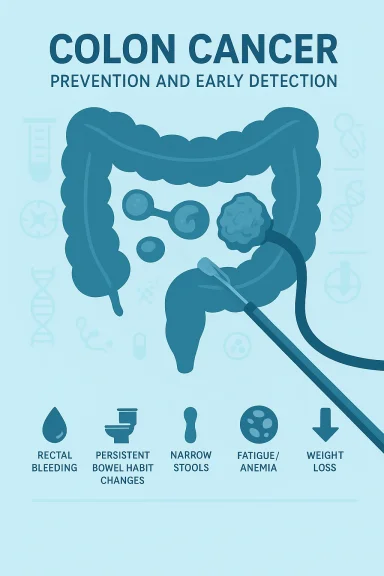
Colon cancer symptoms can be subtle, intermittent, or mistaken for less serious digestive problems. Early-stage disease may produce no symptoms at all, which is why screening is so important. When symptoms do appear, they may vary by tumor location and how far the disease has progressed.Bowel Habit Changes
A persistent change in bowel habits is one of the most common warning signs. This may include new constipation, diarrhea, alternating constipation and diarrhea, or feeling that the bowel does not empty fully. If the change lasts for weeks, it deserves medical attention.People sometimes assume these symptoms are caused by diet, stress, or hemorrhoids. That may be true in some cases, but a persistent pattern should not be dismissed. Repeated change is more important than a single bad day.
Blood in Stool or Rectal Bleeding
Visible blood in the stool is always concerning, although not always caused by cancer. Bright red bleeding can come from hemorrhoids, while darker or hidden blood may indicate bleeding higher in the colon. Either way, unexplained bleeding should be evaluated.Occult bleeding can be harder to notice. In some cases, the only clue is iron-deficiency anemia found on a blood test. That is why fatigue, dizziness, or pallor may be indirect signs of something more serious.
Abdominal Pain, Bloating, and Narrow Stools
Some patients develop cramping, persistent abdominal discomfort, or bloating. Narrower stools or a sense of blockage can occur when a tumor partially obstructs the bowel. These symptoms can overlap with irritable bowel syndrome or indigestion, which makes clinical evaluation essential.A bowel obstruction is a medical emergency. Severe pain, vomiting, inability to pass stool or gas, and marked abdominal distention require urgent care. It is better to be cautious than to wait.
Unexplained Weight Loss and Fatigue
Cancer can cause weight loss through reduced appetite, altered metabolism, or chronic blood loss. Fatigue is especially common when the disease causes anemia. These are nonspecific symptoms, but they become more meaningful when they appear with bowel changes or bleeding.Not every weight change signals cancer, and fatigue has many causes. Still, when symptoms cluster together, the likelihood of a significant underlying problem rises. The pattern matters as much as the individual symptom.
Key Points
- A lasting change in bowel habits is a warning sign.
- Blood in stool or unexplained rectal bleeding should never be ignored.
- Abdominal pain, bloating, and narrower stools can reflect partial obstruction.
- Fatigue and weight loss may point to anemia or advanced disease.
How Colon Cancer Is Diagnosed
Diagnosis usually starts with symptom review, physical examination, and screening tests if the person is due for them. If a suspicious finding appears, the next step is often colonoscopy with biopsy. The biopsy confirms whether cancer is present and helps define the type of tumor.Screening and Early Detection
Screening can identify polyps or early cancers before symptoms occur. Colonoscopy remains the most comprehensive test because it can both detect and remove lesions. Other screening methods, including stool-based tests, can also play an important role depending on risk level and access.The key issue is not just having a test, but having it on time. Many preventable cancers arise because screening was delayed or never completed. That gap is especially important in health systems where people face cost, fear, or limited access barriers.
Colonoscopy and Biopsy
If a suspicious lesion is found during colonoscopy, tissue is removed and examined under a microscope. Pathology confirms whether the growth is benign, precancerous, or malignant. It also provides details that guide treatment planning.A colonoscopy can sometimes be physically and emotionally intimidating. But it remains one of the most powerful cancer prevention tools in modern medicine. In terms of public-health value, it is a high-yield intervention.
Imaging and Staging
Once cancer is diagnosed, imaging such as CT scans may be used to see whether it has spread. Blood tests, including liver function tests and sometimes tumor markers, may support staging and follow-up. Staging is critical because it determines treatment intensity.A person with localized disease may need surgery alone or surgery plus additional therapy. Someone with metastatic disease requires a broader strategy. The stage is not just a label; it is the roadmap.
Key Points
- Screening finds cancer earlier, when it is more treatable.
- Colonoscopy allows direct visualization and biopsy.
- Pathology confirms the diagnosis and tumor type.
- Imaging and staging determine how far the disease has spread.
Treatment Options and What They Mean
Colon cancer treatment depends on stage, location, tumor biology, and the patient’s overall health. Surgery is often the first treatment for localized disease, while chemotherapy may be used before or after surgery depending on the case. Advanced disease may require combinations of surgery, systemic therapy, and targeted approaches.Surgery
For many patients with early or localized colon cancer, surgery to remove the tumor and nearby lymph nodes is the main treatment. The goal is complete removal with clear margins. When caught early, surgery can sometimes be curative.Modern surgery may be open or minimally invasive, depending on the tumor and the patient. Recovery varies, but the general principle is straightforward: remove the source of disease as thoroughly as possible. The operation is often the turning point between uncertainty and a structured recovery plan.
Chemotherapy and Systemic Treatment
Chemotherapy may be recommended when there is a higher risk of recurrence or when cancer has spread. These drugs circulate through the body to kill microscopic cancer cells that surgery cannot remove. Side effects can include nausea, fatigue, diarrhea, and lowered blood counts.For metastatic colon cancer, treatment is often longer and more complex. Oncologists may use different drug combinations based on molecular testing. This is where personalized medicine increasingly matters.
Targeted Therapy and Immunotherapy
Some tumors have features that make them more responsive to targeted drugs or immunotherapy. These treatments do not work the same way as traditional chemotherapy. Instead, they interfere with specific cancer pathways or help the immune system recognize tumor cells.This is one of the major advances in oncology over the past decade. The more precisely doctors can identify tumor biology, the more tailored treatment can become. That precision can improve outcomes while reducing unnecessary toxicity.
Key Points
- Surgery is central for many localized colon cancers.
- Chemotherapy helps reduce recurrence risk or treat metastatic disease.
- Targeted therapy and immunotherapy depend on molecular tumor features.
- Treatment is increasingly individualized rather than one-size-fits-all.
Prevention and Risk Reduction
The best outcome in colon cancer is often not treatment but prevention or early detection. Because many colon cancers begin as polyps, there is a real opportunity to stop the disease before it becomes invasive. That makes screening, lifestyle, and follow-up care central to prevention.Screening as Prevention
Regular screening is the strongest prevention tool for average-risk adults. It can detect polyps, early cancers, and other abnormalities before symptoms appear. For many people, the hardest part is not the test itself but overcoming procrastination or fear.Public-health messaging should stress that screening is not only about finding cancer. It is also about preventing cancer from forming in the first place. That preventive framing is often more persuasive than fear-based messaging.
Lifestyle Changes
A healthier diet, regular exercise, weight management, and avoiding smoking can all reduce risk. Lowering processed meat intake and increasing fiber-rich foods may also help. These changes are not magic, but they are directionally protective.Alcohol moderation matters too. Again, the effect is not usually immediate, but cancer risk accumulates over years. Long-term habits are what ultimately move the needle.
Follow-Up for High-Risk People
Those with family history, hereditary syndromes, prior polyps, or inflammatory bowel disease may need earlier and more frequent screening. The schedule should be individualized rather than copied from general recommendations. This is an area where specialist guidance can make a major difference.People often underestimate how much a single family diagnosis changes their own risk profile. If a parent, sibling, or child had colon cancer, the conversation with a doctor should happen sooner rather than later. Prevention is most effective when it begins before symptoms.
Key Points
- Screening can prevent some colon cancers by removing polyps.
- Diet, activity, weight, smoking, and alcohol all matter.
- High-risk individuals need personalized surveillance plans.
- Early action beats late discovery.
Why Colon Cancer Is Rising in Younger Adults
One of the most important recent trends is the increase in colon cancer among younger adults in several countries. The reason is not fully understood, but researchers suspect a mix of obesity, diet, microbiome changes, sedentary behavior, and diagnostic delays. That trend has changed how clinicians think about “typical” age ranges.Changing Assumptions
For years, colon cancer was treated as mainly a disease of older adults. That remains true in absolute terms, but younger diagnoses are becoming common enough that doctors can no longer rely on age alone for reassurance. A younger person with persistent symptoms still needs proper evaluation.This is especially important because younger patients may face more delay before being taken seriously. Their symptoms are sometimes labeled as stress, hemorrhoids, or irritable bowel syndrome. Those explanations can be correct, but they should not be accepted too quickly when symptoms persist.
The Public-Health Implication
Rising early-onset colon cancer means screening strategies may need continued adjustment. It also means health education should reach people well before the traditional screening age. Awareness campaigns should not make adults under 45 feel invincible.The practical message is simple: persistent rectal bleeding, unexplained anemia, or bowel habit changes are not “too young” problems. Age reduces risk, but it does not eliminate it. That distinction can save lives.
Key Points
- Colon cancer is increasingly being diagnosed in younger adults.
- Delayed recognition is a serious concern.
- Persistent symptoms should be evaluated regardless of age.
- Public-health messaging must reflect this changing pattern.
Strengths and Opportunities
Colon cancer care has several real strengths today, especially when the disease is found early. Screening prevents disease, surgery can be curative for localized tumors, and precision oncology is improving treatment selection. The opportunity now is to make those benefits reach more people consistently.- Screening works as both detection and prevention.
- Colonoscopy can remove polyps before they become cancer.
- Pathology provides actionable diagnostic detail.
- Targeted therapy and immunotherapy expand options for selected patients.
- Surgery remains highly effective in early-stage disease.
- Awareness of younger-onset cases is improving.
- Lifestyle modification gives people some control over risk.
The Bigger Opportunity
The biggest opportunity is closing the gap between what medicine already knows and what the public actually does. Many cases are still found too late, not because the tools are lacking, but because people delay care. Better education, better access, and fewer barriers would likely save many lives.Risks and Concerns
Despite medical progress, colon cancer remains dangerous because it can be quiet for a long time and aggressive once advanced. Screening gaps, unequal access, and symptom dismissal all contribute to delayed diagnosis. In addition, the rise in younger cases complicates long-standing assumptions about who is at risk.- Silent early disease can create false reassurance.
- Delayed screening can allow polyps to progress.
- Symptom overlap with benign conditions can mislead patients.
- Access barriers can keep people from getting colonoscopies.
- Family history is often underappreciated.
- Late-stage disease is harder and more expensive to treat.
- Younger adults may be diagnosed after avoidable delay.
Clinical and Social Concerns
Another concern is that fear can discourage people from getting screened. Colonoscopy is not a pleasant experience for everyone, but it is far better than discovering advanced cancer later. Public messaging should be honest about discomfort while making clear that the benefit is substantial.There is also a social inequality issue. People with fewer resources often have more difficulty accessing preventive care, follow-up testing, and specialist treatment. That means colon cancer outcomes are not just medical outcomes; they are also systems outcomes.
What to Watch Next
The next phase of colon cancer care will likely focus on earlier detection, better risk stratification, and more personalized treatment. Researchers are working on blood-based tests, improved molecular profiling, and better understanding of early-onset disease. If these tools mature, they could reshape screening and diagnosis.At the same time, prevention will remain the most important front line. Even the best targeted therapies cannot match the value of not developing invasive cancer in the first place. That makes public-health action, lifestyle change, and timely screening essential.
Key Developments to Watch
- New screening technologies that may complement colonoscopy.
- Improved genetic testing for high-risk families.
- Biomarker-driven therapy that better matches treatment to tumor biology.
- Research into early-onset disease and its causes.
- More awareness campaigns aimed at younger adults and primary care settings.
Colon cancer is serious, but it is also one of the more preventable and detectable major cancers when screening is done on time. The real challenge is not understanding the disease in theory; it is translating that understanding into action. If people recognize the warning signs, take family history seriously, and stay current with screening, outcomes can improve dramatically.
Source: Fathom Journal Fathom - For a deeper understanding of Israel, the region, and global antisemitism
Last edited:
