

The next two years will be defined not by a single tool but by a convergent stack: the Python data ecosystem (Pandas, NumPy, scikit‑learn), the deep‑learning duopoly of PyTorch and TensorFlow, and cloud‑scale platform services that glue data, compute and model lifecycle together. That stack is accelerating toward mainstream enterprise production in 2026 thanks to rising Python adoption, broader GPU access inside data platforms, and a new class of MLOps, AutoML and agent orchestration systems that are lowering the barrier to production. Evidence from developer surveys, vendor product launches and independent market analysis points to a practical outcome: teams that standardize on Python tooling, pick one modern DL framework (most commonly PyTorch for research and TensorFlow for some production use cases), and pair those with a hyperscaler or data cloud for managed GPU and MLOps will have the clearest path to scale.
Adoption trends in late 2024–2025 show Python reclaiming territory as the de facto language for data work. Developer surveys recorded a notable jump in Python use—driven largely by AI and data workflows—while cloud and platform vendors baked GPU acceleration and managed ML services more deeply into their offerings. These two forces—language momentum and platform support—are the main drivers for which data‑mining and ML tools will dominate in 2026. Enterprise cloud providers are already central to that picture. Hyperscalers (AWS, Microsoft Azure, Google Cloud) supply the compute, managed model hosting, and enterprise governance that make production ML feasible at scale. Independent reviews and procurement‑focused analyses emphasize that hyperscalers remain the backbone of many ML pipelines because of their global footprint and integrated MLOps tooling. At the same time, data‑cloud vendors and specialist platforms are pushing GPU acceleration and library integrations into the data plane itself—shortening iteration cycles and reducing data movement.
The practical reality for Windows‑centric enterprises is straightforward: invest in Python data skills, pick a primary deep‑learning framework that matches your talent pool, and use cloud or data‑cloud GPU acceleration where it materially shortens iteration time. Combine that with disciplined MLOps, clear KPIs and portability guardrails, and your organization will be using the dominant data‑mining toolset of 2026—not because a single product won, but because an interoperable stack delivered measurable, governed value.
Source: Analytics Insight Which Data Mining Tools Will Dominate in 2026?
 Background
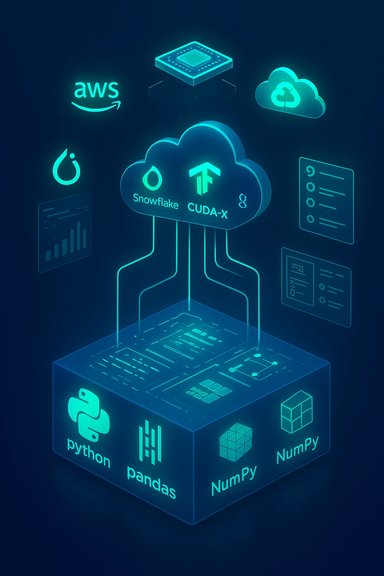
Adoption trends in late 2024–2025 show Python reclaiming territory as the de facto language for data work. Developer surveys recorded a notable jump in Python use—driven largely by AI and data workflows—while cloud and platform vendors baked GPU acceleration and managed ML services more deeply into their offerings. These two forces—language momentum and platform support—are the main drivers for which data‑mining and ML tools will dominate in 2026. Enterprise cloud providers are already central to that picture. Hyperscalers (AWS, Microsoft Azure, Google Cloud) supply the compute, managed model hosting, and enterprise governance that make production ML feasible at scale. Independent reviews and procurement‑focused analyses emphasize that hyperscalers remain the backbone of many ML pipelines because of their global footprint and integrated MLOps tooling. At the same time, data‑cloud vendors and specialist platforms are pushing GPU acceleration and library integrations into the data plane itself—shortening iteration cycles and reducing data movement.The Core Players: Libraries and Frameworks Poised to Dominate in 2026
Python and the scientific stack: Pandas, NumPy, scikit‑learn
Python’s ecosystem remains the lingua franca of data work. For tabular data, feature engineering and exploratory analysis, Pandas and NumPy remain foundational. scikit‑learn continues to be the fastest route from data to classical models—decision trees, gradient‑boosted ensembles, clustering, and preprocessing pipelines.- Why they matter in 2026:
- Mature APIs and stable semantics make them predictable for production pipelines.
- Tight integration with other tools (Dask, RAPIDS, cloud SQL connectors) reduces engineering overhead.
- Increasing GPU acceleration in data platforms (see Snowflake’s CUDA‑X integration) makes existing pandas/scikit workflows far faster without wholesale rewrites.
- Practical advantage for teams:
- Short learning curve for analysts and data scientists.
- Strong interoperability with model serving, feature stores and orchestration tools.
Deep learning: PyTorch and TensorFlow (and the rising ecosystem)
The two dominant deep‑learning frameworks will remain PyTorch and TensorFlow, but their roles keep diverging.- PyTorch
- Continues to dominate research and model prototyping thanks to its Pythonic API, dynamic graphs and Hugging Face / PaperswithCode integration.
- Community and ecosystem components (PyTorch Lightning, vLLM, TorchServe, Ray integrations) make it easier to move research prototypes toward scale.
- TensorFlow
- Retains strength in some production and mobile/embedded scenarios due to mature tooling (TF Serving, TFLite, TFX).
- Enterprise deployments at scale (historically) often favor TensorFlow where teams have established long production pipelines.
- What to expect in 2026:
- PyTorch will remain the predominant choice in R&D and for teams building generative and transformer‑based models.
- TensorFlow will remain relevant where organizations value long‑standing production toolchains or mobile/edge integration.
- Tooling that reduces framework lock‑in (Keras 3, interchangeable backends, model hubs) will rise, making the framework debate less binary over time.
Specialized libraries that matter for data mining workflows
- XGBoost / LightGBM / CatBoost for tabular modeling—still vital for structured prediction workloads.
- HDBSCAN / UMAP for clustering and dimensionality reduction—benefits significantly from GPU acceleration; Snowflake’s CUDA‑X integration specifically highlights speedups for clustering algorithms.
- Vector search and embeddings libraries (FAISS, Milvus, RedisVector, and cloud vector services) will be core where retrieval‑augmented generation and semantic similarity underpin the product.
Platforms and Services: Where Execution Happening at Scale
Hyperscalers: AWS, Azure, Google Cloud
Hyperscalers continue to be the pragmatic choice for building large ML pipelines because they provide end‑to‑end managed services, global scale, and enterprise governance.- AWS: breadth of services (SageMaker, Bedrock) and custom silicon for inference/training make AWS a default for large‑scale teams. Buyer guidance emphasizes validating region‑level GPU capacity.
- Microsoft Azure: integration with Microsoft 365, Entra/AAD and seat‑based Copilot products gives Azure an adoption advantage in Windows‑centric shops; Azure’s hybrid options remain a differentiator for regulated industries.
- Google Cloud (Vertex AI): strong data‑centric tooling (BigQuery + Vertex AI) and TPU support make Google Cloud especially attractive for analytics‑first teams.
Data‑cloud and platform innovation: Snowflake, VAST, and others
Data platforms are collapsing the gap between storage and compute by bringing GPU acceleration and data‑native libraries inside the platform.- Snowflake’s native integration of NVIDIA CUDA‑X libraries into Snowflake ML means pandas/scikit workloads and some clustering algorithms can run accelerated directly in the data cloud. That materially shortens iteration cycles and reduces the need to extract and pipeline terabytes of data to separate GPU clusters. Benchmark claims released by Snowflake show notable speedups for Random Forest, HDBSCAN and other algorithms—though real gains vary by dataset and workload.
- Storage and index platforms (VAST Data’s AI OS, unified namespace approaches) aim to reduce data movement for large embedding catalogs and agentic systems—again a direct productivity lever for teams building at scale.
MLOps, AutoML and agent platforms
- DataRobot and other AutoML vendors will continue to be important for structured data and governed model development where business users need rapid, auditable models. UiPath and process‑mining vendors will be the front door for operationalizing rule‑based and document workflows.
- Agent orchestration frameworks and “agent workforces” are becoming a new layer of infrastructure. Vendors and open‑source projects that manage agent state, memory, and orchestration are quickly moving from R&D to enterprise pilots. Expect specialist platforms—for orchestrating many concurrent conversational/agent sessions—to grow in importance in 2026.
Why These Tools Will Dominate: The Driving Forces
- Language gravity: Python’s continued growth and explicit AI use cases drive standardized stacks. A significant YoY increase in Python adoption across developer surveys in 2025 confirms this momentum. That trend directly benefits Pandas/NumPy/scikit and the PyData ecosystem.
- Research → Production pipeline improvements: PyTorch’s research dominance and maturing deployment tooling (TorchServe, PyTorch Lightning, Ray projects) smooth the path from prototype to production, giving teams a practical reason to standardize on PyTorch for LLMs and generative models.
- Platform integration and GPU accessibility: When data clouds (e.g., Snowflake) or hyperscalers expose GPU acceleration within the data plane, the cost, latency and complexity of model iteration fall—this alone will shift many organizations toward in‑place, data‑native workflows rather than exporting data for external GPU clusters.
- MLOps and governance maturity: Native model monitoring, lineage, and governance tools from major platforms reduce the operational risk that once blocked enterprise adoption. As governance tooling becomes standard, the remaining barriers are around capacity, cost management, and vendor lock‑in.
Strengths, Weaknesses and Practical Risks
Strengths
- Rapid prototyping and democratization: Python + PyTorch + managed services mean teams can go from idea to experiment quickly. This reduces time‑to‑insight for analytics and R&D teams.
- Reduced operational friction: Data clouds offering GPU acceleration and native libraries remove the need for complex ETL and separate GPU fleet management. For many enterprises this lowers TCO and speeds experimentation.
- Mature enterprise tooling: Hyperscalers now ship repeatable, auditable MLOps primitives (pipelines, model monitors, deployment patterns) which materially de‑risk production ML.
Risks and limitations
- Vendor‑reported numbers require scrutiny: Many speedup claims and adoption percentages are vendor‑reported and optimized for best‑case scenarios. Independent verification is still necessary for procurement and architecture decisions. Some analysis explicitly flags vendor reports that could not be independently confirmed. Buyers should require representative workload tests and contractable KPIs.
- Capacity and regional GPU availability: High‑end GPU capacity is a real constraint in many regions. Organizations planning large training runs must validate regional accelerator SLAs and consider hybrid or multi‑cloud options.
- Portability and lock‑in: The convenience of managed features and one‑click integrations comes with lock‑in risk. Designs that assume portability—containerized models, standard artifact formats, abstracted vector stores—reduce that risk but increase short‑term engineering cost.
- Model governance and hallucination risk: As RAG and retrieval‑grounded copilots proliferate, it’s essential to enforce retrieval correctness, logging, and human oversight. Enterprises deploying LLMs for knowledge work need robust retrieval pipelines and transparent audit trails.
What Windows‑centric and Enterprise Teams Should Do Now (Practical Roadmap)
- Inventory and classification (0–2 months)
- Catalog data sources, classify by sensitivity and residency, and map dependencies to downstream workloads.
- Create a prioritized list of quick wins (reporting automation, anomaly detection, customer triage).
- Pilot with a representative dataset (2–4 months)
- Run a 60–90 day proof‑of‑value using Python + Pandas/scikit and a single DL framework for model experiments.
- If using cloud acceleration, benchmark with representative data sizes to validate vendor GPU speedup claims. Demand representative benchmarks rather than marketing slides.
- Institutionalize MLOps (4–12 months)
- Deploy model monitoring, lineage tracking, and retraining thresholds.
- Use vector stores and retrieval grounding for LLMs; log prompts and retrievals for auditability.
- Scale and diversify (12+ months)
- Build challenger models, A/B tests, and enforce portability of critical model artifacts (ONNX, container images).
- Consider multi‑cloud or hybrid strategies for large training runs to avoid single‑region capacity risk.
Recommended Tooling Matrix for 2026 (Fast Reference)
- Data exploration / ETL:
- Pandas, NumPy, Dask, PyArrow
- Classical ML / tabular:
- scikit‑learn, XGBoost, LightGBM
- Deep learning / generative:
- PyTorch (research & prototyping), TensorFlow (production & mobile in some shops)
- Vector and RAG:
- FAISS, Milvus, RedisVector, managed vector services
- Platform / cloud:
- AWS (SageMaker/Bedrock), Azure (Azure ML + Copilot stack for Windows shops), Google Cloud (Vertex AI + BigQuery)
- Data‑cloud acceleration:
- Snowflake ML with CUDA‑X libraries for in‑place GPU acceleration.
SEO‑Friendly Takeaways for Practitioners
- Python remains the standard for data mining and machine learning; skill investment here pays off in 2026. Early 2025 surveys showed a meaningful increase in Python adoption tied to AI work.
- PyTorch leads research; TensorFlow still matters in production—pick the tool that best matches your team’s pipeline and staffing. Expect PyTorch to dominate academic/experimental model development while TensorFlow remains strong where long‑standing production infrastructure exists.
- Cloud + data‑cloud GPU acceleration is a game‑changer. Snowflake and hyperscalers are moving GPUs closer to the data, compressing iteration cycles and reducing data movement costs—test with your own workloads to quantify benefits.
- MLOps and governance are no longer optional. The platforms now include monitoring, lineage and role‑based controls—but teams must require auditable KPIs and validate vendor claims in production‑like tests.
Final Assessment: Who Will “Win” in 2026?
No single vendor or library will own data mining in 2026. Instead, dominance will be exercised by ecosystems and combinations:- The Python ecosystem (Pandas, NumPy, scikit‑learn) will remain central for data cleaning, pattern discovery and feature engineering because of interoperability and developer momentum.
- PyTorch (research & transformer work) and TensorFlow (some large production/mobile deployments) will continue to split the deep‑learning landscape; organizations will choose based on team skills, library ecosystem needs, and production constraints.
- Hyperscalers and data clouds (AWS, Azure, Google Cloud and Snowflake) will dominate where organizations need scale, governance and integrated GPU access—especially for enterprise deployments that must satisfy compliance and SLA requirements. Validate vendor claims and test representative workloads before committing to large runs.
- Specialist platforms (AutoML, agent orchestration, vector stores) will own important vertical and operational niches, enabling organizations to productize ML workflows faster than building everything in‑house.
The practical reality for Windows‑centric enterprises is straightforward: invest in Python data skills, pick a primary deep‑learning framework that matches your talent pool, and use cloud or data‑cloud GPU acceleration where it materially shortens iteration time. Combine that with disciplined MLOps, clear KPIs and portability guardrails, and your organization will be using the dominant data‑mining toolset of 2026—not because a single product won, but because an interoperable stack delivered measurable, governed value.
Source: Analytics Insight Which Data Mining Tools Will Dominate in 2026?
