• Thread Author
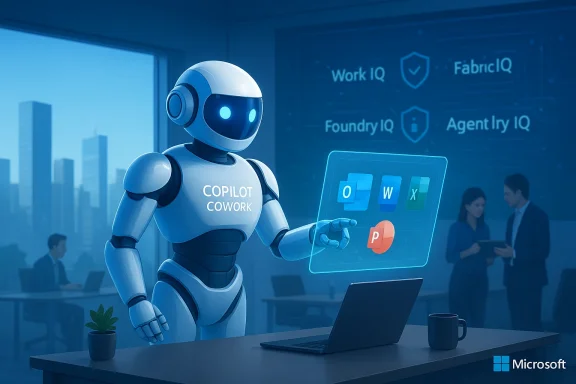
Microsoft’s Copilot has moved decisively from a conversational helper to a doing teammate: the company this week unveiled Copilot Cowork, a Claude‑powered agent designed to plan, execute and return finished work across Microsoft 365, accompanied by a new Agent 365 control plane and an enterprise commercial play that surfaces as a higher‑tier bundle for organizations.

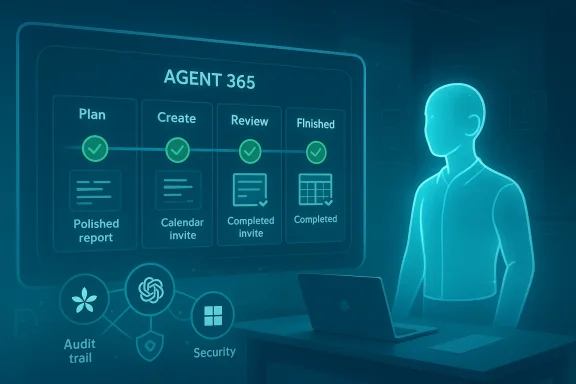
Futuristic agent dashboard shows Plan, Create, Review, Finished with green checkmarks.Background​

Microsoft’s Copilot program has been evolving for more than two years from a chat‑first assistive layer into a platform for agentic automation inside Windows and Microsoft 365. Early Copilot releases emphasized drafting, summarization and inline help; recent waves moved toward multi‑turn planning, document creation, and connectors that let Copilot act on user content across accounts. Those building blocks set the stage for the next step: agents that don’t just suggest, but do.
At the same time Microsoft has been deliberately unbundling model choice inside Copilot, adding Anthropic’s Claude family as selectable backends alongside existing providers. That multi‑model approach allows specific workloads to be routed to Claude models when the task or enterprise policy calls for it. The Copilot Cowork announcement formalizes a closer, research‑preview collaboration with Anthropic to deliver agentic, long‑running task automation.

What Copilot Cowork is — and what it promises​

From helper to coworker​

Copilot Cowork is explicitly framed as a coworker rather than an assistant. That means the agent is built to accept responsibility for multi‑step workflows — scheduling, assembling reports, building spreadsheets, researching topics, and returning finished outputs — not just to return suggestions or text snippets. Microsoft positions this as the practical next stage for workplace automation: hand the agent a goal, grant explicit, permissioned access, and receive a completed deliverable.
Key user‑facing capabilities Microsoft describes include:
  • Permissioned access to calendar, mail, files and apps so the agent can act with context.
  • Long‑running task orchestration — agents that can continue work beyond a single chat interaction.
  • Outputs returned as finished artifacts (documents, spreadsheets, schedules) rather than ephemeral suggestions.
  • Integration with Copilot Studio and the Agent 365 control plane to manage, govern and instrument agent behavior at scale.

Why Claude?​

Microsoft’s selection of Anthropic’s Claude models for Cowork follows the company’s broader decision to offer model choice inside Copilot. Claude’s capabilities — particularly in multi‑step reasoning and agentic behavior in Anthropic’s Cowork experiments — made it a natural fit for this kind of task‑oriented agent. Microsoft’s approach isn't replacement of its existing models; it’s additive: customers can route specific workloads to Claude when that model’s traits are desired.

Architecture and product surfaces​

Agent 365 control plane​

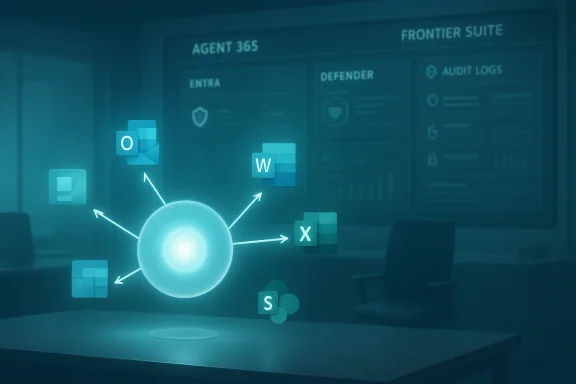
Copilot Cowork will be managed through a new Agent 365 control plane — a governance and orchestration layer intended to let IT and admin teams provision agents, control data flows, and monitor agent activity across the enterprise. Agent 365 is presented as the instrument for enforcing policies, audit trails, and operational settings necessary for deploying agentic AI in regulated environments. Microsoft has signaled this control plane will be central to how Cowork is adopted in large organizations.

Copilot Studio and “Computer Use”​

Copilot Studio now includes capabilities often described as “computer use” — a set of tools that let agents perform UI‑level interactions on desktop and web apps. That is, agents can operate mouse and keyboard actions in a controlled way to interact with legacy systems and web portals that have no API. This is a crucial enabler for real‑world automation where backend integrations are unavailable. It also raises important security and reliability questions that IT teams must manage.

Multi‑model orchestration​

Copilot is becoming an orchestration layer for multiple LLM backends. The Researcher agent and Copilot Studio can now select between OpenAI models, Microsoft‑hosted models, and Anthropic Claude variants depending on workload, policy, or developer configuration. For Cowork, Anthropic’s Claude engines are used in a research‑preview context to run long‑running, agentic tasks. Microsoft emphasizes opt‑in selection and tenant admin controls rather than an automatic or forced rerouting of prompts to third‑party models.

Enterprise packaging and licensing: the E7 signal​

Microsoft’s announcements include a commercial framing that bundles agent management and agentic capabilities into a premium enterprise offering — referenced in internal materials as a higher‑tier E7 bundle. The E7 positioning signals that Microsoft intends Copilot Cowork and Agent 365 to be a seat‑based, auditable enterprise product rather than a simple add‑on for consumer subscribers. That packaging will affect procurement, licensing costs, and rollout strategies for IT organizations.
Be cautious, however: at the time of the preview the publicly available pricing and final GA (general availability) dates were not fully baked into Microsoft’s public briefings. Enterprises should treat any commercial commitments as subject to change until Microsoft posts formal pricing and terms. Where specific dates or price points are not included in Microsoft’s preview materials, those items remain unverifiable and should be validated with Microsoft sales channels.

Security, privacy and governance: the hard questions​

Permissioned access is necessary, not optional​

Microsoft highlights permissioned access as a critical design requirement: Cowork agents act only when a user or tenant explicitly grants them access to mail, calendar, files, or apps. That model is meant to reduce accidental exposure while enabling automation. But permissioned access alone does not eliminate risk: misconfigured permissions, over‑broad scopes, or lingering tokens can still create exposure vectors that IT must monitor.

Data handling and third‑party model hosting​

Because Copilot Cowork uses Anthropic’s Claude models in preview, enterprises must give attention to where data is processed and stored. Microsoft’s multi‑model approach includes options that may route workloads to third‑party model hosts. Microsoft has indicated opt‑in behavior and admin controls, but the exact boundaries of data residency, logging, and third‑party retention policies depend on contract terms and implementation choices. Organizations in regulated sectors should insist on concrete, written guarantees before routing sensitive data through third‑party models.

Auditability and explainability​

Copilot Cowork is designed to return finished artifacts, which raises two audit requirements:
  • A clear provenance trail showing which agent steps produced each part of an output.
  • Verifiable logs that capture agent actions (what it accessed, what it changed, and when).
Microsoft’s Agent 365 control plane is positioned to provide those capabilities, but customers should validate the granularity and retention of logs, the exportability of audit records, and whether logs meet their compliance frameworks. If you need chain‑of‑custody level detail for regulated audits, validate those assumptions with Microsoft and insist on test cases.

UI automation and brittle automations​

The “computer use” and UI‑level automation features are practical but brittle by nature: agents that click through web pages or emulate desktop interactions can break when interfaces change. Organizations must expect maintenance overhead and define guardrails:
  • Use UI automation only where APIs are unavailable and monitor for failures.
  • Combine UI interactions with log‑driven health checks and fallback workflows.
  • Limit UI automation scopes to narrowly scoped automation tasks with robust error handling.

Operational and business impact​

Productivity gains — real but variable​

If Copilot Cowork works as marketed, teams will see meaningful reductions in repetitive knowledge‑work: meeting scheduling that reconciles complex calendars, multi‑document research briefs, or spreadsheet construction from natural‑language prompts. In practice the productivity delta will vary by task complexity, data quality, and the amount of human supervision retained. Early adopters should pick high‑value, low‑risk workflows for pilots.

Cost and governance tradeoffs​

Agentic automation shifts budget from manual labor to platform and governance costs. Organizations will need to weigh:
  • License and seat costs (E7 tier and agent seats).
  • Model consumption costs if routing to external backends like Claude.
  • Engineering and SRE effort to maintain automation reliability.
  • Compliance and legal review costs for data flows.
Treat agent deployment as an organizational program: budget for governance, runbooks, and people who can own agent outcomes.

IT and security team roles​

Successful rollouts depend on tight collaboration between product teams and IT/security. Practical actions include:
  • Creating a pilot governance policy and a whitelist of allowed agent tasks.
  • Establishing least‑privilege permissions for Cowork agents.
  • Enabling comprehensive auditing via Agent 365 and validating log exports.
  • Running red‑team tests to simulate agent misuse or credential leakage.

Risks and recommended mitigations​

1. Hallucinations and incorrect outputs​

Risk: Agents may synthesize plausible but incorrect facts or spreadsheets with erroneous formulas.
Mitigation:
  • Require human review for any outputs used in decision‑making.
  • Configure Copilot Cowork to annotate outputs with source citations and provenance metadata where available.
  • Use the Agent 365 control plane to enable verification and automated sanity checks.

2. Over‑privileged access and data leakage​

Risk: An agent with excessive permission could expose sensitive mail, calendars, or files.
Mitigation:
  • Apply least privilege; grant access just long enough for the task and revoke tokens automatically.
  • Use conditional access and session limits tied to Agent 365 policies.
  • Monitor agent sessions in near real time and configure alerting for anomalous access patterns.

3. Third‑party model data residency and retention​

Risk: Routing data to Anthropic or other model hosts may violate data residency or contractual obligations.
Mitigation:
  • Validate model hosting locations and retention policies in procurement.
  • Keep high‑sensitivity workflows on models with strictly controlled data flow or on‑prem/enterprise‑hosted options when available.
  • Require data minimization and redaction where appropriate.

4. Automation brittleness​

Risk: UI automation breaks when interfaces change.
Mitigation:
  • Prefer APIs where possible.
  • Implement automated test suites that exercise UI automations on a schedule.
  • Use feature flags to disable agents rapidly if errors spike.

How this compares to competitive moves​

Google, Anthropic, and other cloud vendors are pursuing similar visions: agents as workflow partners embedded inside productivity suites. Google’s Workspace has been evolving toward AI co‑authoring and agentic features inside Docs and Sheets, while Anthropic has been experimenting with Cowork‑style desktop agents that act on files in user‑designated folders. Microsoft’s differentiator is its tight integration with Microsoft 365, the Agent 365 governance plane, and the orchestration layer that offers model choice inside a single enterprise product. That matters for enterprises that already run critical workflows on Office apps and need centralized governance.

Practical rollout checklist for IT leaders​

  • Identify low‑risk, high‑value pilot workflows (e.g., recurring reporting, calendar triage).
  • Define a permissions and provisioning policy for Cowork agents (least privilege, time‑bound tokens).
  • Validate Agent 365 auditing capabilities and log export formats against compliance requirements.
  • Test failure modes for UI automations and implement monitoring and rollback mechanisms.
  • Conduct a legal and privacy review for model routing and third‑party processing.
  • Budget for license, consumption, and ongoing SRE/maintenance costs.
  • Train end users on when to trust agent outputs and how to escalate uncertain results.

Strengths and opportunities​

  • Real productivity uplift: Automating multi‑step, repetitive workflows can unlock substantial time savings and let knowledge workers focus on higher‑value tasks. Early previews suggest Copilot Cowork can produce finished deliverables rather than drafts, which is a meaningful change in outcome.
  • Enterprise governance first: The introduction of Agent 365 as a control plane demonstrates Microsoft’s awareness that agentic AI needs centralized management, which is crucial for regulated customers.
  • Model choice: Offering Anthropic’s Claude as an option reduces single‑vendor risk and lets organizations route workloads to the model best suited for a task. This is a pragmatic approach that can accelerate adoption across diverse enterprise needs.

Key limitations and unresolved questions​

  • Final commercial terms and GA timing remain unclear. Microsoft’s preview materials and research‑preview timelines leave pricing and availability subject to later announcements; organizations should not assume immediate general availability or fixed pricing based on preview messaging alone.
  • Exact data residency guarantees for third‑party model routing are not public in preview materials. Enterprises with strict residency requirements will need to secure contractual commitments before routing sensitive workloads through third‑party models. This is a material, verifiable risk until Microsoft publishes firm contractual terms.
  • Operational maintenance overhead for UI automations. While “computer use” unlocks legacy automation, it also inherits the classic brittleness of RPA‑style approaches. Expect a nontrivial maintenance burden.
Where claims are not fully documented in Microsoft’s preview notes — for example, precise SLA commitments for agent uptime, per‑seat pricing for E7, or model retention windows at the storage level — treat those points as unverified until Microsoft posts formal documentation or contract terms.

Recommendations for buyers and decision makers​

  • Start small and measure: run pilots that have clearly measurable KPIs (hours saved, time to completion, error rate).
  • Insist on strong audit visibility from Agent 365 before expanding agent scopes.
  • Bake security into procurement: require model hosting locality, retention policies, and incident response SLAs in writing.
  • Train staff on agent behavior expectations and keep humans in the loop for high‑risk outputs.
  • Maintain an internal register of agent tasks and prescriptive runbooks for when agents fail or produce unexpected results.

Conclusion​

Copilot Cowork marks a meaningful inflection point: Microsoft is moving Copilot from a conversational assistant to an agentic coworker capable of taking responsibility for end‑to‑end tasks. The research preview — built with Anthropic’s Claude models and managed through the Agent 365 control plane — combines promising productivity gains with significant governance and operational challenges.
For enterprises, the opportunity is real: automate repetitive, multi‑step workflows and reclaim knowledge worker time. But the risks are equally tangible: data residency, auditability, automation brittleness, and commercial uncertainties demand careful piloting, strict governance, and legal scrutiny before broad rollouts. Microsoft’s multi‑model orchestration and Agent 365 acknowledge these tradeoffs, but the burden falls on IT and security teams to translate preview promises into safe, reliable production practice.
Adopt with discipline, instrument with auditability, and treat agents as new organizational teammates that must be hired, managed, and offboarded with the same rigor as any human coworker.

Source: Windows Report https://windowsreport.com/microsoft...lot-cowork-agent-to-automate-workplace-tasks/
 

Microsoft’s latest move to turn Copilot from a conversational helper into an active, doing teammate landed this week with the public announcement of Copilot Cowork — an agentic AI designed to plan, execute, and coordinate multi‑step workflows across Microsoft 365, running as a permissioned, long‑running assistant that returns completed outputs rather than just suggestions. This capability, built in collaboration with Anthropic and introduced alongside a new Agent 365 control plane and a Microsoft 365 E7 Frontier Worker offering, signals a major shift in Microsoft’s Copilot strategy: the company is moving from “answers” to end‑to‑end “actions” inside enterprise systems.

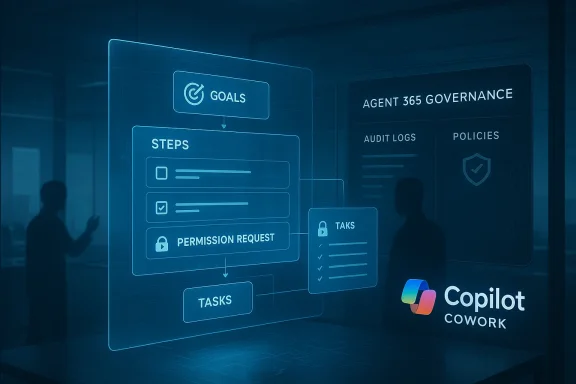
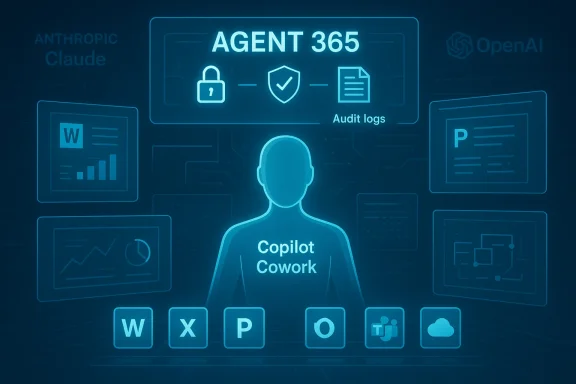
Blue holographic workflow board showing goals, steps, tasks, and governance at Copilot Cowork.Background​

From chat to agents: how Copilot evolved​

What began as a chat‑first assistant inside Windows, Edge, and Microsoft 365 has progressively expanded into a platform of embedded agents and execution surfaces. Over the last year Microsoft added features such as in‑canvas Agent Mode in Office apps, Copilot Actions and an Agent Workspace in Windows, and a programmatic layer for no‑code agent creation in Copilot Studio. Those architectural building blocks — planning, execution, connectors to accounts and files, and— are now being assembled into agentic products like Copilot Tasks and Copilot Cowork that are explicitly designed to act on behalf of users over time.

What Microsoft announced this week​

Microsoft’s announcements bundle three tightly related items:
  • Copilot Cowork — an Anthropic‑powered agent that can accept natural‑language goals, create multi‑step plans, obtain explicit permissions, and execute workflows across mail, calendar, files and apps within Microsoft 365. Cowork is initially available as a research preview and is being piloted with select customers.
  • Agent 365 — a management and governance surface for creating, monitoring, and applying policies to organizational agents; this is Microsoft’s control plane for agent lifecycles, credentials, auditing and policy enforcement.
  • Microsoft 365 E7 (Frontier Worker Suite) — a new enterprise bundle that combines Microsoft 365 E5 with Copilot, Agent 365, Work IQ and related security tooling. Microsoft has published availability and pricing for the E7 Frontier offering (general availability on May 1, priced at $99 per user per month) while Cowork will be available to Frontier participants and research preview users in March.
These announcements are the latest step in a roadmap Microsoft has described publicly for “agentic” AI — a category of experiences that delegate tasks to AI with governance controls, audit trails and human review gates. Copilot Cowork and Agent 365 are the enterprise‑grade articulation of that roadmap.

How Copilot Cowork works​

Architecture and third‑party model partnerships​

Copilot Cowork is notable because Microsoft explicitly acknowledges external model partners in its design: the Cowork agent leverages Anthropic’s Claude family technology, integrated into Microsoft’s Copilot stack to provide the planning and reasoning layer for multi‑step workflows. Microsoft’s blog and product briefings emphasize an integrated stack: planning and orchestration (Cowork agent), connectors to Microsoft 365 services (mail, calendar, OneDrive, SharePoint, Teams, apps), and an Agent 365 management layer for governance and monitoring.
Anthropic’s involvement matters for two reasons. First, it shows Microsoft is building a multi‑model ecosystem rather than relying solely on one provider. Second, it raises integration and compliance questions enterprises will want answered — which data leaves a tenant, how model inference is isolated, and what contractual obligations apply. Microsoft’s messaging emphasizes research previews and controlled pilots for exactly these governance and compliance conversations.

Permissioned access and auditability​

A central design point for Cowork is explicit permissioning: agents request access scopes (mail, calendar, file lockers, etc.) and administrators can apply policies through Agent 365. Microsoft’s Copilot Task announcements and Copilot blog documents make clear that long‑running tasks will surface audit logs, let users pause or cancel running agents, and require elevated approvals for consequential actions (spending money, sending external messages, etc.). That audit trail and control surface is essential for enterprise acceptance.

Execution model: planning, sandboxing, and reporting​

Copilot Cowork decomposes user goals into multi‑step plans, then executes steps in a managed environment. Microsoft has described analogous functionality in Copilot Tasks: the system spins up controlled compute (sometimes a browser‑driven environment) to interact with web pages or internal apps and reports progress in a dashboard where human operators can intervene. The Cowork model expands this to broader 365 workflows — orchestration across Teams, Outlook, SharePoint and third‑party connectors. The running‑task dashboard is a recurring pattern: visibility, human oversight, and the ability to stop or modify plans at any time. Cowork can do: practical scenarios

Examples Microsoft highlighted and likely early use cases​

Copilot Cowork is framed for long‑running, knowledge‑worker workflows and frontline scenarios where tasks are repetitive or cross multiple systems. Early examples include:
  • Scheduling and coordination: find windows, book meetings, update attendees, and create follow‑up tasks.
  • Procurement and approvals: assemble vendor quotes, create requisitions, and shepherd approvals through modeled workflows.
  • Document generation and completion: draft contracts, iterate with inline feedback, and deliver finalized documents into a chosen SharePoint folder.
  • Retail and commerce integrations: end‑to‑end purchase flows (Copilot Checkout) where the agent completes the transaction on behalf of a user.
These are not theoretical: Microsoft has been piloting agent templates for retail and frontline tasks, and Copilot Cowork is presented as the enterprise‑grade agent to run these templates at scale.

Why Cowork matters for productivity​

The practical value of Cowork lies in the elimination of repetitive orchestration work that characterizes much corporate knowledge work. Instead of copying content across apps, manually reconciling calendars, or repeatedly pulling reports, an agent can perform these steps autonomously under human supervision and return a finished artifact — a ready‑to‑share document, a reconciled spreadsheet, or a completed order. For knowledge teams and frontline staff this could materially reduce overhead and accelerate throughput.

Packaging, availability and cost​

E7 Frontier Worker Suite and timelines​

Microsoft paired the Copilot Cowork reveal with the new Microsoft 365 E7 (Frontier Worker) Suite. Microsoft’s regional releases indicate the E7 bundle unifies E5 security and compliance features with Copilot, Agent 365, Work IQ, and other agentic tooling. Public documentation and press coverage list general availability of E7 on May 1 and a per‑user price of $99 per month for the Frontier Worker SKU; Copilot Cowork is slated for research preview access in March and wider availability through the Frontier program later. Enterprises should budget for the additional per‑user cost and prepare governance plans as part of any pilot.

Licensing implications: agents as “users”​

Microsoft leadership has publicly suggested a future where AI agents are treated like users in identity and policy systems — agents with identities, mailboxes, Teams presence and seats to manage. That model implies enterprises may need to allocate licensing or seats to digital workers as they scale agents across processes, which is exactly the financial and operational model the E7 pricing and Agent 365 controls appear designed to support. Industry coverage and commentary predict Microsoft will monetize agent deployments either via seat‑style licensing or new metering approaches. This has important implications for budgeting and long‑term vendor lock‑in.

Governance, compliance and security — strengths and concerns​

Built‑in governance primitives​

Microsoft is clearly designing Copilot Cowork for regulated customers: the Agent 365 control plane provides policy enforcement, permissions gating, monitoring and an audit trail. Built‑in pause/cancel controls, explicit consent for sensitive actions (payments, external messages), and centralized visibility are all positive signs that Microsoft understands enterprise requirements and compliance expectations. For organizations with mature identity and policy frameworks, Agent 365 promises to plug into existing controls.

Attack surface, prompt injection, and data exfiltration risks​

Despite governance controls, agentic AI substantially increases attack surface and risk vectors. Agents that access mail, files and web apps broaden the pathways by which data can be exfiltrated or manipulated. Security researchers have raised the specter of indirect prompt injection — where an agent is tricked by content in the environment into taking unsafe actions — and warned that agents’ programmatic access to systems could be misused if not tightly controlled. Microsoft’s own guidance and experimental features documentation acknowlegs the need for additional safeguards. Enterprises should treat agent pilots as high‑risk experiments until controls and auditing are mature.

Supply‑chain and third‑party model risk​

Copilot Cowork’s Anthropic integration raises supply‑chain considerations for enterprise security and compliance teams. Questions enterprises should ask before adopting Cowork include: where does inference run (on Microsoft cloud, Anthropic cloud, or a hybrid), what data is transmitted for model evaluation, how are logs stored and protected, and what contractual assurances (including data residency and breach notification) exist. Microsoft’s pilot posture is appropriate here — enterprises should require clear contractual SLAs and data processing details before deploying agents on sensitive workloads.

Organizational readiness: people, process and tooling​

What IT and security teams must do first​

Introducing agentic AI is not simply a technical rollout — it’s an organizational change that touches identity, procurement, compliance, and employee roles. Recommended steps for IT and security teams running early pilots:
  • Define clear, scoped pilots with measurable business outcomes (e.g., reduce time to create vendor contracts by X%).
  • Map data flows and identify sensitive connectors; apply the principle of least privilege for agent access.
  • Configure Agent 365 policies to require human approval for high‑risk actions and ensure audit logging is enabled.
  • Run adversarial testing to probe for prompt‑injection or data‑leak scenarios.
  • Train operational owners and designate responsible humans who can pause or revoke agents.

Change management and governance​

Deploying agents will also change how work is assigned and who owns outcomes. Organizations should update process documentation, reassign oversight duties (e.g., agent operators), and build SLAs for agent behavior. Communications to end users should clarify when agents will act autonomously, what approvals are required, and how to contest or correct agent outcomes. These human controls will be cal ones for adoption and risk mitigation.

Strengths — what Microsoft gets right​

  • Integration‑first approach: Cowork is designed to plug directly into the apps enterprises already use — Outlook, Teams, SharePoint, OneDrive — reducing friction between idea and execution. This tight integration is one of Microsoft’s strategic advantages.
  • Governance as a first‑class requirement: Agent 365 and the audit controls show Microsoft accepts enterprise constraints and regulatory needs, not an afterthought. Built‑in pause/cancel and explicit consent flows are valuable design choices.
  • Multi‑model flexibility: Partnering with Anthropic indicates Microsoft is building a model‑agnostic architecture, which can improve resilience, choice, and capability diversity for customers.
  • Operational visibility: The dashboard and task monitoring concepts give IT and business leaders the control surfaces they need to make agentic automation observable and auditable.

Risks and open questions​

  • Data residency and model inference location: Enterprises will demand clarity on whether sensitive content is routed outside their control and what protections exist for logs and telemetry. This is non‑trivial for regulated industries.
  • Prompt‑injection and supply‑chain attacks: Agents increase attack surface; developers and security teams must build defenses for both direct and indirect (environmental) manipulation. Microsoft’s guidance is evolving, but organizatidefault safety.
  • Licensing and cost at scale: Treating agents as users — and charging per AI seat or agent — could materially raise costs as organizations automate more workflows. The E7 price signal suggests Microsoft expects enterprises to pay at a premium for managed agent capabilities; CFOs will want models and caps.
  • Vendor lock‑in and interoperability: Deep integration across Microsoft 365 can deliver huge productivity benefits — but it increases dependence on Microsoft tooling and model providers, complicating future migration or multi‑cloud strategies.
  • Accuracy and trust in autonomous outputs: Agents that act on behalf of humans amplify the consequences of hallucinations or incorrect actions. Enterprises must mandate verification steps for high‑stakes outcomes and track agent error rates.

Recommendations for IT leaders evaluating Copilot Cowork​

  • Run a narrowly scoped pilot: Choose a single high‑value, repeatable workflow where the cost of occasional errors is low but the productivity upside is high.
  • Require logged approvals for any outbound communication or financial transaction initiated by agents.
  • Demand transparency from vendors: contractually require details on where AI inference runs, what data is retained, and how incident response will be handled.
  • Model ongoing costs: include licensing, storage, monitoring and human‑in‑the‑loop costs when estimating ROI.
  • Prepare a phased rollout plan that starts with pilot stages, moves to business unit adoption, and only then expands to enterprise scale.

Final analysis — a pragmatic leap, not a silver bullet​

Copilot Cowork represents a pragmatic and fast‑moving evolution in AI for the enterprise. Microsoft has stitched together model partnerships, app integrations, and a governance control plane in a way that makes autonomous, long‑running agents feasible for real organizations. The promise is significant: less busywork, faster cycle times, and the ability to route routine, cross‑system work to delegated agents so humans can focus on judgment tasks.
At the same time, Cowork exposes enterprises to new operational and security risks. The technology’s success will hinge on how well Microsoft and its partners operationalize transparency, isolation, auditability and human oversight. Licensing and cost models — and the idea of treating agents as first‑class “users” — will reshape how organizations budget for AI and how IT architects think about identity and governance.
For IT leaders, the right posture is cautious curiosity: run targeted pilots, insist on contractual clarity for data handling and inference, harden policies and monitoring, and scale only when both business value and risk posture are proven. Copilot Cowork is a powerful new tool in the AI toolbox — but it must be integrated thoughtfully into organizational practice to become an enduring productivity multiplier rather than a novel attack surface.

Microsoft’s agentic push has transformed Copilot’s role: from a helper that answers questions to a teammate that gets work done. The coming months of research previews and Frontier program pilots will determine whether enterprises can capture the upside while controlling the downside — and whether Microsoft’s new pricing and governance model will become the industry norm for the era of digital coworkers.

Source: Neowin Microsoft's new Copilot Cowork moves beyond chat to execute real-world tasks
 

Microsoft’s Copilot has quietly crossed a threshold: it is no longer just a drafting and summarization helper but is being positioned as a bona fide, autonomous coworker that can plan, execute, and return finished work on behalf of employees — built in close technical partnership with Anthropic and shipping as a research-preview experience called Copilot Cowork inside Microsoft 365.

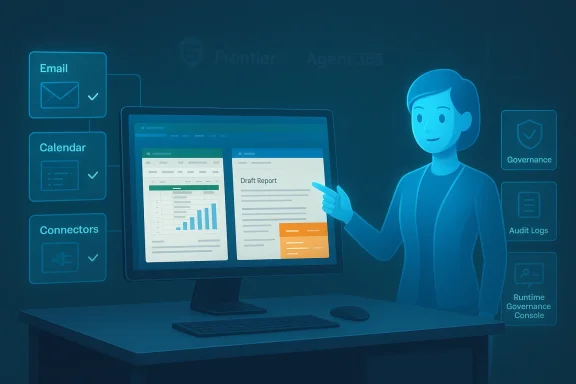
A person points to a monitor showing charts and a draft report in a blue, high-tech dashboard.Background​

Microsoft’s Copilot journey began as an assistive, conversational layer grafted across productivity apps. Over the past two years that assistant has expanded into a platform that can call actions, connect to services, and coordinate multi-step tasks. Microsoft’s recent announcements consolidate that evolution into a formal enterprise play: a new Copilot Cowork product developed with Anthropic, a freshly promoted Microsoft 365 E7 enterprise tier, and an Agent 365 control plane intended to manage fleets of agents across an organization.
Anthropic — the safety-focused AI startup behind the Claude family of models — released its own agentic product, Claude Cowork, as a research preview earlier this year. Claude Cowork demonstrated file-scoped, plugin-enabled agents that can read, edit, and create documents and run multi-step workflows with limited human supervision. Microsoft’s Copilot Cowork is explicitly powered by Anthropic technology; Microsoft characterizes the integration as bringing the “technology that powers Claude Cowork into Microsoft 365 Copilot,” with a limited research preview and Frontier-program access planned in March.

What is Copilot Cowork?​

A practical definition​

Copilot Cowork is Microsoft’s agentic extension of Copilot that aims to execute work end-to-end rather than simply offering drafts or suggestions. It is designed to:
  • Accept natural-language direction for complex, multi-step tasks (for example: "Audit Q1 spend, consolidate vendor invoices into a spreadsheet, and schedule a review meeting").
  • Use permissioned access to calendar, email, files, and application connectors to carry tasks through multiple systems.
  • Return finished outputs (a completed spreadsheet, a draft report, a created slide deck) rather than a set of next-step suggestions.
Microsoft is positioning Copilot Cowork as a research-preview experience first — piloted with select customers — with broader access through the company’s Frontier program. That staged rollout lets Microsoft test governance, observability, and commercial terms while Anthropic’s file-aware agent technology proves itself in enterprise contexts.

How it differs from legacy Copilot behavior​

Traditional Copilot scenarios were largely interactive: a user asks, Copilot drafts, the user edits, and the result is completed by humans. Copilot Cowork is engineered to close the loop more often, automating interactions across apps and returning completed artifacts. That requires richer connectors and more robust governance — effectively converting Copilot from an assistant into a worker in the organizational graph.

Why Microsoft tapped Anthropic​

Complementary technical strengths​

Anthropic’s Claude Cowork demonstrated several features that map directly to Microsoft’s enterprise needs:
  • File-scoped autonomy: agents that operate within a sandboxed folder or connector, reducing the scope of access and exposure.
  • Plugin and connector framework: enabling file-system actions and app integrations that are required for real-world workflows.
  • Safety-focused model design: Anthropic emphasizes constitutional and safety-first model behavior, which neatly complements Microsoft’s governance narrative.
Microsoft’s move is part of a broader multi-model strategy. The company has been routing Copilot workloads to multiple model vendors — OpenAI, Anthropic, its own Azure Foundry models, and custom enterprise models — to optimize for cost, latency, accuracy, and policy constraints. Adding Anthropic’s agentic technology is therefore less about flipping loyalty and more about engineering the “right model for the right job.”

A practical hedge and a competitive answer​

From a business-strategy perspective, the Anthropic partnership reduces concentration risk associated with any single model vendor and gives Microsoft tangible differentiation in the rapidly crowded agent field. It also gives Microsoft a way to respond to market momentum around Claude Cowork — which quickly captured attention for its agent-style interactions — by offering enterprises a Microsoft-vetted path to those capabilities inside Copilot.

The enterprise architecture: E7, Agent 365, and Frontier​

Packaging agent capabilities for IT​

Microsoft bundled many of these announcements in a commercial and operational strategy that targets enterprise customers:
  • Microsoft 365 E7: a premium suite that consolidates advanced Copilot agent features, governance, and analytics into one seat-based product offering. Early coverage suggests the E7 tier is aimed at organizations that want to run agent-driven workflows at scale.
  • Agent 365 control plane: a centralized management layer for identity, lifecycle, auditing, and policy enforcement across agent deployments. Agent 365 is Microsoft’s attempt to treat agents like first-class, auditable entities in an enterprise directory.
  • Frontier program: Microsoft’s controlled preview channel for high-risk or high-value AI experiments, used to test Copilot Cowork with select customers before broader availability.
These elements are intended to reduce one of the principal enterprise frictions for agent adoption: deployability with control. Rather than letting teams run unsanctioned agents, E7 + Agent 365 provide a managed path that integrates with Microsoft’s identity and security stack.

Runtime governance and Copilot Studio​

A practical, technical safeguard Microsoft has built into its agent story is runtime governance: an enforcement point that can intercept an agent’s planned actions during execution and route those to external monitors for approval or blocking. Copilot Studio — Microsoft’s low-code authoring surface for building agents — now supports near-real-time controls that allow external monitors (Microsoft Defender, third-party XDR, or custom endpoints) to approve or deny an agent’s actions as they run. This is a crucial control that attempts to reconcile automation power with enterprise security needs.

Security, privacy, and compliance: where the rubber meets the road​

Permissioned access is necessary but not sufficient​

Copilot Cowork’s ability to access mail, calendar, files, and app connectors is what makes the product powerful — and vulnerable. Microsoft is framing this access as permissioned: administrators and users grant specific scopes, and the Agent 365 control plane should enable visibility and lifecycle management. But permissioned access is only one layer; enterprises must also ensure:
  • Proper identity binding and least-privilege policies.
  • Strong logging, telemetry, and attestation for all agent actions.
  • Deterministic approval and fallback logic for failed or risky actions.

Real risks enterprises must evaluate​

There are several measurable and non-measurable risks IT leaders must consider:
  • Data exfiltration and lateral access: An agent that can open multiple documents and call external connectors creates new vectors for leakage if controls are misapplied.
  • Automation errors: Agents can make high-impact mistakes (wrong vendor payments, deleted records). You must design robust human-in-the-loop checks for critical steps.
  • Prompt injection and adversarial inputs: Agent orchestration raises the stakes for malicious instructions embedded in apparently legitimate content.
  • Auditability and legal defensibility: Compliance regimes require transparent logs and retention mechanisms; agent actions must be traceable to human approvals.
Microsoft’s runtime approval mechanisms and the Agent 365 control plane are important mitigations, but they do not eliminate the need for careful operational design. The community threads we’ve observed emphasize that organizations are already demanding sub-second approval latency, integrated SIEM/XDR coverage, and deterministic policy enforcement before they’ll deploy agentic systems to production.

Model orchestration and the Model Context Protocol​

Multi-model routing in practice​

When an enterprise request enters Copilot, Microsoft’s orchestration layer can route that request to the model best suited to the task: Anthropic’s agentic models for file-driven, multi-step tasks; OpenAI or Azure Foundry models for other workloads; or an enterprise’s own tuned model. Microsoft calls this a multi-model approach and has emphasized that customers should have choice — both for performance and for policy alignment.

Model Context Protocol (MCP) and data provenance​

Anthropic and other vendors have introduced protocols and metadata standards intended to preserve context, provenance, and model facts as agents act. MCP (Model Context Protocol) and similar efforts aim to provide richer, verifiable context to each model call so enterprises can trace which model produced which output and why. These mechanisms are critical for audit and for troubleshooting agent decisions post-hoc. Microsoft’s integration work with Anthropic is leveraging these sorts of protocols to maintain consistent behavior across model boundaries.

Commercial and strategic implications​

A more plural AI ecosystem​

Microsoft’s pivot to multi-vendor Copilot has three immediate strategic effects:
  • Reduced vendor concentration: relying on Anthropic as well as OpenAI and Microsoft’s own models lowers single-vendor operational risk.
  • Enhanced bargaining power: Microsoft can balance price and performance across providers for different workload classes.
  • Market signaling: deep technical collaboration with Anthropic validates the credibility of agent-first products and signals Microsoft’s urgency to defend enterprise productivity share.

For Anthropic, a distribution win​

Being embedded inside Microsoft 365 — even as a research-preview option — gives Anthropic enterprise reach that would be hard to achieve independently. Claude Cowork’s early enthusiasm among knowledge workers nudged Microsoft toward a direct partnership; for Anthropic, the Copilot integration accelerates enterprise trials and sets the company up as a strategic alternative to the OpenAI–Microsoft axis. That positioning will be closely watched by investors and incumbents alike.

Competitive reactions​

Google, Meta, and other cloud providers are racing to make their models and assistant frameworks more enterprise-ready. Microsoft’s E7 and Agent 365 packaging is a direct competitive response: make it easier for IT to adopt agentic workflows without surrendering governance. The battleground for the next 12–24 months will be enterprise safety guarantees, auditability, and the total cost of ownership for agentic automation.

Practical guidance for IT leaders: prepare, pilot, govern​

Below is a pragmatic checklist to prepare an organization for Copilot Cowork pilots.
  • Inventory the high-value, low-risk candidate workflows that can benefit from agent automation (e.g., recurring report generation, meeting preparation, document consolidation).
  • Establish an agent sandbox and a test tenancy in the Microsoft Frontier program or equivalent pilot channel.
  • Define explicit scopes and least-privilege connector policies for agents: treat agents like service accounts with time-limited credentials.
  • Implement runtime approval and monitoring integrations with SIEM/XDR and Microsoft Defender; test sub-second approval workflows for critical actions.
  • Create human-in-the-loop checkpoints for any step that can incur financial, legal, or reputational damage.
  • Maintain immutable logs and exportable audit trails for agent actions, with retention schedules that meet compliance needs.
  • Evaluate cost models: agentic workflows can shift costs from labor to compute and model inference; model routing will be an important cost lever.
  • Pilot with cross-functional governance — include legal, compliance, security, and finance in the early stages.
These steps are intentionally sequential: start with limited-scope pilots, measure error rates and control efficacy, then expand into more consequential workflows.

Developer and partner ecosystem: plugins, connectors, and extensibility​

Plugins and enterprise connectors​

Anthropic’s Cowork and similar agent platforms rely on plugin ecosystems to bridge model capabilities with real-world apps. Microsoft’s advantage is deep access to Office and Microsoft Graph — a preexisting, widely-used surface for connectors. The expectation is that enterprise partners will rapidly build sanctioned connectors that can be packaged and attested for safety.

ISVs and integrators will be in demand​

System integrators and independent software vendors (ISVs) that can build safe, auditable connectors and governance templates will find a ready market. Microsoft’s Agent 365 control plane will likely expose hooks that partners can implement for policy enforcement, cost accounting, and audit; the partner ecosystem will determine how quickly complex workflows are productionized.

What remains unclear — and what to watch​

There are several open questions enterprises should monitor closely:
  • Exact contract and liability terms: Who is responsible when an agent commits a consequential error — the customer, the model vendor, or Microsoft as the platform provider? Public disclosures so far emphasize pilot status and don’t fully answer liability questions. This will be a live negotiation in contracts and procurement.
  • Data residency and regulatory compliance: How will cross-border data residency be addressed when an agent touches email, files, and external services? Microsoft and Anthropic both emphasize enterprise controls, but enterprises subject to strict jurisdictional requirements must verify where model calls and logs are stored.
  • Model provenance and deterministic explanations: Can enterprises obtain clear, machine-readable provenance for agent decisions — enough for auditing, dispute resolution, or regulatory review? Protocols such as MCP are promising, but real-world implementations will determine whether provenance is actionable.
  • Economics at scale: Agentic workloads can be compute-intensive; understanding how Microsoft routes workloads (cheap vs. expensive models) will be a key part of cost planning. Early coverage suggests Microsoft will use model routing to optimize for cost/latency, but pricing models and seat-level economics remain a working assumption.
Where public statements have been thin, prudence is warranted. Enterprises should treat initial Copilot Cowork deployments as exploratory pilots rather than immediate, organization-wide transformations.

Critical analysis: strengths and risks​

Strengths​

  • Practical enterprise orientation: Microsoft’s emphasis on governance, identity, and a central control plane directly addresses the chief enterprise concern: “How do we scale agents without losing control?” The E7 + Agent 365 packaging makes it easier for procurement and IT to evaluate adoption.
  • Multi-model pragmatism: By orchestrating multiple model vendors, Microsoft can optimize for accuracy, cost, and compliance — and reduce dependence on any single provider. That makes Copilot more resilient and adaptable to vendor disruptions.
  • Anthropic’s agent competency: Anthropic’s Claude Cowork has strong early product fit for file-scoped enterprise automation, which plugs directly into the kinds of workflows knowledge workers do daily.

Risks​

  • Governance complexity and sprawl: Giving teams the ability to spawn agents that run across mail, calendar, and files risks an uncontrolled proliferation of agents unless lifecycle and policy controls are enforced rigorously. Evidence from community alerts and technical threads shows admins are already worried about runtime enforcement and sprawl.
  • False sense of automation safety: Early demos suggest agents can do impressive work, but they can also make plausible mistakes at speed. Enterprises that rely on agents without layered human checks invite operational risk.
  • Unclear liability and compliance posture: Contractual and regulatory responsibilities around agent decisions remain under-specified in public statements; this is a business risk for procurement and legal teams.

The near-term roadmap and what to expect​

  • Expect a staged preview in March (Frontier participants), followed by broader enterprise previews through Microsoft 365 E7 and Agent 365 channels. Microsoft has positioned the product as research-preview initially, which means functionality, pricing, and integrations will evolve rapidly.
  • Watch for rapid rollout of enterprise connectors and partner-built governance modules. These will be the leading indicators of how quickly Copilot Cowork can move from pilot to production.
  • Regulatory and procurement scrutiny will increase as more organizations experiment with agent-driven workflows. Expect tighter contractual language around liability and data handling in enterprise agreements over the coming months.

Conclusion​

Copilot Cowork marks a turning point in the enterprise AI story: Microsoft is shifting from a Copilot that advises to a Copilot that can do, and it has deliberately chosen a multi-vendor architecture that includes Anthropic’s agentic strengths. The commercial packaging (E7), the governance control plane (Agent 365), and runtime enforcement mechanisms (Copilot Studio integrations) show Microsoft understands that enterprises will only adopt agentic AI when it offers both productivity gains and provable controls.
That said, the shift from suggestion to execution magnifies every operational risk: data exposure, automation errors, regulatory scrutiny, and the need for airtight audit trails. For IT leaders the right posture is cautious optimism — pilot aggressively with clear scopes, measure error modes, integrate security controls early, and insist on contractual clarity around liability and data flows.
This is a decisive moment for enterprise productivity: agents like Copilot Cowork and Claude Cowork promise to change how work gets done, but the real winners will be the organizations and vendors who pair ambition with discipline — harnessing agents’ practical power while keeping governance firmly in the loop.

Source: The Economic Times Microsoft taps Anthropic for Copilot Cowork in push for AI agents - The Economic Times
 

Microsoft’s Copilot has moved from drafting and summarizing to doing: today the company unveiled Copilot Cowork, an agentic enterprise assistant built with Anthropic’s Cowork technology that Microsoft says will plan, execute and return finished work across Microsoft 365 apps — backed by a new Agent 365 control plane, the Work IQ intelligence layer, and a refreshed commercial bundle aimed at large organizations.

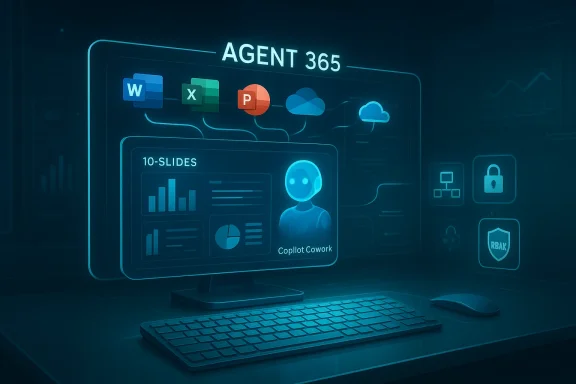
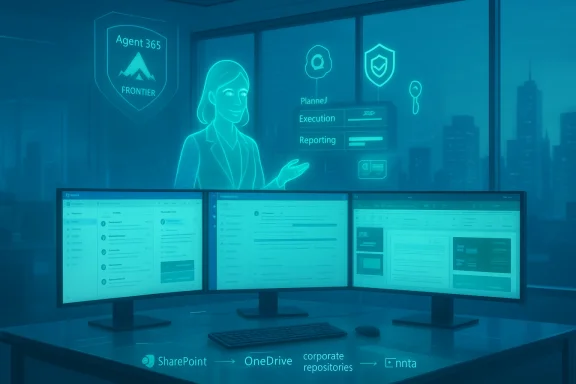
Futuristic desktop displays Agent 365 interface with Office icons, clouds, and a robotic avatar.Background​

Microsoft introduced Copilot as a chat-first productivity layer that augmented Office apps with large language models, but over the past two years it has steadily evolved toward more autonomous, multi-step workflows. Early Copilot releases emphasized conveeneration inside Word, Excel, PowerPoint and Outlook; most recently Microsoft began giving administrators and tenants explicit model choice by adding Anthropic’s Claude models to the Copilot mix.
Anthropic launched its own agentic desktop product, Claude Cowork, earlier this year as a non-technical-worker–oriented tool that can orchestrate multi-step tasks, manipulate files, and run background workflows on Windows. Industry observers quickly noted Claude Cowork’s focus on delivering finished artifacts (reports, spreadsheets, calendar arrangements) rather than only conversational suggestions — a distinction that Microsoft is now commercializing inside its Copilot stack.
Microsoft frames today’s announcements as “Wave 3” of Copilot’s product journey: move from single-turn assistance to a managed, auditable agent platform that can run permissioned, long-running tasks and be governed at enterprise scale. That shift bundles product, governance and pricing changes: Copilot Cowork enters a research preview this month, Microsoft positions a new Microsoft 365 E7 enterprise bundle to host these capabilities, and the company is shipping management tooling under the Agent 365 banner. (venturebeat.com

What Copilot Cowork is — and how it works​

An agent that “does” work, not just suggests it​

At its core, Copilot Cowork is an agentic AI designed to accept an outcome-oriented brief — for example, “Prepare a 10-slide product update deck with Q1 sales charts and a three-paragraph executive summary” — then plan, gather data, run multi-step workflows across Outlook, OneDrive, Excel, and PowerPoint, and return a finished deliverable. Microsoft emphasizes that Cowork is intended to execute tasks end-to-end under explicit permissions rather than only produce draft text.
The product relies on several architectural pieces:
  • lligence layer Microsoft describes as the system that models the user’s role, responsibilities, organizational context, and data relationships so agents can act more appropriately within a company.
  • Agent 365 control plane — a governance and telemetry surface for creating, running, auditing and governing agents at scale inside the enterprise. It’s the administrative backbone that lets tenant admins control which agents can access what data and which actions they may take. ([nat://nationaltoday.com/us/wa/redmond/news/2026/03/09/microsoft-unveils-e7-suite-copilot-cowork-in-enterprise-ai-push/)
  • Multi-model routing — Microsoft will route tasks to the model best suited for the job, including Anthropic’s Cowork/Claude engines and Microsoft’s own or OpenAI models where applicable. This “right model for the right job” orchestration had previously been introduced for the Researcher agent and Copilot Studio and now extends into agentic workflows.

Permission-first design and data access​

Microsoft stresses that Copilot Cowork operates under explicit, opt‑in permissions: agents only access inboxes, calendars, drives and SharePoint content when tenants configure and approve connectors. The Agent 365 plane includes audit logs and controls to restrict which agents can surface or modify specific content, a necessary capability for a system that will write and execute changes in business‑critical systems. Those governance claims are central to Micitch — but they also illustrate the technical and legal complexity that organizations must manage before enabling agents widely.

Anthropic’s role: Claude Cowork as the technology foundation​

Anthropic’s Claude Cowork is the feature set Microsoft licensed and integrated to provide the “doing” capabilities inside Copilot Cowork. Anthropic debuted Cowork as a desktop agent that could take recurring, multi-step tasks off user plates while remaining approachable for non-technical business users; Microsoft is leveraging that design to speed Copilot’s evolution from helper to coworker. Several reporting outlets corroborate that Copilot Cowork is built on top of Anthropic’s agent stack and that theis a research preview with limited enterprise access.
This is not the first time Microsoft and Anthropic’s technologies have touched inside corporate Copilot offerings. Over late 2025 Microsoft expanded Copilot to support Anthropic’s Claude Sonnet and Opus models as selectable backends in Copilot Studio and the Researcher agent — an earlier move that signaled Microsoft’s intent to operate a multi-model Copilot. Copilot Cowork takes the relationship deeper by incorporating Anthropic’s agentic tooling itself.

Feature-level breakdown​

  • Agent planning and orchestration: Copilot Cowork creates a plan, executes the steps, and iterates until it satisfies the brief supplied by the user.
  • Cross‑app execution: agents can create and edit Word, Excel and PowerPoint artifacts, schedule meetings in Outlook, surface files from OneDrive/SharePoint and call Teams as part of a task flow.
  • Long‑running tasks: supports background or recurring tasks that continue beyond the original chat session — for example, weekly report compilation or ongoing monitoring jobs.
  • Administrative governance: Agent 365 provides tenant-level governance, role-based controls, logging, and compliance hooks.
  • Model choice and routing: Copilot can route tasks to Anthropic’s Cowork or other models based on workload, policy, or administrator preference.

Why Microsoft is betting on agentic work: the business case​

Microsoft’s move answers a clear enterprise need: many knowledge‑worker tasks are repetitive, multi-step and rule‑bound — exactly the kind of work that an agentic AI can compound productivity on. By offering a managed, auditable agent platform integrated into the apps businesses already use, Microsoft hopes to accelerate adoption and lock-in for Copilot as the default workplace automation layer. Analysts frame Copilot Cowork as Microsoft’s entry into the “digital coworker” market that Anthropic popularized this year.
There’s also an economic logic to bundling governance and agent capabilities into a premium suite (Microsoft’s new E7 bundle) and tying broader access to the Frontier preview program: Microsoft can monetize high-value, high-touch enterprise scenarios while maintaining a staged rollout that allows IT teams to pilot features and prove compliance impacts.

Strengths and notable advances​

  • **From suggestion to Cowork’s core advantage is delivering completed artifacts rather than just drafts. For teams that measure productivity in deliverables, that matters.
  • Built-in enterprise governance — shipping Agent 365 as a control plane is a significant concession to IT: enterprises get tenant-level controls, audit trails and model routing that are essential for compliance.
  • Multi-model openness — Microsoft’s multi-model strategy reduces vendor lock‑in risk and lets organizations pick models optimized for safety, cost, or performance for different workloads.
  • Tighter Office integration — agents that can natively operate across Outlook, Excel, SharePoint and Teams remove friction that previously made automation fragile or brittle.
These are real engineering and product wins: the ability to plan, act and return auditable outputs inside enterprise data boundaries is a step above earlier Copilot iterations that required significant human orchestration to move results into production systems.

Risks, caveats and technical unknowns​

No technology is risk‑free, and Copilot Cowork concentrates several thorny issues enterprise IT must weigh carefully.
  • Hallucination and fidelity risk: Agents that act can do more damage than those that merely suggest. A model that fabricates a line item in a spreadsheet, schedules an incorrect meeting, or misattributes data carries direct operatiogovernance controls mitigate but do not eliminate this class of error. Independent verification remains essential.
  • Data sovereignty and third‑party processing: Microsoft’s use of Anthropic’s Cowork tech — and the prior inclusion of Claude models in Copilot — raises questions about where and how data is processed, which sub-processors handle customer content, and what contractual protections are in place. Microsoft documents and partner briefings emphasize opt-in connectors and tenant controls, but legal teams will need to parse the fine print before wider deployment.
  • Operational complexity: Agent behaviors introduce new operational surfaces: long‑running tasks, retries, exception handling, and cross-tenant telemetry. These add complexity to monitoring, incident response and capacity planning for enterprise IT. The Agent 365 control plane aims to centralize that, but it also becomes a single point of policy and potential failure.
  • Governance vs. usability trade-offs: Strict governance reduces risk but also diminishes agent utility. Organizations will need to balance restrictive policies with enabling productive agent behaviors — a governance exercise that will vary by compliance posture and vertical industry.
  • Vendor strategy and concentration risk: The partnership between Microsoft and Anthropic is deepening — but Anthropic remains a separate company with its own roadmap, investors and potential strategic changes. Enterprises that adopt Copilot Cowork are, implicitly, accepting a multi-vendor dependency that requires active vendor due diligence.

Unverifiable or uncertain claims​

Some reporting suggests rapid, broad availability via Microsoft’s Frontier program later this month, and press coverage identifies March 9, 2026 as the announcement date for Copilot Cowork research previews. While Microsoft and multiple outlets confirm the research preview and the Anthropic collaboration, specific timing for tenant access, pricing tiers and SLA commitments remain subject to Microsoft’s staged rollout plan and partner program schedules. Organizations should treat availability and contractual terms as tentative until they receive tenant-level communications from Microsoft.

Security, compliance and legal considerations (what IT must ask)​

Before enabling Copilot Cowork across an estate, IT and legal teams should get clear answers to a short checklist:
  • Data paths and processors: Which sub‑processors (including Anthropic) will handle tenant data, and where will processing occur geographically? Require precise mapping in contracts.
  • Retention and deletion: How long will agent traces, intermediate artifacts and telemetry be retained? Are there controls to purge or anonymize data on demand?
  • Auditability: Can Agent 365 produce immutable audit trails that capture planning steps, decisions made by the agent, and subsequent human approvals?
  • Test and staging modes: Does Microsoft offer safe, sandboxed modes where agents can run without modifying production systems until they are validated?
  • Liability and indemnity: What contractual protections does Microsoft offer when an agent causes business disruption or data leakage?
  • Certification posture: Will Copilot Cowork and Agent 365 meet industry-specific compliance regimes (HIPAA, FedRAMP, SOC 2) for a given tenant?
These questgotiable for enterprises that must meet regulatory obligations or who host highly sensitive data.

Practical rollout guidance for IT teams​

Adopting agentic AI inside a large organization is not an all-or-nothing decision. A phased, test-driven approach reduces risk and builds trust.
  • Pilot with low-risk use cases: Start with internal, low-impact workflows (for example: weekly project status collations, non-sensitive report assembly, or meeting-minute drafting).
  • Define agent contracts: For each pilot, document the agent’s permitted actions, data access levels, expected outputs, and fail-safes.
  • Establish observability: Enable Agent 365 telemetry, create dashboards for agent health and behavior, and set up alerting for anomalous actions.
  • Human-in-the-loop gates: Require human approval for any agent action that writes to external systems, sends email, or modifies permissions.
  • Red team the agents: Simulate adversarial or edge-case scenarios to identify hallucinations, incorrect data merges, or unwanted cascading actions.
  • Iterate policy: Use pilot learnings to refine RBAC, connector scopes and audit policies before broader rollout.
These steps preserve productivity benefits while controlling the operational and legal exposure that comes with agents that act on behalf of employees.

Market and competitive implications​

Copilot Cowork is a significant strategic move in three ways.
  • It signals Microsoft’s intent to own the agentic layer of enterprise productivity — not just the LLM-powered assistant but the orchestration, governance and commercial model around it. That turns Copilot into a platform play, not merely a feature.
  • By buildowork technology — while continuing to support OpenAI and in-house models — Microsoft positions itself as the neutral, multi-model orchestrator for enterprise customers, hedging the company’s own deep investments in OpenAI and offering customers choice. This reduces single-vendor lock-in concerns and can accelerate enterprise adoption by allowing teams to pick models tuned for specific safety or compliance requirements.
  • The product tightens Microsoft’s moat: embedding agentic capabilities directly into the apps where work happens increases switching costs for organizations that standardize on Microsoft 365 as their digital work fabric. Competitors — from Google Workspace to Salesforce and specialist agent builders — will need to match both the integration depth and governance features to remain competitive.

Verdict: capable, promising — but not plug-and-play​

Copilot Cowork is an important technical and product milestone: it demonstrates that Microsoft is serious about shipping agents that do work inside enterprise boundaries and that the company recognizes governance as a first‑class product requirement. The coupling of Work IQ, Agent 365 and Anthropic’s Cowork technology gives Copilot Cowork real capability and — crucially — a story IT leaders can present to compliance and procurement teams.
That said, the practicalities of large-scale agent adoption are non-trivial. Enterprises must accept a period of operational learning: designing agent contracts, fitting agents into change-management processes, and building new monitoring and incident response playbooks. The benefits are high — saved staff hours, faster report generation, and fewer manual steps — but so are the stakes when agents interact with business-critical data and systems.

Actionable recommendations — what to do next​

  • Security and legal leads: demand a sub‑processor list and a clear, written data‑flow diagram before enabling any Copilot Cowork connectors.
  • IT and procurement: negotiate pilot terms that include SLAs for processing location, response times for security incidents, and deletion/retention guarantees.
  • Line‑of‑business leaders: identify three high-value, low-risk pilot processes and define measurable KPIs (time saved, error reduction, approval rates) to evaluate ROI.
  • Developers and automation teams: partner with Copilot Studio and Agent 365 early to build reusable, auditable agent templates that conform to your company’s policy framework.
  • Executive sponsors: set realistic expectations — large-scale adoption is months, not weeks — and fund a cross-functional governance and operations team.

Microsoft’s Copilot Cowork marks a turning point for workplace AI. It moves the industry from chat-first assistance to agentic productivity software with explicit governance, multi-model orchestration, and the ambition to become a digital coworker inside the tools knowledge workers already use. For organizations willing to invest the time in governance, testing and operational maturity, Cowork promises real efficiency gains. For the cautious, the feature underlines the pragmatic truth of enterprise AI today: capability is arriving faster than policy and process, and the winners will be those who build both in parallel.

Source: eWeek Microsoft Debuts Copilot Cowork, Bringing Claude Tech Into Office Workflows
Source: IT Pro Anthropic's Claude Cowork tool is coming to Microsoft Copilot
 

Microsoft’s Copilot has shifted from being a single-vendor assistant to a multi‑model, agentic workspace — and it did so practically overnight, folding Anthropic’s Claude family and the company’s Cowork agent technology into the heart of Microsoft 365 Copilot and a new product called Copilot Cowork.

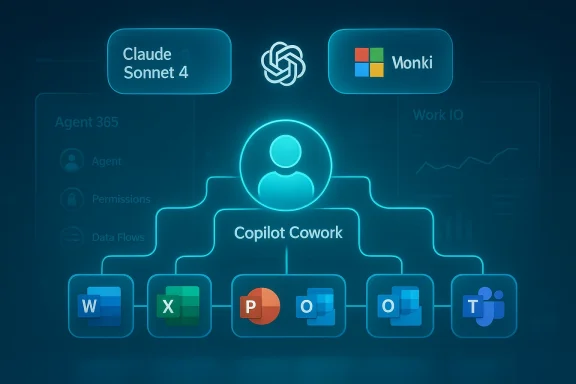
Neon schematic of Copilot Cowork coordinating Word, Excel, PowerPoint, Outlook, and Teams.Background​

Microsoft launched Microsoft 365 Copilot as a productivity‑first layer that tightly integrated large language models into Word, Excel, PowerPoint, Outlook and Teams. For its earliest and most visible iterations Copilot leaned heavily on models supplied through Microsoft’s partnership with OpenAI. The recent changes — adding Anthropic’s Claude models as selectable backends and introducing Copilot Cowork, an agentic assistant built in collaboration with Anthropic — mark a deliberate strategic pivot toward multi‑model orchestration and agentic automation inside workplace software.
This transition is not merely cosmetic. Microsoft is exposing model choice to tenant administrators, surfacing new control planes for agent governance, and bundling new capabilities — Agent 365 and Work IQ — aimed squarely at enterprises that want Copilot to do real work rather than only draft suggestions. The announcements are framed as additive: OpenAI models remain available while Anthropic’s Claude Sonnet and Claude Opus families are now selectable engines for specific Copilot surfaces.

What Microsoft announced — the essentials​

Anthropic Claude models inside Copilot​

  • Microsoft 365 Copilot now supports Anthropic’s Claude models — notably Claude Sonnet 4 and Claude Opus 4.1 — as selectable backends within important Copilot surfaces such as the Researcher reasoning agent and Copilot Studio. This change gives organizations the ability to route certain workloads to Anthropic models while keeping OpenAI and Microsoft models in the mix.
  • Availability is being handled as an opt‑in experience: tenant administrators must enable Anthropic model options, and the rollout has been staged through Microsoft’s preview channels. Microsoft has explicitly presented this as a way to offer model choice for different workload characteristics — for example, routing heavy reasoning tasks, code or compliance‑sensitive workflows to a preferred model.

Copilot Cowork — an autonomous coworker​

  • Microsoft introduced Copilot Cowork, a new agentic capability that promises to plan, execute and return finished outputs across Microsoft 365 applications. Copilot Cowork leans on Anthropic’s Cowork technology and runs as a permissioned, long‑running assistant that can coordinate multi‑step workflows rather than just offer single‑turn suggestions. The product debuted as a research preview on March 9, 2026, with a commercial path planned through Microsoft’s broader enterprise programs.
  • Copilot Cowork is accompanied by an Agent 365 control plane and a Work IQ intelligence layer. Together these are intended to give IT and security teams the tools to configure, monitor and govern persistent agents that act on behalf of users across apps and data sources.

Copilot Studio and Researcher enhancements​

  • Copilot Studio — Microsoft’s agent‑building surface — now exposes Anthropic model options as part of agent configuration, enabling developers and power users to select the “right model for the right job” when designing Copilot agents. The Researcher agent, which handles deeper reasoning tasks in Copilot, similarly supports reaching out to Anthropic engines for specified tasks.

Why this matters: strategic and technical implications​

For enterprise IT: vendor diversity and risk management​

Microsoft’s move breaks Copilot’s perception as a single‑vendor product and formalizes a multi‑vendor orchestration approach. This gives organizations practical levers to manage vendor risk, negotiate cost/performance tradeoffs, and avoid over‑dependence on any single provider. Enterprises that have compliance or contractual constraints — or simply want redundancy — now have a supported path to route workloads across providers.
However, vendor diversification introduces operational complexity: model selection policies must be defined, cross‑provider telemetry collected, and legal teams consulted on third‑party hosting and data handling. Microsoft’s messaging acknowledges these tradeoffs and positions Anthropic as an additive option rather than a wholesale replacement.

For workloads: choosing the right model​

Different LLMs have different strengths: some excel at coding, others at mathematical reasoning or document summarization; tone, safety‑guardrail behavior and hallucination profiles also vary. By exposing model choice in Copilot Studio and the Researcher agent, Microsoft lets teams tune agents to task profiles — for example, preferring a model with stronger code synthesis metrics for developer‑facing agents, or a model with conservative hallucination controls for compliance tasks. These are practical, real‑world choices that can materially affect productivity outcomes.

For automation: from “assist” to “do”​

Copilot Cowork signals a step change: Copilot moves from assisting through suggestions to performing work — composing reports, coordinating across mail and calendar, updating spreadsheets and more — then returning completed outputs. This agentic capability can multiply productivity but raises questions about error‑handling, approvals, auditing and human oversight. The Agent 365 control plane and Work IQ layer are Microsoft’s response, but they must prove robust in real deployments.

Technical details and verification of claims​

Which Claude models and where​

Microsoft’s integration lists Claude Sonnet 4 and Claude Opus 4.1 as selectable engines inside the Researcher feature and Copilot Studio. Multiple independent briefings and reports from the rollout confirm the model names and the surfaces where they appear. These are currently opt‑in selections in enterprise preview channels.

Copilot Cowork architecture — what’s public​

The public descriptions identify three core pieces:
  • Cowork technology (Anthropic) powering agent behavior and folder/app access semantics.
  • Agent 365 control plane for lifecycle, permissions and governance.
  • Work IQ intelligence layer meant to translate intent into coordinated, multi‑step actions across Microsoft 365.
These claims are corroborated across multiple reporting sources and product briefings. Where the public materials are silent — for example, the precise isolation or deduplication mechanisms used when Copilot Cowork reads multiple document versions — those technical specifics remain undisclosed and should be treated as unverified.

Data handling and hosting​

Published descriptions make clear that Anthropic‑powered workloads are hosted by third‑party model providers as selectable backends and that tenant administrators must opt in. Microsoft emphasizes that OpenAI models remain available by default. The materials also contain Microsoft’s standard caveats around third‑party hosting and the need for administrators to evaluate data handling and compliance impacts. These governance points are emphasized in Microsoft’s rollout messaging.

Strengths: what Microsoft and Anthropic are delivering well​

  • Model choice and orchestration — Making multiple, vetted models available inside a single Copilot surface is a strong, pragmatic move for enterprise adoption. It reduces single‑provider lock‑in and enables optimization of cost, latency and capability per task.
  • Agentic capabilities with governance controls — Shipping Copilot Cowork alongside Agent 365 and Work IQ reflects an understanding that enterprises want automation but also control. Presenting governance tooling at launch is a meaningful contrast to the early era of uncontrolled bot deployments.
  • Integration into developer tooling — Copilot Studio exposing model selections makes it easier for IT and developers to experiment with agent design without complex vendor integrations. This reduces friction for innovation in automation and agent design.
  • Staged, opt‑in rollout — By keeping Anthropic model options opt‑in and limited to preview channels initially, Microsoft enables cautious enterprise adoption and time for security and compliance teams to test behaviors.

Risks and gaps — what enterprises must watch closely​

  • Data residency, handling, and contractual exposure. Routing data to third‑party models can change the underlying legal and compliance posture. The opt‑in model reduces surprise, but tenant administrators must still confirm data flows, residency guarantees and contractual protections before switching production workloads. Microsoft’s messaging flags these concerns but detailed contractual terms are not publicly enumerated in the announcements. Treat those claims as requiring direct verification with legal and procurement teams.
  • Auditing and observability for long‑running agents. Agents that persist and act autonomously increase the need for fine‑grained audit trails, replayable logs and approval workflows. Microsoft’s Agent 365 control plane is meant to address lifecycle and governance, but early previews rarely show the full depth of enterprise auditability required for regulated industries. Organizations should validate whether logs include request/response content, decision rationales and user approvals in a way that satisfies compliance needs.
  • Model behavior and safety differences. Different models have different safety‑guardrail profiles. Anthropic and OpenAI tune for different tradeoffs between creativity and conservatism. Enterprises must test agent outputs across model choices to discover subtle differences in hallucination rates, factual accuracy, or stylistic tone that could affect downstream processes. Published claims about model superiority should be verified with controlled benchmarks relevant to your workload; blanket claims are not substitutes for empirical testing.
  • Cost, performance and SLA variability. Multi‑model routing may lead to mixed latency and cost patterns. Some providers bill per token or per request in ways that can be expensive for long‑running agent workflows. Microsoft’s announcements do not fully enumerate commercial terms for Anthropic‑backed Copilot usage at enterprise scale; procurement should plan for pilot usage and cost modeling.
  • Operational complexity and skill requirements. Running a multi‑model Copilot with agentic capabilities requires new operational practices: model selection policies, observability tooling, incident responses for agent misbehavior, and staff trained to manage agent lifecycles. These are nontrivial investments that must be planned as part of adoption.

Practical guidance for IT, security and procurement teams​

  • Get clarity on data flows and contracts.
  • Before enabling Anthropic models for production workloads, obtain explicit documentation from Microsoft and Anthropic on where data is sent, how long it is retained, and what contractual protections (data processing addendums, DPAs) are offered.
  • Verify whether outputs of Copilot Cowork agents are stored and where, and whether any transcript/telemetry leaves your tenant boundary.
  • Run targeted pilots with representative workloads.
  • Select 3–5 representative tasks (e.g., contract redlines, code generation, financial report aggregation) and evaluate outputs from OpenAI + Microsoft models versus Anthropic models.
  • Measure hallucination rates, latency, cost, and the need for human intervention. Use those metrics to build a model routing policy for production.
  • Auditability and governance checklist.
  • Confirm Agent 365’s audit logs include: action timestamps, triggering user, input data references (without leaking secrets), model type used, and a retrievable transcript of agent decisions.
  • Ensure approval gates exist for high‑impact tasks (e.g., sending external email, changing financial records).
  • Define security posture for long‑running agents.
  • Limit agent capability by scope and permissions (least privilege), require explicit user consent for cross‑app actions, and implement escalation paths when agents encounter ambiguous decisions.
  • Plan for cost and SLA contingencies.
  • Model expected token usage for agentic workflows and include cost caps or fallback routing to cheaper models when budgets are exceeded.
  • Negotiate SLAs and emergency procedures with Microsoft for critical Copilot services.

Developer and product implications​

Copilot Studio as an agent design platform​

Copilot Studio’s exposure of model options turns model selection into a first‑class design decision. Developers can iterate on agent designs that use different models for sub‑tasks — for example, using a Claude engine for document synthesis and an OpenAI engine for conversational retrieval — while retaining a unified orchestration layer. This mixed‑model approach can yield better outcomes but requires careful instrumentation and testing.

New testing patterns​

Expect to adopt model‑aware testing patterns: unit tests for agent logic, integration tests across model choices, and regression tests to detect behavioral drift if a provider updates a model. These practices will be essential for reliable automation at scale.

Market and competitive context​

Microsoft’s move to a multi‑model Copilot reflects a broader industry trend: platform vendors are recognizing that no single model will be ideal for every enterprise workload. By offering a managed orchestration layer and bringing multiple providers under a unified control plane, Microsoft is both hedging its own supplier exposure and enabling customers to optimize for capability, cost and compliance.
Anthropic benefits by gaining distribution inside one of the largest workplace software footprints, while Microsoft gains a technological portfolio that reduces dependency risk and strengthens its enterprise pitch: choose the model that matches the task, while Microsoft manages the plumbing. This arrangement changes competitive dynamics with both OpenAI and other model providers, and raises the bar for other platform vendors that want to remain single‑provider.

What remains unclear — open questions to validate before large deployments​

  • Exact contractual and DPA details for Anthropic‑backed Copilot usage in regulated industries remain to be verified with Microsoft and Anthropic directly. Public announcements highlight the opt‑in model but do not replace legal review.
  • The depth of auditability offered by Agent 365 under heavy production load (e.g., retention of action provenance, exportability of logs) is not exhaustively documented in preview materials and should be validated in pilots.
  • How Microsoft will handle mixed‑model failover and graceful degradation for long‑running Cowork agents (for example, if an Anthropic endpoint has an outage) must be tested. The commercial terms and SLAs around such failovers should be negotiated up front.
  • The operational model for managing model updates and drift — and the extent to which Microsoft will provide model factsheets or automated tests for each supported model — is only partially described and should be clarified with Microsoft’s product and partner teams.

Final analysis: pragmatic optimism with guarded controls​

Microsoft’s integration of Anthropic’s Claude family and the introduction of Copilot Cowork represent a pragmatic next step in enterprise AI: choice, agentic automation and governance are now first‑class considerations rather than afterthoughts. For organizations that have been waiting for stronger controls around automation — and for alternatives to single‑vendor dependency — these announcements offer a path forward.
That said, the practical value depends on implementation details: clear contractual protections, robust audit logs, predictable latency and cost, and mature workflows for human oversight. Enterprises should approach adoption with a structured pilot plan, cross‑functional governance, and careful stress tests that validate safety, performance and compliance under realistic workloads.
If you treat Copilot Cowork and multi‑model Copilot as a platform that needs the same engineering, governance and legal rigor as any other business‑critical system, the potential productivity gains are substantial. If you treat it as a seat‑of‑the‑pants productivity hack, the risks — from hidden data flows to misdirected agent actions — are material. Microsoft and Anthropic have put the building blocks on the table; the rest is now on enterprise IT teams to build responsibly.

Quick checklist for decision‑makers​

  • Confirm contractual DPA and data residency terms before enabling Anthropic models.
  • Run representative pilots comparing model outputs, cost and latency.
  • Validate Agent 365 auditability and retention policies.
  • Define approval gates for agent actions and implement least‑privilege permissions.
  • Prepare incident playbooks for model outages, hallucinations, and misbehaving agents.
In short: Microsoft has given enterprises a valuable set of levers — model choice, agent autonomy, and governance tooling — that, if used with discipline, can enable a new wave of productivity automation. But those levers demand the same rigorous controls, testing and legal groundwork any other mission‑critical platform requires.

Source: Silicon Republic Microsoft adding Anthropic's AI technology to its Copilot service
Source: Techloy Microsoft Introduces Copilot Cowork: What It Is and How It Works
Source: Cryptopolitan Microsoft brings Anthropic’s Claude AI into Copilot Cowork to expand agent-driven workplace tools - Cryptopolitan
Source: Computerworld M365 Copilot gets its own version of Claude Cowork
Source: blockchain.news Microsoft Cowork Branded Launch: Analysis of Model Quality, Transparency, and 2026 AI Agent Trends | AI News Detail
 

Microsoft’s Copilot has moved beyond drafting and assisting: with Copilot Cowork the company is offering an agentic coworker that plans, executes and returns finished work across Microsoft 365 — and it built that capability in close collaboration with Anthropic, the startup behind the viral Claude Cowork agent.

Copilot Cowork robot demonstrates holographic Microsoft apps in a modern office.Background​

In January 2026 Anthropic unveiled Claude Cowork, a desktop- and plugin-capable agent that can read files, manipulate spreadsheets, call APIs and perform multi-step business processes with limited human oversight. That launch sparked a wave of investor anxiety about AI displacing traditional software vendors and triggered a sharp sector sell-off. Anthropic’s move crystallized a new class of “doing” AI agents, rather than chat-first assistants.
Microsoft responded on March 9, 2026 by announcing Copilot Cowork: a research-preview, enterprise-focused agent built by integrating Anthropic’s Cowork technology into the Microsoft 365 Copilot ecosystem. The company says Copilot Cowork is being tested with a limited set of enterprise customers and will reach early-access users later in March via its Frontier program. Microsoft also confirmed that it is making Anthropic’s latest Claude Sonnet models available across parts of Copilot.
This is not merely a product extension. It represents a strategic shift toward a multi-model, multi-supplier Copilot and toward embedding agentic automation deeper into everyday productivity workflows — with all the operational, governance and security trade-offs that implies.

What Copilot Cowork is — and what it promises​

A doing coworker, not just a chat assistant​

Copilot Cowork is designed to go beyond summarization and drafting: it plans a sequence of steps, executes them across Outlook, Word, Excel, PowerPoint and Teams, and returns completed deliverables rather than draft instructions. Microsoft positions the feature as a permissioned, long‑running assistant that acts on behalf of a user while respecting enterprise controls and data protections.

Built with Anthropic — and built for Microsoft 365​

Microsoft’s announcement emphasizes that Copilot Cowork was developed “working closely with Anthropic” and leverages the same agent concepts that made Claude Cowork notable. Unlike standalone desktop agents, Microsoft stresses Copilot Cowork will operate inside its cloud-managed fabric — running with enterprise policy, audit trails and the security posture customers already trust from Microsoft. Jared Spataro, who leads Microsoft’s AI-at-Work efforts, framed the launch as “intelligence + trust” — intelligence to be context-aware and trust to enable safe, enterprise-scale automation.

Commercial placement and pricing hints​

Microsoft said some usage of Copilot Cowork will be included in the existing Microsoft 365 Copilot enterprise plan, which Microsoft currently prices at $30 per user per month, with higher-capacity or additional usage available for purchase. The company has not disclosed an itemized pricing schedule for Cowork itself but indicated Copilot Cowork will feature in new enterprise bundles and a higher-tier licensing play (Microsoft 365 E7 and Agent 365 were announced alongside the product narrative).

How Copilot Cowork fits into Microsoft’s technical stack​

Work IQ, Fabric IQ, Foundry IQ and Agent 365​

Microsoft’s messaging around the product ties Copilot Cowork into an internal intelligence layer the company calls Work IQ (context about how people work), Fabric IQ (a semantic reasoning layer over organizational data), and Foundry IQ (an app service for safe, scalable agent experiences). These layers form a control surface that routes agent actions, enforces policies and surfaces context to the underlying LLMs (now including Anthropic’s models). Agent 365 is presented as the enterprise control plane for agent lifecycle, governance and observability.

Multi-model orchestration: the “right model for the right job”​

Crucially, Copilot is moving to a multi-model architecture. Microsoft now exposes Anthropic’s Claude Sonnet and Opus model variants alongside OpenAI models inside Copilot surfaces such as Researcher and Copilot Studio. That lets organizations route specific workloads to the model best suited to the task (reasoning, explanation, code generation, or agentic orchestration). Microsoft frames this as adding choice, resilience and better cost/performance trade-offs. Analysts characterize the shift as Microsoft deliberately reducing single-vendor dependency and making Copilot an orchestration layer for multiple LLMs.

Why Microsoft did this: strategic reading​

1) Competitive pressure and the “agent” moment​

Anthropic’s Cowork made two things clear: agents that do work are technologically feasible, and non‑technical users immediately see the value. That positioning threatened existing enterprise software moats and raised investor questions about Microsoft’s Copilot differentiation. By licensing Anthropic’s technology and making it part of Copilot, Microsoft accomplishes three goals: it neutralizes a competitive threat, accelerates its own agent roadmap, and signals to customers that Copilot can now deliver the same kinds of autonomous outcomes they’ve been reading about.

2) Reducing vendor concentration risk​

Microsoft’s long, high-profile partnership with OpenAI has been mutually strategic but visible. Adding Anthropic models gives Microsoft bargaining leverage, reduces single-source risk and positions Copilot as a neutral orchestration layer rather than a monolithic OpenAI showcase. Analysts at Forrester and others framed this as Microsoft shifting Copilot away from reliance on a single provider and toward a multi‑model ecosystem.

3) Monetization and enterprise governance opportunities​

Agentic automation creates new enterprise requirements — governance, auditing, permissioning, and vendor control. Microsoft’s product play (Agent 365, E7 licensing bundles) is squarely targeted at monetizing those needs: enterprises will pay for a managed, auditable way to let agents act on corporate data. Microsoft’s cloud-first, identity-driven control model is the product advantage it is leaning on.

Technical strengths and potential advantages​

  • Integrated context and identity: Copilot Cowork runs with the Work IQ context layer and Microsoft identity, enabling agents to make decisions informed by a user’s calendar, files and tenant policies — a real differentiator over standalone desktop agents.
  • Enterprise-grade governance: Agent 365 promises centralized lifecycle controls, logging and policy enforcement that enterprises demand for automation that touches sensitive data.
  • Model choice and routing: Multi-model orchestration allows routing of tasks to specialized models (e.g., Anthropic for certain agentic flows, OpenAI for others), enabling better accuracy, resilience and cost optimization.
  • Commercial packaging: By including some Cowork usage in the existing Copilot plan and bundling governance tools into new E7 tiers, Microsoft lowers an enterprise’s friction to trial while creating an upsell path for heavy agent consumers.

Real risks — technology, security and governance​

Agentic AI expands the attack surface and introduces new failure modes. Microsoft’s cloud-centric stance mitigates some risks compared with a local-only agent, but it does not eliminate them.

Data leakage and overreach​

Agents that read, write and act across user data can inadvertently expose sensitive information or take actions beyond their remit. Anthropic’s early Cowork rollout already drew security scrutiny for sandboxing and data exfiltration edge cases. Enterprises must assume any cross-application agent raises the bar on data governance.

Long‑running agents and unintended consequences​

Autonomous, long-running agents that retry, chain actions or spin up subagents create persistence and state that complicate incident response and audits. These agents can continue acting while a human is unaware — amplifying mistakes or malicious manipulation. Robust observability and revocation mechanisms are essential.

Supply‑chain and plugin risks​

Cowork-style agents use plugins and connectors to interact with enterprise systems. Each connector is a new trust boundary: compromised or malicious plugins could cascade into data loss, fraud or lateral movement inside a corporate tenant. Microsoft’s marketplace approach and private plugin management reduce, but do not eliminate, that exposure.

Model-specific risks: hallucination and authority​

Even state-of-the-art models hallucinate. When an agent acts (e.g., sends an invoice, updates finance records, or files a contract), hallucination is no longer a content-quality issue — it becomes a process- and compliance-level hazard. Enterprises must require verification gates for high-risk actions.

Governance complexity in a multi-model world​

While multi-model choice is powerful, it also complicates compliance: different vendors have different data handling, retention and jurisdictional commitments. IT teams will need to map compliance regimes to model endpoints and manage policies that route sensitive tasks only through compliant models or regional deployments.

Practical recommendations for IT leaders and security teams​

If you lead an IT, security or compliance function, treat agentic rollout like a new platform launch — because that is what it is.
  • Establish an Agent Risk Committee.
  • Include legal, security, privacy, business owners and procurement. Define tolerances, approval gates and success metrics.
  • Start with low‑risk pilots.
  • Choose repetitive, non‑sensitive workflows (meeting summaries, template drafting) and instrument them for observability.
  • Apply least privilege and explicit opt‑in.
  • Agents should request the smallest scope necessary and require human authorization for escalations or sensitive writes.
  • Enforce immutable audit trails.
  • All agent actions must be logged with traceable user consent, inputs and outputs. Logs should be tamper-evident and exportable for forensic review.
  • Use a plugin whitelist and private marketplaces.
  • Allow plugins only from validated sources; use private plugin registries to control third‑party connectors.
  • Implement human-in-the-loop checkpoints for high-impact actions.
  • Automated execution can exist, but require explicit sign-off for financial transactions, legal documents, or system changes.
  • Map data flows to regulatory constraints.
  • Route data classified as regulated to compliant model endpoints; use tenant-level policy routing to prevent cross-boundary leakage.
  • Build rollback and revocation tooling.
  • Ensure you can stop running agents, revoke tokens, and revert state changes rapidly when something goes wrong.
  • Conduct adversarial and red-team tests.
  • Simulate malicious plugins, prompt manipulations and environment failures to understand worst-case behaviors.
  • Plan for vendor and model transparency.
  • Require model factsheets, data residency guarantees and SLA terms from vendors that operate agent backends.

Market and competitive implications​

  • Investor reaction and sector re‑pricing: Anthropic’s Cowork earlier in the year prompted a sharp sell-off across software stocks, and Microsoft itself experienced downward pressure on its share price during February before this announcement. The market narrative is that agentic AI reconfigures incumbents’ product value, and Microsoft’s move signals it will aggressively defend that territory.
  • OpenAI relationship rebalanced: Microsoft’s Copilot was long seen as strongly identified with OpenAI models; adding Anthropic is both a strategic diversification and a signal to partners and customers that Microsoft will remain platform-agnostic where it benefits enterprise reliability and choice. Forrester and other analysts explicitly called this a strategic shift to multi-model Copilot.
  • Vendor consolidation and platformization: The product plays by Microsoft, OpenAI (Frontier) and Anthropic show the market moving toward platforms that bundle agents, observability and plugin marketplaces. That increases switching costs for enterprise customers who standardize on a single ecosystem but also creates commercial opportunities for specialized governance tooling and secure connector providers.

Developer and admin consequences​

  • Developers will need to learn new design patterns for agentic workflows: planning, reflection, tool invocation, and recovery patterns that handle partial failures gracefully.
  • Admins must re-evaluate IAM and secrets management: agents need tokens and connectors; those credentials must be scoped, rotated and audited.
  • SRE and ops teams will carry new responsibilities: monitoring long-running agents, controlling cost and throttling model use to prevent runaway bills or runaway actions.
Agent design patterns (coordination, reflection, tool use) and secure integration best practices become essential skills for product, security and operations teams.

What remains unclear or unverifiable​

  • Microsoft has not published a detailed per‑action or per‑minute pricing scheme for Copilot Cowork beyond saying some usage will be included in the $30-per‑user, per‑month Copilot plan and that higher capacity will be available for purchase. That means total TCO for heavy agent users remains uncertain until Microsoft publishes usage tiers or E7 bundle terms in full. Enterprises should treat any headline pricing as provisional until they receive contract-level details.
  • Certain technical specifics — for example, exact sandboxing architectures, whether agent execution occurs in tenant‑owned VMs or Microsoft-managed enclaves, and the precise data retention window for agent logs — were not fully disclosed in public announcements. These are contract-level details that must be clarified during procurement and security review. If your organization is evaluating Copilot Cowork, insist on written architecture and data-flow diagrams.
  • Early reports that Anthropic’s Cowork had sandboxing and plugin vulnerabilities in initial releases are mixed; some third‑party researchers flagged issues that were reportedly patched or mitigated, but independent verification across enterprise deployments is limited. Treat any claims of “fully secure” as provisional and require penetration-testing evidence.

Step-by-step pilot checklist (practical)​

  • Identify a single high-value, low-risk process (e.g., board meeting minutes extraction and slide generation).
  • Create a tenant-level test sandbox and enable Agent 365 monitoring for that tenant.
  • Define explicit scope and plugin whitelist for the pilot agent.
  • Instrument audit logging and alerting for agent invocations, file accesses and outbound calls.
  • Run the pilot under supervised conditions for 3–6 weeks, capturing KPIs: time saved, error rate, manual rework, and security events.
  • Expand gradually to adjacent workflows with stronger governance until a steady-state policy baseline is defined.
This phased, metrics-driven approach balances innovation with operational caution, enabling measurable ROI while containing risk.

Final assessment: meaningful innovation with real trade-offs​

Copilot Cowork is a decisive product and strategic move. It brings Anthropic’s most interesting agent capabilities into Microsoft’s enterprise-scale governance model and packages them as a commercial offering that enterprises can operationalize. That combination — agentic capability + enterprise trust surface — is the reason Microsoft chose to partner rather than compete head-on in this release.
The upside is compelling: genuine task automation that can reduce repetitive work, accelerate decision-making and reshape how knowledge workers spend their time. The downside is equally concrete: increased attack surface, governance complexity, and the need for new operational disciplines. For IT leaders, the right posture is pragmatic and disciplined: pilot, measure, enforce least privilege, and require transparency from vendors.
Copilot Cowork will not magically solve the cultural and process challenges of automation. But by marrying Anthropic’s agent innovations with Microsoft’s identity, data protection and lifecycle management, it gives enterprises their best shot yet at adopting agentic AI responsibly — provided they treat deployment as an organizational program, not a feature flag.

Microsoft’s announcement marks a turning point: agents have moved from demos and developer toys to enterprise product strategy. The question today is not whether agentic AI is possible — it is clearly possible — but whether organizations can build the governance, trust and operational muscles necessary to put these autonomous coworkers to productive, safe use.
Conclusion: Copilot Cowork raises the bar for productivity automation and the bar for governance at the same time. Enterprises that move deliberately — piloting with observable controls, designing for least privilege, and demanding vendor transparency — will capture productivity gains while limiting the inevitable new classes of risk that accompany agentic AI.

Source: Silicon Republic Microsoft adding Anthropic's AI technology to its Copilot service
 

Microsoft’s newest move takes Copilot beyond chat and into the role of a constant, background collaborator — capable of running multi-step, long-running tasks across Microsoft 365 apps automatically and at scale. The feature, called Copilot Cowork, is being introduced as part of a larger “Frontier” push that includes a new enterprise bundle (Microsoft 365 E7), a control plane for agents (Agent 365), and deeper model diversity that brings Anthropic’s Claude-derived agent tech into Microsoft’s workplace AI stack.

A glowing holographic hub projects Office icons (Outlook, Word, Excel, SharePoint) in a conference room.Background​

Microsoft has steadily evolved Copilot from a conversational assistant into a platform that can act on behalf of users. Early Copilot releases focused on content generation and in-context assistance inside Word, Excel, and Teams. Over the last 12–18 months the company emphasized agent-driven automation — tooling that not only suggests actions but orchestrates them across multiple services. Copilot Cowork is the clearest step in that direction: a built-in agenting feature designed to execute tasks autonomously, coordinate across apps like Outlook, Teams, SharePoint, Excel, and Planner, and run work that unfolds over hours or days without requiring constant user prompts.
Microsoft describes Copilot Cowork as bringing “long-running, multi-step work” into Copilot, combining the ability to access the Microsoft 365 data graph (emails, calendars, files, chats, and meeting transcripts) with agentic capabilities intended to finish tasks while people focus elsewhere. The feature was announced alongside a new enterprise offering and governance tooling intended to address the thorny problems that agentic systems create in corporate environments.

What Copilot Cowork actually is​

The core idea​

At its core, Copilot Cowork is an agent layer inside Microsoft 365 Copilot that can:
  • Accept a goal from a user (for example, “organize next week’s client follow-ups and send digest emails”),
  • Plan and break that goal into sub-tasks,
  • Execute actions across apps (create calendar invites, draft emails, update Planner tasks, prepare a spreadsheet), and
  • Monitor progress, report back, and adapt when conditions change — all while running in the background.
This moves Copilot from an interactive helper to an autonomous collaborator that can handle routine, repetitive, and multi-step workflows without manual orchestration at each step.

What differentiates Cowork from previous Copilot features​

Previous Copilot features mainly produced content on demand or performed live actions when prompted. Cowork emphasizes:
  • Persistence: agents can run for extended periods, reacting to events as they happen.
  • Parallelism: the ability to handle multiple tasks or threads concurrently for a single user or across team contexts.
  • Orchestration: cross-app actions that require coordination of calendar, email, file generation, and task tracking.
These capabilities are made possible by tighter integrations between Copilot, the Microsoft 365 data graph, and new orchestration tooling Microsoft calls Agent 365.

The technology partnerships: Anthropic + Microsoft​

Microsoft explicitly says Copilot Cowork was built “in close collaboration” with Anthropic and that Claude’s agentic technology — particularly what Anthropic calls Claude Cowork — inspired the design and operational model inside Microsoft’s environment. In practice, Microsoft is making Claude available as one of the model options in mainline Copilot Chat under its Frontier program and drawing on the architecture that supports long-running agents.
That partnership is notable for two reasons:
  • It demonstrates Microsoft’s multi-vendor strategy for generative models — the company intends to be model-diverse rather than exclusive — which it argues provides resilience and “the right model for the job.”
  • It ties Microsoft’s enterprise-grade governance, identity, and security layers to agent tech that Anthropic developed for agentic work, which Anthropic designed from the ground up with safety guardrails in mind.
Independent reporting and industry analysts confirm that the Copilot Cowork offering leverages Anthropic-derived approaches to agent orchestration while embedding them within Microsoft’s administrative and compliance frameworks.

Agent 365: the control plane for agents​

What Agent 365 is designed to do​

Agent 365 is Microsoft’s answer to the management problem posed by autonomous agents. It’s described as a control plane that gives IT and security teams a single place to:
  • Discover, provision, and monitor agents running across the organization,
  • Define and enforce policies that limit what agents can access and do,
  • Audit agent actions and generate compliance reports, and
  • Integrate agent observability with existing security stacks (Defender, Entra, Intune, Purview).
This product aims to make agent use enterprise-friendly rather than an unmanaged proliferation of autonomous bots with unconstrained access to sensitive data.

Availability and pricing signals​

Microsoft announced that Agent 365 and a new Microsoft 365 E7 — branded as The Frontier Suite — will be generally available on May 1. Microsoft’s official messaging listed Microsoft 365 E7 at $99 per user per month. Multiple independent outlets reported Agent 365 as a separately priced control-plane product and cited an approximate $15 per user per month figure for Agent 365 where bought separately, though Microsoft’s core communications emphasized bundling Agent 365 into the E7 offering. Readers should treat the $15 figure as widely reported but subject to final confirmation from Microsoft’s licensing channels.

How Copilot Cowork integrates with Microsoft 365 apps​

Copilot Cowork is designed to function across the primary productivity surfaces. Microsoft highlighted early agent experiences in:
  • Outlook: agents can triage email, draft responses, schedule follow-ups, and send digests. These actions can be automated on a schedule or triggered by events.
  • Teams: agents can summarize long conversations, create follow-up tasks or meetings, and post updates into channels on behalf of team members.
  • Word, Excel, PowerPoint: agents can prepare drafts, assemble data and tables, run calculations, and transform results into presentations or reports.
  • SharePoint and OneDrive: agents can find and use shared files, update documents, and manage document lifecycles.
  • Planner and To Do: agents can create, assign, and update tasks based on meeting actions or email instructions.
The key capability is context awareness: Copilot Cowork has access to the signals across the Microsoft 365 graph (meeting transcripts, chat history, files, tenant data) so it can make informed decisions rather than blind automation.

Real-world examples and practical use cases​

Early examples Microsoft and analysts described include:
  • A project agent that coordinates stakeholder check-ins, updates a status spreadsheet, creates slides for weekly reports, assigns follow-up tasks in Planner, and sends a consolidated status email.
  • A sales agent that scans calendar availability, prepares client pre-meeting briefs pulling from CRM and SharePoint, executes post-meeting outreach, and creates a task list for the account team.
  • An HR onboarding agent that sequences paperwork, schedules orientation sessions, checks off policy acknowledgements, and generates a personalized welcome package.
These examples show the kind of cross-app choreography that previously required multiple scripts, connectors, or manual coordination.

Security, compliance, and governance — the elephant in the room​

Copilot Cowork raises real security and governance questions because agents will often need access to sensitive emails, calendars, files, and internal systems. Microsoft has taken three approaches to address these risks:
  • Policy and observability by design: Agent 365 is marketed as a centralized governance surface so administrators can see what agents are doing, who created them, and what data they touch. This includes logging, audit trails, and controls integrated with the enterprise security stack.
  • Identity and least privilege: Microsoft emphasizes that agents operate under identity controls (Microsoft Entra) and should be constrained with the minimum permissions required to accomplish a task.
  • Model choice and data handling: Microsoft states it will provide model diversity that lets orgs opt into models with different privacy and processing characteristics; in some cases Copilot Chat will run using Claude via the Frontier program.
Despite these measures, independent security analysts and commentators are cautious. Agents with background access dramatically increase the attack surface. Malicious or compromised agents could be used to:
  • Exfiltrate sensitive documents,
  • Generate and send fraudulent communications,
  • Reconfigure access or automate lateral movement inside tenant services.
Organizations must ensure strict role-based governance, thorough audit trails, and robust anomaly detection on agent behavior before broad rollouts. Multiple industry reports note that while Microsoft’s governance tooling is comprehensive, the operational challenge — keeping an active catalog of trusted agents and blocking rogue ones — will be the harder work for enterprise teams.

Licensing, cost, and rollout considerations​

Microsoft packaged Copilot Cowork in the broader Frontier narrative. The headline commercial points are:
  • Microsoft 365 E7: The new Frontier Suite bundles Microsoft 365 E5, Microsoft 365 Copilot, Agent 365, and additional security/encryption controls into a single SKU priced at $99 per user per month with availability on May 1. This represents Microsoft’s strategy to offer a turnkey enterprise AI stack.
  • Agent 365 as a separate SKU: Independent reporting suggests Agent 365 may also be purchasable separately (widely reported at ~$15 per user per month), though Microsoft emphasizes the E7 bundle for customers that want a complete solution. Buyers should confirm exact pricing and packaging with Microsoft or their reseller.
From an IT budgeting perspective, the key tradeoffs are predictable: pay for a managed, integrated solution that simplifies deployment and governance, or implement agent capabilities piecemeal and risk complexity and shadow AI. For large enterprises with heavy compliance needs, a bundled E7 approach may offer the lower operational risk.

Strengths: where Copilot Cowork could deliver real value​

  • Productivity lift: automating coordination tasks that typically consume an employee’s time (triaging, follow-ups, status reports) could produce measurable time savings.
  • Cross-app orchestration without custom code: many enterprises rely on custom scripts, RPA, or specialist automation teams. Cowork promises to let business users define goals and let the agent do the orchestration. That lowers the barrier for process automation.
  • Enterprise-friendly governance: by combining agent tech with Agent 365, Microsoft is acknowledging the need for central control and providing built-in tooling that many competing standalone agent platforms do not offer out of the box.
  • Model diversity: enabling Anthropic’s approach alongside Microsoft’s own models gives organizations options around safety, hallucination risk, and performance characteristics.

Risks and limitations: what IT leaders should worry about​

  • Unintended actions and data leakage: agents that can send email or edit documents autonomously are powerful — and dangerous if misconfigured. A misrouted digest or incorrectly scoped agent could leak confidential content.
  • Complex policy surface: Agent 365 promises governance, but the complexity of configuring least privilege across dozens or hundreds of agents, users, and data connectors is non-trivial.
  • Over-reliance and complacency: teams might delegate business-critical steps to agents without adequate monitoring, creating single points of automation failure.
  • Vendor lock-in and billing surprises: the E7 bundle simplifies procurement but raises questions about long-term vendor dependence and total cost of ownership, especially if agents begin to replace third-party workflow tools.
  • Model behavior and hallucinations: even with Anthropic’s safety design, LLM-based agents can hallucinate or misinterpret instructions. For tasks that require precision (financial entries, legal language), human oversight remains essential.

Practical implementation checklist for IT and security teams​

  • Establish governance policies before enabling Copilot Cowork broadly. Define who can create agents, what data they can access, and which actions require approval.
  • Pilot with low-risk workflows. Start with agents that coordinate scheduling or generate internal status digests rather than agents that change financial records or push externally-facing communications.
  • Configure least-privilege permissions and use Microsoft Entra conditional access to limit agent capabilities.
  • Enable full auditing and integrate Agent 365 logs with SIEM solutions to detect anomalies in agent behavior.
  • Train the workforce on responsible agent usage and create escalation processes for unintended agent actions.
  • Regularly review and rotate agent credentials and review agent manifests for scope creep.

Developer and partner implications​

Copilot Cowork and Agent 365 open new integration points for ISVs and systems integrators. Microsoft is positioning Agent 365 as a control plane that could manage agents created by third parties, which means independent vendors that build agent experiences must add enterprise governance hooks, manifest declarations of required permissions, and logging to be compatible with Agent 365’s control and auditing surfaces.
For automation practitioners, the arrival of Cowork suggests:
  • A shift away from point automation tooling (Power Automate flows, ad-hoc scripts) toward agent-based workflows that emphasize intent and orchestration.
  • New responsibilities around agent lifecycle management — designing agents that can fail gracefully, expose clear audit trails, and degrade to human workflows.
  • Opportunities: service providers that can help organizations model safe agents, run secure pilots, and integrate agent observability into existing compliance tooling will be in demand.

What remains unclear and what to watch​

  • The final, definitive pricing and bundling details for Agent 365 outside the E7 bundle need official confirmation from Microsoft’s licensing pages and reseller channels. Some outlets reported a $15/month per user price for Agent 365; Microsoft’s primary messaging emphasized bundling into E7. Buyers should confirm in contracting.
  • The exact boundaries of agent permissions by default — which connectors and data sources agents can access without extra approvals — are not yet fully documented for all enterprise scenarios.
  • How Microsoft will handle third-party agents and cross-tenant agent interoperability (for example, agents that need to orchestrate across customer and vendor tenants) needs further detail.
  • The operational burden of large-scale agent governance — how Agent 365 scales in organizations with thousands of agents — will only be clear after customer pilots and wider rollouts. Independent testing and third-party audits will be important to validate Microsoft’s security claims.

Final analysis: pragmatic enthusiasm with cautious execution​

Copilot Cowork is a logical next step in Microsoft’s Copilot journey: it closes the gap between suggesting work and doing work. For organizations that carefully plan adoption, enforce strict governance controls, and prioritize high-value, low-risk automation first, Cowork can deliver meaningful productivity gains. The promise is automation that feels conversational and context-aware while still operating within enterprise security boundaries.
However, the flip side is that agentic automation increases both technical and organizational complexity. The most serious risks are operational and governance-related, not purely technical: shadow agents, poorly scoped permissions, and overreliance on opaque model behavior can create substantial business risk. Microsoft’s Agent 365 and E7 bundle indicate the company understands those concerns and is packaging governance and security alongside agent capabilities — but real-world deployments will be the proving ground.
If you’re an IT decision-maker, start with a tight pilot program, demand detailed manifesting and logging from any agent templates you use, and require periodic audits of agent activity. If you’re a power user, think of Cowork as a capable assistant — but one that still needs human supervision for high-stakes tasks.

Conclusion​

Copilot Cowork signals a major shift in workplace AI: agents that can run in the background, coordinate across apps, and complete multi-step workflows promise to automate many of the administrative chores that drain knowledge workers’ time. Microsoft pairs that capability with a governance story — Agent 365 and the E7 Frontier Suite — aimed at giving enterprises the tools to adopt agents safely and at scale. The potential productivity upside is real, but so are the governance and security obligations that come with agents that can act autonomously in business systems. Careful pilots, strict policies, and continuous monitoring will determine whether Copilot Cowork becomes a reliable co-worker or an unwieldy new layer to manage.

Source: Gizbot Microsoft Copilot Cowork Explained: How the New AI Feature Automates Tasks Across Microsoft 365 Apps
 

Microsoft’s Copilot has crossed a threshold: what began as a conversational assistant that helped draft text and summarize documents is now being positioned as an active, doing teammate that plans, executes, and returns finished work across Microsoft 365 — a capability Microsoft is shipping as a research-preview product named Copilot Cowork, built in close technical collaboration with Anthropic and introduced alongside a new agent control plane called Agent 365, a productivity intelligence layer labeled Work IQ, and a higher‑tier commercial bundle aimed at enterprises.

A glowing AI cockpit labeled Copilot Cowork with Agent 365 and office app icons.Background​

Microsoft’s Copilot journey has been evolutionary rather than abrupt. Launched as an assistive layer to surface generative features inside Word, Excel, PowerPoint, Outlook and Teams, Copilot has steadily expanded from drafting help into deeper, integrated workflows inside Windows, OneDrive and Office surfaces. Over the past year Microsoft has intentionally shifted Copilot toward a multi‑model orchestration architecture, adding Anthropic’s Claude family as selectable backends for specific Copilot workloads while maintaining OpenAI and Microsoft models in the mix.
That shift set the stage for agentic capabilities: rather than simply returning a draft or suggestion, Copilot Cowork is designed to accept high‑level instructions, plan a multi‑step sequence of actions across apps and data, execute those actions with permissioned access, and return completed artifacts — for example a filled spreadsheet, a slide deck, a scheduled set of meetings, or a polished report. Microsoft positions this as a long‑running, permissioned assistant that does work for you rather than just giving advice.

What is Copilot Cowork? Technical overview​

The agent model and multi‑model strategy​

At its core, Copilot Cowork is an agentic extension of Microsoft 365 Copilot that leverages Anthropic’s Claude agent technology to perform cross‑app, multi‑step workflows inside the Microsoft 365 environment. Microsoft is implementing a multi‑model strategy that lets enterprises route specific workloads to different model families — Anthropic’s Claude variants, OpenAI models, or Microsoft’s own models — depending on requirements for reasoning, safety profile, latency, or cost. This multi‑model orchestration is exposed through Copilot’s existing agent surfaces like Researcher and Copilot Studio and is now being expanded to support long‑running Cowork agents.
Key aspects:
  • Anthropic Claude integration: Copilot Cowork leverages Claude’s agent tech for planning and execution rather than only for text generation. Anthropic’s Cowork agent offers desktop and plugin capabilities that can read files, manipulate spreadsheets, call APIs, and perform multi‑step business tasks — capabilities Microsoft is integrating with enterprise controls.
  • Model choice: Administrators can opt to route workloads to Claude Sonnet/Opus families or to OpenAI models where appropriate; the idea is to give organizations "the right model for the right job."

Agent 365: the control plane​

Microsoft pairs Copilot Cowork with a new control plane named Agent 365. Agent 365 is intended to be the governance and lifecycle platform for agents — covering provisioning, permissioning, monitoring, audit logging, and security policies. For enterprises, Agent 365 is meant to provide centralized visibility and controls over agents that may have access to emails, calendars, files and other sensitive corporate assets. Microsoft is packaging these agent‑management capabilities into its commercial enterprise offering as part of a broader "Frontier" push.
Agent 365 aims to provide:
  • Role‑based access control for agents and the data they can access.
  • Audit trails and activity logs for agent actions, suitable for compliance reviews.
  • Policy enforcement — for example limiting what agents can send externally, or which model backend specific agent actions must use.

Work IQ: an intelligence layer​

Work IQ is being introduced as an intelligence layer that helps agents reason about context — understanding files, calendar states, team roles, deadlines, and organizational norms. It’s described as a layer that surfaces relevant context and signals to the agent so that planning and execution are more precise and aligned with enterprise workflows. This contextual intelligence is crucial for any agent that will act autonomously across email, calendar and shared documents.

Deployment model and preview timeline​

Microsoft’s initial rollout of Copilot Cowork is running as a research preview to selected enterprise customers and participants in Microsoft’s Frontier program. The feature is being introduced as a higher‑tier enterprise capability — packaged inside a new Microsoft 365 E7 bundle in Microsoft's commercial product strategy — with staged availability for early testers before broader enterprise adoption.

How Copilot Cowork works in practice​

Typical agent workflow​

  • A user issues a high‑level instruction in natural language, for example: “Compile last quarter’s marketing performance into a one‑page summary with charts and schedule a review meeting with the product team next Tuesday.”
  • Copilot Cowork uses Work IQ to gather context (recent marketing files, campaign KPIs, calendar availability, relevant stakeholders).
  • The agent plans a step sequence: find and consolidate data in Excel, create charts, draft a one‑page Word summary, prepare a PowerPoint slide if requested, and propose meeting times.
  • With permissioned access, the agent executes these steps across Microsoft 365 apps and returns a consolidated artifact plus an action log for review.

Permissioning and data access​

Microsoft says Cowork agents run as permissioned, long‑running assistants, meaning they require explicit organizational consent to access mailboxes, calendars, and files. Agent 365’s governance features are intended to ensure that agents only access data they are authorized to and that every action is logged for auditability. These mechanisms are central to Microsoft’s pitch to enterprises that require compliance and data governance.

Interaction surfaces​

Cowork agents will interact across standard Microsoft 365 surfaces — Word, Excel, PowerPoint, Outlook, Teams, OneDrive and SharePoint — returning completed outputs in the most natural app surface (e.g., a finished deck in PowerPoint or a finalized spreadsheet in Excel). Researchers and agent builders can also design bespoke agents inside Copilot Studio for specialized workflows.

What this means for enterprises: benefits and immediate strengths​

1. Productivity uplift through automation of multi‑step tasks​

Copilot Cowork promises to automate complex, multi‑app processes that previously required manual orchestration. For routine but multi‑stage activities — consolidations, recurring reports, scheduling and follow‑ups — an agent that can execute will shorten delivery time and reduce human error. Early previews emphasize the potential to convert intent into finished artifacts rather than just suggestions.

2. Model choice and reduced vendor lock‑in​

By integrating Anthropic’s Claude family alongside existing model backends, Microsoft is offering enterprises explicit model choice. This reduces single‑vendor risk and enables IT to select models based on security posture, reasoning capability, cost, or regulatory needs. For organizations wary of over‑dependence on one provider, this is a meaningful architectural change.

3. Centralized agent governance​

Agent 365 promises a single pane for provisioning, controlling and auditing agents — a necessary capability if agents will be long‑running and able to touch sensitive systems. Centralized lifecycle management helps security and compliance teams maintain oversight without blocking innovation.

4. Enterprise packaging and allocation​

Microsoft is bundling these capabilities into a new higher‑tier commercial SKU to make them manageable at scale for large organizations. Packaging governance, model choice, and agent orchestration together makes adoption simpler for enterprises that need an end‑to‑end vendor solution.

Risks, unknowns, and areas that require scrutiny​

While the potential is large, Copilot Cowork raises several material risks that IT, security, legal and product teams must evaluate before broad rollout.

1. Data exfiltration and unintended sharing​

Long‑running agents with access to mailboxes and shared drives can, intentionally or accidentally, move sensitive data. Permissioning is a mitigator, but the complexity of enterprise data flows — external collaborators, shared inboxes, and integrated apps — increases the attack surface. Organizations must validate that Agent 365’s policies can enforce fine‑grained limits (for example preventing transfer of PII to external apps) and that audit logs are tamper‑resistant.

2. Auditability and compliance gaps​

Agents that autonomously create artifacts must produce clear, searchable logs that map high‑level instructions to executed actions and to the data sources used. Compliance regimes (SOX, HIPAA, GDPR, sectoral rules) will require demonstrable provenance and data lineage. Enterprises should not assume the presence of suitable evidence flows; they must verify that Agent 365’s telemetry meets their auditors’ standards.

3. Model behavior and hallucinations​

Autonomous agents amplify the consequences of model errors. A hallucinated data point used to build a KPI chart or an incorrectly scheduled meeting can have operational and reputational costs. Multi‑model choice can help — some models may be better at specific reasoning tasks — but mechanism design, validation checks and human‑in‑the‑loop review points are essential to mitigate risk.

4. Vendor and contractual complexity​

Introducing Anthropic as a core backend raises questions about contractual relationships, liability, data residency and the chain of custody for data used by third‑party models. Enterprises should demand clarity on where data is routed, how long it is retained, and what legal protections apply when multiple vendors process corporate data.

5. Economic and workforce implications​

Automating multi‑step workflows will change how teams are staffed and what tasks are considered high value. While routine work can be offloaded, organizations must prepare for reskilling and for process redesign to ensure that human oversight remains effective where it matters. This transition has both opportunity and risk — productivity gains may be offset by governance failures or misaligned incentive structures.

Practical guidance and recommended controls for IT teams​

If you are evaluating Copilot Cowork for your organization, consider these concrete steps to reduce risk while realizing benefits.
  • Establish a staged pilot:
  • Begin with non‑sensitive workflows and a small group of power users.
  • Monitor agent outputs and collect detailed logs for the pilot period.
  • Define model‑selection policies:
  • Identify workloads that require the strongest safety or reasoning guarantees and route those to the most appropriate model backends.
  • Maintain documented rationale for model choice.
  • Harden permissioning and least privilege:
  • Require explicit, auditable consent for any agent’s access to mailboxes, SharePoint sites, or external connectors.
  • Use Agent 365 to enforce role‑based constraints and temporal access windows.
  • Implement human‑in‑the‑loop checkpoints:
  • Require review steps for artifacts that will be externally distributed or used for decision‑making.
  • Automate unit checks (e.g., data sanity checks) before publishing.
  • Verify logging and evidence requirements:
  • Ensure that Agent 365 produces immutable, timestamped logs that map instruction → actions → data sources.
  • Review retention and export capabilities to support audits.
  • Clarify vendor responsibilities:
  • Contractually require data handling assurances from model providers (data deletion, processing limits, ingress/egress controls).
  • Confirm whether model inference or fine‑tuning occurs on dedicated tenant resources or shared infrastructure.

Competitive and market context​

Microsoft’s move to incorporate Anthropic’s Claude agents and to package agent governance explicitly positions Microsoft 365 Copilot not just as a feature set but as a multi‑vendor, enterprise automation platform. This is a significant market signal: Copilot is being treated as a managed orchestration layer that must integrate multiple model providers and enterprise governance tools in a single commercial offering. For enterprises that require a one‑stop shop with built‑in controls, this can be compelling — especially if the Agent 365 control plane proves robust and easy to audit.
At the same time, the move underscores the emergence of a third wave in workplace AI: from assistance to automation to agentic workforce augmentation. Vendors who can pair powerful models with enterprise-grade governance will have an advantage. Microsoft’s bundling strategy (a new Microsoft 365 E7 tier) aims to capture that enterprise demand by making the entire stack — models, agents, governance — purchasable in a single commercial agreement.

Early preview findings and user experience signals​

Reports from the research preview highlight a few consistent user experience themes:
  • Agents can automate multi‑step tasks end‑to‑end, often producing presentation‑ready artifacts that only require minor human design passes. However, small manual edits typically make the difference between “good” and “great.”
  • The user‑facing experience emphasizes returning completed outputs rather than intermediate recommendations, which changes mental models for users accustomed to Copilot as a drafting tool.
  • Admins value the promise of a centralized control plane (Agent 365), but they are asking for granular policy controls and verifiable logs before enabling production deployments.
These signals indicate that while the core technical capability is promising, successful enterprise adoption will hinge on governance maturity and the quality of the integration with existing compliance tooling.

Where the unknowns remain — questions enterprises must ask Microsoft and their vendors​

  • What exact permissions model governs Cowork agents, and can those permissions be scoped down to specific files, labels or columns inside a dataset?
  • How is PII and regulated data identified and protected during agent execution?
  • Where does model inference run, and how is customer data isolated from other tenants or vendors?
  • How granular and tamper‑resistant are the audit logs produced by Agent 365, and can they be exported into third‑party SIEM and GRC tools?
  • What guarantees exist around data retention and deletion for Anthropic‑processed workloads when routed through Copilot?
Enterprises should insist on written responses to these questions and run technical proof‑of‑concepts that validate assumptions against their legal and security requirements.

Final analysis: opportunity vs. vigilance​

Copilot Cowork represents a noteworthy inflection point in enterprise productivity software. By combining agentic automation, multi‑model choice, and a centralized governance control plane, Microsoft is attempting to convert Copilot from a drafting assistant into an autonomous collaborator that can execute work at scale. For organizations with mature governance practices, the promise is substantial: measurable productivity gains, faster time‑to‑insight, and the automation of repetitive orchestration tasks.
However, the scope and autonomy of agents heighten risk. Data governance, auditability, vendor contracts, and the consequences of model error all require concrete, verifiable mitigations before enterprises should deploy Cowork agents broadly. The technology is moving quickly; organizations that move decisively but cautiously — through staged pilots, strict permissioning, and enforced human checkpoints — will capture the upside while limiting exposure. Agent 365’s promise of centralized agent management is a necessary but not sufficient condition; it must be backed by demonstrable logging, policy enforcement, and contractual clarity with model providers.

Immediate checklist for IT leaders evaluating Copilot Cowork​

  • Identify safe pilot workflows that involve non‑sensitive data.
  • Validate Agent 365 logging and export to your SIEM/GRC systems.
  • Define and document model‑selection criteria for different workload classes.
  • Require explicit consent and least‑privilege access for any agent accessing mail, calendar or files.
  • Build human‑in‑the‑loop review gates for externally distributed artifacts.
  • Contractually clarify data processing, retention and deletion policies with Microsoft and third‑party model providers.

Microsoft’s Copilot Cowork is not merely a new feature — it’s a strategic repositioning of Copilot into the domain of autonomous, permissioned enterprise agents. The concept is promising, and the initial preview underscores meaningful productivity potential, but success for enterprise adopters will come down to governance, verification, and the careful alignment of model choice with regulatory and operational realities. Organizations that ask the right questions, run disciplined pilots, and insist on auditable controls will be best placed to turn this agentic wave into sustainable business value.

Source: H2S Media Microsoft Launches Copilot Cowork: AI That Executes Tasks Across Microsoft 365
Source: Tech Wire Asia Microsoft explores AI agents inside Microsoft 365 Copilot
 

Microsoft has taken the next big step in turning Copilot from a drafting assistant into an active, working teammate: Copilot Cowork, a new agentic capability built in collaboration with Anthropic that can plan, execute, and return finished work across Microsoft 365 apps — and it arrives as part of a broader “Frontier” push that includes a new Agent 365 control plane and a packaged enterprise offering, Microsoft 365 E7.

Futuristic office with a holographic agent on the glass wall and a three-monitor workstation.Background / Overview​

Microsoft’s Copilot program has steadily evolved from chat-first drafting and summarization into agentic automation that can run multi-step workflows, persist over time, and act across app boundaries. What the company announced in early March is not a small feature update: it folds Anthropic’s agent technology (the same model family behind Claude Cowork) into Microsoft 365, introduces a governance/control plane for agents (Agent 3e capabilities into a higher-tier enterprise SKU called Microsoft 365 E7.
Anthropic’s Cowork product — launched earlier this year — popularized the idea of an AI that does recurring, multi-step knowledge work on a user’s behalf: building spreadsheets, extracting and reconciling data across files, composing and sending or scheduling messages, and orchestrating toolchains via plugins. Microsoft’s Copilot Cowork brings that agentic pattern into the managed, enterprise-grade world of Microsoft 365, with Microsoft’s identity, security, and compliance stack layered on top.

What is Copilot Cowork — and what does it actually do?​

A coworker that plans, executes, and reports back​

Copilot Cowork is described by Microsoft as an agentic extension of Microsoft 365 Copilot that can accept a plain‑English goal, break it into a multi‑step plan, execute those steps across Outlook, Teams, Word, Excel, PowerPoint, OneDrive/SharePoint and other surfaces, and return completed outputs — not just suggestions. Actions can run for minutes or hours, with progress visible to the user and checkpoints where a person can steer or stop the workflow. Microsoft emphasizes that the experience is permissioned, observable, and governed under corporate policies.
  • Key behaviors Copilot Cowork aims to deliver:
  • Translate high-level requests (e.g., “prepare a vendor performance deck and email the summary to stakeholders”) into an executable plan.
  • Execute steps autonomously (collect files, analyze data, build slides, draft email).
  • Surface progress and request approvals before consequential actions (e.g., sending email or changing calendar events).
  • Produce finished artifacts (documents, slide decks, spreadsheets) that are immediately usable and stored within corporate repositories.
These are the fundamental shifts that move AI from “assistive” to “doing” in the enterprise context — and Microsoft is explicit about adding controls to make that practical for IT and security teams.

How Cowork maps to Anthropic’s technology​

Microsoft’s Copilot Cowork is built in close technical collaboration with Anthropic and leverages the agentic machinery that powers Anthropic’s Claude Cowork experiences. That means the reasoning model and agent orchestration patterns developed by Anthropic are now available to enterprises through Microsoft’s managed surfaces. Microsoft frames this as “bringing the technology that powers Claude Cowork into Microsoft 365 Copilot,” while Anthropic’s original Cowork product continues to exist in parallel for other customers.

Packaging and pricing: what companies will actually buy​

Microsoft’s Frontier Suite and E7​

Microsoft grouped these agentic advances into what it calls the Frontier Suite — effectively Wave 3 of Microsoft 365 Copilot. The headline commercial item is Microsoft 365 E7, which unifies Microsoft 365 E5, Microsoft 365 Copilot, and Agent 365, and is announced at a retail price of $99 per user per month with general availability set for May 1, 2026. Microsoft positions E7 as the enterprise option for customers that want Copilot plus additional security, identity, and agent governance capabilities as a single bundled solution.

Where Copilot Cowork sits relative to Copilot pricing​

For months, Microsoft’s mainstream Copilot for Microsoft 365 offering has been quoted at roughly $30 per user per month for business customers (the familiar Copilot add-on pricepoint), and that figure continues to be the price anchor for many organizations evaluating Copilot capabilities. Microsoft’s announcements indicate Copilot Cowork is being introduced as a research preview and will be available to Frontier program participants in March, while full, enterprise-grade access comes through E7/Agent 365 as the company commercializes the control plane and governance features. That means the base Copilot list price remains ~$30/user/month for Copilot features, but organizations that want the full Frontier suite (Agent 365 controls and the expanded agent experience at enterprise scale) will be looking at the $99 E7 offering or add-on Agent 365 pricing.
  • Observed commercial pieces reported by industry outlets:
  • Microsoft 365 Copilot (classic) — commonly cited at roughly $30/user/month for commercial customers.
  • Agent 365 — described as the control plane for agents; industry reporting suggests it may be offered as a discrete add-on (figures such as $15/user/month have appeared in press coverage), though Microsoft’s primary commercial message bundles Agent 365 into E7.
  • Microsoft 365 E7 Frontier Suite — priced publicly by Microsoft at $99/user/month and slated for GA on May 1, 2026.
Caveat: Microsoft’s launch materials emphasize bundles and partner offerings, and some early press reports and analyst commentary have different permutations of what’s included where. Organizations should validate exact entitlements and per-user math with their Microsoft account teams, because enterprise agreements, reseller channels, and multi-year deals materially change the effective per-seat cost.

Technical anatomy: models, orchestration, and control​

Multi‑model Copilot: Microsoft is embracing model diversity​

Copilot has already been reframed from a single‑model product into a multi‑model orchestration platform. Microsoft added Anthropic’s Claude family as selectable backends in Copilot months earlier and now embeds Anthropic’s agentic Cowork tech into Copilot Cowork. That multi‑model approach gives enterprises explicit model choice — OpenAI, Microsoft’s models, and Anthropic — for different workloads, and it lets IT route sensitive or high-assurance tasks to the model best suited for them.
This is significant: a multi‑model Copilot means the product is architected as an orchestration layer that applies governance, context, and business data while switching underlying reasoning engines as needed. The practical implication is that enterprises can balance cost, capability, and risk by selecting the model most appropriate for each task or agent.

Agent 365: the control plane for long‑running agents​

Agent 365 is Microsoft’s answer to the governance problem. It’s the administrative and security fabric that:
  • Observes and logs agent activity across the tenant.
  • Applies policy controls to which data agents can access.
  • Enables IT to pause, inspect, or revoke agent actions.
  • Integrates with Microsoft Defender, Entra, Purview and Intune to make agent behavior part of the organization’s existing security posture.
The existence of Agent 365 is Microsoft’s explicit recognition that long‑running agents change the operational model for enterprise IT — and must be governed like any other service with privileged capabilities.

Data flow, telemetry, and enterprise assurances​

Microsoft’s messaging stresses that Cowork operates in a permissioned environment: actions are observable, outputs are stored in corporate stores (OneDrive/SharePoint), and the platform is integrated with Microsoft’s identity and data protection services. This is designed to address enterprise requirements around data residency, eDiscovery, audit trails, and regulatory compliance. Microsoft’s security blog and frontline product pages underline those points as the primary differentiator for running agentic AI inside a managed SaaS environment versus consumer-grade tools.

Real-world use cases and early customer scenarios​

Copilot Cowork is pitched at a broad set of knowledge-work scenarios where tasks are multi-step, repetitive, or require stitching data across files and communications. Practical examples Microsoft and early press demos have showcased include:
  • Hiring and onboarding: gather candidate résumés from a folder, extract key competencies to a spreadsheet, rank candidates, draft a shortlist memo, create a slide deck for the hiring manager, and email stakeholders with calendar invites for interviews.
  • Vendor performance reporting: pull invoices and SLA reports from SharePoint, compute KPIs in Excel, generate a summary in Word, produce a slide deck, and circulate it to finance and procurement.
  • Sales enablement: aggregate product collateral, draft lead-specific outreach, prepare a one-page briefing for a customer meeting, and schedule follow-up tasks in Teams.
These are the types of cross-app activities humans currently spend hours on, and agents like Cowork promise to compress them into minutes of autonomous execution — with checkpoints and approvals along the way.

Strengths: Why this matters for enterprises​

  • Enterprise-grade agent experience: Copilot Cowork brings the agentic capabilities enterprises have been testing in smaller tools into Microsoft’s managed cloud, with integrated identity, compliance, and security controls. That lowers the operational risk relative to adopting a third‑party agent tool and helps IT teams keep the behavior observable and auditable.
  • Reduced vendor lock-in through model choice: Microsoft’s multi‑model orchestration — offering Anthropic’s Claude alongside OpenAI and Microsoft models — is a pragmatic shift. It reduces single‑vendor dependence and lets organizations route tasks to models that are stronger at particular workloads.
  • Productivity uplift for repetitive, multi-step work: Early demonstrations show real time savings where agents can handle orchestration, data extraction, and artifact assembly — tasks that historically require context switches and manual reconciliation. This can free employees for higher-order work.
  • Centralized governance and security posture: Agent 365 and the E7 bundle are designed to give enterprises a single place to manage agent behavior, aligned to existing Microsoft security controls, which is a practical advantage for regulated industries.

Risks and unresolved questions​

No agentic system is without risk. The technical and operational tradeoffs below are central to whether Copilot Cowork will scale safely and effectively inside large organizations.

1) Automation trust and hallucination risk​

Even Claude-style models that are engineered to be “helpful and harmless” can produce incorrect outputs or take inappropriate actions when objectives are underspecified. When an agent can edit files, send mail, or change calendar events, the cost of a hallucination or misinterpretation is far higher than a wrong paragraph in a draft. Microsoft acknowledges this: Cowork includes visible progress, checkpoints, and the ability for humans to steer or stop agents — but those safeguards depend on configuration and user discipline. Organizations must decide which agent actions are allowed automatically and which require approvals.

2) Data surface and lateral‑movement risk​

Giving an agent permissioned access to email, files, and calendars expands its attack surface. Misconfiguration, privilege creep, or malicious plug‑ins could expose sensitive information. Microsoft’s integration with Defender, Entra and Purview reduces risk but does not eliminate it; governance teams must adopt strict least-privilege patterns, monitor telemetry, and regularly audit agent permissions.

3) Compliance, legal, and auditability​

Agents that synthesize outputs from internal documents create new eDiscovery and records-retention questions. Who is legally responsible for agent-created content? How are audit trails preserved for regulatory review? Microsoft promises storage in corporate repositories and integration with compliance tooling, but these controls must be validated against specific regulatory frameworks (e.g., HIPAA, FINRA) before large-scale adoption.

4) Economic friction: licensing complexity and per-seat math​

The potential productivity gains have to be balanced against licensing costs. For a large organization, the headline $30/user/month Copilot price multiplied by thousands of seats becomes substantial; adding Agent 365 and E7-scale protections amplifies that. Early analyst commentary highlights scenarios where the per-seat cost easily becomes a material budget line and requires clear ROI modeling. Microsoft’s bundling into E7 simplifies procurement but may also lock customers into a higher commitment to get full agent control.

5) Ecosystem and third‑party risk​

Copilot Cowork’s usefulness depends on connectors and plugins to SaaS providers and custom internal systems. Each connector expands functionality but also increases dependence on third-party security postures. Microsoft’s emphasis on agent observability helps, but enterprises will still need to validate vendor integrations and their security guarantees.

How enterprises should approach adoption (practical steps)​

  • Start small and map high-value workflows: pilot Copilot Cowork on a few well-scoped processes where success metrics (time saved, error reduction) are measurable.
  • Define explicit permission boundaries: for each pilot, document what the agent may read, write, or send, and require human approval for external communications.
  • Integrate with existing governance: fold agent telemetry into existing SIEM, DLP, and compliance pipelines through Agent 365 and Defender integration.
  • Train stakeholders: product owners, legal, HR, and frontline workers need role-specific training on what agents can and cannot do.
  • Monitor ROI and scale: measure both productivity gains and any governance incidents before expanding to more teams.
These steps are standard for introducing any automation platform, but agentic AI’s potential to act autonomously makes disciplined rollout especially important.

Competitive landscape and market implications​

Microsoft’s formal productization of Anthropic’s agent technology changes dynamics across enterprise AI.
  • Anthropic’s own Cowork remains a strong product for organizations that want Anthropic’s agent features directly; Microsoft’s offering makes that same experience available within a Microsoft-controlled, enterprise SaaS stack.
  • OpenAI, Google (and their respective workspace integrations), and vendors like Salesforce are all pushing agentic functionality into their productivity stacks. Microsoft’s advantage is deep integration into the 365 productivity fabric and a massive installed base of enterprise customers.
  • The commercial bet Microsoft is making — bundling Copilot + Agent 365 + E7 — signals a move to monetize not just AI features but packaged governan. That could accelerate consolidation as enterprises prefer turnkey governance over stitching together multiple point solutions.

Synthesis: the promi prudent path forward​

Copilot Cowork is the clearest example yet of mainstream enterprise software embracing agentic AI. By building on Anthropic’s Cowork capabilities while embedding them within Microsoft’s identity, security, and compliance stacks, Microsoft has lowered a set of practical adoption barriers for regulated enterprises that previously feared putting autonomous agents to work.
The promise is substantial: automate complex, cross‑app workflows at scale; reduce manual reconciliation; and free knowledge workers from many of the repetitive tasks that consume their days. But the price — both in licensing dollars and operational risk — is nontrivial. A large rollout will require explicit governance, careful permissioning, continuous monitoring, and a willingness to accept that agents will sometimes make mistakes.
For IT leaders, the immediate constructive priorities are clear:
  • Treat Copilot Cowork as a platform that requires operational controls from day one.
  • Pilot where the ROI is easiest to measure and the cost of mistakes is low.
  • Use Agent 365 and existing security tooling to maintain a strong telemetry and audit posture.
  • Engage legal and compliance early to address records-retention and responsibility for agent outputs.
  • Model the long‑term economics with conservative adoption curves so the move to E7 or expanded Copilot licensing is justified by measured productivity gains.

Final assessment: transformative, conditional, and governed​

Copilot Cowork is transformative in potential — it’s the productization of a new category: the enterprise agent that can actually do work on behalf of employees. Microsoft’s collaboration with Anthropic accelerates that transformation, and Agent 365 and Microsoft 365 E7 show a clear commercial path for enterprises that want the capability plus the controls.
But transformative does not mean risk‑free. Organizations that rush to enable agents without governance, least-privilege permissions, and continuous monitoring will expose themselves to avoidable operational and compliance failures. The prudent path is measured adoption: pilots, robust policing of agent permissions, and alignment with legal and security teams.
Microsoft’s announcement makes the wager clear: enterprise AI will not remain a novelty. It will become an operational layer. Whether organizations benefit will depend less on the raw intelligence of the models and more on the systems and cultures they build to govern them — and on making sure that the “coworker” they hire behaves like a reliable colleague, not an unchecked automaton.
Conclusion: Copilot Cowork marks a major inflection point in how AI shows up at work. The technology is here; the controls are being packaged to make it usable at scale. The rest — successful deployments, cost justification, and sustained trust — will come down to governance, cautious pilots, and clear ROI.

Source: TechRadar Microsoft's Copilot Cowork uses Anthropic AI to conquer all your biggest work tasks
Source: WinBuzzer Microsoft Launches Copilot Cowork, Powered by Anthropic's Claude
Source: Technology Org Microsoft Copilot Cowork Uses Anthropic AI - Technology Org
Source: Business Today Microsoft Copilot Cowork explained: How it differs from Anthropic’s Claude Cowork - BusinessToday
 

Back
Top