

As Microsoft’s Copilot push collides with the messy realities of enterprise data governance, a new warning from Gartner is crystallizing what many security teams already suspect: AI assistants are only as safe as the permissions, habits, and attention spans around them. According to reporting from The Register and Futurism’s summary, analyst Dennis Xu argued that companies should be especially cautious with Copilot on Friday afternoons, when tired workers are less likely to catch mistakes or sensitive disclosures. The joke lands because the risk is real: Copilot can make overshared content easier to find, easier to reuse, and easier to leak. That is not a brand-new vulnerability, but it is a very modern amplifier of an old one.
Microsoft has spent the last two years turning Copilot into a centerpiece of its AI strategy, embedding it across Windows, Microsoft 365, security tooling, and the broader workplace stack. The pitch is straightforward: let the model draft emails, summarize documents, surface insights, and reduce the friction of routine knowledge work. But every time a system like this gets deeper access to mailboxes, files, chats, and internal records, it becomes a governance problem as much as a productivity feature.
The Gartner warning matters because it captures a tension that has defined enterprise AI adoption from the start. Organizations want the convenience of a conversational layer over their data, but they do not want the assistant to become a convenient exfiltration channel. Microsoft itself now explicitly frames oversharing as one of the most common risks in a Copilot rollout, and its own guidance focuses heavily on limiting exposure through Purview, sensitivity labels, and SharePoint remediation.
That is an important signal. When the vendor’s documentation and the market’s security analysts are converging on the same concern, the issue is no longer theoretical. The problem is not simply whether Copilot can hallucinate a wrong answer; it is whether Copilot can retrieve the right answer from a place it should never have been able to touch in the first place. That distinction is critical.
The Friday-afternoon framing is also a useful cultural shorthand. It is less about the clock than the mindset: fatigue, distraction, rushed approvals, and the very human tendency to trust automation when one is eager to wrap up the week. In that sense, Xu’s warning is not really a ban proposal so much as a reminder that AI risk is as much about operational discipline as model behavior. Companies that already struggle with file sprawl, weak permissions, and inconsistent review practices are unlikely to be rescued by a chat box.
At the same time, Microsoft’s own posture shows how much of the market now accepts the premise that Copilot is here to stay. The company is not pulling back; it is building around the risk with security controls, deployment blueprints, and administrative guidance. That means the real contest is no longer whether AI assistants should exist in the enterprise, but whether firms can deploy them without turning their own internal information architecture into a liability.
Microsoft has repeatedly emphasized that Copilot respects existing permissions and only returns content users are already authorized to access. In practice, though, that assurance cuts both ways. If a worker has excessive access because a team folder was broadly shared years ago, Copilot can make that content much easier to discover, copy, summarize, or forward. Microsoft now explicitly says oversharing is one of the most common risks in Copilot deployments and provides a phased blueprint to reduce it.
That is why the security conversation has shifted from “can the model be trusted?” to “can the organization’s controls be trusted?” Microsoft’s own guidance stresses shared responsibility, data classification, and centralized governance, which is a polite way of saying the model will happily operate inside whatever permission mess it inherits. The assistant is not the only security layer; it is the front end to your existing one.
The wider industry has also learned that AI systems with broad enterprise access are attractive targets for prompt injection, data harvesting, and social engineering. Researchers and security firms have shown how Copilot-style tools can be manipulated into revealing internal details or drafting convincing phishing messages. That has pushed vendors toward better guardrails, but the cat is already partly out of the bag: if the bot can read useful data, it can also be abused to expose it.
There is also a market narrative underneath all this. Microsoft has invested heavily in AI infrastructure and product integration, and Copilot is central to its growth story in a crowded AI ecosystem. The company wants Copilot to become a default work companion, not a niche add-on. That ambition makes every security warning more consequential, because the broader the rollout, the bigger the blast radius if governance fails.
It also changes user behavior. Workers may stop checking source files carefully if the summary looks polished and authoritative. That trust can be productive, but only when the organization’s controls are mature.
That human factor is central to generative AI risk. A model can be wrong, but a user can also be careless about whether it is wrong. In a traditional workflow, a mistake might remain isolated in a draft. With Copilot, that mistake can become a polished email, a neatly summarized confidential memo, or a shareable briefing note that looks more credible precisely because it was generated by software.
That is why Xu’s quip lands as more than a joke. It is a proxy for a broader truth: AI safety degrades when human oversight degrades. Friday afternoon is just the meme-friendly version of a real organizational weakness.
The practical issue is simple. Copilot does not need to break into protected data to create trouble. It only needs to be given access to content that should have been better classified, better partitioned, or better time-limited in the first place. Once the model can retrieve that content, the user experience makes it feel intentionally available.
That is why Microsoft’s documentation repeatedly highlights SharePoint, OneDrive, labels, DLP, and administrative remediation. The company is effectively telling customers to fix the plumbing before they install the smart faucet.
That helps, but it also reveals a reality many buyers may have hoped to avoid: Copilot security is not “built in” in the sense of automatic protection from bad internal governance. It is more accurate to say Microsoft has built a framework for customers who are willing to do the work. The controls exist; the discipline still has to come from the organization.
For IT and compliance leaders, the question is not whether Copilot can draft a good response. It is whether the response can be audited, constrained, labeled, and blocked when necessary. Microsoft’s emphasis on governance suggests that the company knows enterprises will demand exactly that.
This is why security analysts keep returning to the same theme: the model’s reliability is only one axis of risk. If the assistant is embedded in a workflow that touches confidential emails or internal documents, then even occasional mishandling becomes a material governance issue. The hazard is not just falsehood; it is false confidence.
This is the reason many companies are beginning to talk about AI usage policy in the same breath as data classification and change management. A model that writes convincingly can still be a poor substitute for a careful human reviewer.
For rivals like Google and Anthropic, the challenge is to prove that their own enterprise assistants can offer comparable productivity without inheriting the same governance pain. But the market may be moving toward a less glamorous conclusion: no assistant avoids risk if the organization’s data estate is messy. The differentiator will be how gracefully the platform helps customers contain that mess.
That could slow adoption in some sectors, especially regulated ones. It could also make services and governance tooling more valuable than the assistant itself.
Training matters because many AI failures begin with innocent behavior. A user asks for a summary of a folder they can access but should not broadly redistribute. Another asks the assistant to draft a message using sensitive context that is only partially reviewed. In both cases, the tool is not the only actor; the employee’s habits are part of the attack surface.
A practical framework would include:
That said, the consumer lesson is valuable because it highlights a broader AI literacy issue. People are beginning to treat chatbots like helpful coworkers, but coworkers are accountable, while chatbots are probabilistic systems that can be confidently wrong. That is a very different relationship.
That shift may sound pessimistic, but it is actually how enterprise technology matures. Email, cloud storage, and collaboration suites all went through the same process: excitement first, then governance, then normalization. Copilot is still in the messy middle, where the promise is obvious and the controls are catching up.
Source: Futurism Analyst Warns Against Using Microsoft's Copilot AI on Friday Afternoons
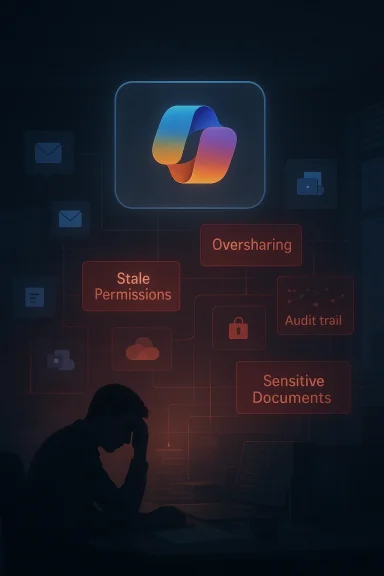 Overview
Microsoft has spent the last two years turning Copilot into a centerpiece of its AI strategy, embedding it across Windows, Microsoft 365, security tooling, and the broader workplace stack. The pitch is straightforward: let the model draft emails, summarize documents, surface insights, and reduce the friction of routine knowledge work. But every time a system like this gets deeper access to mailboxes, files, chats, and internal records, it becomes a governance problem as much as a productivity feature.The Gartner warning matters because it captures a tension that has defined enterprise AI adoption from the start. Organizations want the convenience of a conversational layer over their data, but they do not want the assistant to become a convenient exfiltration channel. Microsoft itself now explicitly frames oversharing as one of the most common risks in a Copilot rollout, and its own guidance focuses heavily on limiting exposure through Purview, sensitivity labels, and SharePoint remediation.
That is an important signal. When the vendor’s documentation and the market’s security analysts are converging on the same concern, the issue is no longer theoretical. The problem is not simply whether Copilot can hallucinate a wrong answer; it is whether Copilot can retrieve the right answer from a place it should never have been able to touch in the first place. That distinction is critical.
The Friday-afternoon framing is also a useful cultural shorthand. It is less about the clock than the mindset: fatigue, distraction, rushed approvals, and the very human tendency to trust automation when one is eager to wrap up the week. In that sense, Xu’s warning is not really a ban proposal so much as a reminder that AI risk is as much about operational discipline as model behavior. Companies that already struggle with file sprawl, weak permissions, and inconsistent review practices are unlikely to be rescued by a chat box.
At the same time, Microsoft’s own posture shows how much of the market now accepts the premise that Copilot is here to stay. The company is not pulling back; it is building around the risk with security controls, deployment blueprints, and administrative guidance. That means the real contest is no longer whether AI assistants should exist in the enterprise, but whether firms can deploy them without turning their own internal information architecture into a liability.
Background
Copilot’s rise follows a familiar pattern in enterprise software: a powerful new interface is introduced before every organization has cleaned up the underlying data estate. Microsoft 365 environments are notorious for decades of accumulated permissions, externally shared documents, stale collaboration links, and inconsistent sensitivity labeling. Copilot does not invent those problems, but it does surface them more efficiently than a traditional search box ever could.Microsoft has repeatedly emphasized that Copilot respects existing permissions and only returns content users are already authorized to access. In practice, though, that assurance cuts both ways. If a worker has excessive access because a team folder was broadly shared years ago, Copilot can make that content much easier to discover, copy, summarize, or forward. Microsoft now explicitly says oversharing is one of the most common risks in Copilot deployments and provides a phased blueprint to reduce it.
That is why the security conversation has shifted from “can the model be trusted?” to “can the organization’s controls be trusted?” Microsoft’s own guidance stresses shared responsibility, data classification, and centralized governance, which is a polite way of saying the model will happily operate inside whatever permission mess it inherits. The assistant is not the only security layer; it is the front end to your existing one.
The wider industry has also learned that AI systems with broad enterprise access are attractive targets for prompt injection, data harvesting, and social engineering. Researchers and security firms have shown how Copilot-style tools can be manipulated into revealing internal details or drafting convincing phishing messages. That has pushed vendors toward better guardrails, but the cat is already partly out of the bag: if the bot can read useful data, it can also be abused to expose it.
There is also a market narrative underneath all this. Microsoft has invested heavily in AI infrastructure and product integration, and Copilot is central to its growth story in a crowded AI ecosystem. The company wants Copilot to become a default work companion, not a niche add-on. That ambition makes every security warning more consequential, because the broader the rollout, the bigger the blast radius if governance fails.
What changed with Copilot
The key shift is that search became actionable summarization. Users are not just locating files; they are asking a model to digest them, transform them, and often write something new on top. That makes accidental disclosure easier because the assistant can stitch together fragments from multiple sources into a single response.It also changes user behavior. Workers may stop checking source files carefully if the summary looks polished and authoritative. That trust can be productive, but only when the organization’s controls are mature.
- Copilot accelerates discovery of already-shared content.
- It increases the value of weak or outdated permissions.
- It can turn minor oversharing into major visibility.
- It makes the consequences of human laziness much larger.
Why the Friday Warning Resonates
The “Friday afternoon” line works because it is funny in a painfully accurate way. Security teams know that risk does not distribute evenly across the week. Toward the end of the day, and especially at the end of the week, people are more likely to approve something without checking it twice, forward a summary without verifying it, or rely on an AI-generated response because it seems good enough.That human factor is central to generative AI risk. A model can be wrong, but a user can also be careless about whether it is wrong. In a traditional workflow, a mistake might remain isolated in a draft. With Copilot, that mistake can become a polished email, a neatly summarized confidential memo, or a shareable briefing note that looks more credible precisely because it was generated by software.
Human attention is a security control
Analysts often talk about identity, access, and data protection, but attention is the hidden control layer. If employees do not review outputs, do not question permissions, and do not understand the sensitivity of what they are asking, then the model becomes an accelerant rather than a safeguard.That is why Xu’s quip lands as more than a joke. It is a proxy for a broader truth: AI safety degrades when human oversight degrades. Friday afternoon is just the meme-friendly version of a real organizational weakness.
- Fatigue leads to faster approval.
- Faster approval increases leakage risk.
- Copilot can make output look more trustworthy.
- Trustworthy-looking output can be the most dangerous kind.
Oversharing as the Core Enterprise Risk
Microsoft’s own current guidance places oversharing at the center of Copilot deployment risk. That is important because oversharing is boring, legacy, and deeply common — which is exactly why it is dangerous. It is not an exotic zero-day; it is the accumulated result of years of convenience-first file sharing and inconsistent cleanup.The practical issue is simple. Copilot does not need to break into protected data to create trouble. It only needs to be given access to content that should have been better classified, better partitioned, or better time-limited in the first place. Once the model can retrieve that content, the user experience makes it feel intentionally available.
Why old sharing mistakes become new AI problems
Traditional oversharing was already a compliance headache. Copilot turns it into an active interface problem. Instead of buried files sitting quietly in the wrong place, the content becomes queryable through natural language and easier to combine with other artifacts.That is why Microsoft’s documentation repeatedly highlights SharePoint, OneDrive, labels, DLP, and administrative remediation. The company is effectively telling customers to fix the plumbing before they install the smart faucet.
- Public links and broad internal access remain common hazards.
- Stale permissions can expose old project material.
- Sensitive documents may be discoverable long after their usefulness ends.
- AI makes incomplete cleanup more visible, not less.
Microsoft’s Security Story
Microsoft is not ignoring these concerns. In fact, its current messaging leans heavily into security, compliance, and governance, with documentation that describes Copilot as part of a layered defense strategy. The company’s official materials now stress that customers must use tools like Purview, sensitivity labels, and access control policies to manage how AI interacts with enterprise content.That helps, but it also reveals a reality many buyers may have hoped to avoid: Copilot security is not “built in” in the sense of automatic protection from bad internal governance. It is more accurate to say Microsoft has built a framework for customers who are willing to do the work. The controls exist; the discipline still has to come from the organization.
Enterprise protection versus consumer convenience
The consumer story around AI assistants is different because the data surface is usually smaller and less structured. In the enterprise, however, every mailbox, SharePoint site, Teams chat, and document library can become part of the assistant’s cognitive footprint. That makes permission management far more consequential.For IT and compliance leaders, the question is not whether Copilot can draft a good response. It is whether the response can be audited, constrained, labeled, and blocked when necessary. Microsoft’s emphasis on governance suggests that the company knows enterprises will demand exactly that.
- Purview is positioned as a central control plane.
- Sensitivity labels are meant to preserve classification.
- Oversharing remediation is treated as a deployment prerequisite.
- DLP policies can block certain files or emails from AI processing.
Hallucinations Are Only Half the Story
The Futurism piece points to hallucinated police reports, exposed passwords, and other high-profile Copilot missteps as evidence that the system can behave unpredictably. Those failures matter, but in enterprise settings they are not always the worst problem. A wrong answer can be embarrassing. A wrong answer that exposes real internal content can be damaging.This is why security analysts keep returning to the same theme: the model’s reliability is only one axis of risk. If the assistant is embedded in a workflow that touches confidential emails or internal documents, then even occasional mishandling becomes a material governance issue. The hazard is not just falsehood; it is false confidence.
Accuracy, confidence, and the appearance of authority
AI systems are particularly dangerous when they sound more certain than the evidence warrants. A worker may accept a summary because it is polished, not because it is verified. That is especially true near the end of the week, when people are less inclined to do a full read-through.This is the reason many companies are beginning to talk about AI usage policy in the same breath as data classification and change management. A model that writes convincingly can still be a poor substitute for a careful human reviewer.
- Hallucinations create reputational risk.
- Data exposure creates legal and compliance risk.
- Confident tone can mask both problems.
- Human review remains the final defense.
Competitive and Market Implications
Copilot’s risk profile has implications well beyond Microsoft itself. Competitors across the AI assistant market are grappling with the same basic issue: the more useful the assistant becomes, the more access it needs, and the more dangerous it becomes if access is too broad. Microsoft is simply the most visible test case because it sits in so many workplaces already.For rivals like Google and Anthropic, the challenge is to prove that their own enterprise assistants can offer comparable productivity without inheriting the same governance pain. But the market may be moving toward a less glamorous conclusion: no assistant avoids risk if the organization’s data estate is messy. The differentiator will be how gracefully the platform helps customers contain that mess.
Enterprise buying decisions are getting more conservative
Security buyers rarely get excited by demo magic for long. Once the pilot phase begins, they ask about retention, audit logs, labeling, exfiltration controls, and administrative visibility. Those questions are now shaping the AI platform market more than product polish.That could slow adoption in some sectors, especially regulated ones. It could also make services and governance tooling more valuable than the assistant itself.
- Security tooling is becoming part of the AI sales cycle.
- Governance maturity may outweigh model quality in procurement.
- Regulated sectors will move slower but demand more proof.
- The winners may be those who simplify control, not just output.
The Role of Governance and Training
The most effective response to the Copilot risk story is not a blanket ban. It is better governance, clearer policy, and better user training. Microsoft’s own materials point in that direction by emphasizing oversharing remediation and secure-by-default practices before and during deployment.Training matters because many AI failures begin with innocent behavior. A user asks for a summary of a folder they can access but should not broadly redistribute. Another asks the assistant to draft a message using sensitive context that is only partially reviewed. In both cases, the tool is not the only actor; the employee’s habits are part of the attack surface.
What good governance should look like
A mature deployment should assume that users will be busy, under-informed, and occasionally overeager. That means policies have to be simple enough to remember and strong enough to matter.A practical framework would include:
- Data cleanup before broad rollout.
- Sensitivity labels on high-risk content.
- Clear rules for what Copilot may summarize or draft.
- Monitoring of risky sharing patterns.
- Mandatory human review for outward-facing material.
- Training should be role-specific.
- Governance should be automated where possible.
- Exceptions should be explicit, not implied.
- Audit trails should be part of normal operations.
Consumer Lessons from an Enterprise Warning
Even though the Gartner warning is aimed at companies, the logic applies to consumers too. Any chatbot can become a problem if users rely on it to summarize, explain, or rewrite sensitive information without checking the result. The difference is that consumer mistakes usually affect a single person, while enterprise mistakes can affect an entire organization.That said, the consumer lesson is valuable because it highlights a broader AI literacy issue. People are beginning to treat chatbots like helpful coworkers, but coworkers are accountable, while chatbots are probabilistic systems that can be confidently wrong. That is a very different relationship.
Why this matters outside Microsoft 365
A Friday-afternoon ban is really a shorthand for a wider rule: do not assume the assistant is doing your verification for you. Whether the tool is Copilot, ChatGPT, Gemini, Claude, or something else, the burden of judgment still sits with the user.- Do not paste sensitive data casually.
- Do not forward AI-generated output without review.
- Do not trust summaries of high-stakes material blindly.
- Do not confuse fluency with correctness.
Strengths and Opportunities
The Copilot story is not just a warning label. There is real value in the idea of an assistant that can reduce search friction, summarize sprawling workspaces, and help employees get through information overload. Microsoft’s security guidance also suggests the company understands that trust will be won or lost on governance, not marketing alone.- Productivity gains are genuine when the data is clean and permissions are sound.
- Microsoft’s ecosystem integration gives IT teams a familiar control surface.
- Purview and labeling offer a credible path to risk reduction.
- Oversharing cleanup can improve the broader Microsoft 365 environment.
- Auditability is becoming better aligned with enterprise expectations.
- Policy-driven deployment can make AI adoption more sustainable.
- User education can turn Copilot from a novelty into a disciplined work tool.
Risks and Concerns
The biggest danger is that organizations will confuse the appearance of control with actual control. Copilot’s convenience can hide the fact that old sharing habits, stale permissions, and poor review practices are still very much alive under the hood. That combination is exactly how small mistakes become serious incidents.- Oversharing exposure can surface content that should have stayed buried.
- Hallucinations can create convincing but incorrect business output.
- Prompt injection can be exploited when bots reach too broadly.
- Human complacency rises when the output looks polished.
- Compliance failures may follow from weak labeling or poor remediation.
- Overconfidence in AI can undermine existing review processes.
- Complex governance setups may be misconfigured in real deployments.
Looking Ahead
The next phase of the Copilot story will not be defined by whether Microsoft can keep promoting the product. It will be defined by whether customers can operationalize it without turning internal sprawl into a liability. The companies that succeed will likely be the ones that treat AI deployment as a security and records-management initiative first, and a productivity project second.That shift may sound pessimistic, but it is actually how enterprise technology matures. Email, cloud storage, and collaboration suites all went through the same process: excitement first, then governance, then normalization. Copilot is still in the messy middle, where the promise is obvious and the controls are catching up.
What to watch next
- Expanded Microsoft guidance on oversharing remediation and AI governance.
- More vendor pressure to offer simpler default-safe configurations.
- Security research on prompt injection and indirect data exposure.
- Enterprise adoption patterns in regulated industries.
- Policy changes around when AI-generated material requires human review.
Source: Futurism Analyst Warns Against Using Microsoft's Copilot AI on Friday Afternoons
Last edited:
