Microsoft’s latest push to make AI not just a productivity feature but an operational platform rests on a simple premise: if agents are going to do real work, enterprises need a managed, auditable, and governable place to build, test, run and secure them — and Copilot Studio is that place. Recent updates give makers more model choices, administrators more governance and security controls, and business leaders clearer levers for measurement and scale. Taken together, these changes position Copilot Studio as the practical foundation for what Microsoft calls an agentic business transformation — turning AI from experimentation into measurable business outcomes.
Agentic business transformation reframes AI from a drafting tool into a set of autonomous, goal‑oriented agents that can reason, act and persist state across systems. The idea is not science fiction; it’s engineering disciplines applied to LLM-driven agents: ground outputs in tenant data, enforce approval gates for high-risk actions, and instrument every decision for observability and ROI measurement. That lifecycle — monitor, gather, reason, validate, act, learn — is explicit in Microsoft’s Copilot Studio playbook and in early enterprise deployments.
Why this shift matters:
Caveat: model performance claims are product‑and‑workload dependent. Enterprises should validate models against their own ground truth before choosing a production model.
Security note: UI automation must be scoped carefully with credential vaulting and runtime protection to avoid token or credential exfiltration.
The platform does not remove the need for disciplined engineering, governance and culture change. But it drastically reduces friction for organizations that do the work: it shortens the path from idea to production, provides the operational primitives to run agents safely, and gives IT the controls to measure and manage value.
Taken together, Copilot Studio gives CIOs and transformation leads a credible, governed path to agentic business transformation: not by promising magic, but by delivering integrated tooling, identity, observability, and security that align with enterprise operational requirements. For organizations prepared to invest in data grounding, governance and skills, Copilot Studio is a practical foundation for turning agentic ideas into repeatable, auditable and measurable business outcomes.
Microsoft’s product and partner posts, independent reporting and customer case studies together show the same pattern: agents provide outsized value when they are engineered as production services with identity, policy, telemetry and cost controls. Copilot Studio consolidates those primitives into a single platform — and that is why it can serve as the foundation for a responsible, measurable agentic business transformation.
Source: Microsoft Microsoft Copilot Studio: Powering agentic business transformation | Microsoft Copilot Blog
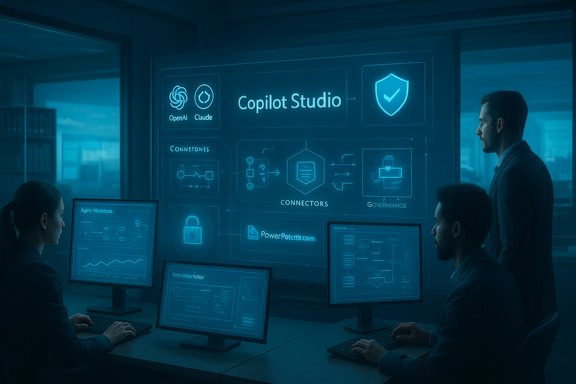 Background: what “agentic business transformation” means in practice
Agentic business transformation reframes AI from a drafting tool into a set of autonomous, goal‑oriented agents that can reason, act and persist state across systems. The idea is not science fiction; it’s engineering disciplines applied to LLM-driven agents: ground outputs in tenant data, enforce approval gates for high-risk actions, and instrument every decision for observability and ROI measurement. That lifecycle — monitor, gather, reason, validate, act, learn — is explicit in Microsoft’s Copilot Studio playbook and in early enterprise deployments.Why this shift matters:
- It moves automation from one-off macros and RPA into reusable, composable agents that can be versioned and governed.
- It converts systems of record (ERP, CRM, HR systems) into systems of action where agents can not only surface answers but write back changes under policy constraints.
- It forces organizations to treat agents as operational assets — with owners, SLAs, costs and observability — rather than toy projects.
What Copilot Studio now provides: the platform pieces
Copilot Studio’s value comes from combining authoring, execution, model choice, integrations and governance into a single tenant-scoped platform. Key capabilities that make it suitable as a foundation are:Low-code and pro‑dev authoring
- A visual, conversational authoring surface for makers to design agent behavior, prompts, and actions without writing full stacks of code.
- Embedded support for Power Platform connectors, Microsoft Graph, Dataverse and more — which reduces bespoke integration work.
Model choice and routing
- Makers can select from multiple leading models for different tasks (for example, high‑throughput summarization vs deep reasoning). Microsoft has added industry models to the menu so agents can pick models optimized for their workload. This multi‑model approach is now surfaced inside Copilot Studio.
Execution runtime and “computer use”
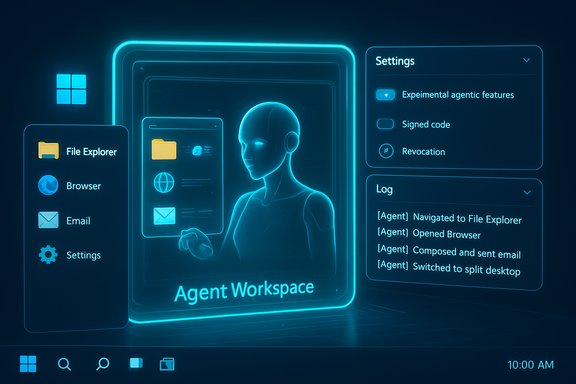
- Agents can execute deterministic flows (agent flows embedded with Power Automate logic) and also perform UI automation where APIs don’t exist, using hosted browser and Windows 365-based Cloud PC pools for secure execution. This bridges legacy systems without requiring API upgrades.
Identity, lifecycle and the Agent control plane
- Agent identities are treated as first-class directory objects via Microsoft Entra Agent ID and Agent 365 controls. That makes agents discoverable, manageable in access reviews, and bound to the tenant’s IAM and lifecycle processes. It’s a significant step: agents can be assigned owners, placed on org charts, and included in conditional access policies.
Observability, testing and ROI measurement
- Built-in analytics, evaluation tooling for A/B agent comparisons, run histories, and ROI dashboards let teams prove value and catch regressions before they reach production. These are critical to turning pilot successes into repeatable programs.
Governance and security integration
- Copilot Studio ships with default protections against prompt injection and cross‑prompt injection, and it now supports near‑real‑time runtime protection by integrating with Microsoft Defender and third‑party monitoring systems — enabling external systems to approve or block actions at runtime. That “bring‑your‑own‑protections” model is what ties agentic automation to enterprise risk controls.
Recent platform updates that matter to IT and business leaders
The product announcements and admin updates over the past year are not boutique features — they are the operational levers CIOs need to scale agents safely.1) Model diversity and “bring your own model” choices
Microsoft has broadened the model choices available inside Copilot Studio, adding third‑party vendor models alongside its default OpenAI options. This enables makers to select models for particular tasks — better cost/performance fit, or regulatory reasons — and plugs Copilot Studio into a multi‑model ecosystem rather than locking teams to a single provider. Independent press coverage confirms Microsoft’s integration of newer model families into Copilot tooling. Practical implication: teams can experiment with different models for cost‑sensitive workloads (e.g., simple summarization) and reserve higher‑capability models for deep reasoning or high‑risk decisions.Caveat: model performance claims are product‑and‑workload dependent. Enterprises should validate models against their own ground truth before choosing a production model.
2) Real‑time protection and Defender integration
Copilot Studio now supports external, near‑real‑time protection hooks that let Microsoft Defender (and other providers) examine agent plans before execution and block unsafe actions or prompt injections. This architecture delivers a safety net for agents that can perform write‑backs or send communications. Microsoft’s product documentation and Defender team posts describe how runtime blocking and audit logging work. Why this matters: prompt injection and OAuth token risks are real — security researchers have demonstrated attack patterns that target agents. Runtime interception and policy enforcement raise the bar for safe production deployments. However, integrating external controls requires architecture work (latency, telemetry mapping, incident workflows) and thorough testing.3) Copilot Credits — consumption and cost governance
Microsoft consolidated billing around Copilot Credits, a consumption currency for agent actions, content processing and model invocations. Capacity packs and pay‑as‑you‑go options let organizations choose pricing models and set tenant limits. Copilot Credits make usage predictable but introduce a new operational responsibility: monitoring and cost‑optimizing agents just like any other cloud service. Action point: Establish cost allocation and tagging, run load tests to estimate credits per workflow, and set admin alerts for unexpected consumption spikes.4) “Computer use” and UI automation
Agents can now operate apps, websites and legacy portals with a virtual mouse and keyboard inside hosted browser or Cloud PC contexts. For many enterprises, this is the practical bridge between modern AI workflows and older vendor portals that lack APIs. It expands the surface area of automation but also increases the attack surface and requires credential handling and approvals.Security note: UI automation must be scoped carefully with credential vaulting and runtime protection to avoid token or credential exfiltration.
5) Agent 365 and the Agent Store / control plane
Microsoft is surfacing enterprise agent management inside an Agent 365 control plane and a discoverable Agent Store. This turns agents into cataloged, auditable resources that IT can approve and distribute across the tenant — a crucial step for scale. Internal and partner materials detail how Agent 365 surfaces the same governance capabilities in a centralized console.Real-world evidence: measurable outcomes and business cases
Transformational results are already visible in early adopter stories — when organizations invest in a governed agent platform instead of ad‑hoc tools, they report large productivity gains.- EY: Microsoft case materials and the published EY case study show that EY’s PowerPost/PowerMatch efforts (built on Power Platform and Microsoft integrations) delivered dramatic reductions in lead times and cost; Microsoft’s public materials report up to a 95% reduction in lead time and material cost savings, and partner coverage validates the customer story. These numbers reflect the value of platformed automation applied to high-volume, repeatable finance processes.
- Other customers (Danone, CSX and larger partners) have publicly described pilot outcomes that emphasize error reduction, faster processing and measurable ROI when Copilot- or Power Platform-based agents are applied to targeted process areas such as order-to-cash, HR processing and shared services. Platform playbooks emphasize starting with high-volume, low-risk processes that have clear KPIs.
- Where agents reduce repetitive manual work with well-defined inputs and outputs, ROI can be rapid and large.
- The transformational delta comes from standardizing agent lifecycles and governance — not just from model quality alone.
Strengths: why Copilot Studio works as a foundation
- Integrated stack: Authoring, connectors, Power Platform flows, identity, monitoring and model routing in one tenant-scoped fabric reduces integration and compliance friction.
- Governance-first design: Entra Agent ID, Purview and runtime Defender hooks let security teams map agents to existing IAM and data governance controls — a non-negotiable for regulated industries.
- Operational tooling: Evaluations, analytics, capacity billing (Copilot Credits) and agent inventories give the SRE and IT teams the instrumentation they need to run agents as production services.
- Model flexibility: Multi‑model support lets teams match capability and cost to requirements rather than betting on a single vendor ecosystem.
- Bridges to legacy: UI automation and hosted Cloud PC execution connect agentic workflows to systems that would otherwise block automation due to lack of APIs.
Risks and operational realities: what enterprises must plan for
Agentic transformation is powerful, but it adds new classes of risk and operational workload. The platform reduces risk, it doesn’t eliminate it.Hallucination and decision safety
Agents that generate outputs and perform actions can produce plausible but incorrect results. Mitigations:- Ground answers in tenant data (RAG patterns).
- Use deterministic checks and human validation stations for high‑impact tasks.
- Apply policy enforcement on write-backs and set minimum confidence thresholds.
Prompt injection and UX-driven attacks
Researchers have demonstrated agent-targeting attacks (examples such as CoPhish and OAuth token exfiltration). Microsoft’s runtime protections and Defender hooks help, but organizations must still enforce consent policies, restrict third‑party app consent, and monitor for suspicious app activity. Security hygiene and least-privilege principles remain indispensable.Cost control and unexpected consumption
Copilot Credits convert agent behavior into dollars. Without governance, a misconfigured agent or a runaway test could quickly inflate bills. Organizations need:- Credit budgets and alerts.
- Cost profiling for new agents during staging.
- Consumptions quotas and policy guardrails.
Data residency and compliance concerns
Even with tenant scoping, some model providers or managed services route requests through third‑party infrastructure (some third‑party models may be hosted on AWS or another cloud). Confirm model hosting, contractual residency guarantees, and data retention policies before routing sensitive data to external models. Flag: always validate model‑provider hosting and contractual terms for regulated data.Organizational change and skill gaps
Scaling agents at enterprise scope requires new roles: agent owners, prompt engineers, validation/test engineers, and a central Copilot Center of Excellence. Successful adopters pair early wins with broad skilling programs to avoid pilots stagnating.Practical adoption playbook: five steps to a safe, measurable rollout
- Start with the use cases that have the clearest KPIs and the lowest regulatory friction — e.g., document triage, email routing, repetitive finance posting.
- Design an agent lifecycle: staging environment, evaluations, runbook tests, and validation checkpoints before any production write-back is allowed.
- Configure Entra Agent IDs and integrate the agents into access reviews and conditional access processes. Treat agents like production principals.
- Integrate runtime protection with Microsoft Defender (or your SOC’s detection platform) and enable audit logging to Purview/Defender for investigations.
- Control costs via Copilot Credits governance: estimate credits per workflow, pre-purchase capacity packs where predictable, and enable alerts for consumption anomalies.
- Pilot (shadow mode, non‑actionable): measure accuracy and false positives.
- Validation (human-in-loop, limited write‑back): collect operational telemetry.
- Production (controlled write‑back, monitored runtime protection): scale with cost and SLA governance.
- Continuous improvement (A/B model comparisons and evaluations): version agents and re-evaluate model choices.
Where claims should be verified and what remains marketing
Many vendor pages and partner case studies highlight large percentage improvements and cost savings. While the early case studies (for example, EY’s PowerPost/PowerMatch) show compelling outcomes, each deployment’s ROI depends on data quality, process maturity and governance. Claims about model superiority (e.g., one model is always best) should be validated with tenant data and specific end‑to‑end scenarios before committing at scale. Public reporting confirms both the EY numbers and the product features, but enterprises should treat vendor numbers as directional and verify with pilot-based measurement.Final assessment: why Copilot Studio is a defensible platform bet
Copilot Studio is not just another low‑code toy; it’s an opinionated platform that stitches together model choice, connectors, runtime automation, identity, security and cost controls in a tenant‑scoped surface. Those integration points — Entra identities for agents, Defender hooks for runtime protection, Copilot Credits for measurable consumption, and first‑class analytics and evaluation tooling — are precisely what enterprises need to move from pilots to production fleets of agents.The platform does not remove the need for disciplined engineering, governance and culture change. But it drastically reduces friction for organizations that do the work: it shortens the path from idea to production, provides the operational primitives to run agents safely, and gives IT the controls to measure and manage value.
Taken together, Copilot Studio gives CIOs and transformation leads a credible, governed path to agentic business transformation: not by promising magic, but by delivering integrated tooling, identity, observability, and security that align with enterprise operational requirements. For organizations prepared to invest in data grounding, governance and skills, Copilot Studio is a practical foundation for turning agentic ideas into repeatable, auditable and measurable business outcomes.
Microsoft’s product and partner posts, independent reporting and customer case studies together show the same pattern: agents provide outsized value when they are engineered as production services with identity, policy, telemetry and cost controls. Copilot Studio consolidates those primitives into a single platform — and that is why it can serve as the foundation for a responsible, measurable agentic business transformation.
Source: Microsoft Microsoft Copilot Studio: Powering agentic business transformation | Microsoft Copilot Blog