

Shroud’s blunt line — “If Microsoft did Mixer today they would be hot sh-- — it just came too early” — landed like a challenge, not a eulogy, and it’s the perfect framing for a very modern gaming-business thought experiment: could Microsoft’s failed Mixer product have succeeded if launched and nurtured in 2025 rather than 2016–2020? The short answer is: plausibly, yes — but only if Microsoft learned the specific lessons Mixer’s collapse taught the industry and then matched them with sustained product focus, creator economics, and cultural craft. That’s the argument made most recently in a Windows Central feature reflecting on Shroud’s comments, and it’s the one this piece tests against history, market data, and hard engineering and business realities.
Mixer began life as Beam, a low‑latency, interactive streaming prototype that launched in early 2016 and attracted Microsoft’s attention for its technical strengths. Microsoft acquired Beam in August 2016 and rebranded it as Mixer in May 2017 as it folded the team into Xbox and Windows integrations. Those dates and the acquisition timeline are well documented in contemporaneous reporting. Mixer’s core differentiators were technical: a “Faster Than Light” streaming protocol that brought sub‑second latency, built‑in viewer interactivity hooks, and deep Xbox/Windows integration (native Game Bar broadcasting, controller‑level UX, and Sparks as an in‑platform currency). Those features made Mixer unusually well suited to interactive live formats — audience voting, in‑stream game events, and co‑streaming with multiple broadcasters. Microsoft leaned into the platform and, in 2019, spent heavily to buy celebrity streamer talent in a high‑profile war against Twitch. But Mixer’s story ended quickly. On June 22, 2020 Microsoft announced Mixer would shut down and that it would partner with Facebook Gaming to migrate partners; Mixer’s services ceased on July 22, 2020. Executives said the platform couldn’t scale to the levels needed to break Twitch’s network effects. The shutdown left many creators in limbo and exposed the hard truth about creator economies: capital plus tech is not always enough to move an audience at scale.
But technical novelty alone will not be the deciding factor. A relaunch would need a fundamentally different set of commitments: long‑term creator economics, product simplicity for small creators, open developer tooling, authentic cultural work, and careful regulatory hygiene around IP integration. Those are the specifics Microsoft would need to nail to make a relaunch “hot” in the way Shroud imagines.
Mixer’s real legacy is not that it failed — it’s that it taught the industry how hard the streaming business really is. If Microsoft ever tries this again, three things matter most: product patience, cultural humility, and a creator economics model that scales beyond buying headlines. Do that, and Shroud’s thought experiment isn’t just wishful thinking — it’s a road map.
Source: Windows Central https://www.windowscentral.com/gami...streaming-platform-and-hes-100-percent-right/
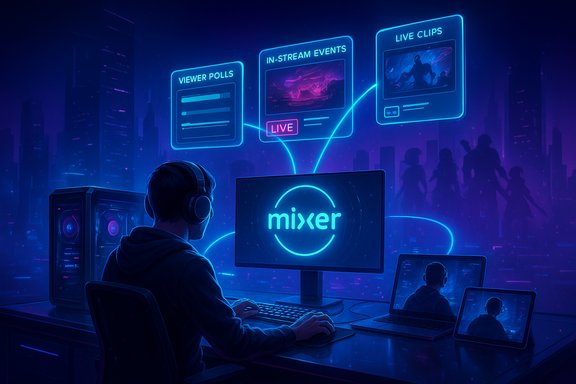 Background / Overview
Mixer began life as Beam, a low‑latency, interactive streaming prototype that launched in early 2016 and attracted Microsoft’s attention for its technical strengths. Microsoft acquired Beam in August 2016 and rebranded it as Mixer in May 2017 as it folded the team into Xbox and Windows integrations. Those dates and the acquisition timeline are well documented in contemporaneous reporting. Mixer’s core differentiators were technical: a “Faster Than Light” streaming protocol that brought sub‑second latency, built‑in viewer interactivity hooks, and deep Xbox/Windows integration (native Game Bar broadcasting, controller‑level UX, and Sparks as an in‑platform currency). Those features made Mixer unusually well suited to interactive live formats — audience voting, in‑stream game events, and co‑streaming with multiple broadcasters. Microsoft leaned into the platform and, in 2019, spent heavily to buy celebrity streamer talent in a high‑profile war against Twitch. But Mixer’s story ended quickly. On June 22, 2020 Microsoft announced Mixer would shut down and that it would partner with Facebook Gaming to migrate partners; Mixer’s services ceased on July 22, 2020. Executives said the platform couldn’t scale to the levels needed to break Twitch’s network effects. The shutdown left many creators in limbo and exposed the hard truth about creator economies: capital plus tech is not always enough to move an audience at scale. What Mixer got right — technical and product wins
Mixer’s brief life left behind several genuine technical advantages that remain instructive for anyone building streaming tech today.- Sub‑second latency: Mixer’s FTL protocol delivered near‑instant interaction between streamer and viewer, enabling real‑time control and micro‑events that Twitch’s traditional HLS pipelines made much harder. That technical milestone enabled new genres of interactive entertainment.
- Developer hooks and interactivity toolkits: Mixer shipped APIs and SDKs for game developers and creators to build viewer‑facing mechanics that actually impacted live gameplay, turning passive viewing into participatory sessions. This lowered friction for experiments — from vote‑driven branching narratives to in‑match audience triggers.
- Platform integration: Mixer was built into Xbox dashboards and the Windows Game Bar, reducing friction for millions of Xbox and Windows users to stream and to discover streams. That native placement matters: streaming platforms succeed when discovery and creation are low‑cost for users.
What went wrong — why tech alone wasn’t enough
Mixer’s technical chops couldn’t compensate for larger platform‑market realities. The failure modes are instructive:- Network effects and audience inertia. Twitch had scale, a mature discovery ecosystem, and an entrenched creator‑tooling ecosystem. Audience habits favor where the people already are; moving viewership requires more than a better protocol. Microsoft underestimated how sticky social graphs are in creator economies. Contemporary reporting and post‑mortems point to this as Mixer’s single largest obstacle.
- Short‑term partnership strategy. In an effort to buy attention quickly, Microsoft signed marquee exclusivity deals with top talent (notably Ninja and Shroud). Those deals were eye‑popping and expensive: public estimates put Ninja’s Mixer deal in the $20–30 million range, and reporting around Shroud suggests an eight‑figure contract was bought out when Mixer closed. But exclusives alone don’t build a broad ecosystem; they can yield headline numbers without sustainable community growth. These reported figures are estimates from multiple outlets and should be read as industry reporting, not corporate confirmation.
- Corporate patience and product focus. Launching and building a social platform requires long‑term cultural attention, not periodic investments. Microsoft’s decision to discontinue Mixer reflected a corporate calculus that the platform could not economically reach first‑order scale. That calculus ignored the long, iterative runway needed for social products. Phil Spencer later framed the decision as strategic, but critics argue Microsoft didn’t commit the kind of product‑level patience necessary for social success.
Shroud’s point: why Mixer “came too early”
Shroud’s argument — that Mixer would be formidable if built now — is rooted in two connected observations. First, the streaming and creator market in 2025 looks different: more platforms (Kick), stronger multi‑platform viewing, a growing marketplace for creator monetization, and a renewed appetite for interactive formats. Second, Microsoft’s corporate position in 2025 is materially different from 2019: with the Activision Blizzard acquisition completed in October 2023, Microsoft owns franchises and IP that could seed platform integrations in ways it could not previously. Those are fair, concrete reasons Shroud’s counterfactual sounds plausible. But plausibility is not inevitability. To test the thought experiment, we must be explicit about two sets of facts: market structure in 2025 and where Microsoft’s assets could realistically create leverage.- Market structure (2025): live‑streaming hours have recovered and grown; Stream Hatchet Q2 and Q3 2025 reports show overall hours watched rising back into the 9+ billion quarters and the competitive picture spreading beyond Twitch to YouTube Gaming, Kick, and increasingly TikTok Live. Kick took noticeable share gains in 2025, YouTube Gaming is at record viewership, and TikTok Live is an external attention giant transforming the attention economy. That means the streaming market is more fragmented and platform switches — if paired with true product differentiation — can succeed in niches.
- Microsoft’s assets (post‑Activision): owning Call of Duty, World of Warcraft, Diablo, Candy Crush, and many other franchises gives Microsoft a unique set of properties to experiment with in‑platform experiences (special in‑game events tied to streams, cross‑promotion of Game Pass, etc.. Those are real levers — but they require orchestration across internal teams, developer buy‑in for interactive hooks, and a sustained investment to build ecosystem effects beyond short promotional bursts.
The product playbook Microsoft would have needed in 2025
If Mixer were relaunched today, what would it need to do differently? The list below is both tactical and strategic — concrete product moves Microsoft could make to make a relaunch credible.- Prioritize creator‑first economics at scale, not just marquee exclusivity.
- Invest in reliable revenue models for tiers of creators (subscriptions, ad rev share, robust tipping, creator grants).
- Commit to multi‑year, transparent incentive programs so creators can plan and build communities without fear of sudden program cancellations.
- Make interactivity the default, not an add‑on.
- Ship SDKs and easy templates that let small studios add viewer interactions with minimal dev time.
- Provide low‑friction composer tools that let creators build interactive overlays and event logic without a programmer.
- Convert Microsoft’s owned games into living lab experiments (but don’t lock them).
- Use Activision Blizzard titles as early-stage playgrounds for integrated features (clips + live events + rewards), but keep platforms cross‑platform so the industry (and users) don’t feel boxed in.
- Offer opt‑in “audience event” APIs for big franchises — e.g., community‑triggered in‑game global events that create spectacle and discovery.
- Surface clips and short‑form content natively.
- Compete with short‑form players by making clip creation, remixing, and social sharing frictionless. If short clips are eating playtime, build features that convert clips into a discovery engine for longer live sessions.
- Ship strong moderation and creator safety tools from day one.
- Interactive features scale risk; invest early in AI‑assisted moderation, rate limits for viewer controls, and transparent appeal processes so creators aren’t burned.
- Commit long term.
- Build a multi‑year roadmap and keep public‑facing promises about investment windows to avoid the “pull the plug” risk that doomed modern social experiments.
Money, talent, and the limits of signing checks
Mixer’s high‑profile talent signings were headline‑grabbing and instructive. Public reporting estimated Ninja’s exclusivity at roughly $20–30 million and Shroud’s contract in the multi‑million range; when Mixer closed Microsoft bought out or released those contracts. Multiple industry outlets reported similar ranges — they are estimates derived from reporting, agent leaks, and SEC filings where available, not precise corporate disclosures. These deals demonstrated two truths: big checks attract attention, and attention alone doesn’t create sustainable communities. A relaunch strategy centered purely on exclusives would be expensive and brittle. The modern creator market rewards platforms that build predictable mid‑tier monetization and sticky discovery loops. For a relaunched Mixer to work, Microsoft would need to:- Spend money differently: seed mid‑tier creator economies with predictable monthly payouts and discoverability support.
- Build infrastructure that reduces creators’ operational friction (analytics, payments, cross‑platform clips).
- Keep marquee signings as accelerants, not the foundation.
Risks, governance, and cultural hurdles
Microsoft faces internal and external risks in any streaming push.- Organizational alignment. Streaming succeeds when games, platform teams, marketing, and ad sales all align. Microsoft’s history of organizational complexity (multiple product silos and shifting priorities) makes this coordination non‑trivial. Even great features risk poor execution if teams don’t ship with unity.
- Regulatory and antitrust optics. With Activision Blizzard under Microsoft, any tight coupling of Activision content to a Microsoft streaming platform would invite scrutiny. The October 2023 acquisition closed after regulatory review and concessions; Microsoft must avoid product designs that appear to lock content behind its own social surface. That means open APIs and cross‑platform commitments are not only good product choices — they’re governance necessities.
- Cultural authenticity. Social platforms are cultural products. Microsoft’s past attempts at “consumer cool” have sometimes landed as corporate mimicry rather than authentic culture building. A relaunch would require boots‑on‑the‑ground community work and fearless product experiments that accept short‑term risk for long‑term cultural payoff. Windows Central’s recent critique points directly at this gap: the technical muscle was there; cultural execution was not.
A reality check on a few specific claims
- Microsoft’s acquisition timeline and price for Activision Blizzard are verified: Microsoft completed the deal in October 2023 after filings and regulatory reviews. This is a settled corporate fact.
- Mixer’s acquisition (Beam) and closure dates are verifiable: Beam was acquired in 2016 (integration followed), Mixer rebrand occurred in May 2017, and Microsoft announced Mixer’s shutdown in June 2020 with services ending July 22, 2020. These technical dates are well documented.
- Reported money paid to Ninja and Shroud are industry estimates from multiple outlets (Forbes, Engadget, Newsweek, etc., not audited corporate disclosures. Use these figures as directional context, not as precise accounting.
- The claim that "Facebook Gaming is now defunct" in the Windows Central piece is not robustly supported by public records. Facebook Gaming continues to exist as a brand/feature under Meta’s gaming and video strategy as of late 2025; assertions it is “defunct” are editorial and should be flagged as potentially inaccurate or overstated. Treat that line as opinion, not a verified shutdown. Caution is warranted.
If Microsoft “did Mixer today” — realistic scenarios
Scenario modeling helps separate optimism from plausibility. Here are three plausible outcomes if Microsoft relaunched a Mixer‑style platform in 2025 and executed the playbook above.- Conservative outcome — niche success:
- Microsoft builds a reliable interactive streaming platform that becomes the preferred home for certain game franchises and a subset of creators focused on interactive formats. Hours watched grow, but the platform remains a specialized complement to Twitch/YouTube.
- Balanced outcome — meaningful third‑place platform:
- Through deep integrations with Activision titles, cross‑promotion via Game Pass, heavy investment in creator economics, and a strong clip/discovery engine, Microsoft captures a sustainable mid‑market share (single‑digit to low‑teens percent on key metrics) and creates a lucrative business unit that complements Xbox and Azure.
- Aggressive outcome — breakout mainstream competitor:
- Microsoft matches product focus with persistent investment and cultural authenticity, plus regulatory‑safe IP integration. Mixer becomes a mainstream streaming destination with significant creator migration. This requires near‑perfect execution and multi‑year discipline; the bar is extraordinarily high, but not impossible.
Conclusion — the playbook that could have saved Mixer, and the one that could still work
Mixer’s failure was not a condemnation of interactive streaming’s promise. It was a failure of timing, execution, and corporate patience. Shroud’s observation is valuable because it realigns us to two truths: (1) the technical problems Mixer solved are more relevant than ever, and (2) the modern market contains richer starter ingredients for a relaunch, from diversified platform competition to Microsoft’s expanded IP portfolio.But technical novelty alone will not be the deciding factor. A relaunch would need a fundamentally different set of commitments: long‑term creator economics, product simplicity for small creators, open developer tooling, authentic cultural work, and careful regulatory hygiene around IP integration. Those are the specifics Microsoft would need to nail to make a relaunch “hot” in the way Shroud imagines.
Mixer’s real legacy is not that it failed — it’s that it taught the industry how hard the streaming business really is. If Microsoft ever tries this again, three things matter most: product patience, cultural humility, and a creator economics model that scales beyond buying headlines. Do that, and Shroud’s thought experiment isn’t just wishful thinking — it’s a road map.
Source: Windows Central https://www.windowscentral.com/gami...streaming-platform-and-hes-100-percent-right/
