

Itochu Techno-Solutions is positioning its Managed Cloud Services portfolio as an enterprise control layer for Japanese organizations running workloads on AWS, Microsoft Azure and other public clouds as of June 2026. The pitch is not simply “move to cloud,” but “move without surrendering operational discipline.” That distinction matters because cloud adoption has long since stopped being a developer convenience story and become a board-level governance problem. For CIOs, the managed-service question is now less about novelty than accountability: who owns uptime, cost, security, and change when infrastructure no longer lives in the basement?
The first wave of public cloud adoption was sold with a liberation narrative. Enterprises would escape hardware refresh cycles, stop waiting months for capacity, and let teams deploy infrastructure as code instead of filing tickets into a procurement queue. That story was mostly true, but it was incomplete in the way all early platform stories are incomplete: it assumed that operational complexity would disappear because the physical servers did.
It did not. The burden moved upward, from racks and storage arrays to identity policy, network topology, logging, backup posture, patch timing, cost attribution, and regulatory evidence. For small teams, the cloud became powerful but slippery. For large enterprises, it became another estate to govern, except one where mistakes can propagate at software speed.
That is the opening for Itochu Techno-Solutions, better known as CTC, and its Managed Cloud Services. The company is not trying to convince conservative customers that AWS or Azure exists; that argument was settled years ago. It is trying to convince them that cloud operations can be made boring enough for mission-critical work.
The word “managed” is doing a lot of work here. In consumer technology, managed services can sound like a convenience wrapper. In enterprise IT, they are a redistribution of risk. If a bank, manufacturer, retailer, university, or public-sector agency hands cloud operations to a partner, it is buying more than monitoring dashboards. It is buying a process model, an escalation path, a compliance posture, and, ideally, a way to keep scarce engineers focused on the systems that actually differentiate the business.
That matters because cloud projects often fail in the handoff. A systems integrator designs the target architecture, a migration team moves workloads, a security team blesses the initial baseline, and then the environment is left to drift. Tags disappear. Privileges expand. Temporary exceptions become permanent. Monthly bills climb for reasons nobody can explain quickly. Backups exist, but restore procedures are not rehearsed under pressure.
Managed Cloud Services are an answer to that drift. CTC’s proposition is that enterprises need an operator with enough cloud depth to understand AWS and Azure primitives, enough infrastructure history to understand legacy workloads, and enough local context to deal with Japanese-language support, domestic compliance expectations, and procurement norms. That combination is not glamorous, but it is precisely what makes enterprise cloud hard.
The WindowsForum audience should read this through a pragmatic lens. For organizations running Windows Server, SQL Server, Active Directory dependencies, line-of-business applications, and hybrid identity, “cloud migration” is rarely a clean rewrite. It is usually a managed compromise between the old world and the new one. A provider that can operate both sides of that boundary has a more plausible story than a pure cloud consultancy that treats legacy infrastructure as technical debt to be mocked rather than business reality to be supported.
CTC fits that pattern. The company’s background is not as a cloud-native startup, but as a broad systems integrator with decades of enterprise relationships, infrastructure expertise, data center operations, and vendor partnerships. That history cuts both ways. It can make the company look less nimble than newer cloud boutiques, but it also gives it credibility with customers that still have mainframes, VMware estates, regulated workloads, and procurement committees.
The ad-hoc-news description of the portfolio emphasizes AWS, Azure, hybrid environments, Japanese-language support, and local compliance know-how. Those are not incidental features. They are the product. The cloud resources themselves come from the hyperscalers; the differentiator is how they are assembled, monitored, governed, and explained to the customer.
AWS’s own partner listing for CTC describes the company as providing consulting, implementation, and operation services for cloud environments, with AWS Managed Service Provider participation, public-sector solution-provider status, Well-Architected involvement, and thousands of AWS certifications. That is the kind of credential stack enterprises look for when they need someone to stand between their internal audit team and a sprawling public-cloud estate.
Azure support is equally important, particularly for Microsoft-heavy enterprises. Windows Server and SQL Server workloads are still everywhere, and many organizations approach Azure not as a greenfield platform but as an extension of their Microsoft licensing, identity, and application stack. A managed service that understands virtual machines, platform services, backup, monitoring, and hybrid connectivity can make Azure feel less like a parallel universe and more like a controlled extension of the existing estate.
CTC’s Managed Cloud Services appear designed around that question. Monitoring and incident response are the obvious entry points, but the more valuable work is hidden in routines: change management, backup verification, configuration hygiene, patch coordination, and structured reporting. The customer does not need another stream of raw alerts; it needs a coherent view of what is happening and what needs a decision.
This is especially relevant for security. Public cloud security is frequently described as a shared responsibility model, which is accurate but often too abstract to be useful. The hyperscaler secures the underlying platform; the customer remains responsible for identity, configuration, workloads, data, and access patterns. In practice, that means many incidents are not failures of AWS or Azure but failures of operational discipline.
A managed service can reduce that risk, but it cannot eliminate accountability. Enterprises still need to know what controls are in place, what assumptions the provider is making, and how responsibilities are divided. The best managed-service relationships are explicit about boundaries. The worst ones allow both sides to believe the other side is watching the dangerous bit.
That is why structured reporting is more than a nicety. CIOs and security teams need evidence: logs collected, vulnerabilities tracked, changes approved, incidents documented, backups tested, costs explained. The output of a mature managed service is not merely uptime. It is auditability.
For a managed-service provider, cost optimization is one of the most politically delicate parts of the job. It requires visibility into technical architecture and business priorities. Turning something off may save money, but it may also expose a forgotten dependency. Rightsizing a workload may be obvious on a spreadsheet and unacceptable to the application owner who remembers the last outage.
CTC’s subscription-style commercial model, reportedly tied to managed resource volume and complexity, aligns with the broader market move from project revenue to recurring services. For customers, that can simplify budgeting if the scope is clear. For providers, it creates an incentive to maintain long-term relationships rather than chase one-off migration fees.
There is a tension here, though. If fees scale with the size and complexity of the managed estate, customers must be careful that optimization incentives are explicit. A good provider can still help reduce waste because customer trust is worth more than short-term resource count. But cloud economics should never be left to assumptions. Enterprises should demand transparent reporting, agreed savings targets where appropriate, and a clear view of which optimization actions are recommendations versus changes the provider can execute directly.
This is where mature IT management habits reassert themselves. Cloud did not abolish capacity planning; it made capacity more fluid. It did not abolish budgeting; it made budget failure faster. The customer that treats managed cloud as an outsourced utility bill will be disappointed. The customer that treats it as a managed operating partnership has a better chance of seeing the promised value.
That reality often includes on-premises Active Directory, Microsoft Entra ID, Windows Server workloads, SQL Server licensing considerations, file services, backup products, endpoint management, and business applications that were never designed for cloud-native deployment. Some workloads can move to Azure virtual machines with relatively modest change. Others are better modernized into platform services. Some should not move yet at all.
A credible managed-service provider should be able to say “not now” as confidently as “migrate.” That is not always what customers hear during cloud sales cycles, where migration momentum can become its own justification. But enterprise IT has learned that modernization without operational clarity is just a more expensive way to create fragility.
For Windows Server and SQL Server customers, licensing and architecture decisions can materially affect cost and performance. Running a database in a virtual machine is not the same as adopting a managed database service. Extending identity into the cloud is not the same as redesigning access control. Using cloud backup is not the same as having a tested recovery strategy.
CTC’s value, if delivered well, is in making those tradeoffs explicit. Azure is powerful, but it rewards organizations that understand its identity, networking, monitoring, and cost models. AWS is equally capable, but Windows workloads on AWS still require thoughtful design around directory services, licensing, backup, monitoring, and operational escalation. Multi-cloud support sounds good in a brochure; in practice, it is useful only if the provider can prevent each platform from becoming its own unmanaged silo.
For a WindowsForum business-and-pro desk audience, the distinction matters. CTC is no longer a conventional public-company equity story in the way it was before delisting. Its strategic direction should be read primarily through Itochu group priorities, customer demand, partner activity, and service expansion rather than daily share-price signals.
The taking-private move also fits the managed-services theme. Recurring cloud operations, security services, and proprietary automation tools often require investment horizons that do not map neatly to quarterly public-market narratives. Integrators trying to shift from hardware resale and project delivery toward higher-margin managed services must change sales incentives, staffing models, tooling, and customer success processes. That transition can be easier away from the glare of public-market earnings expectations.
CTC’s 2025 announcement around StageCrew, its AIOps-oriented cloud service expansion into the U.S. market through a partner, points in the same direction. The company is not merely reselling hyperscaler infrastructure. It is trying to build operational intellectual property around cloud management, automation, and reliability practices. Whether that becomes a major differentiator or just another managed-service wrapper will depend on execution.
The larger Itochu relationship gives CTC reach and balance-sheet context, but it also raises expectations. Enterprise customers will expect stability, especially in regulated and public-sector environments. If a provider sells itself as the adult in the room, it must be prepared to operate with boring consistency for years.
In Japan, demographic pressure and competition for advanced cloud talent intensify the problem. Enterprises may be able to hire a few strong cloud engineers, but retaining a full operational bench is harder. The result is a familiar split: internal teams focus on business systems, architecture decisions, and vendor governance, while managed-service partners handle continuous operations and specialized platform work.
That model can work, but only if customers avoid hollowing out their own expertise. Outsourcing operations is not the same as outsourcing judgment. CIOs still need internal people capable of challenging recommendations, understanding risk, and connecting technical decisions to business priorities. Otherwise the managed-service provider becomes the de facto architect, auditor, and operator — a concentration of influence that can be convenient until something goes wrong.
The healthiest arrangement is a layered one. The provider operates the platform and supplies deep technical coverage. The customer retains ownership of strategy, data classification, risk tolerance, application priorities, and vendor governance. Both sides document the boundary, revisit it regularly, and test it during incidents rather than discovering it under stress.
This is where CTC’s long systems-integration background could be an advantage. Cloud-native firms sometimes underestimate the organizational side of enterprise IT. Traditional integrators, at their best, understand committees, audits, legacy dependencies, and the fact that a technically elegant answer can still fail if it does not fit the customer’s operating culture.
But simplicity has a shadow. A single managed-service partner can become a dependency that is hard to unwind. Runbooks, scripts, monitoring thresholds, escalation habits, and architecture decisions accumulate over time. If those artifacts are not portable and well documented, the customer may discover that it has not bought operational control so much as rented it.
This is not an argument against CTC or managed cloud. It is an argument for disciplined contracting. Customers should insist on documentation, access transparency, configuration ownership, and exit planning. They should understand which tools are proprietary, which procedures are customer-visible, and what happens if the relationship changes.
The same concern applies to multi-cloud management. A provider that supports AWS, Azure, and other platforms can reduce fragmentation, but it can also become the abstraction layer customers depend on instead of understanding their own environments. That is acceptable only if the abstraction is transparent enough to audit and portable enough to survive a provider change.
Enterprise IT has learned this lesson before. Outsourcing can produce efficiency, but it can also create institutional amnesia. The cloud version of that mistake is subtler because dashboards and automation can make everything look visible. Visibility is not the same as control.
The portfolio also reflects a broader shift in systems integration. Selling hardware, licenses, and migration projects is less attractive than owning ongoing operations, optimization, and advisory work. Managed cloud gives integrators a recurring relationship with customers and a reason to remain involved after the initial transformation budget is spent.
For customers, the upside is operational continuity. They can adopt AWS or Azure without building every support function internally, and they can draw on a provider familiar with Japanese enterprise requirements. For CTC, the upside is strategic relevance in a market where hyperscalers own the infrastructure and customers increasingly expect partners to deliver value above the platform layer.
The risk is commoditization. Many firms can claim 24/7 monitoring, cloud certifications, and cost optimization. The differentiator will be whether CTC can prove that its managed services reduce incidents, improve audit readiness, accelerate safe change, and control spend over time. Those outcomes are measurable, and sophisticated customers should measure them.
Itochu Techno-Solutions is not offering enterprises a magic route around cloud complexity; it is offering to industrialize that complexity into a managed relationship. That is less exciting than the old cloud pitch, but far more relevant to the next decade of enterprise IT. The winners in this phase will not be the providers that promise the most transformation in the fewest slides, but the ones that can keep hybrid, regulated, cost-sensitive environments secure, observable, recoverable, and boring — because in business-critical cloud operations, boring is not a failure of imagination. It is the target state.
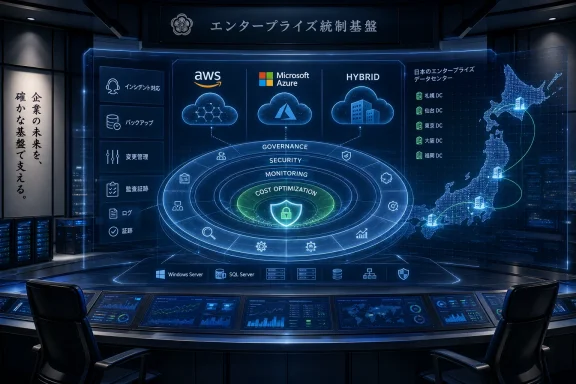 The Cloud Migration Story Has Entered Its Operations Era
The first wave of public cloud adoption was sold with a liberation narrative. Enterprises would escape hardware refresh cycles, stop waiting months for capacity, and let teams deploy infrastructure as code instead of filing tickets into a procurement queue. That story was mostly true, but it was incomplete in the way all early platform stories are incomplete: it assumed that operational complexity would disappear because the physical servers did.It did not. The burden moved upward, from racks and storage arrays to identity policy, network topology, logging, backup posture, patch timing, cost attribution, and regulatory evidence. For small teams, the cloud became powerful but slippery. For large enterprises, it became another estate to govern, except one where mistakes can propagate at software speed.
That is the opening for Itochu Techno-Solutions, better known as CTC, and its Managed Cloud Services. The company is not trying to convince conservative customers that AWS or Azure exists; that argument was settled years ago. It is trying to convince them that cloud operations can be made boring enough for mission-critical work.
The word “managed” is doing a lot of work here. In consumer technology, managed services can sound like a convenience wrapper. In enterprise IT, they are a redistribution of risk. If a bank, manufacturer, retailer, university, or public-sector agency hands cloud operations to a partner, it is buying more than monitoring dashboards. It is buying a process model, an escalation path, a compliance posture, and, ideally, a way to keep scarce engineers focused on the systems that actually differentiate the business.
CTC Sells Control, Not Cloud Romance
The reported service scope is familiar to anyone who has watched cloud managed-service providers mature over the past decade: assessment, architecture design, migration, 24/7 operations, monitoring, incident response, backup and recovery, configuration changes, and cost optimization. The important part is not that any one of those functions is exotic. It is that CTC packages them as a continuous operating relationship rather than a one-time migration project.That matters because cloud projects often fail in the handoff. A systems integrator designs the target architecture, a migration team moves workloads, a security team blesses the initial baseline, and then the environment is left to drift. Tags disappear. Privileges expand. Temporary exceptions become permanent. Monthly bills climb for reasons nobody can explain quickly. Backups exist, but restore procedures are not rehearsed under pressure.
Managed Cloud Services are an answer to that drift. CTC’s proposition is that enterprises need an operator with enough cloud depth to understand AWS and Azure primitives, enough infrastructure history to understand legacy workloads, and enough local context to deal with Japanese-language support, domestic compliance expectations, and procurement norms. That combination is not glamorous, but it is precisely what makes enterprise cloud hard.
The WindowsForum audience should read this through a pragmatic lens. For organizations running Windows Server, SQL Server, Active Directory dependencies, line-of-business applications, and hybrid identity, “cloud migration” is rarely a clean rewrite. It is usually a managed compromise between the old world and the new one. A provider that can operate both sides of that boundary has a more plausible story than a pure cloud consultancy that treats legacy infrastructure as technical debt to be mocked rather than business reality to be supported.
Japan’s Enterprise Cloud Market Rewards the Patient Integrator
Japan’s IT market has its own rhythm. Large organizations often value long vendor relationships, local accountability, detailed operational process, and conservative migration paths. That can frustrate cloud purists who want rapid transformation, but it also creates a natural market for integrators that can absorb complexity and translate hyperscaler platforms into enterprise operating models.CTC fits that pattern. The company’s background is not as a cloud-native startup, but as a broad systems integrator with decades of enterprise relationships, infrastructure expertise, data center operations, and vendor partnerships. That history cuts both ways. It can make the company look less nimble than newer cloud boutiques, but it also gives it credibility with customers that still have mainframes, VMware estates, regulated workloads, and procurement committees.
The ad-hoc-news description of the portfolio emphasizes AWS, Azure, hybrid environments, Japanese-language support, and local compliance know-how. Those are not incidental features. They are the product. The cloud resources themselves come from the hyperscalers; the differentiator is how they are assembled, monitored, governed, and explained to the customer.
AWS’s own partner listing for CTC describes the company as providing consulting, implementation, and operation services for cloud environments, with AWS Managed Service Provider participation, public-sector solution-provider status, Well-Architected involvement, and thousands of AWS certifications. That is the kind of credential stack enterprises look for when they need someone to stand between their internal audit team and a sprawling public-cloud estate.
Azure support is equally important, particularly for Microsoft-heavy enterprises. Windows Server and SQL Server workloads are still everywhere, and many organizations approach Azure not as a greenfield platform but as an extension of their Microsoft licensing, identity, and application stack. A managed service that understands virtual machines, platform services, backup, monitoring, and hybrid connectivity can make Azure feel less like a parallel universe and more like a controlled extension of the existing estate.
The Real Product Is the Operating Model
A cloud account is not an operating model. Neither is a landing zone, though vendors sometimes talk as if building one solves the problem. The hard work begins after the initial architecture is approved: who reviews changes, who responds at 2 a.m., who owns cost anomalies, who rotates credentials, who updates runbooks, who verifies recovery, and who tells the business whether the platform is getting healthier or merely larger?CTC’s Managed Cloud Services appear designed around that question. Monitoring and incident response are the obvious entry points, but the more valuable work is hidden in routines: change management, backup verification, configuration hygiene, patch coordination, and structured reporting. The customer does not need another stream of raw alerts; it needs a coherent view of what is happening and what needs a decision.
This is especially relevant for security. Public cloud security is frequently described as a shared responsibility model, which is accurate but often too abstract to be useful. The hyperscaler secures the underlying platform; the customer remains responsible for identity, configuration, workloads, data, and access patterns. In practice, that means many incidents are not failures of AWS or Azure but failures of operational discipline.
A managed service can reduce that risk, but it cannot eliminate accountability. Enterprises still need to know what controls are in place, what assumptions the provider is making, and how responsibilities are divided. The best managed-service relationships are explicit about boundaries. The worst ones allow both sides to believe the other side is watching the dangerous bit.
That is why structured reporting is more than a nicety. CIOs and security teams need evidence: logs collected, vulnerabilities tracked, changes approved, incidents documented, backups tested, costs explained. The output of a mature managed service is not merely uptime. It is auditability.
Cost Optimization Is Governance Wearing a Finance Hat
Cloud cost optimization is often treated as a separate discipline, but it is really governance by another name. Waste is usually a symptom of unclear ownership. Instances are left running because nobody knows who owns them. Storage grows because retention policies were never translated into automated rules. Overprovisioned databases persist because performance fears outrank budget discipline.For a managed-service provider, cost optimization is one of the most politically delicate parts of the job. It requires visibility into technical architecture and business priorities. Turning something off may save money, but it may also expose a forgotten dependency. Rightsizing a workload may be obvious on a spreadsheet and unacceptable to the application owner who remembers the last outage.
CTC’s subscription-style commercial model, reportedly tied to managed resource volume and complexity, aligns with the broader market move from project revenue to recurring services. For customers, that can simplify budgeting if the scope is clear. For providers, it creates an incentive to maintain long-term relationships rather than chase one-off migration fees.
There is a tension here, though. If fees scale with the size and complexity of the managed estate, customers must be careful that optimization incentives are explicit. A good provider can still help reduce waste because customer trust is worth more than short-term resource count. But cloud economics should never be left to assumptions. Enterprises should demand transparent reporting, agreed savings targets where appropriate, and a clear view of which optimization actions are recommendations versus changes the provider can execute directly.
This is where mature IT management habits reassert themselves. Cloud did not abolish capacity planning; it made capacity more fluid. It did not abolish budgeting; it made budget failure faster. The customer that treats managed cloud as an outsourced utility bill will be disappointed. The customer that treats it as a managed operating partnership has a better chance of seeing the promised value.
The Microsoft Angle Is Hybrid Reality, Not Azure Cheerleading
For Windows-centric organizations, the most interesting part of CTC’s pitch is not that it supports Azure. Many providers do. The more important question is whether it can support the messy hybrid reality that Microsoft customers actually inhabit.That reality often includes on-premises Active Directory, Microsoft Entra ID, Windows Server workloads, SQL Server licensing considerations, file services, backup products, endpoint management, and business applications that were never designed for cloud-native deployment. Some workloads can move to Azure virtual machines with relatively modest change. Others are better modernized into platform services. Some should not move yet at all.
A credible managed-service provider should be able to say “not now” as confidently as “migrate.” That is not always what customers hear during cloud sales cycles, where migration momentum can become its own justification. But enterprise IT has learned that modernization without operational clarity is just a more expensive way to create fragility.
For Windows Server and SQL Server customers, licensing and architecture decisions can materially affect cost and performance. Running a database in a virtual machine is not the same as adopting a managed database service. Extending identity into the cloud is not the same as redesigning access control. Using cloud backup is not the same as having a tested recovery strategy.
CTC’s value, if delivered well, is in making those tradeoffs explicit. Azure is powerful, but it rewards organizations that understand its identity, networking, monitoring, and cost models. AWS is equally capable, but Windows workloads on AWS still require thoughtful design around directory services, licensing, backup, monitoring, and operational escalation. Multi-cloud support sounds good in a brochure; in practice, it is useful only if the provider can prevent each platform from becoming its own unmanaged silo.
The Taking-Private Context Changes the Investor Story
One detail in the source material deserves caution: the statement that Itochu Techno-Solutions shares traded on U.S. OTC markets under CTTAY on June 12, 2026. CTC was taken private after Itochu’s 2023 tender offer and subsequent squeeze-out process, with Tokyo Stock Exchange delisting effective December 1, 2023. That does not negate the operational story, but it does change how readers should interpret any stock-price framing attached to the company.For a WindowsForum business-and-pro desk audience, the distinction matters. CTC is no longer a conventional public-company equity story in the way it was before delisting. Its strategic direction should be read primarily through Itochu group priorities, customer demand, partner activity, and service expansion rather than daily share-price signals.
The taking-private move also fits the managed-services theme. Recurring cloud operations, security services, and proprietary automation tools often require investment horizons that do not map neatly to quarterly public-market narratives. Integrators trying to shift from hardware resale and project delivery toward higher-margin managed services must change sales incentives, staffing models, tooling, and customer success processes. That transition can be easier away from the glare of public-market earnings expectations.
CTC’s 2025 announcement around StageCrew, its AIOps-oriented cloud service expansion into the U.S. market through a partner, points in the same direction. The company is not merely reselling hyperscaler infrastructure. It is trying to build operational intellectual property around cloud management, automation, and reliability practices. Whether that becomes a major differentiator or just another managed-service wrapper will depend on execution.
The larger Itochu relationship gives CTC reach and balance-sheet context, but it also raises expectations. Enterprise customers will expect stability, especially in regulated and public-sector environments. If a provider sells itself as the adult in the room, it must be prepared to operate with boring consistency for years.
Managed Cloud Is a Labor Strategy in Disguise
One reason managed cloud services are gaining traction is that the labor market has made the alternative difficult. Cloud engineering is not one skill. It is a bundle of disciplines: networking, identity, automation, security, observability, cost management, operating systems, databases, containers, compliance, and incident management. Hiring enough people to cover that spectrum around the clock is expensive even for large organizations.In Japan, demographic pressure and competition for advanced cloud talent intensify the problem. Enterprises may be able to hire a few strong cloud engineers, but retaining a full operational bench is harder. The result is a familiar split: internal teams focus on business systems, architecture decisions, and vendor governance, while managed-service partners handle continuous operations and specialized platform work.
That model can work, but only if customers avoid hollowing out their own expertise. Outsourcing operations is not the same as outsourcing judgment. CIOs still need internal people capable of challenging recommendations, understanding risk, and connecting technical decisions to business priorities. Otherwise the managed-service provider becomes the de facto architect, auditor, and operator — a concentration of influence that can be convenient until something goes wrong.
The healthiest arrangement is a layered one. The provider operates the platform and supplies deep technical coverage. The customer retains ownership of strategy, data classification, risk tolerance, application priorities, and vendor governance. Both sides document the boundary, revisit it regularly, and test it during incidents rather than discovering it under stress.
This is where CTC’s long systems-integration background could be an advantage. Cloud-native firms sometimes underestimate the organizational side of enterprise IT. Traditional integrators, at their best, understand committees, audits, legacy dependencies, and the fact that a technically elegant answer can still fail if it does not fit the customer’s operating culture.
The Risk Is That “Single Partner” Becomes a Comfortable Dependency
The appeal of a single partner is obvious. One contract. One support path. One reporting structure. One company to call when AWS, Azure, networking, and legacy workloads intersect in unpleasant ways. For overextended IT departments, that simplicity can be powerful.But simplicity has a shadow. A single managed-service partner can become a dependency that is hard to unwind. Runbooks, scripts, monitoring thresholds, escalation habits, and architecture decisions accumulate over time. If those artifacts are not portable and well documented, the customer may discover that it has not bought operational control so much as rented it.
This is not an argument against CTC or managed cloud. It is an argument for disciplined contracting. Customers should insist on documentation, access transparency, configuration ownership, and exit planning. They should understand which tools are proprietary, which procedures are customer-visible, and what happens if the relationship changes.
The same concern applies to multi-cloud management. A provider that supports AWS, Azure, and other platforms can reduce fragmentation, but it can also become the abstraction layer customers depend on instead of understanding their own environments. That is acceptable only if the abstraction is transparent enough to audit and portable enough to survive a provider change.
Enterprise IT has learned this lesson before. Outsourcing can produce efficiency, but it can also create institutional amnesia. The cloud version of that mistake is subtler because dashboards and automation can make everything look visible. Visibility is not the same as control.
The Evidence Points to a Practical Bet, Not a Platform Revolution
The concrete reading of CTC’s Managed Cloud Services is straightforward: the company is betting that enterprises want public cloud infrastructure but do not want unmanaged cloud operations. That is a practical bet, and probably a durable one. The market has moved beyond cloud evangelism into cloud housekeeping, and housekeeping at enterprise scale is a serious business.The portfolio also reflects a broader shift in systems integration. Selling hardware, licenses, and migration projects is less attractive than owning ongoing operations, optimization, and advisory work. Managed cloud gives integrators a recurring relationship with customers and a reason to remain involved after the initial transformation budget is spent.
For customers, the upside is operational continuity. They can adopt AWS or Azure without building every support function internally, and they can draw on a provider familiar with Japanese enterprise requirements. For CTC, the upside is strategic relevance in a market where hyperscalers own the infrastructure and customers increasingly expect partners to deliver value above the platform layer.
The risk is commoditization. Many firms can claim 24/7 monitoring, cloud certifications, and cost optimization. The differentiator will be whether CTC can prove that its managed services reduce incidents, improve audit readiness, accelerate safe change, and control spend over time. Those outcomes are measurable, and sophisticated customers should measure them.
The Procurement Checklist Writes Itself
The most useful way to think about CTC’s managed-cloud push is as a negotiation over responsibility. The marketing language may emphasize control, support, and optimization, but the contract must convert those words into duties, metrics, and evidence. Buyers should treat the service as operational infrastructure, not as a convenience add-on.- Enterprises should verify exactly which AWS, Azure, operating-system, database, network, backup, and security responsibilities sit with CTC and which remain with the customer.
- Customers should require regular evidence of backup recoverability, incident response performance, vulnerability handling, and configuration compliance rather than accepting dashboard access as proof of control.
- Windows-heavy organizations should examine how the service handles Active Directory, Microsoft Entra ID, Windows Server, SQL Server, licensing, patching, and hybrid connectivity before approving migration plans.
- Finance and IT teams should agree in advance how cost optimization recommendations are produced, approved, executed, and measured.
- Regulated organizations should test whether CTC’s reporting aligns with their audit obligations, not merely whether the provider claims familiarity with compliance.
- Buyers should make documentation, access rights, and exit procedures part of the initial deal so that managed operations do not become accidental lock-in.
Itochu Techno-Solutions is not offering enterprises a magic route around cloud complexity; it is offering to industrialize that complexity into a managed relationship. That is less exciting than the old cloud pitch, but far more relevant to the next decade of enterprise IT. The winners in this phase will not be the providers that promise the most transformation in the fewest slides, but the ones that can keep hybrid, regulated, cost-sensitive environments secure, observable, recoverable, and boring — because in business-critical cloud operations, boring is not a failure of imagination. It is the target state.
References
- Primary source: AD HOC NEWS
Published: 2026-06-13T06:40:11.531627
Itochu Techno-Solutions Managed Cloud Services: Enterprise IT under control
Itochu Techno-Solutions is pushing deeper into enterprise cloud operations with its Managed Cloud Services portfolio, targeting Japanese and global businesses that want stable, compliant infrastructure without building large in-house teams.www.ad-hoc-news.de - Related coverage: partners.amazonaws.com
AWS Partner Solutions Finder
partners.amazonaws.com
- Related coverage: insight.com
Managed Cloud Services | Azure Managed Cloud | Insight
Insight’s managed cloud services for Microsoft Azure deliver advanced cloud expertise to free your internal resources and improve operations and performance of your cloud systems. www.insight.com
- Related coverage: itochu.co.jp
ITOCHU, CTC and iret Announce Formation of Business Partnership | Press Releases | ITOCHU Corporation
Provides information about [ITOCHU, CTC and iret Announce Formation of Business Partnership]. ITOCHU, one of the leading sogo shosha, is engaging in domestic trading, import/export, and overseas trading of various products such as textile, machinery, metals, minerals, energy, chemicals, foods...www.itochu.co.jp - Related coverage: itechh.ne.jp
- Related coverage: aws.amazon.com
ITOCHU Techno-Solutions | AWS Partner Network (APN) Blog
aws.amazon.com
- Related coverage: netapp.com
- Related coverage: ctc-america.com
Total Solutions — ITOCHU Techno-Solutions America
www.ctc-america.com
- Related coverage: purestorage.com
ITOCHU Techno-Solutions Corporation and Everpure | Everpure
ITOCHU Techno-Solutions is a system integrator that provides end-to-end services from sales to installation, professional services, and maintenance.www.purestorage.com - Related coverage: catalog.redhat.com
ITOCHU Techno-Solutions Corporation Cloud
catalog.redhat.com
- Related coverage: marketscreener.com
ITOCHU Techno : Announcement of Results of the Tender Offer by a Subsidiary of ITOCHU Corp. and a Change in the Status of Major Shareholders | MarketScreener
Translation September 15, 2023 ...www.marketscreener.com
- Related coverage: manaloadvisors.com
Manalo Advisors Ltd | Itochu Techno-Solutions / Itochu | Deal Insight
On 2-Aug-23, Japanese conglomerate Itochu announced its intention to launch a recommended tender offer for its Tokyo-based subsidiary, Itochu Techno-Solutions (“CTC” is the operating company, for ‘Challenging Tomorrow’s Changes’), that specialises in software development and information processing.www.manaloadvisors.com - Related coverage: finimize.com
Itochu Is Taking Itochu-Shokuhin Private With A Tender Offer - Finimize
Itochu’s unit G.K. FMDI offered 13,000 yen per share, with board backing and a plan to buy all tendered shares (then squeeze out holdouts) if the minimum is met. finimize.com
