

Microsoft’s brief MSRC entry naming Azure Linux as a carrier for the open‑source component linked to CVE‑2024‑6608 is accurate for the product Microsoft has inventory‑checked — but it is not a technical guarantee that no other Microsoft product includes the same vulnerable code.
CVE‑2024‑6608 is a moderate‑severity browser vulnerability that allowed a malicious page to move the user’s cursor using the Pointer Lock API from inside an iframe, permitting the cursor to go outside the viewport and even outside the Firefox window. The defect affected Firefox versions earlier than 128 and Thunderbird versions earlier than 128; Mozilla released fixes as part of the Firefox 128 / Thunderbird 128 updates.
Microsoft’s public MSRC entry for the CVE includes an FAQ line that reads, essentially, “Azure Linux includes this open‑source library and is therefore potentially affected,” and states Microsoft will expand its machine‑readable CSAF/VEX attestations (a program that began rolling out in October 2025) and update CVE product mappings if additional Microsoft products are found to ship the component. That phrasing is important: it confirms a found‑positive in Azure Linux images Microsoft examined, but it stops short of declaring exclusivity.
CVE‑2024‑6608 is straightforward to remediate on endpoints: update the affected applications. The harder, longer‑running job is supply‑chain hygiene — finding every place an upstream open‑source component is reused inside a diverse set of images and artifacts. Microsoft’s Azure Linux attestation is an important operational signal, but it should be treated as a starting point for artifact discovery and remediation across your entire environment.
Source: MSRC Security Update Guide - Microsoft Security Response Center
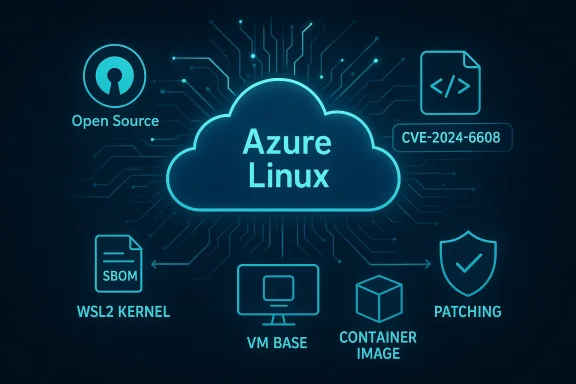 Background / Overview
CVE‑2024‑6608 is a moderate‑severity browser vulnerability that allowed a malicious page to move the user’s cursor using the Pointer Lock API from inside an iframe, permitting the cursor to go outside the viewport and even outside the Firefox window. The defect affected Firefox versions earlier than 128 and Thunderbird versions earlier than 128; Mozilla released fixes as part of the Firefox 128 / Thunderbird 128 updates.Microsoft’s public MSRC entry for the CVE includes an FAQ line that reads, essentially, “Azure Linux includes this open‑source library and is therefore potentially affected,” and states Microsoft will expand its machine‑readable CSAF/VEX attestations (a program that began rolling out in October 2025) and update CVE product mappings if additional Microsoft products are found to ship the component. That phrasing is important: it confirms a found‑positive in Azure Linux images Microsoft examined, but it stops short of declaring exclusivity.
Why the MSRC sentence matters — and why it isn’t the whole story
What Microsoft actually asserted
- Microsoft’s statement is an inventory attestation for a named product family (Azure Linux). It communicates that Microsoft examined Azure Linux artifacts and found the implicated open‑source component present in those images or packages. That makes the advisory immediately actionable for Azure Linux customers: apply the updates Microsoft publishes for those images. ([archive.ph](https://archive.ph/2025.12.07-21324...rability/CVE-2025-5916?utm_source=openatement does not assert
- The wording does not claim that Azure Linux is the only Microsoft product that can or does include the same library. Microsoft explicitly commits to updating the CVE entry and its CSAF/VEX attestations if additional products are identified — which implies the current mapping is incomplete by design rather than declarative of exclusivity. Treating the absence of a public attestation for other Microsoft SKUs as evidence they are unaffected is a risky operational assumption.
Why vendors publish product‑scoped attestations
Large vendors with many product families commonly roll out inventory attestations incrementally. Verifying every binary, kernel build, image, SDK, container base, and appliance across a global product portfolio is time‑consuming; Microsoft’s approach (attest for Azure Linux first, then expand VEX/CSAF coverage) is pragmatic but means customers must assume “not yet attested” = “not yet verified.” Community analysis and expert commentary on recent MSRC advisories reiterate this interpretation.How to read this for CVE‑2024‑6608 specifically
- The CVE itself is an upstream Mozilla issue fixed in Firefox/Thunderbird 128 and later. Patch client installations to 128+ immediately. This is the single most important action for endpoints running Firefox or Thunderbird.
- Microsoft’s MSRC advisory is providing a product attestation that Azure Linux images they ship include the upstream library or package that contains the vulnerable component. That means Azure Linux images should be patched and rebuilt promptly by Microsoft and consumed by customers as updated images.
- Do not assume other Microsoft artifacts are clean just because MSRC has not yet named them. Any Microsoft product that ships the same upstream package — whether a WSL2 kernel or distribution, Marketplace VM images, container base images, or internal appliances — could carry the vulnerable code until inventory and attestations prove otherwise. Independent vulnerability trackers and distro advisories show how widely browser components and related libraries can be reused across artifacts.
Cross‑referenced facts (verified)
- The vulnerability description, affected products (Firefox < 128 and Thunderbird < 128), and the remediation version (128+) are documented in Mozilla’s security advisory for Firefox 128.
- The NVD entry and several Linux distro security trackers index CVE‑2024‑6608 and list the same affected versions and CVSS weighting (medium). That provides independent confirmation of the CVE summary and severity.
- Microsoft’s MSRC text and FAQs follow the same pattern used for other CVEs (inventory attestation of Azure Linux, pledge to expand CSAF/VEX mapping), which community analysts have summarized and repeatedly noted; those forum analyses underscore that Azure Linux is the only Microsoft product publicly attested so far but not necessarily the only product that could be affected.
Practical impact and real‑world risk
For administrators and endpoint owners
- If you run Firefox or Thunderbird on Windows, macOS, Linux or in managed fleets, the immediate risk is straightforward: unpatched installations earlier than version 128 are vulnapplications to the vendor‑released patched versions. This removes the primary attack surface for CVE‑2024‑6608.
For Azure Linux customers and cloud operators
- Microsoft’s attestation means Azure Linux images shipped by Microsoft were found to include the implicated upstream component; Microsoft will supply patched images / packages as part of its normal update cadence and via its CSAF/VEX feeds. Prioritize updating Azure Linux images in your fleet and redeploying workloads from patched images.
For organizations that consume multiple Microsoft artifacts
- Any Microsoft artifact that embeds or packages open‑source libraries — WSL2 kernel builds, Marketplace VM images, Azure container base images, or internal appliances distributed by Microsoft partners — could be a carrier unless explicitly inventory‑checked. Customers should not treat the Azure Linux attestation as a blanket safety promise for other Microsoft products.
Recommended verification and remediation checklist (operational playbook)
Below is a prioritized, practical checklist operators can adopt immediately.- Update browsers and mail clients (high priority)
- Upgrade Firefox and Thunderbird to version 128 or later on all endpoints anese applications. This removes the immediate vulnerability for user agents. Action window: immediate.
- Patch Azure Linux images (high priority if you run them)
- Pull updated Azure Linux images from Microsoft and redeploy. If you maintain your own forked images based on Azure Linux, rebuild them against updated packages. Action window: within maintenance cycle, expedited for internet‑exposed workloads.
- Inventory Microsoft‑supplied artifacts (medium priority, high operational value)
- Generate an SBOM or run an image scan across all Microsoft images and binaries you consume. Focus on:
- Marketplace VM images
- Container base images from Microsoft registries
- WSL2 distribution and kernel artifacts
- Any managed appliance images
- Use tools that inspect packages and binaries for embedded versions (package managers, binary scanners, YARA/strings where necessary). Treat anything that contains the same upstream package as “in scope” until upgraded. Community advisories recommend this artifact‑level verification approach when vendors publish product‑scoped attestations.
- Monitor Microsoft CSAF/VEX feeds and MSRC advisories
- Microsoft has committed to machine‑readable CSAF/VEX attestations (program started October 2025). Subscribe to the VEX/CSAF feed and the Security Update Guide so you receive updates if Microsoft expands the list of affected product artifacts.
- Hardening and mitigations (temporary)
- Where patching is delayed, adopt runtime mitigations:
- Restrict or harden sites that use pointer lock APIs (e.g., web app allowlists, content blocking for untrusted frames).
- Use browser policy controls in managed environments to limit pointer lock for untrusted origins.
- Encourage users to prefer Chromium‑based browsers temporarily if their organization can’t immediately patch Firefox/Thunderbird, while being mindful that this changes other risk profiles.
- Note: these mitigations reduce attack surface but do not replace the definitive fix (updating to 128+).
Detection guidance — how to hunt for carriers
- For package‑based Linux images:
- Debian/Ubuntu: dpkg -l | grep -E "firefox|thunderbird|<suspect‑package‑name>"
- RPM systems: rpm -qa | grep -E "firefox|thunderbird|<suspect‑package‑name>"
- Check package versions and compare to fixed versions reported by distributions and upstream advisories. Distribution trackers such as Ubuntu and Debian list fixed package versions for CVE‑2024‑6608.
- For container images:
- Use container scanning (image layer analysis) to enumerate installed packages and their versions.
- If you see Firefox/Thunderbird or the particular upstream library inside a Microsoft base image, mark it in scope for remediation.
- For Windows endpoints:
- Use your RMM/EDR tooling inventory to locate installations of Firefox/Thunderbird and report versions across the fleet.
- For WSL2 / kernel artifacts:
- If you run WSL2 with a custom kernel, inventory the kernel source/version and search the tree for the component names (‑level component that shares code with the implicated library should be verified.
Why Azure Linux being called out is still a positive step
Microsoft naming Azure Linux explicitly is useful for customers. It provides immediate, actionable intelligence: Azure Linux customers should prioritize those images and can expect Microsoft to publish fixes and machine‑readable attestations. The transparency commitment to CSAF/VEX is a step forward for supply‑chain hygiene and vulnerability inventory management. That said, customers must combine vendor attestations with their own artifact‑level verification to close real operational blind spots.Notable strengths in Microsoft’s approach — and the risks that remain
Strengths
- Product‑level attestation: Microsoft’s explicit mapp families (starting with Azure Linux) gives customers an authoritative starting point for prioritized remediation.
- CSAF/VEX commitment: Machine‑readable attestations reduce ambiguity and help automate downstream risk triage and patch prioritization once coverage grows. (microsoft.com)
Risks / gaps
- Incremental coverage: The attestation program is necessarily staged; until VEX mappings and SBOMs cover all Microsoft artifacts, customers face potential blind spots. Microsoft’s wording explicitly signals this gap.
- Operational burden on customers: The onus remains on operators to scan and inventory their fleets, including non‑Azure artifacts and third‑party images provided through Microsoft channels. This is an operationally heavy task for large environments.
- Potential for misreading the advisory: Less experienced operators might misread the MSRC wording as a “Microsoft only finds this in Azure Linux” statement. That would be incorrect and could leave other artifacts unpatched.
Bottom line answer to the user’s question
No — Azure Linux is not necessarily the only Microsoft product that includes the open‑source library implicated by CVE‑2024‑6608. It is the only Microsoft product that Microsoft has publicly attested so far to include the affected component; Microsoft’s attestation is product‑scoped and not an exclusionary guarantee that other Microsoft artifacts do not contain the same code. Microsoft has committed to expanding CSAF/VEX attestations and to update CVE mappings if additional products are identified; until then, customers should treat non‑attested Microsoft artifacts as “not yet verified” rather than “not affected.”Final recommendations (what to do now)
- Immediately update all Firefox and Thunderbird installations to 128 or later. This removes the direct browser exploitation vector.
- Patch and redeploy Azure Linux images as Microsoft publishes updates; prioritize internet‑exposed workloads and managed fleets running Azure Linux.
- Run artifact‑level discovery (SBOMs, image scans, package inventories) across all Microsoft images and binaries you consume. Treat anything that contains the same upstream package as in scope.
- Subscribe to Microsoft’s CSAF/VEX feed and MSRC advisories so you’re notified if Microsoft expands its attestation set beyond Azure Linux.
- Apply short‑term mitigations (pointer‑lock restrictions, content filtering) where patching is delayed, but do not rely on them as substitutes for updates.
CVE‑2024‑6608 is straightforward to remediate on endpoints: update the affected applications. The harder, longer‑running job is supply‑chain hygiene — finding every place an upstream open‑source component is reused inside a diverse set of images and artifacts. Microsoft’s Azure Linux attestation is an important operational signal, but it should be treated as a starting point for artifact discovery and remediation across your entire environment.
Source: MSRC Security Update Guide - Microsoft Security Response Center
