

Microsoft’s brief product attestation that “Azure Linux includes this open‑source library and is therefore potentially affected” is accurate for Azure Linux, but it is not a guarantee that no other Microsoft product can include the vulnerable Linux kernel code — any Microsoft artifact that ships or runs a Linux kernel build containing the affected b53/bcm63xx code should be treated as potentially in‑scope until verified and patched.
CVE‑2025‑38272 is a Linux kernel bug in the DSA/b53 driver tree described as “net: dsa: b53: do not enable EEE on bcm63xx.” The root cause is an attempt to enable Energy Efficient Ethernet (EEE) on BCM63xx internal switches that do not actually implement EEE registers; when the kernel tries to configure non‑existent EEE registers the system can hang, producing an availability impact rather than a confidentiality or integrity compromise. The upstream kernel project produced a small, surgical patch that checks whether the switch actually supports EEE before attempting configuration. That patch has been merged into stable kernel trees and distributed to vendors; downstream maintainers (Debian, Ubuntu, SUSE, Oracle, and cloud providers) have mapped the fix into their kernel packages and advisories. Why operators care: this is a kernel‑level reliability/availability defect that can hang affected hosts or virtual machines if the kernel and platform combination includes the b53 driver with the bcm63xx switch support and attempts to use EEE capabilities exposed by attached external PHYs. The bug is local in nature — it is not an unauthenticated remote RCE — but in multi‑tenant, embedded, or otherwise specialized networking environments it presents a real operational risk.
That phrasing is deliberate and useful: it tells Azure Linux customers they should treat Microsoft‑published Azure Linux images as in‑scope and apply Microsoft’s recommended updates. However, it is not a categorical denial that other Microsoft artifacts (WSL kernels, linux‑azure kernels for VMs, AKS node images, marketplace appliances, custom images, or device firmware) might also include the same upstream kernel code. The presence or absence of the vulnerable code is a per‑artifact, build‑time property.
Beyond Azure Linux, the following Microsoft artifacts are plausible carriers and should be verified:
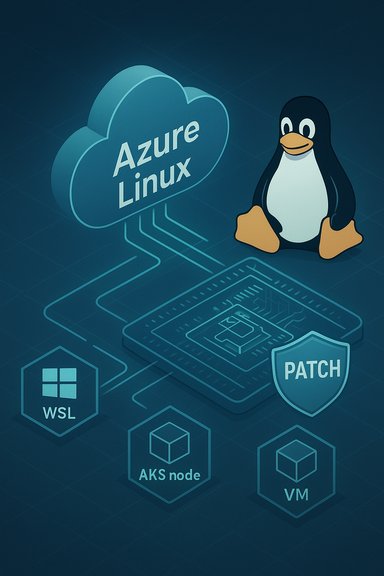
However, Azure Linux is not technically the only Microsoft product that could include the vulnerable b53/bcm63xx code. Any Microsoft or third‑party artifact that ships a Linux kernel build containing the b53 driver and the vulnerable upstream commit range is a potential carrier until you verify otherwise — the most plausible examples are WSL2 kernels, linux‑azure kernels, AKS/VM node kernels, and marketplace or partner images. Treat any Microsoft artifact that runs a Linux kernel as needing artifact‑level verification.
For technical verification of the vulnerability and fixed versions consult authoritative kernel and vendor trackers (NVD, the kernel.org patch commits, Debian/Ubuntu/SUSE advisories) and implement the remediation steps above. The upstream patch is small, backports are widely available, and the fastest route to neutralize the risk is to apply vendor‑supplied kernel updates and reboot affected hosts. Operators should view Microsoft’s VEX/CSAF attestations as a useful automation signal for attested products (Azure Linux in this instance), but not as a blanket safety guarantee for every Microsoft artifact. Inventory, verify, patch, and document — those are the controls that remove doubt and restore resilience.
Source: MSRC Security Update Guide - Microsoft Security Response Center
 Background / Overview
CVE‑2025‑38272 is a Linux kernel bug in the DSA/b53 driver tree described as “net: dsa: b53: do not enable EEE on bcm63xx.” The root cause is an attempt to enable Energy Efficient Ethernet (EEE) on BCM63xx internal switches that do not actually implement EEE registers; when the kernel tries to configure non‑existent EEE registers the system can hang, producing an availability impact rather than a confidentiality or integrity compromise. The upstream kernel project produced a small, surgical patch that checks whether the switch actually supports EEE before attempting configuration. That patch has been merged into stable kernel trees and distributed to vendors; downstream maintainers (Debian, Ubuntu, SUSE, Oracle, and cloud providers) have mapped the fix into their kernel packages and advisories. Why operators care: this is a kernel‑level reliability/availability defect that can hang affected hosts or virtual machines if the kernel and platform combination includes the b53 driver with the bcm63xx switch support and attempts to use EEE capabilities exposed by attached external PHYs. The bug is local in nature — it is not an unauthenticated remote RCE — but in multi‑tenant, embedded, or otherwise specialized networking environments it presents a real operational risk. What Microsoft actually said — reading the MSRC wording correctly
Microsoft’s Security Response Center (MSRC) entry for this and similar upstream kernel CVEs has adopted a phased, product‑scoped attestation model: Microsoft began publishing machine‑readable CSAF/VEX attestations beginning with Azure Linux, and when the company says “Azure Linux includes this open‑source library and is therefore potentially affected” it is publishing an authoritative inventory result for that product family. Microsoft has also stated it will update the CVE/VEX record if additional Microsoft products that ship the component are identified.That phrasing is deliberate and useful: it tells Azure Linux customers they should treat Microsoft‑published Azure Linux images as in‑scope and apply Microsoft’s recommended updates. However, it is not a categorical denial that other Microsoft artifacts (WSL kernels, linux‑azure kernels for VMs, AKS node images, marketplace appliances, custom images, or device firmware) might also include the same upstream kernel code. The presence or absence of the vulnerable code is a per‑artifact, build‑time property.
Which Microsoft products could in practice carry the vulnerable kernel code?
Microsoft’s public attestation names Azure Linux as a product that includes the affected component and is therefore potentially affected. That is the definitive statement for that product family and should be acted on immediately by operators who run Azure Linux images.Beyond Azure Linux, the following Microsoft artifacts are plausible carriers and should be verified:
- Windows Subsystem for Linux (WSL / WSL2) — WSL2 ships a Microsoft‑built Linux kernel binary and publishes the source. If the WSL kernel build used by a given Windows installation includes the b53/bcm63xx code in an affected range, that WSL instance could be impacted until patched.
- linux‑azure / Azure‑tuned kernels used for some Azure VM image SKUs — Microsoft publishes “azure‑tuned” kernel builds for certain VM families and image SKUs; these kernel builds are distinct artifacts and must be checked for the vulnerable commit range.
- Azure Marketplace and third‑party images — many marketplace images are published by third parties (Canonical, Red Hat, SUSE, ISVs). Those images carry whatever kernel the publisher chose and are out of Microsoft’s direct packaging control; customers must follow the image maintainer’s advisories.
- AKS node pools and managed node images — container node images use host kernels supplied by the image publisher or by Microsoft; if an AKS node uses a kernel build containing the vulnerable b53 code, the node is in‑scope.
- Embedded appliances, IoT images, and partner offerings — any Microsoft or partner artifact that embeds a Linux kernel build could carry the code depending on kernel configuration.
Technical specifics: affected kernel ranges and behaviour
The NVD/CVE entry and multiple distribution trackers list the bug details and the kernel versions impacted. NVD’s published metadata identifies the patch and maps affected kernel version ranges used by vendors; the practical result is that multiple stable kernel branches required backports or upgrades to carry the fix. Key technical points to verify in your environment:- The bug affects the DSA/b53 code paths where bcm63xx support exists. Confirm whether your kernel includes the b53 driver and bcm63xx switch support.
- The bug triggers when external PHYs attached to RGMII ports advertise EEE and the kernel tries to enable EEE on MACs that lack EEE registers — the attempted access to non‑existent registers can hang the system.
- The upstream patch checks for switch‑level EEE support before configuring EEE, preventing the hang.
How to confirm whether a given host or image is affected
The exact commands and checks you run will depend on whether you control the VM (guest kernel), the host (hypervisor kernel), or a managed image. Here are pragmatic verification steps operators can drop into runbooks:- Identify the running kernel:
- uname -r
- Check whether b53/bcm63xx support was built into the kernel:
- grep -E "CONFIG_B53|CONFIG_BCM63" /boot/config-$(uname -r) (where /boot/config-* is present)
- or inspect loaded modules: lsmod | egrep 'b53|dsa|bcm'
- Search kernel logs for signs of EEE‑related hangs or b53 messages:
- journalctl -k | grep -i 'b53|EEE|bcm63'
- For image inventories (VM images, AKS node images, WSL kernels):
- Map image SKU → kernel package → package version and cross‑reference vendor advisories to see whether that kernel package includes the fix.
- For WSL:
- Check the WSL kernel version and the date of the WSL kernel binary; apply WSL updates via the supported mechanisms if a vulnerable kernel is present.
Patching and mitigation guidance
- For Azure Linux customers: follow Microsoft’s MSRC guidance for Azure Linux images and apply the patched kernel image or updated VM image Microsoft publishes for the attested Azure Linux SKUs. Microsoft has committed to delivering fixes for Azure Linux and publishing VEX/CSAF attestations for automation.
- For distribution images (Ubuntu, Debian, SUSE, Oracle, etc.: rely on the distribution’s security advisory to install the patched kernel package and reboot into the fixed kernel. Debian’s tracker and Ubuntu advisories list the fixed release packages and timelines.
- For WSL users: check the WSL kernel version; if Microsoft publishes an updated WSL kernel containing the fix, install via the official WSL update mechanism or Windows Update as directed. If you maintain a custom WSL kernel binary, rebuild or replace it with a patched kernel.
- For AKS nodes / managed node pools: coordinate with the node image maintainers (Microsoft or distro vendor) and ensure cluster nodes are patched and rolled in a controlled manner to avoid service impact.
- For Marketplace images: contact the image publisher and apply their advisories; do not assume Microsoft’s Azure Linux attestation extends to third‑party marketplace images.
- Constrain workloads that might trigger the b53 path (networking workloads that interact with PHYs via RGMII ports).
- Isolate or schedule maintenance windows to minimize exposure to hosts where the kernel cannot be updated quickly.
- Where available, consider vendor livepatch tooling for kernel patches (note: not all livepatch tooling supports every kernel tree or vendor’s backport policy).
Risk assessment and exploitability
CVE‑2025‑38272 is primarily an availability issue: the kernel may hang when attempting to access non‑existent EEE registers exposed by certain hardware/PHY combinations. NVD and several vulnerability trackers classify the impact as medium (CVSS 3.1 base score ~5.5) with an availability impact, limited confidentiality/integrity impact, and a local attack vector. Exploitability nuance:- The defect requires the affected kernel build and particular hardware conditions (BCM63xx internal switch present, external PHY advertising EEE).
- For many cloud or virtualized environments, the specific hardware conditions may be uncommon; for embedded, VPS, or telco‑grade platforms using bcm63xx switches, the risk is higher.
- The bug is not an unauthenticated remote code execution; it is a local reliability issue that can cause service interruption or host reboots to recover, meaning the operational blast radius depends on your platform architecture and redundancy.
Critical analysis: strengths, risks, and gaps in the vendor attestation model
Strengths- Microsoft’s CSAF/VEX rollout and Azure Linux attestation create an actionable signal. By publishing product‑scoped attestations for Azure Linux, Microsoft gives customers a machine‑readable starting point for automated triage and prioritization. That transparency is beneficial and aligns with best‑practice supply‑chain reporting.
- Upstream patch is small and non‑intrusive. The fix merely checks for EEE support before configuring it — a low‑risk, targeted change that is straightforward to backport and distribute. Distribution and cloud vendors have already mapped and patched many kernel trees.
- Phased attestations can produce a false sense of safety. Attesting one product (Azure Linux) first is operationally sensible, but customers may mistakenly assume Microsoft’s statement implies other Microsoft artifacts are safe. That assumption is dangerous: many Microsoft artifacts ship different kernel builds and configurations. Absence of a VEX/CSAF mapping is unknown, not safe.
- Embedded and third‑party images create a long tail. Marketplace images, vendor appliances, and custom images can embed old or forked kernel builds that never receive mainstream distribution patch timelines. These are often overlooked during triage.
- Detection is imperfect. Kernel hangs may be attributed to hardware or driver noisiness rather than a CVE‑specific signature; teams must correlate image/kernel versions with vendor advisories rather than relying solely on log patterns.
Recommended operational checklist (one‑page runbook)
- Inventory phase
- Enumerate all images and artifacts that run Linux kernels in your estate (Azure VM images, AKS node images, WSL installations, Marketplace appliances, on‑prem images).
- Map each image SKU → kernel package → kernel version.
- Verification phase
- For each image, check for b53 or bcm63xx presence: lsmod | grep -E 'b53|bcm63'
- Confirm kernel version ranges against vendor advisories and NVD affected CPEs.
- Remediation phase
- Apply vendor or Microsoft supplied kernel updates for affected images (Azure Linux: follow MSRC guidance).
- Schedule controlled reboots to boot into patched kernels.
- For WSL, apply WSL updates or replace custom kernels with patched builds.
- Mitigation and monitoring
- If patching is delayed, segment affected hosts and restrict workloads that could trigger the path.
- Tune alerting for b53/bcm63 kernel messages and correlate with image/kernel mapping.
- Documentation and automation
- Use VEX/CSAF outputs (where available) to automate triage for attested products.
- Maintain a reconciliation report that shows each image, CVE mapping, remediation status, and validation evidence.
Final assessment and closure
Microsoft’s public wording that “Azure Linux includes this open‑source library and is therefore potentially affected” is an accurate and actionable inventory attestation for Azure Linux and should prompt immediate remediation for Azure Linux customers.However, Azure Linux is not technically the only Microsoft product that could include the vulnerable b53/bcm63xx code. Any Microsoft or third‑party artifact that ships a Linux kernel build containing the b53 driver and the vulnerable upstream commit range is a potential carrier until you verify otherwise — the most plausible examples are WSL2 kernels, linux‑azure kernels, AKS/VM node kernels, and marketplace or partner images. Treat any Microsoft artifact that runs a Linux kernel as needing artifact‑level verification.
For technical verification of the vulnerability and fixed versions consult authoritative kernel and vendor trackers (NVD, the kernel.org patch commits, Debian/Ubuntu/SUSE advisories) and implement the remediation steps above. The upstream patch is small, backports are widely available, and the fastest route to neutralize the risk is to apply vendor‑supplied kernel updates and reboot affected hosts. Operators should view Microsoft’s VEX/CSAF attestations as a useful automation signal for attested products (Azure Linux in this instance), but not as a blanket safety guarantee for every Microsoft artifact. Inventory, verify, patch, and document — those are the controls that remove doubt and restore resilience.
Source: MSRC Security Update Guide - Microsoft Security Response Center
