

Microsoft’s short advisory that “Azure Linux includes this open‑source library and is therefore potentially affected” is accurate — but it is a product‑scoped attestation, not a proof that no other Microsoft product can or does contain the same vulnerable code.
CVE-2025-40099 is a Linux kernel vulnerability in the CIFS/SMB client parsing code: cifs: parse_dfs_referrals: prevent oob on malformed input. A malicious or misbehaving SMB server can reply to FSCTL_DFS_GET_REFERRALS with malformed data — for example, a reply smaller than the expected structure or a header that claims more referral entries than are actually present. When that response is parsed, the kernel code could read beyond the bounds of the reply buffer, producing an out‑of‑bounds (OOB) read and leading to kernel instability. The upstream fix returns -EINVAL on malformed replies to eliminate the out‑of‑bounds access. Public trackers and vendors list the vulnerability as a medium‑severity kernel issue with availability impact (kernel OOPS/panic) and generally assign a CVSS in the mid‑range (several vendors list CVSS 3.x = 5.5). NVD’s entry was still marked “awaiting analysis” at the time of writing, while distribution trackers and vendor advisories have ingested the upstream patches and started mapping affected kernel releases. This article examines Microsoft’s wording about Azure Linux, explains what that wording does and doesn’t mean, cross‑references independent trackers and upstream artifacts, and provides a practical triage and remediation checklist for defenders responsible for mixed Microsoft/Linux estates.
Key interpretive points:
Operationally, the defensible path is:
Source: MSRC Security Update Guide - Microsoft Security Response Center
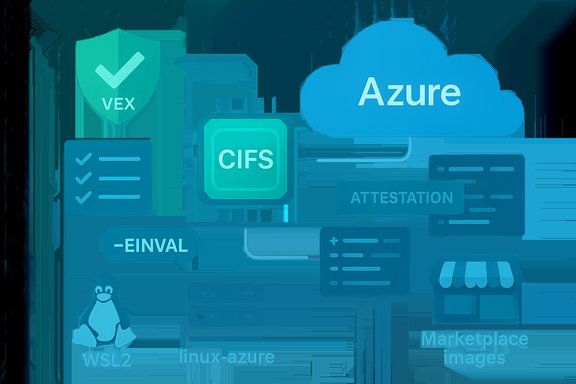 Background / Overview
CVE-2025-40099 is a Linux kernel vulnerability in the CIFS/SMB client parsing code: cifs: parse_dfs_referrals: prevent oob on malformed input. A malicious or misbehaving SMB server can reply to FSCTL_DFS_GET_REFERRALS with malformed data — for example, a reply smaller than the expected structure or a header that claims more referral entries than are actually present. When that response is parsed, the kernel code could read beyond the bounds of the reply buffer, producing an out‑of‑bounds (OOB) read and leading to kernel instability. The upstream fix returns -EINVAL on malformed replies to eliminate the out‑of‑bounds access. Public trackers and vendors list the vulnerability as a medium‑severity kernel issue with availability impact (kernel OOPS/panic) and generally assign a CVSS in the mid‑range (several vendors list CVSS 3.x = 5.5). NVD’s entry was still marked “awaiting analysis” at the time of writing, while distribution trackers and vendor advisories have ingested the upstream patches and started mapping affected kernel releases. This article examines Microsoft’s wording about Azure Linux, explains what that wording does and doesn’t mean, cross‑references independent trackers and upstream artifacts, and provides a practical triage and remediation checklist for defenders responsible for mixed Microsoft/Linux estates.What Microsoft actually said — and why the wording matters
Microsoft’s public guidance for several recent CVEs uses machine‑readable CSAF/VEX attestations to state which Microsoft product artifacts include a given open‑source component. For CVE-2025-40099 Microsoft’s MSRC messaging included the sentence (paraphrased by many): “Azure Linux includes this open‑source library and is therefore potentially affected by this vulnerability.” That sentence is an attestation — the vendor confirming it has completed an inventory for that product family and found the upstream code in those artifacts. Microsoft further stated it began publishing CSAF/VEX attestations in October 2025 and that it will update the CVE entry if additional Microsoft products are later identified as carriers. Why that matters operationally:- Attestation = authoritative for the named product. If you run Azure Linux images supplied by Microsoft, treat the product as “known potentially affected” and follow Microsoft’s remediation signals.
- Attestation ≠ exclusivity. The attestation indicates what Microsoft has validated so far. It is not a technical guarantee that other Microsoft artifacts (WSL kernels, linux‑azure kernels, Marketplace images, partner appliances, etc. do not include the same upstream component. Absent a published attestation for some other product, the correct interpretation is “not yet attested” rather than “proven safe.”
Independent verification: upstream, NVD, and distro trackers
Two independent sources confirm the technical facts and the presence of upstream fixes:- The upstream Linux kernel stable commits that fix the CIFS parse_dfs_referrals issue are publicly available in the kernel stable tree; the kernel patch changes the parser to validate the reply length and number of referrals and to return -EINVAL on malformed replies. The commit IDs and diffs are present in the kernel stable repositories.
- Vendor/distro trackers (Amazon Linux advisories, CVE aggregators, and vulnerability databases) have ingested the CVE and mapped it to kernel package advisories. Several trackers list the vulnerability as medium‑severity with an availability impact; Red Hat/other vendor feeds have created advisories and backports for their kernels. NVD’s record existed but was still being enriched at the time of review.
- The vulnerability is real, documented upstream, and fixed in stable kernel commits.
- Distros and cloud OS teams are mapping the fix into packaging pipelines and issuing patch updates.
- Microsoft’s Azure Linux attestation is consistent with a vendor having inspected the product artifacts and mapping the upstream component into that product family.
Is Azure Linux the only Microsoft product that includes the library?
Short answer: No — not necessarily. Azure Linux is the only Microsoft product Microsoft has publicly attested to include the implicated open‑source kernel code for CVE‑2025‑40099 so far, but the attestation is product‑scoped and phased. The presence of the CIFS parsing code is a build‑time and packaging property: whether any particular Microsoft‑supplied kernel includes CIFS/SMB client or DFS referral parsing depends on kernel configuration (CONFIG_CIFS), whether the feature is built‑in or a module, and which kernel snapshot was used. Other Microsoft artifacts — notably the WSL2 kernel, linux‑azure kernels used in some VM SKUs, Azure Marketplace images, and managed AKS node images — are plausible carriers and should be checked until an attestation or direct verification proves otherwise.Key interpretive points:
- Microsoft’s attestation is an authoritative “known potentially affected” for Azure Linux and should be prioritized.
- The absence of attestations for other Microsoft products is absence of evidence, not evidence of absence.
- Vendors ship many distinct binary artifacts; each must be mapped and attested separately. Treat each Microsoft image or kernel binary as a separate artifact for inventory and triage purposes.
Technical risk model: exploitability and attack surface
Understanding the attack model helps prioritize remediation:- The vulnerability is triggered by parsing a DFS referrals response from an SMB server. That implies the attacker must be in a position to control or spoof the responses seen by the victim’s CIFS/SMB client. Practical exposure scenarios include:
- A Linux host that mounts SMB shares and accepts referrals from untrusted SMB servers.
- A host acting as an SMB client that connects to an attacker‑controlled or compromised server.
- Multi‑tenant storage or services where untrusted peers can interact with an SMB endpoint.
- The primary impact is availability: out‑of‑bounds reads in kernel parsing can crash the kernel or cause oopses and instability. The vulnerability is not described as immediate remote code execution; proof of RCE would require additional exploit primitives or memory corruption chaining beyond the documented OOB read. Public trackers classify the vector as local/network‑adjacent with limited practical exploitability unless the attacker can deliver crafted server responses.
- CVSS guidance published by distribution trackers places the issue in the medium severity band with a focus on availability impact (several vendor advisories list CVSS v3 = 5.5). NVD’s enrichment was in progress at review time, so expect vendor‑provided advisories for your specific distro to contain the most operationally relevant mapping and severity.
Practical triage checklist (for operations and security teams)
- Inventory Microsoft Linux artifacts in your estate.
- Enumerate Azure Linux VMs, AKS node images, Marketplace images, WSL2 installs, and any Microsoft‑supplied or Microsoft‑tuned kernels. Treat each artifact as a separate product to verify.
- For each Linux host, confirm whether CIFS is present in the kernel build.
- Check kernel configuration: grep -i CONFIG_CIFS /boot/config-$(uname -r) or zgrep CONFIG_CIFS /proc/config.gz.
- Check modules: lsmod | grep cifs and modinfo cifs, and inspect /lib/modules/$(uname -r)/kernel/fs/smb/ or /lib/modules/$(uname -r)/kernel/fs/smb/client/. If CONFIG_CIFS=y or CONFIG_CIFS=m with cifs.ko present, the feature exists on that kernel.
- Prioritize patching:
- If you run Azure Linux, treat those hosts as top priority because Microsoft has attested the product as potentially affected. Apply Microsoft’s recommended kernel updates or image replacements immediately.
- For non‑Azure Microsoft artifacts (WSL, linux‑azure, Marketplace images):
- Perform the same verification steps. If CIFS is present, map the kernel version to upstream commits or vendor advisories to see whether it includes the upstream fix. If Microsoft publishes VEX/CSAF attestations for these products later, consume those machine‑readable signals to automate triage.
- Short‑term mitigations if immediate patching is impossible:
- Unload or prevent loading of cifs.ko modules on hosts that do not require SMB client functionality.
- Restrict network access to SMB endpoints that hosts would contact, especially untrusted servers.
- Avoid mounting SMB shares from untrusted or internet‑reachable servers until patched.
- Validate after remediation:
- Confirm the kernel package changelog or build metadata lists the upstream commit(s) that fixed the issue.
- Monitor kernel logs (dmesg, systemd journal) for residual OOPS/warning traces that match the earlier vulnerability signatures.
- For WSL, ensure the WSL kernel binary has been updated via Microsoft Update or your custom kernel provisioning pipeline.
Recommended operational playbook (ordered)
- Patch Azure Linux hosts immediately (where Microsoft has attested potential impact).
- Inventory and verify the presence of CIFS in all Microsoft‑supplied kernels you run.
- Patch or replace kernels that are confirmed to contain the vulnerable code.
- Apply mitigations (module unload, network restrictions) to hosts that cannot be rebooted immediately.
- Automate future checks by ingesting Microsoft’s CSAF/VEX feed for product attestations and feed those signals into your vulnerability management platform.
Strengths and risks of Microsoft’s VEX/CSAF approach
Strengths- Machine‑readable attestations accelerate triage. Publishing VEX/CSAF for Azure Linux gives automation platforms deterministic signals about which product artifacts are known affected, not affected, under investigation, or fixed. This reduces false positives and helps prioritize patching.
- Vendor transparency is operationally valuable. A named attestation for Azure Linux allows customers to act with confidence for that product family and supports regulatory compliance automation.
- Phased rollout leaves a verification gap. By starting with Azure Linux, Microsoft created an authoritative signal for that product but left many other Microsoft artifacts un‑attested at first. Operators should not interpret the absence of an attestation for a product as proof of safety. This distinction is critical in mixed estates where WSL, Azure Marketplace images, and linux‑azure kernels may be present.
- Artifact granularity complicates enterprise triage. Large vendors ship dozens or hundreds of binary artifacts with differing build configurations; each artifact needs its own inventory mapping. For teams without robust artifact inventory and binary verification processes, phased attestations could create a false sense of security.
- Timing and patch cadence differences. Upstream kernel fixes must be mapped into vendor packaging and backported into supported kernel branches; distribution timelines vary. Public trackers may show the fix upstream while some vendor kernels remain unpatched or pending backports. Confirm with vendor advisories for your specific kernel packages.
What to watch for — signals and ambiguity to flag
- Microsoft attestation updates. Microsoft said it will update CVE records and VEX/CSAF attestations if additional products are found to ship the same component. Watch for expanded attestations beyond Azure Linux — these are the most direct confirmation that other Microsoft artifacts contain the component.
- Vendor advisories for Marketplace images and AKS node images. Many Azure platform services rely on images or kernels that are either vendor‑supplied or Microsoft‑tuned. Monitor Azure image advisories and AKS node image patch notes for any mapping to CVE‑2025‑40099.
- Kernel config / module presence. Verification at the artifact level remains the authoritative check: if CONFIG_CIFS is absent in the kernel build (CONFIG_CIFS not set), that kernel does not include the CIFS client parsing code and cannot be vulnerable in this code path. Conversely, if CIFS is present (built‑in or module), the artifact must be checked against upstream commits/backports.
- Discrepancies among trackers. NVD and vendor trackers sometimes differ in timing and CVSS scoring while vendor backports roll out. Treat vendor advisories (Ubuntu, Red Hat, Amazon Linux, Microsoft) as the operational source of truth for package updates and prioritization.
Final assessment and practical conclusion
Microsoft’s statement that Azure Linux includes the implicated open‑source library and is therefore potentially affected is accurate for Azure Linux and is important for customers who run that product: it is an authoritative inventory result they can act on now. However, that same statement is not an exhaustive or exclusive guarantee covering all Microsoft products. The presence of kernel code such as the CIFS parser is a per‑artifact, build‑time property; other Microsoft kernels or images may or may not include the same vulnerable code depending on kernel configuration and packaging choices. Until Microsoft’s VEX/CSAF attestations are expanded or until operators verify individual artifacts themselves, do not assume other Microsoft artifacts are safe by omission.Operationally, the defensible path is:
- Treat Azure Linux hosts as high priority and apply Microsoft’s updates immediately.
- Inventory and verify other Microsoft‑supplied kernels (WSL2, linux‑azure, Marketplace images, AKS node images).
- Apply vendor kernel updates or backports where the CIFS code is present.
- Use Microsoft’s published VEX/CSAF feeds to automate triage as attestations arrive, but retain artifact‑level verification as the ground truth.
Source: MSRC Security Update Guide - Microsoft Security Response Center
