

Microsoft has recorded a new elevation‑of‑privilege entry for the Microsoft Streaming Service Proxy under CVE‑2025‑59514 — a local, high‑impact flaw that Microsoft’s Security Update Guide lists as an Elevation‑of‑Privilege (EoP) condition and which public vulnerability aggregators currently score as High (CVSS v3.1 ≈ 7.8).
The Microsoft Streaming Service (often referenced in telemetry and security writeups as the Streaming Service Proxy, MsStrProxy, or Kernel/Streaming components) is a privileged Windows component that mediates protected streaming and media-related operations. Because the streaming stack runs inside privileged contexts on many client and server SKUs, memory-safety and authorization defects in this component have historically led to reliable local privilege escalation primitives. Recent and past CVEs in the streaming/stream proxy family (for example, high‑impact EoP entries patched in both 2023 and 2025) illustrate the recurring risk this component represents to Windows estates. Microsoft’s Security Update Guide is the canonical source for vendor mapping from CVE → KB → patched build. The MSRC Update Guide entry for CVE‑2025‑59514 is the authoritative place to confirm affected SKUs and the exact update package to apply; however the MSRC vulnerability pages are rendered client‑side and sometimes require the vendor’s UI/API to extract full details. Administrators should therefore always validate the KB/build mapping via the MSRC Update Guide or the Microsoft Update Catalog before rolling updates at scale.
Source: MSRC Security Update Guide - Microsoft Security Response Center
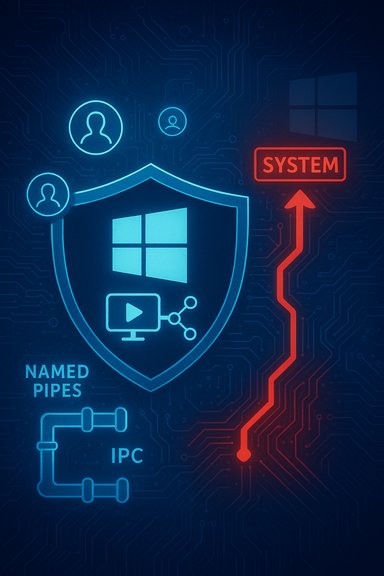 Background
The Microsoft Streaming Service (often referenced in telemetry and security writeups as the Streaming Service Proxy, MsStrProxy, or Kernel/Streaming components) is a privileged Windows component that mediates protected streaming and media-related operations. Because the streaming stack runs inside privileged contexts on many client and server SKUs, memory-safety and authorization defects in this component have historically led to reliable local privilege escalation primitives. Recent and past CVEs in the streaming/stream proxy family (for example, high‑impact EoP entries patched in both 2023 and 2025) illustrate the recurring risk this component represents to Windows estates. Microsoft’s Security Update Guide is the canonical source for vendor mapping from CVE → KB → patched build. The MSRC Update Guide entry for CVE‑2025‑59514 is the authoritative place to confirm affected SKUs and the exact update package to apply; however the MSRC vulnerability pages are rendered client‑side and sometimes require the vendor’s UI/API to extract full details. Administrators should therefore always validate the KB/build mapping via the MSRC Update Guide or the Microsoft Update Catalog before rolling updates at scale. What the public record says right now
- Summary of the issue: CVE‑2025‑59514 is described in public trackers as an improper privilege management / elevation‑of‑privilege vulnerability in the Microsoft Streaming Service component that a locally‑authorized user can exploit to obtain elevated (SYSTEM) privileges.
- Severity: Aggregated feeds currently list the issue as High with a CVSS v3.1 base in the high‑7 range (≈ 7.8), consistent with a local EoP that has low attack complexity and requires only a standard user context.
- Exploitation status: At the time of writing there is no widely‑published proof‑of‑concept (PoC) tied to CVE‑2025‑59514 in major public repositories, and there are no broad claims of in‑the‑wild mass exploitation for this specific CVE. Still, streaming/proxy EoP flaws have been weaponized quickly in past incidents, so lack of a public PoC is not a guarantee of safety.
Technical anatomy — how a Streaming Service Proxy EoP typically works
Although Microsoft’s public advisory text for CVE‑2025‑59514 is intentionally concise (a deliberate trade‑off vendors use to limit rapid weaponization), the technical family and likely exploitation mechanics are clear from historical precedents and public writeups on similar MsStrProxy/streaming bugs:- Component behavior that matters:
- The Streaming Service Proxy runs as a privileged service and exposes IPC endpoints (named pipes, RPC, or other local interfaces) to unprivileged processes for media streaming, DRM, and inter‑process handoffs.
- Because these endpoints handle tokens, impersonation contexts, and file/pipe operations, improper validation or mishandling of impersonation tokens and handles is a common root cause for privilege escalation.
- Typical vulnerability classes that produce local EoP in this component:
- Use‑after‑free or heap corruption in privileged processing paths that can be triggered by unprivileged clients. Exploitation of such memory‑safety defects enables control‑flow hijack or token manipulation and commonly yields SYSTEM context in privileged services.
- Improper impersonation or pipe/token handling: a privileged service that accepts a client connection and then mistakenly reuses or elevates an impersonation token can be coerced into executing work under SYSTEM.
- Race conditions and TOCTOU (time‑of‑check/time‑of‑use) windows when the service validates a handle or path and later performs an operation without atomicity.
- Practical exploitation outline (based on public patterns):
- Attacker obtains a local foothold (e.g., non‑admin user executing code).
- The attacker interacts with the streaming component’s IPC surface repeatedly (or arranges payloads) to trigger the vulnerable code path.
- Through memory corruption, impersonation abuse, or a race condition, the attacker escalates privileges to SYSTEM and can then install persistent payloads or read/modify protected files. Historical EoP cases show this sequence often requires some exploit engineering (heap grooming, timing control), but once weaponized it is a deterministic path to full host compromise.
Affected systems and real‑world risk
- Likely affected SKUs: Historically, streaming/stream proxy flaws have impacted a broad swath of Windows client and server builds — Windows 10, Windows 11, and supported Windows Server branches that include the streaming stack. Please verify the exact product/build list for CVE‑2025‑59514 on the MSRC Update Guide (the advisory → KB mapping is authoritative).
- Attack vector and privileges required:
- Attack vector: Local (AV:L) — exploitation requires the ability to run code or issue IPC calls on the target host.
- Privileges required: Low (PR:L) — a standard (non‑admin) account is typically sufficient to trigger the vulnerable code path based on analogous CVEs in the same component family.
- Blast radius:
- On single‑user workstations the impact is immediate: SYSTEM compromise enables persistence, disabling of protections, and exfiltration.
- In enterprise environments the consequences are amplified: build servers, developer machines, CI/CD hosts, bastions, RDS/VDI hosts, and multi‑user desktops are high‑value targets because a local EoP there can quickly become a domain or cloud pivot point. Historical incidents show attackers chain local EoP to cloud token theft (via local metadata or management endpoints) or extension/agent abuse.
Confirmed mitigations and patch status
- Vendor fixes: Public vulnerability aggregators note that patches are available from Microsoft for CVE‑2025‑59514 and administrators should apply the updates Microsoft lists for the affected SKUs. Always confirm the exact KB number and the target build on the MSRC Update Guide (vendor KB mapping) and the Microsoft Update Catalog before deploying.
- Patch testing and deployment guidance:
- 1. Identify hosts that include the Streaming Service / related components (inventory via SCCM/Intune/EDR).
- 2. Map each host to the MSRC KB → build mapping rather than relying only on the CVE number.
- 3. Stage the update to a small pilot group (test ring) and validate application compatibility before broad rollout.
- 4. For servers with high availability constraints, apply the update during scheduled maintenance windows and validate rollback plans.
- Compensating controls if patching is delayed:
- Hardening: apply least‑privilege controls to reduce the number of users permitted to run untrusted local code on high‑value hosts.
- Isolation: reduce exposure of shared build agents and developer workstations; suspend unnecessary local services that interact with streaming components where operationally feasible.
- Telemetry & detection: enable EDR/telemetry on candidate hosts and deploy hunts for suspicious local escalation behaviors (processes spawning cmd/powershell from non‑system parents, anomalous named‑pipe access patterns).
Detection, hunting, and incident response guidance
- High‑value detection signals to prioritize:
- Unexpected process elevations to NT AUTHORITY\SYSTEM on hosts that run streaming/telemetry agents.
- Named pipe creation and impersonation chains originating from user processes directed at privileged streaming components.
- Sudden changes to service binaries or scheduled tasks shortly after local user activity.
- Example EDR/telemetry hunts:
- Search for processes that call OpenProcessToken/ImpersonateNamedPipeClient or similar APIs from user contexts when the target process is typically a privileged service.
- Monitor for crashes or repeated restarts of streaming/related services that could indicate exploitation attempts (heap grooming and race exploitation often produce instability).
- Hunt for lateral tactics immediately after an elevation event: new service installs, suspicious outbound authentication requests, and abnormal access to cloud metadata/managed identity endpoints.
- Incident containment checklist:
- Isolate affected host from the network while preserving forensic artifacts.
- Preserve memory and full disk images before restarting or applying updates.
- Conduct credential rotation for any machine‑ or user‑level credentials that may have been exposed post‑compromise (service accounts, build tokens, API keys).
- Rebuild or reimage hosts that show confirmed exploitation — do not rely on in‑place cleanup unless you have high confidence in remediation and full forensic visibility.
Risk analysis and practical recommendations
- Why urgency is justified: Local EoP vulnerabilities in privileged system services are highly prized by attackers because they transform low‑privilege footholds into full host control and often enable lateral movement, persistence, or cloud resource abuse. The streaming proxy family has a track record of producing such primitives; the industry has repeatedly observed rapid weaponization after disclosure in prior CVEs affecting the same code paths.
- Recommended immediate actions for Windows administrators:
- Apply the Microsoft security update(s) that address CVE‑2025‑59514 as soon as you can after validating in a test ring. Confirm KB/build mapping on MSRC.
- Prioritize patching of multi‑user systems, build servers, CI/CD runners, bastion hosts, and VDI/RDS hosts — these produce the highest blast radius if compromised.
- Harden local environments: enforce application control policies, reduce local admin counts, and remove unnecessary system components where possible.
- Strengthen monitoring for privilege escalation and named pipe/IPC abuse patterns. Deploy SIEM/EDR alerts that flag suspicious token impersonation operations.
- For MSSPs and SOCs:
- Update detection content to include suspicious interactions with streaming/stream proxy services and escalate triage for any SYSTEM‑level token creations after user context operations.
- Add CVE‑based inventory checks to vulnerability management pipelines but map CVE → KB → installed builds before automated remediation rollouts.
What’s not (yet) known — and why that matters
Vendor advisories sometimes withhold exploit‑level technical details at initial disclosure to reduce the chance of rapid weaponization; MSRC’s Update Guide may therefore summarize impact and affected builds without revealing exact exploit mechanics. That means:- If your detection strategy requires syscall‑level signatures or exploit‑specific offsets, those details may be unavailable early. Build detection around behavioral signals (named pipe impersonation, unexpected SYSTEM token usage, service crashes) rather than fragile memory signatures until trusted researcher writeups or vendor technical notes are published.
- Public trackers and aggregators (some of which mirrored this CVE) are useful for operational triage, but they occasionally show fragmented CVE → KB mappings for Microsoft issues. Always validate with the MSRC Update Guide and the Microsoft Update Catalog.
- If you see conflicting CVE identifiers in third‑party feeds for streaming/service‑related bugs, don’t assume equivalence — the same underlying component can produce multiple, distinct CVEs over time. Map each CVE to the exact KB and build you have installed.
Longer‑term view and lessons for defenders
- Recurrent pattern: The streaming and media stacks in Windows are complex and interact with privileged services, token/impersonation flows, and IPC surfaces. Those traits make the streaming subsystem a recurring source of EoP issues. Defensive engineering priorities for vendors and enterprise defenders should include stricter input validation, hardened impersonation/token patterns, and minimized privilege for telemetry/streaming agents.
- Inventory discipline: This class of vulnerability highlights the critical need for accurate software inventory and the ability to map installed builds to vendor KBs. Automated remediation pipelines must resolve KB/build IDs rather than relying solely on CVE strings to avoid false negatives/positives during patch orchestration.
- Defense‑in‑depth: Relying on a single line of defense (for example, patching alone) is insufficient. Combine least‑privilege, application control, segmentation, and robust telemetry to reduce the chance that a local EoP will convert into a domain‑ or cloud‑level incident.
Conclusion
CVE‑2025‑59514 continues a concerning trend: privileged, widely‑deployed Windows components that expose local IPC surfaces are frequently the source of high‑value elevation‑of‑privilege primitives. Public aggregators show the issue as High (CVSS ≈ 7.8) and note that a Microsoft patch is available; administrators must validate the exact KB/build mapping in the MSRC Update Guide and apply updates on a prioritized schedule — starting with multi‑user and high‑value hosts — while strengthening detection for impersonation and named‑pipe abuse patterns. Practical next steps for defenders, in order:- Confirm whether the Streaming Service component is present on your hosts and map installed builds to Microsoft’s KBs.
- Apply Microsoft’s published updates for CVE‑2025‑59514 in a controlled, staged manner (test ring → broader rollout).
- Harden high‑risk hosts, restrict local code‑exec capabilities, and rotate any sensitive machine/service credentials if compromise is suspected.
- Deploy EDR/SIEM hunts for named‑pipe impersonation, SYSTEM token misuse, and streaming‑service crashes.
- Validate post‑patch telemetry to ensure updates applied cleanly and no signs of exploitation remain.
Source: MSRC Security Update Guide - Microsoft Security Response Center
