

Microsoft’s advisory for CVE-2026-20962 warns that a use of an uninitialized resource inside the Dynamic Root of Trust for Measurement (DRTM) implementation can allow an authorized local attacker to disclose sensitive information, and administrators should treat affected hosts as high priority for triage and patching.
Dynamic Root of Trust for Measurement (DRTM) is a hardware-assisted trust mechanism used by Windows to establish a measured, trusted execution state after the system boots. The newly published CVE‑2026‑20962 is an information disclosure vulnerability caused by a code path that reads or uses a resource that was not fully initialized; under certain conditions that can leak kernel or platform memory to a privileged caller. Microsoft’s Update Guide lists the CVE and summarizes the impact: local information disclosure possible to an authorized actor. This article explains what DRTM is, why an uninitialized-resource bug in that layer matters, how attackers could realistically leverage such a defect, and practical mitigation and detection steps for Windows administrators and security teams. Technical claims are cross‑checked against Microsoft’s explanatory documentation for System Guard and DRTM, industry references on DRTM mechanics, and prior public analyses of “use of uninitialized resource” vulnerabilities to provide context and operational guidance.
Immediate actions (hours)
Source: MSRC Security Update Guide - Microsoft Security Response Center
 Overview
Dynamic Root of Trust for Measurement (DRTM) is a hardware-assisted trust mechanism used by Windows to establish a measured, trusted execution state after the system boots. The newly published CVE‑2026‑20962 is an information disclosure vulnerability caused by a code path that reads or uses a resource that was not fully initialized; under certain conditions that can leak kernel or platform memory to a privileged caller. Microsoft’s Update Guide lists the CVE and summarizes the impact: local information disclosure possible to an authorized actor. This article explains what DRTM is, why an uninitialized-resource bug in that layer matters, how attackers could realistically leverage such a defect, and practical mitigation and detection steps for Windows administrators and security teams. Technical claims are cross‑checked against Microsoft’s explanatory documentation for System Guard and DRTM, industry references on DRTM mechanics, and prior public analyses of “use of uninitialized resource” vulnerabilities to provide context and operational guidance. Background: what DRTM is and why Windows uses it
DRTM in the measured‑boot ecosystem
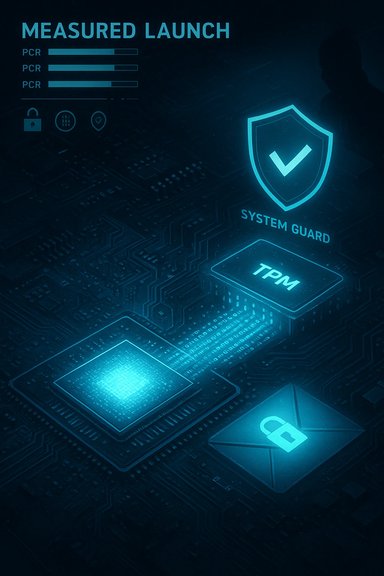
DRTM stands for Dynamic Root of Trust for Measurement. Unlike a static root-of-trust that is fixed at early firmware stages, DRTM enables the platform to establish a fresh, measured trust anchor after initial boot by taking direct control of processor threads and launching a Measured Launched Environment (MLE). The MLE’s code is measured and recorded into TPM PCRs (Platform Configuration Registers), producing a cryptographic record that reflecting the runtime environment. This secure launch flow is the foundation of System Guard Secure Launch in modern Windows releases. Key DRTM properties administrators should keep in mind:- DRTM is intended to produce a short, auditable trusted state after potentially untrusted firmware or early boot code has run.
- It relies on hardware instructions and platform support (Intel TXT / AMD equivalents) and on TPM PCRs to record measurements that services and attestation solutions consume.
- Because it interacts with low-level platform state and the TPM, defects in DRTM code paths can expose high-value secrets (keys, tokens, pointers) or undermine attestation guarantees if exploited.
Where DRTM runs and what components it touches
DRTM-related logic executes in privileged contexts: hypervisor, boot components, System Guard subsystems and code paths that manage the trusted launch flow and vTPM/attestation services. Those components interact with:- The TPM (physical or virtual) to record measurements and keys.
- CPU control code (SMM/firmware or secure initialization instructions).
- OS-level subsystems that depend on attestation (e.g., BitLocker, virtualization features such as shielded VMs).
Because of that privileged surface, even minor memory-management mistakes — like using an uninitialized struct or buffer — can lead to information disclosure that materially aids later privilege escalation.
What the vulnerability is (technical summary)
The core defect
Microsoft describes CVE‑2026‑20962 as a use of an uninitialized resource in the DRTM implementation that allows an authorized attacker to disclose information locally. In practice, that means code in the DRTM flow reads memory or fields that were not zeroed or initialized, and then returns or exposes those values to a caller with some level of authorization. The result is confidentiality loss — kernel or platform memory contents may be revealed. This is the same general class of bug previously cataloged as CWE‑908 — Use of Uninitialized Resource. Past incidents across kernels and privileged services show this class commonly leads to:- Leaks of kernel pointers or memory (defeating KASLR).
- Exposure of ephemeral secrets, tokens or measured values.
- A reconnaissance primitive that dramatically lowers the cost of developing local privilege escalation exploits.
Preconditions and attacker model
According to the vendor summary, exploitation requires the attacker to be authorized locally — that is, they must have an account or process capability that can interact with the DRTM management interface or the specific privileged API path. This is not a remote, unauthenticated issue; it’s a local information disclosure. That profile makes the bug a high‑value post‑compromise primitive rather than an immediate wormable threat, but remains critical because it lowers the bar for full system compromise when chained with other local exploits. Realistic attacker models include:- A low-privilege local process or user that legitimately interacts with virtualization or attestation subsystems and can issue requests that exercise the DRTM code path.
- A compromised VM or container tenant in a multi‑tenant environment where DRTM and vTPM functions are exposed to tenant‑managed agents.
- An insider or maintenance account with limited rights that nonetheless has access to the affected API.
Likely impact and severity
The principal impact is confidentiality — leaked memory may include secrets that lead to later privilege escalation or persistent compromise. Historically, uninitialized reads in privileged services are weaponized as reconnaissance to discover kernel addresses and tokens, enabling further exploitation. Public and vendor treatment of such bugs typically assigns high operational priority even when the initial access vector requires local authorization.Why a DRTM bug is particularly serious
DRTM touches the measured-launch path and the platform attestation chain. That amplifies the consequences of an information leak:- Secrets stored or used in the trusted-launch flow (keys, policy data, attestation materials) are high-value. Any leak increases risk significantly.
- Leaked kernel pointers or layout information can defeat ASLR and speed development of local privilege escalations targeted at the platform.
- In virtualization and cloud contexts, DRTM and virtual TPM services are used to protect guests; a defect here can weaken tenant isolation and attestation guarantees for shielded VMs or other hardware-backed protections.
Verification and cross‑checks
Confirmed facts:- Microsoft lists CVE‑2026‑20962 in its Update Guide with a one‑line summary that the bug is a use-of-uninitialized-resource in the DRTM code allowing local information disclosure. Administrators should consult Microsoft’s Update Guide for the authoritative KB mapping.
- DRTM is the mechanism used by Windows System Guard Secure Launch to create a dynamic root of trust and relies on TPM PCRs and hardware support; this is documented in Microsoft’s System Guard documentation and platform references.
- The operational class — uninitialized resource → information disclosure → reconnaissance → potential escalation — is well established in the vulnerability literature and previous vendor advisories. Examples across kernels and Windows services show identical exploitation patterns and mitigation priorities.
- Microsoft’s public advisory text for CVE‑2026‑20962 on the MSRC site may require an interactive browser to render full KB → CVE mappings and package lists. The short summary on the Update Guide is authoritative for the presence and type of the bug, but specific OS builds and KB numbers must be verified directly in the Update Guide or the Microsoft Update Catalog before deploying patches. Treat any third‑party KB mapping as provisional until validated against Microsoft’s published mapping.
Practical mitigation and remediation steps
Apply the vendor’s security updates as the primary and authoritative remediation path. Because MSRC/Update Guide is the canonical KB mapping service, confirm the exact package(s) for each OS SKU and servicing branch before deployment. If you cannot immediately patch, use compensating controls to reduce risk.Immediate actions (hours)
- Identify all hosts that rely on DRTM / System Guard / Secure Launch, and inventory which workloads use vTPM, shielded VMs, BitLocker attestation or other attestation-dependent services.
- Query your patch management system for the CVE string CVE‑2026‑20962 and validate the KB mapping in the Microsoft Update Guide; schedule emergency patch windows for high‑value and highly exposed hosts (admin workstations, virtualization hosts, jump boxes).
- For environments where tenant workloads can invoke DRTM-related APIs (multi‑tenant virtualization), restrict tenant access to management interfaces and apply stricter isolation until patches are deployed.
- Reduce local attack surface: minimize accounts and services that are authorized to invoke DRTM APIs. Where possible, enforce multi-factor and privileged-access workstation policies for administrative operations that touch attestation and virtualization plumbing.
- Increase monitoring: collect and centralize telemetry for calls to the DRTM/attestation APIs, TPM‑related operations, and any abnormal responses from System Guard components. Hunt for unusual requests or anomalous caller accounts that coincide with suspicious activity.
- Rotate any keys or attestation secrets if there is evidence of anomalous access prior to remediation.
- Harden platform configurations: require strict attestation check policies, minimize exposed management endpoints, and ensure vTPM usage aligns with the principle of least privilege.
- Validate applied patches via automated inventory (WSUS/SCCM/Intune) and independent host checks (verify installed KBs and OS build numbers).
- Search EDR and SIEM logs for anomalous invocations of attestation or DRTM management interfaces from non‑administrative accounts.
- Hunt for unexpected exposures of TPM data, or for processes that received larger-than-normal responses from privileged attestation APIs.
- Pay attention to lateral movement indicators following local reconnaissance primitives — leaked kernel information is frequently used quickly to develop privilege escalation steps. Historical analyses show uninitialized-resource information leaks are commonly used as the second stage in an attack chain.
How to validate that you’re patched
- Use the Microsoft Update Guide (or the Microsoft Update Catalog) to map CVE‑2026‑20962 to the exact KB numbers for each supported Windows SKU and servicing channel. The Update Guide is authoritative; do not rely on unconfirmed third‑party mappings.
- After installing the mapped updates, verify on representative hosts that the relevant KB entries are installed and that the host reports the updated OS build number. Use WSUS/SCCM/Intune Inventory reports to confirm coverage.
- Re-run hunts for suspicious behavior recorded prior to patching to ensure no root cause chains remain open.
Broader lessons and operational risk management
Small coding mistakes in privileged code are high‑value
A missing memset or partially-populated struct inside DRTM code is a minor programming error but can produce outsized security consequences. Prior CVEs in kernels and privileged services show the pattern repeatedly: the defect is small, the remediation straightforward, but the operational impact and exploitation utility can be large. Treat these fixes as high-priority even when the initial vector is local or “authorized” only.Defense-in-depth: eliminate the preconditions
Because the CVE requires local authorization to trigger, reducing the number of accounts and processes that can legitimately call into DRTM and attestation subsystems reduces the blast radius:- Enforce least privilege for management/automation accounts.
- Require dedicated privileged access workstations for administrative operations.
- Use JIT/JEA tools to avoid standing privileges that attackers can abuse post‑compromise.
Patch cadence and validation matter
Platform and firmware features that integrate with the TPM and secure‑launch pipeline are cross‑component: firmware, hypervisor, OS and management agents. Patch sequencing, testing in pilot rings, and validation of KB mappings matter. Confirm vendor KBs before mass deployment to avoid accidental mismatch or incomplete remediation.Conclusion
CVE‑2026‑20962 is a reminder that even small memory‑safety or initialization oversights in the platform trust chain can yield high operational risk. The vulnerability is an information‑disclosure issue rooted in a use of an uninitialized resource inside DRTM code, enabling a locally authorized actor to read sensitive platform data. Microsoft’s Update Guide lists the CVE and is the authoritative source for the KB → SKU mapping; administrators should validate the exact updates for their environment and prioritize deployment to virtualization hosts, attestation consumers, and admin endpoints. DRTM and Secure Launch are core building blocks for modern Windows hardware‑rooted trust. Understanding their role — and treating any defect inside them with high urgency — is essential for protecting attestation, BitLocker, shielded VMs, and other security guarantees that enterprises depend on. For context on why these defects are consequential and how they are weaponized in practice, review prior “use of uninitialized resource” analyses and drive closed‑loop detection and patch validation in your environment.Source: MSRC Security Update Guide - Microsoft Security Response Center
