

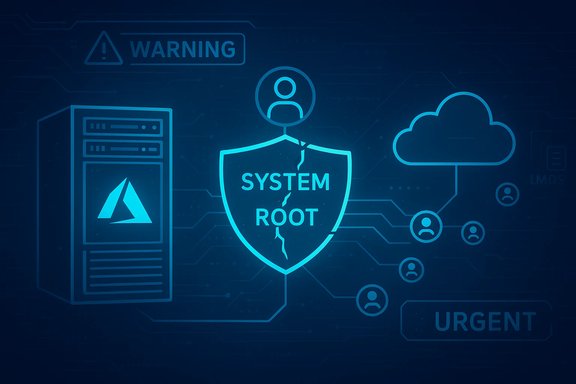
Microsoft has published an advisory for CVE-2026-21224, an elevation‑of‑privilege vulnerability in the Azure Connected Machine Agent (azcmagent), that — if successfully exploited — can allow a local, low‑privileged actor to escalate to SYSTEM/root on managed servers and potentially abuse machine‑assigned identities and extension management to access Azure resources.
Azure Connected Machine Agent (azcmagent) is the agent Microsoft ships for Azure Arc–enabled servers and other hybrid scenarios to provide identity, monitoring, configuration and extension management on non‑Azure or on‑premises hosts. The agent runs privileged services and exposes local endpoints that bridge a host to the Azure management plane; those endpoints provide both the convenience and the risk — a local flaw in the agent frequently allows a local escalation to become a cross‑plane compromise. This class of agent‑adjacent vulnerabilities has been observed repeatedly across 2024–2026: multiple CVEs impacting azcmagent and Azure monitoring/management agents have been cataloged, patched, and tracked by vulnerability scanners and vendors. Those prior advisories establish a predictable pattern — local, authenticated attack vectors that escalate to SYSTEM/root and then exploit metadata/token endpoints or extension workflows to access tenant resources. Independent scanner vendors and trackers recommend mapping each CVE to the exact azcmagent build or KB before patching.
Microsoft’s Security Update Guide entry for CVE‑2026‑21224 is the authoritative starting point; confirm the KB and fixed azcmagent build there, act quickly on high‑value hosts, and deploy behavior‑focused detection while updating your patch automation to rely on vendor package identifiers rather than CVE strings alone.
Source: MSRC Security Update Guide - Microsoft Security Response Center
 Background
Azure Connected Machine Agent (azcmagent) is the agent Microsoft ships for Azure Arc–enabled servers and other hybrid scenarios to provide identity, monitoring, configuration and extension management on non‑Azure or on‑premises hosts. The agent runs privileged services and exposes local endpoints that bridge a host to the Azure management plane; those endpoints provide both the convenience and the risk — a local flaw in the agent frequently allows a local escalation to become a cross‑plane compromise. This class of agent‑adjacent vulnerabilities has been observed repeatedly across 2024–2026: multiple CVEs impacting azcmagent and Azure monitoring/management agents have been cataloged, patched, and tracked by vulnerability scanners and vendors. Those prior advisories establish a predictable pattern — local, authenticated attack vectors that escalate to SYSTEM/root and then exploit metadata/token endpoints or extension workflows to access tenant resources. Independent scanner vendors and trackers recommend mapping each CVE to the exact azcmagent build or KB before patching. What Microsoft’s advisory says (concise summary)
- Affected component: Azure Connected Machine Agent (azcmagent) on Windows and Linux hosts.
- Vulnerability type: Elevation of Privilege (EoP) — a local attacker or low‑privilege process may be able to gain SYSTEM/root.
- Vendor confidence and disclosure posture: Microsoft’s advisory entry includes a vulnerability maturity/confidence metric to indicate how certain the vendor is about the existence and technical details of the issue. The vendor sometimes withholds low‑level exploit details in the interest of safety while supplying KB/package mappings for remediation.
Why this matters: the cross‑plane amplification problem
A local EoP in azcmagent is more than a typical host EoP because of three linked properties:- Privileged local services: azcmagent and its helper services run as SYSTEM/root and perform sensitive tasks on behalf of the cloud management plane. That grants access to high‑value actions (extension installs, configuration changes).
- Local identity/token access: the agent and its components commonly integrate with local metadata or identity endpoints (HIMDS/IMDS variants). SYSTEM privileges can be used to request and harvest machine‑assigned tokens usable against Azure Resource Manager (ARM), Key Vault, and storage APIs.
- Large fleet footprint: azcmagent is deployed broadly across hybrid estates (bastions, jump boxes, build agents, CI/CD runners). A single exploited host can therefore provide lateral movement or management‑plane persistence at scale.
Technical analysis — likely root causes and attack surface
Microsoft’s public advisory may not disclose low‑level exploit primitives. Where vendor detail is limited, the realistic inference model draws on prior azcmagent/AMA advisories and independent scans:- Common root causes observed previously:
- Improper access control / missing authorization (CWE‑284). Privileged IPC or service APIs callable by lower‑privileged processes.
- Unsafe installer/upgrade paths (MSI repair argument chaining or unsanitized installer inputs) that permit command injection when an installer runs elevated.
- Unsafe parsing / deserialization of telemetry or configuration (CWE‑502/CWE‑94) that can lead to code‑injection primitives.
- Race conditions or memory‑safety defects (use‑after‑free, heap corruption) that can be more complex to weaponize but are seen repeatedly in privileged services.
- Likely exploitation chain (conservative, evidence‑based):
- Attacker obtains a local foothold (malicious user, compromised CI runner, or malware).
- Attacker triggers the azcmagent defect to escalate to SYSTEM/root.
- With SYSTEM, attacker queries local metadata/HIMDS endpoints, requests a machine‑assigned token, and uses it to call ARM APIs or access tenant resources.
- Attacker persists by installing or tampering with agent extensions, or by creating backdoor services that survive reboots and propagate.
Vulnerability maturity and why it changes urgency
Microsoft’s advisory system includes a confidence/maturity metric that shades defender response:- High maturity (confirmed): vendor acknowledgement with KB/package mappings and fixed builds. This is actionable; patch immediately.
- Medium maturity (corroborated): trusted third‑party reports or scanner signatures point to a likely issue but vendor mapping is incomplete. Inventory and hunt while preparing mitigations.
- Low maturity (speculative): public mention without vendor confirmation. Increase detection and containment; do not over‑automate patch rollouts based only on the CVE string.
Operational playbook — immediate (0–24 hours)
- Inventory:
- Enumerate all hosts running Azure Connected Machine Agent (azcmagent) and record agentVersion fields. Use Azure Resource Graph for Arc‑connected machines and endpoint management tools (Intune, WSUS, SCCM) for on‑prem fleets. Validate locally where agentVersion is ambiguous.
- Confirm vendor advisory:
- Open Microsoft’s Security Update Guide entry for CVE‑2026‑21224 and capture the KB/article mapping and fixed azcmagent build(s). If MSRC doesn’t render, consult the Microsoft Update Catalog and vendor KB pages referenced by MSRC. Do not assume a CVE string maps to a single package across SKUs.
- Prioritize high‑risk hosts:
- Patch bastions, jump boxes, CI/CD/build agents, virtualization hosts, domain controllers, and any hosts that possess machine‑assigned identities or access to Key Vault/storage. These hosts present the largest blast radius.
- Contain while patching:
- Restrict access to local metadata endpoints (HIMDS/IMDS) where feasible.
- Limit who can run msiexec repair/installer flows (tighten local admin cohorts).
- Apply application allow‑listing (WDAC/AppLocker) to agent binaries and installers.
- Validate:
- After updates, validate agentVersion centrally and locally. Do not rely on CVE‑only matching in automation; use the exact KB/package identifiers.
Short‑term mitigations (24–72 hours) and detection
- Network and host controls:
- Block or limit inbound access to agent endpoints from untrusted subnets.
- Harden NSGs/host firewall rules around management traffic and limit management plane exposure.
- Least privilege and install controls:
- Remove unnecessary accounts from local Administrators groups.
- Enforce UAC and JIT elevation for install/repair operations. Restrict MSI repair to a minimal admin set.
- Detection and SIEM hunts:
- Alert when non‑service processes query local metadata endpoints; watch for IMDS/HIMDS calls from unexpected processes or interactive sessions.
- Alert on agent binaries spawning command interpreters (cmd, PowerShell), unexpected MSI repair spikes, or extension install operations outside change windows.
- Process ancestry changes where a non‑privileged process spawns a SYSTEM‑context process shortly after an azcmagent crash or update.
- Sudden role assignment or Key Vault access events in Azure Activity logs that correlate with local agent anomalies on a host.
Long‑term hardening and governance (1–12 weeks)
- Centralize agent telemetry:
- Forward azcmagent, HIMDS and extension logs to your SIEM/EDR with long retention for forensic analysis. This makes retrospective hunts practical and speeds detection.
- Treat management agents as first‑class patch items:
- Include azcmagent and AMA updates in your change‑management and vulnerability pipelines. Map CVE → KB → package version and add that mapping to automation to avoid CVE fragmentation problems.
- Tighten deployment and CI/CD hygiene:
- Isolate build runners and CI jobs that can run system installers. Enforce signed artifacts and limit the subset of jobs permitted to perform privileged installer steps.
- Network segmentation:
- Place management hosts and bastions in tightly controlled management VNETs with strict NSGs and private link where possible to reduce exposure.
Detection recipes and example SIEM queries
- Hunt for: azcmagent or agent helper spawning PowerShell or cmd.exe as SYSTEM within a 5‑minute window of agent update activity.
- Hunt for: IMDS/HIMDS token requests from non‑system processes or workstation accounts.
- Correlate: host‑level privilege escalation events with Azure Activity logs showing token use, Key Vault access, or role assignment changes.
Strengths and weaknesses of the vendor disclosure model
Strengths:- Microsoft’s Security Update Guide gives a canonical CVE→KB→package mapping and, when fully published, provides authoritative patch targets for operational teams. This is critical for accurate remediation across SKUs.
- The use of a maturity/confidence metric helps defenders interpret how definitive the technical detail is and drives appropriate urgency.
- Client‑side rendering and terse advisory text can complicate automated ingestion and leave operators needing to human‑verify KB/package mappings before patching. Automated pipelines keyed only to CVE strings risk mismatching and missing the true remediation artifact.
- Vendor advisories sometimes purposely omit exploit mechanics until patches are widely distributed; defenders must therefore act on authoritative KBs while relying on behavioral detection until detailed technical analyses are published.
Cross‑checking claims and evidence
To avoid overreliance on a single feed, the following independent sources corroborate the wider pattern of azcmagent EoP risk and tactical recommendations:- Tenable/Nessus plugin guidance and multiple scanner rules have repeatedly flagged azcmagent EoPs and tie specific fixed versions to KBs; their plugin notes also recommend upgrading to explicit agent versions when Microsoft maps the fix.
- Third‑party vulnerability trackers and advisories (e.g., Cybersecurity‑help, vulnerability aggregators) catalog several azcmagent CVEs and describe local EoP attack vectors and recommended remediation.
- Community operational write‑ups and playbooks emphasize inventorying azcmagent versions with Azure Resource Graph and applying compensating controls (metadata restrictions, WDAC, MSI repair limitations) while patches are staged.
- There is currently no public, vendor‑confirmed proof‑of‑concept exploit code for many of the recent agent CVEs at the time of writing, including CVEs in the azcmagent family; absence of PoC is not evidence of no exploitation, so conservative urgency is warranted. Flag any assertion of in‑the‑wild exploitation until multiple independent incident reports or vendor telemetry confirm it.
Practical checklist — what administrators should do right now
- Confirm the MSRC Security Update Guide entry for CVE‑2026‑21224 and extract the KB and fixed agentVersion. Use the Microsoft Update Catalog if the MSRC page needs additional rendering.
- Inventory all azcmagent installations and map installed versions to the vendor’s fixed builds. Use Azure Resource Graph and endpoint management tooling for central verification.
- Patch high‑risk hosts first: bastions, jump boxes, build agents, CI/CD runners, virtualization hosts, and systems with machine‑assigned identities.
- If you cannot patch immediately: restrict metadata endpoints, lock down installer privileges, apply application allow‑listing to agent binaries, and tighten NSGs.
- Deploy detection rules described above and hunt for IMDS/HIMDS anomalies, suspicious child processes, and correlated tenant activities.
Closing analysis — balancing speed and verification
CVE‑2026‑21224 sits squarely in a familiar and dangerous category: privileged management agents with local attack surfaces that can amplify to tenant‑level compromise. The vendor’s advisory signals a genuine, high‑impact class risk; the right operational response is fast, measured, and evidence‑based:- Fast: prioritize inventory and patch high‑value systems immediately.
- Measured: do not mass‑rollout based on a CVE string alone — confirm KB/package targets from Microsoft’s Security Update Guide or Update Catalog.
- Evidence‑based: augment patching with detection, metadata access restrictions, and least‑privilege install controls to reduce exposure both before and after the update.
Microsoft’s Security Update Guide entry for CVE‑2026‑21224 is the authoritative starting point; confirm the KB and fixed azcmagent build there, act quickly on high‑value hosts, and deploy behavior‑focused detection while updating your patch automation to rely on vendor package identifiers rather than CVE strings alone.
Source: MSRC Security Update Guide - Microsoft Security Response Center
