

Microsoft's terse advisory for CVE-2025-62459 signals a presentation‑layer weakness in the Microsoft Defender portal that can be abused to spoof trusted UI elements, but public technical detail and reproduction proof remain scarce — administrators should treat the vendor’s MSRC entry as the canonical record, assume realistic operational risk from UI spoofing, and apply rapid detection and compensating controls while awaiting any vendor remediation or further disclosure.
Microsoft has cataloged a vulnerability under CVE‑2025‑62459 described as a spoofing issue affecting the Defender portal (the cloud and web management surfaces used to monitor and configure Microsoft Defender services). The initial public entry is in the Microsoft Security Response Center (MSRC) Security Update Guide, which — as many administrators know — is a dynamic JavaScript application that can show only minimal text to scrapers and mirrors; viewing it interactively is often required to confirm exact product mappings, KB identifiers, and status. Spoofing and presentation‑layer flaws do not typically permit immediate remote code execution, but they are operationally powerful: they can make attacker‑controlled content and UI elements appear to originate from internal, trusted sources, facilitating credential theft, fraud, approval of malicious automation, or the theft of tokens and configuration artifacts that lead to follow‑on compromise. Multiple community trackers and enterprise advisories have repeatedly warned that when a cloud management console or portal is affected by UI spoofing, the downstream business impact can be severe despite a modest technical CVE description.
Each chain highlights the same core point: spoofing undermines trust and turns routine management actions into high‑impact risks.
Administrators should assume the vulnerability enables effective social‑engineering amplifiers against Defender portal users until proven otherwise; treat the MSRC entry as the canonical advisory, enforce phishing‑resistant sign‑in, tighten Conditional Access, rotate long‑lived credentials, and instrument rigorous telemetry for rapid detection. If a proof‑of‑concept or independent research emerges, revisit risk and urgency immediately and apply vendor KBs according to your change‑control policies.
Appendix: verification notes and reading guidance
Source: MSRC Security Update Guide - Microsoft Security Response Center
 Background / Overview
Microsoft has cataloged a vulnerability under CVE‑2025‑62459 described as a spoofing issue affecting the Defender portal (the cloud and web management surfaces used to monitor and configure Microsoft Defender services). The initial public entry is in the Microsoft Security Response Center (MSRC) Security Update Guide, which — as many administrators know — is a dynamic JavaScript application that can show only minimal text to scrapers and mirrors; viewing it interactively is often required to confirm exact product mappings, KB identifiers, and status. Spoofing and presentation‑layer flaws do not typically permit immediate remote code execution, but they are operationally powerful: they can make attacker‑controlled content and UI elements appear to originate from internal, trusted sources, facilitating credential theft, fraud, approval of malicious automation, or the theft of tokens and configuration artifacts that lead to follow‑on compromise. Multiple community trackers and enterprise advisories have repeatedly warned that when a cloud management console or portal is affected by UI spoofing, the downstream business impact can be severe despite a modest technical CVE description.What the MSRC entry actually tells us
Canonical status and limitations
- The MSRC Security Update Guide entry is the authoritative record for CVE‑2025‑62459; it is where Microsoft will list exact affected SKUs, mitigation guidance, and KB/patch identifiers when available. However, the MSRC UI is rendered client‑side and often provides only a single line description for cloud/service CVEs, intentionally withholding low‑level exploit details. Administrators should therefore confirm the MSRC page interactively from a secure workstation rather than relying on third‑party mirrors.
- Public mirrors, automated feeds, or third‑party aggregators may lag or show incomplete data for service‑side CVEs. When vendor entries are terse, the practical advice is to treat the MSRC page as canonical and assume the presence of a real operational risk until Microsoft marks the issue “Mitigated” or publishes a KB with explicit remediation steps.
What MSRC does not (yet) show
- No public, vendor‑published proof‑of‑concept (PoC) or exploit recipe has been published alongside the entry for CVE‑2025‑62459.
- The MSRC text for similar cloud/service spoofing CVEs is deliberately short, and it often omits low‑level root‑cause details (for example, whether the vulnerability is a server‑side HTML sanitization issue, a token‑binding omission, or a client‑side rendering quirk). Treat any detailed mechanics found in third‑party posts as provisional until corroborated by Microsoft or independent technical research.
Why this matters: the operational risk of Defender portal spoofing
Spoofing is an attack enabler, not just a nuisance
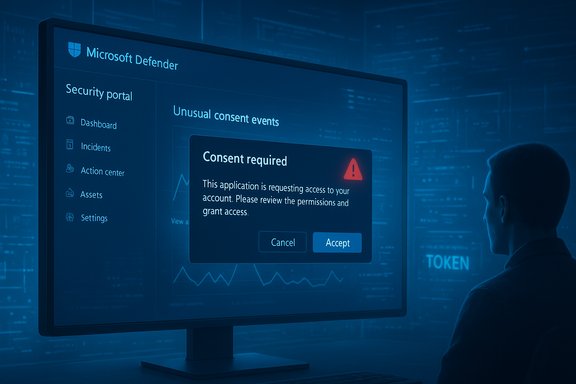
UI and portal spoofing amplifies social engineering by making malicious prompts look legitimate to both humans and automation. In a Defender portal context the likely impacts include:- Credential harvesting: attackers present a fake sign‑in or consent dialog to capture admin credentials or refresh tokens.
- Illicit approvals: attackers trick an operator into approving a dangerous automation (for example, allowing a connector or consent grant that exfiltrates data).
- Token / configuration theft: attacker‑controlled content displayed as “system” messages can entice administrators to copy command snippets or API keys into insecure locations.
- Pivoting into protected resources: the portal is a management choke point; if an attacker secures a session token or accepts a malicious configuration, they can gain high‑impact downstream access. These are realistic scenarios in other cloud console spoofing incidents and are explicitly the vector that makes presentation‑layer issues damaging.
UI spoofing is low‑technical‑barrier with high leverage
Unlike memory corruption flaws that require exploit development and often system privileges, UI spoofing typically requires only the ability to host a well‑crafted payload (web page or email content) and a target user to act. Attack success therefore depends less on code execution complexity and more on operational controls, hygiene, and user training — meaning large organizations with many delegated administrators, outsourcing, or complex automation pipelines can be particularly exposed. Community analyses repeatedly emphasize that presentation‑layer issues are dangerous because they target trust rather than memory safety.The verification/confidence metric: how sure are we about CVE‑2025‑62459?
MSRC’s advisory model provides an important signal — vendor acknowledgement equals “existence confirmed.” But the degree of technical detail available publicly often varies. Use this practical confidence ladder when triaging CVE‑2025‑62459:- Vendor acknowledgement (MSRC entry) — High confidence that the issue exists and that Microsoft has tracked it. This is the primary source and should be treated as authoritative for remediation guidance and affected‑SKU mapping.
- Technical classification (spoofing/presentation‑layer) — Moderate confidence: the label “spoofing” guides defenders to the general attack profile, but not to the exact exploit mechanism (e.g., script injection vs. malformed metadata vs. UI provenance confusion). Third‑party write‑ups often converge on the same impact profile even when low‑level details differ.
- Public PoC or independent research corroboration — Low confidence (at time of writing): no robust PoC or technical deep‑dive is publicly available to validate exploitability or attack steps. Until independent research is published or Microsoft expands the advisory, claims about precise exploit mechanics should be treated as speculative.
Threat scenarios and likely exploitation chains
1) Targeted admin phishing with portal UI mimicry
An attacker crafts an email (or social engineering message via Teams/Slack) linking to a page that perfectly mimics Defender’s console prompts (or an interstitial “confirm administrator action” dialog). When an on‑call admin follows the link, the malicious page captures credentials or trick‑click approvals. Attackers then use harvested tokens to modify alert rules or create backdoors.2) Malicious artifact embedded in accepted content
If the Defender portal ingests user‑provided content (comments, automation templates, uploaded connectors) and fails to sanitize provenance or metadata, an attacker can plant content that appears as a system‑generated security notification, thereby coercing admins into risky actions.3) Automation abuse through spoofed system prompts
An attacker may spoof an automated recommendation (for example, “accept this remediation runbook to fix an infection”) prompting a human operator to trigger an automation that instead executes attacker‑controlled code or exports sensitive configuration.Each chain highlights the same core point: spoofing undermines trust and turns routine management actions into high‑impact risks.
Immediate defensible actions for administrators
While waiting for Microsoft to publish remediation details or a patch mapping, apply layered compensating controls that reduce the likelihood and impact of portal‑spoofing attacks.Short term (hours to 48 hours)
- Require phishing‑resistant authentication for all Defender portal administrators (FIDO2 security keys or platform authenticators) and disable legacy app passwords. This prevents many stolen credential attacks from becoming session compromises.
- Enable Conditional Access: restrict management console access to known corporate IP ranges and enforce device compliance checks (Intune/MDE posture checks).
- Remove or rotate long‑lived API keys and service principals with broad Defender portal permissions; prefer short‑lived certificates or token refresh flows.
- Increase administrative telemetry: add or tune alerts for unusual consent/grant events, unusual machine‑to‑human approval patterns, and suspicious changes to automation connectors.
- Apply Strict MFA step‑up on any high‑impact operations (for example, approving connector creation or changing detection configuration).
Medium term (days to weeks)
- Audit and reduce the number of users with privileged Defender roles; apply least privilege, break up duties, and enforce just‑in‑time elevation where supported.
- Harden ingestion paths: restrict who can upload scripts or runbooks that are rendered in the portal; use pre‑approval workflows for automation ingestion.
- Implement network‑level web filtering and DNS‑based protections (Secure DNS, block suspicious domains) to reduce the chance targeted spoofing pages reach administrators.
- Run tabletop drills to rehearse response to a stolen‑token scenario, including revocation of compromised sessions and rotation of service principals.
Monitoring and detection priorities
- Search logs for suspicious token issuance and consent events originating from unexpected IPs or regions.
- Correlate portal UI events with user actions — detect when an alert acknowledgement or rule change is made from a device that doesn’t match prior behavioral baselines.
- Inspect audit trails for changes to automation runbooks or connectors, particularly if these changes coincide with atypical admin activity.
How to validate the MSRC advisory and map it to your environment
- Open the MSRC Security Update Guide entry for CVE‑2025‑62459 in an interactive browser session and note the affected product/service SKUs and the MSRC “status” field. Because the site is a JavaScript app, some scrapers and mirrors will not show the full mapping. Treat MSRC as the source of truth.
- If Microsoft publishes a KB number, obtain the package from the Microsoft Update Catalog or the applicable service release notes and map the KB to your tenant/provider rollout schedule.
- Cross‑check the CVE entry against NVD and other national CERT feeds for enriched metadata and CVSS scoring if present; these feeds sometimes lag or add independent scoring. For instance, community and NVD entries for related Defender/identity spoofing CVEs have helped administrators prioritize mitigations while vendor KBs rolled out.
- Use your enterprise inventory (Intune, SCCM, or central identity provider logs) to identify accounts and workloads with Defender portal privileges and apply targeted hardening.
What we do and don’t know (verifiability and caution)
- We know Microsoft has logged CVE‑2025‑62459 in the Security Update Guide; that confirms vendor recognition. However, the public advisory text is brief and lacks exploit details. The MSRC page’s dynamic nature makes automated confirmation of exact KB mapping unreliable; view it interactively.
- We do not (yet) have an independently verified, reproducible proof‑of‑concept in the wild for CVE‑2025‑62459. Until such technical research is published, precise statements about exploit steps, required privileges, or a CVSS score are provisional. Treat vendor description and the spoofing classification as operational guidance rather than a complete technical dissection.
- Community mirrors and forum analyses broadly agree on the risk profile — UI/provenance manipulation that enables social engineering and token capture — but differ on hypothetical root causes. Cross‑check claims against MSRC and wait for independent write‑ups before assuming exploit reliability.
Critical analysis — strengths, vendor posture, and residual risks
Strengths in the vendor response model
- Microsoft’s MSRC and Security Update Guide provide an authoritative tracking record that details when a CVE is recognized and when it is mitigated for specific SKUs; for cloud/service CVEs this is the right operational signal for defenders. Administrators who use the MSRC as their “single source of truth” can reliably map remediation timelines and KBs once Microsoft publishes them.
- Microsoft’s rapid acknowledgment of spoofing issues in its cloud portfolio in past incidents (and the habitual pairing of vendor guidance with downstream mitigations) suggests an established patch and mitigation pipeline for management console issues. Historical community analyses repeatedly recommend immediate hardening while patches are staged.
Weaknesses and residual risks
- Lack of public technical detail delays defensive tuning. When MSRC entries are terse, security operations teams must act on inference and general best practice, which increases the chance of incomplete mitigation.
- Portal/console spoofing is inherently a human‑targeting technique; even with patches, the human factor persists. Patching the code does not automatically inoculate staff against cleverly crafted phishing or spoofed prompts that bypass behavioral defenses.
- The distributed cloud model (tenant‑side configuration, service‑side rendering) complicates patch rollout and verification. Admins should not assume global mitigation until Microsoft explicitly marks the CVE as fixed and provides KB/ingestion mapping.
Practical checklist for Windows/Enterprise admins (concise)
- Treat MSRC as the canonical source; open the CVE page interactively and capture the affected SKUs.
- Enforce phishing‑resistant MFA for Defender portal administrators now.
- Restrict portal access via Conditional Access (IP, device compliance).
- Rotate long‑lived tokens and audit service principals and runbooks.
- Increase telemetry: monitor consent/grant events, unusual admin actions, and automation approvals.
- Conduct targeted user education for administrators on portal phishing and spoofed prompts.
- Prepare incident playbooks for token revocation, partner notification, and forensic capture of audit logs.
Longer‑term recommendations and hardening
- Move to least‑privilege access models and embrace just‑in‑time elevation for Defender management roles.
- Adopt hardware security keys (FIDO2) for all privileged sign‑ins to materially reduce the potency of stolen credentials derived from spoofed UIs.
- Harden ingestion and display pipelines: avoid rendering attacker‑supplied HTML or metadata in privileged UI surfaces without rigorous sanitization and provenance checks.
- Incorporate human‑factor defenses: make high‑risk approvals require multi‑channel confirmations (for example, a secure out‑of‑band confirmation to a registered admin device).
- Include portal UI‑integrity checks in your continuous compliance scans and detect anomalous UI changes or unexpected banner/alert text as a potential compromise indicator.
Closing assessment
CVE‑2025‑62459 is an operationally significant reminder that management consoles and cloud portals are high‑value targets not because they allow remote code execution, but because they hold the keys to detection, response, and control. The vendor’s acknowledgment confirms a legitimate weakness, but current public information is intentionally sparse; this increases the need for conservative, proactive defense.Administrators should assume the vulnerability enables effective social‑engineering amplifiers against Defender portal users until proven otherwise; treat the MSRC entry as the canonical advisory, enforce phishing‑resistant sign‑in, tighten Conditional Access, rotate long‑lived credentials, and instrument rigorous telemetry for rapid detection. If a proof‑of‑concept or independent research emerges, revisit risk and urgency immediately and apply vendor KBs according to your change‑control policies.
Appendix: verification notes and reading guidance
- MSRC Security Update Guide requires interactive viewing and is the authoritative vendor entry for CVE‑2025‑62459; automated scrapers may not reliably show ingestion/KB mapping.
- Community and forum analyses emphasize the presentation‑layer risk profile and recommend immediate hardening even in the absence of a public PoC. Treat those community write‑ups as operational guidance to be validated against the MSRC entry.
- Review analogous NVD and vendor entries for Defender/identity spoofing CVEs to understand mitigation patterns and historical fixes that apply to portal spoofing scenarios.
Source: MSRC Security Update Guide - Microsoft Security Response Center
