

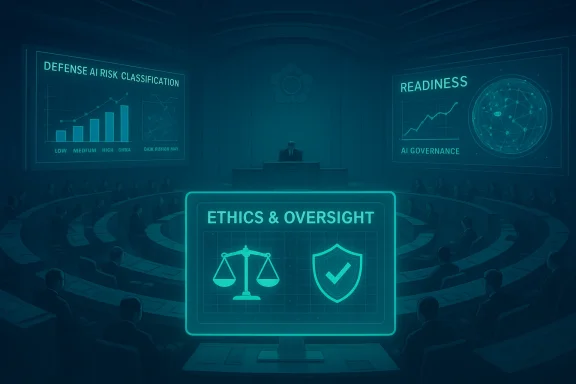
It is possible — but not proven — that Palantir’s data‑integration and decision‑support software played a role in the U.S. operation that removed Venezuelan President Nicolás Maduro from power, and that this moment has crystallized a rare bipartisan push in South Korea to codify a national approach to defense artificial intelligence through a newly proposed “Defense Artificial Intelligence Act.”
Background / Overview
The opening weeks of 2026 have produced a string of high‑profile, geopolitically consequential events that intersect at the technical and policy edges of modern AI. In early January, U.S. forces executed an operation inside Venezuela that resulted in Maduro’s capture and transfer to U.S. custody — an event reported internationally as involving coordinated military and intelligence assets and that immediately prompted market and media speculation about the technology underpinning the operation. Several market commentators linked Palantir’s Gotham and other decision‑intelligence offerings to the apparent speed and precision of the raid, and Palantir’s shares jumped on that market narrative even while the company and U.S. officials offered no public confirmation of a role.At the same time, South Korea is moving on the legislative front. On February 2, a group of 33 lawmakers in the National Assembly — listed in an article carried by Maeil Business Newspaper (MK) — announced a draft “Defense Artificial Intelligence Act” intended to create a national, systematized framework for the development, deployment, and safety management of AI specifically for the defense sector. The MK report frames the bill as a foundation law aimed not at strangling research but at enabling responsible, interoperable defense‑grade AI while embedding basic ethical and operational controls. (mk.co.kr)
These two threads — the real‑world assertion of AI’s force‑multiplying value and the legislative desire to govern it — are tightly coupled. The market rush to attach a vendor to a sensitive military operation, and a national legislature’s scramble to anchor defense AI in law, together reveal how rapidly public attention, procurement pressure, and governance imperatives can converge when an AI‑inflected military result becomes headline news.
What the reporting actually says: facts, speculation, and gaps
The Maduro operation: verified facts and high‑confidence reporting
- U.S. authorities publicly announced a high‑precision operation that resulted in Maduro’s detention and transfer to the United States; reporting indicates involvement by U.S. special operations, intelligence support, and law enforcement units.
- Multiple media outlets and briefings describe elements such as targeted strikes on military infrastructure, airborne assets, and rapid extraction; casualty figures and the precise chronology remain contested among reporting sources.
The Palantir question: credible speculation, no public confirmation
- Financial press and industry outlets noted a short‑term market response — Palantir shares rose on the operation’s news — and commentators pointed to Palantir’s known government contracts and the design of its Gotham and Foundry platforms as plausible enablers for the kind of "real‑time data fusion" that aids complex raids. These accounts explain market movements and the rationale for speculation.
- Crucially, there is no public, verifiable confirmation from Palantir, the Pentagon, or other U.S. agencies that directly links Palantir software to the Maduro operation. Statements published so far emphasize operational success without attributing contributions to specific contractors or products. Market narrative and social media amplified the connection; analysts repeatedly described it as plausible rather than proven. Treat the claim as unverified intelligence‑market narrative until corroborated by official disclosures or reliable investigative reporting.
The South Korean bill: what the MK report asserts
- The MK English translation reports that 33 lawmakers across parties proposed a Defense Artificial Intelligence Act to systemize development, deployment, and safety management of defense AI at the national strategy level. The article quotes the bill’s sponsors (identified as Yoo Yong‑won and Bu Seung‑chan) describing the law as a foundational framework that emphasizes safe and responsible use and seeks to connect private AI capabilities to defense needs. (mk.co.kr)
- The MK article also situates the proposed bill within Korea’s broader AI legal landscape, noting that South Korea’s Framework Act on the Development of Artificial Intelligence and Establishment of Trust (often rendered as the “AI Basic Act”) took effect on January 22, 2026, but that defense applications are explicitly or practically excluded from general‑purpose AI governance — hence the need for a defense‑specific statute. (mk.co.kr)
Why markets and media associate Palantir with high‑consequence raids
Palantir’s credibility with defense and intelligence customers rests on a handful of well‑known features. Those features explain why investors, traders, and armchair analysts immediately seeded narratives tying Palantir to the Venezuelan operation:- Palantir Gotham and Foundry are widely described as platforms for integrating heterogeneous intelligence — signals, imagery, human reports, and logistics — into operational dashboards and analytic workflows that support rapid decision-making.
- Palantir’s public contract portfolio includes large, visible engagements with U.S. defense and intelligence agencies and with allied militaries; that history creates a natural plausibility map for observers who see Gotham as an enabler of “situational awareness” at scale.
The proposed Defense Artificial Intelligence Act — unpacking the MK account
Core objectives MK attributes to the bill
- Create a national, systematic governance architecture for defense AI (R&D, procurement, field use, safety oversight).
- Embed safe and responsible use as a founding legal principle, including ethics and risk management mechanisms tailored to military use cases.
- Promote interoperability across the services and reduce duplicate spending by connecting project silos into a national program.
- Build human capital and an industrial ecosystem so private‑sector AI advances can feed defense capability sustainably. (mk.co.kr)
Why lawmakers say it’s urgent
The MK piece frames urgency around several converging facts:- Rapid demography‑driven manpower decline argues for technological substitutes and force multipliers to sustain national defense postures.
- Major powers are already pursuing AI as a national strategic capability; South Korea perceives a gap if defense AI remains uncoordinated or legally ambiguous.
- The national AI Framework Act sets the broad direction for civilian AI governance, but defense use is treated as a special domain requiring separate rules to account for classified data, lethal force implications, and operational secrecy. (mk.co.kr)
Critical analysis: strengths, gaps, and real risks
Strengths and sensible elements in the legislative concept
- Strategic coherence. Defense AI is distinct because of classified data, tempo of operations, and lethality considerations. A tailored legal framework that anticipates interoperability and lifecycle governance (R&D → deployment → decommission) is conceptually sound.
- Industry linkage. Explicitly seeking to lower friction between private innovation and defense needs — while building auditability and standards — can reduce procurement waste and speed fielding of defensive applications (signal processing, logistics optimization, intelligence fusion).
- Ethics and safety as statutory principles. Making “safe and responsible use” a statutory baseline is vital to anchor later rules on human oversight, assurance testing, and accountability.
Gaps and policy‑making pitfalls
- Vagueness in translation and reporting. The MK English piece is a translation and lists many signatories, but I found only that MK reporting; secondary confirmation from other major Korean outlets was not readily discoverable at the time of writing. That suggests either the bill is newly filed and not yet syndicated widely, or translation/attribution of names may create confusion. Policymakers require clarity of sponsor, exact text, and transitional arrangements. (mk.co.kr)
- Secrecy vs oversight. Defense classification systems and operational secrecy are legitimate. But legal frameworks that permit broad exceptions to transparency risk creating unreviewable regimes where responsibility is hard to enforce. Any defense AI statute must include robust oversight mechanisms (independent auditors, parliamentary committees with security clearances, judicial remedies).
- Operationalization of ethics. Statutory high‑level principles are necessary but insufficient. Terms like “safe and responsible use” need concrete implementations: testing standards, red‑team requirements, adversarial robustness metrics, model provenance, datasets vetting, and human‑in‑the‑loop (HITL) requirements for critical decisions.
- Interoperability and supplier lock‑in. Relying heavily on a small pool of foreign vendors for national defense AI creates supply‑chain and sovereignty risks. The law’s industrial policy components should balance rapid adoption with domestic capability development and secure sovereign enclaves for sensitive datasets and models.
Significant risks tied to the Palantir narrative
- Normalization of contractor attribution. If vendors are publicly credited for enabling clandestine operations, the line between classified national security and commercial marketing blurs. That raises ethical questions about contractors’ incentives and public accountability.
- Escalation and precedent. Very public, technically enabled regime change operations raise legal and ethical debates about proportionality, sovereignty, and international law. When AI and data fusion lower friction for kinetic action, democracies must ask whether legal frameworks are keeping up.
- Overreliance on a “black box” supply chain. The more defense organizations depend on opaque vendor platforms for decisioning, the greater the systemic risk from bugs, adversarial manipulation, or backdoors. National law must enforce explainability and the ability to operate disconnected from vendor control.
Technical and governance checklist for any Defense AI Act
Below are practical items that should appear in operative legislation or in the implementing regulations:- Mandatory risk classification for defense AI systems (e.g., advisory, operational support, lethal engagement), with escalating assurance requirements tied to those classes.
- Auditability obligations: immutable logging, model cards, and access for accredited auditors to reproduce outcomes.
- Human‑in‑the‑loop (HITL) requirements at defined decision nodes — especially where escalation to force, targeting, or lethal outcomes is possible.
- Red‑teaming and adversarial testing as routine pre‑deployment steps, including supply‑chain penetration testing.
- Data governance rules for sourcing, labeling, retention, and cross‑domain sharing, plus clear restrictions on biometric and personally identifiable data processing.
- Institutional roles: a central defense AI authority (for standards and procurement coordination), an independent oversight board (parliamentary or civilian with security clearance), and an industry certification body.
- Define classes of systems and testing thresholds.
- Require independent operational acceptance testing before field deployment.
- Mandate periodic post‑deployment safety reviews and sunset clauses.
- Workforce and industry support: national programs for secure compute, sovereign data enclaves, and skilled engineer pipelines to reduce vendor dependency.
What South Korea can and should learn from the reporting around Palantir and Venezuela
- Real‑world operations will be used as political and market signals about the value of defense AI. Lawmakers must not let market narratives substitute for careful policy design.
- Legislative ambition should be matched by technical specificity — the MK report’s language about “systematizing lifecycle management” is correct in spirit but needs binding standards and capacities to make it meaningful.
- Given South Korea’s strategic environment, the Defense AI Act must combine:
- national security protections (classification regimes, export controls),
- civil liberties safeguards (where defense AI overlaps with domestic security),
- industrial policy (build domestic alternatives, supply chain resilience),
- and international law compliance (adherence to humanitarian norms and allied coordination).
Practical recommendations for drafters, military planners, and technologists
- For legislators:
- Insist on a detailed bill text with defined system classes, oversight gates, and clear institutional responsibilities.
- Create sunset and review clauses that force periodic evaluation.
- For defense organizations:
- Adopt open standards for interfaces and provenance metadata so different services can audit and, if necessary, replace vendor components.
- Invest in sovereign compute and data enclaves for the highest‑sensitivity workloads.
- For industry:
- Prepare for certification regimes: build auditable model pipelines, lineage tracking, and reproducible test suites.
- Avoid public statements that claim or imply operational involvement in classified operations; doing so risks legal and reputational blowback.
- For civil society and the press:
- Maintain clarity about speculation versus evidence. Market reactions and social posts are valuable signals but must not be treated as proof of operational involvement.
Conclusion
The MK report on Korea’s proposed Defense Artificial Intelligence Act lands at a consequential moment: a dramatic, high‑visibility U.S. operation that showcased how modern intelligence, logistics, weapons, and data fusion can be combined has provoked both market speculation about vendor involvement and renewed public attention to how militaries adopt AI. The Palantir narrative remains plausible but unverified; multiple outlets noted the link between Palantir’s established defense market footprint and investors’ speculative response, yet no authoritative confirmation has been published tying the company to the operation.That ambiguity is precisely why sober, technically literate lawmaking matters. South Korea’s reported draft Defense Artificial Intelligence Act aims to create a structured, national approach to defense AI — a necessary and potentially constructive step — but the promise of such legislation depends entirely on implementation detail: clear risk classes, enforceable assurance processes, independent oversight, and a sustained industrial strategy that preserves sovereignty while enabling innovation. (mk.co.kr)
If the last months teach us anything, it is that battlefield advantage increasingly flows from who can fuse data into timely, auditable, and trustworthy operational decisions. That power can protect lives — or, if poorly governed, increase risk. Legislators, military leaders, technologists, and the public must therefore move together: codify standards, require transparency where possible, and insist on the technical and institutional foundations that make defense AI safe, explainable, and accountable.
Source: 매일경제 It has been reported that Palantir, an artificial intelligence (AI) company based on big data, has c.. - MK
