

For years Dell’s PC business has been sliding into a slow-motion identity crisis; Jeff Clarke’s reassignment to run the division is the clearest signal yet that the company intends to stop drifting and start rebuilding the hardware culture that once made Dell synonymous with premium Windows laptops. erview
Dell’s CES 2026 reset — a practical re-embrace of the XPS brand and a new “One Dell Way” operational push — reads like a public admission that the company lost its way after the EMC merger and a controversial 2025 rebrand that buried XPS under a generic naming scheme. The revived XPS 14 and XPS 16, announced with thin CNC-aluminum chassis, improved thermals, and renewed attention to keyboard and display ergonomics, are intended to serve both as technical flagships and symbolic proof that Dell intends to compete again at the high end.
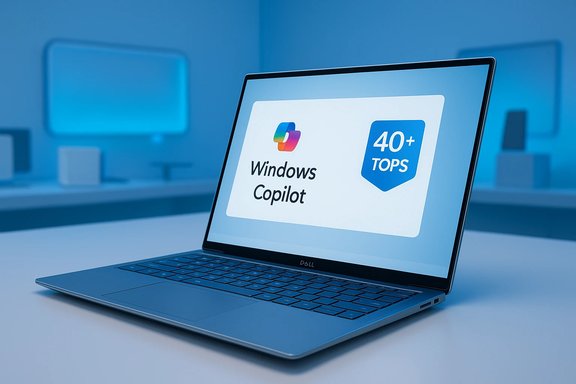
At the same time, Dell and other Oide a shifting Windows landscape. Microsoft’s Copilot+ program has introduced an explicit hardware bar―notably an NPU capable of roughly 40+ TOPS (trillion operations per second) for many on-device AI experiences―and OEMs have rushed to ship qualifying silicon where appropriate. Microsoft’s documentation is explicit about the 40+ TOPS floor for Copilot+ experiences, a requirement that has driven both design and marketing choices across the PC industry. This article examines what Clarke inherited, why the XPS relaunch matters, where Dell’s gaps remain (security and mobile integration chief among them), and what success would actually look like. It also evaluates HP’s new EliteBoard G1a — a near-invisible “PC in a keyboard” that embodies the very kind of hardware creativity Dell once led (and may now be trying to mDell drifted: distractions, conservative choices, and missed flagships
The EMC acquisition and Dell’s wider push into servers, storage, and enterprise services materially changed the company’s focus. Financially, the move worked; operationally, it diverted executive attention and engineering resources away from the consumer PC roadmap at a time when competitors were investing aggressively in design, repairability, and sustainability. That refocusing left the PC arm exposed to strategic inertia and branding missteps.
That said, this is a high-stakes course correction, not a guaranteed rescue. The market’s patience is limited, and rivals are not standing still: HP’s EliteBoard G1a shows that creative hardware ideas and rigorous enterprise security can capture attention, while Microsoft’s Copilot+ ruleset forces OEMs to be precise about capabilities and value. Dell’s success will hinge on disciplined, visible execution: better thermals, concrete security primitives, unambiguous Copilot+ SKU definitions, and a credible path to cross-device intelligence. If Clarke can deliver on those fronts, Dell’s XPS comeback will be more than symbolic; it will be foundational. If those efforts falter, the brand revival risks becoming a missed second chance.
Source: TechNewsWorld Jeff Clarke's Mission to Save Dell PCs
Dell’s CES 2026 reset — a practical re-embrace of the XPS brand and a new “One Dell Way” operational push — reads like a public admission that the company lost its way after the EMC merger and a controversial 2025 rebrand that buried XPS under a generic naming scheme. The revived XPS 14 and XPS 16, announced with thin CNC-aluminum chassis, improved thermals, and renewed attention to keyboard and display ergonomics, are intended to serve both as technical flagships and symbolic proof that Dell intends to compete again at the high end.
At the same time, Dell and other Oide a shifting Windows landscape. Microsoft’s Copilot+ program has introduced an explicit hardware bar―notably an NPU capable of roughly 40+ TOPS (trillion operations per second) for many on-device AI experiences―and OEMs have rushed to ship qualifying silicon where appropriate. Microsoft’s documentation is explicit about the 40+ TOPS floor for Copilot+ experiences, a requirement that has driven both design and marketing choices across the PC industry. This article examines what Clarke inherited, why the XPS relaunch matters, where Dell’s gaps remain (security and mobile integration chief among them), and what success would actually look like. It also evaluates HP’s new EliteBoard G1a — a near-invisible “PC in a keyboard” that embodies the very kind of hardware creativity Dell once led (and may now be trying to mDell drifted: distractions, conservative choices, and missed flagships
 From enterprise pivot to PC neglect
The EMC acquisition and Dell’s wider push into servers, storage, and enterprise services materially changed the company’s focus. Financially, the move worked; operationally, it diverted executive attention and engineering resources away from the consumer PC roadmap at a time when competitors were investing aggressively in design, repairability, and sustainability. That refocusing left the PC arm exposed to strategic inertia and branding missteps.Project
Project Luna — Dell’s modular, repairable PC concept that promised sustainability and a Lego-like upgrade experience — became an emblem of “what could have been.” Rather than shipping Luna as a flagship differentiator, Dell let the idea stagnate in concept limbo while rivals moved forward with earnest sustainability programs and modular designs. That hesitation cost Dell a visible differentiator at a moment when consumers and corporates are increasingly conscious of repairability and lifecycle impact.Branding mistakes and the deaPS
In 2025 Dell attempted to simplify its product lineup with a blunt naming restructure. The market reaction was immediate and negative: customers and reviewers saw the move as erasing decades of brand equity. The company reversed course at CES 2026 by reviving XPS as a premium “halo” line that will showcase design, materials, and engineering—precisely the traits the 2025 change obscured. Reviving a brand is only the first step; it must be accompanied by sustained product excellence.Jeff Clarke: the right profile — and the right test
What Clarke brings
Jeff Clarke is a 30-year Dell veteran known for operational discipline, supply-chain rigor, and a no-nonsense engineering mindset. He has publicly framed the “One Dell Way” as a people-and-process realignment designed to break down internal silos, standardize engineering practices, and restore an accountability culture. That mix of product and operational expertise is precisely what’s needed to counter a “cover-up” culture that prioritized spin over root-cause fixes.Why this is high-risk, high-reward
Clarke inherits a business that must accomplishs simultaneously: restore premium engineering credibility; re-establish a coherent product portfolio that customers and enterprise buyers trust; and do it in a market with compressed consumer demand and higher component costs. The XPS revival is the signal; execution and follow-through will determine whether the signal translates into regained market trust.The technical battleground: AI silicon, Windows 11, and fragmented Copilot+ reality
Copilot+ isspecific
Microsoft’s Copilot+ program isn’t marketing jargon: the platform has explicit hardware prerequisites that include an NPU capable of 40+ TOPS and baseline memory and storage thresholds (commonly 16 GB RAM and 256 GB SSD). That technical floor means Copilot+ experiences are delivered only on qualifying devices, creating an immediate bifurcation in the Windows ecosystem. Microsoft’s own guidance and developer documentation make the 40+ TOPS requirement clear. Independent technology coverage has repeatedly emphasized that this creates a two-tier reality for users: Copilot+ machines with on-device inference and other Windows 11 devices that must rely on cloud-backed features or narrower local accelerators. That fragmentation complicates enterprise procurement and consumer messaging.Dell’s strategic pivot: less “AI theater,” more hardware fundamentals
Clarke and Dell acknowledged at CES that mainstream buyers are not purchasing devices for a Copilot key or raw NPU numbers; they buy for display quality, battery life, keyboard feel, and chassis finish. Dell’s reset retains technical optionality — shipping silicon that can support Copilot+ where appropriate — while shifting marketing emphasis back to everyday human benefits. This is a pragmatic course correction that several OEMs adopted at CES 2026.The two structural gaps Clarke must close
1) Security at hardware scale
HP’s Wolf Security has set expectations for deep hardware-enforced isolation and endpoint protection. Dell’s portfolio currently lacks an equivalently comprehensive, hardware-assisted security story that integrates firmware-level resiliency, runtime isolation, and post-quantum considerations in an enterprise-friendly package. For C-suite IT buyers, platform-level security is as important as CPU and display specs. Rebuilding that trust will require:- Investment in firmware integrity and measured boot at scale.
- A clear hardware-rooted isolation story that integrates with modern endpoint management.
- Transparent roadmaps and aggressive third-party validation (attestations, certifications).
2) T gap
Lenovo’s Qira and Apple's integrated ecosystem point to a future where agentic AI follows users across devices. Dell exited the smartphone market years ago; that decision now looks strategically limiting in a world where a user’s AI assistant may need a native mobile surface to be truly “personal.” If an AI assistant must live in pockets and on wrists as well as laptops, Dell needs credible cross-device strategies — either through partnerships, acquisitions, or entirely new form factors — to avoid being a hardware island in a multi-device world.Roadmap: what Clarke d blueprint)
- Re-lock the product chain: enforce One Dell Way design and test standards, with public milestones and independent validation cycles.
- Re-invest in an XPS halo program: ship demonstrable engineering wins (sustained thermal performance, battery-life transparency, driver/firmware cadence).
- Build hardware-native security primitives that integrate with Microsoft’s enterprise stack and provide third-party certs.
- Define a cross-device strategy: partnerships, software agents, or thin-client innovations to reduce the mobile gap.
- Make repairability concrete: meaningful modularity and serviceability for mainstream SKUs, not just PR concepts.
Product of the week: HP EliteBoard G1a — a near-invisible PC that shows what creative hardware can do
HP’s EliteBoard G1a is the kind of product that demonstrates the elasticity of the PC category when hardware teams are willing to reimagine form factors. Announced at CES 2026, the EliteBoard G1a places a Copilot+–capable PC inside a sleek keyboard chassis: a 12 mm profile, about 750 g, and an internal AMD Ryzen AI 300-series processor with an NPU rated at roughly 50 TOPS in HP’s marketing. HP positions the EliteBoard as both an enterprise product and a practical expression of the “PC should disappear into the workspace” idea. Why the EliteBoard matters:- It treats the keyboard as a full compute surface rather than as an input-only peripheral.
- It emphasizes repairability and enterprise manageability in a compact package.
- It ships with enterprise-level security features and the promise of HP Wolf Security integration.
Strengths and weak points: a candid assessment
Strengths of Clarke’s approach and the XPS relaunch
- Symbolic clarity: Restoring XPS gives Dell a visible premium identity that reassures buyers and partners.
- Engineering focus: The return of tactile keys, refined thermals, and material quality addresses the precise pain points customers repeatedly complained about.
- Pragmatic marketing: Dialing back AI-first hype in favor of human-centered benefits reduces consumer confusion and sets expectations more realistically.
Risks and open questions
- Execution risk: ery hours, thermal headroom, repairability) must survive independent testing. Premium starting prices put added pressure on real-world performance.
- Security gap: HP’s Wolf Security and other vendor moves have elevated baseline enterprise security expectations; Dell needs to match or outpace these offerings with demonstrable firmware and hardware protections.
- Mobile/AI ecosystem gap: If the future of personal computing is agentic AI that follows people across phones,Dell’s lack of a smartphone play is a structural disadvantage that marketing rhetoric alone cannot fix.
- Copilot+ fragmentation: The 40+ TOPS Copilot+ floor creates a two-tier Windows ecosystem. Dell must be clear about which SKUs qualify and why — failure to do so will confuse buyers and complicate enterprise procurement. Microsoft’s developer guidance and external reporting make the fragmentation risk plain.
How to judge success: metrics that matter
- Customer sentiment and NPS improvements for XPS and premium lines within 12 months.
- Independent review pass rates for sustained performance (thermals under real workloads).
- Enterprise adoption of Dell’s hardware-based security features and integration into managed deployments.
- Market share movement in premium consumer and creator segments, particularly against HP and Lenovo.
- Evidence of cross-device initiatives or partnerships that close the mobile/AI gap.
Final assessment: cautious optimism, conditional on execution
Jeff Clarke’s return to the PC helm is the clearest sign yet that Dell recognizes the scale of its branding and product missteps. Restoring XPS and anchoring the company to hardware fundamentals is the right strategic direction. Clarke’s strengths — operational discipline and product-minded leadership — match the immediate needs of a business that must rebuild engineering credibility while navigating a complex AI and Windows environment.That said, this is a high-stakes course correction, not a guaranteed rescue. The market’s patience is limited, and rivals are not standing still: HP’s EliteBoard G1a shows that creative hardware ideas and rigorous enterprise security can capture attention, while Microsoft’s Copilot+ ruleset forces OEMs to be precise about capabilities and value. Dell’s success will hinge on disciplined, visible execution: better thermals, concrete security primitives, unambiguous Copilot+ SKU definitions, and a credible path to cross-device intelligence. If Clarke can deliver on those fronts, Dell’s XPS comeback will be more than symbolic; it will be foundational. If those efforts falter, the brand revival risks becoming a missed second chance.
Short checklist for readers tracking this story
- Watch Dell’s first independent XPS 14/XPS 16 reviews for sustained thermal and battery performance validation.
- Look for enterprise security whitepapers and third-party certifications from Dell that counter HP Wolf Security’s claims.
- Track Microsoft’s Copilot+ compatibility lists and Dell’s SKU labeling to avoid Copilot confusion.
- Monitor early EliteBoard G1a reviews for practical real-world tradeoffs between form factor convenience and sustained performance.
Source: TechNewsWorld Jeff Clarke's Mission to Save Dell PCs
