

The UNESCO‑backed “Opportunities for Heritage” forum returns to the Gulf this week with a high‑profile edition in Doha that promises to push heritage conservation from academic debate into actionable policy, practice and financing — but the exact schedule and scope include details worth verifying before travel or press accreditation.
The second edition of the Opportunities for Heritage conference (O4H‑II) is convened by the UNESCO Regional Office for the Gulf States and Yemen, in partnership with the UNESCO Chair for World Heritage and Sustainable Tourism Management in the Arab Region (WH‑STAR) and Qatar Museums. Local press and institutional organisers confirm that the forum will be held in Doha in early December 2025 and will gather policymakers, heritage professionals, urban planners, economists and cultural stakeholders to explore how culture can be integrated into development and resilience strategies. O4H‑II builds directly on the inaugural conference held in Muscat (24–27 February 2024), which combined academic panels, practitioner workshops and a field trip to key heritage sites in Oman. The move from Muscat to Doha signals an ambition to rotate the forum across the region while sharpening practical outputs for policymakers and site managers. The forum is explicitly framed around UNESCO’s normative instruments — the 1972 World Heritage Convention, the 2003 Convention for the Safeguarding of the Intangible Cultural Heritage, and the 2011 Recommendation on the Historic Urban Landscape — positioning heritage as a multi‑dimensional asset for sustainable development rather than a niche cultural concern. Organisers say the aim is to convert normative frameworks into implementable approaches for regulatory reform, financing and community engagement.
Conclusion
O4H‑II offers an opportunity to operationalise heritage as a public good — one that can support sustainable tourism, urban resilience and cultural continuity — but the quality of its legacy will depend on the forum’s capacity to translate discussion into actionable, transparent and community‑centred outcomes. Confirmation of final dates and a clear post‑conference accountability framework will determine whether Doha’s gathering becomes a catalytic moment for heritage conservation across the region or another high‑level conversation without lasting impact.
Source: Qatar Tribune https://www.qatar-tribune.com/artic...e-unesco-conference-to-kick-off-on-dec-7/amp/
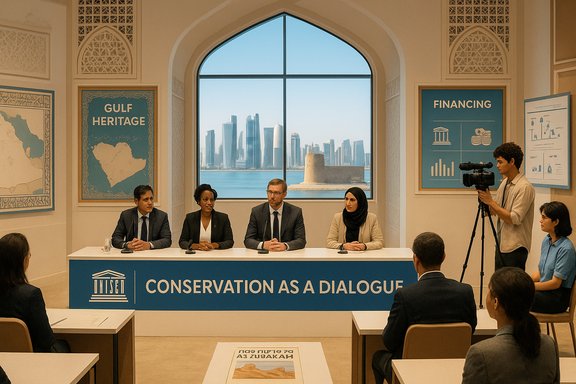 Background / Overview
The second edition of the Opportunities for Heritage conference (O4H‑II) is convened by the UNESCO Regional Office for the Gulf States and Yemen, in partnership with the UNESCO Chair for World Heritage and Sustainable Tourism Management in the Arab Region (WH‑STAR) and Qatar Museums. Local press and institutional organisers confirm that the forum will be held in Doha in early December 2025 and will gather policymakers, heritage professionals, urban planners, economists and cultural stakeholders to explore how culture can be integrated into development and resilience strategies. O4H‑II builds directly on the inaugural conference held in Muscat (24–27 February 2024), which combined academic panels, practitioner workshops and a field trip to key heritage sites in Oman. The move from Muscat to Doha signals an ambition to rotate the forum across the region while sharpening practical outputs for policymakers and site managers. The forum is explicitly framed around UNESCO’s normative instruments — the 1972 World Heritage Convention, the 2003 Convention for the Safeguarding of the Intangible Cultural Heritage, and the 2011 Recommendation on the Historic Urban Landscape — positioning heritage as a multi‑dimensional asset for sustainable development rather than a niche cultural concern. Organisers say the aim is to convert normative frameworks into implementable approaches for regulatory reform, financing and community engagement. What the Doha programme actually says (dates, sessions and fieldwork)
Dates and a note about an inconsistency
Public reporting by local newspapers states the conference will take place on 7–8 December 2025, hosted at Qatar Museums. However, the official O4H‑II page maintained by the UNESCO Chair (WH‑STAR) lists the forum as Doha, 7–9 December 2025, and the event’s tentative programme published by the organisers explicitly schedules a Day 3 field trip on 9 December — a visit to the World Heritage site Al Zubarah Fort. The draft programme therefore confirms a three‑day event (two days of panels and workshops, plus a site visit on the third day). Organisers and delegates should treat media reports that list only two days as an abbreviated notice; anyone planning attendance or accreditation should verify the full programme through the organisers.Core elements of the programme
The published tentative programme shows a mix of keynote addresses, thematic sessions and workshops with practical orientation. Highlights include:- Session I: Conservation as a Dialogue: People, Place and Purpose — addresses community engagement and conservation priorities.
- Session II: Endowments and Financial Institutions: Vehicles for Sustainable Development — explores funding models, green finance and public‑private instruments for heritage.
- Session III: Managing Heritage in Private Hands: Models and Case Studies — examines governance models and case studies from the region.
- Session IV: Communicating Heritage: Museums, Memory and Tourism — focuses on interpretation, museums’ role and sustainable tourism strategies.
- Workshops on Heritage Impact Assessment (HIA) and Preparation of World Heritage nomination files — explicitly targeted at policymakers and site managers.
- Day 3: Field trip to Al Zubarah Fort (World Heritage Site) and related heritage visits — designed as hands‑on learning and site observation.
Why this matters: the conference’s strategic ambitions
Heritage as a lever for sustainable development
Organisers frame O4H‑II as an effort to translate UNESCO’s normative tools into practical policy, especially in coastal and rapidly urbanising Gulf contexts where development pressures, tourism economics and climate risk intersect. This is significant for three reasons:- It reframes heritage from a conservation problem to a policy and financing opportunity that can be mainstreamed in national development plans.
- It creates a regional forum for knowledge transfer between states facing similar challenges — regulatory reform, museum interpretation, and balancing urban growth with historic urban landscape management.
- It positions heritage work within broader resilience and climate adaptation conversations, consistent with the 2011 HUL Recommendation’s holistic approach to historical urban environments.
Practical‑first format
Compared with the first edition in Muscat — which mixed academic and policy content — O4H‑II emphasises solution‑oriented, practitioner‑facing sessions: workshops on Heritage Impact Assessment, world heritage nomination practice and finance models that can be adapted by ministries and municipal authorities. The presence of field visits and youth media competitions suggests an intention to marry technical capacity building with community outreach and communications practice.Strengths: what O4H‑II does well
- Multi‑stakeholder participation — bringing together UNESCO offices, the UNESCO Chair (WH‑STAR), Qatar Museums, NGOs, funders and municipal officials creates the cross‑sector dialogue needed to implement complex heritage strategies. The organisers’ roster and partners indicate genuine institutional breadth.
- Policy linkage to normative instruments — anchoring the forum in the World Heritage, Intangible Cultural Heritage and Historic Urban Landscape frameworks ensures discussions tie back to existing international standards and practical tools for implementation. This alignment improves the chances that national actors will adopt recommendations consistent with international best practice.
- Practical workshops and site learning — sessions on HIA, nomination dossiers, and a field trip to Al Zubarah Fort provide capacity building rather than purely rhetorical outputs. These sessions are designed to produce technical skills that can be transferred to day‑to‑day heritage work.
- Focus on finance and innovative funding models — dedicating a session to endowments, green finance and financial institutions signals a realistic appreciation that conservation requires sustainable financing — not just declarations. That practical focus is a positive shift for heritage gatherings.
- Youth engagement and communications — including media competitions and sessions on communicating heritage recognises the central role of interpretation, storytelling and youth‑led media in sustaining heritage relevance and community buy‑in.
Risks and blind spots to watch
While O4H‑II has clear strengths, several risks and limitations could blunt its impact unless the organisers and participating governments address them explicitly.1) Date and logistics confusion
The discrepancy between media reports (7–8 December) and the organisers’ own programme (7–9 December, with a field trip on the 9th) highlights a communication gap that could cause logistical friction for delegates, press and site hosts. Accurate, centralised conference information is essential for travel, accreditation and fieldtrip permits.2) Heritage as soft‑power and the risk of instrumentalisation
Large cultural events in the Gulf often intersect with national branding and diplomacy agendas. While cultural diplomacy can bring resources and attention, there is a risk that heritage becomes a display of state prestige rather than a vehicle for local community empowerment. Safeguarding practice must be attentive to who benefits from projects, and whether local communities have meaningful decision‑making roles. UNESCO instruments emphasise community participation; implementing that in practice requires legal and budgetary reforms, not only ceremonial commitments.3) Over‑tourism and commercialization
Museums and heritage sites that successfully attract tourists risk crowding, commercialization of sacred practices and infrastructure strain. Sessions on museums and tourism are necessary, but without robust carrying‑capacity studies and community benefit‑sharing mechanisms, growth in visitor numbers can damage the very assets the conference aims to protect. The Historic Urban Landscape approach explicitly warns against treating heritage as an isolated asset divorced from socio‑economic realities.4) Financing rhetoric versus sustained funding
Debates about endowments and green finance are useful, but establishing sustainable, transparent funding mechanisms remains hard in practice. Issues include fiduciary transparency, long-term maintenance funds, and clear governance arrangements for endowments or PPPs. There is a risk that financing conversations remain conceptual unless linked to pilot projects, independent audits, and public reporting requirements.5) Climate change, coastal sites and disaster preparedness
Many Gulf heritage sites are in low‑lying coastal zones and are increasingly vulnerable to sea level rise, extreme heat and episodic storms. A durable conservation strategy must integrate climate risk assessment, retrofitting options, and disaster preparedness — not just museum displays or interpretive programming. Fieldwork to coastal sites (e.g., Al Zubarah) is a valuable learning opportunity, but it must be coupled with technical sessions on climate vulnerability and engineering responses.6) Sectoral capacity and decentralisation
Translating conference recommendations into on‑the‑ground change requires local technical capacity — conservation architects, trained masons, site managers and municipal planners. Many regional governments centralise heritage decision‑making, which can speed projects but also create implementation bottlenecks and disconnect with communities. Capacity building and decentralised funding streams should be priorities.Practical recommendations for organisers, policymakers and funders
- Publicly confirm and circulate the final programme and logistical details (dates, field trip permissions, visa and accreditation instructions) in at least two authoritative locations: the UNESCO Chair page and the UNESCO Regional Office site, and include daily schedules for press and delegates. This will reduce confusion caused by divergent early notices.
- Link finance discussion sessions to concrete pilot projects with transparent monitoring and reporting clauses (independent audits, published milestones, community benefit metrics). This converts theoretical finance models into demonstrable outcomes.
- Make community participation measurable: require that conservation proposals include evidence of community consultation, written consent for intangible practices, and benefit‑sharing plans. UNESCO’s ICH Convention and HUL Recommendation underline the primacy of community agency.
- Integrate climate risk assessments into all site planning sessions; include a short technical stream that brings coastal engineers and climate scientists together with heritage conservators for workable retrofit options.
- Invest in a regional capacity‑building fund for conservation trades (stone work, traditional crafts), supported by heritage endowments where appropriate, and linked to vocational programs in host countries. This helps ensure long‑term maintenance capability rather than one‑off restoration.
- Require that any public‑private partnership (PPP) or sponsorship agreement include binding clauses on interpretation, community access, and anti‑commercialisation safeguards to protect intangible practices and ritual calendars.
- Publish an open‑access “conference outcomes” brief within 30 days that lists agreed pilot projects, responsible agencies, timelines and funding sources. This creates public accountability and a foundation for follow‑up.
Who’s in the room: organisers, partners and notable contributors
- UNESCO Regional Office for the Gulf States and Yemen — the convening UN office with regional mandate for culture and heritage.
- UNESCO Chair for World Heritage and Sustainable Tourism Management in the Arab Region (WH‑STAR), hosted at the German University of Technology (GUtech) — conference president Prof. Heba Aziz.
- Qatar Museums — host institution and a major actor in national cultural diplomacy and museum practice. QM’s December programming and national museum celebrations underline its central role in Doha’s cultural agenda.
- International NGOs and funding partners — the programme lists participation by organisations such as the World Monuments Fund and regional heritage bodies (the programme and organisational partners are published on the conference page). Inclusion of such NGOs helps bridge technical practice and fundraising.
What to watch after Doha: metrics and accountability
The conference should be judged not by sessions alone but by the concrete outputs and follow‑through it produces. Watch for:- Published pilot project lists with budgets and named implementing agencies.
- Memoranda of understanding or funding commitments from international financial institutions or philanthropic foundations tied to verifiable project KPIs.
- Capacity‑building commitments: numbers of trained practitioners, apprenticeships or vocational programs created as a result of the forum.
- Transparent monitoring reports on pilot projects, including independent third‑party audits or civil society monitoring mechanisms.
Final assessment
O4H‑II in Doha arrives at an important moment: Gulf states and regional partners are investing heavily in museum infrastructure, tourism and cultural promotion, while UNESCO instruments increasingly push heritage into policy domains such as urban planning, resilience and sustainable finance. The forum’s strengths lie in its multi‑stakeholder design, practical workshops, and explicit attention to finance and communication. If organisers succeed in converting dialogue into funded pilots, capacity‑building programs and measurable policy reforms, O4H‑II can deliver meaningful change for heritage management in the Arab region. However, the conference must also confront hard realities: the risk of heritage being instrumentalised for prestige, the technical and financial gaps in long‑term conservation, climate vulnerabilities, and the need to embed community voices in decision‑making. Practical recommendations — clear logistics and programme confirmation, binding financing pilots, measurable community safeguards, and climate‑sensitive conservation planning — are essential to ensure the conference’s ambitions translate into resilient heritage outcomes. The organisers’ tentative programme (which lists December 7–9 with a dedicated field trip on the 9th) should be treated as the authoritative schedule unless the UNESCO Regional Office or Qatar Museums publish an amended programme; delegates and media should confirm logistics directly with the organisers before making travel plans.Conclusion
O4H‑II offers an opportunity to operationalise heritage as a public good — one that can support sustainable tourism, urban resilience and cultural continuity — but the quality of its legacy will depend on the forum’s capacity to translate discussion into actionable, transparent and community‑centred outcomes. Confirmation of final dates and a clear post‑conference accountability framework will determine whether Doha’s gathering becomes a catalytic moment for heritage conservation across the region or another high‑level conversation without lasting impact.
Source: Qatar Tribune https://www.qatar-tribune.com/artic...e-unesco-conference-to-kick-off-on-dec-7/amp/
