

The Server Side’s DP‑900 practice set reframes Azure Data Fundamentals preparation as engineering practice rather than trivia memorization: a 10‑week, lab‑first cadence, scenario‑driven Q&A, and a strict remediation loop that turns every failed question into a short sandbox lab and a documented artifact.
Microsoft’s DP‑900: Microsoft Azure Data Fundamentals is an entry‑level certification that tests foundational data concepts and how Azure implements them. The official exam structure is organized into four domains with published approximate weights: Describe core data concepts (25–30%), Identify considerations for relational data on Azure (20–25%), Describe considerations for working with non‑relational data on Azure (15–20%), and Describe an analytics workload on Azure (25–30%) — these domain weights are the authoritative map you should follow when building study priorities. Microsoft reports that technical exams use a scaled scoring model and that a passing score is 700 on the 1–1000 scale; treat that value as the standard gating threshold for technical certs and confirm any procedural details on the Microsoft exam page when you register. The Server Side article analyzed here assembles curated practice questions (sourced from public course material and widely available practice banks), pairs them with a reproducible hands‑on plan, and stresses ethical practice: avoid leaked “brain dumps” and favor vendor transparency. The article’s practical scaffold is designed to produce demonstrable competence — short GitHub artifacts, lab scripts, remediation notes — rather than brittle memorization.
If you adopt this approach, your DP‑900 preparation will shift from “memorize and test” to learn, build, document, and demonstrate — and that is the difference between a certificate that sits on a résumé and a credential that opens doors.
Source: The Server Side DP-900 Practice Tests on Azure Data Fundamentals Exam Topics
 Background / Overview
Microsoft’s DP‑900: Microsoft Azure Data Fundamentals is an entry‑level certification that tests foundational data concepts and how Azure implements them. The official exam structure is organized into four domains with published approximate weights: Describe core data concepts (25–30%), Identify considerations for relational data on Azure (20–25%), Describe considerations for working with non‑relational data on Azure (15–20%), and Describe an analytics workload on Azure (25–30%) — these domain weights are the authoritative map you should follow when building study priorities. Microsoft reports that technical exams use a scaled scoring model and that a passing score is 700 on the 1–1000 scale; treat that value as the standard gating threshold for technical certs and confirm any procedural details on the Microsoft exam page when you register. The Server Side article analyzed here assembles curated practice questions (sourced from public course material and widely available practice banks), pairs them with a reproducible hands‑on plan, and stresses ethical practice: avoid leaked “brain dumps” and favor vendor transparency. The article’s practical scaffold is designed to produce demonstrable competence — short GitHub artifacts, lab scripts, remediation notes — rather than brittle memorization.Why the Server Side approach matters now
The gap between a badge and competence
Cloud certification exams increasingly test decision‑making (which service to use, what trade‑offs to accept) rather than just syntax and GUI locations. DP‑900 rewards the ability to choose the right data primitive for a scenario (for example, Azure SQL Database vs Cosmos DB vs Blob storage) and to reason about transactional vs analytical workloads. The Server Side’s hands‑on approach directly targets that gap by converting wrong answers into applied micro‑labs — a small but powerful pedagogical shift.Practice tests as diagnostics, not shortcuts
The article reframes timed practice exams as diagnostic tools: use them to reveal weak concepts and pacing problems, then remediate with focused labs and documentation. This is fundamentally different from treating practice banks as a “shortcut” to a passing score, a tactic the article explicitly warns against for ethical and practical reasons.The vendor problem: provenance, cadence, and ethics
Not all practice content is equal. The Server Side emphasizes three vendor requirements that materially affect learning quality:- Content must explicitly map questions to Microsoft’s skills outline.
- Every item should include an explanation linked to official documentation.
- The vendor must publish an update cadence and methodology.
What the Server Side recommends (a practical roadmap)
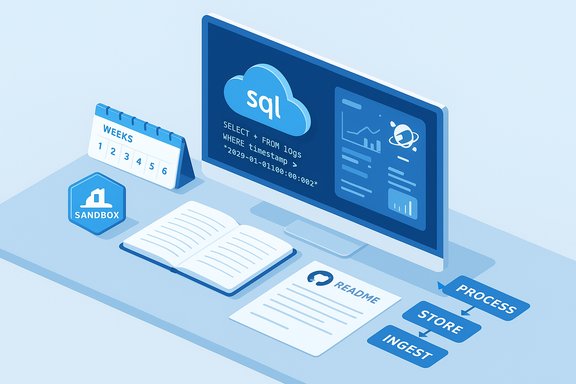
The 10‑week, lab‑first cadence (condensed)
- Weeks 1–2 — Foundations & mapping: Read the DP‑900 skills outline on Microsoft Learn, map objectives to modules, and provision a low‑cost sandbox subscription.
- Weeks 3–5 — Core storage & relational concepts: Labs covering Azure SQL family, blobs, file shares, and basic SQL queries/normalization.
- Weeks 6–7 — Non‑relational basics & analytics: Cosmos DB partitioning, consistency models, ingest → process → store pipelines using Synapse/Fabric/Databricks.
- Week 8 — Monitoring & observability: End‑to‑end ingestion, telemetry, and basic performance reasoning.
- Weeks 9–10 — Timed practice & remediation: Full timed mocks (MeasureUp or Microsoft practice assessment), convert every incorrect answer into a remediation ticket, lab, and a short documented artifact.
The remediation loop (5 steps)
- Capture the failed question and your answer.
- Identify the core concept (e.g., partitioning, consistency, transactional vs analytical).
- Run a focused 30–90 minute lab in your sandbox that exercises that concept.
- Write a 200–500 word remediation note in a personal repo explaining why the correct choice is right and why other options fail.
- Re‑test with a similar practice item until the concept is solid.
Cross‑checking the hard facts (verification)
Key claims in the Server Side article were validated against Microsoft Learn and established practice vendors to ensure the study map aligns with official guidance.- Domain weights and skills measured are listed on Microsoft’s DP‑900 study guide and match the breakdown the Server Side uses for the study cadence. Use Microsoft Learn as the canonical syllabus and re‑verify right before the exam.
- Microsoft provides practice assessments and an exam sandbox that let candidates preview question types and timing. Use those official tools to normalize pacing and question interactions before you take the real exam. If Microsoft’s practice assessment for DP‑900 is available, it will appear on the exam page and the Practice Assessments hub.
- MeasureUp’s DP‑900 practice product simulates the certification environment (certification mode vs practice mode), offers extensive question pools and reporting, and is a common third‑party choice for timed practice. The Server Side’s recommendation to prefer transparent vendors aligns with MeasureUp’s model.
- The scaled passing threshold of 700 is the standard Microsoft technical exam pass mark; treat this as the scoring target but confirm exam rules on the registration page as procedural detail can vary.
Strengths: what works well in this approach
- Applied, evidence‑based learning: The remediation loop forces active problem solving and creates artifacts that demonstrate real capability beyond the badge. This reduces the disconnect between “I passed” and “I can do the job.”
- Scenario‑first Q&A builds decision instincts: Practice questions framed as micro‑case studies train candidates to weigh trade‑offs (latency, consistency, cost, lifecycle) rather than memorize keywords. That’s the skill DP‑900 rewards.
- Clear vendor and ethics guidance: The article’s vendor checklist and explicit admonition against leaked exam content protects candidates from legal and career risks and focuses study time on durable learning.
- A usable cadence for working professionals: Ten weeks with modular sprints is a realistic schedule that balances breadth and depth while producing demonstrable outputs.
Risks and limitations you must manage
Staleness risk
Third‑party practice items and blog Q&A can lag Microsoft’s change log. Specific CLI flags, SDK API names, or product defaults may change; memorize concepts and verification patterns, not surface strings. The Server Side repeatedly flags this and recommends re‑validation against Microsoft Learn and product docs right before the exam.Vendor claims and “guaranteed pass” marketing
Many vendors advertise inflated pass rates or imply verbatim exam reproduction. These are marketing claims that are often unverifiable and may signal recycled content or leaks. Treat any “verbatim exam” promise as a red flag and demand an auditable methodology.Brain dumps and enforcement risk
Using leaked exam content is ethically wrong and contractually risky: Microsoft’s candidate agreement and proctoring systems can lead to score cancellation, credential revocation, and exam bans. The Server Side’s stern warnings here are warranted — short‑term convenience is not worth potential long‑term career damage.Over‑simplification for production decisions
Some Q&A items present the “exam‑correct” short answer for constrained stems. Real architectures sometimes combine patterns (for example: Event Grid + Service Bus + Redis in a complex pipeline). Treat practice items as decision aids, not one‑size‑fits‑all rules.Practical micro‑labs that map directly to DP‑900 domains
These short labs are high ROI — each should be kept small, cost‑aware, and documented in a README you can show to interviewers.- Describe core data concepts (25–30%)
- Lab: Create three sample datasets (structured CSV, semi‑structured JSON, unstructured text) and write a short README explaining use cases and storage choices.
- Relational data on Azure (20–25%)
- Lab: Provision an Azure SQL Database (single database tier), create normalized tables, load sample transactional data, and run basic joins and transactions. Capture firewall, authentication (Entra), and scaling options.
- Non‑relational data on Azure (15–20%)
- Lab: Create a Cosmos DB container, experiment with partition key strategies (try composite keys, hashed suffixes), and measure read/write patterns; document consistency models (strong, session, eventual) using small scripts.
- Analytics workloads on Azure (25–30%)
- Lab: Ingest CSV blobs into an Azure Synapse / Fabric workspace or Databricks notebook, run an aggregate query, and visualize results in Power BI. Keep the pipeline minimal (ingest → transform → visualize) and publish a short demo.
Choosing practice tests (vendor checklist)
When you buy paid practice exams, insist on the following vendor guarantees:- A published mapping of questions to Microsoft’s official skills outline.
- Detailed explanations for each question referencing Microsoft Learn or official docs.
- An update cadence and change log.
- A clear disclaimer that the vendor does not reproduce “verbatim” exam content.
- A realistic simulation mode (timed certification mode) and a practice mode with full explanations.
The last two weeks: an actionable pre‑exam checklist
- Re‑read the DP‑900 “Skills measured” page and confirm domain weights.
- Run one full timed practice assessment in certification mode (MeasureUp or Microsoft Practice Assessment if available).
- Convert every incorrect answer into a remediation ticket: run a focused lab (30–90 minutes), write a 200–500 word remediation note, and push it to your repo.
- Re‑verify any memorized numeric defaults or UI flows against Microsoft docs. If an item has changed, update your notes.
- Prepare three interview artifacts: a README describing a small ingestion pipeline, a tiny SQL demo repo, and a short Power BI visualization. These are quick proofs of applied knowledge that outlast the exam.
Ethical rules for exam prep (non‑negotiable)
- Do not use leaked exam content or “actual exam” PDFs. These materials are often illegal to disseminate and can result in revoked credentials, bans, or reputational damage.
- Use third‑party practice tests only when they publish editorial policies and a refresh cadence. Prefer vendors that tie explanations back to Microsoft Learn or official docs.
- Make your remediation work public or exportable. Documented labs and short repos are the best mitigant to the phantom credibility of memorized exam passes.
Final verdict — how to use the Server Side DP‑900 material responsibly
The Server Side DP‑900 practice collections are a high‑value accelerator when used as part of a three‑legged strategy:- Microsoft Learn as the canonical syllabus and source of truth.
- Reproducible hands‑on labs in a sandbox subscription that validate conceptual understanding.
- Reputable timed practice tests used as diagnostics (MeasureUp or Microsoft practice assessments) to normalize pacing and expose weak concepts.
If you adopt this approach, your DP‑900 preparation will shift from “memorize and test” to learn, build, document, and demonstrate — and that is the difference between a certificate that sits on a résumé and a credential that opens doors.
Source: The Server Side DP-900 Practice Tests on Azure Data Fundamentals Exam Topics
